 plumi
Polymers: OxfordAQA International A Level Chemistry questions
OxfordAQA International A Level Chemistry past-paper questions on 3.3.12 Polymers, Official specimen papers for Units 1–5, with mark schemes and examiner’s reports where available.
Past paper difficulty
Paper
All papers
Exam
All years
Calculations
Loading the full question list…
Q02.6
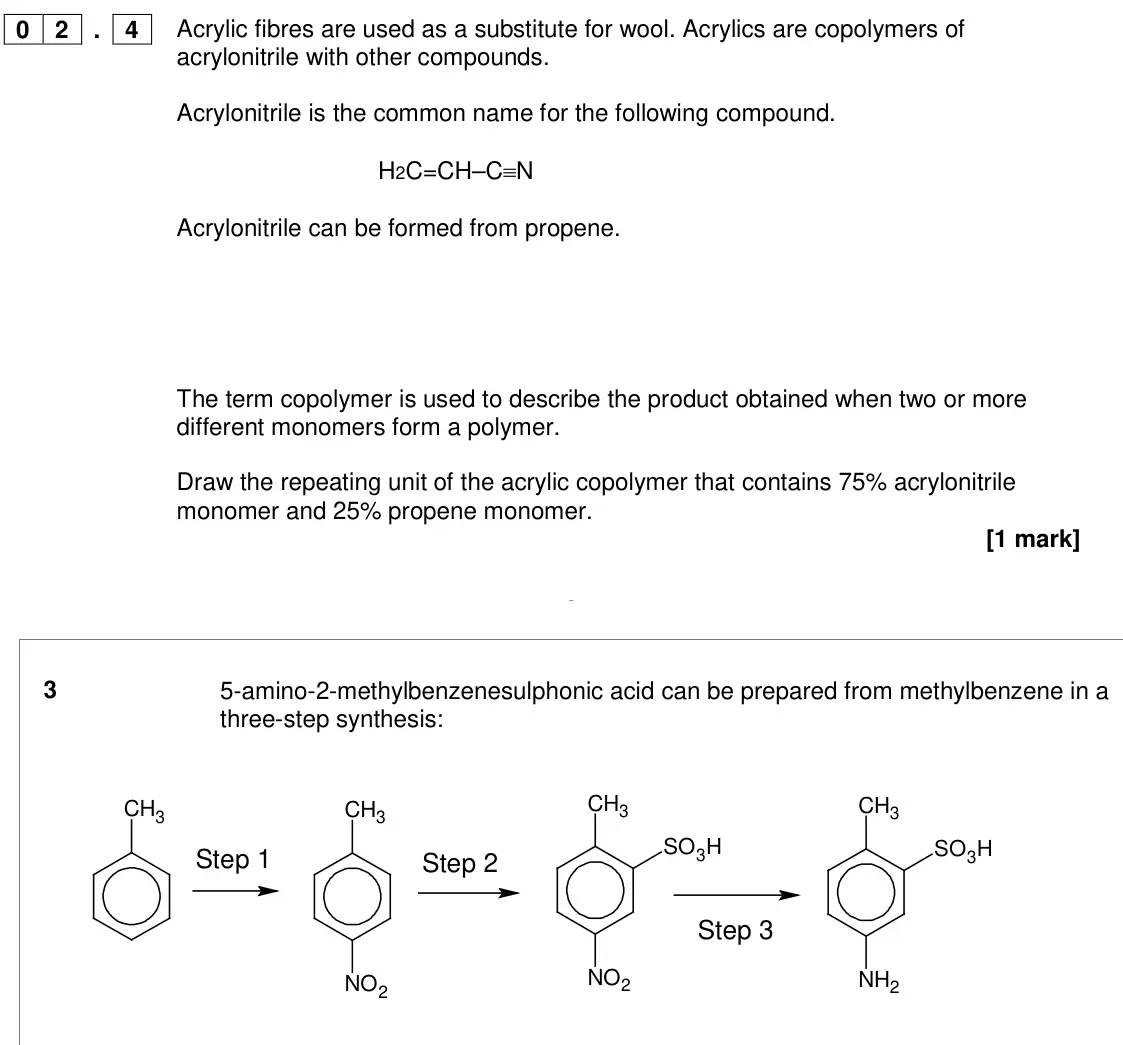
The whole paper ↗Q02.4
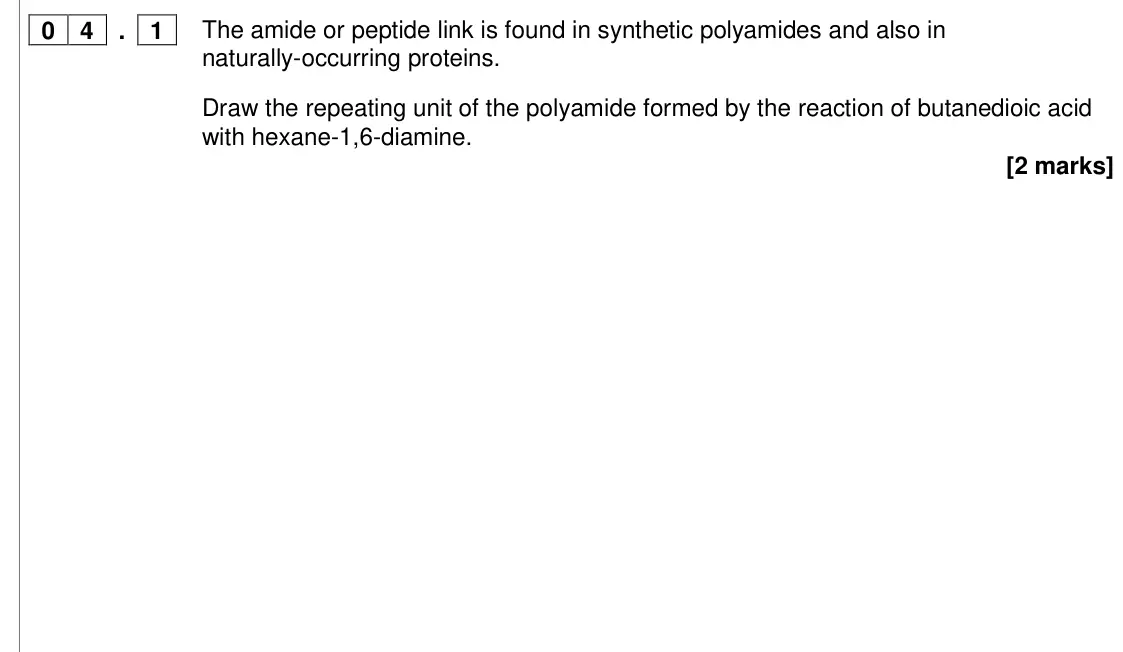
The whole paper ↗Q04.1
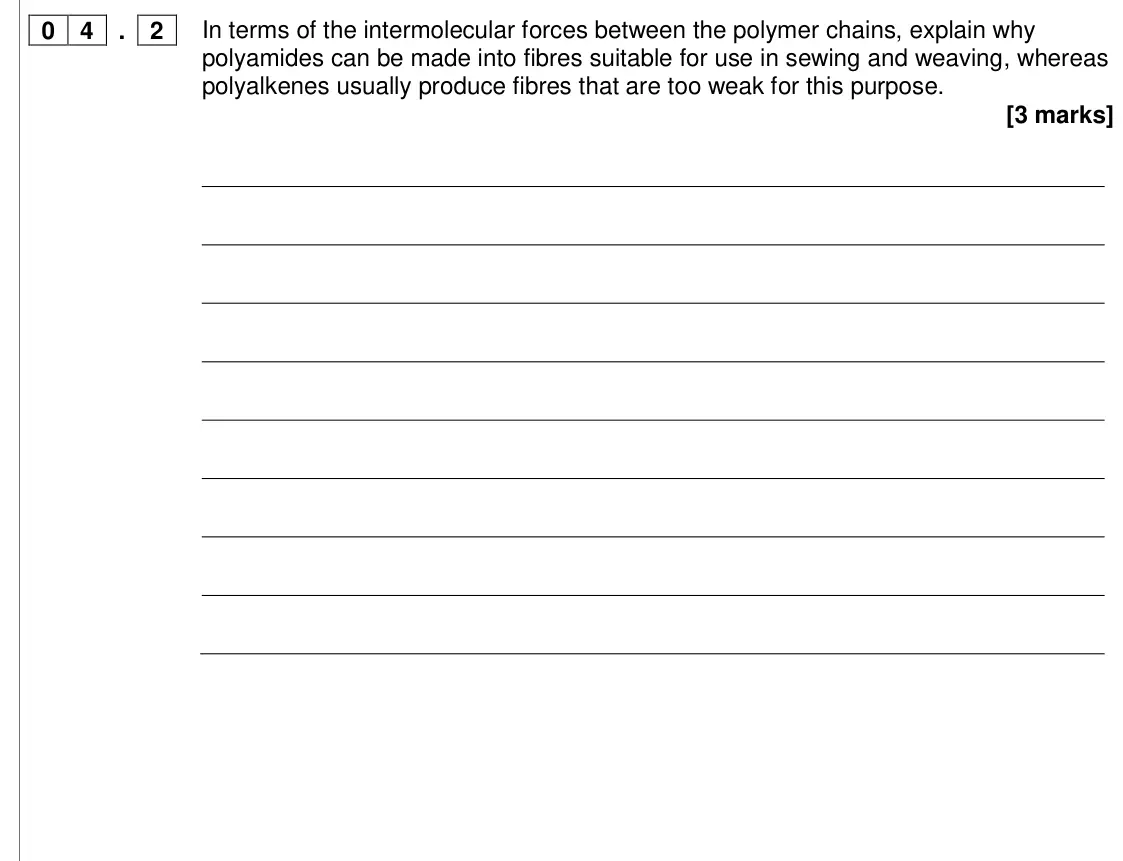
The whole paper ↗Q04.2
The whole paper ↗


All 5 questions on Polymers, as a list
- Specimen, Unit 2, Q02.6 (1 mark): State one type of useful solid material that could be formed from alkenes. [1 mark] 0 2 . 6 8
- Specimen, Unit 4, Q02.4 (1 mark): 0 2 . 4 Acrylic fibres are used as a substitute for wool. Acrylics are copolymers of acrylonitrile with other compounds. Acrylonitrile is the common name for the following compound
- Specimen, Unit 4, Q04.1 (2 marks): 0 4 . 1 The amide or peptide link is found in synthetic polyamides and also in naturally-occurring proteins. Draw the repeating unit of the polyamide formed by the reaction of buta
- Specimen, Unit 4, Q04.2 (3 marks): 0 4 . 2 In terms of the intermolecular forces between the polymer chains, explain why polyamides can be made into fibres suitable for use in sewing and weaving, whereas polyalkenes
- Specimen, Unit 5, Q30 (1 mark): Which compound can polymerise by reaction with itself? [1 mark] A NH2CH2CH2NH2 B CH3CH2CONH2 C HOOCCH2COOH D NH2CH2COCl 3 0
Questions, mark schemes and examiner’s reports are © OxfordAQA, from their published past papers. Plumi isn’t affiliated with any exam board. Want whole papers? OxfordAQA International A Level Chemistry past papers.
The Plumi iPad app also offers exam-style questions with AI feedback on your handwritten working.