 plumi
How can electricity be generated?: OCR GCSE Physics B questions
Every OCR GCSE Physics B exam question on P2.2 How can electricity be generated?, 2018–2025, with its mark scheme and examiner’s report.
Paper
All papers
Exam
All years
Calculations
Q7(c)(i)
The whole paper ↗
Q7(c)(ii)
The whole paper ↗Q11(a)(i)
The whole paper ↗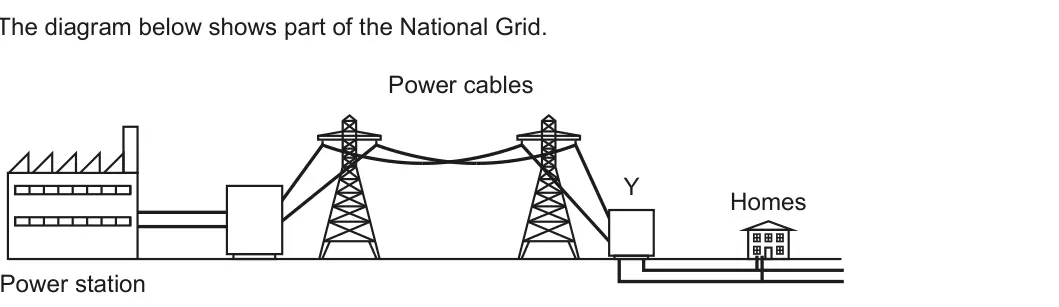
Q11(a)(ii)
The whole paper ↗Q11(a)(iii)
The whole paper ↗Q11(b)(i)
The whole paper ↗Q11(b)(ii)
The whole paper ↗Q1(a)(i)
The whole paper ↗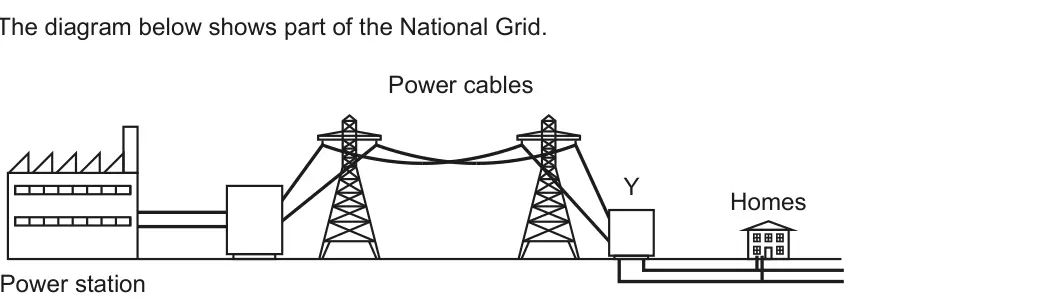
Q1(a)(ii)
The whole paper ↗Q1(a)(iii)
The whole paper ↗Q1(b)(i)
The whole paper ↗Q1(b)(ii)
The whole paper ↗Q1(a)
The whole paper ↗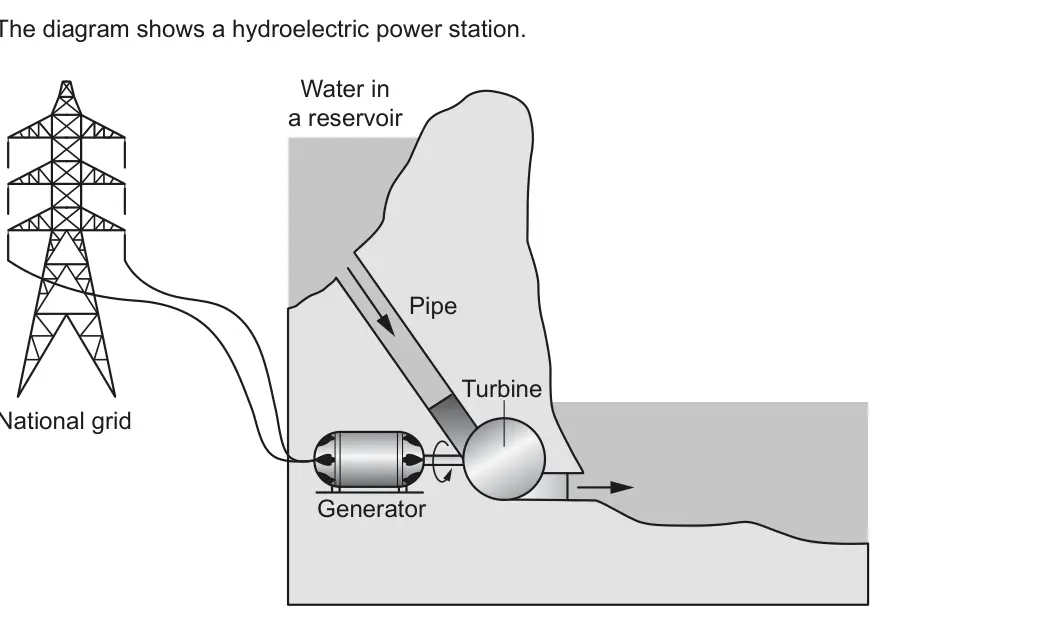
Q1(b)
The whole paper ↗Q7(b)(i)
The whole paper ↗Q7(b)(ii)
The whole paper ↗Q11(a)
The whole paper ↗Q11(b)
The whole paper ↗Q3(a)
The whole paper ↗
Q9(a)
The whole paper ↗
All 76 questions on How can electricity be generated?, as a list
- June 2025, Paper 3 Higher, Q7(c)(i) (1 mark): Define a renewable energy resource. [1]
- June 2025, Paper 3 Higher, Q7(c)(ii) (1 mark): Explain whether the electricity produced by riding the bike has come from a renewable or non-renewable source. [1]
- June 2024, Paper 2 Foundation, Q11(a)(i) (1 mark): What is the domestic mains supply voltage to homes in the UK? Tick (✓) one box. 60 V a.c. 60 V d.c. 230 V a.c. 230 V d.c. [1]
- June 2024, Paper 2 Foundation, Q11(a)(ii) (2 marks): The electricity is transmitted along the power cables at around 230 000 V. Explain how this high voltage makes the energy transfer along the power cables more e
- June 2024, Paper 2 Foundation, Q11(a)(iii) (1 mark): Name the device at Y. [1]
- June 2024, Paper 2 Foundation, Q11(b)(i) (2 marks): State two types of renewable energy resources used to generate electricity. 1 2 [2]
- June 2024, Paper 2 Foundation, Q11(b)(ii) (6 marks): The diagram below shows part of the National Grid. Power cables Y Homes Power station (ii)* Fig. 11.1 shows the percentage of electricity generated by different
- June 2024, Paper 4 Higher, Q1(a)(i) (1 mark): What is the domestic mains supply voltage to homes in the UK? Tick (✓) one box. 60 V a.c. 60 V d.c. 230 V a.c. 230 V d.c. [1]
- June 2024, Paper 4 Higher, Q1(a)(ii) (2 marks): The electricity is transmitted along the power cables at around 230 000 V. Explain how this high voltage makes the energy transfer along the power cables more e
- June 2024, Paper 4 Higher, Q1(a)(iii) (1 mark): Name the device at Y. [1]
- June 2024, Paper 4 Higher, Q1(b)(i) (2 marks): State two types of renewable energy resources used to generate electricity. 1 2 [2]
- June 2024, Paper 4 Higher, Q1(b)(ii) (6 marks): The diagram below shows part of the National Grid. Power cables Y Homes Power station (ii)* Fig. 1.1 shows the percentage of electricity generated by different
- June 2023, Paper 1 Foundation, Q1(a) (1 mark): What is the useful energy store of the water in the reservoir? Tick (3) one box. Chemical Electrical Gravitational Potential Thermal [1]
- June 2023, Paper 1 Foundation, Q1(b) (3 marks): Many of the main energy resources use a turbine attached to a generator. Complete the table to state what drives the turbine for each energy resource. Tick (3)
- June 2023, Paper 3 Higher, Q7(b)(i) (1 mark): State the potential difference and frequency of the household a.c. electricity supply in the UK. Potential difference = V Frequency = Hz [1]
- June 2023, Paper 3 Higher, Q7(b)(ii) (1 mark): Laptops need a d.c. (direct current) electrical power supply. Describe the difference between a.c. and d.c. electricity. [1]
- June 2023, Paper 3 Higher, Q11(a) (2 marks): Fig. 11.1 shows a UK 3-pin plug socket. Fig. 11.1 Earth Live Neutral Complete the table by: • writing live, neutral and earth in the Pin column next to their co
- June 2023, Paper 3 Higher, Q11(b) (2 marks): Fig. 11.2 shows a broken desk light plugged into the wall, with the lamp switch off. Inside the light, the live wire is touching the metal case. Fig. 11.2 Mains
- June 2022, Paper 2 Foundation, Q3(a) (2 marks): Which two statements are correct about solar panels? Tick (3) two boxes. Solar panels generate more electricity when it’s sunny. Solar panels generate more elec
- November 2021, Paper 1 Foundation, Q9(a) (1 mark): Why is nuclear fuel a non-renewable energy source? [1]
- November 2021, Paper 1 Foundation, Q13(a) (3 marks): Describe and explain the relationship shown in the graph. [3]
- November 2021, Paper 1 Foundation, Q13(b)(i) (1 mark): Give one reason why Mia is correct. [1] James In the future there will be more wind turbines, so we won’t need gas power stations anymore.
- November 2021, Paper 1 Foundation, Q13(b)(ii) (2 marks): Discuss James’ comment. [2]
- November 2021, Paper 2 Foundation, Q1(a) (1 mark): Fig. 1.1 shows the wiring of four 3-pin plugs. A B Neutral wire Earth wire Live wire Neutral wire Live wire Neutral wire C D Live wire Earth wire Neutral wire L
- November 2021, Paper 2 Foundation, Q1(b)(i) (1 mark): Which part of Fig. 1.2 shows a step-up transformer? Tick (✓) one box. W X Y Z [1]
- November 2021, Paper 2 Foundation, Q1(b)(ii) (1 mark): Which part of Fig. 1.2 shows high voltage cables? Tick (✓) one box. W X Y Z [1]
- November 2021, Paper 2 Foundation, Q10(b)(iii) (2 marks): Space probes that travel to the outer planets of the solar system do not use solar panels to provide electricity. Explain why solar panels are not used by these
- November 2021, Paper 3 Higher, Q2(a) (3 marks): Describe and explain the relationship shown in the graph. [3]
- November 2021, Paper 3 Higher, Q2(b)(i) (1 mark): Give one reason why Mia is correct. [1] James In the future there will be more wind turbines, so we won’t need gas power stations anymore.
- November 2021, Paper 3 Higher, Q2(b)(ii) (2 marks): Discuss James’ comment. [2]
- November 2021, Paper 3 Higher, Q9(a) (3 marks): Wood pellets are a type of biofuel. Heating oil is a fossil fuel. Give the similarities and differences between biofuels and fossil fuels as energy sources. [3]
- November 2021, Paper 3 Higher, Q9(b) (3 marks): They find the information shown in the table. Wood pellets Heating oil Energy density (MJ / kg) 20 40 Density (kg / m3) 760 950 Cost (p / kg) 25 55 Which energy
- November 2020, Paper 1 Foundation, Q4(a)(i) (1 mark): Name the form of stored energy that is used by wind turbines to generate mains electricity. [1]
- November 2020, Paper 1 Foundation, Q12(a)(i) (1 mark): Describe the trend in the percentage of UK energy supplied by biofuels. [1]
- November 2020, Paper 1 Foundation, Q12(a)(ii) (1 mark): Suggest one reason for this trend. [1]
- November 2020, Paper 1 Foundation, Q12(b)(i) (2 marks): Evaluate whether the evidence shown in Fig. 12.1 supports Ali's statement. [2] Ling The data shows that in 2016, over 16% of energy was supplied by renewable en
- November 2020, Paper 1 Foundation, Q12(b)(ii) (1 mark): State why Ling is incorrect. [1]
- November 2020, Paper 1 Foundation, Q12(b)(iii) (1 mark): Using Fig. 12.1, estimate the correct percentage of energy that was supplied by renewable energy sources in 2016. Percentage = ....% [1]
- November 2020, Paper 2 Foundation, Q10(a)(i) (2 marks): company, and Amir's data. Similarity Difference • [2]
- November 2020, Paper 2 Foundation, Q10(a)(ii) (2 marks): Give two reasons why there is greater uncertainty in Amir’s data than the local solar panel company’s data. 1. 2. [2]
- November 2020, Paper 2 Foundation, Q10(b)(i) (3 marks): Calculate the total cost to deliver a minimum power of 3800 W to his house, using solar panels. Total cost = £ [3]
- November 2020, Paper 2 Foundation, Q10(b)(ii) (2 marks): Kai has £5000 to spend. Which system should Kai use to deliver a minimum power of 3800 W to his house? Wind turbines Solar panels Explain your answer. [2]
- November 2020, Paper 2 Foundation, Q13(b)(i) (1 mark): What is the value of the base load? MW [1]
- November 2020, Paper 2 Foundation, Q13(b)(ii) (1 mark): At which approximate time of the day is the demand for electricity the greatest? [1]
- November 2020, Paper 2 Foundation, Q13(b)(iii) (1 mark): At which approximate time of the day does the demand for electricity become greater than the base load? Put a ring around the correct answer. 2.30am 7am 4pm 10.
- November 2020, Paper 2 Foundation, Q13(c) (6 marks): Electricity is transferred from power stations to consumers by the National Grid, as shown in Fig. 13.1. 400000 V 25000V Transmission cables Step-up 888888 tran
- November 2020, Paper 3 Higher, Q2(a)(i) (1 mark): Describe the trend in the percentage of UK energy supplied by biofuels. [1]
- November 2020, Paper 3 Higher, Q2(a)(ii) (1 mark): Suggest one reason for this trend. [1]
- November 2020, Paper 3 Higher, Q2(b)(i) (2 marks): Evaluate whether the evidence shown in Fig. 2.1 supports Ali's statement. [2] Ling The data shows that in 2016, over 16% of energy was supplied by renewable ene
- November 2020, Paper 3 Higher, Q2(b)(ii) (1 mark): State why Ling is incorrect. [1]
- November 2020, Paper 3 Higher, Q2(b)(iii) (1 mark): Using Fig. 2.1, estimate the correct percentage of energy that was supplied by renewable energy sources in 2016. Percentage = ..% [1]
- November 2020, Paper 4 Higher, Q2(b)(i) (1 mark): What is the value of the base load? MW [1]
- November 2020, Paper 4 Higher, Q2(b)(ii) (1 mark): At which approximate time of the day is the demand for electricity the greatest? [1]
- November 2020, Paper 4 Higher, Q2(b)(iii) (1 mark): At which approximate time of the day does the demand for electricity become greater than the base load? Put a ring around the correct answer. 2.30am 7am 4pm 10.
- November 2020, Paper 4 Higher, Q2(c) (6 marks): Electricity is transferred from power stations to consumers by the National Grid, as shown in Fig. 2.1. 400 000 V 25000V Transmission cables Step-up 888889 tran
- November 2020, Paper 4 Higher, Q9(a)(i) (1 mark): Complete the scatter graph by plotting the last four points from the table. [1]
- November 2020, Paper 4 Higher, Q9(a)(ii) (1 mark): Draw a line of best fit. [1] 50 45 40 Power generated 35 (MW) 30 25 20 0 5 10 15 20 Average monthly temperature (°C)
- November 2020, Paper 4 Higher, Q9(b) (3 marks): Discuss Kai and Amir’s comments. Use the graph to support your answer. [3]
- June 2019, Paper 1 Foundation, Q8(a)(i) (2 marks): Give one similarity and one difference in the ways these energy resources are used to generate electricity. Similarity Difference [2]
- June 2019, Paper 2 Foundation, Q2(a)(i) (1 mark): What is the frequency and potential difference (voltage) of the domestic supply in the UK? Frequency = Potential difference (voltage) = [1]
- June 2019, Paper 2 Foundation, Q2(a)(ii) (3 marks): On the axes, sketch a graph for a direct voltage and an alternating voltage. direct voltage alternating voltage voltage voltage + + 0 0 0 0 time time – – [3]
- June 2019, Paper 2 Foundation, Q2(c) (1 mark): What is the name of the device used to change low-voltage to high-voltage at power stations? Put a ring around the correct answer. diode National Grid thermisto
- June 2019, Paper 3 Higher, Q9(c) (2 marks): Suggest two factors, other than maximum power, that could affect someone’s decision to use solar cells to generate electricity for their home. 1 2 [2]
- June 2019, Paper 3 Higher, Q12(a)(i) (3 marks): Calculate the possible energy transferred from 3.5 × 10⁻⁵ kg of twistrons in 1 minute. Energy output = J [3]
- June 2019, Paper 3 Higher, Q12(b)(i) (1 mark): Describe a positive impact that twistrons and other similar inventions could have on society. [1]
- June 2019, Paper 3 Higher, Q12(b)(ii) (1 mark): Suggest why the scientists decided to give their invention of ‘twistron’ a short and memorable name. [1]
- June 2019, Paper 4 Higher, Q8 (6 marks): 8* Electrical energy is transported across the country using the National Grid. Transformers play a key role in this transportation. Describe and explain the ro
- June 2018, Paper 1 Foundation, Q2(a)(i) (2 marks): Put a tick (3) in the correct box in each row to show the correct descriptions of the live, neutral and earth wires. Connected to Is at the same Wire the Nation
- June 2018, Paper 1 Foundation, Q2(a)(ii) (1 mark): Put a ring around the voltage between the live and neutral wires. 0 V 12 V 230 V 25 000 V [1]
- June 2018, Paper 1 Foundation, Q2(b) (2 marks): Batteries supply direct current (d.c). Another type of current is alternating current (a.c). Each statement in the table below may be true about d.c, or true ab
- June 2018, Paper 2 Foundation, Q3(a) (2 marks): The generator produces an alternating voltage, not a direct voltage. Explain the difference between these two types of voltage. [2]
- June 2018, Paper 2 Foundation, Q4(a)(i) (2 marks): Calculate the number of solar farms that would be needed to give the output power of this gas-burning power station. Number of solar farms = [2]
- June 2018, Paper 2 Foundation, Q4(a)(ii) (2 marks): In the table, the 35 MW power of the solar farm is the maximum power it can produce. Give two reasons why the output power is often less than 35 MW. 1 2 [2]
- June 2018, Paper 2 Foundation, Q4(b) (6 marks): Solar farms are large power stations made up from many photovoltaic (PV) panels. Even though they are now very common, most of Britain’s electricity is generate
- June 2018, Paper 4 Higher, Q3(b)(ii) (1 mark): Give one reason why it would actually take longer than the time calculated in (b)(i). [1]
- June 2018, Paper 4 Higher, Q7(b) (6 marks): Solar farms are large power stations made up from many photovoltaic (PV) panels. They have become very common in Britain. (b)* Many people are not in favour of
Questions, mark schemes and examiner’s reports are © OCR, from their published past papers. Plumi isn’t affiliated with any exam board. Want whole papers? Every OCR GCSE Physics B paper.
Rather write your answers by hand on iPad? Plumi marks them against the same mark schemes.