 plumi
How have our ideas about atoms developed over time?: OCR GCSE Combined Science B questions
Every OCR GCSE Combined Science B exam question on C2.1 How have our ideas about atoms developed over time?, 2018–2025, with its mark scheme and examiner’s report.
Paper
All papers
Exam
All years
Calculations
Q8(a)
The whole paper ↗
Q8(b)
The whole paper ↗Q8(c)
The whole paper ↗Q8(d)
The whole paper ↗Q1(a)
The whole paper ↗
Q1(b)
The whole paper ↗Q1(c)
The whole paper ↗Q1(d)
The whole paper ↗Q1(a)(i)
The whole paper ↗Q3(a)
The whole paper ↗
Q3(b)
The whole paper ↗Q3(c)
The whole paper ↗Q5(a)
The whole paper ↗Q5(b)
The whole paper ↗Q3(b)(i)
The whole paper ↗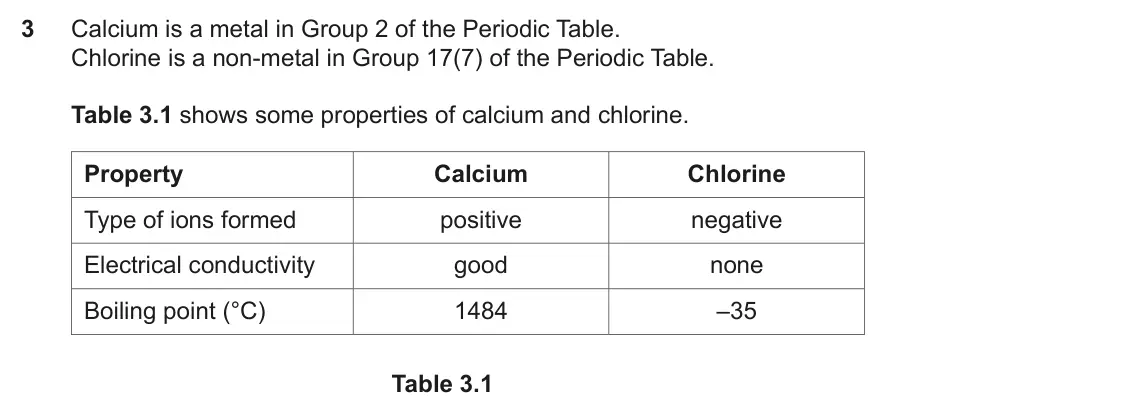
Q2(a)(i)
The whole paper ↗
Q2(a)(ii)
The whole paper ↗Q2(b)(i)
The whole paper ↗Q2(b)(ii)
The whole paper ↗Q2(b)(iii)
The whole paper ↗
All 31 questions on How have our ideas about atoms developed over time?, as a list
- June 2025, Chemistry Paper 2 Foundation, Q8(a) (2 marks): Later discoveries led to scientists suggesting new models for the atom. Draw lines to connect each discovery with the model it led to. Discovery Model _ _ _ Ele
- June 2025, Chemistry Paper 2 Foundation, Q8(b) (3 marks): The modern model of the atom consists of electrons, neutrons and protons. Which statements about the modern model of the atom are true and which are false? Tick
- June 2025, Chemistry Paper 2 Foundation, Q8(c) (2 marks): The diameter of an atom is 1 × 10⁻¹⁰ m and the diameter of a nucleus is 1.7 × 10⁻¹⁵ m. Estimate how many times bigger the atom is compared to the nucleus. Numbe
- June 2025, Chemistry Paper 2 Foundation, Q8(d) (4 marks): The atomic number and mass number can be used to find the number of protons, neutrons and electrons in an atom. The table shows information about an argon atom
- June 2025, Chemistry Paper 6 Higher, Q1(a) (2 marks): Later discoveries led to scientists suggesting new models for the atom. Draw lines to connect each discovery with the model it led to. Discovery Model _ _ _ Ele
- June 2025, Chemistry Paper 6 Higher, Q1(b) (3 marks): The modern model of the atom consists of electrons, neutrons and protons. Which statements about the modern model of the atom are true and which are false? Tick
- June 2025, Chemistry Paper 6 Higher, Q1(c) (2 marks): The diameter of an atom is 1 × 10⁻¹⁰ m and the diameter of a nucleus is 1.7 × 10⁻¹⁵ m. Estimate how many times bigger the atom is compared to the nucleus. Numbe
- June 2025, Chemistry Paper 6 Higher, Q1(d) (4 marks): The atomic number and mass number can be used to find the number of protons, neutrons and electrons in an atom. The table shows information about an argon atom
- June 2024, Chemistry Paper 2 Foundation, Q1(a)(i) (5 marks): Complete Table 1.1. Use the Data Sheet. [5]
- June 2024, Chemistry Paper 6 Higher, Q3(a) (3 marks): Complete the table to show the relative masses and charges of the three particles in the atom. Particle Relative Mass Relative Charge Proton Neutron Electron [3
- June 2024, Chemistry Paper 6 Higher, Q3(b) (2 marks): A student builds a model of an atom. They use a tennis ball with a diameter of 6.7 cm to represent the nucleus in the model. The diameter of an atom is 1 × 10⁵
- June 2024, Chemistry Paper 6 Higher, Q3(c) (3 marks): The number of protons, neutrons and electrons in an atom or an ion can be calculated using the atomic number and relative atomic mass of the element. Complete t
- June 2023, Chemistry Paper 6 Higher, Q5(a) (2 marks): Around 1800, Dalton stated that atoms are the smallest particles that exist. The models show how the atomic model has developed further over time: − _ + + − _ −
- June 2023, Chemistry Paper 6 Higher, Q5(b) (2 marks): The diameter of an atom is approximately 50 000 times bigger than its nucleus. The diameter of an atom is approximately 1 × 10⁻¹⁰ m. Estimate the diameter of a
- June 2022, Chemistry Paper 6 Higher, Q3(b)(i) (2 marks): Give the electronic structures of calcium and chlorine. Calcium Chlorine [2]
- November 2021, Chemistry Paper 2 Foundation, Q2(a)(i) (2 marks): Draw lines to connect each scientist with their idea about the structure of the atom. Scientist Idea Bohr Atoms contain a nucleus. Electrons are arranged in Rut
- November 2021, Chemistry Paper 2 Foundation, Q2(a)(ii) (1 mark): Give one reason why scientists needed to develop new ideas about the structure of the atom over time. [1]
- November 2021, Chemistry Paper 2 Foundation, Q2(b)(i) (1 mark): Complete the table by giving the charge of each of these particles. Particle Charge Electron Proton Neutron [1]
- November 2021, Chemistry Paper 2 Foundation, Q2(b)(ii) (1 mark): Electrons are arranged in shells around the outside of the atom. Give the location of the other particles in the atom. [1]
- November 2021, Chemistry Paper 2 Foundation, Q2(b)(iii) (2 marks): How many electrons, protons and neutrons are there in an atom of phosphorus? Use the Data Sheet. Electrons Protons Neutrons [2]
- November 2021, Chemistry Paper 2 Foundation, Q2(c) (2 marks): Sodium is in Group 1 of the Periodic Table. Complete the diagram to show the arrangement of electrons in a sodium atom. Use the Data Sheet. Na [2]
- November 2021, Combined Science Paper 4 Foundation, Q7(d) (2 marks): Sodium has an atomic number of 11 and a relative atomic mass of 23. Complete the table to show the number of protons, neutrons and electrons in a sodium ion, Na
- November 2020, Chemistry Paper 2 Foundation, Q1(a)(i) (3 marks): Complete the table to give information about protons, neutrons and electrons. Relative mass Relative Charge Location in the atom Proton 1 +1 Neutron Electron in
- November 2020, Chemistry Paper 2 Foundation, Q1(b) (2 marks): The diameter of an atom is approximately 0.1 nm. The diameter of a bacterium is approximately 10 000 times bigger than the diameter of an atom. Estimate the dia
- November 2020, Chemistry Paper 2 Foundation, Q9(a) (3 marks): The atomic number and relative atomic mass of an element can be used to work out the number of protons, electrons and neutrons in its atoms and ions. Complete t
- November 2020, Chemistry Paper 6 Higher, Q2(a) (3 marks): The atomic number and relative atomic mass of an element can be used to work out the number of protons, electrons and neutrons in its atoms and ions. Complete t
- November 2020, Chemistry Paper 6 Higher, Q4(a)(i) (2 marks): Complete the table to show the relative masses and charges of these particles. Particle Relative mass Relative charge Proton Neutron Electron [2]
- November 2020, Chemistry Paper 6 Higher, Q4(a)(ii) (2 marks): Describe how these three particles are arranged in an atom. [2]
- November 2020, Chemistry Paper 6 Higher, Q4(b) (2 marks): James builds a model of an atom. He uses a golf ball with a diameter of 43 mm to represent the nucleus in his model. The diameter of an atom is 1 × 10⁵ times la
- June 2019, Chemistry Paper 2 Foundation, Q6(a) (3 marks): The nucleus contains protons and neutrons. Which statements about the nucleus are true and which are false? Tick (3) one box in each row. Statement True False M
- June 2019, Chemistry Paper 2 Foundation, Q6(b) (2 marks): An atom of strontium has an atomic number of 38 and a mass number of 88. How many protons, electrons, and neutrons are in an atom of strontium? Protons = Electr
Questions, mark schemes and examiner’s reports are © OCR, from their published past papers. Plumi isn’t affiliated with any exam board. Want whole papers? Full past papers.
Rather write your answers by hand on iPad? Plumi marks them against the same mark schemes.