 plumi
Reasons and methods of government intervention: Eduqas A‑Level Economics questions
Eduqas A-Level Economics past-paper questions on Reasons and methods of government intervention, 2016–2025, with mark schemes and examiner’s reports where available.
Paper
All papers
Exam
All years
Calculations
Loading the full question list…
Q1(d)
The whole paper ↗Q2(b)(i)
The whole paper ↗Q2(b)(ii)
The whole paper ↗Q2(c)
The whole paper ↗Q21(b)
The whole paper ↗Q1(e)
The whole paper ↗Q3(a)
The whole paper ↗Q4(b)
The whole paper ↗Q1(a)(i)
The whole paper ↗Q1(a)(ii)
The whole paper ↗












All 49 questions on Reasons and methods of government intervention, as a list
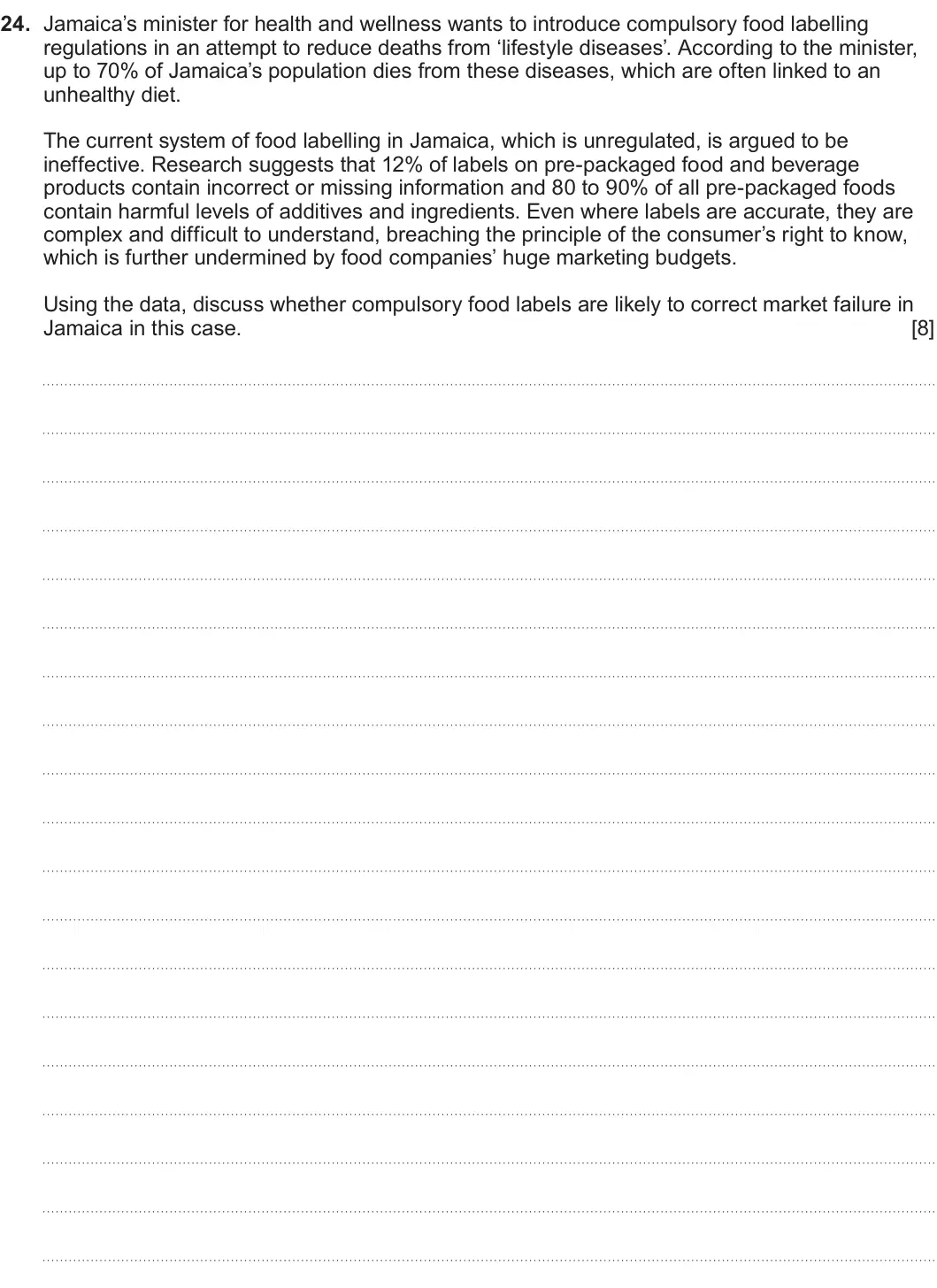
- June 2025, Component 1, Q24 (8 marks): Jamaica’s minister for health and wellness wants to introduce compulsory food labelling
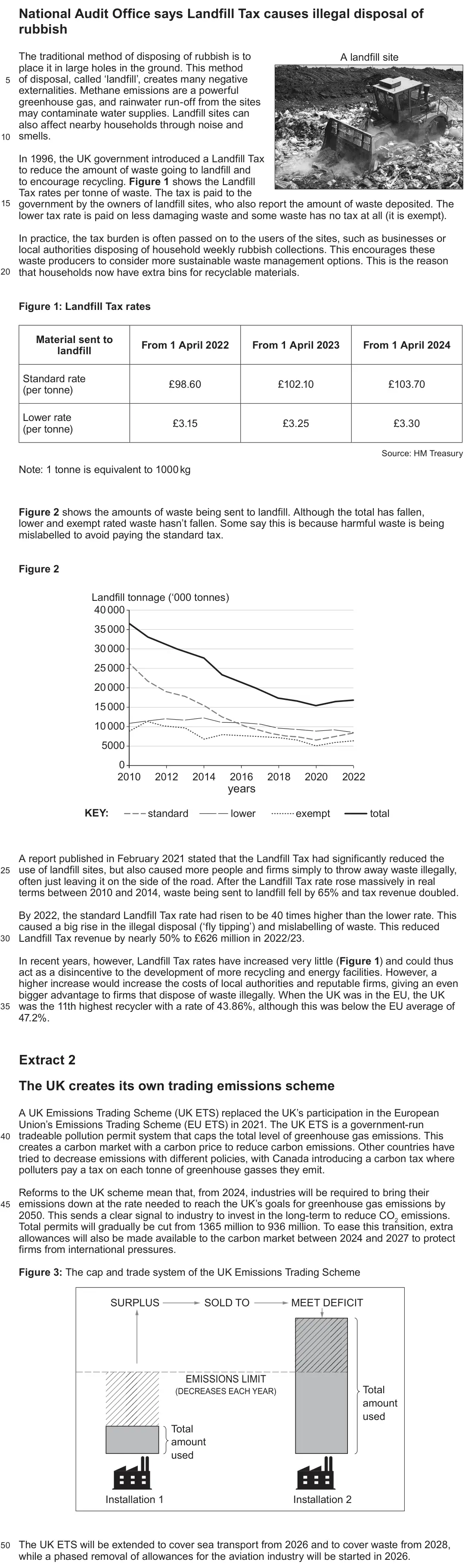
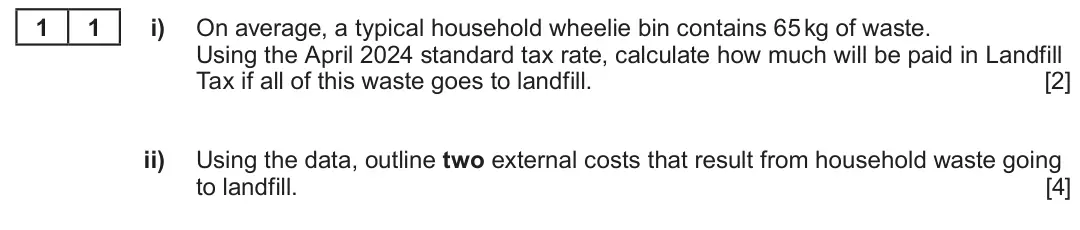
- June 2025, Component 2, Q1.1 (6 marks): tended to cover sea transport from 2026 and to cover waste from 2028, 50 while a phased removal of allowances for the aviation industry will be started in 2026.
- June 2025, Component 2, Q1.2 (4 marks): tended to cover sea transport from 2026 and to cover waste from 2028, 50 while a phased removal of allowances for the aviation industry will be started in 2026.
- June 2025, Component 2, Q1.5 (6 marks): tended to cover sea transport from 2026 and to cover waste from 2028, 50 while a phased removal of allowances for the aviation industry will be started in 2026.
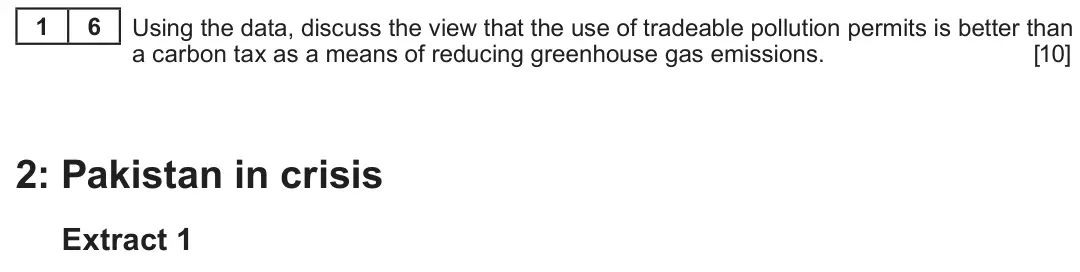
- June 2025, Component 2, Q1.6 (10 marks): tended to cover sea transport from 2026 and to cover waste from 2028, 50 while a phased removal of allowances for the aviation industry will be started in 2026.
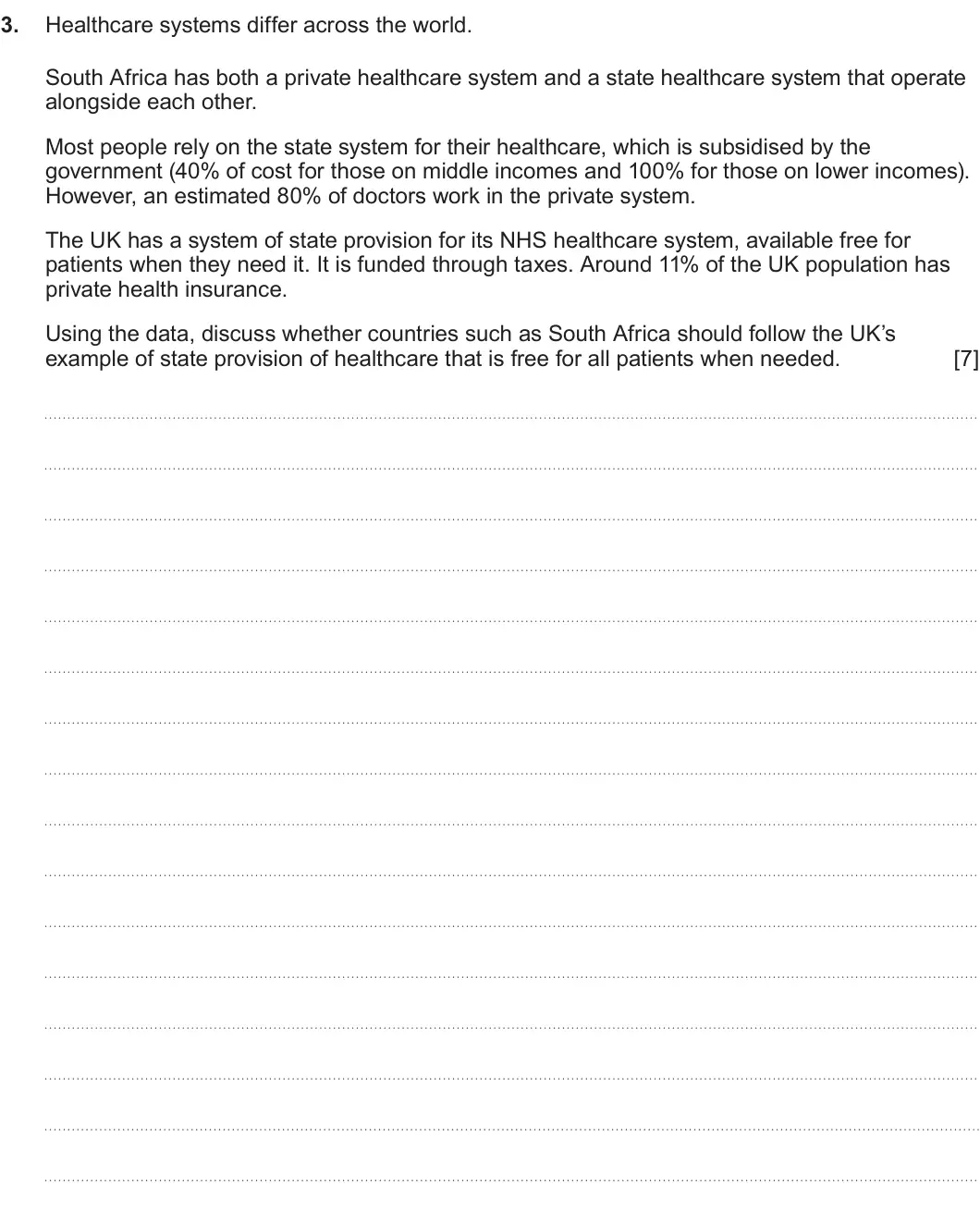
- June 2025, AS Component 1, Q3 (7 marks): Healthcare systems differ across the world.
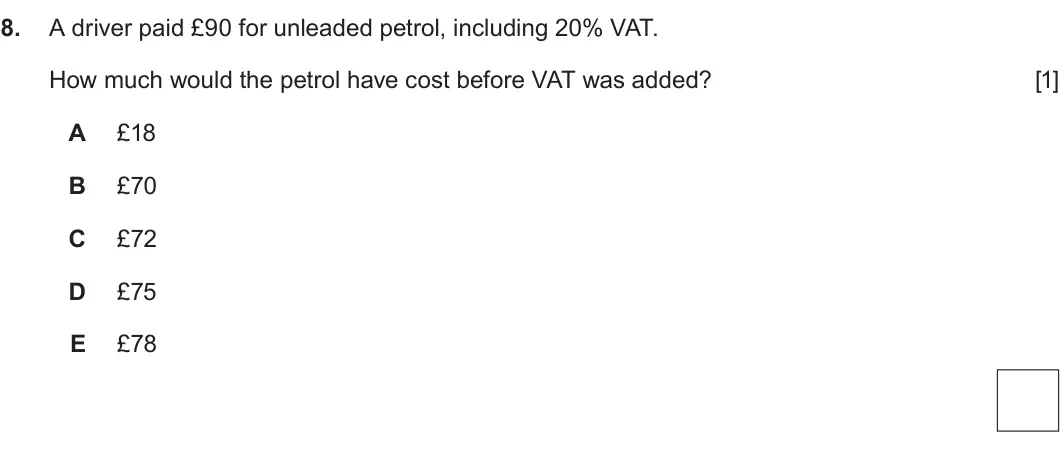
- June 2024, Component 1, Q8 (1 mark): A driver paid £90 for unleaded petrol, including 20% VAT.
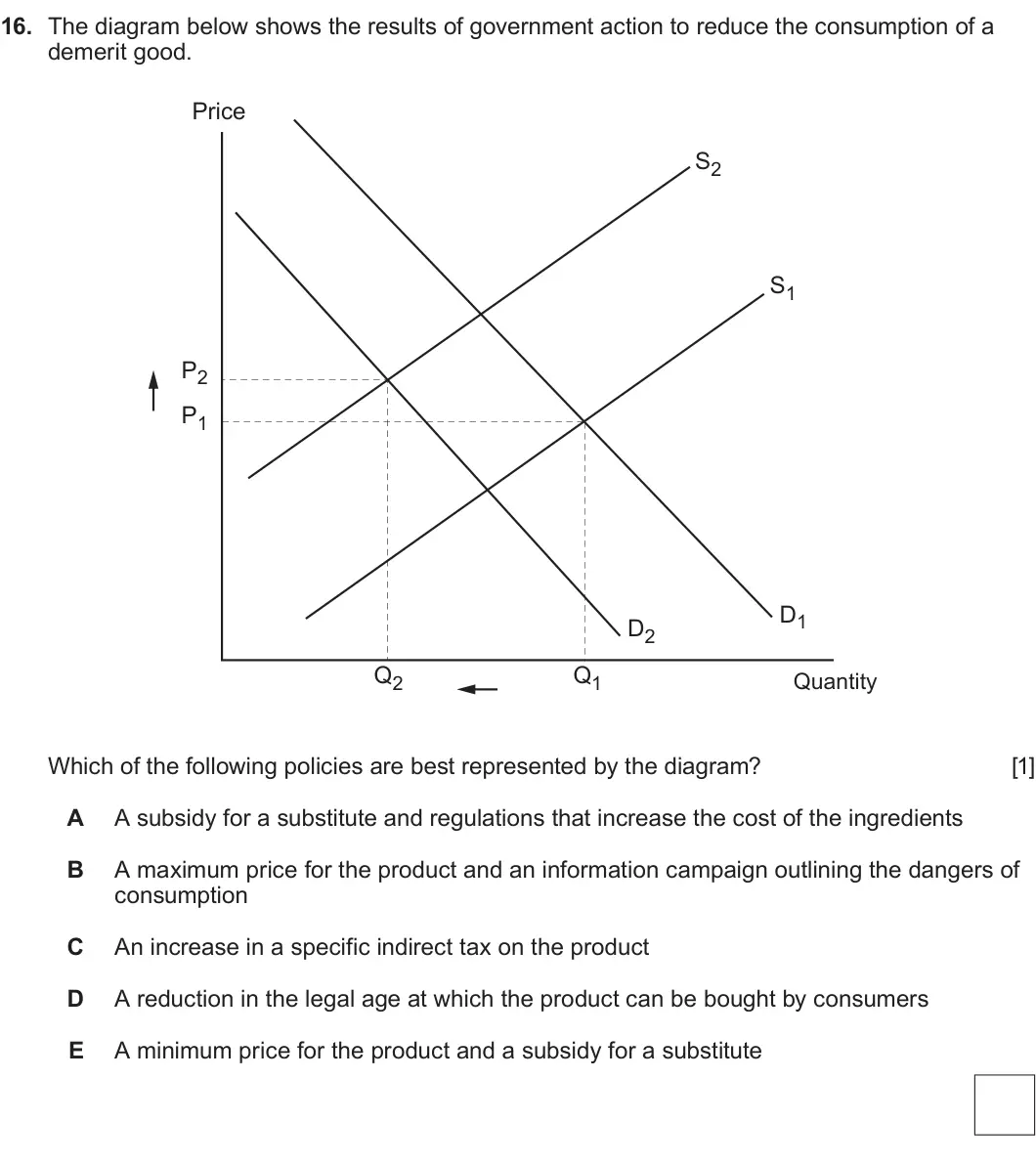
- June 2024, Component 1, Q16 (1 mark): The diagram below shows the results of government action to reduce the consumption of a
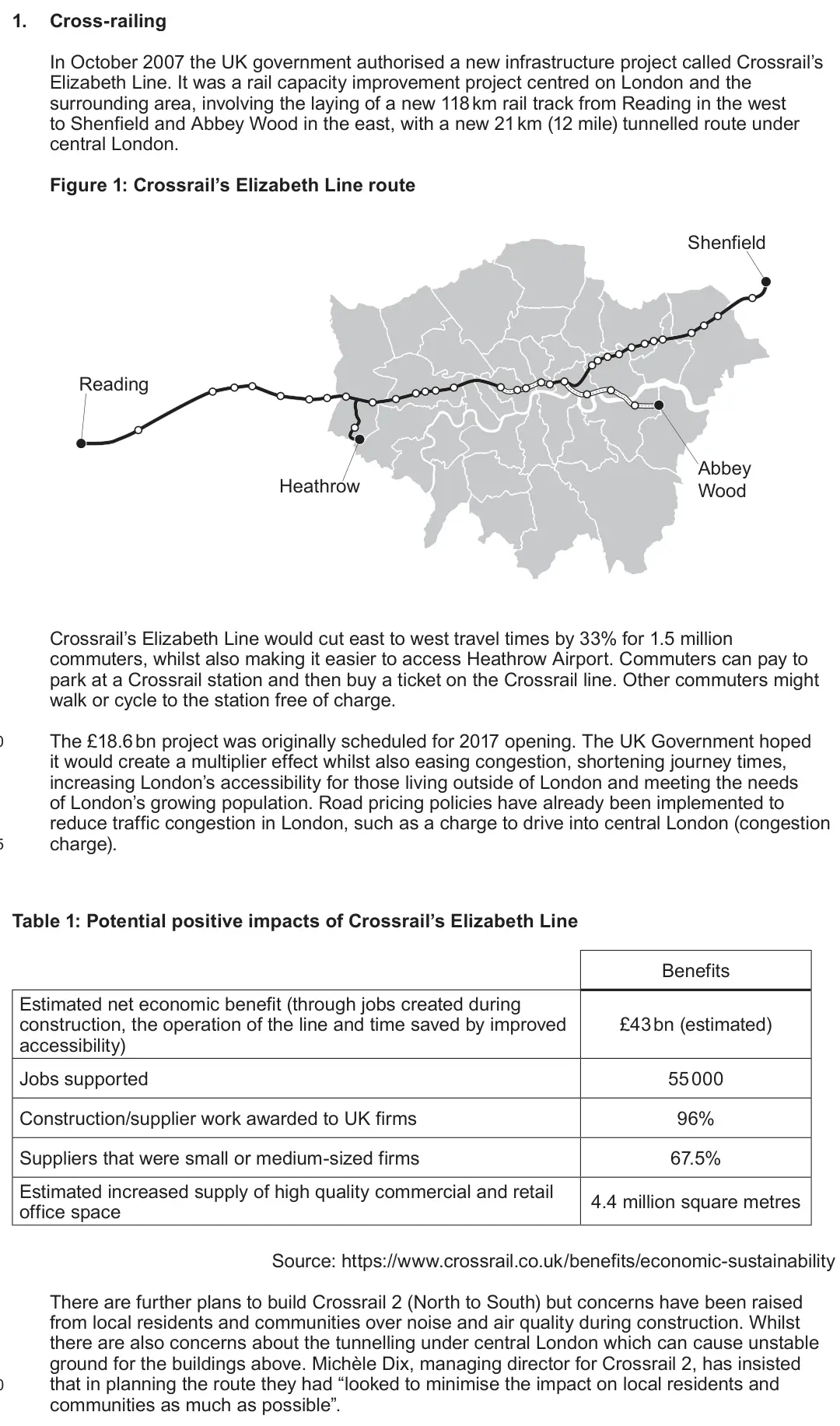
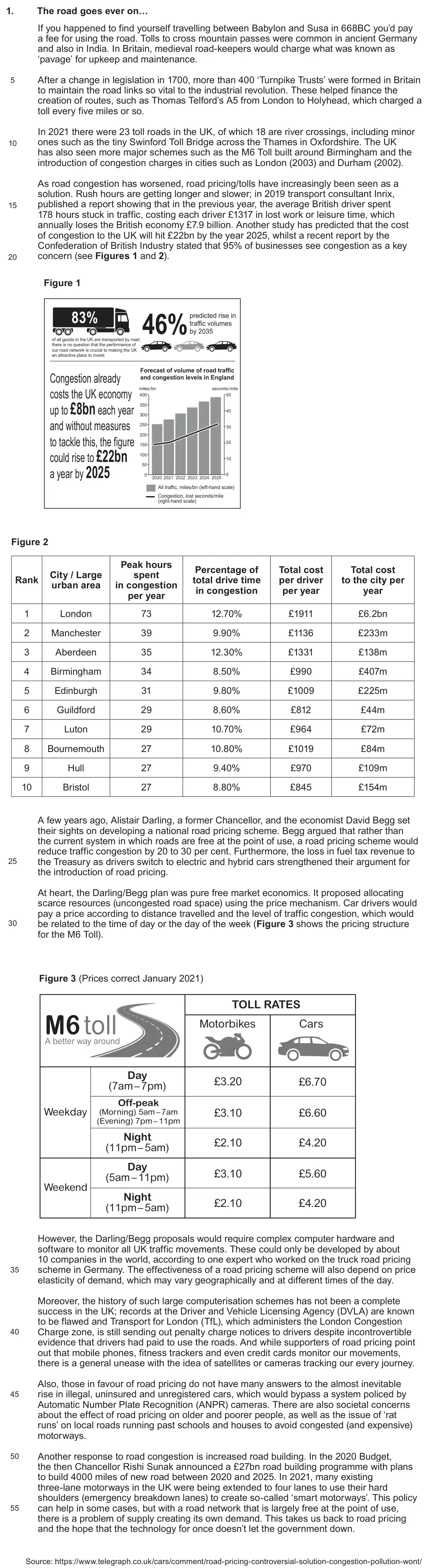
- June 2024, AS Component 2, Q1(d) (10 marks): Evaluate whether increasing infrastructure is better than increased use of road pricing
- June 2024, AS Component 2, Q2(b)(i) (4 marks): decrease negative externalities
- June 2024, AS Component 2, Q2(b)(ii) (4 marks): increase positive externalities
- June 2024, AS Component 2, Q2(c) (7 marks): Using a demand and supply diagram, consider who benefits the most from a decrease
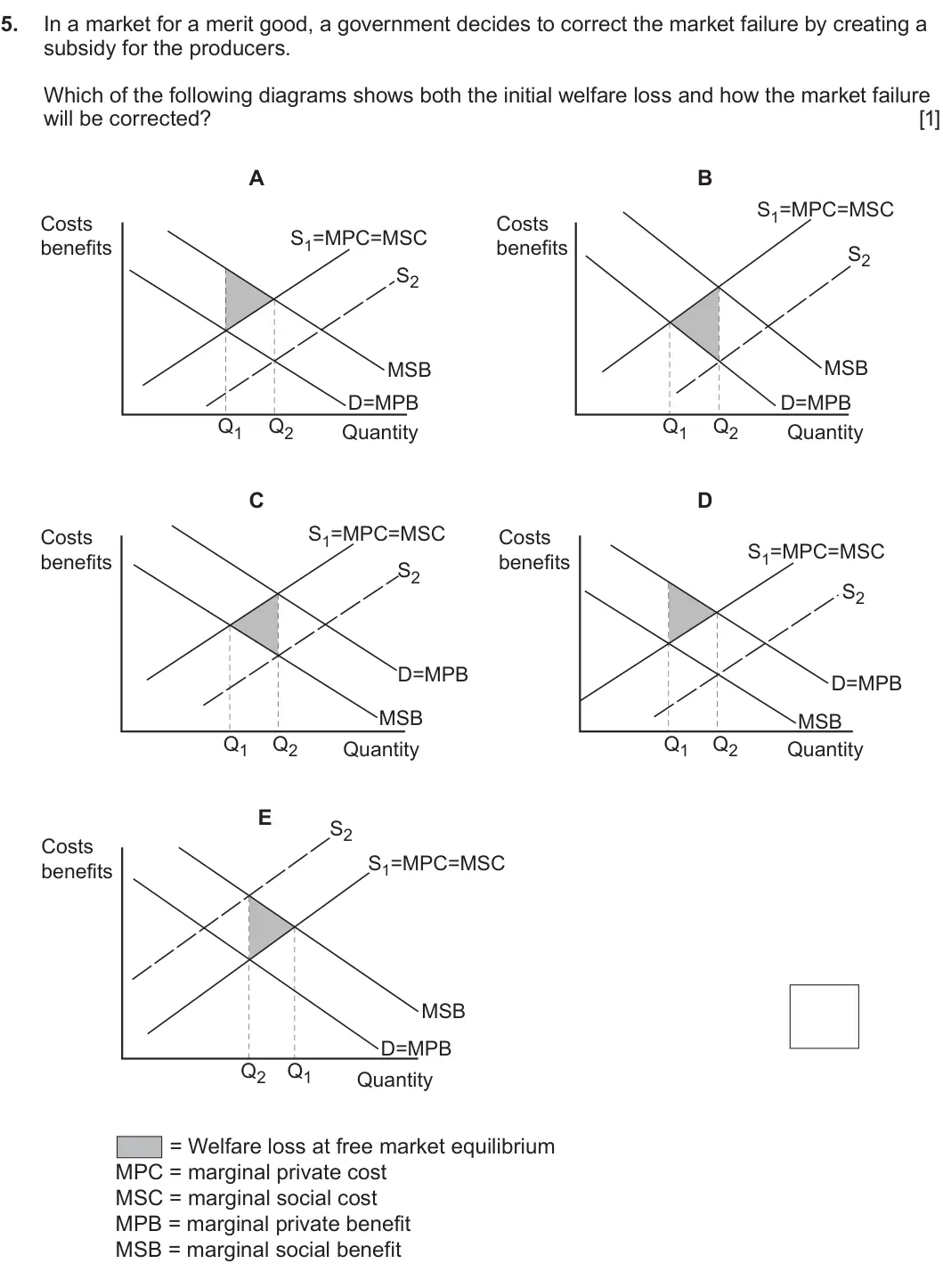
- June 2023, Component 1, Q5 (1 mark): In a market for a merit good, a government decides to correct the market failure by creating a
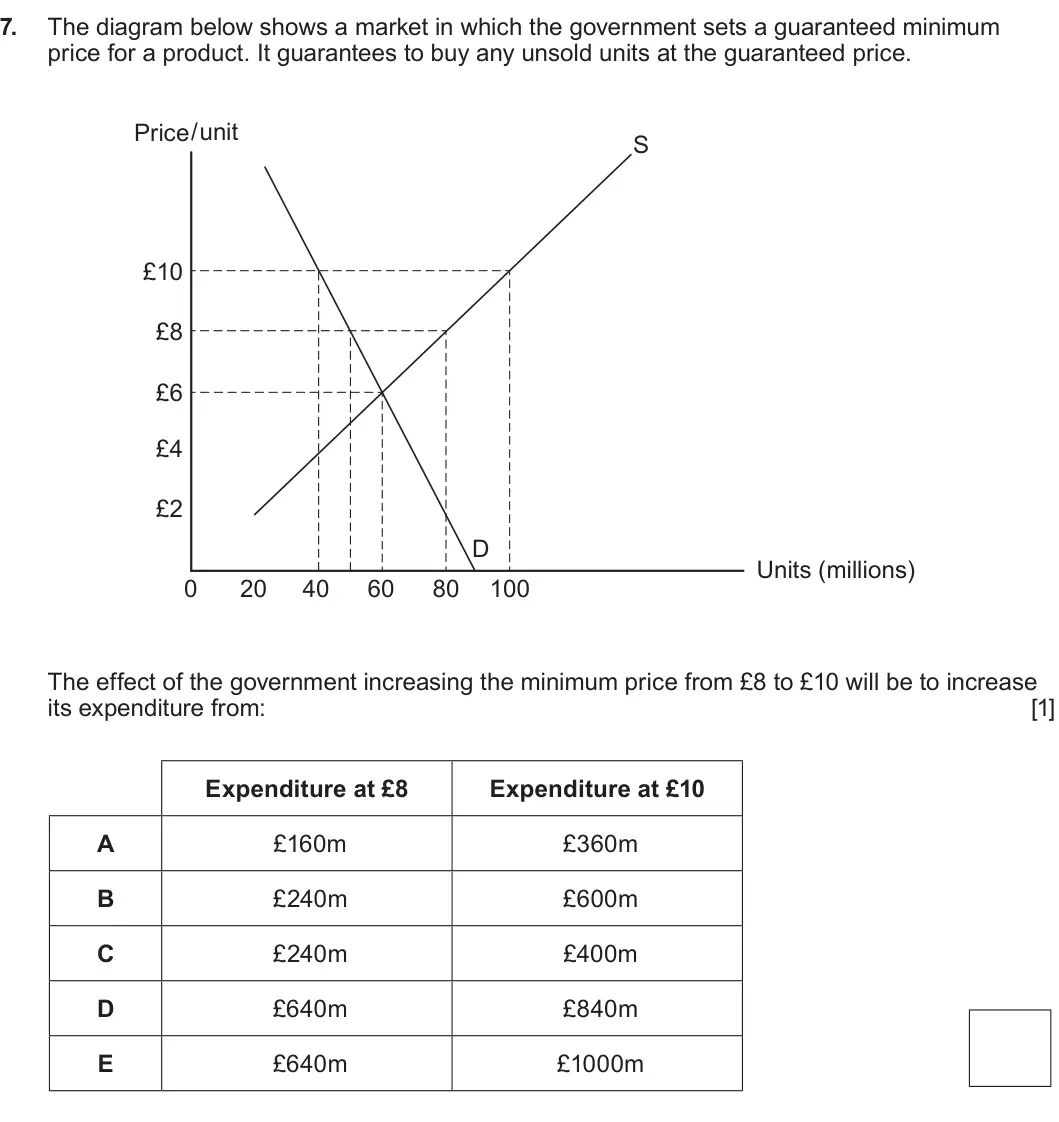
- June 2023, Component 1, Q7 (1 mark): The diagram below shows a market in which the government sets a guaranteed minimum
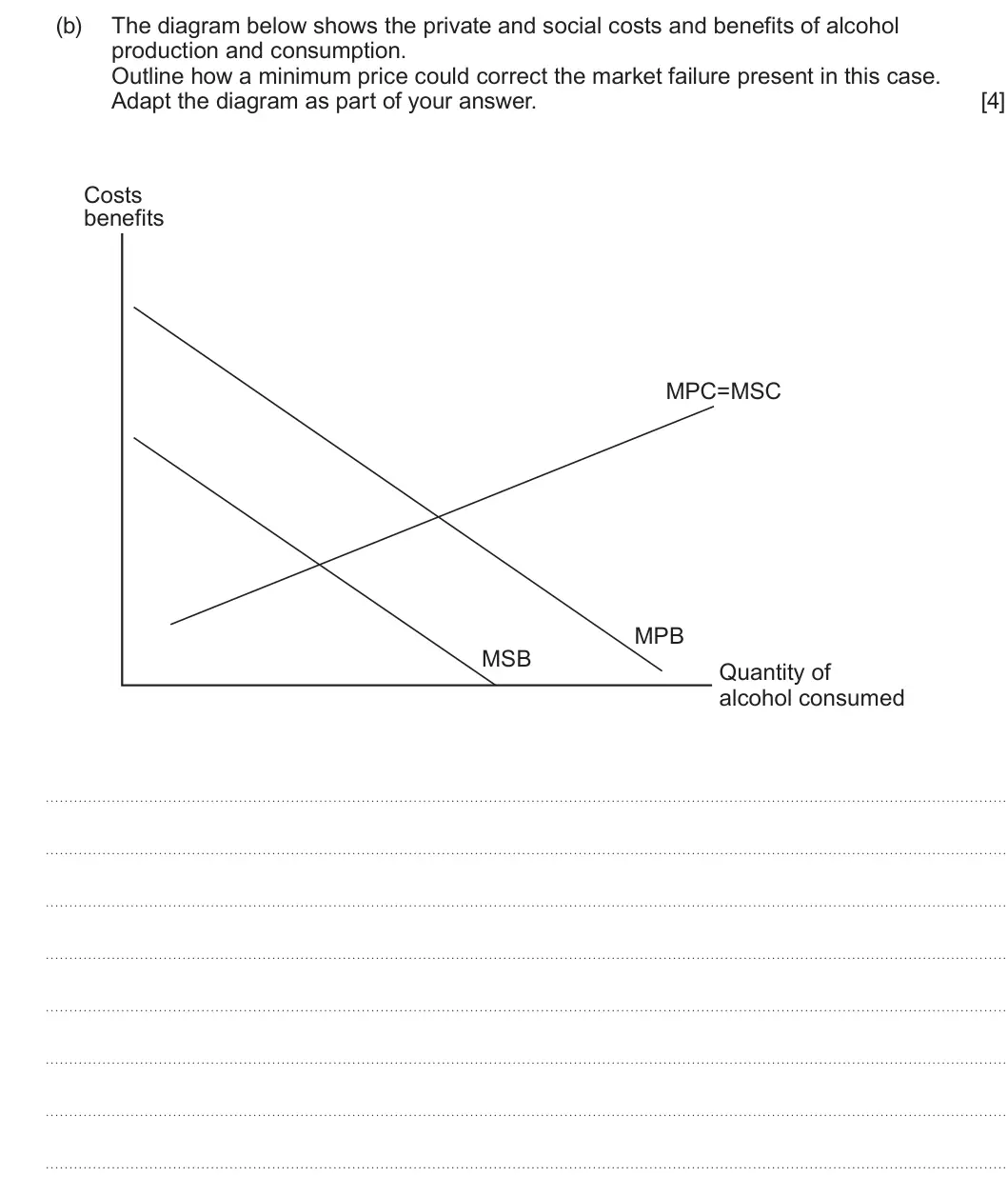
- June 2023, Component 1, Q21(b) (4 marks): The diagram below shows the private and social costs and benefits of alcohol
- June 2023, Component 2, Q1(e) (10 marks): With reference to the data, evaluate the use of road pricing as a means of solving the
- June 2023, AS Component 1, Q3(a) (4 marks): Using a demand and supply diagram, show the likely impact of this change in tax rates.
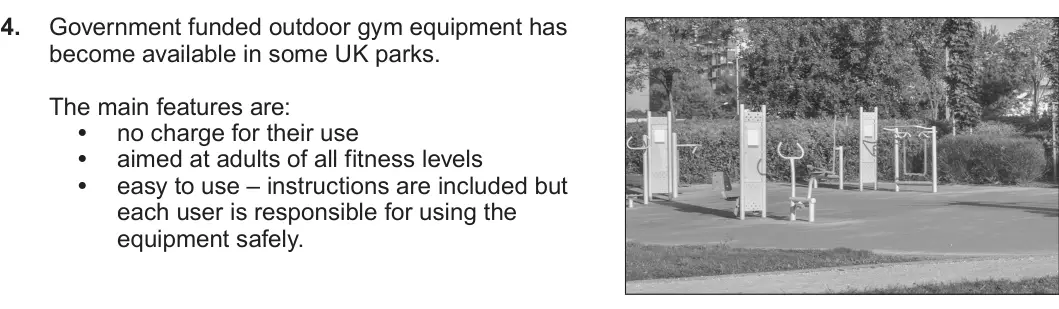
- June 2023, AS Component 1, Q4(b) (8 marks): Discuss whether local government should provide outdoor gyms.
- June 2023, AS Component 2, Q1(a)(i) (2 marks): Define the meaning of a subsidy.
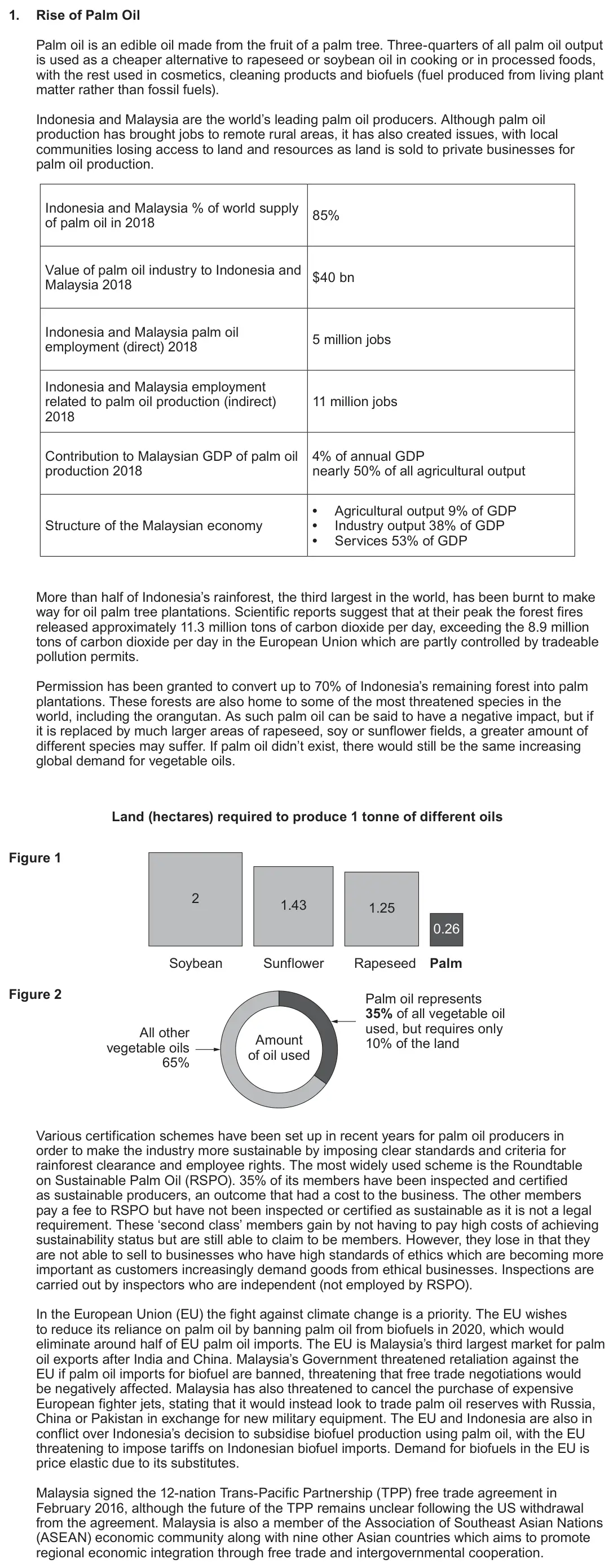
- June 2023, AS Component 2, Q1(a)(ii) (6 marks): Using the data and a diagram, outline the likely impact of the subsidy on biofuel
- June 2023, AS Component 2, Q1(c) (5 marks): Analyse how a decrease in the price of tradeable pollution permits could lead to
- June 2023, AS Component 2, Q1(e) (6 marks): Discuss whether sustainability regulations for palm oil should be made compulsory
- June 2023, AS Component 2, Q2(a) (3 marks): Explain one reason for a drop in investment by utility firms during Kirchner’s Presidency.
- June 2023, AS Component 2, Q2(f) (9 marks): Using a demand and supply diagram, discuss the extent to which price controls on the
- June 2022, Component 1, Q26 (8 marks): Vegan diet to save the planet?
- June 2022, Component 2, Q1(c) (9 marks): With reference to the data and using a diagram, discuss whether the Government
- June 2022, AS Component 2, Q2(b) (8 marks): Using a diagram, discuss whether Government subsidies for new environmentally
- June 2022, AS Component 2, Q2(e)(ii) (10 marks): To what extent are the steps taken by the UK Government to reduce plastic
- Autumn 2021, Component 1, Q20 (1 mark): The table below shows the demand and supply functions for a commodity:
- Autumn 2021, Component 1, Q26 (8 marks): Over the decades to come, UK households face an ever-increasing risk of flooding as a result
- Autumn 2020, Component 1, Q22 (8 marks): ‘Sugar tax’ cuts sales of fizzy drinks at Jamie Oliver’s restaurants
- Autumn 2020, Component 2, Q1(a)(ii) (4 marks): With reference to Figures 1 and 2 and appropriate economic theory, explain why
- Autumn 2020, Component 2, Q1(d) (9 marks): With reference to the data, discuss whether it would be beneficial to give more fishing
- Autumn 2020, Component 2, Q1(e) (9 marks): Using diagrams, discuss whether the policies that the UK is considering (lines 44 to 46)
- Autumn 2020, Component 3, Q1(b) (20 marks): The efficiency of resource allocation in an economy would be improved by a reduction in
- Autumn 2020, AS Component 1, Q5 (10 marks): The table below gives information on the estimated price elasticities of demand (PED) for
- Autumn 2020, AS Component 2, Q1(d) (8 marks): Using appropriate economic analysis, discuss whether introducing more environmental
- June 2019, Component 1, Q24 (6 marks): The Chancellor of the Exchequer, Philip Hammond, cut tax bills for first-time house buyers in
- June 2019, Component 3, Q2(b) (20 marks): Discuss whether government attempts to correct market failure do more harm than
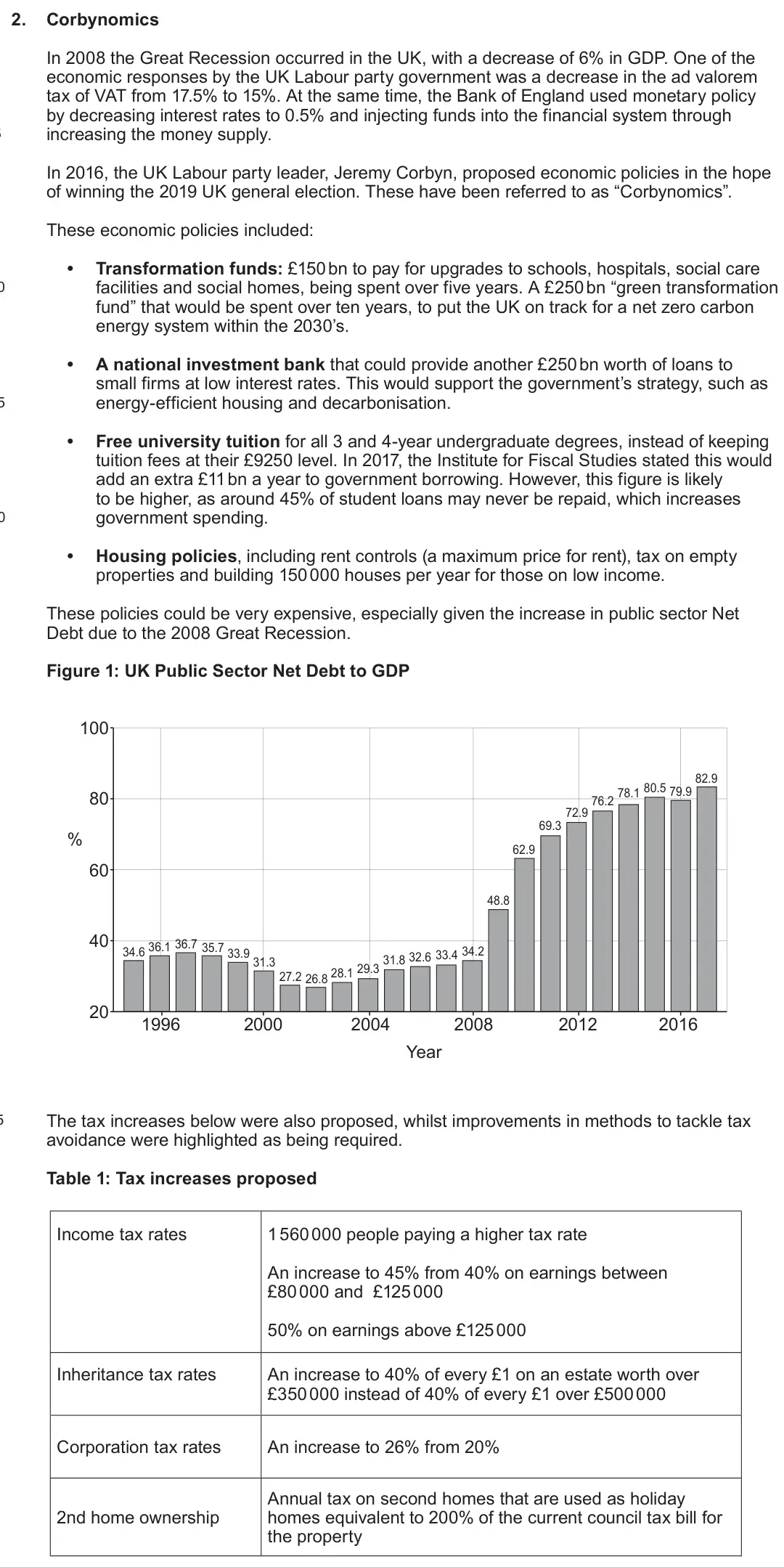
- June 2019, AS Component 1, Q5(b) (9 marks): Using the data, discuss whether the rent controls proposed by Jeremy Corbyn are likely
- June 2019, AS Component 2, Q2(e) (10 marks): Using a diagram, discuss whether governments should intervene to stabilise agricultural
- June 2018, Component 2, Q1(f) (10 marks): Using an appropriate diagram and with reference to the data, evaluate the view that the
- June 2018, AS Component 1, Q2(b) (8 marks): Discuss how effective subsidies for electric cars are likely to be in reducing the number of
- June 2017, AS Component 1, Q2(a)(i) (1 mark): Calculate the average price of a packet of cigarettes.
- June 2017, AS Component 1, Q2(a)(ii) (1 mark): Calculate how much tax is paid on an average packet of cigarettes.
- June 2017, AS Component 1, Q2(b) (4 marks): Using a supply and demand diagram, explain how the taxation of cigarettes is designed
- June 2016, AS Component 1, Q3 (8 marks): Read the article below and answer the question that follows.
- June 2016, AS Component 2, Q2(e) (10 marks): With the aid of a diagram and using the data, evaluate the effects of a 5% increase in the
- June 2016, AS Component 2, Q2(f) (10 marks): “A subsidy to the producers of nicotine patches, lozenges and gum is the best way to
Questions, mark schemes and examiner’s reports are © WJEC Eduqas, from their published past papers. Plumi isn’t affiliated with any exam board. Want whole papers? Eduqas A-Level Economics past papers.
The Plumi iPad app also offers exam-style questions with AI feedback on your handwritten working.