 plumi
Stationary waves, nodes and antinodes: Edexcel International A Level Physics questions
Edexcel International A Level Physics past-paper questions on 2.3.2.2 Stationary waves, nodes and antinodes, 2019–2025, with mark schemes and examiner’s reports where available.
Paper
All papers
Exam
All years
Calculations
Q17(a)
The whole paper ↗
Q17(b)(i)
The whole paper ↗Q17(b)(ii)
The whole paper ↗Q4(b)
The whole paper ↗
Q4(c)(i)
The whole paper ↗Q4(c)(iii)
The whole paper ↗Q4(c)(iv)
The whole paper ↗- Your answer
Q17(a)
The whole paper ↗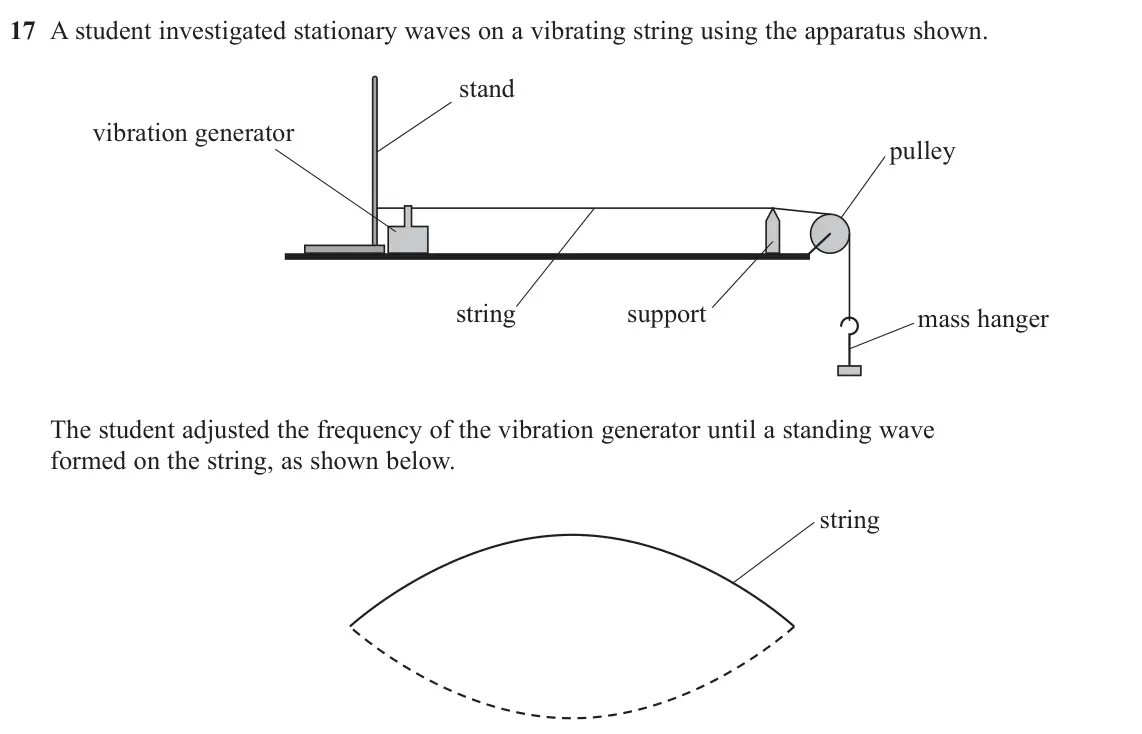
Q17(b)
The whole paper ↗Q18(a)
The whole paper ↗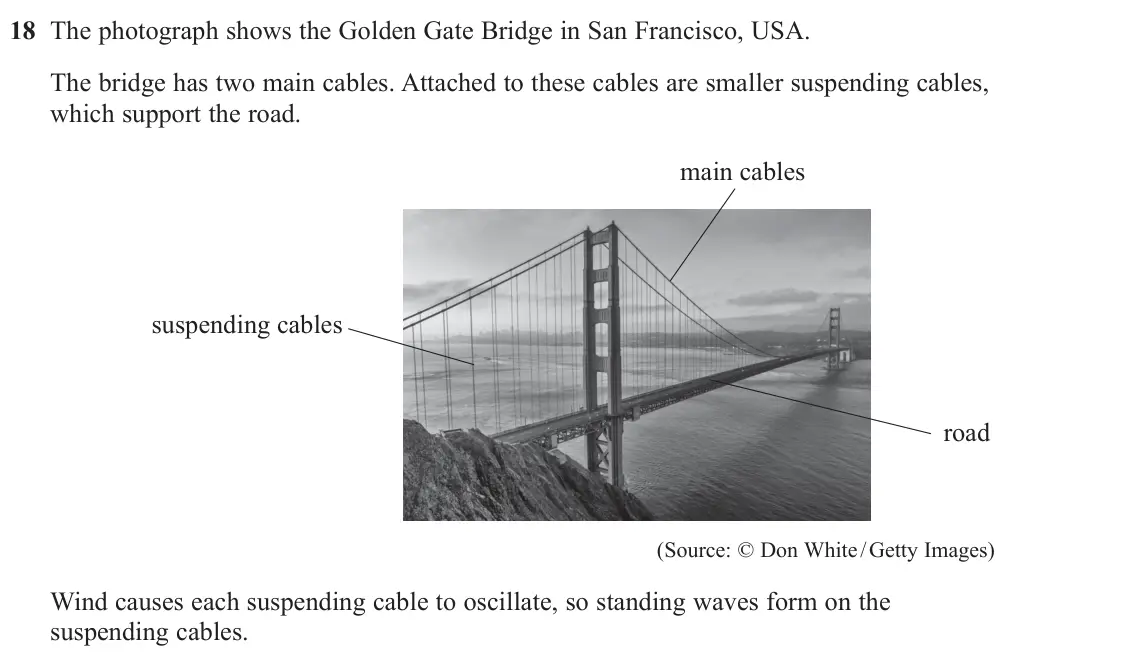
Q18(b)
The whole paper ↗Q18(c)(ii)
The whole paper ↗Q15(b)
The whole paper ↗
Q15(d)
The whole paper ↗Q11(b)
The whole paper ↗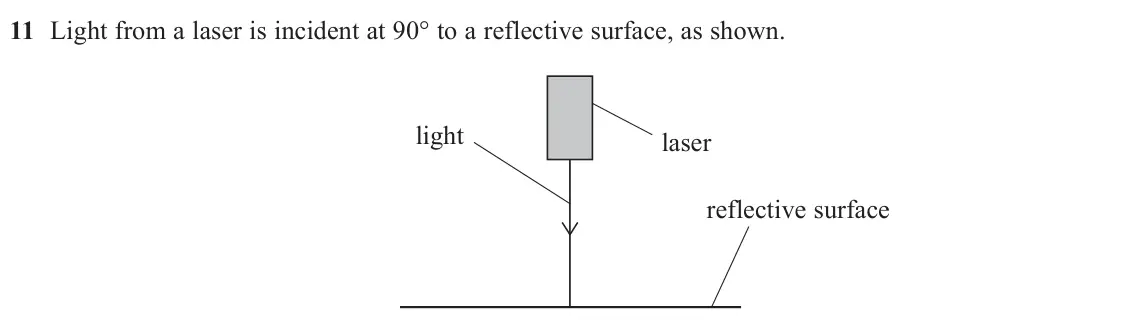
Q15(b)
The whole paper ↗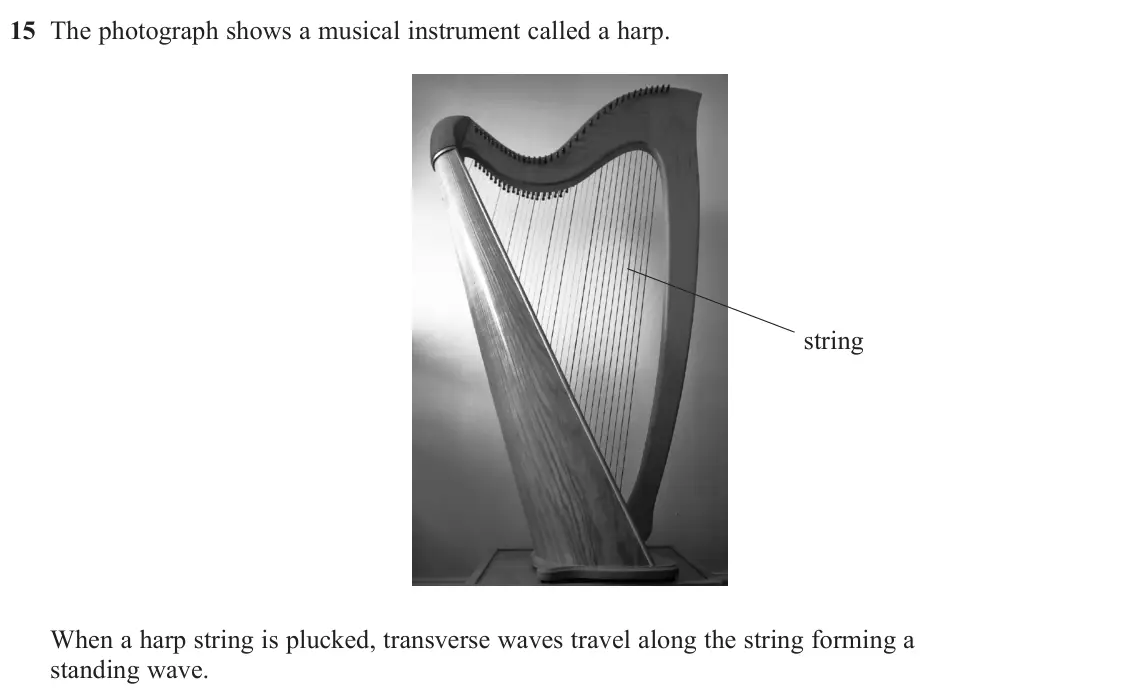
- Your answer
- Your answer
Q18(a)
The whole paper ↗
All 40 questions on Stationary waves, nodes and antinodes, as a list
- June 2025, AS Unit 2, Q17(a) (6 marks): Describe how a stationary wave is formed inside the tube. (6)
- June 2025, AS Unit 2, Q17(b)(i) (3 marks): Calculate the frequency of the sound produced by the tube. speed of sound in air = 340 m s –1 (3) Frequency =
- June 2025, AS Unit 2, Q17(b)(ii) (2 marks): The actual frequency of the sound produced by the tube is slightly less than the calculated value. Suggest why. (2)
- June 2025, AS Unit 3, Q4(b) (2 marks): The student connected the loudspeaker to a signal generator. She set the frequency f of the signal generator to its lowest value. The student gradually increase
- June 2025, AS Unit 3, Q4(c)(i) (2 marks): Explain how a graph of f against n can be used to determine the value of v. (2)
- June 2025, AS Unit 3, Q4(c)(iii) (4 marks): Determine the value of v from the graph. L = 0.595 m (4) v =
- June 2025, AS Unit 3, Q4(c)(iv) (2 marks): The student suggested that the magnitude of k is half the magnitude of the gradient. Determine whether the student’s suggestion could be correct. (2)
- January 2025, AS Unit 2, Q7 (1 mark): The diagram shows a wave of amplitude A on a string. P and Q are two points on the string. P Q A The wave on the string is a stationary wave. Which row of the t
- January 2025, AS Unit 2, Q17(a) (1 mark): Label each node on the standing wave with a letter N, and each antinode with a letter A. (1)
- January 2025, AS Unit 2, Q17(b) (3 marks): Explain how a standing wave forms on the string. (3)
- October 2024, AS Unit 2, Q18(a) (3 marks): Explain how a standing wave can form on a cable that is fixed at both ends. (3)
- October 2024, AS Unit 2, Q18(b) (3 marks): The diagram shows a standing wave on a cable that is fixed at both ends. X and Y are two points on the cable. X Y Describe the motion of points X and Y on the c
- October 2024, AS Unit 2, Q18(c)(ii) (6 marks): The lowest frequency of the humming sound produced by the bridge is 280 Hz. The total mass of the road on the bridge is 140 × 10 6 kg. The weight of the road is
- June 2024, AS Unit 2, Q15(b) (3 marks): Each pipe is open at the top and closed at the bottom. When air is blown across the open end, a stationary wave is formed in the pipe. The student was able to p
- June 2024, AS Unit 2, Q15(d) (3 marks): On another day the speed of sound was 340 m s –1. The student produced a stationary wave using the longest pipe. The pipe has a length of 28.2 cm, as shown. A 2
- January 2024, AS Unit 2, Q11(b) (1 mark): State why a standing wave forms between the laser and the reflective surface. (1)
- January 2024, AS Unit 2, Q15(b) (2 marks): The diagram represents one string of the harp. The string is fixed at both ends. The string is made to vibrate at its lowest frequency. Add to the diagram to sh
- October 2023, AS Unit 2, Q6 (1 mark): The length of the string VY is 0.6 m. Which of the following is the wavelength of the standing wave? A 0.2 m B 0.4 m C 0.6 m D 0.9 m
- October 2023, AS Unit 2, Q7 (1 mark): Which of the following sections of the string would be in phase with each other? A VW and WX B WX and XY C VW and XY D No sections are in phase.
- June 2023, AS Unit 2, Q18(a) (3 marks): Explain how a stationary wave forms on the string. (3)
- June 2023, AS Unit 2, Q18(b) (4 marks): The simplest stationary wave that can be formed on the string has a node (N) at each end and an antinode (A) at the centre, as shown. A N N The frequency of thi
- June 2023, AS Unit 2, Q18(c) (5 marks): The stationary wave on the string causes sound waves to be transmitted through the air. Describe the similarities and differences between the stationary wave on
- January 2023, AS Unit 2, Q10 (1 mark): Which of the following is not a correct statement about stationary waves? A All points between two adjacent nodes are in phase. B Antinodes are points of maximu
- June 2022, AS Unit 2, Q16(a) (3 marks): Explain how a stationary wave forms on the string. (3)
- June 2022, AS Unit 2, Q16(b) (5 marks): The frequency of the stationary wave was 30.0 Hz. The distance between the vibrator and the pulley was 3.600 m. Point R is 0.600 m from the pulley, as shown. Di
- June 2022, AS Unit 2, Q16(c)(i) (2 marks): Explain the phase relationship between points S and T. (2)
- June 2022, AS Unit 2, Q16(c)(ii) (2 marks): Explain how the amplitude of vibration of the string at point S compares with the amplitude of vibration of the string at point T. (2)
- January 2022, AS Unit 2, Q7 (1 mark): The diagram shows how the displacement varies with distance along a stationary wave at two instants of time. Displacement X W Distance Y Z Which of the followin
- October 2021, AS Unit 2, Q12(a) (2 marks): Explain how the stationary wave was formed in this experiment. (2)
- October 2021, AS Unit 2, Q12(b)(i) (3 marks): A sound was heard when l was 19.3 cm. Determine a value for the speed of sound in air. frequency of tuning fork = 440 Hz (3) Speed of sound in air =
- October 2021, AS Unit 2, Q12(b)(ii) (2 marks): The antinode is slightly further from the water than the end of the glass tube. Explain how this would affect the accuracy of your calculated value for the spee
- October 2021, Unit 6, Q3(a) (4 marks): Describe how the student should use the oscilloscope to identify the resonant frequency and determine its value. (4)
- June 2021, AS Unit 3, Q2(c) (2 marks): The frequency of the tuning fork was 440 Hz. The standing wave produced had a wavelength 4l. Calculate the speed of sound in air. (2) Speed of sound =
- January 2021, AS Unit 2, Q21(a)(i) (3 marks): The stationary wave has antinodes at both ends of the air column as shown. antinode antinode Calculate the frequency of the sound produced by this stationary wa
- January 2021, AS Unit 2, Q21(a)(ii) (3 marks): The recorder is made from three separate sections that slide together as shown. A musician plays the recorder and produces the same frequency sound as in (i). T
- October 2020, AS Unit 2, Q17(a) (3 marks): Explain how nodes and antinodes are created on a string. (3)
- October 2020, Unit 4, Q18(c) (3 marks): Linacs used for radiotherapy operate by means of a standing wave formed within the linac. Explain how standing waves are produced. (3)
- January 2020, AS Unit 2, Q11(a) (2 marks): Determine the wavelength of the waves on the string when vibrating as shown. length L = 1.70 m (2) Wavelength =
- June 2019, AS Unit 2, Q3 (1 mark): When a guitar string is plucked, a sound of constant frequency is heard. The wave produced on the vibrating guitar string is A longitudinal and progressive. B l
- June 2019, AS Unit 2, Q10 (1 mark): The diagram shows how the displacement varies with distance along a stationary wave at two instants of time. X distance Y Z Which of the following statements is
Questions, mark schemes and examiner’s reports are © Pearson Edexcel, from their published past papers. Plumi isn’t affiliated with any exam board. Want whole papers? Edexcel International A Level Physics past papers.
The Plumi iPad app also offers exam-style questions with AI feedback on your handwritten working.