 plumi
Electrophilic substitution mechanisms: Edexcel International A Level Chemistry questions
Edexcel International A Level Chemistry past-paper questions on 18.1.3 Electrophilic substitution mechanisms, 2019–2025, with mark schemes and examiner’s reports where available.
Paper
All papers
Exam
All years
Calculations
Q20(d)(i)
The whole paper ↗
Q20(d)(ii)
The whole paper ↗- Your answer
Q18(a)
The whole paper ↗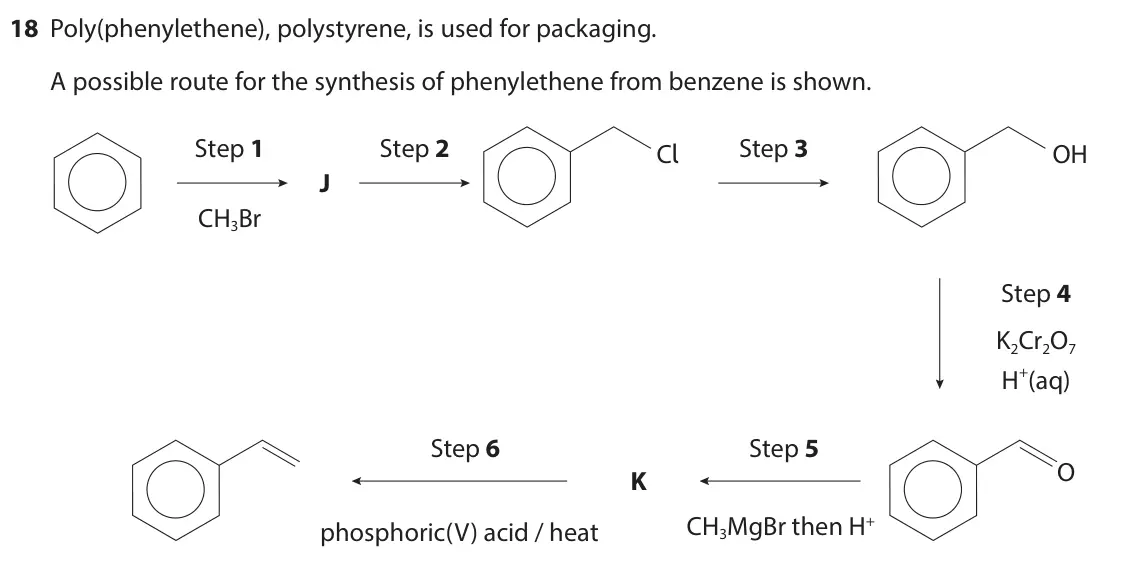
Q23(b)(ii)
The whole paper ↗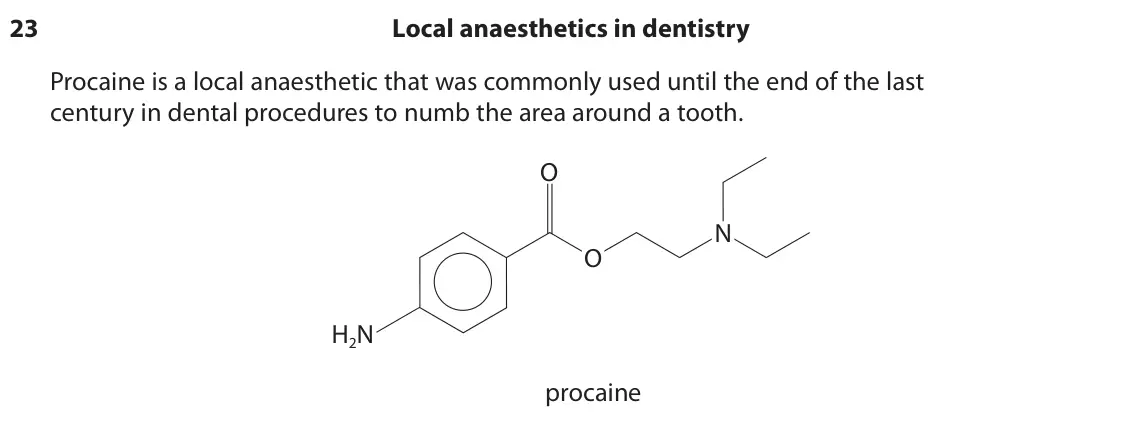
Q19(b)(i)
The whole paper ↗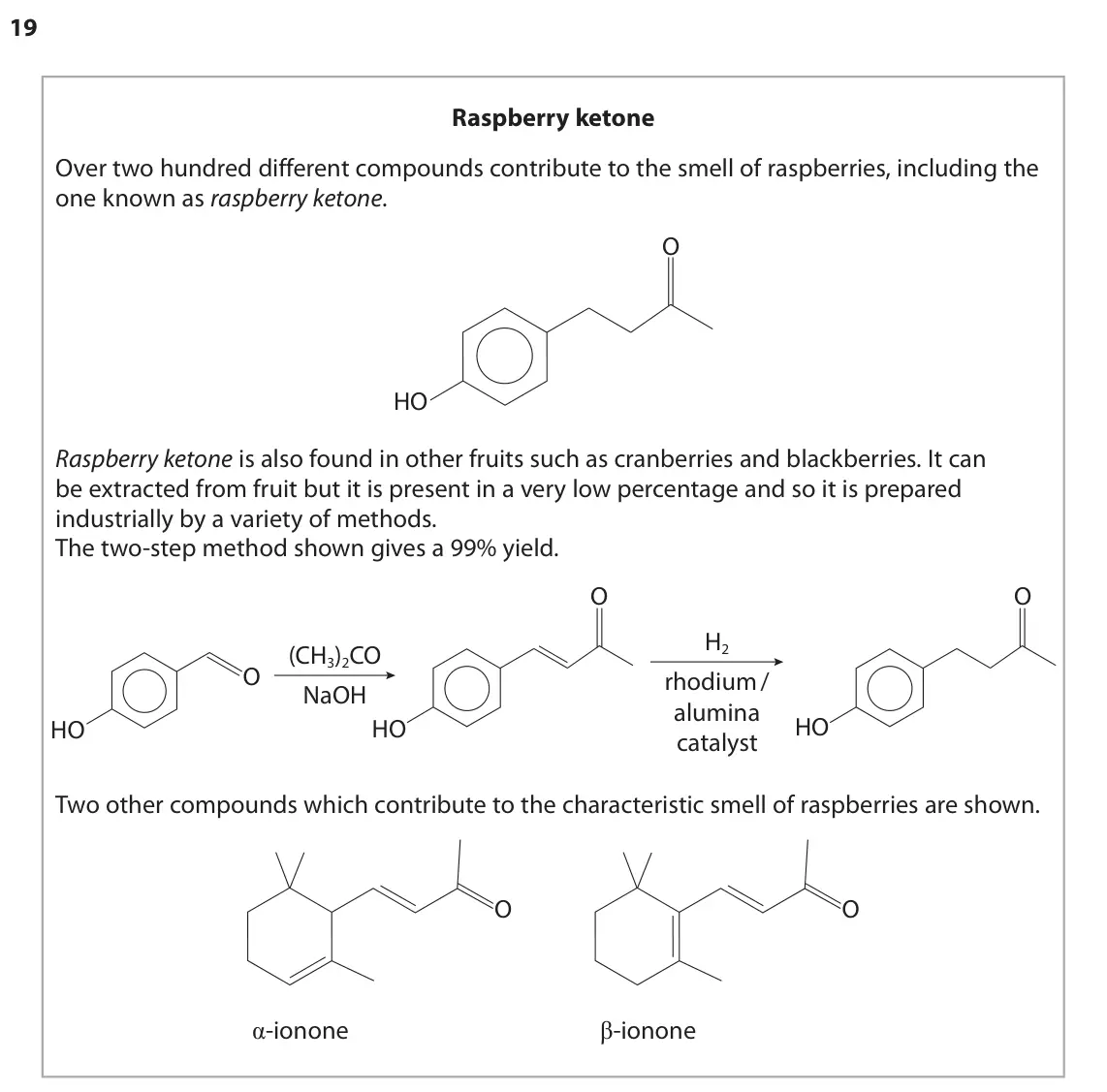
Q19(b)(ii)
The whole paper ↗- Your answer
Q17(a)
The whole paper ↗
Q14(a)(i)
The whole paper ↗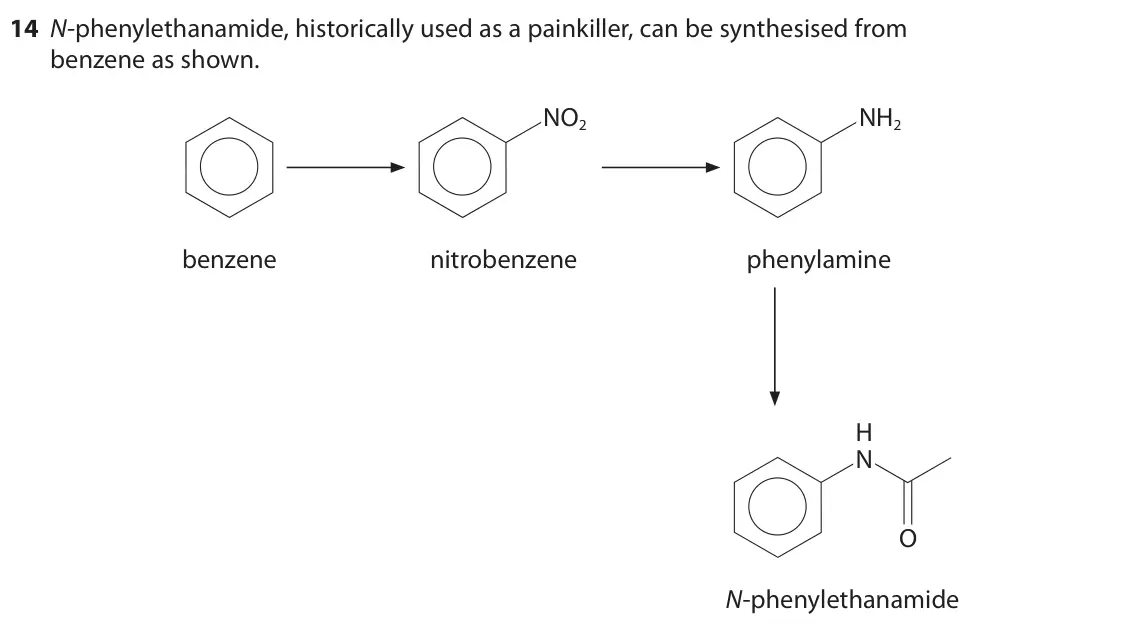
Q14(a)(ii)
The whole paper ↗Q20(a)(i)
The whole paper ↗
Q25(d)(i)
The whole paper ↗
Q19(a)(i)
The whole paper ↗
Q23(c)(i)
The whole paper ↗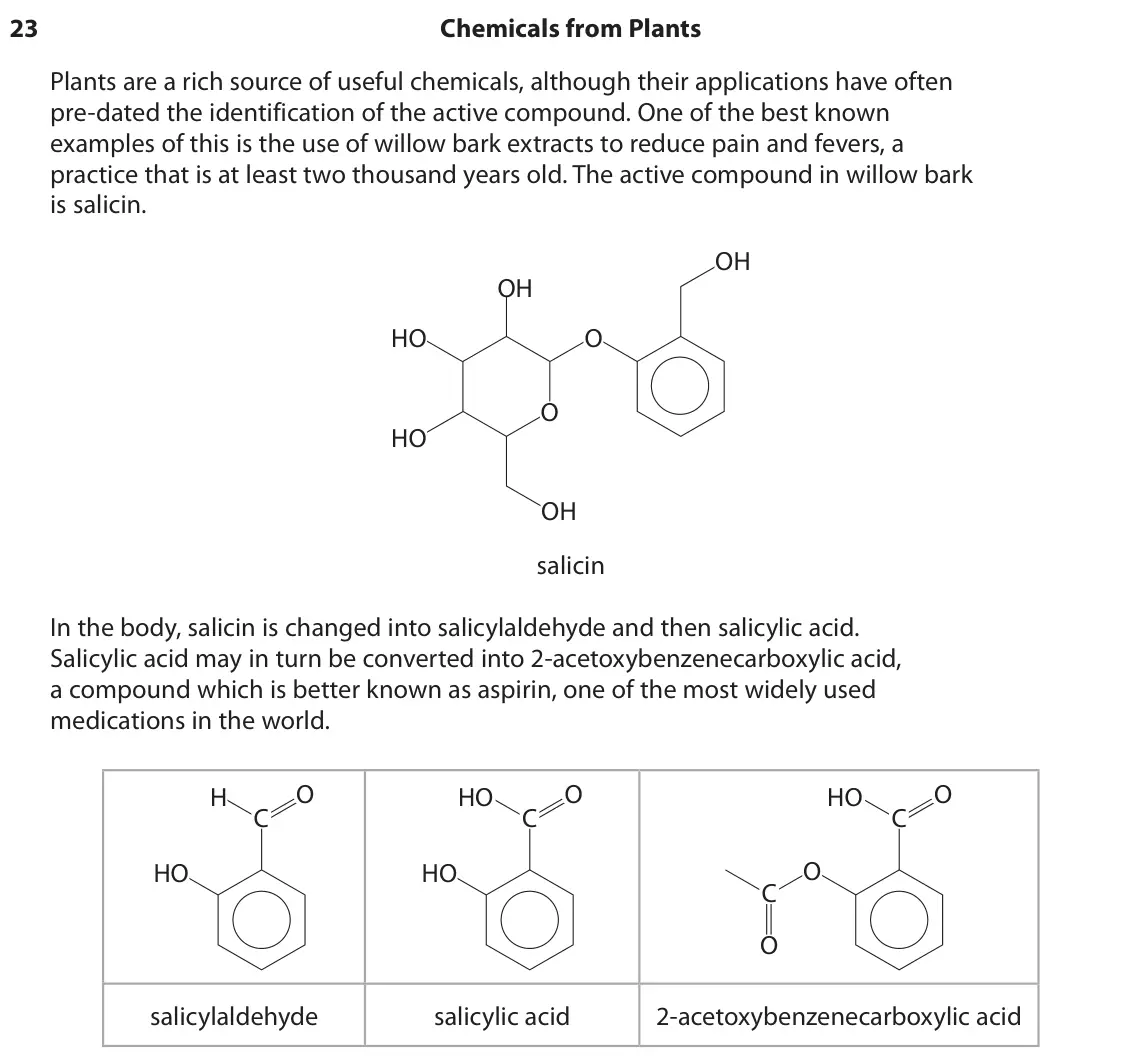
Q23(c)(ii)
The whole paper ↗Q12(a)(i)
The whole paper ↗
Q12(a)(ii)
The whole paper ↗Q6(b)
The whole paper ↗ Your answer
Q19(f)(iii)
The whole paper ↗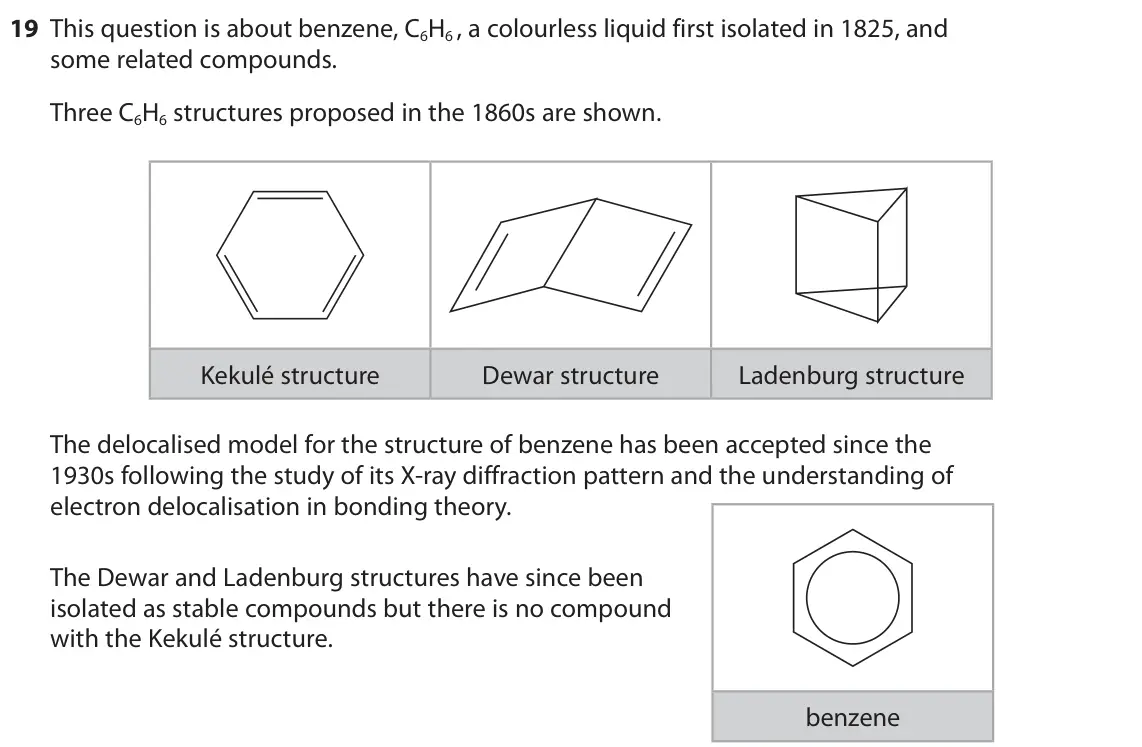
All 23 questions on Electrophilic substitution mechanisms, as a list
- June 2025, Unit 5, Q20(d)(i) (1 mark): Concentrated nitric and sulfuric acid are used to produce NO 2 to initiate the reaction. + Write the equation for the production of NO 2 . (1)
- June 2025, Unit 5, Q20(d)(ii) (5 marks): Complete the reaction mechanism to form 5-nitrosalicylic acid, naming the reaction mechanism. (5) Reaction mechanism O OH OH NO2 +
- June 2025 (A), Unit 5, Q10 (1 mark): Benzene is nitrated using a mixture of concentrated nitric and sulfuric acids. In this reaction, the sulfuric acid A dissolves both benzene and nitric acid B fo
- June 2025 (A), Unit 5, Q18(a) (4 marks): Draw the mechanism for the reaction in Step 1 to produce J, including the formation of the electrophile. (4)
- January 2025, Unit 5, Q23(b)(ii) (5 marks): For Step 2, draw the mechanism for this reaction, including the formation of a suitable electrophile and the regeneration of the catalyst. Include curly arrows.
- October 2024, Unit 5, Q19(b)(i) (5 marks): Draw the mechanism for this reaction, using appropriate curly arrows. Include equations showing the formation of the electrophile and the regeneration of the ca
- October 2024, Unit 5, Q19(b)(ii) (1 mark): Give a reason why the yield of the raspberry ketone by this method is not high. (1)
- June 2024, Unit 5, Q8 (1 mark): The formation of nitrobenzene requires benzene and concentrated nitric and sulfuric acids. Which is an equation for the reaction to form the electrophile? A HNO
- June 2024, Unit 5, Q17(a) (3 marks): The first step of the synthesis is the formation of methylbenzene, from benzene and chloromethane. Draw the mechanism of this reaction. Equations for the format
- January 2024, Unit 5, Q14(a)(i) (2 marks): Identify, by name or formula, the second reagent and the electrophile. (2)
- January 2024, Unit 5, Q14(a)(ii) (3 marks): Draw the mechanism for the reaction between the electrophile and benzene to form nitrobenzene. (3)
- October 2023, Unit 5, Q20(a)(i) (4 marks): Draw the mechanism for this reaction, including the formation of the electrophile. (4)
- June 2023, Unit 5, Q25(d)(i) (4 marks): Give the mechanism for Step 1. Include an equation for the formation of the electrophile. (4)
- January 2023, Unit 5, Q19(a)(i) (3 marks): Draw a mechanism for the reaction to form 2-nitrophenol. + is the electrophile. Assume that NO2 (3)
- October 2022, Unit 5, Q23(c)(i) (1 mark): Write an equation for the formation of the electrophile from methanoyl chloride. Use displayed formulae. (1)
- October 2022, Unit 5, Q23(c)(ii) (3 marks): Draw the mechanism of the formation of benzaldehyde from benzene using the electrophile from (c)(i). (3)
- June 2022, Unit 5, Q12(a)(i) (2 marks): Identify two errors in the mechanism by circling them. (2)
- June 2022, Unit 5, Q12(a)(ii) (2 marks): State how the errors identified in (a)(i) should be corrected. Justify your answer in terms of the structures involved. (2)
- January 2022, Unit 5, Q6(b) (1 mark): What type of reaction takes place? (1) A nucleophilic addition B nucleophilic substitution C electrophilic addition D electrophilic substitution
- October 2021, Unit 5, Q19(f)(iii) (4 marks): Complete the diagram, including curly arrows, to show the mechanism for the formation of compound X in this reaction. Include an equation for the regeneration o
- June 2021, Unit 5, Q20(b) (4 marks): Bromine reacts with cyclohexene to form 1,2-dibromocyclohexane, and with benzene to form bromobenzene. Compare and contrast these reactions, considering the typ
- January 2021, Unit 5, Q24(c)(i) (5 marks): A student suggested that caffeic acid could be synthesised by an electrophilic substitution of 1,2-dihydroxybenzene. Draw the mechanism of this electrophilic su
- October 2020, Unit 5, Q22(a)(i) (3 marks): Benzene is converted into nitrobenzene in Step 1 using a mixture of concentrated nitric acid and concentrated sulfuric acid. The electrophile is NO2 + . A stude
Questions, mark schemes and examiner’s reports are © Pearson Edexcel, from their published past papers. Plumi isn’t affiliated with any exam board. Want whole papers? Edexcel International A Level Chemistry past papers.
The Plumi iPad app also offers exam-style questions with AI feedback on your handwritten working.