 plumi
Covalent and dative covalent bonds: Edexcel International A Level Chemistry questions
Edexcel International A Level Chemistry past-paper questions on 3.B.1 Covalent and dative covalent bonds, 2019–2025, with mark schemes and examiner’s reports where available.
Paper
All papers
Exam
All years
Calculations
Q23(b)(i)
The whole paper ↗
Q23(b)(ii)
The whole paper ↗Q26(b)
The whole paper ↗
Q26(c)
The whole paper ↗Q21(b)(ii)
The whole paper ↗
Q18(b)(i)
The whole paper ↗
Q18(a)(i)
The whole paper ↗
Q15(a)(i)
The whole paper ↗
Q22(d)
The whole paper ↗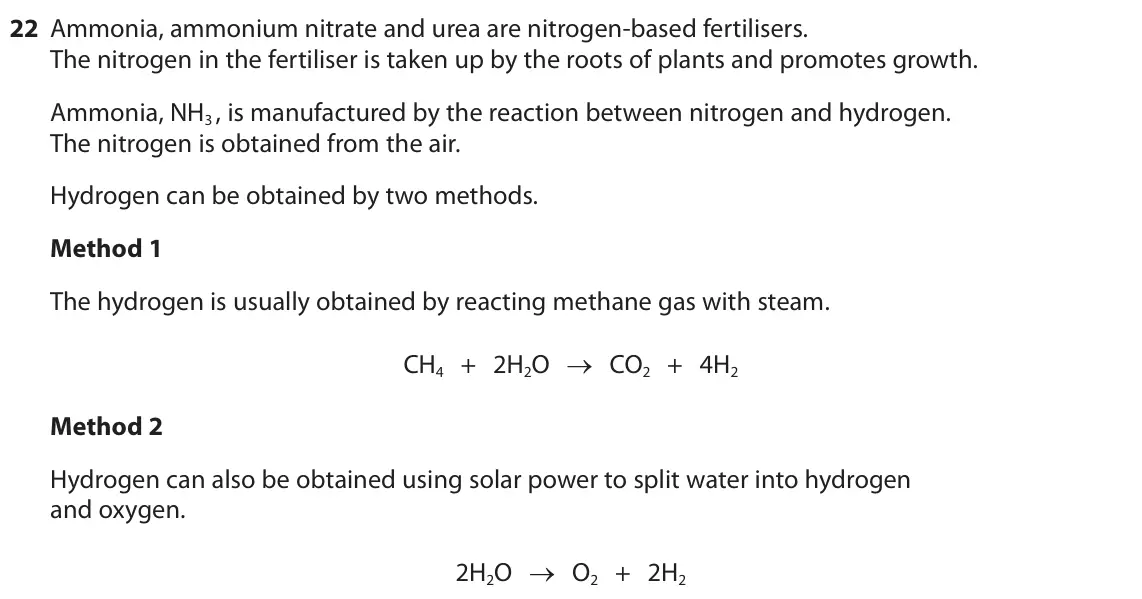
Q21(b)(i)
The whole paper ↗
Q21(b)(ii)
The whole paper ↗
- Your answer
- Your answer
Q18(c)(i)
The whole paper ↗
Q18(c)(iii)
The whole paper ↗Q23(b)(ii)
The whole paper ↗
Q25(a)(ii)
The whole paper ↗
Q20(c)(i)
The whole paper ↗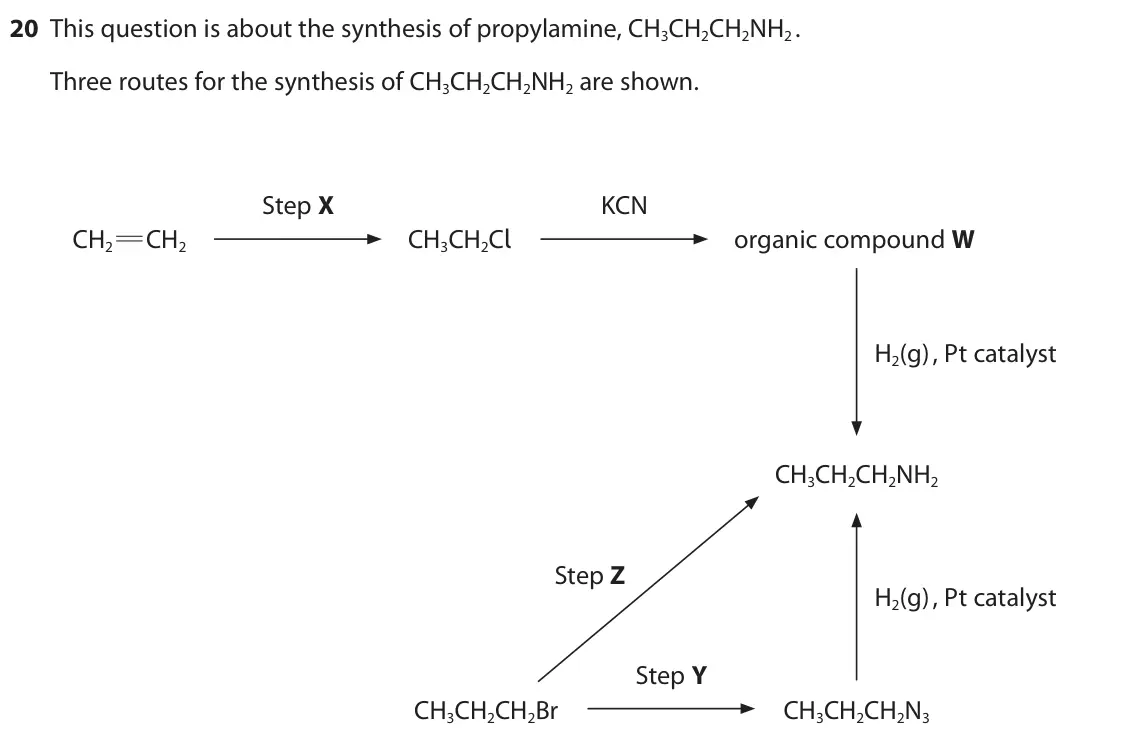
Q16(d)(ii)
The whole paper ↗
- Your answer
All 44 questions on Covalent and dative covalent bonds, as a list
- June 2025, AS Unit 1, Q23(b)(i) (1 mark): Describe covalent bonding. (1)
- June 2025, AS Unit 1, Q23(b)(ii) (3 marks): Methane, ammonia and water are covalently bonded compounds. Draw the dot-and-cross diagrams for the molecules of methane (CH4), ammonia (NH3) and water (H2O). (
- January 2025, AS Unit 1, Q26(b) (2 marks): Molecules of S2F10 consist of two SF5 units linked by a S S bond. Complete the dot‑and‑cross diagram of S2F10 , showing the outer shell electrons. Use dots ()
- January 2025, AS Unit 1, Q26(c) (2 marks): Draw a dot‑and‑cross diagram of SF4, showing all the outer shell electrons. Use dots () for the sulfur electrons and crosses (×) for the fluorine electrons. (2
- October 2024, AS Unit 1, Q21(b)(ii) (3 marks): Draw the dot‑and‑cross diagram for Al2Cl6 . Use dots (•) for the electrons of aluminium and crosses (×) for the electrons of chlorine. (3)
- October 2024, Unit 5, Q18(b)(i) (2 marks): The dot-and-cross diagram for the thiocyanate ion can be drawn in more than one way. For example, the negative charge can be on the nitrogen atom as shown. – *
- June 2024, AS Unit 2, Q18(a)(i) (2 marks): Complete the dot‑and‑cross diagram for this structure. Use dots (•) for oxygen electrons and crosses (×) for chlorine electrons. (2) Cl O O
- June 2024, Unit 4, Q15(a)(i) (2 marks): Complete the table, indicating the type of bonding in the reactants and products of this reaction. (2) Substance SiO2 Mg Mg2Si MgO Bonding type covalent
- June 2024 (R), AS Unit 2, Q22(d) (2 marks): Urea, NH2CONH2 , can also be made from ammonia. Complete the dot‑and‑cross diagram for the urea molecule. (2) O C N N H H H H
- January 2024, AS Unit 1, Q21(b)(i) (3 marks): Draw a dot‑and‑cross diagram for this molecule. Show outer electrons only. (3)
- January 2024, AS Unit 2, Q21(b)(ii) (3 marks): Complete the table to indicate the type(s) of bonding and structure in the species involved in this reaction. (3) Species Bonding Structure Ca(s) covalent giant
- October 2023, AS Unit 1, Q5 (1 mark): What types of bonding are present in the compound ammonium chloride, NH4Cl? Ionic Covalent Dative covalent A B C D
- October 2023, AS Unit 1, Q16 (1 mark): A cyclic hydrocarbon has the structure shown. How many pi (π) and sigma (σ) bonds are present in the molecule? pi (π) bonds sigma (σ) bonds A 2 11 B 2 5 C 4 3 D
- October 2023, AS Unit 1, Q18(c)(i) (1 mark): Draw a dot-and-cross diagram of the molecule, BeCl2. (1)
- October 2023, AS Unit 1, Q18(c)(iii) (2 marks): Draw a diagram to show how two beryllium chloride molecules bond together to form the dimer, Be2Cl4, stating the type of bond involved. (2) Type of bond
- January 2023, AS Unit 1, Q23(b)(ii) (2 marks): Nitrogen molecules bind to zeolite using their outer electrons. Draw a dot‑and‑cross diagram of the bonding in a nitrogen molecule. Show outer electrons only. (
- January 2023, AS Unit 1, Q25(a)(ii) (2 marks): Aluminium chloride can exist as a dimer formed from two molecules of aluminium trichloride. Draw a diagram of this dimer, showing the bonding between the two mo
- January 2023, AS Unit 2, Q20(c)(i) (2 marks): Complete a possible dot-and-cross diagram for N3 Show outer electrons only. (2) – N N N
- October 2022, AS Unit 1, Q16(d)(ii) (2 marks): Germane can donate a proton to ammonia, forming the ion GeH3 –. NH3 + GeH4 → NH4 + + GeH3 – –. Show the outer electrons only. Draw a dot‑and‑cross diagram of th
- June 2022, AS Unit 1, Q12 (1 mark): At 180 °C, aluminium chloride exists as Al2Cl6 . What is the structure of Al2Cl6 ? − Cl + A Cl Al Cl Cl Al Cl Cl Cl Cl B Cl Al Al Cl Cl Cl Cl Cl Cl C Al Al Cl C
- June 2022, AS Unit 1, Q20(c)(i) (2 marks): Draw a dot-and-cross diagram to show the bonding in a molecule of bromine. Only the outer electrons should be shown. (2)
- June 2022, AS Unit 1, Q21(a)(i) (2 marks): Describe the covalent bond between a silicon atom and an oxygen atom in silicon dioxide, in terms of the particles involved. (2)
- June 2022, AS Unit 1, Q21(a)(ii) (3 marks): Compare and contrast the covalent bonding in carbon dioxide and silicon dioxide in terms of orbital overlap. (3)
- January 2022, AS Unit 1, Q22(b)(i) (1 mark): In the elements silicon, phosphorus, sulfur and chlorine, the atoms are joined by covalent bonds. Describe the attraction between the atoms in a covalent bond.
- January 2022, AS Unit 1, Q22(c)(i) (2 marks): Complete the dot-and-cross diagram of a molecule of sulfur dichloride. Use dots (•) for the chlorine electrons and crosses (×) for the sulfur electrons. Show th
- January 2022, Unit 5, Q13(a) (1 mark): Draw a dot‑and‑cross diagram for arsine, AsH3 . (1)
- October 2021, AS Unit 1, Q7(b) (1 mark): Ammonium sulfate is used in the preparation of the double salt. What types of bond are present in ammonium sulfate? (1) A ionic only B covalent and ionic only C
- October 2021, AS Unit 1, Q12(b) (2 marks): In the gaseous state, beryllium chloride is molecular. Draw a dot-and-cross diagram to show the bonding in a molecule of beryllium chloride, BeCl2 . (2)
- October 2021, AS Unit 1, Q12(c) (2 marks): In the solid state, beryllium chloride forms a polymeric structure. The diagram shows part of this structure. Cl Cl Cl Cl Cl Be Be Be Be Cl Cl Cl Cl Cl The diag
- June 2021, AS Unit 1, Q22(c)(i) (1 mark): Draw a dot-and-cross diagram of a PCl4 Show only outer shell electrons. (1)
- June 2021, AS Unit 2, Q22(a) (2 marks): Complete the dot-and-cross diagram to show the bonding in phosgene. (2) O C Cl Cl
- January 2021, AS Unit 1, Q19(b)(ii) (2 marks): Draw a dot-and-cross diagram to show the bonding in a molecule of SbCl5 . Use dots (•) to represent the Sb electrons, and crosses (x) to represent the Cl electr
- January 2021, AS Unit 1, Q19(c)(i) (1 mark): State what is meant by the term dative covalent bond. (1)
- January 2021, AS Unit 1, Q19(c)(ii) (1 mark): Complete the diagram to show the dative covalent bonds in Sb2Cl10 . (1) Cl Cl Cl Cl Cl Sb Sb Cl Cl Cl Cl Cl
- January 2021, AS Unit 1, Q19(d) (1 mark): Arsenic also forms a pentachloride with the formula AsCl5 . Give one possible reason why nitrogen is the only Group 5 element that does not form a pentachloride
- January 2021, AS Unit 2, Q20(b)(i) (3 marks): Explain the type of bonding that occurs between the nitrogen atom and the hydrogen ion, when the positive ion forms. (3)
- October 2020, AS Unit 1, Q13 (1 mark): How many lone pairs of electrons are there in the outer shell of the sulfur atom in a molecule of H2S? A zero B one C two D four
- October 2020, AS Unit 1, Q19(c)(i) (2 marks): Draw a dot‑and‑cross diagram of the ammonium ion. Use dots (●) for the nitrogen electrons and crosses (×) for the hydrogen electrons. (2)
- January 2020, AS Unit 1, Q18(d) (1 mark): Chlorine occurs naturally as a diatomic molecule. Draw a dot-and-cross diagram to show the bonding in a molecule of chlorine. Show outer shell electrons only. (
- June 2019, AS Unit 1, Q3 (1 mark): Covalent bonding is best described as the electrostatic attraction between A oppositely charged ions B positive ions and delocalised electrons C a shared pair o
- June 2019, AS Unit 1, Q23(a) (1 mark): Draw an electron density map for a molecule of oxygen. (1)
- June 2019, AS Unit 1, Q23(c)(i) (2 marks): Complete the dot-and-cross diagram for the POCl3 molecule. Use crosses ( ) for the phosphorus electrons, dots ( ) for the chlorine electrons and circles ( ) for
- January 2019, AS Unit 1, Q22(b)(i) (1 mark): Draw a dot-and-cross diagram to show the bonding in a molecule of nitrogen. (1)
- January 2019, AS Unit 1, Q24(d)(ii) (2 marks): Describe how two AlCl3 molecules are joined together in the dimer. Include a diagram in your answer. (2)
Questions, mark schemes and examiner’s reports are © Pearson Edexcel, from their published past papers. Plumi isn’t affiliated with any exam board. Want whole papers? Edexcel International A Level Chemistry past papers.
The Plumi iPad app also offers exam-style questions with AI feedback on your handwritten working.