 plumi
Addition polymerisation and repeat units: Edexcel International A Level Chemistry questions
Edexcel International A Level Chemistry past-paper questions on 5.3.1 Addition polymerisation and repeat units, 2019–2025, with mark schemes and examiner’s reports where available.
Paper
All papers
Exam
All years
Calculations
Q18(g)
The whole paper ↗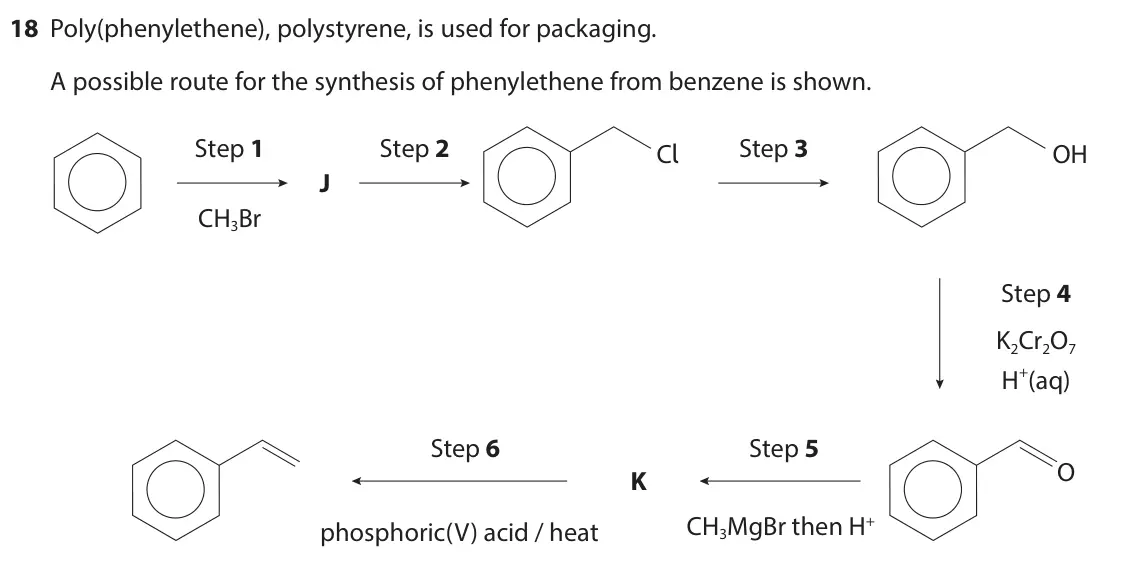
Q21(b)(i)
The whole paper ↗
Q21(b)(ii)
The whole paper ↗- Your answer
Q15(b)
The whole paper ↗
Q20(a)
The whole paper ↗
Q19(c)(iii)
The whole paper ↗
- Your answer
- Your answer
Q20(d)(i)
The whole paper ↗
Q20(d)(ii)
The whole paper ↗Q24(b)(i)
The whole paper ↗
Q24(b)(ii)
The whole paper ↗Q22(b)(i)
The whole paper ↗
Q17(c)
The whole paper ↗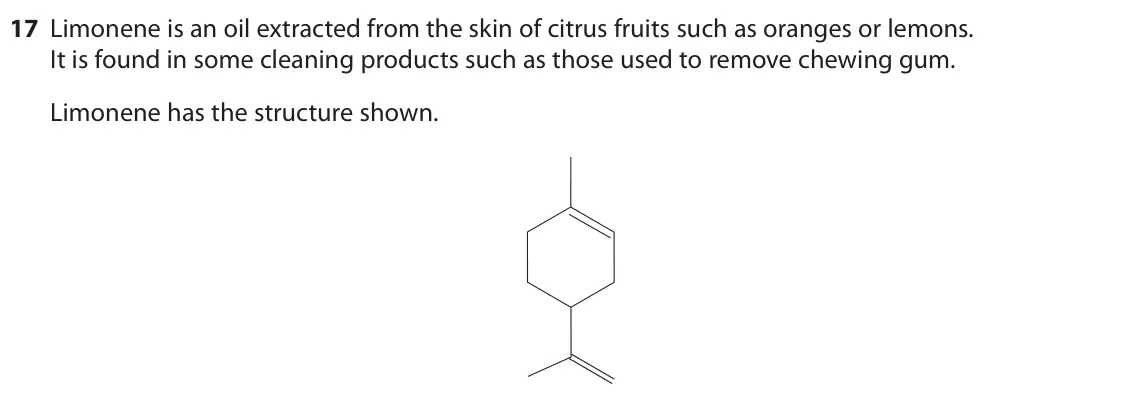
Q23(c)
The whole paper ↗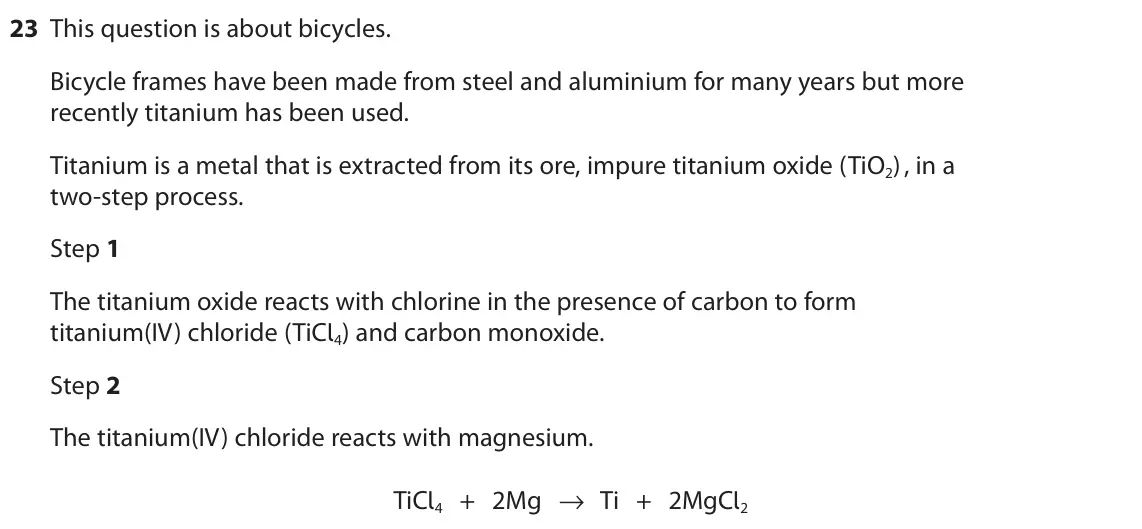
Q7(c)
The whole paper ↗ Your answer
Q12(b)
The whole paper ↗
Q12(c)
The whole paper ↗Q15(c)
The whole paper ↗
All 28 questions on Addition polymerisation and repeat units, as a list
- June 2025 (A), Unit 5, Q18(g) (1 mark): Draw the structure of poly(phenylethene) showing two repeat units. (1)
- January 2025, AS Unit 1, Q21(b)(i) (2 marks): Draw the structure of poly(1‑chloropropene). (2)
- January 2025, AS Unit 1, Q21(b)(ii) (2 marks): The polymer of chloroethene, known as PVC, is used to make water pipes and gutters, which were previously made of metal. Suggest two advantages of using PVC ins
- October 2024, AS Unit 1, Q14 (1 mark): Polymerisation of alkenes occurs via a free radical mechanism. This reaction is started by the addition of small amounts of another compound. The structure of o
- October 2024, AS Unit 1, Q15(b) (1 mark): Cyclohexene can form an addition polymer. Which diagram shows two repeat units of this addition polymer? (1) A B C D
- June 2024, AS Unit 1, Q20(a) (2 marks): Draw the displayed formula of each of the monomers for these polymers. (2) chloroethene tetrafluoroethene
- June 2024, AS Unit 2, Q19(c)(iii) (1 mark): At pressures greater than 7 MPa, a waxy solid forms which melts over a range of temperatures. Identify, by name or formula, this solid. (1)
- January 2024, AS Unit 1, Q15 (1 mark): Which statement about poly(ethene) is not correct? A it is an addition polymer B it decolourises bromine water C it is non‑biodegradable D it has the empirical
- January 2024, Unit 5, Q11 (1 mark): The formulae of three synthetic polymers, X, Y and Z, are shown. H N n n n Cl O O NH2 X Y Z Which are made by addition polymerisation reactions? A X, Y and Z B
- October 2023, AS Unit 1, Q20(d)(i) (1 mark): Draw the skeletal formula of the monomer of polyisoprene. (1)
- October 2023, AS Unit 1, Q20(d)(ii) (2 marks): A sample of polyisoprene has a relative molecular mass of 50 250. Calculate the number of repeat units in the sample. (2)
- June 2023, Unit 5, Q24(b)(i) (1 mark): Draw the structure of the vinylpyrrolidone monomer used to make PVP. (1)
- June 2023, Unit 5, Q24(b)(ii) (2 marks): Calculate the number of monomers needed to make one molecule of PVP polymer with a molar mass of 90 000 g mol–1. Give your answer to the nearest whole number. (
- January 2023, AS Unit 1, Q22(b)(i) (2 marks): Propene can undergo addition polymerisation. Write the equation for the polymerisation of propene. (2)
- October 2022, AS Unit 1, Q17(c) (1 mark): On heating, limonene reacts to form two molecules of a smaller hydrocarbon, Q. Q can be polymerised to form R, a polymer used to improve the grip of car tyres.
- October 2022, AS Unit 2, Q23(c) (2 marks): Many bicycles use an inner tube inside the tyre. A common material used for inner tubes is the addition polymer formed from 2-methylpropene. H3C C CH2 H3C 2-met
- June 2022, Unit 5, Q7(c) (1 mark): The repeat unit of another polymer has the structure shown. H CH3 C C H H H C O C C OH O H H This polymer is formed from (1) A a single type of monomer by an ad
- January 2022, Unit 5, Q12(b) (2 marks): The diagram shows a repeat unit of an addition polymer used in some food wraps. It is formed from two different monomers. Cl H Cl H C C C C Cl H H H Deduce the
- January 2022, Unit 5, Q12(c) (2 marks): A synthetic rubber polymer has the structure shown. H2 H H2 H C C C C C C H H2 The molar mass of the synthetic rubber is approximately 300 000 g mol−1. Calculat
- October 2021, AS Unit 1, Q15(c) (2 marks): Draw the displayed formula of poly(but-1-ene) showing two repeat units. (2)
- June 2021, AS Unit 1, Q23(e) (1 mark): A section of a polymer showing two repeat units is given. CH3 H CH3 H C C C C H C2H5 H C2H5 Give the name of the monomer that forms this polymer. (1)
- January 2021, AS Unit 1, Q20(c) (1 mark): Propene reacts by addition polymerisation to form poly(propene). Draw the structure of poly(propene), showing two repeat units. (1)
- October 2020, AS Unit 1, Q20(a)(i) (2 marks): Write a balanced equation for the polymerisation of propene using displayed formulae. (2)
- October 2020, AS Unit 1, Q20(a)(ii) (1 mark): Give one difference between the polymerisation of propene and that of lactic acid. (1)
- January 2020, AS Unit 1, Q17 (1 mark): The polymers shown are all made from single monomers. Which polymer is made from a monomer that has geometric isomers? H CH3 H CH3 A C C C C H H H H H CH3 CH3 H
- June 2019, AS Unit 1, Q22(d)(i) (1 mark): Write a balanced equation for the polymerisation of ethene using displayed formulae. (1)
- June 2019, AS Unit 1, Q22(d)(ii) (2 marks): Bananas produce ethene as they ripen. Suggest one advantage and one disadvantage of using ripening bananas as a source of ethene for polymer production. (2)
- January 2019, AS Unit 1, Q23(e) (2 marks): Draw two repeat units of poly(2-methylpropene). CH3 H C C H CH3 2-methylpropene (2)
Questions, mark schemes and examiner’s reports are © Pearson Edexcel, from their published past papers. Plumi isn’t affiliated with any exam board. Want whole papers? Edexcel International A Level Chemistry past papers.
The Plumi iPad app also offers exam-style questions with AI feedback on your handwritten working.