 plumi
Selective reabsorption and the loop of Henle: Edexcel International A Level Biology questions
Edexcel International A Level Biology past-paper questions on 7.4.5 Selective reabsorption and the loop of Henle, 2019–2025, with mark schemes and examiner’s reports where available.
Paper
All papers
Exam
All years
Calculations
Q6(d)(i)
The whole paper ↗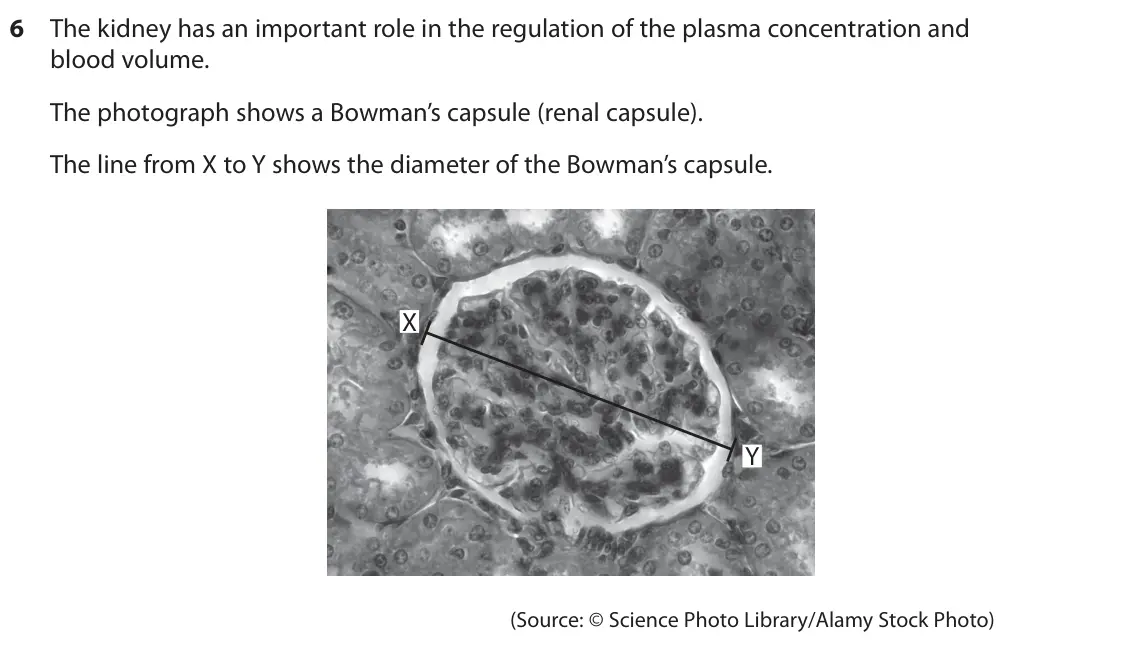 Your answer
Q7(a)(iii)
The whole paper ↗
Q7(b)
The whole paper ↗
Q7(c)(ii)
The whole paper ↗Q5(a)(iii)
The whole paper ↗ Your answer
Q5(b)
The whole paper ↗Q5(a)
The whole paper ↗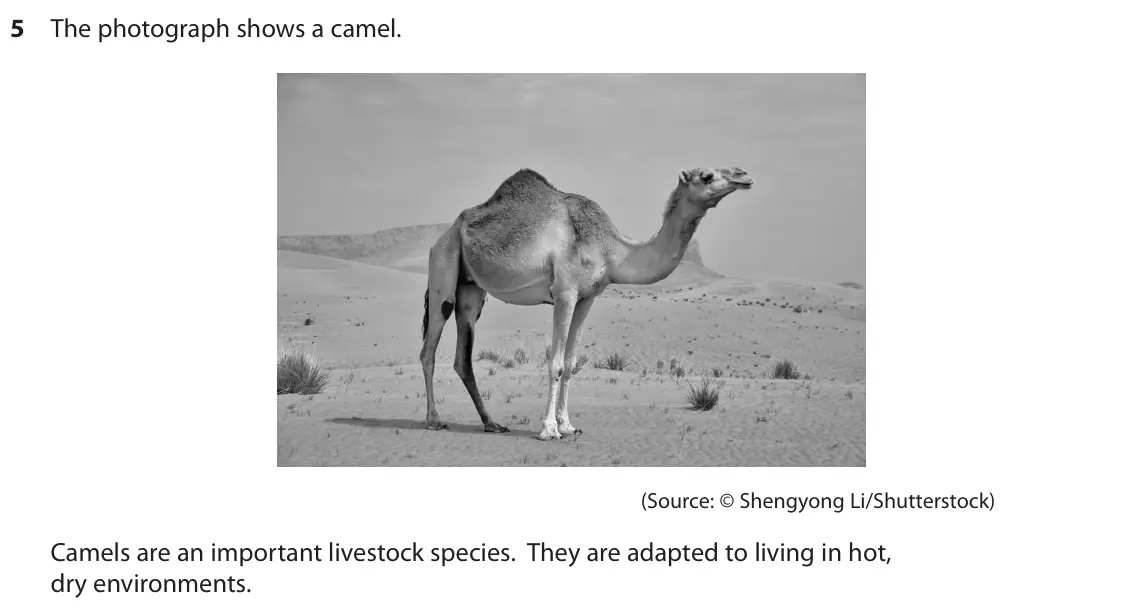 Your answer
Q5(b)(ii)
The whole paper ↗Q5(c)
The whole paper ↗Q5(d)
The whole paper ↗Q2(b)
The whole paper ↗
Q4(a)(ii)
The whole paper ↗ Your answer
Q4(b)
The whole paper ↗Q4(b)(ii)
The whole paper ↗
Q4(d)
The whole paper ↗Q4(e)
The whole paper ↗Q2(c)
The whole paper ↗
All 17 questions on Selective reabsorption and the loop of Henle, as a list
- October 2024, Unit 5, Q6(d)(i) (1 mark): Which method reabsorbs glucose from the proximal convoluted tubule into the blood? (1) A co‑transport with sodium ions B endocytosis C exocytosis D osmosis
- June 2024, Unit 5, Q7(a)(iii) (3 marks): The electron micrograph shows part of a cell lining the proximal convoluted tubule. structure A structure B (Source: © Jose Calvo/Science Photo Library) Explain
- January 2024, Unit 5, Q7(b) (3 marks): In mammals, urine is produced by ultrafiltration and the selective reabsorption of solutes and water. Kangaroo rats are adapted to survive on a diet of dry seed
- January 2024, Unit 5, Q7(c)(ii) (4 marks): Comment on the differences in water gain and water loss between the kangaroo rat and the human. Use your knowledge and information in the diagram to support and
- June 2023, Unit 5, Q5(a)(iii) (1 mark): Which transport mechanism is responsible for the uptake of glucose into the cells of the proximal tubule? (1) A endocytosis B exocytosis C osmosis D sodium co-t
- June 2023, Unit 5, Q5(b) (4 marks): Describe how the loop of Henlé acts as a countercurrent multiplier. (4)
- October 2022, Unit 5, Q5(a) (1 mark): How many of the following adaptations enable a camel to reduce its water loss? • production of very concentrated urine • high glomerular filtration rate • long
- October 2022, Unit 5, Q5(b)(ii) (2 marks): Suggest two reasons why there is no correlation between water use and mean mass for the species given in the table. (2)
- October 2022, Unit 5, Q5(c) (3 marks): The kangaroo rat is another animal that lives in a hot, dry environment. In an investigation, kangaroo rats were given either fresh water, sea water or no water
- October 2022, Unit 5, Q5(d) (2 marks): The kangaroo rat’s kidneys play an important role in the process of conserving water. Explain how the nephrons (kidney tubules) in the kidneys of the kangaroo r
- June 2022, Unit 5, Q2(b) (3 marks): Describe how glucose reabsorption takes place in the nephron. (3)
- January 2022, Unit 5, Q4(a)(ii) (1 mark): Where in the kidney are most amino acids reabsorbed from the nephron? (1) A collecting duct B distal tubule C loop of Henle D proximal tubule
- January 2022, Unit 5, Q4(b) (4 marks): Explain how the loop of Henle acts as a countercurrent multiplier to produce concentrated urine. (4)
- June 2021, Unit 5, Q4(b)(ii) (1 mark): Name the structures labelled S. (1)
- June 2021, Unit 5, Q4(d) (3 marks): The table shows the concentration of glucose and urea in the blood plasma, glomerular filtrate and urine of an individual. Concentration Concentration in Concen
- June 2021, Unit 5, Q4(e) (2 marks): An individual produced 0.83 cm3 of urine each minute. Calculate the volume of urine produced by this individual in 24 hours. Assume the urine production is at a
- October 2020, Unit 5, Q2(c) (3 marks): The kidney controls blood volume and plasma concentration by regulating the loss of water in urine. Some mammals have adaptations to their kidneys that enable t
Questions, mark schemes and examiner’s reports are © Pearson Edexcel, from their published past papers. Plumi isn’t affiliated with any exam board. Want whole papers? Edexcel International A Level Biology past papers.
The Plumi iPad app also offers exam-style questions with AI feedback on your handwritten working.