 plumi
ADH and control of plasma concentration: Edexcel International A Level Biology questions
Edexcel International A Level Biology past-paper questions on 7.4.6 ADH and control of plasma concentration, 2019–2025, with mark schemes and examiner’s reports where available.
Paper
All papers
Exam
All years
Calculations
Q3(b)(i)
The whole paper ↗
Q3(b)(ii)
The whole paper ↗Q3(c)
The whole paper ↗Q8(a)
The whole paper ↗
Q8(c)
The whole paper ↗Q8(d)
The whole paper ↗Q6(b)(i)
The whole paper ↗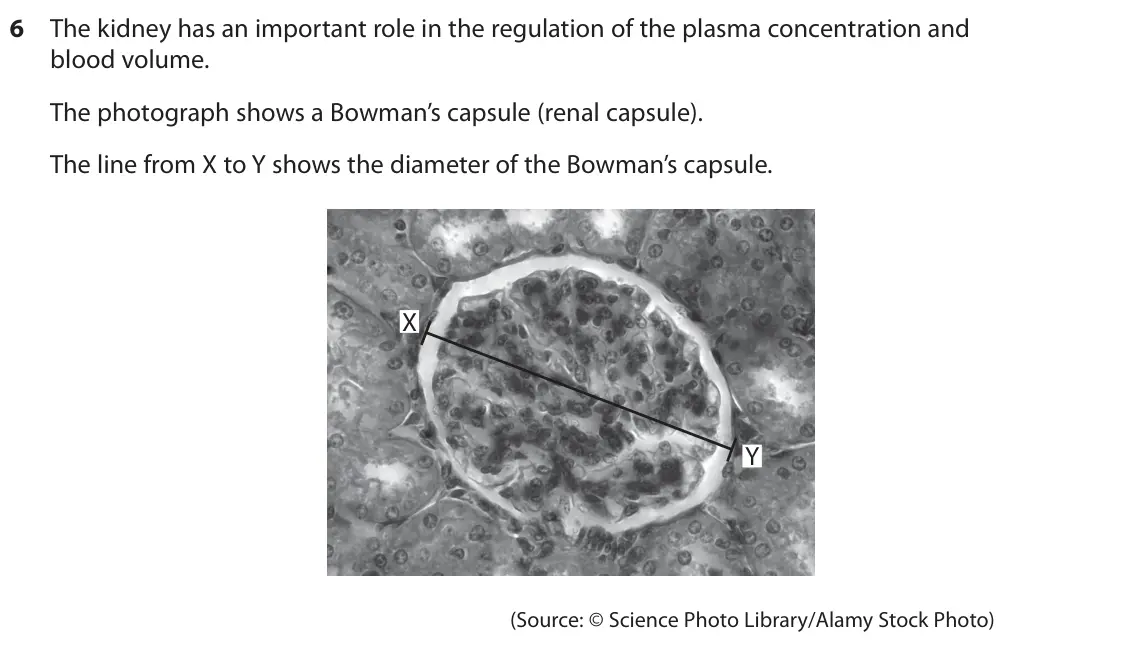 Your answer
Q6(b)(ii)
The whole paper ↗Q6(c)
The whole paper ↗Q2(a)(iii)
The whole paper ↗ Your answer
Q7(b)
The whole paper ↗
Q7(c)
The whole paper ↗Q7(c)(i)
The whole paper ↗
Q7(c)(ii)
The whole paper ↗Q5(c)(i)
The whole paper ↗
Q5(c)(ii)
The whole paper ↗Q5(c)(iii)
The whole paper ↗Q5(a)
The whole paper ↗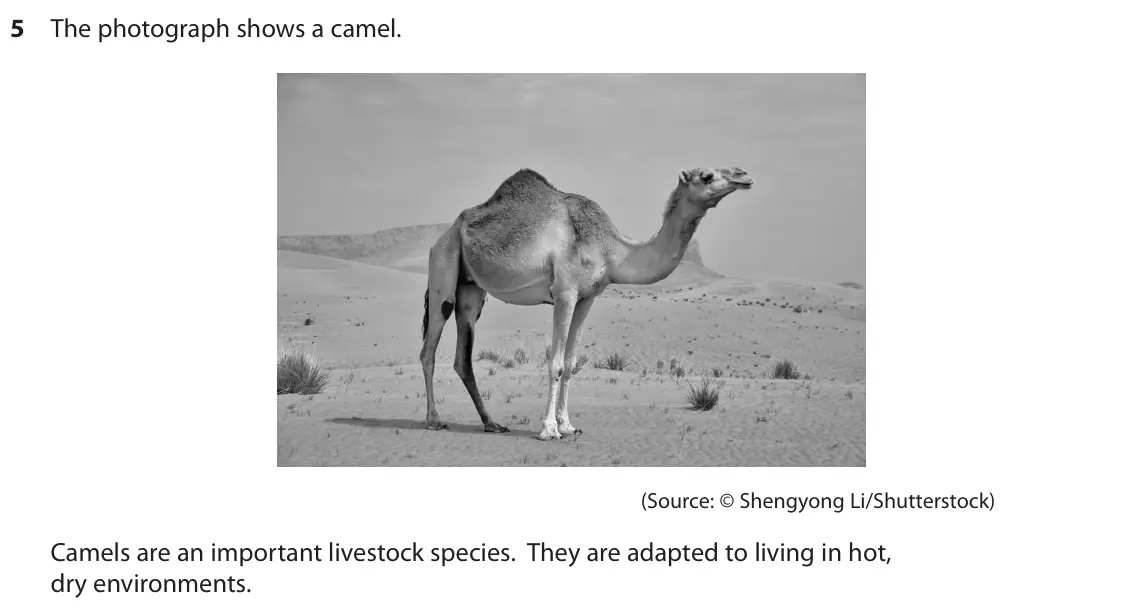 Your answer
Q3(a)(i)
The whole paper ↗ Your answer
Q3(a)(ii)
The whole paper ↗Your answer
All 26 questions on ADH and control of plasma concentration, as a list
- January 2025, Unit 5, Q3(b)(i) (2 marks): Calculate the volume of urine produced in one day with an ADH concentration of 75%. Assume that the concentration of ADH stays constant throughout the day. Give
- January 2025, Unit 5, Q3(b)(ii) (2 marks): Describe the effect of ADH concentration on the concentration of urine and the rate of urine production. (2)
- January 2025, Unit 5, Q3(c) (3 marks): Explain how ADH affects the movement of water from the lumen of the collecting duct into the blood. (3)
- January 2025, Unit 5, Q8(a) (1 mark): Give one reason why ‘optimal hydration’ is beneficial (paragraph 1). (1)
- January 2025, Unit 5, Q8(c) (2 marks): Explain one reason why a ‘typical man’ has a larger daily requirement for water compared with a ‘typical woman’ (paragraph 9). (2)
- January 2025, Unit 5, Q8(d) (5 marks): Explain how the sodium ion concentration in the blood is kept within a narrow range (paragraph 17). (5)
- October 2024, Unit 5, Q6(b)(i) (1 mark): Which is the specialised receptor that detects changes in the plasma solute concentration? (1) A baroreceptor B chemoreceptor C osmoreceptor D thermoreceptor
- October 2024, Unit 5, Q6(b)(ii) (1 mark): Suggest one reason why the plasma solute concentration of the blood needs to be kept within a narrow range. (1)
- October 2024, Unit 5, Q6(c) (4 marks): Drinking too much water causes the plasma solute concentration to decrease and the blood volume to increase. Describe how the body responds to this change. (4)
- June 2024, Unit 5, Q2(a)(iii) (1 mark): Which labelled parts would be involved in controlling the solute concentration of blood plasma? (1) A P and Q B Q and R C P and R D S and T
- June 2024, Unit 5, Q7(b) (4 marks): A group of individuals gave a urine sample and then immediately drank 1 000 cm3 of water. Urine samples were then collected at 30-minute intervals. The volumes
- June 2024, Unit 5, Q7(c) (3 marks): A person with hyponatraemia suffers from excessive production of antidiuretic hormone (ADH) from the pituitary gland. This causes changes in the sodium ion conc
- January 2024, Unit 5, Q7(c)(i) (2 marks): Calculate the difference in urine produced over seven days by the kangaroo rat and by the human. Give your answer in standard form. (2) Answer
- January 2024, Unit 5, Q7(c)(ii) (4 marks): Comment on the differences in water gain and water loss between the kangaroo rat and the human. Use your knowledge and information in the diagram to support and
- June 2023, Unit 5, Q5(c)(i) (2 marks): Calculate the ratio of the mean rate of urine production for the females in the three groups. Express your answer as nothing to drink : water to drink : salt so
- June 2023, Unit 5, Q5(c)(ii) (2 marks): Describe two conclusions that can be drawn from the results of this investigation. (2)
- June 2023, Unit 5, Q5(c)(iii) (2 marks): Explain the effect on the mean urine output of the group drinking water. (2)
- October 2022, Unit 5, Q5(a) (1 mark): How many of the following adaptations enable a camel to reduce its water loss? • production of very concentrated urine • high glomerular filtration rate • long
- June 2022, Unit 5, Q3(a)(i) (1 mark): Which of the following produces ADH? (1) A adrenal gland B hypothalamus C medulla oblongata D pituitary gland
- June 2022, Unit 5, Q3(a)(ii) (1 mark): Which structures does ADH act on? (1) A capillaries B collecting ducts C proximal tubules D ureters
- June 2022, Unit 5, Q3(a)(iii) (1 mark): The control of plasma concentration and blood volume in the body is an example of which type of process? (1) A countercurrent multiplier B habituation C negativ
- June 2022, Unit 5, Q3(a)(iv) (1 mark): Name the type of receptor in the body that detects changes in the plasma concentration. (1)
- January 2022, Unit 5, Q4(c) (4 marks): Describe how ADH is involved in the control of the water potential of the blood. (4)
- June 2021, Unit 5, Q4(a) (1 mark): Antidiuretic hormone (ADH) is required for homeostasis. How many of these parts of the kidney respond to ADH? • Bowman’s capsule • collecting duct • loop of Hen
- October 2020, Unit 5, Q3(a)(ii) (2 marks): Calculate the rate of removal of ADH from the blood between 4 and 8 hours. (2) Answer
- October 2020, Unit 5, Q3(b) (6 marks): Taking MDMA causes a person to be very thirsty. This can lead to swelling of the brain, which can be fatal. The table shows some laboratory results for one case
Questions, mark schemes and examiner’s reports are © Pearson Edexcel, from their published past papers. Plumi isn’t affiliated with any exam board. Want whole papers? Edexcel International A Level Biology past papers.
The Plumi iPad app also offers exam-style questions with AI feedback on your handwritten working.