 plumi
Bacteriostatic and bactericidal antibiotics: Edexcel International A Level Biology questions
Edexcel International A Level Biology past-paper questions on 6.4.1 Bacteriostatic and bactericidal antibiotics, 2019–2025, with mark schemes and examiner’s reports where available.
Paper
All papers
Exam
All years
Calculations
Q2(b)
The whole paper ↗
Q2(c)(i)
The whole paper ↗Q2(c)(ii)
The whole paper ↗Q2(c)(iii)
The whole paper ↗Q6(a)
The whole paper ↗
Q6(b)
The whole paper ↗Your answerQ6(c)
The whole paper ↗Q6(d)
The whole paper ↗Q6(e)(i)
The whole paper ↗Q6(e)(ii)
The whole paper ↗Q7(b)(ii)
The whole paper ↗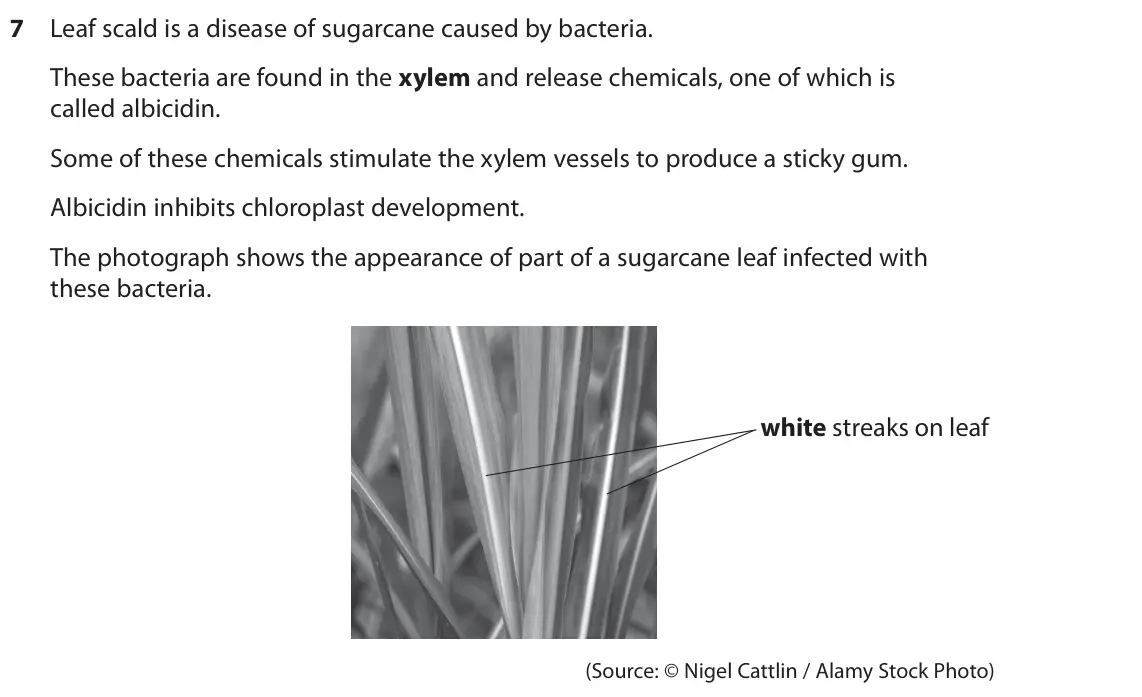
Q7(b)(iii)
The whole paper ↗Q6(a)
The whole paper ↗ Your answer
Q6(b)(ii)
The whole paper ↗Q6(c)(i)
The whole paper ↗Q6(c)(ii)
The whole paper ↗Q6(c)(iii)
The whole paper ↗Q1(b)(i)
The whole paper ↗
Q3(a)
The whole paper ↗
Q3(b)(i)
The whole paper ↗
All 36 questions on Bacteriostatic and bactericidal antibiotics, as a list
- June 2025, Unit 4, Q2(b) (1 mark): State the meaning of the term antibiotic. (1)
- June 2025, Unit 4, Q2(c)(i) (1 mark): State one conclusion about the effect of the control on the variety of bacteria in the gut flora. (1)
- June 2025, Unit 4, Q2(c)(ii) (1 mark): Estimate the decrease in the proportion of bacteria type C in the group given the antibiotic. (1) Answer
- June 2025, Unit 4, Q2(c)(iii) (2 marks): Explain how treatment with antibiotics can affect the gut flora. (2)
- January 2025, Unit 4, Q6(a) (1 mark): State the meaning of the term antibiotic. (1)
- January 2025, Unit 4, Q6(b) (1 mark): In 2019, 1.27 million deaths were due to antibiotic resistance. It is estimated that this will rise to 10 million per year in 2050. Which is the percentage incr
- January 2025, Unit 4, Q6(c) (2 marks): Explain why it is important that these new types of drugs are developed. (2)
- January 2025, Unit 4, Q6(d) (2 marks): The diagram shows the structure of the cell wall of a bacterial cell. It also shows the cell membrane. The molecules in the outer membrane vary in different typ
- January 2025, Unit 4, Q6(e)(i) (2 marks): Describe two conclusions that can be made about the effects of these three antibiotics on the species richness of gut flora. (2)
- January 2025, Unit 4, Q6(e)(ii) (3 marks): Explain the advantages of adding this new drug when treating a bacterial infection with antibiotic C. (3)
- October 2024, Unit 4, Q7(b)(ii) (3 marks): Albicidin is being developed as an antibiotic to human pathogens. Suggest why albicidin can be used as an antibiotic. Use the information in the question to sup
- October 2024, Unit 4, Q7(b)(iii) (2 marks): Explain the importance of developing new antibiotics, such as albicidin. (2)
- June 2024, Unit 4, Q6(a) (1 mark): Samples of water were taken from 120 ponds. Of these, 74 of the ponds had been treated previously with antibiotics. Which of the following is the percentage of
- June 2024, Unit 4, Q6(b)(ii) (3 marks): The graph shows the effect of different concentrations of heavy metals on the survival of the Vibrio collected from each of the 121 ponds. Key Copper ions 120 N
- June 2024, Unit 4, Q6(c)(i) (3 marks): The scientists expected the percentage of resistant bacteria to be higher in the samples of Vibrio taken from the ponds previously treated with antibiotics. Exp
- June 2024, Unit 4, Q6(c)(ii) (1 mark): Some of the antibiotics used were bacteriostatic and some were bactericidal. State the difference between a bacteriostatic antibiotic and a bactericidal antibio
- June 2024, Unit 4, Q6(c)(iii) (2 marks): The method did not distinguish between bacteriostatic and bactericidal antibiotics because no colonies grew. Suggest how the method would need to be modified to
- January 2024, Unit 6, Q1(b)(i) (2 marks): State what is meant by the terms bacteriostatic and bactericidal antibiotics. (2)
- June 2023, Unit 4, Q3(a) (2 marks): Compare and contrast bacteriostatic antibiotics with bactericidal antibiotics. (2)
- June 2023, Unit 4, Q3(b)(i) (3 marks): Describe how this chromatogram could be produced. (3)
- June 2023, Unit 4, Q3(b)(ii) (1 mark): Which identifies the antibiotic in the diagram and the method used? (1) A tetracycline, using method 1 B tetracycline, using method 2 C vancomycin, using method
- June 2023, Unit 4, Q3(b)(iii) (2 marks): Explain why the four values in the table are all different from each other. (2)
- January 2023, Unit 4, Q1(b) (1 mark): How much more antibiotic is in part B3 than in part B2? (1) A 0.5 times B 5.0 times C 50.0 times D 500.0 times
- October 2022, Unit 4, Q7(c) (2 marks): Suggest how weakening the MRSA bacteria could help the recovery of a patient infected with this bacteria. (2)
- June 2022, Unit 4, Q1(a) (1 mark): Give the meaning of the term bactericidal antibiotic. (1)
- June 2022, Unit 4, Q1(b) (1 mark): State why antibiotics affect bacteria and usually not the person taking them. (1)
- June 2022, Unit 4, Q1(d) (3 marks): The charts show the types of bacteria present in the throat of a patient, before and after treatment with an antibiotic. Key: Type J Type K Type L Type M Type N
- October 2021, Unit 4, Q5(c)(i) (2 marks): Explain
- October 2021, Unit 4, Q5(c)(ii) (2 marks): Explain why there was one column that had no antimicrobial substance added to it (column 12). (2)
- October 2021, Unit 4, Q5(c)(iv) (2 marks): Calculate how many times more effective the antimicrobial substance used in row G is than the antimicrobial substance used in row E. (2) Answer
- June 2021, Unit 4, Q8(a)(i) (2 marks): This patient was given a combination of antibiotics for several months. Explain why a combination of antibiotics had to be given for several months. (2)
- January 2021, Unit 4, Q2(a) (2 marks): The table shows some medical conditions and whether or not antibiotics are needed to treat the condition. Are antibiotics needed Medical condition to treat the
- January 2021, Unit 4, Q2(b) (1 mark): The graph shows the effect of three drugs, J, K and L, on the number of bacteria in a culture. drug J Number of bacteria drug K drug L Time Which row of the tab
- January 2021, Unit 4, Q2(c)(ii) (2 marks): Explain why antibiotics can affect gut flora. (2)
- January 2021, Unit 4, Q2(c)(iii) (1 mark): The number of type A in gut flora in the absence of antibiotics is 6000000. Estimate the number of type B in gut flora in the absence of antibiotics. Give your
- January 2021, Unit 4, Q2(c)(iv) (3 marks): Deduce the effects of antibiotics P, Q and R on gut flora. (3)
Questions, mark schemes and examiner’s reports are © Pearson Edexcel, from their published past papers. Plumi isn’t affiliated with any exam board. Want whole papers? Edexcel International A Level Biology past papers.
The Plumi iPad app also offers exam-style questions with AI feedback on your handwritten working.