 plumi
Static electricity: Edexcel GCSE Physics questions
Every Edexcel GCSE Physics exam question on Static electricity (specification points 11.1–11.7), 2018–2025, with its mark scheme and examiner’s report.
Find questions1,554
Exam
All years
Calculations
Q4(b)(i)
The whole paper ↗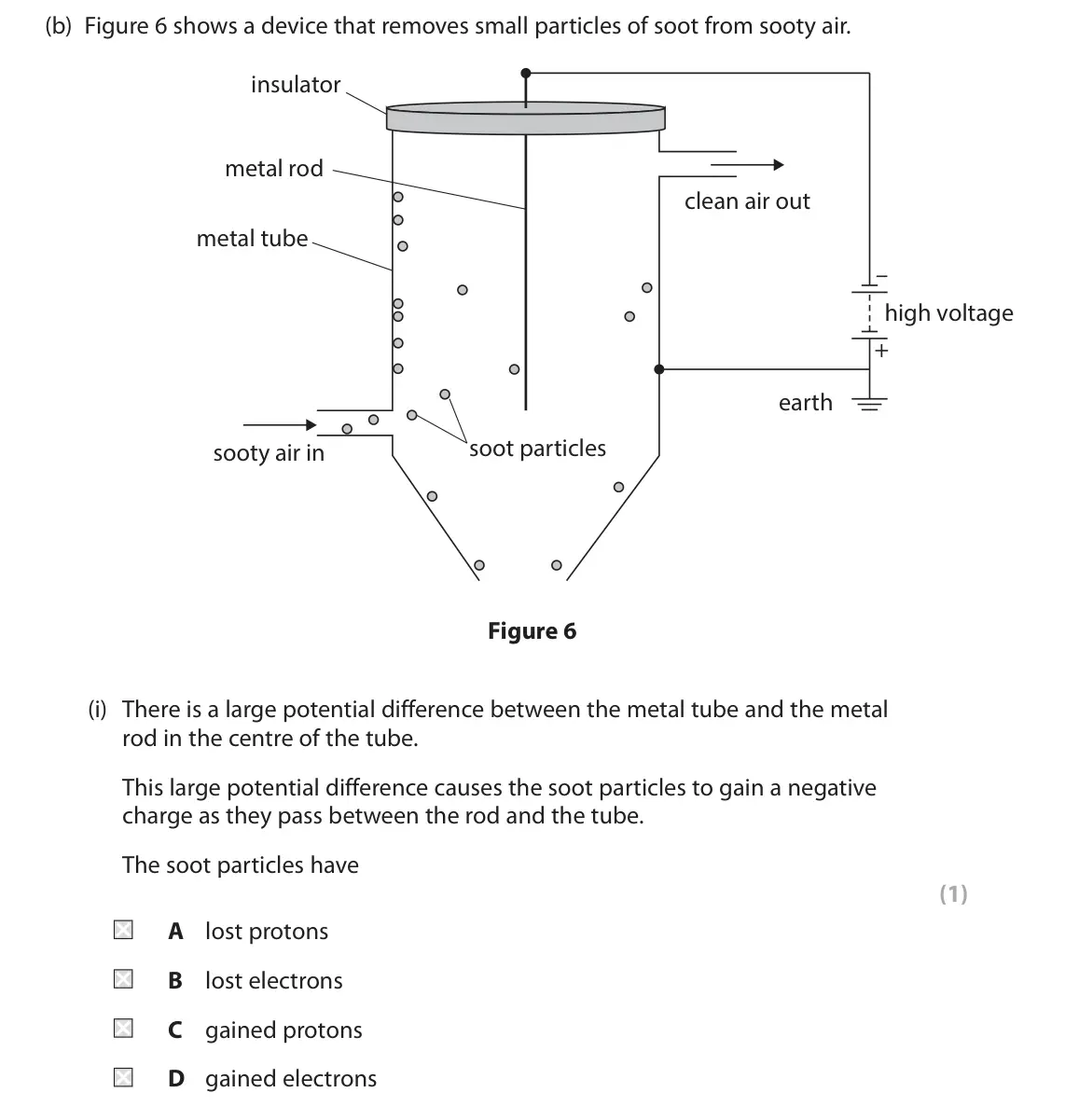
Q4(b)(iii)
The whole paper ↗
Q4(b)(iv)
The whole paper ↗
Q10(b)(i)
The whole paper ↗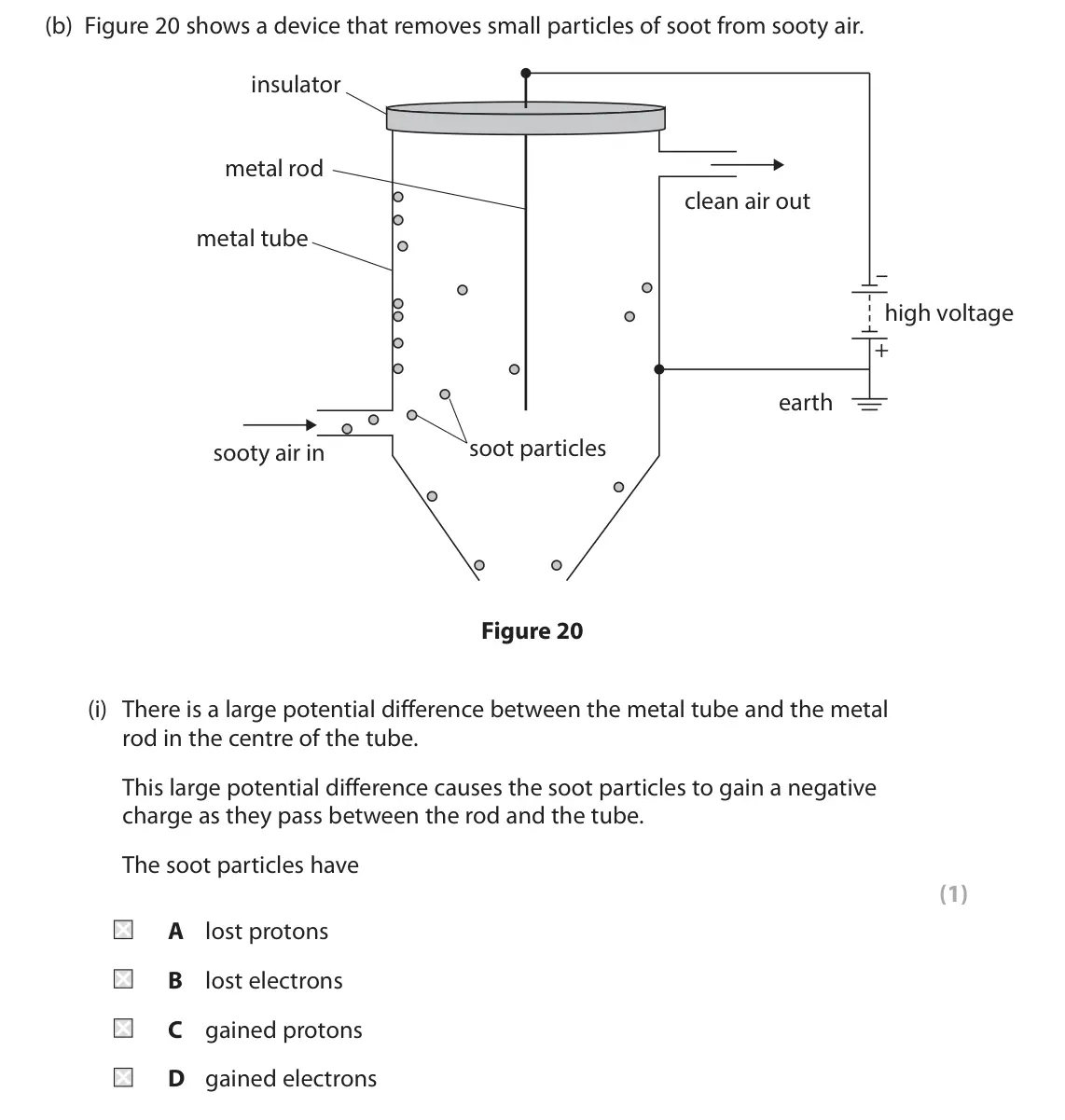
Q10(b)(iii)
The whole paper ↗
Q10(b)(iv)
The whole paper ↗
Q1(a)
The whole paper ↗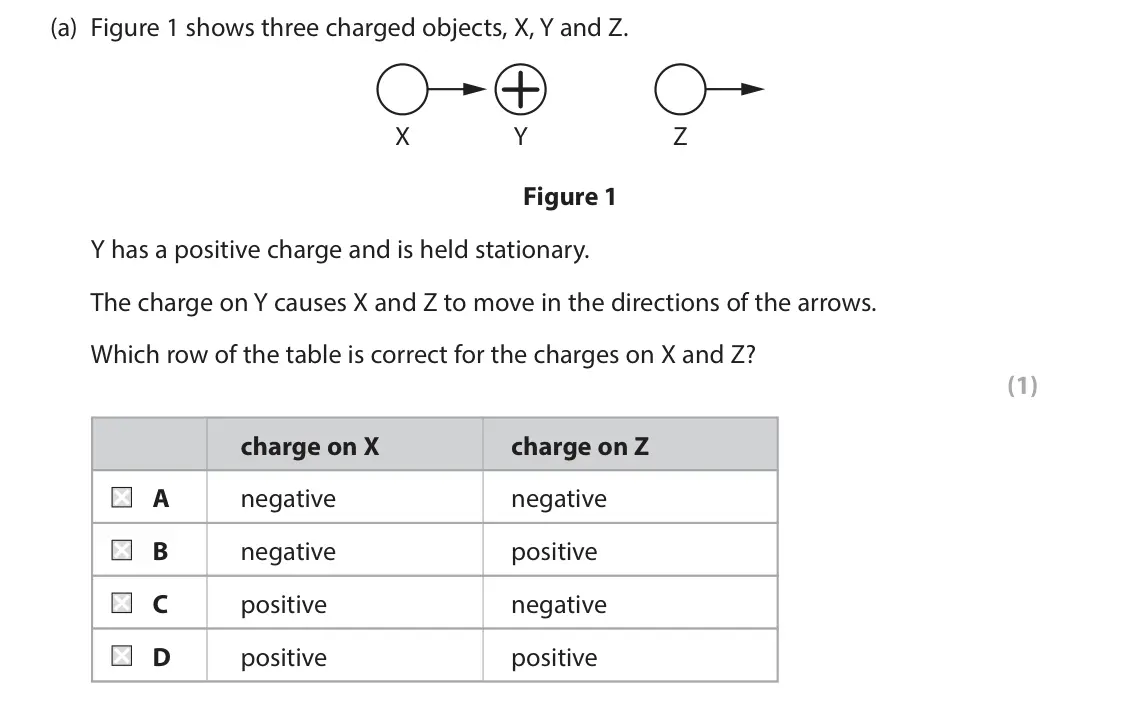
Q3(a)
The whole paper ↗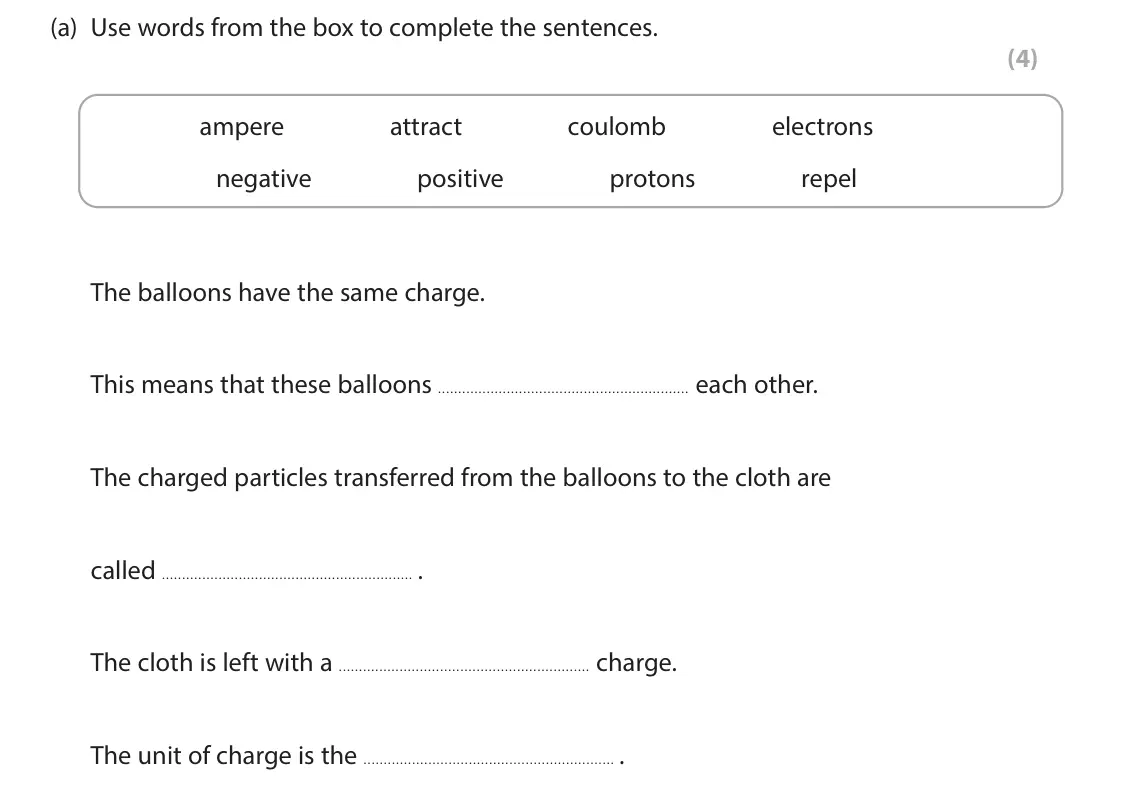
Q3(b)
The whole paper ↗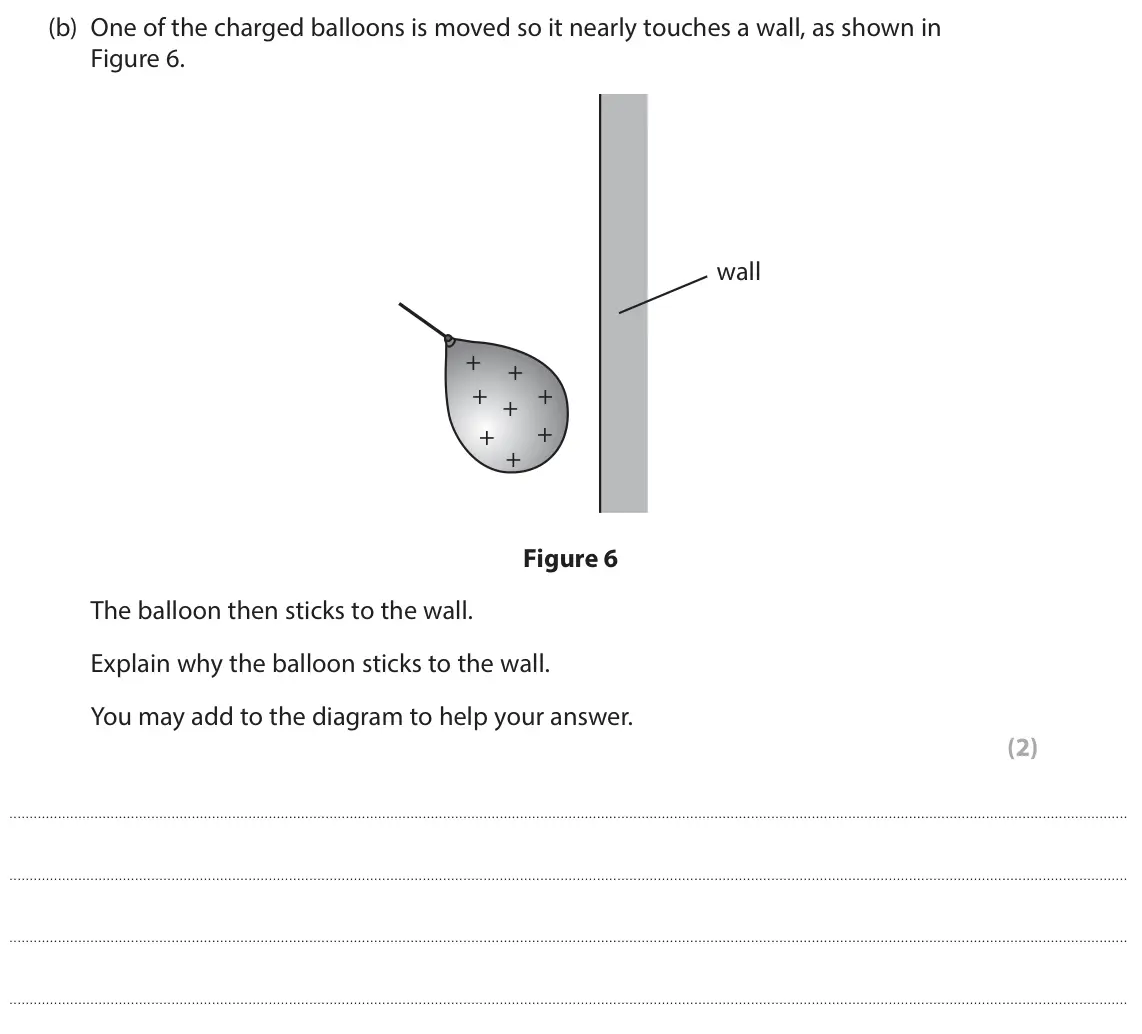
Q3(c)
The whole paper ↗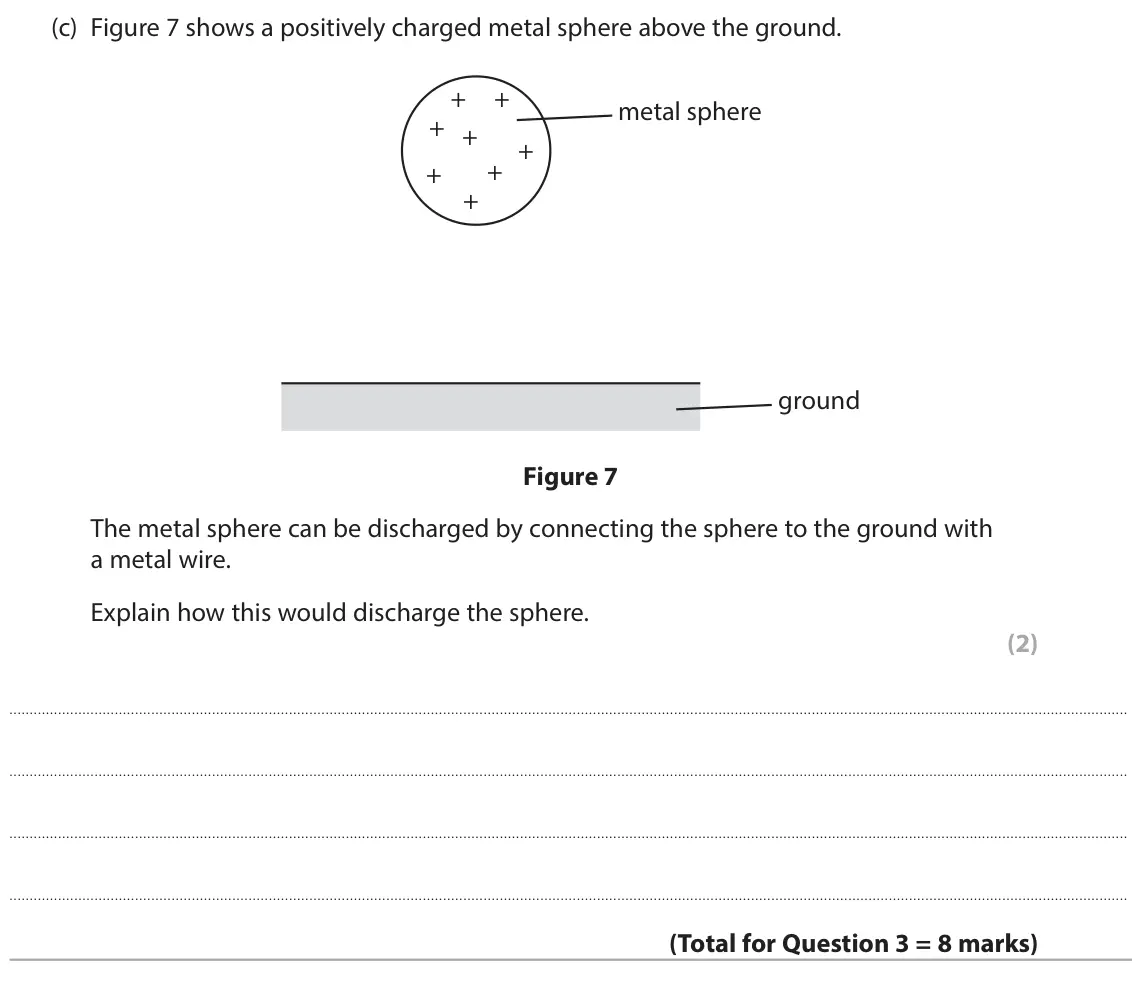
Q1(a)(i)
The whole paper ↗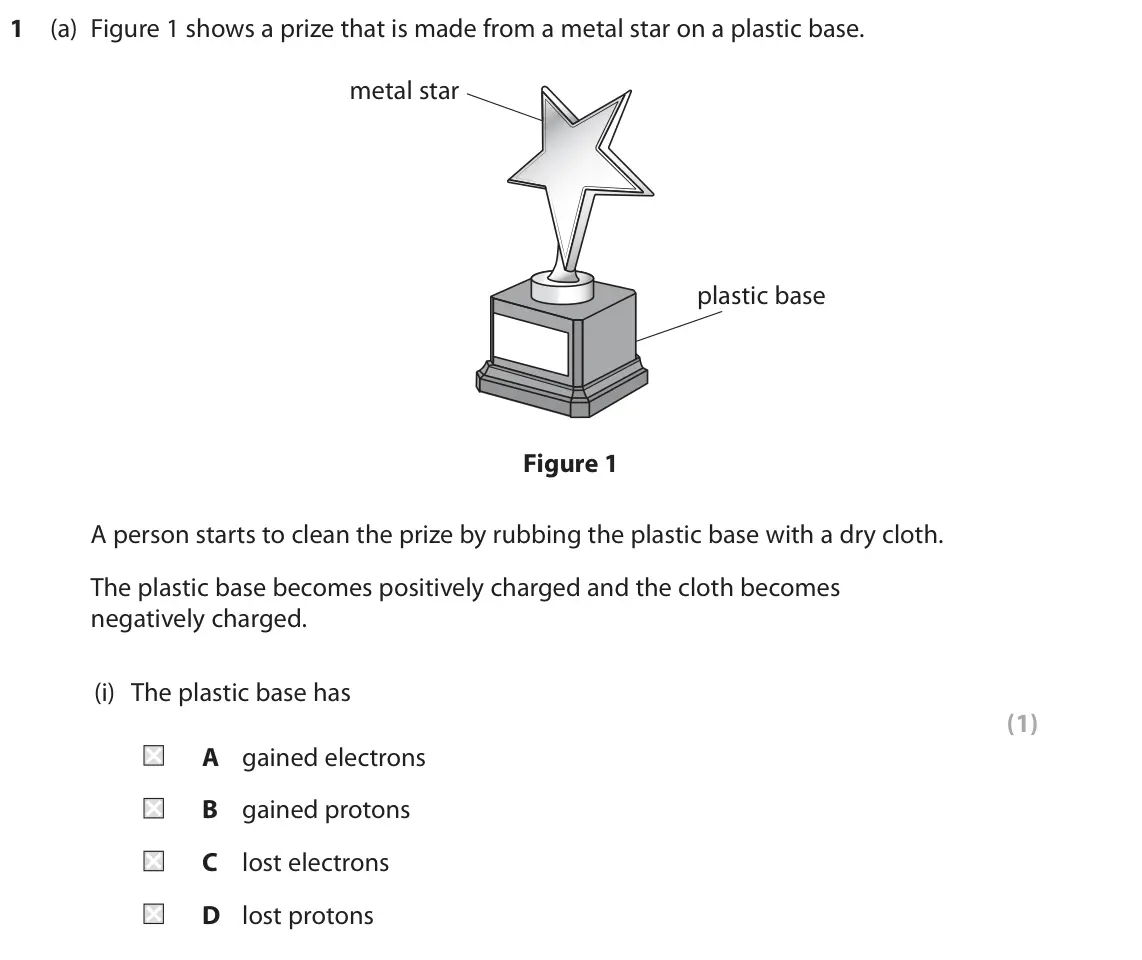
Q1(a)(ii)
The whole paper ↗
Q1(b)
The whole paper ↗
Q1(c)
The whole paper ↗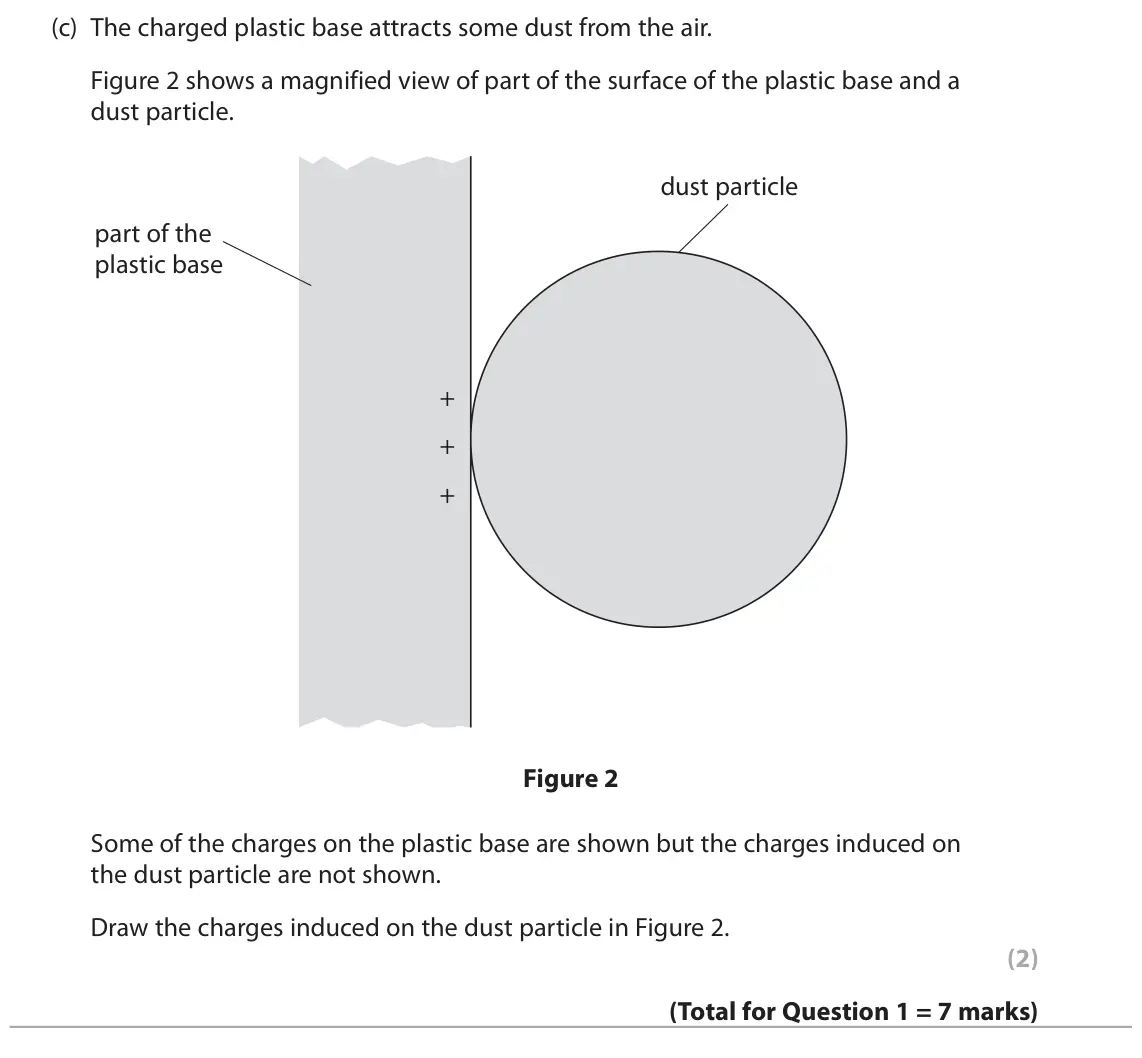
Q1(a)
The whole paper ↗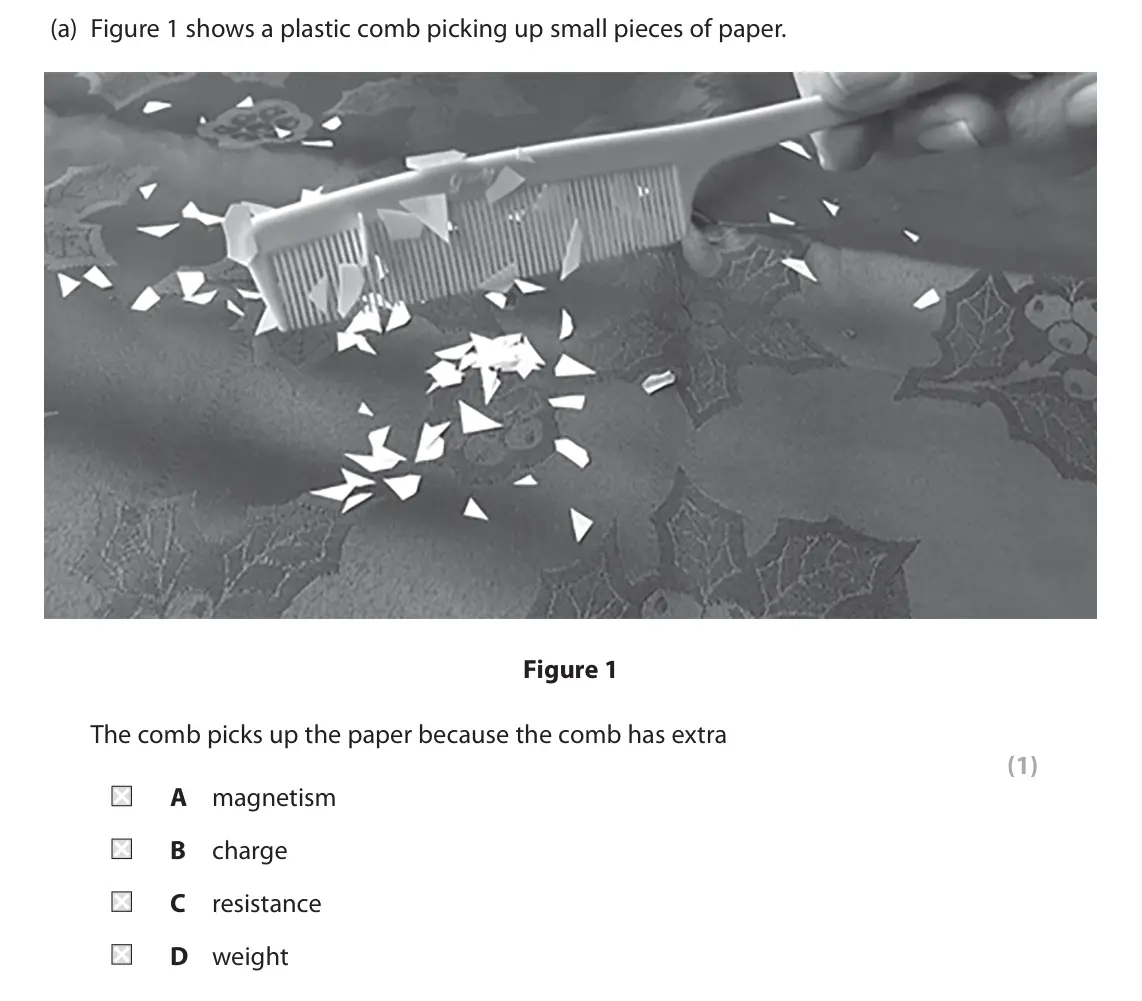
Q1(b)(i)
The whole paper ↗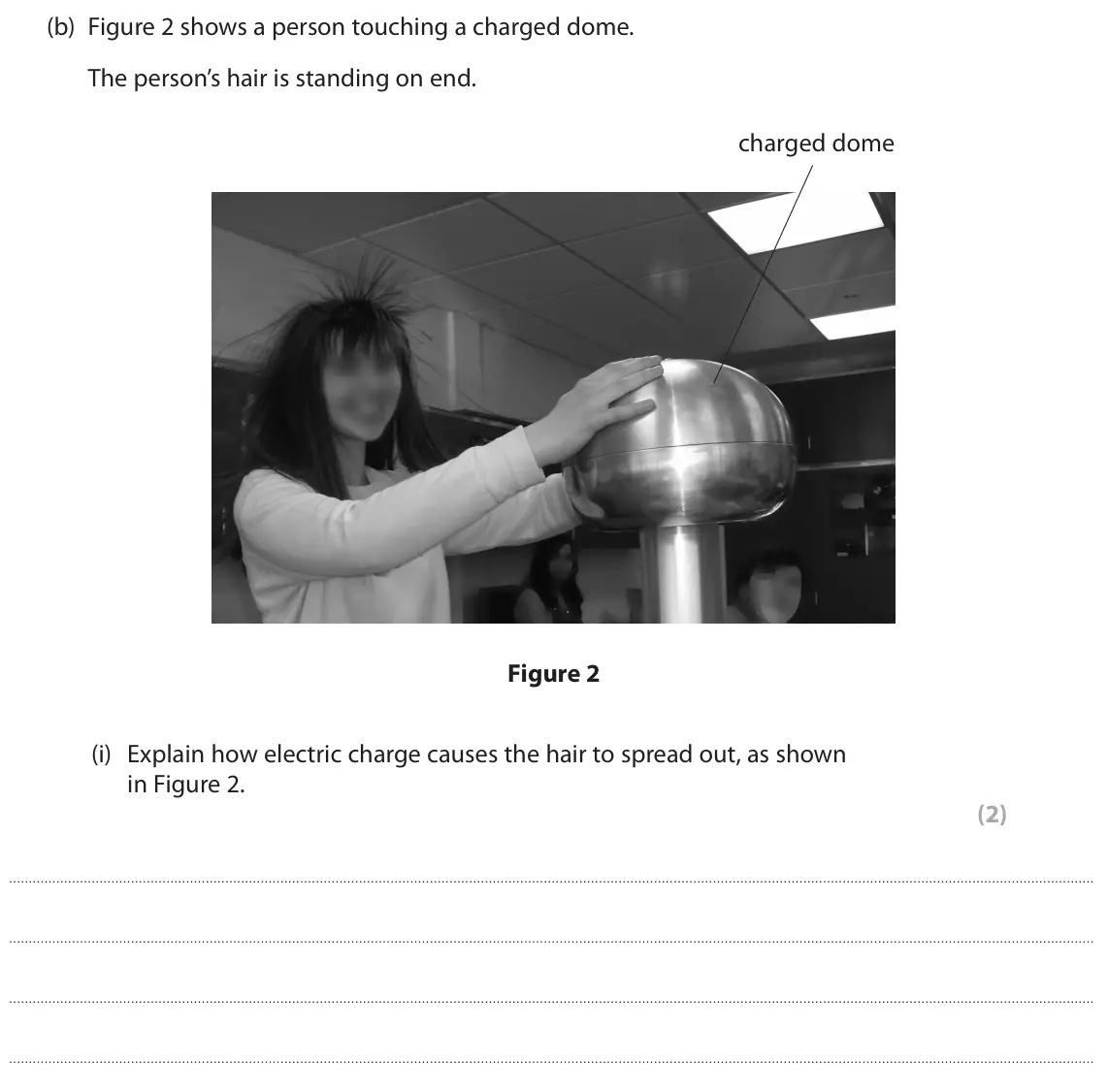
Q1(b)(ii)
The whole paper ↗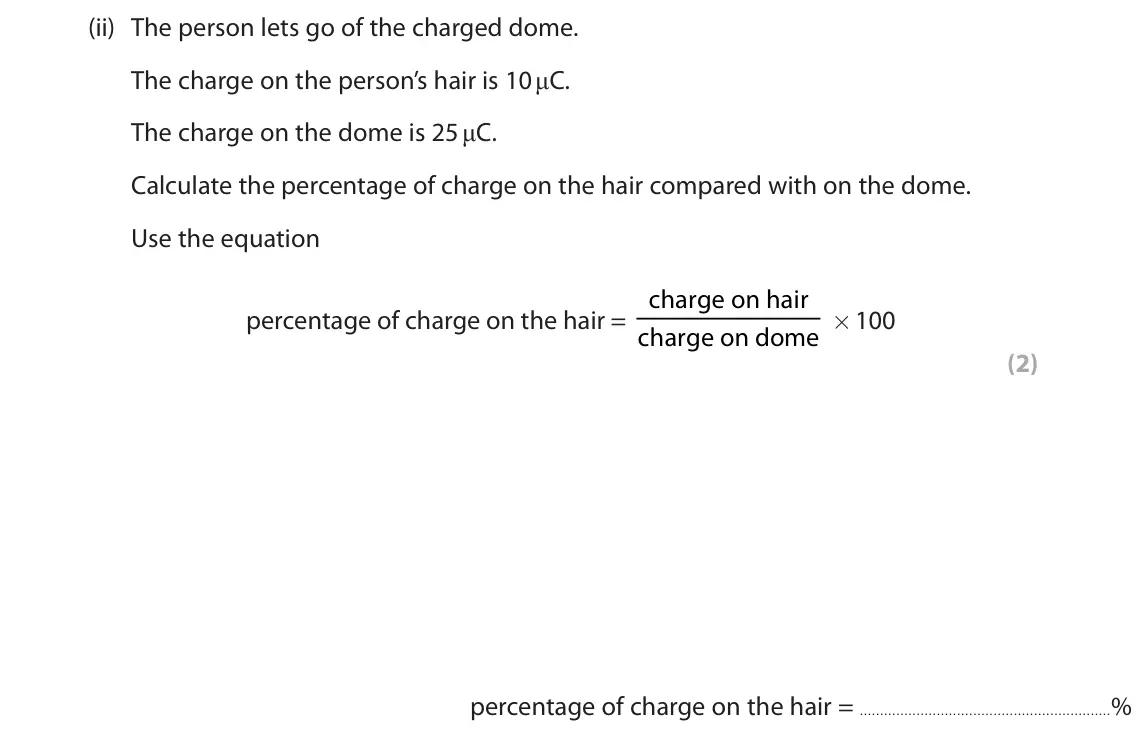
Q1(c)
The whole paper ↗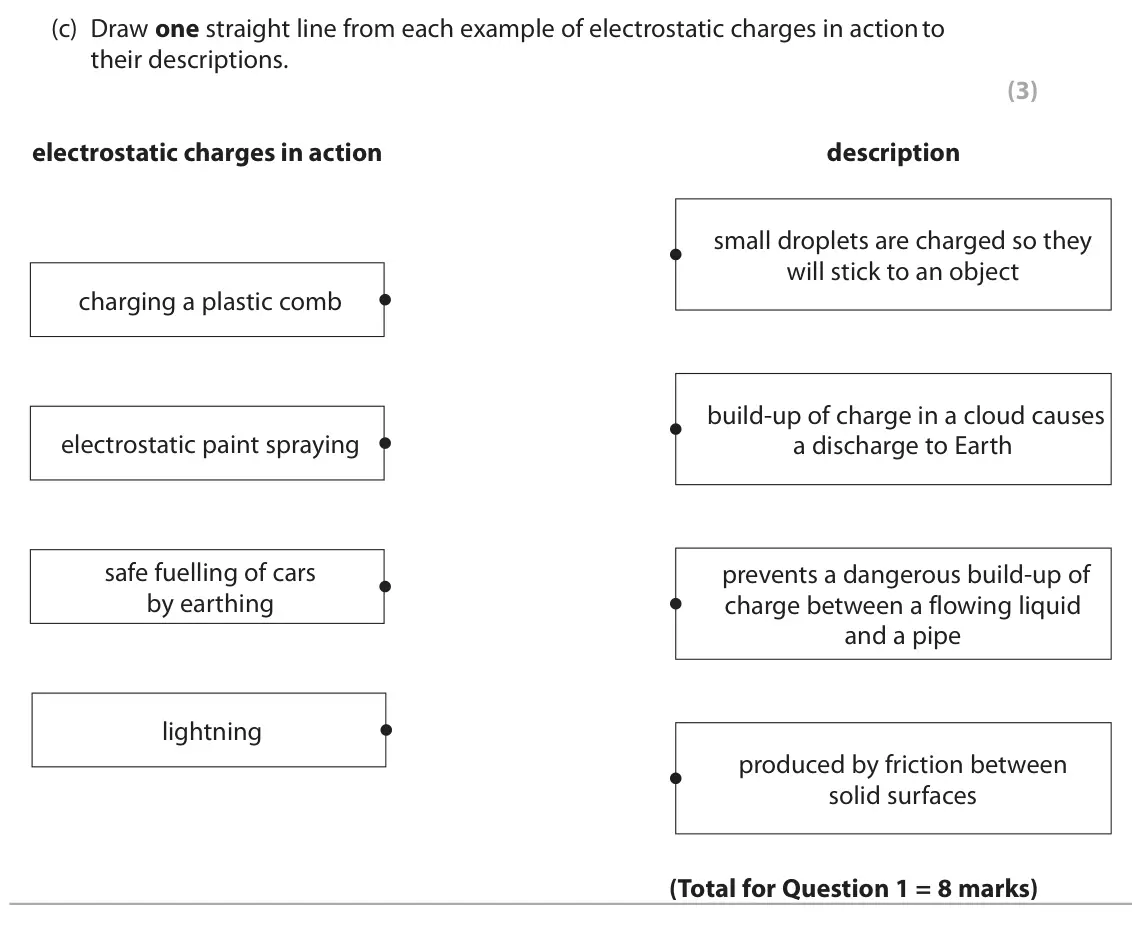
Q1(b)
The whole paper ↗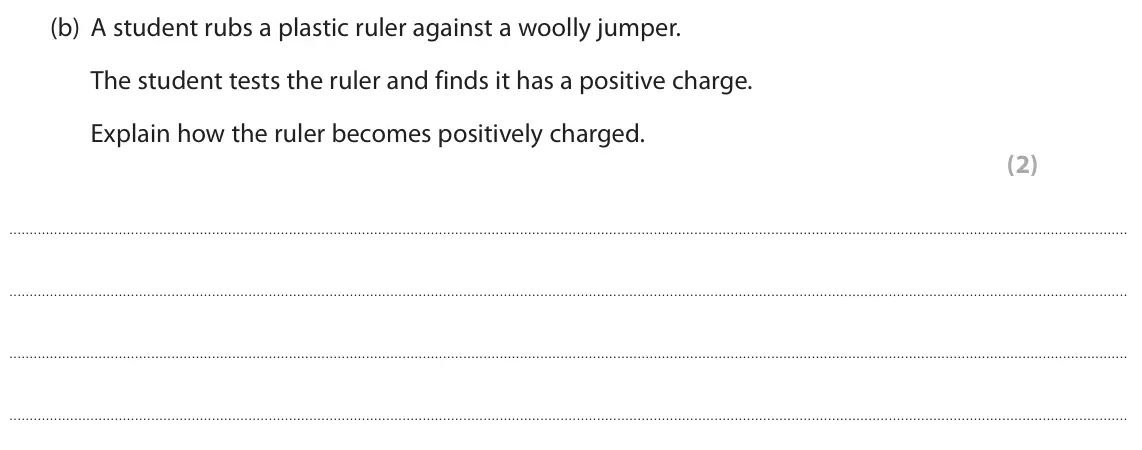
Q1(c)
The whole paper ↗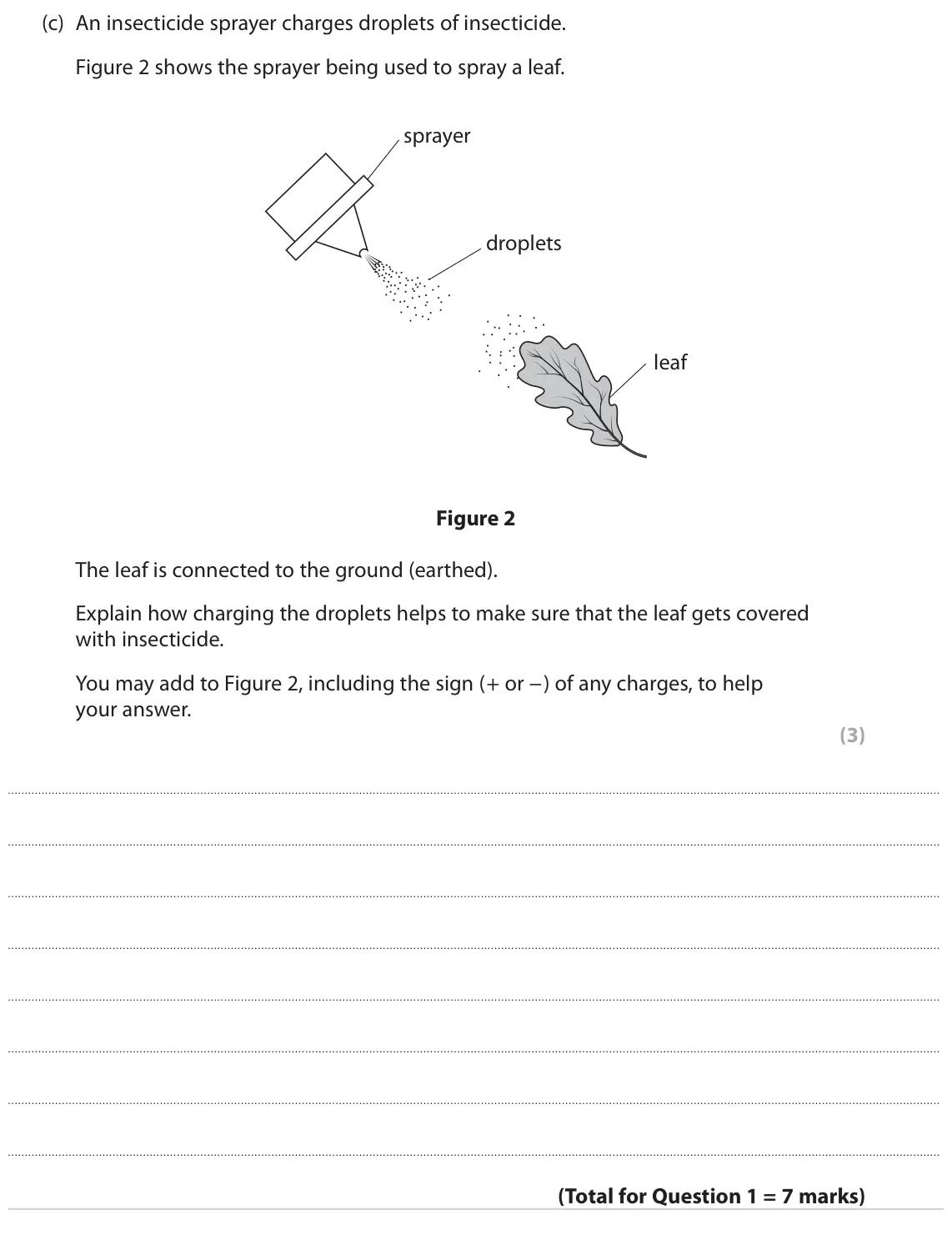
All 53 questions on Static electricity, as a list
- June 2025, Paper 2 Higher, Q4(b)(i) (1 mark): There is a large potential difference between the metal tube and the metal rod in the centre of the tube. This large potential difference causes the soot partic
- June 2025, Paper 2 Higher, Q4(b)(iii) (1 mark): When the soot particles reach the metal tube, the charge on them changes. State how the charge on them changes. (1)
- June 2025, Paper 2 Higher, Q4(b)(iv) (2 marks): The metal tube does not become charged when the soot particles reach it. Explain why the metal tube does not become charged. (2)
- June 2025, Paper 2 Foundation, Q10(b)(i) (1 mark): There is a large potential difference between the metal tube and the metal rod in the centre of the tube. This large potential difference causes the soot partic
- June 2025, Paper 2 Foundation, Q10(b)(iii) (1 mark): When the soot particles reach the metal tube, the charge on them changes. State how the charge on them changes. (1)
- June 2025, Paper 2 Foundation, Q10(b)(iv) (2 marks): The metal tube does not become charged when the soot particles reach it. Explain why the metal tube does not become charged. (2)
- June 2024, Paper 2 Higher, Q1(a) (1 mark): Figure 1 shows three charged objects, X, Y and Z. X Y Z Figure 1 Y has a positive charge and is held stationary. The charge on Y causes X and Z to move in the d
- June 2024, Paper 2 Foundation, Q3(a) (4 marks): Use words from the box to complete the sentences. (4) ampere attract coulomb electrons negative positive protons repel The balloons have the same charge. This m
- June 2024, Paper 2 Foundation, Q3(b) (2 marks): One of the charged balloons is moved so it nearly touches a wall, as shown in Figure 6. wall + + + + + + + + Figure 6 The balloon then sticks to the wall. Expla
- June 2024, Paper 2 Foundation, Q3(c) (2 marks): Figure 7 shows a positively charged metal sphere above the ground. + + metal sphere + + + + + + ground Figure 7 The metal sphere can be discharged by connecting
- June 2023, Paper 2 Higher, Q1(a)(i) (1 mark): The plastic base has (1) A gained electrons B gained protons C lost electrons D lost protons
- June 2023, Paper 2 Higher, Q1(a)(ii) (2 marks): Explain why the cloth has become negatively charged. (2)
- June 2023, Paper 2 Higher, Q1(b) (2 marks): The person then holds the metal star and rubs it with the charged cloth. The cloth loses its charge. Explain why the cloth loses its charge. (2)
- June 2023, Paper 2 Higher, Q1(c) (2 marks): The charged plastic base attracts some dust from the air. Figure 2 shows a magnified view of part of the surface of the plastic base and a dust particle. dust p
- June 2023, Paper 2 Foundation, Q1(a) (1 mark): Figure 1 shows a plastic comb picking up small pieces of paper. Figure 1 The comb picks up the paper because the comb has extra (1) A magnetism B charge C resis
- June 2023, Paper 2 Foundation, Q1(b)(i) (2 marks): Explain how electric charge causes the hair to spread out, as shown in Figure 2. (2)
- June 2023, Paper 2 Foundation, Q1(b)(ii) (2 marks): The person lets go of the charged dome. The charge on the person’s hair is 10 μC. The charge on the dome is 25 μC. Calculate the percentage of charge on the hai
- June 2023, Paper 2 Foundation, Q1(c) (3 marks): Draw one straight line from each example of electrostatic charges in action to their descriptions. (3) electrostatic charges in action description small droplet
- June 2022, Paper 2 Higher, Q1(b) (2 marks): A student rubs a plastic ruler against a woolly jumper. The student tests the ruler and finds it has a positive charge. Explain how the ruler becomes positively
- June 2022, Paper 2 Higher, Q1(c) (3 marks): An insecticide sprayer charges droplets of insecticide. Figure 2 shows the sprayer being used to spray a leaf. sprayer droplets leaf Figure 2 The leaf is connec
- June 2022, Paper 2 Foundation, Q7(b) (1 mark): State one way of giving a plastic rod a static electric charge. (1)
- June 2022, Paper 2 Foundation, Q7(c)(i) (1 mark): The droplets in the cloud of disinfectant have a negative charge because the sprayer (1) A adds electrons to the droplets B adds protons to the droplets C remov
- June 2022, Paper 2 Foundation, Q7(c)(ii) (2 marks): Figure 16 shows the shape of the clouds of droplets in the disinfectant from two sprayers. cloud from sprayer 1 cloud from sprayer 2 Figure 16 Sprayer 1 gives a
- June 2022, Paper 2 Foundation, Q7(c)(iii) (2 marks): Figure 17 shows a cloud of disinfectant, containing charged droplets, moving towards a seat in the bus. Figure 17 Explain how charging the droplets in the cloud
- June 2022, Paper 2 Foundation, Q7(d) (6 marks): Figure 18 shows an aeroplane being refuelled. The fuel passes through a pipe into fuel tanks in the wings. The fuel is very flammable. (Source: © Stanisław Toka
- November 2021, Paper 2 Higher, Q1(a)(i) (1 mark): Describe one way that the student can give the plastic strip an overall electric charge. (1)
- November 2021, Paper 2 Higher, Q1(a)(ii) (1 mark): Figure 1 shows a gold leaf electroscope that can be used to investigate static electricity. metal cap case insulator metal rod gold leaf Figure 1 The electrosco
- November 2021, Paper 2 Higher, Q1(b) (2 marks): Figure 2a shows another gold leaf electroscope that has been given an overall negative charge. A student connects the metal cap of the charged electroscope to e
- November 2021, Paper 2 Foundation, Q7(a)(i) (1 mark): Sphere M is negatively charged because it has (1) A gained electrons B lost electrons C gained protons D lost protons
- November 2021, Paper 2 Foundation, Q7(a)(ii) (2 marks): A metal sphere, N, is connected to earth by a wire. N is moved near to M as shown in Figure 14. spark M N metal spheres wire earth Figure 14 A spark jumps betwe
- November 2021, Paper 2 Foundation, Q7(a)(iii) (2 marks): Describe a use of earthing in everyday life. Your answer should state the use and describe why earthing is needed. (2)
- November 2021, Paper 2 Foundation, Q7(c) (6 marks): This question is about electrostatic charges and the forces between them. Figure 16 shows some apparatus that can be used to show that like charges repel and un
- November 2020, Paper 2 Higher, Q4(a)(i) (2 marks): Describe one way that the student could give the balloon an overall electrostatic charge. (2)
- November 2020, Paper 2 Higher, Q4(a)(ii) (1 mark): The student gives the balloon an overall negative charge. Which of these sentences explains why the overall charge on the balloon is negative? (1) A Negative ch
- November 2020, Paper 2 Higher, Q4(a)(iii) (3 marks): The student charges another balloon on a long thread. Explain how the student can show that the two balloons have the same type of charge. (3)
- November 2020, Paper 2 Higher, Q4(b)(i) (1 mark): Which of these diagrams shows how the charge is distributed on the metal disc? (1) A B C D
- November 2020, Paper 2 Higher, Q4(b)(ii) (2 marks): The student keeps holding the metal disc above the charged plastic block and taps the metal disc with a finger. This earths the metal disc for a short time. Exp
- November 2020, Paper 2 Foundation, Q10(a)(i) (2 marks): Describe one way that the student could give the balloon an overall electrostatic charge. (2)
- November 2020, Paper 2 Foundation, Q10(a)(ii) (1 mark): The student gives the balloon an overall negative charge. Which of these sentences explains why the overall charge on the balloon is negative? (1) A Negative ch
- November 2020, Paper 2 Foundation, Q10(a)(iii) (3 marks): The student charges another balloon on a long thread. Explain how the student can show that the two balloons have the same type of charge. (3)
- November 2020, Paper 2 Foundation, Q10(b)(i) (1 mark): Which of these diagrams shows how the charge is distributed on the metal disc? (1) A B C D
- November 2020, Paper 2 Foundation, Q10(b)(ii) (2 marks): The student keeps holding the metal disc above the charged plastic block and taps the metal disc with a finger. This earths the metal disc for a short time. Exp
- June 2019, Paper 2 Higher, Q1(a)(i) (1 mark): The paint drops have a positive charge because the sprayer (1) A removes electrons from the paint drops B adds electrons to the paint drops C removes protons fr
- June 2019, Paper 2 Higher, Q1(a)(ii) (2 marks): Figure 2 shows the spray pattern from two different paint sprayers. sprayer X sprayer Y Figure 2 Sprayer X does not charge the paint drops. Sprayer Y gives the
- June 2019, Paper 2 Higher, Q1(a)(iii) (2 marks): Sprayer Y is used in a factory to paint a metal object. The object hangs by a metal wire that is connected to earth. Explain why a metal wire is used to connect
- June 2019, Paper 2 Foundation, Q7(a)(i) (3 marks): Explain how the rod becomes positively charged. (3)
- June 2019, Paper 2 Foundation, Q7(a)(ii) (1 mark): Figure 12 shows four light balls, Q, R, S and T. Each ball is suspended on a nylon string. Balls Q, R and T are coated with a conducting material. Ball S is an
- June 2019, Paper 2 Foundation, Q7(b) (3 marks): Figure 13 shows part of a cloud, above the ground. The base of the cloud is negatively charged. − −− −− − − − Figure 13 Explain how lightning is produced betwee
- June 2019, Paper 2 Foundation, Q7(c) (6 marks): Figure 14 shows fuel being transferred to an aeroplane. fuel pipe made from material that is an insulator metal wires Figure 14 Explain why transferring fuel ca
- June 2018, Paper 2 Higher, Q4(a)(i) (3 marks): Explain how rubbing the comb with a dry cloth gives the comb a positive electric charge. (3)
- June 2018, Paper 2 Higher, Q4(a)(ii) (3 marks): Explain how the positively-charged plastic comb picks up the small pieces of paper. (3)
- June 2018, Paper 2 Foundation, Q10(a)(i) (3 marks): Explain how rubbing the comb with a dry cloth gives the comb a positive electric charge. (3)
- June 2018, Paper 2 Foundation, Q10(a)(ii) (3 marks): Explain how the positively-charged plastic comb picks up the small pieces of paper. (3)
Questions, mark schemes and examiner’s reports are © Pearson Edexcel, from their published past papers. Plumi isn’t affiliated with any exam board. Want whole papers? Every Edexcel GCSE Physics paper.
Rather write your answers by hand on iPad? Plumi marks them against the same mark schemes.