 plumi
Elasticity and springs: Edexcel GCSE Physics questions
Every Edexcel GCSE Physics exam question on Elasticity and springs (specification points 15.1–15.6), 2018–2025, with its mark scheme and examiner’s report.
Find questions1,554
Exam
All years
Calculations
Q8(a)(i)
The whole paper ↗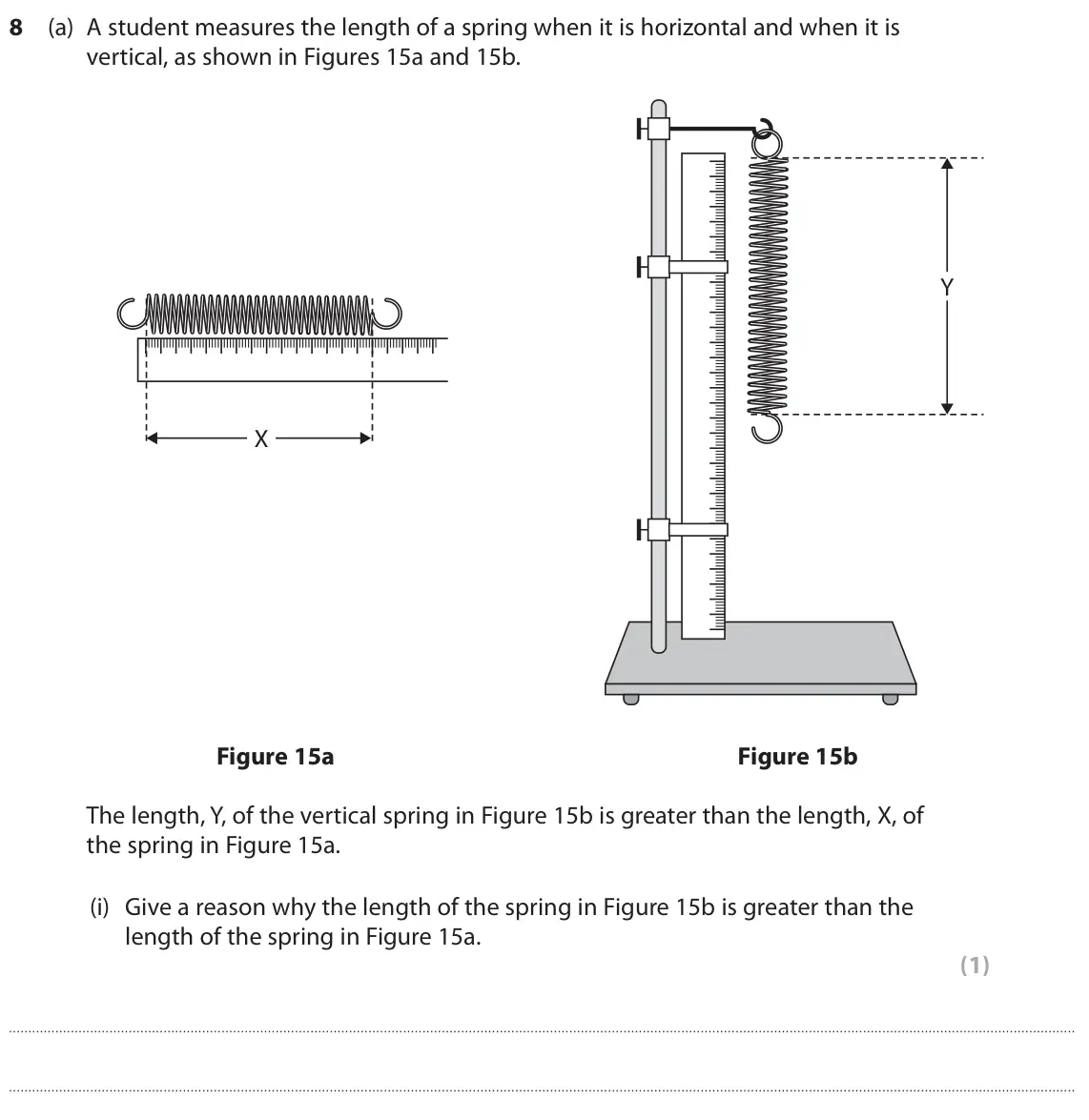
Q8(a)(ii)
The whole paper ↗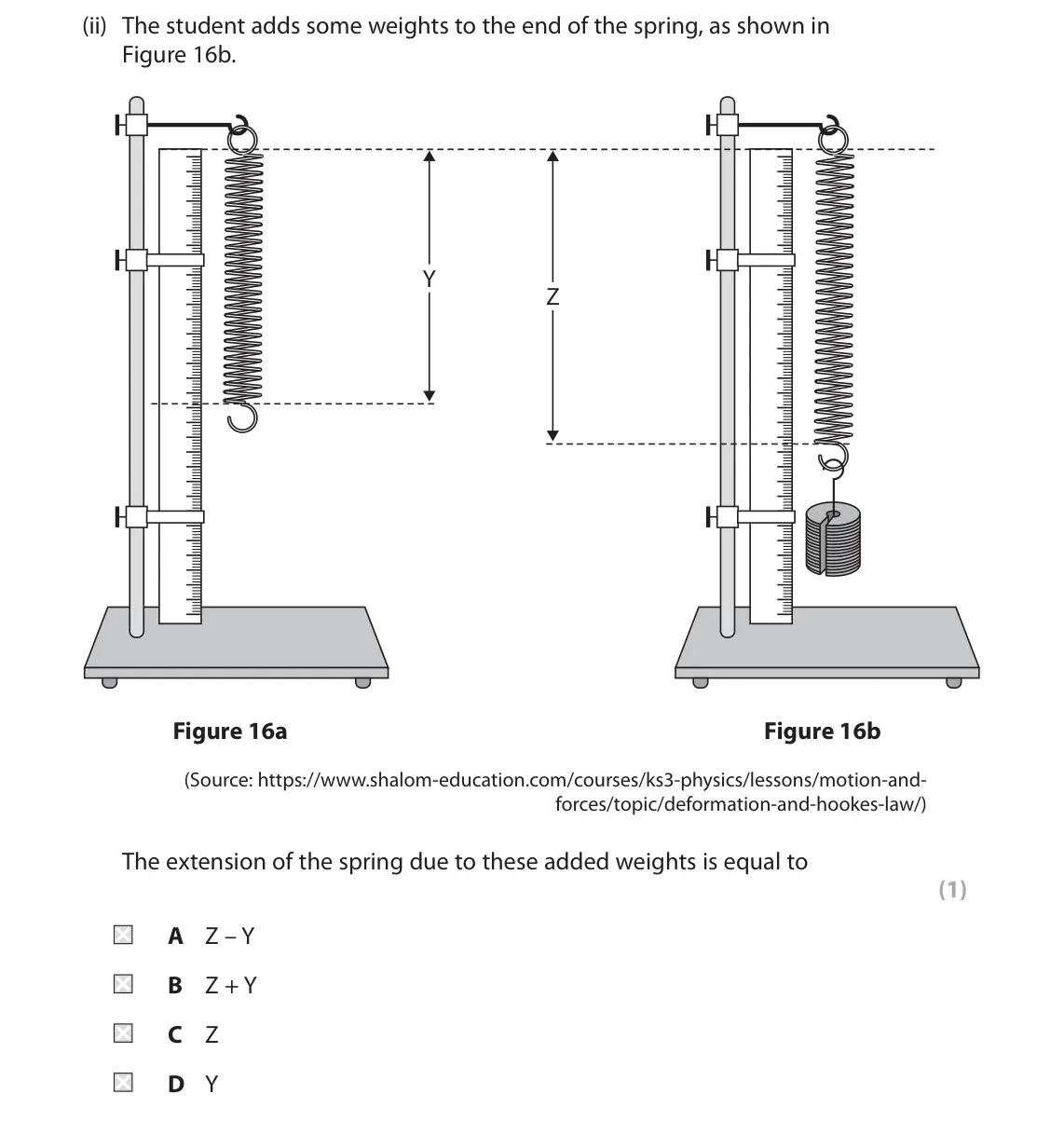
Q8(b)(i)
The whole paper ↗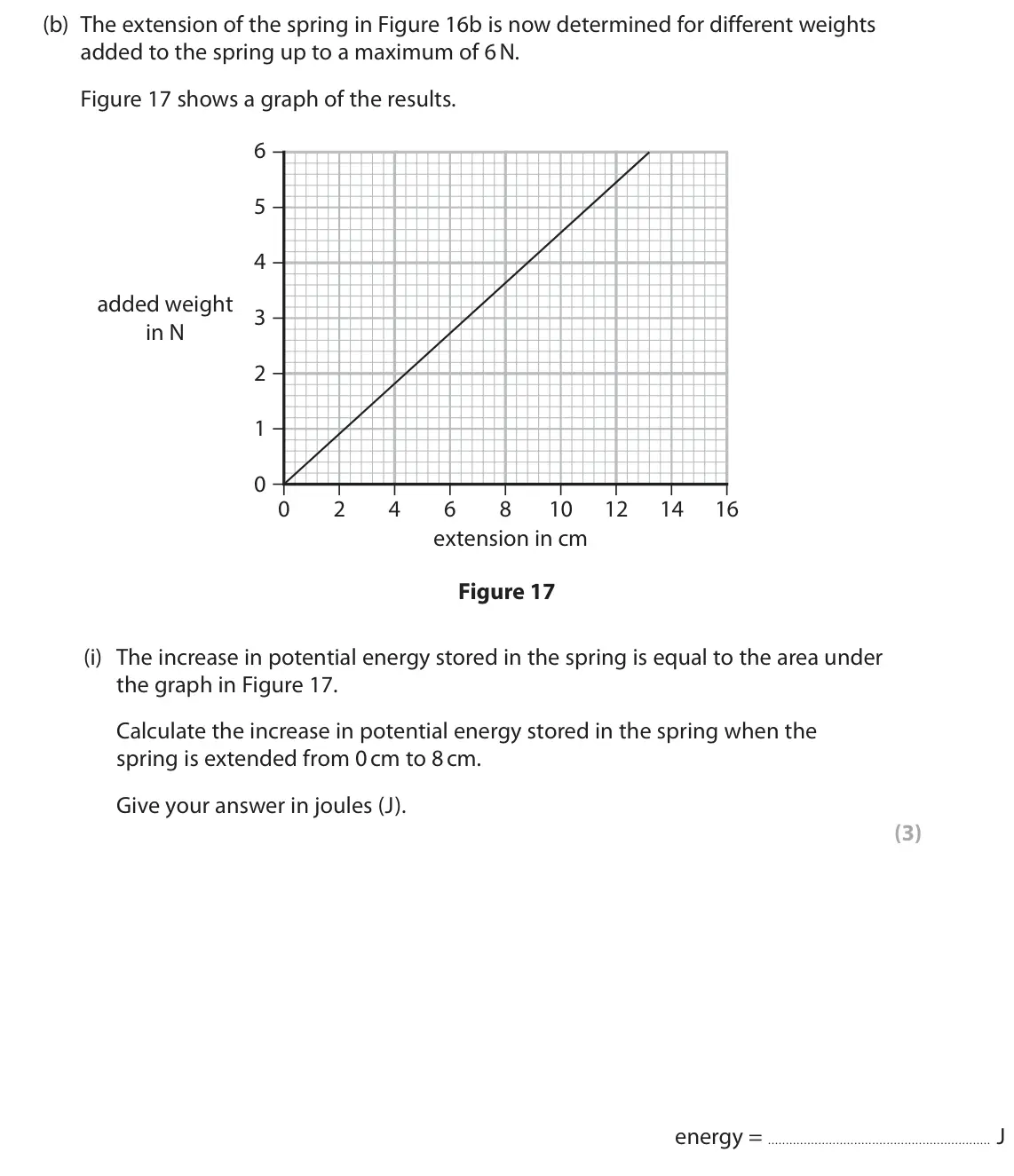
Q8(b)(ii)
The whole paper ↗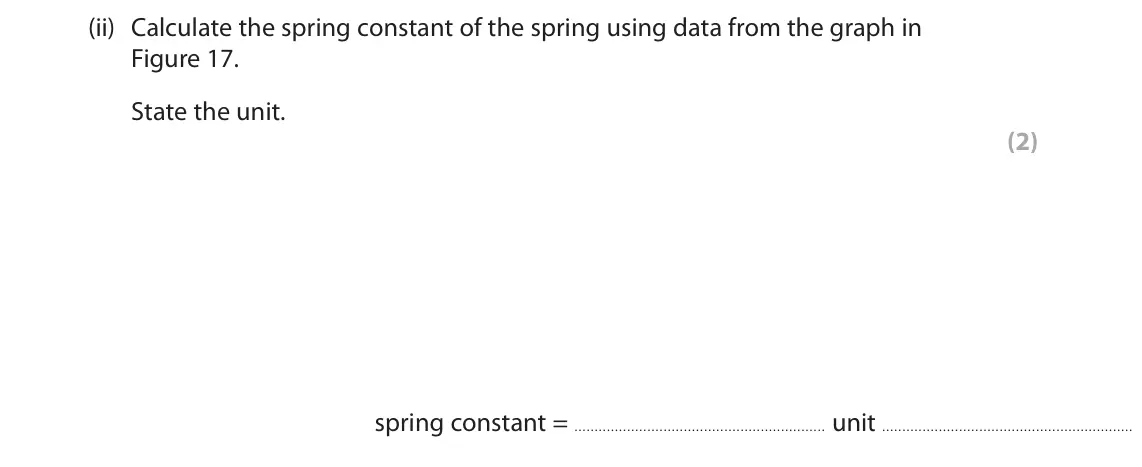
Q6(a)
The whole paper ↗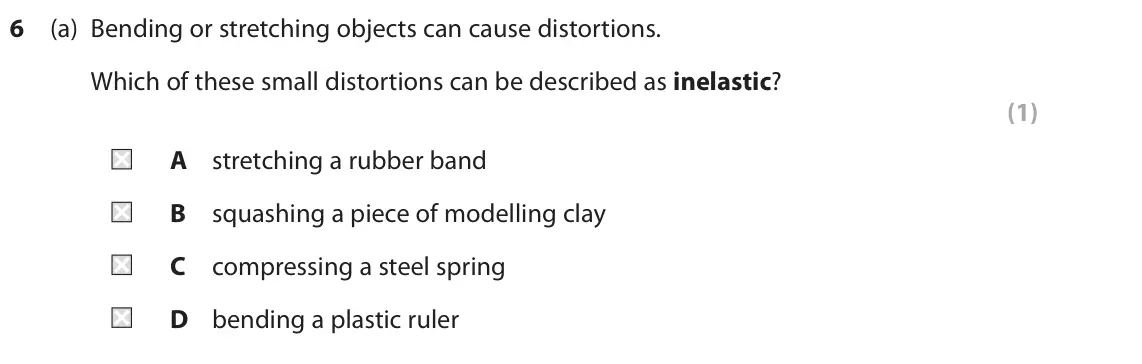
Q6(b)(i)
The whole paper ↗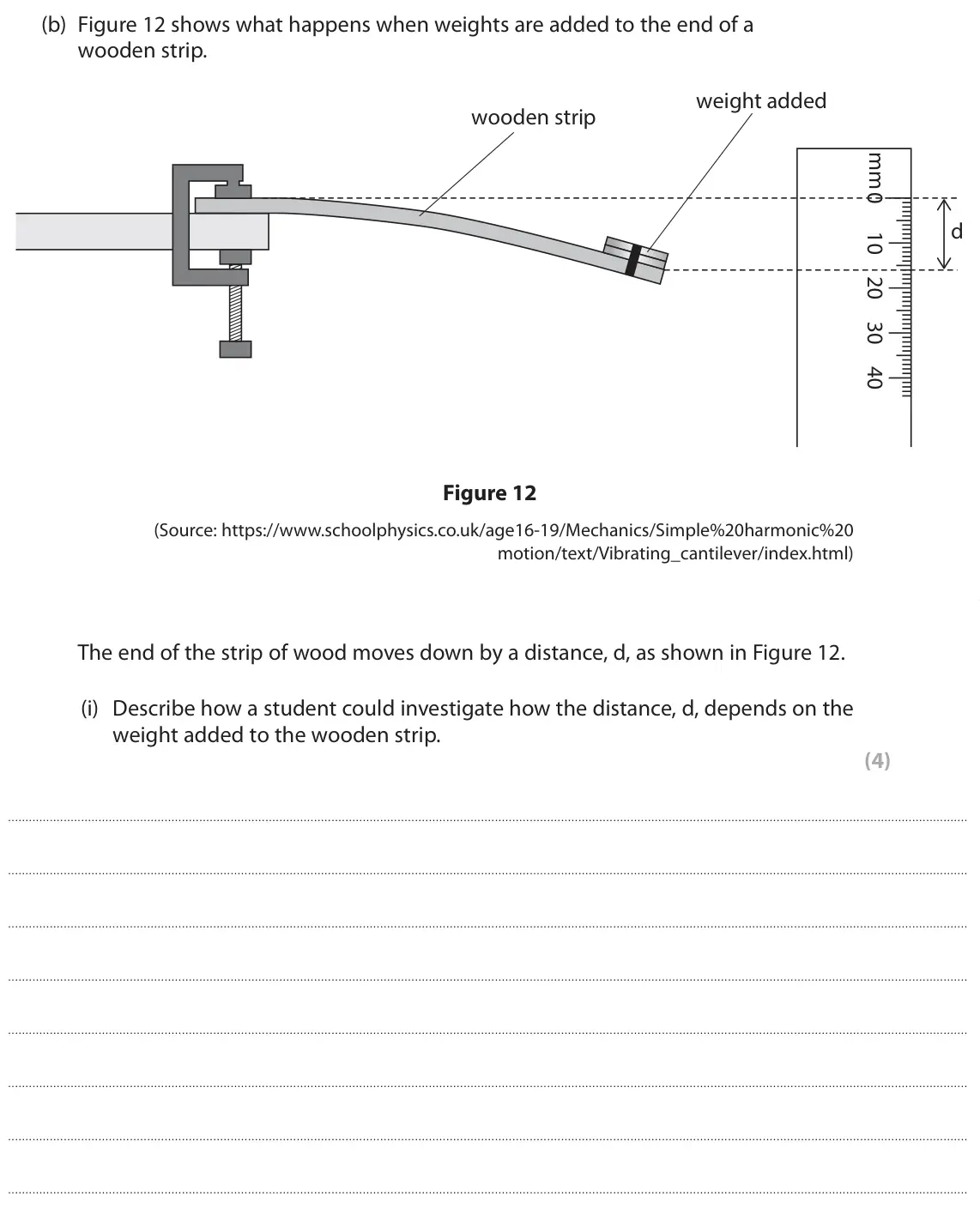
Q6(b)(ii)
The whole paper ↗
Q6(c)(i)
The whole paper ↗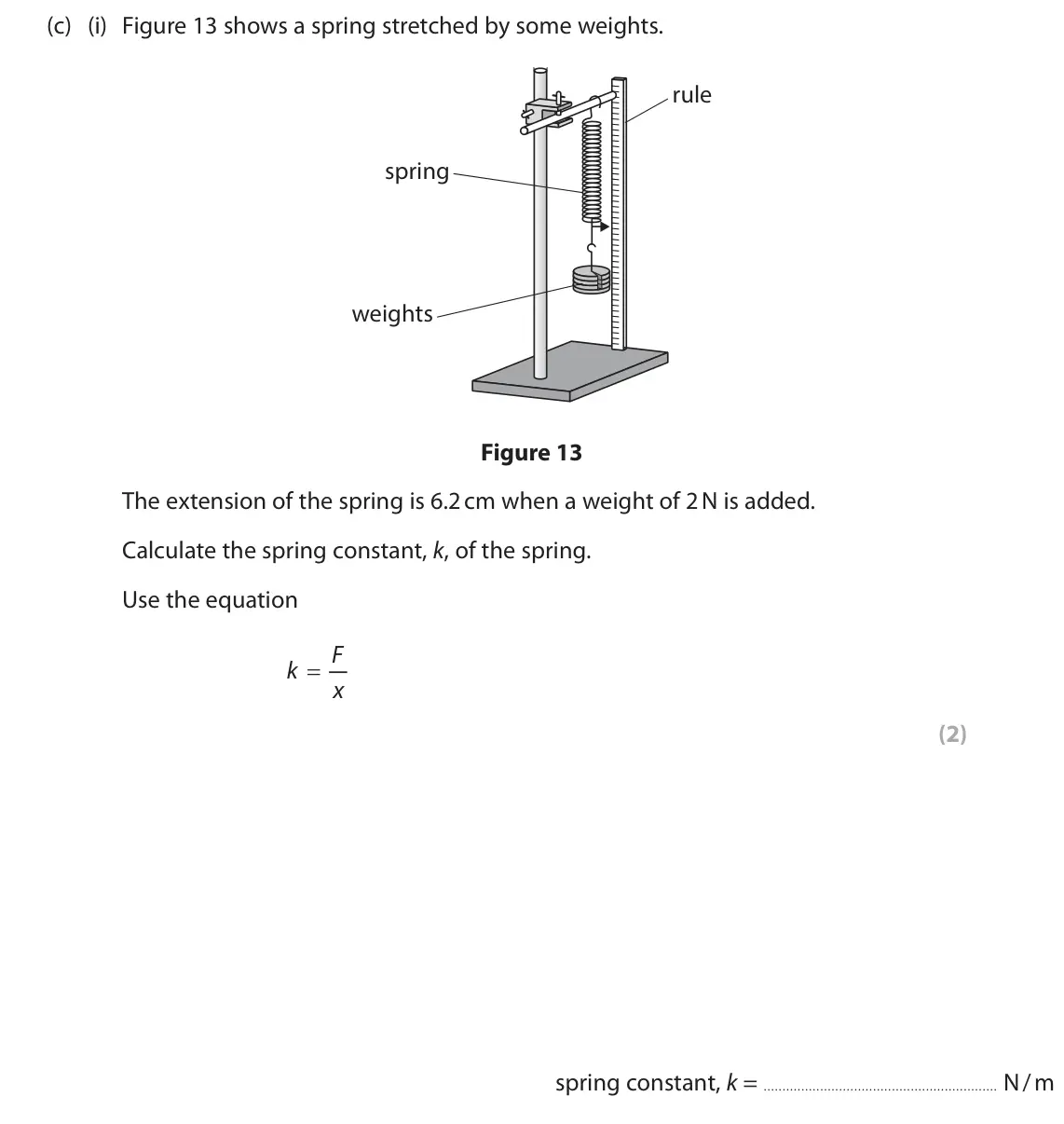
Q6(c)(ii)
The whole paper ↗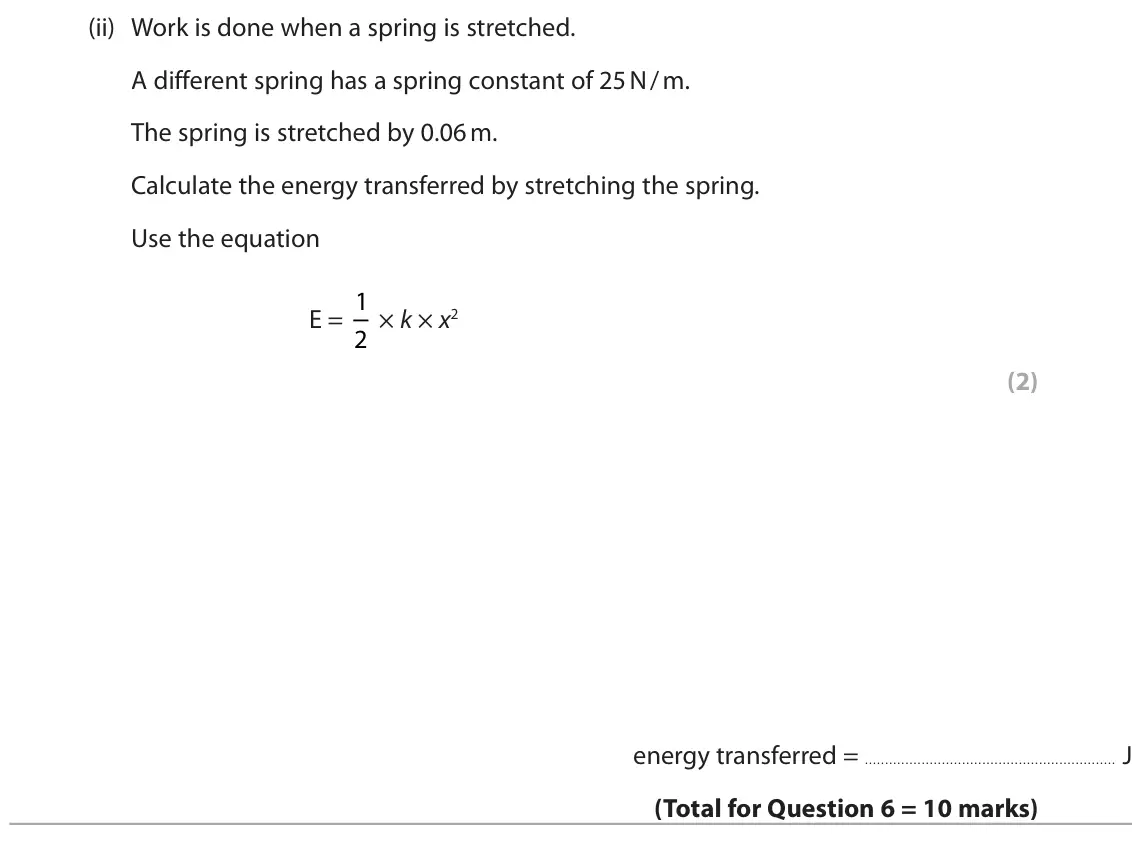
Q7(a)(i)
The whole paper ↗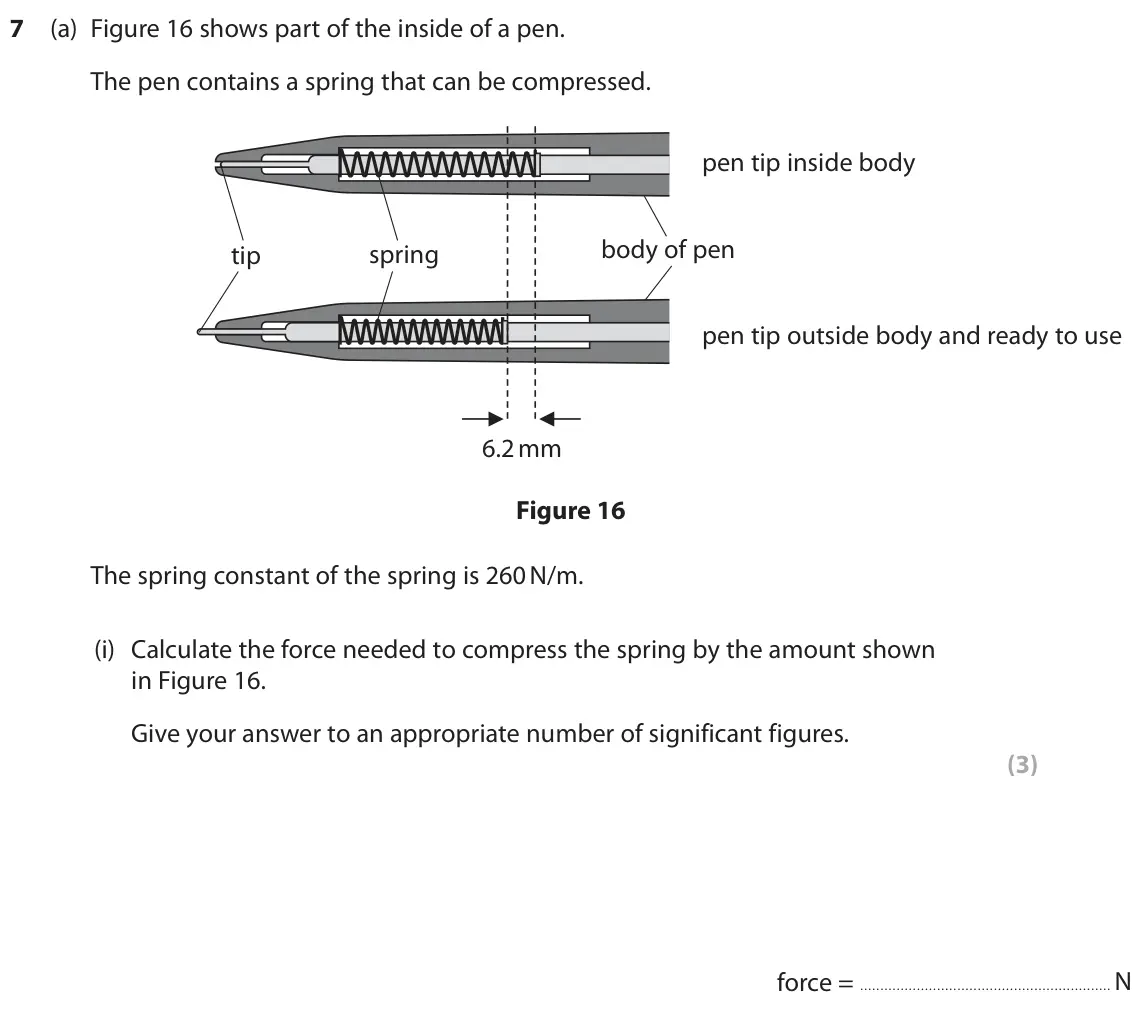
Q7(a)(ii)
The whole paper ↗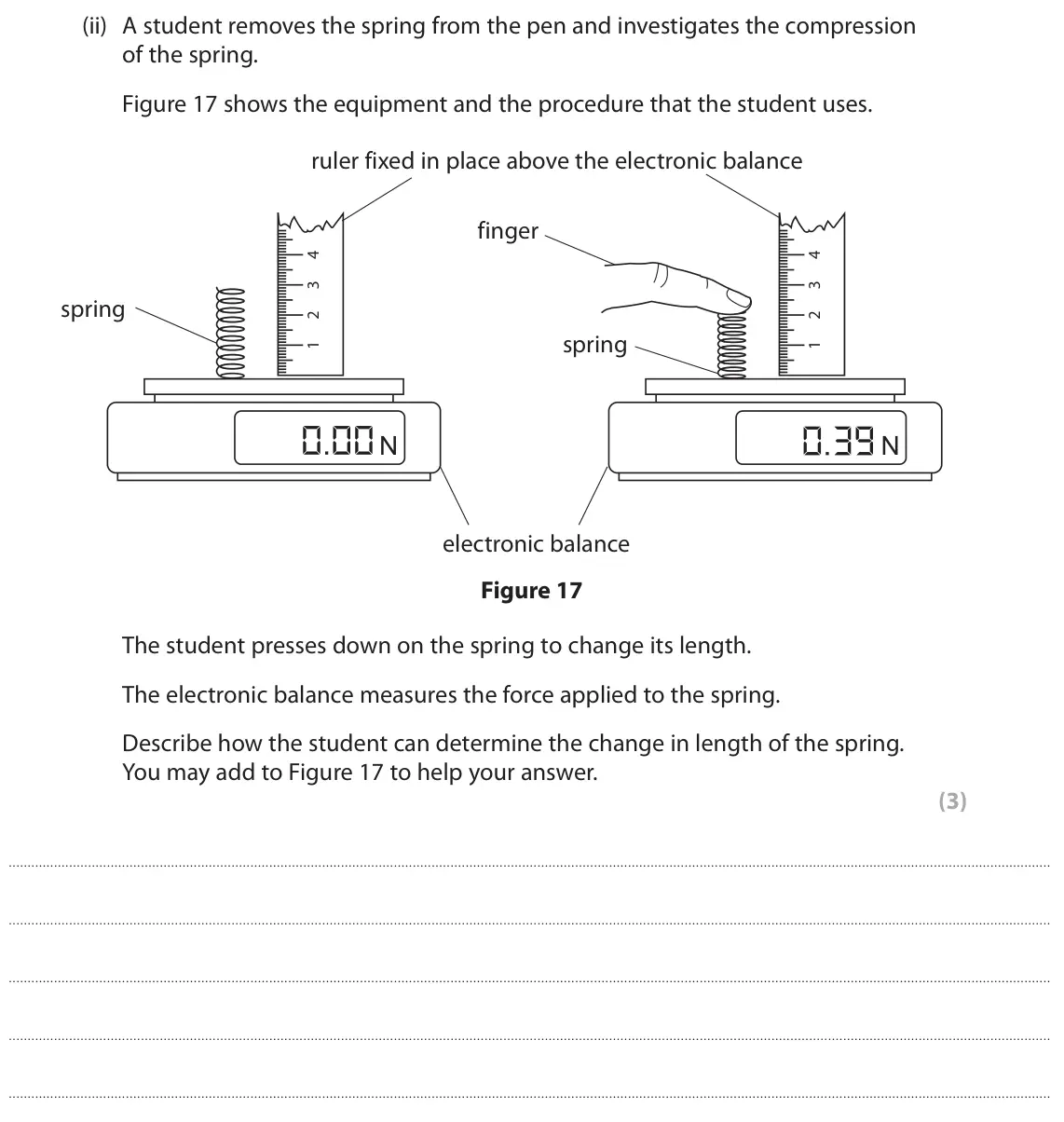
Q7(a)(iii)
The whole paper ↗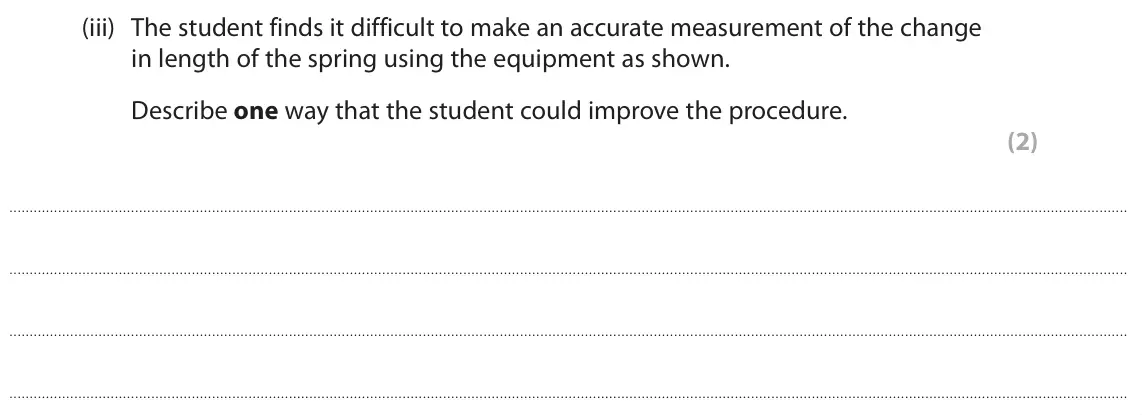
Q6(a)(i)
The whole paper ↗
Q6(a)(ii)
The whole paper ↗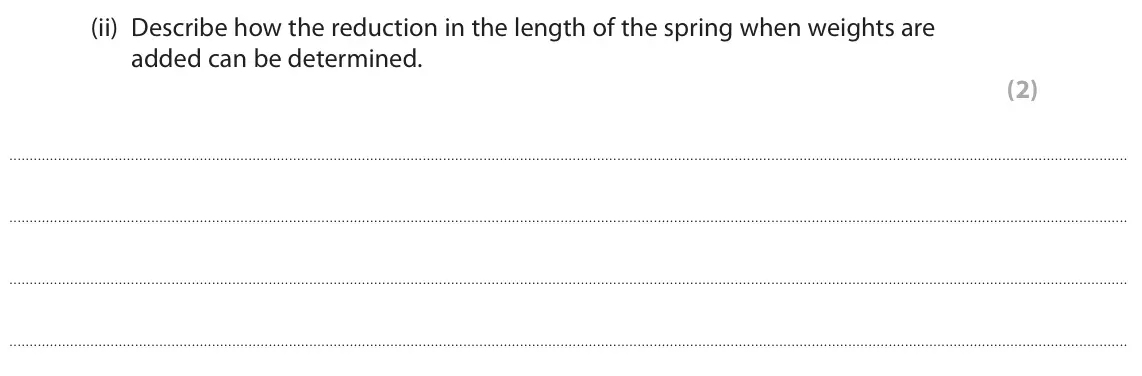
Q6(a)(iii)
The whole paper ↗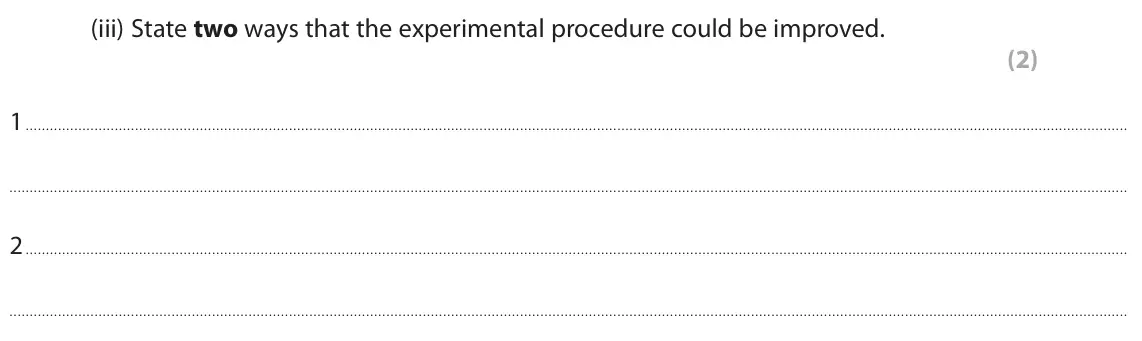
Q6(a)(iv)
The whole paper ↗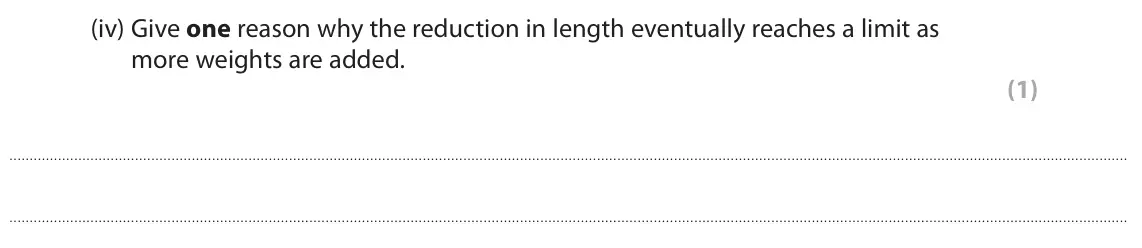
Q6(b)
The whole paper ↗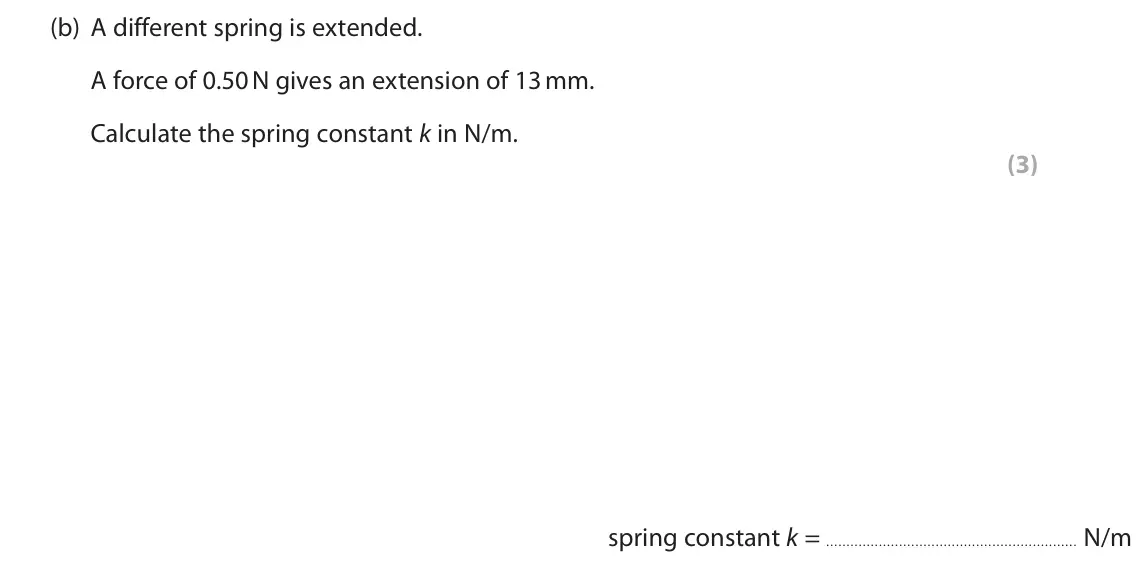
Q6(c)
The whole paper ↗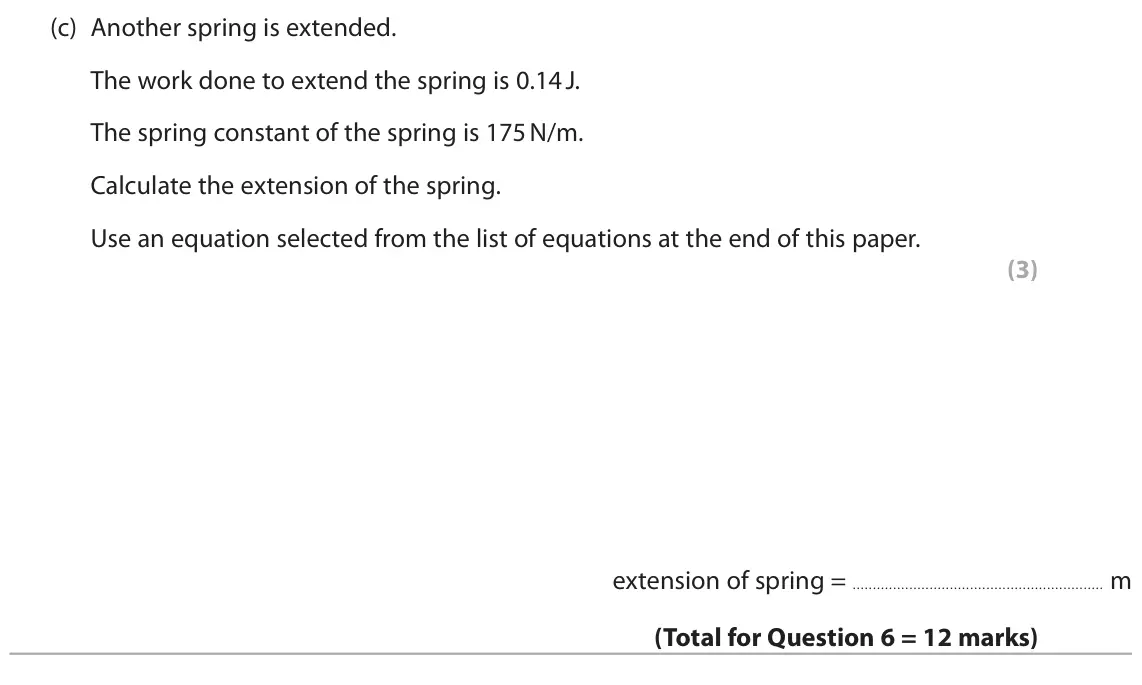
Q4(a)(i)
The whole paper ↗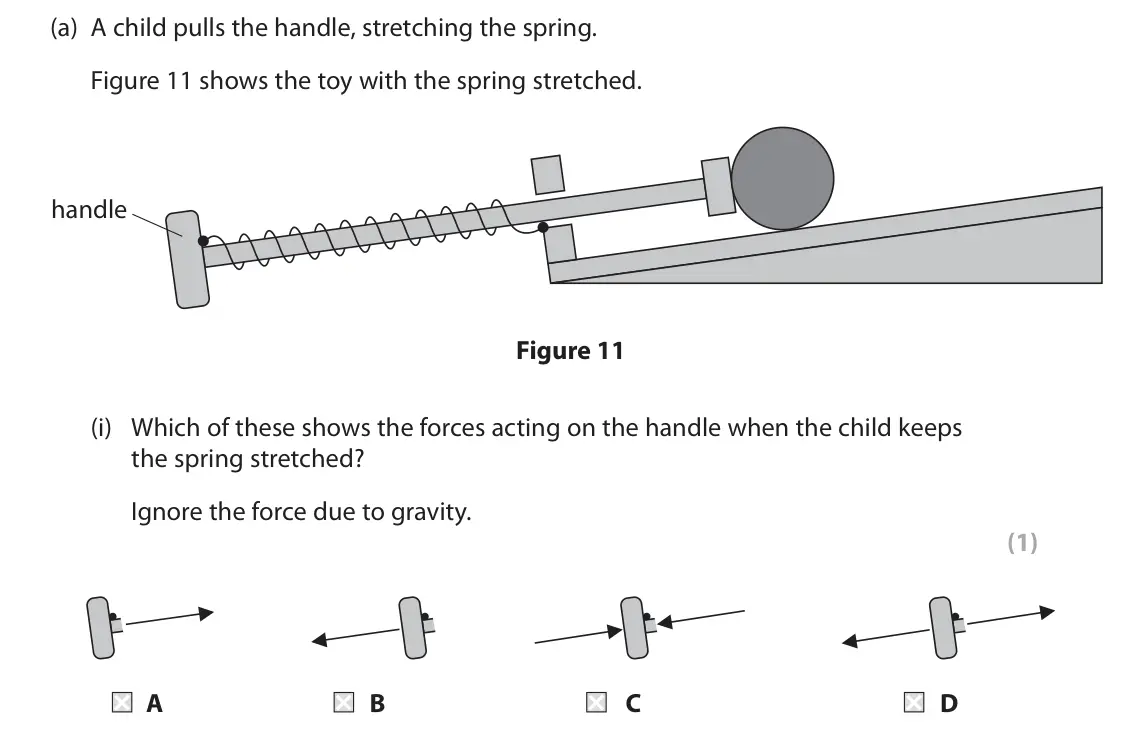
Q4(a)(ii)
The whole paper ↗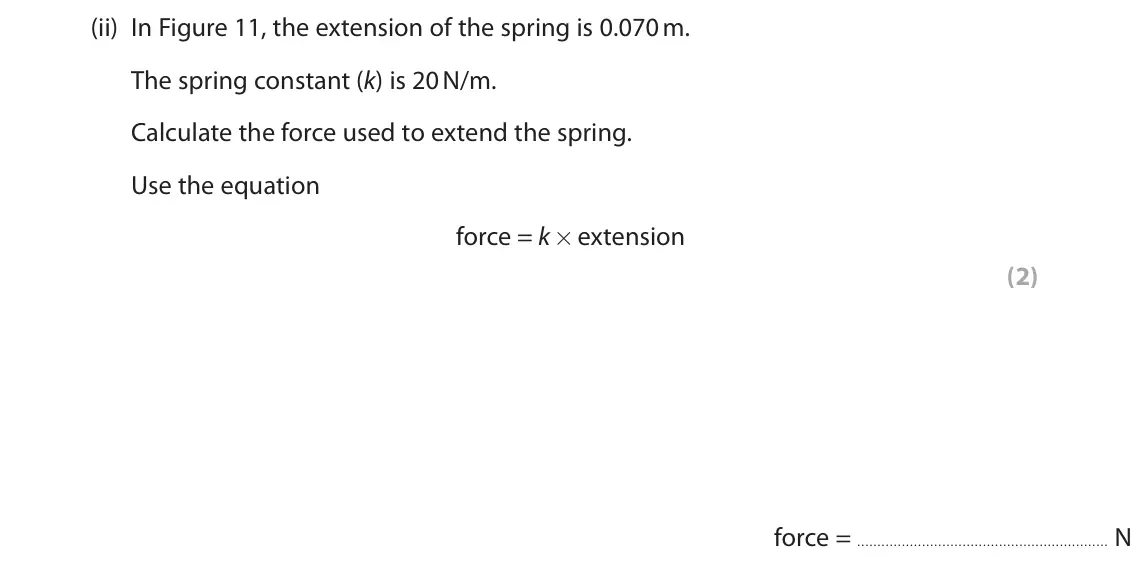
All 31 questions on Elasticity and springs, as a list
- June 2025, Paper 2 Higher, Q8(a)(i) (1 mark): Give a reason why the length of the spring in Figure 15b is greater than the length of the spring in Figure 15a. (1)
- June 2025, Paper 2 Higher, Q8(a)(ii) (1 mark): The student adds some weights to the end of the spring, as shown in Figure 16b. Y Z Figure 16a Figure 16b (Source: https://www.shalom-education.com/courses/ks3-
- June 2025, Paper 2 Higher, Q8(b)(i) (3 marks): The increase in potential energy stored in the spring is equal to the area under the graph in Figure 17. Calculate the increase in potential energy stored in th
- June 2025, Paper 2 Higher, Q8(b)(ii) (2 marks): Calculate the spring constant of the spring using data from the graph in Figure 17. State the unit. (2) spring constant = unit
- June 2025, Paper 2 Foundation, Q6(a) (1 mark): Bending or stretching objects can cause distortions. Which of these small distortions can be described as inelastic? (1) A stretching a rubber band B squashing
- June 2025, Paper 2 Foundation, Q6(b)(i) (4 marks): Describe how a student could investigate how the distance, d, depends on the weight added to the wooden strip. (4)
- June 2025, Paper 2 Foundation, Q6(b)(ii) (1 mark): A student conducts a second experiment with the same equipment where they decide to keep the size of the weight constant. State another variable, other than the
- June 2025, Paper 2 Foundation, Q6(c)(i) (2 marks): Figure 13 shows a spring stretched by some weights. rule spring weights Figure 13 The extension of the spring is 6.2 cm when a weight of 2 N is added. Calculate
- June 2025, Paper 2 Foundation, Q6(c)(ii) (2 marks): Work is done when a spring is stretched. A different spring has a spring constant of 25 N / m. The spring is stretched by 0.06 m. Calculate the energy transferr
- June 2023, Paper 2 Higher, Q7(a)(i) (3 marks): Calculate the force needed to compress the spring by the amount shown in Figure 16. Give your answer to an appropriate number of significant figures. (3) force
- June 2023, Paper 2 Higher, Q7(a)(ii) (3 marks): A student removes the spring from the pen and investigates the compression of the spring. Figure 17 shows the equipment and the procedure that the student uses.
- June 2023, Paper 2 Higher, Q7(a)(iii) (2 marks): The student finds it difficult to make an accurate measurement of the change in length of the spring using the equipment as shown. Describe one way that the stu
- November 2020, Paper 2 Higher, Q6(a)(i) (1 mark): Estimate the original length of the spring as shown in Figure 14a. (1) original length = mm
- November 2020, Paper 2 Higher, Q6(a)(ii) (2 marks): Describe how the reduction in the length of the spring when weights are added can be determined. (2)
- November 2020, Paper 2 Higher, Q6(a)(iii) (2 marks): State two ways that the experimental procedure could be improved. (2) 1 2
- November 2020, Paper 2 Higher, Q6(a)(iv) (1 mark): Give one reason why the reduction in length eventually reaches a limit as more weights are added. (1)
- November 2020, Paper 2 Higher, Q6(b) (3 marks): A different spring is extended. A force of 0.50 N gives an extension of 13 mm. Calculate the spring constant k in N/m. (3) spring constant k = N/m
- November 2020, Paper 2 Higher, Q6(c) (3 marks): Another spring is extended. The work done to extend the spring is 0.14 J. The spring constant of the spring is 175 N/m. Calculate the extension of the spring. U
- November 2020, Paper 2 Foundation, Q4(a)(i) (1 mark): Which of these shows the forces acting on the handle when the child keeps the spring stretched? Ignore the force due to gravity. (1) A B C D
- November 2020, Paper 2 Foundation, Q4(a)(ii) (2 marks): In Figure 11, the extension of the spring is 0.070 m. The spring constant (k) is 20 N/m. Calculate the force used to extend the spring. Use the equation force =
- November 2020, Paper 2 Foundation, Q4(b)(i) (2 marks): The extension of the spring is 0.09 m. The spring constant (k) is 20 N/m. Calculate the work done in extending the spring by 0.09 m. Use the equation work done
- November 2020, Paper 2 Foundation, Q4(b)(iii) (2 marks): The child can only stretch the spring until the pad is pressing against the support. Explain how the design of the toy prevents the spring from becoming damaged
- June 2019, Paper 2 Higher, Q8(a)(ii) (3 marks): Calculate the extension of the spring. Use an equation selected from the list of equations at the end of this paper. (3) extension of the spring = m
- June 2019, Paper 2 Higher, Q8(b)(i) (2 marks): Describe how the student could measure the extension of the rubber when he adds another weight to the weight hanger. (2)
- June 2019, Paper 2 Higher, Q8(b)(ii) (2 marks): The student obtains a series of values of force and extension while loading the piece of rubber and then unloading it. Figure 16 shows the graph of the student’
- June 2019, Paper 2 Higher, Q8(c) (2 marks): The area between the curve and the extension axis of a force/extension graph corresponds to work done or energy transferred. Suggest what the shaded area of the
- June 2019, Paper 2 Foundation, Q5(a) (2 marks): Figure 9 shows a 10 N weight hanging from a spring. 10 N 10 N Figure 9 One of the forces acting to stretch the spring is shown in Figure 9. Complete Figure 9 by
- June 2019, Paper 2 Foundation, Q5(b)(i) (3 marks): Calculate the spring constant, k, of the spring. Use the equation F = k × x (3) spring constant = N/m
- June 2019, Paper 2 Foundation, Q5(b)(ii) (2 marks): State what measurements should be made to determine the extension of the spring produced by the 4.0 N weight. (2)
- June 2019, Paper 2 Foundation, Q5(c) (3 marks): Another spring has a spring constant of 250 N/m. Calculate the work done in stretching the spring by 0.30 m. State the unit. Use the equation E = ½ × k × x2 (3)
- June 2018, Paper 2 Higher, Q5(b)(ii) (2 marks): The spring constant of a different spring is 24 N/m. The spring is extended from its unstretched length by 12 cm. Calculate the energy transferred in extending
Questions, mark schemes and examiner’s reports are © Pearson Edexcel, from their published past papers. Plumi isn’t affiliated with any exam board. Want whole papers? Every Edexcel GCSE Physics paper.
Rather write your answers by hand on iPad? Plumi marks them against the same mark schemes.