 plumi
Density: Edexcel GCSE Physics questions
Every Edexcel GCSE Physics exam question on Density (specification points 14.1–14.4), 2018–2025, with its mark scheme and examiner’s report.
Find questions1,554
Exam
All years
Calculations
Q5(b)
The whole paper ↗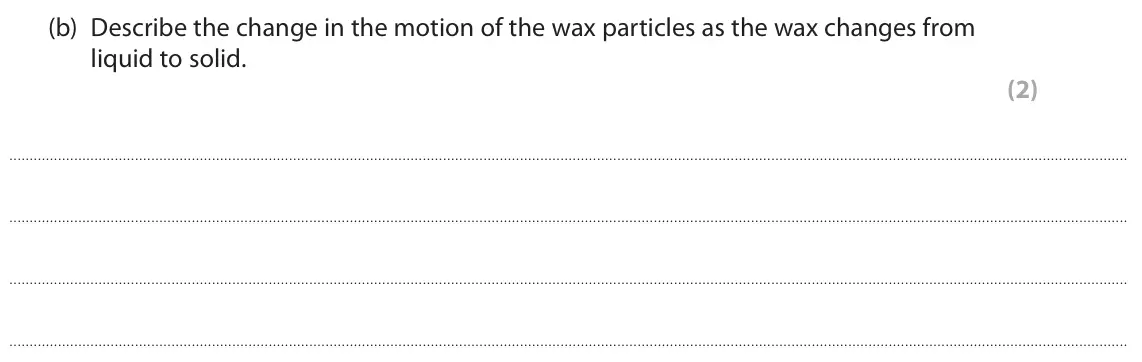
Q5(c)(i)
The whole paper ↗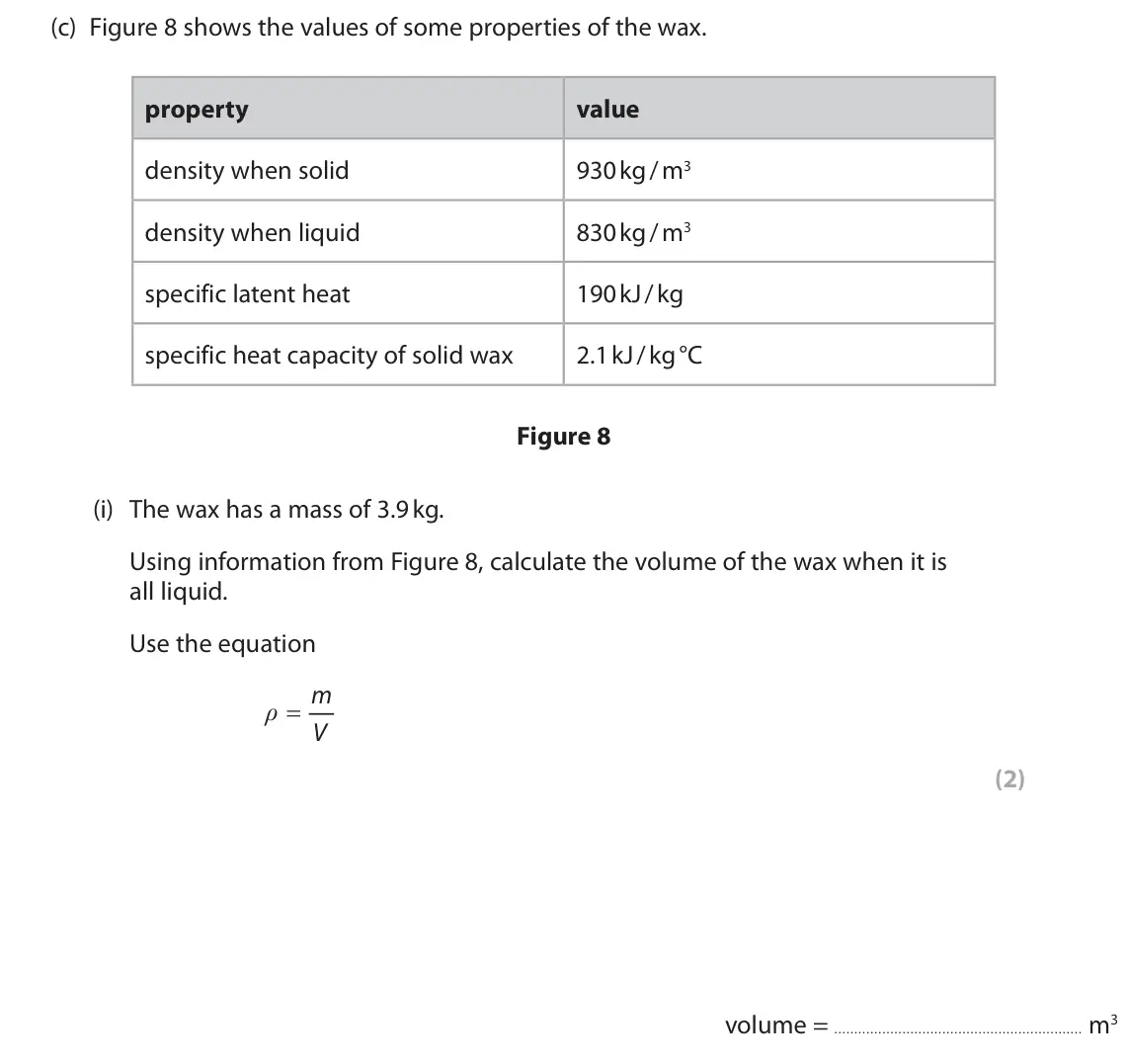
Q5(c)(ii)
The whole paper ↗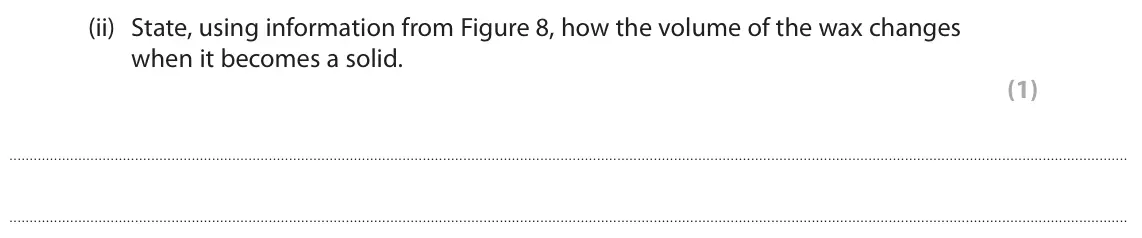
Q4(a)
The whole paper ↗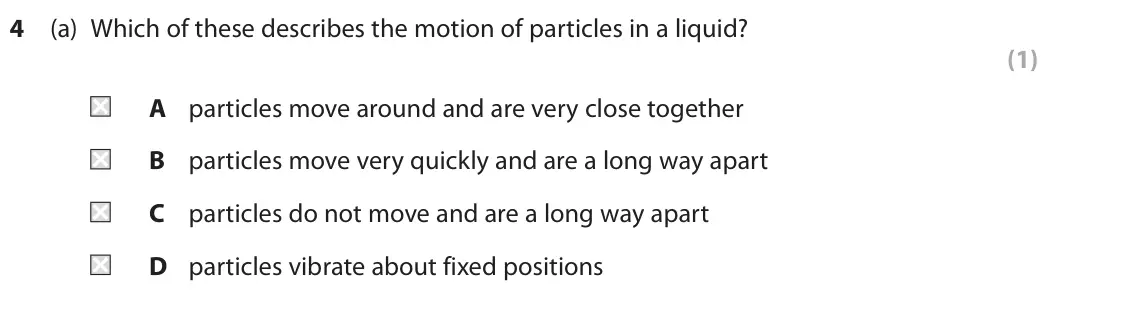
Q4(b)
The whole paper ↗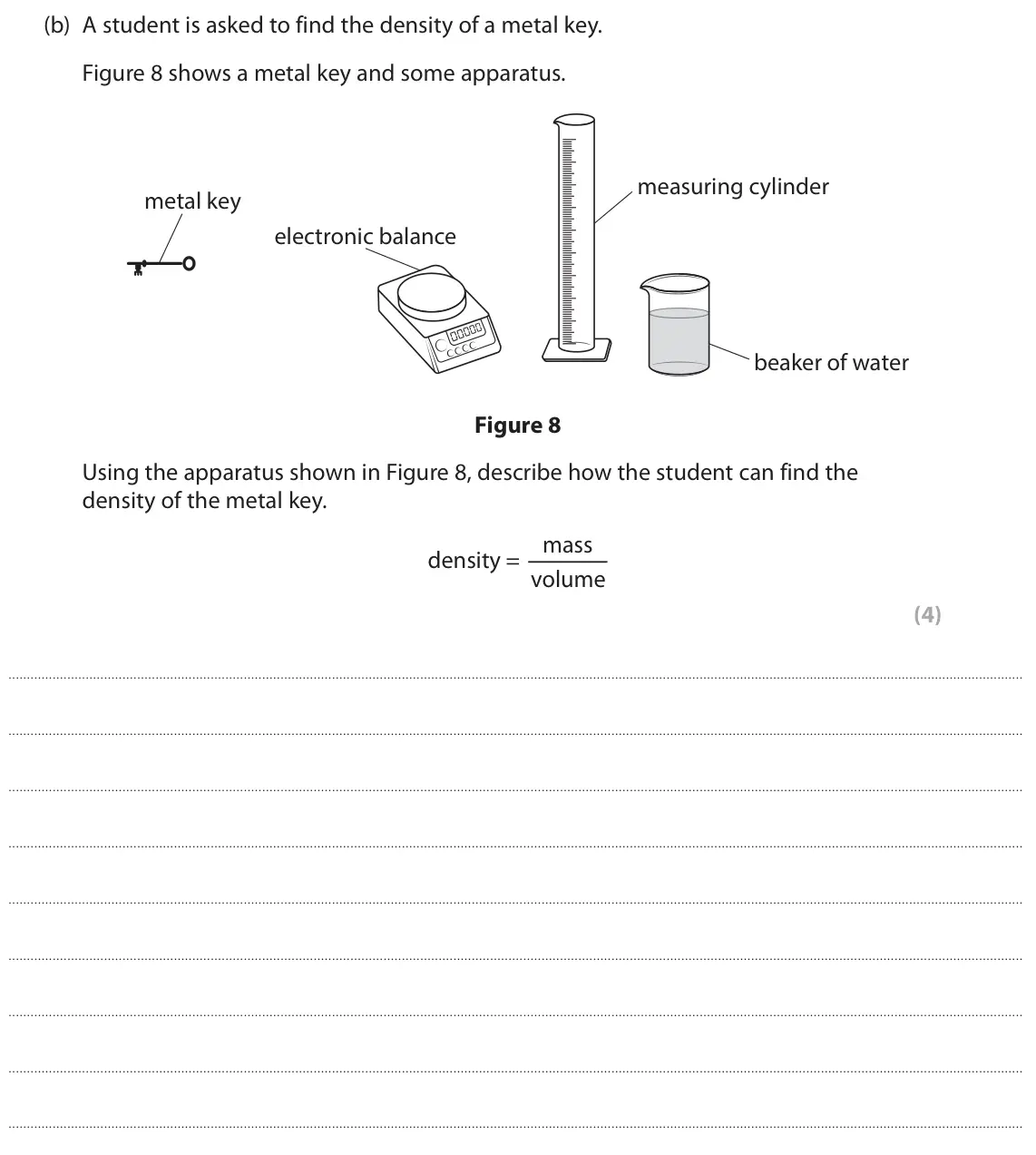
Q3(a)
The whole paper ↗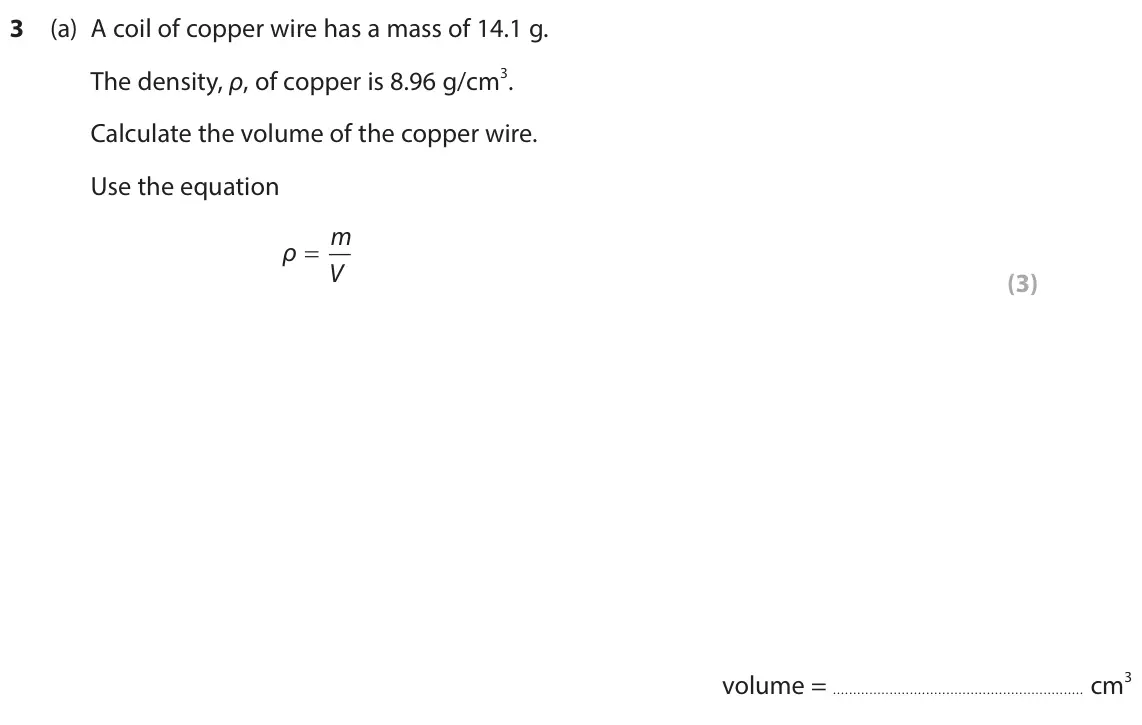
Q3(b)
The whole paper ↗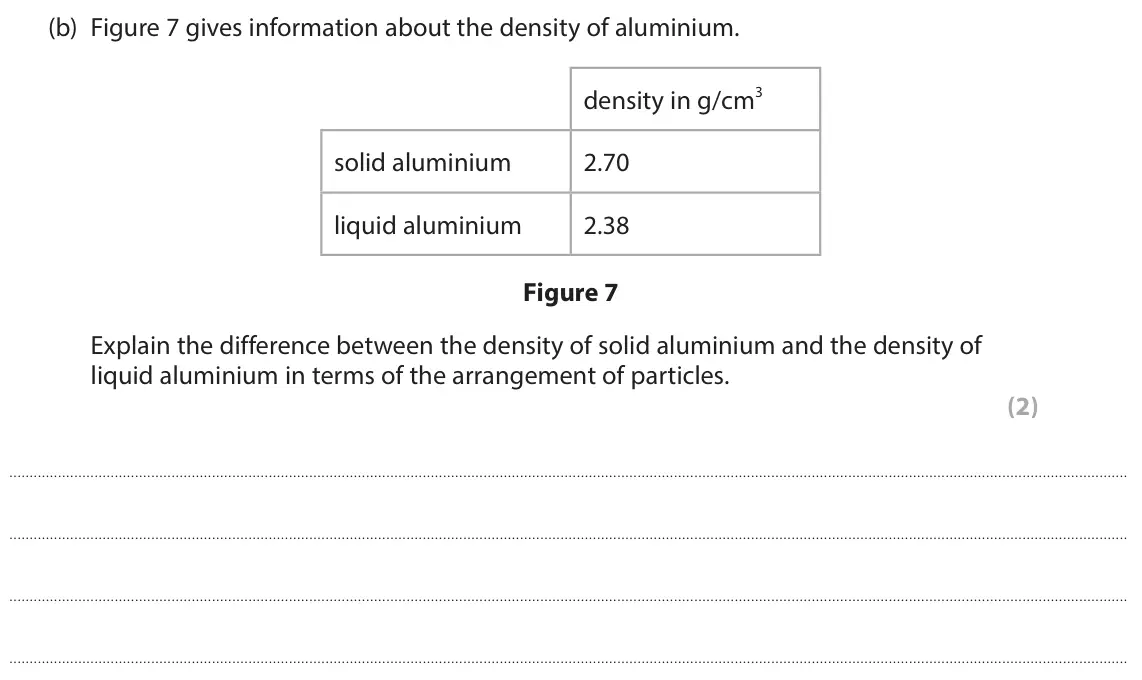
Q3(d)
The whole paper ↗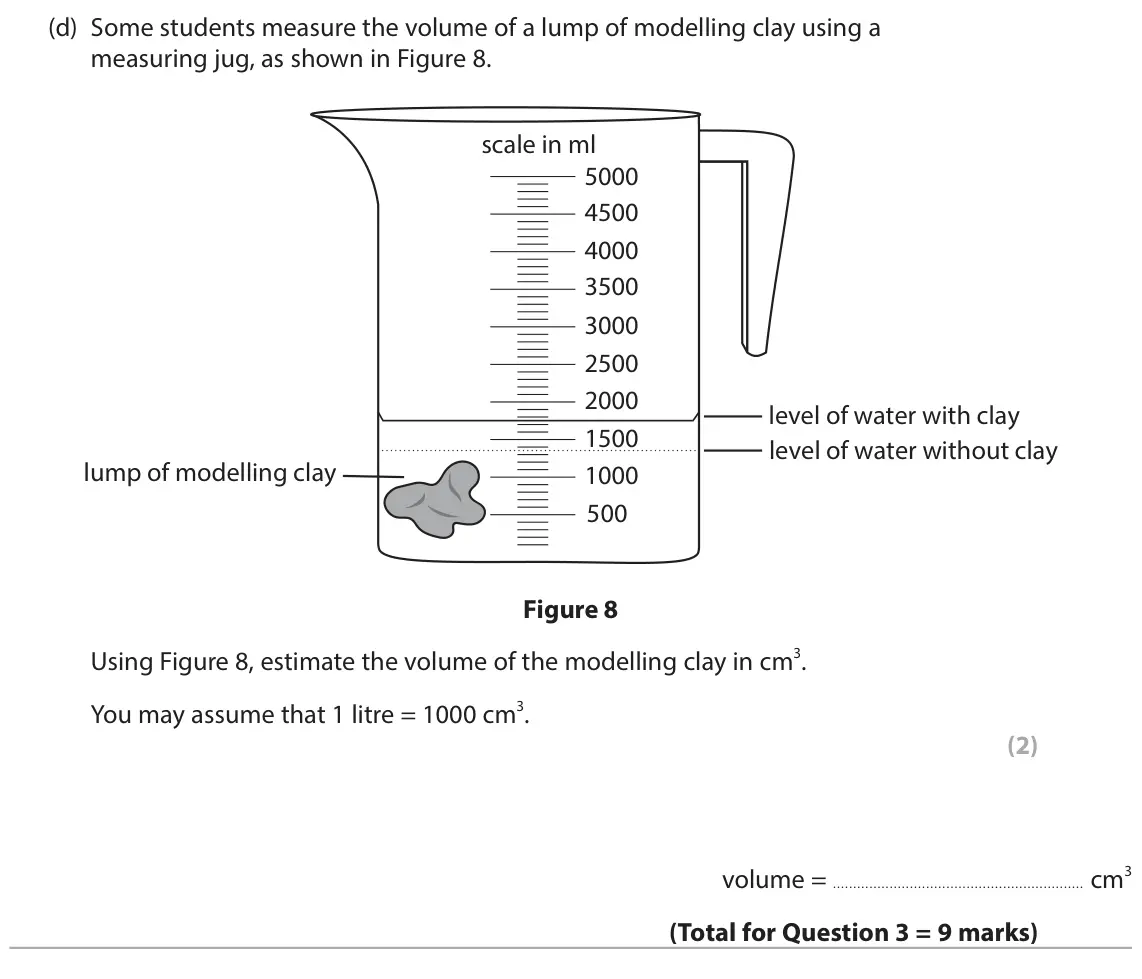
Q9(a)
The whole paper ↗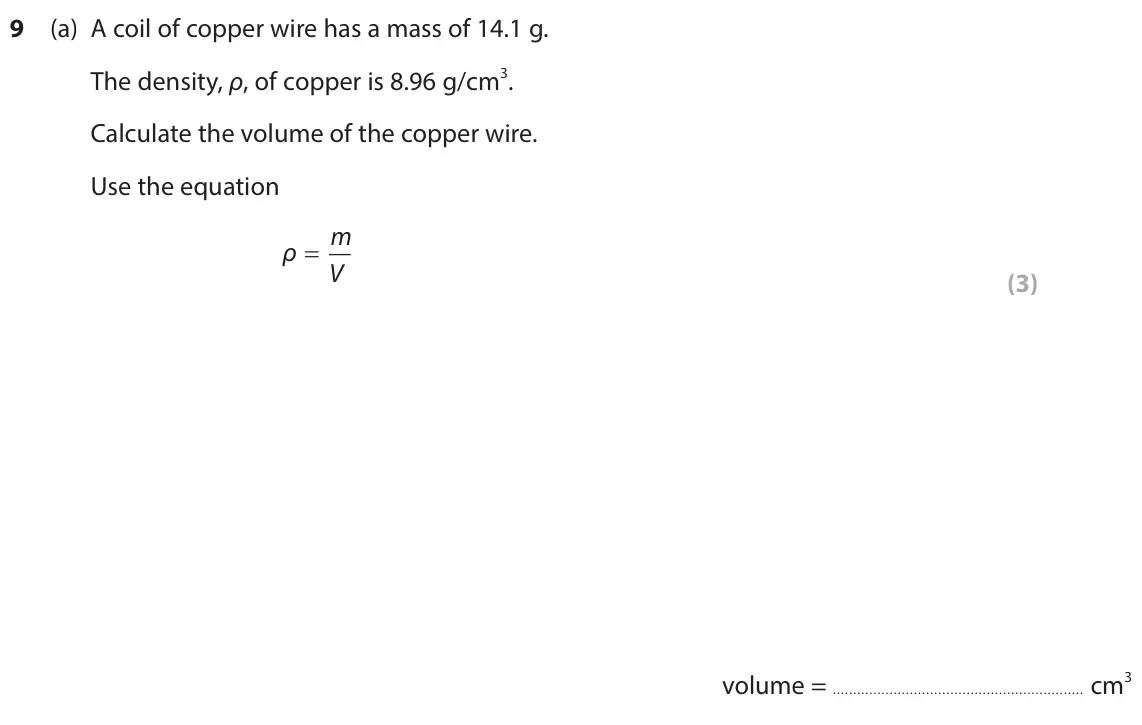
Q9(b)
The whole paper ↗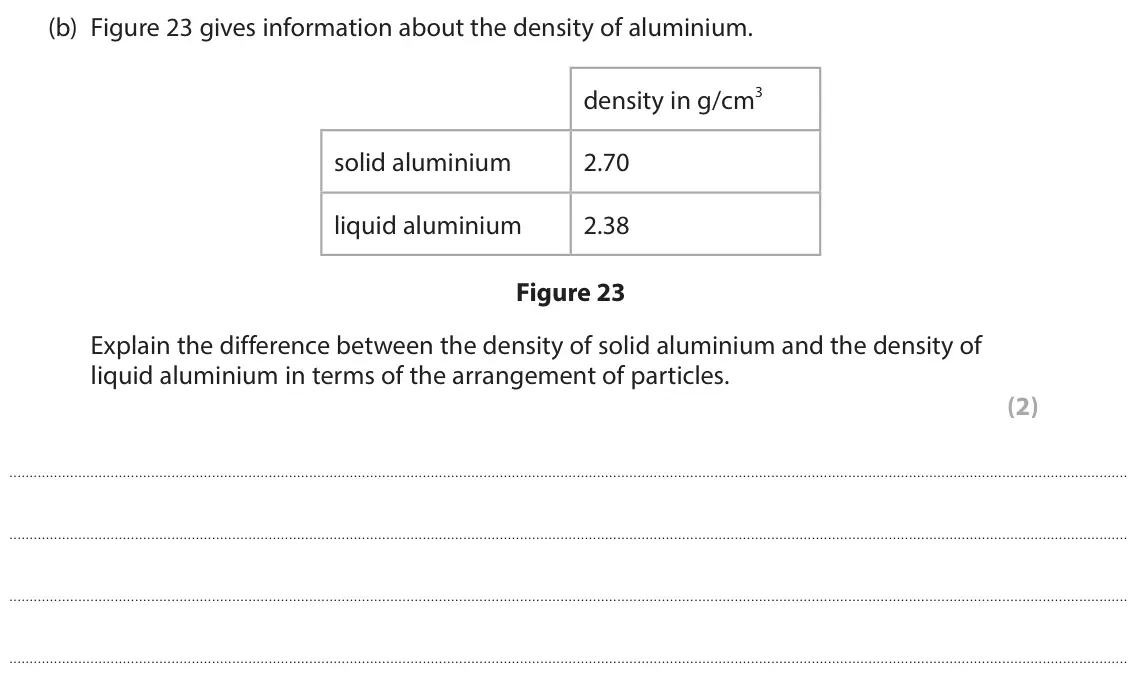
Q3(b)
The whole paper ↗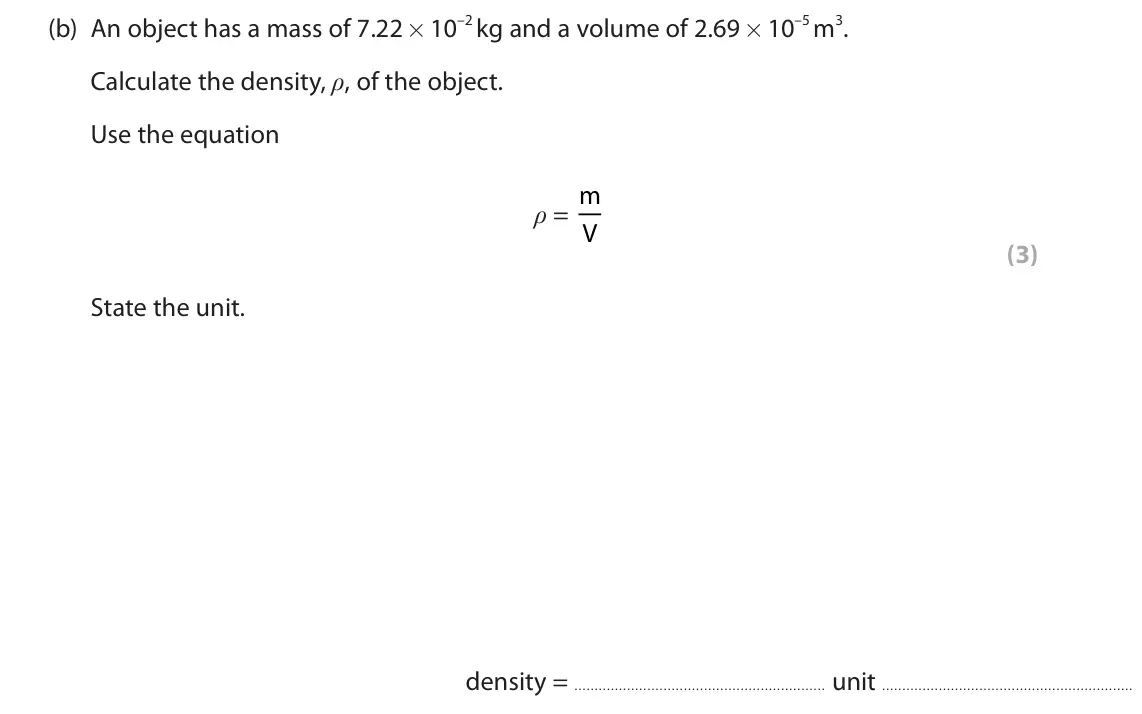
Q3(c)(ii)
The whole paper ↗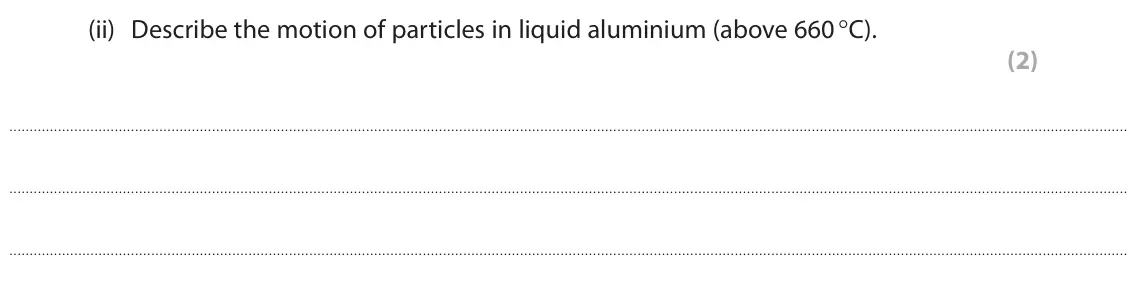
Q3(d)
The whole paper ↗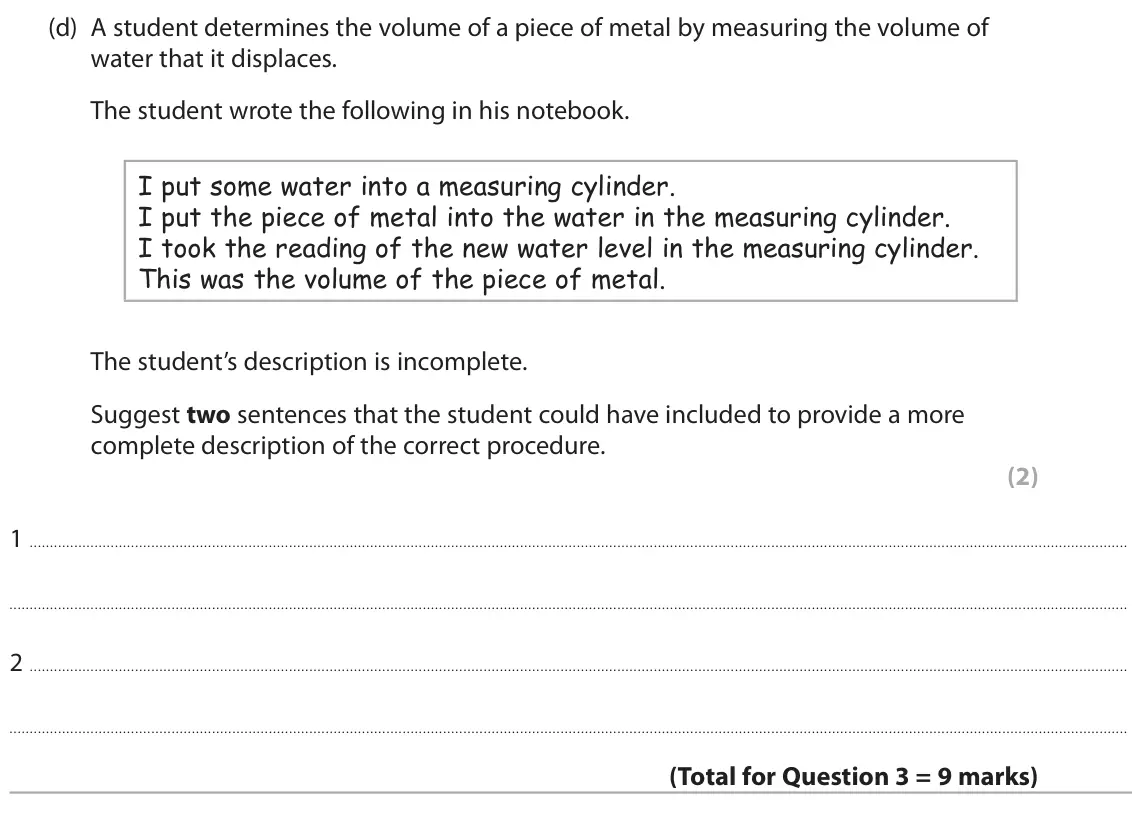
Q9(b)
The whole paper ↗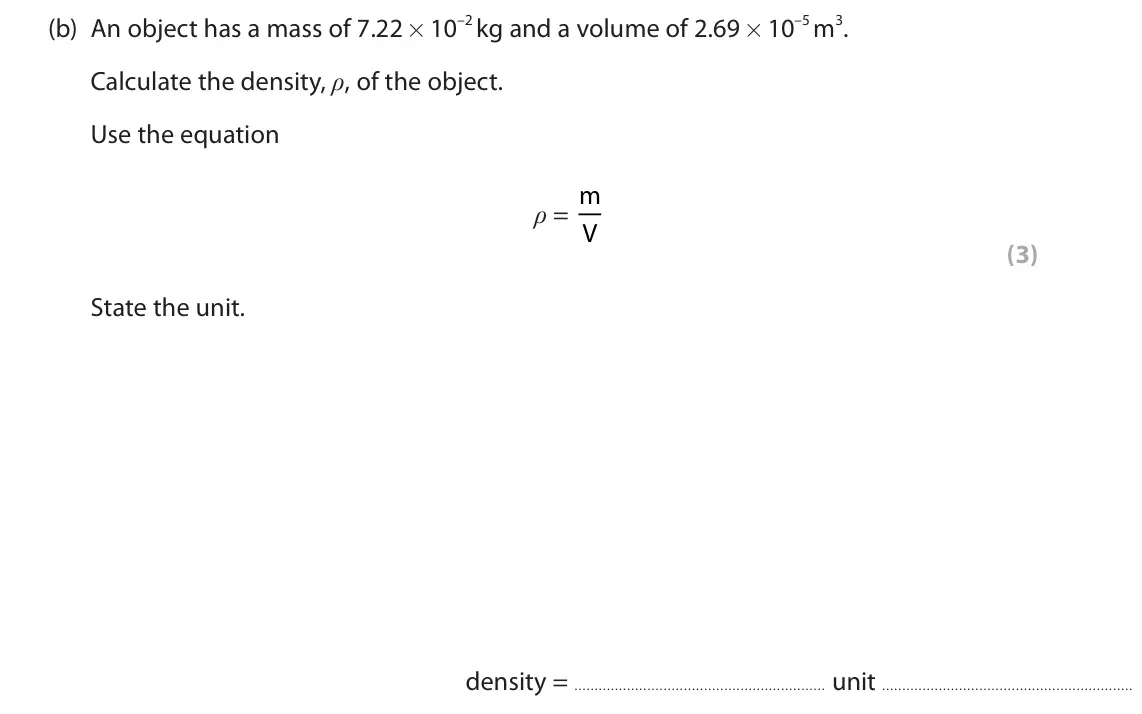
Q9(c)(ii)
The whole paper ↗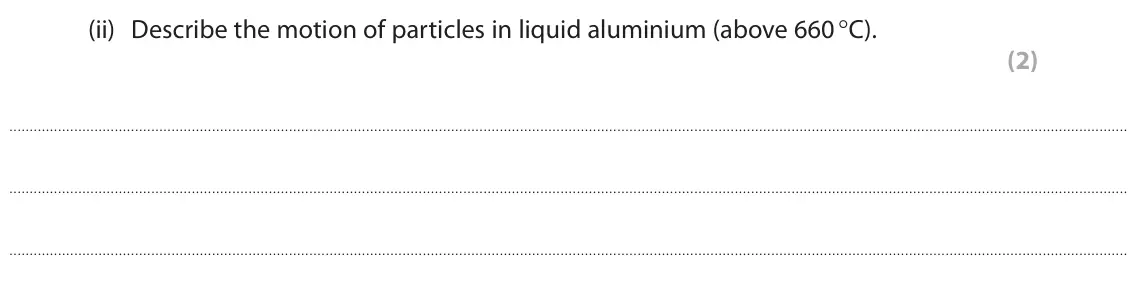
Q3(a)
The whole paper ↗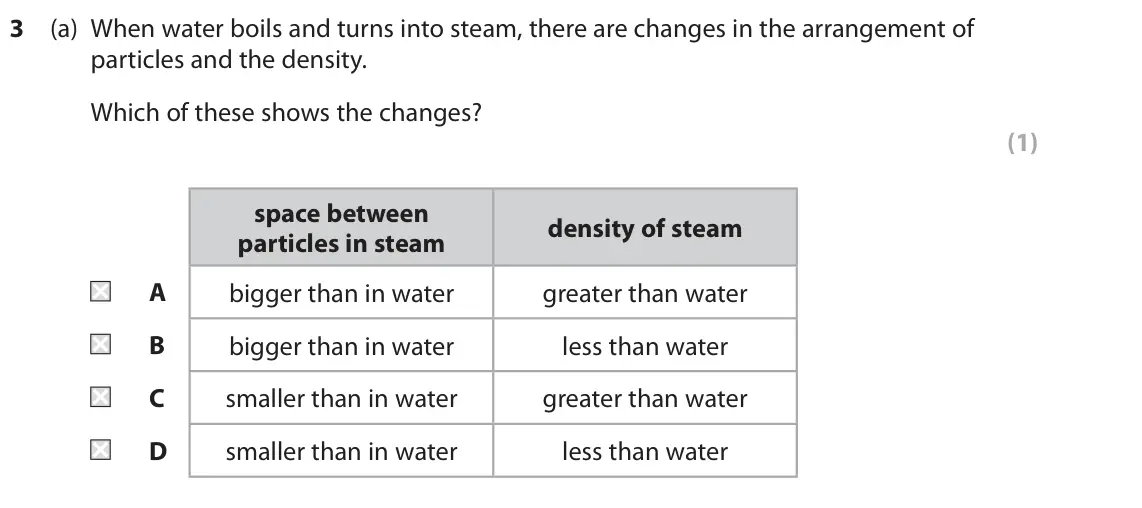
Q3(b)
The whole paper ↗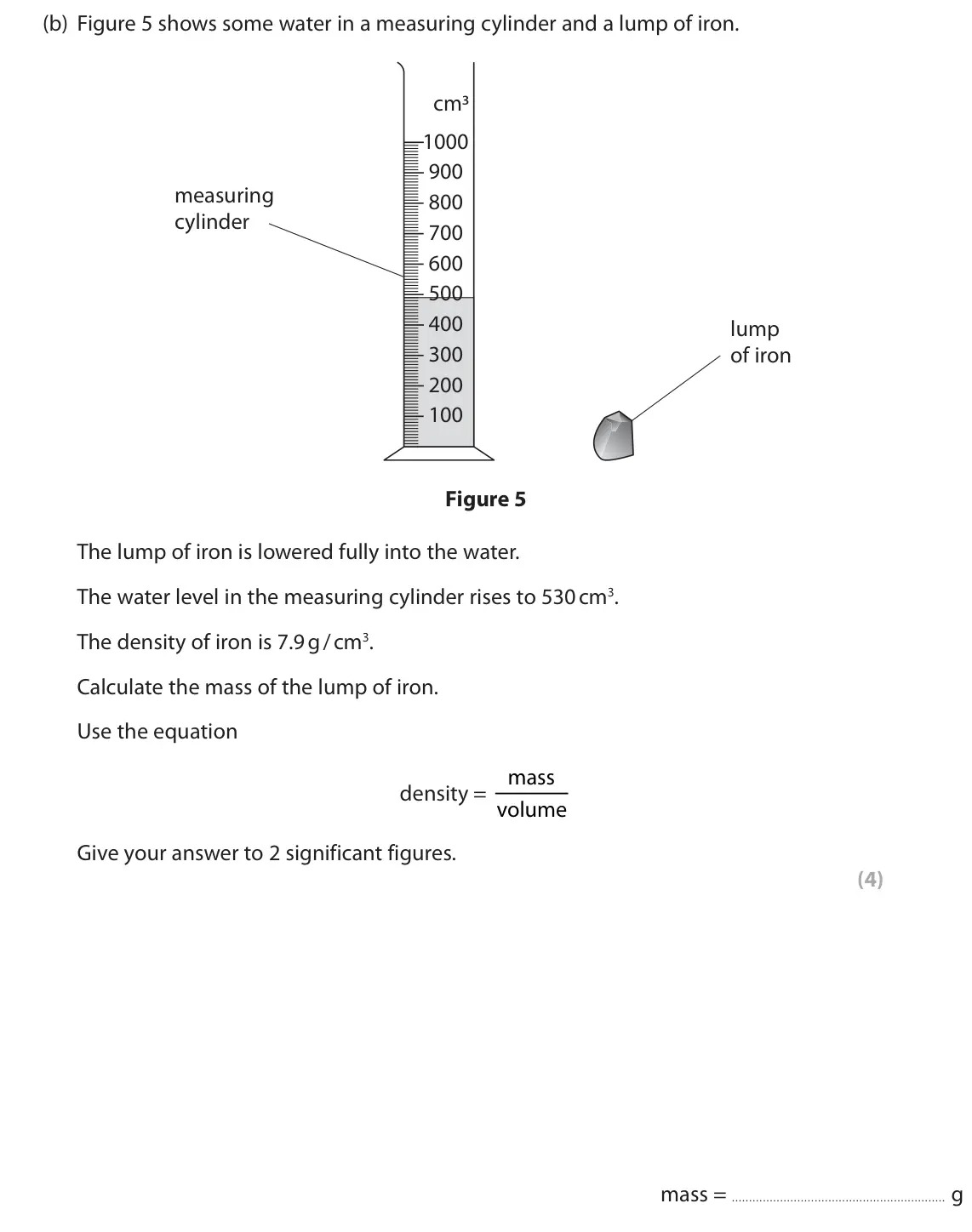
Q3(c)
The whole paper ↗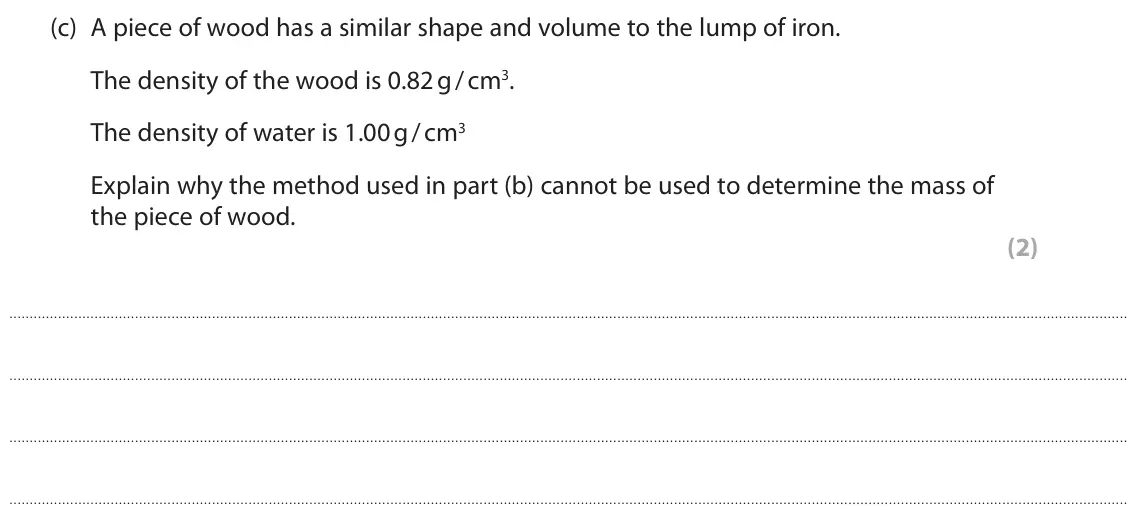
Q9(a)
The whole paper ↗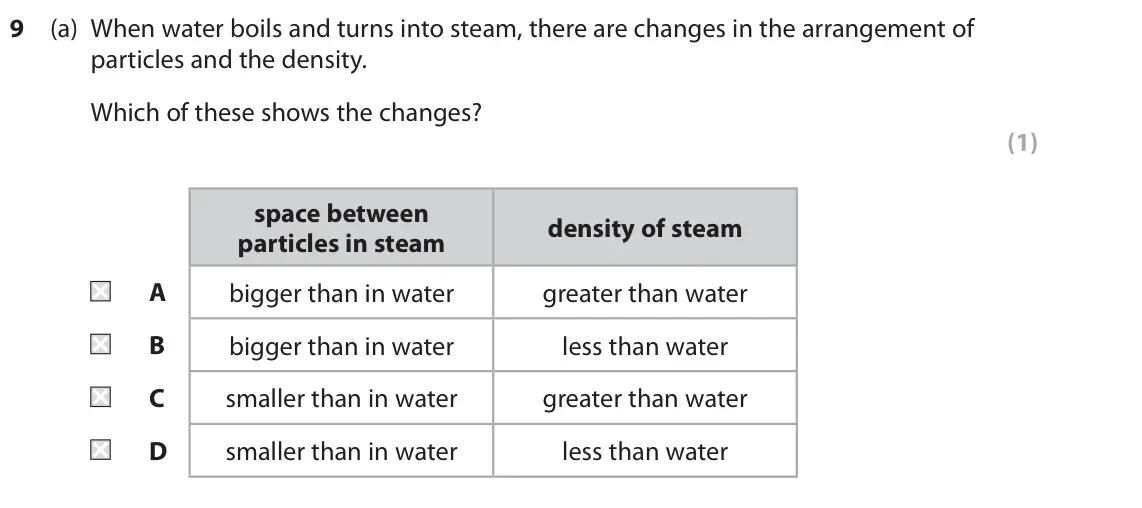
Q9(b)
The whole paper ↗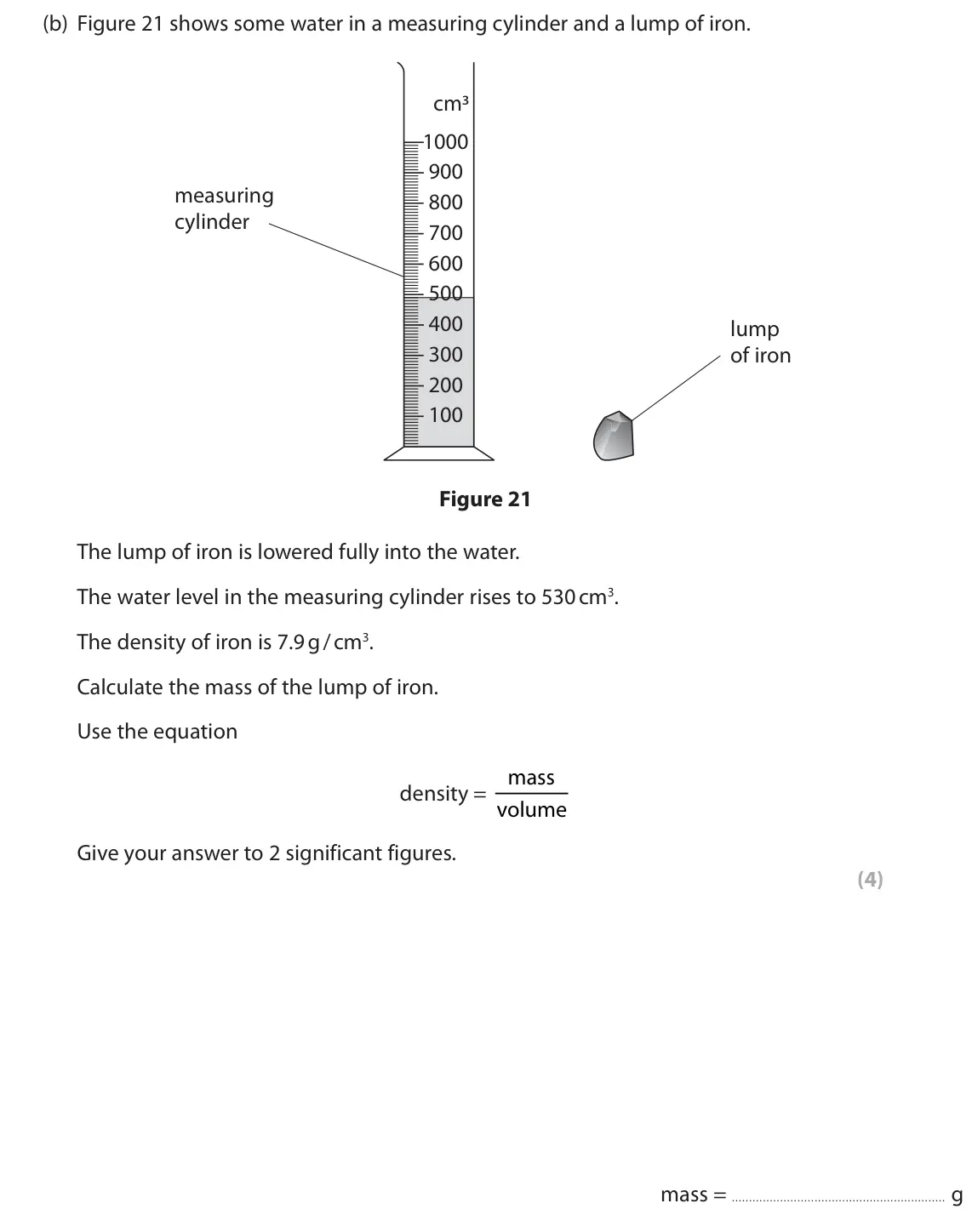
All 37 questions on Density, as a list
- June 2025, Paper 2 Higher, Q5(b) (2 marks): Describe the change in the motion of the wax particles as the wax changes from liquid to solid. (2)
- June 2025, Paper 2 Higher, Q5(c)(i) (2 marks): The wax has a mass of 3.9 kg. Using information from Figure 8, calculate the volume of the wax when it is all liquid. Use the equation m ρ O V (2) volume = m3
- June 2025, Paper 2 Higher, Q5(c)(ii) (1 mark): State, using information from Figure 8, how the volume of the wax changes when it becomes a solid. (1)
- June 2025, Paper 2 Foundation, Q4(a) (1 mark): Which of these describes the motion of particles in a liquid? (1) A particles move around and are very close together B particles move very quickly and are a lo
- June 2025, Paper 2 Foundation, Q4(b) (4 marks): A student is asked to find the density of a metal key. Figure 8 shows a metal key and some apparatus. measuring cylinder metal key electronic balance beaker of
- June 2024, Paper 2 Higher, Q3(a) (3 marks): A coil of copper wire has a mass of 14.1 g. The density, ρ, of copper is 8.96 g/cm3. Calculate the volume of the copper wire. Use the equation ρ O m V (3) volum
- June 2024, Paper 2 Higher, Q3(b) (2 marks): Figure 7 gives information about the density of aluminium. density in g/cm3 solid aluminium 2.70 liquid aluminium 2.38 Figure 7 Explain the difference between t
- June 2024, Paper 2 Higher, Q3(d) (2 marks): Some students measure the volume of a lump of modelling clay using a measuring jug, as shown in Figure 8. scale in ml 5000 4500 4000 3500 3000 2500 2000 level o
- June 2024, Paper 2 Foundation, Q9(a) (3 marks): A coil of copper wire has a mass of 14.1 g. The density, ρ, of copper is 8.96 g/cm3. Calculate the volume of the copper wire. Use the equation ρ O m V (3) volum
- June 2024, Paper 2 Foundation, Q9(b) (2 marks): Figure 23 gives information about the density of aluminium. density in g/cm3 solid aluminium 2.70 liquid aluminium 2.38 Figure 23 Explain the difference between
- June 2023, Paper 2 Higher, Q3(b) (3 marks): An object has a mass of 7.22 × 10⁻² kg and a volume of 2.69 × 10⁻⁵ m3. Calculate the density, ρ, of the object. Use the equation ρ = m V (3) State the unit. den
- June 2023, Paper 2 Higher, Q3(c)(ii) (2 marks): Describe the motion of particles in liquid aluminium (above 660 °C). (2)
- June 2023, Paper 2 Higher, Q3(d) (2 marks): A student determines the volume of a piece of metal by measuring the volume of water that it displaces. The student wrote the following in his notebook. I put s
- June 2023, Paper 2 Foundation, Q9(b) (3 marks): An object has a mass of 7.22 × 10⁻² kg and a volume of 2.69 × 10⁻⁵ m3. Calculate the density, ρ, of the object. Use the equation ρ = m V (3) State the unit. den
- June 2023, Paper 2 Foundation, Q9(c)(ii) (2 marks): Describe the motion of particles in liquid aluminium (above 660 °C). (2)
- June 2022, Paper 2 Higher, Q3(a) (1 mark): When water boils and turns into steam, there are changes in the arrangement of particles and the density. Which of these shows the changes? (1) space between de
- June 2022, Paper 2 Higher, Q3(b) (4 marks): Figure 5 shows some water in a measuring cylinder and a lump of iron. cm3 1000 900 measuring 800 cylinder 700 600 500 400 lump 300 of iron 200 100 Figure 5 The
- June 2022, Paper 2 Higher, Q3(c) (2 marks): A piece of wood has a similar shape and volume to the lump of iron. The density of the wood is 0.82 g / cm3. The density of water is 1.00 g / cm3 Explain why th
- June 2022, Paper 2 Foundation, Q9(a) (1 mark): When water boils and turns into steam, there are changes in the arrangement of particles and the density. Which of these shows the changes? (1) space between de
- June 2022, Paper 2 Foundation, Q9(b) (4 marks): Figure 21 shows some water in a measuring cylinder and a lump of iron. cm3 1000 900 measuring 800 cylinder 700 600 500 400 lump 300 of iron 200 100 Figure 21 Th
- June 2022, Paper 2 Foundation, Q9(c) (2 marks): A piece of wood has a similar shape and volume to the lump of iron. The density of the wood is 0.82 g / cm3. The density of water is 1.00 g / cm3 Explain why th
- November 2021, Paper 2 Higher, Q3(a) (2 marks): Describe, in terms of particles, two differences between a solid and a liquid of the same substance. (2) 1 2
- November 2021, Paper 2 Higher, Q3(b) (3 marks): Figure 6 shows the dimensions of a solid block of concrete. 0.20 m 1.5 m 1.0 m Figure 6 Density of concrete, ρ, = 2100 kg / m3. Calculate the mass of the concre
- November 2021, Paper 2 Foundation, Q9(a) (2 marks): Describe, in terms of particles, two differences between a solid and a liquid of the same substance. (2) 1 2
- November 2021, Paper 2 Foundation, Q9(b) (3 marks): Figure 20 shows the dimensions of a solid block of concrete. 0.20 m 1.5 m 1.0 m Figure 20 Density of concrete, ρ, = 2100 kg / m3. Calculate the mass of the conc
- November 2021, Paper 2 Foundation, Q9(d) (6 marks): A student has two metal strips and a ruler, as shown in Figure 22. A teacher tells the student that • one metal strip is made of aluminium • the other metal str
- November 2020, Paper 2 Higher, Q2(a)(i) (3 marks): Explain how the student could measure the volume of the piece of copper. (3)
- November 2020, Paper 2 Higher, Q2(a)(ii) (2 marks): The mass of the piece of copper is 0.058 kg. The volume of the piece of copper is 6.5 × 10⁻⁶ m3. Calculate the density of copper. (2) density of copper = kg/m3
- November 2020, Paper 2 Foundation, Q8(a)(i) (3 marks): Explain how the student could measure the volume of the piece of copper. (3)
- November 2020, Paper 2 Foundation, Q8(a)(ii) (2 marks): The mass of the piece of copper is 0.058 kg. The volume of the piece of copper is 6.5 × 10⁻⁶ m3. Calculate the density of copper. (2) density of copper = kg/m3
- June 2019, Paper 2 Higher, Q7(a) (4 marks): A student measures the density of glass. The student has − a bag of marbles, all made from the same type of glass − a weighing balance − a plastic measuring cyl
- June 2019, Paper 2 Higher, Q7(b)(iii) (2 marks): The graph in Figure 13 shows how the volume of 1 kg of water changes with temperature. 1000.30 1000.25 1000.20 volume of 1 kg 1000.15 of water (cm3) 1000.10 100
- June 2019, Paper 2 Foundation, Q6(b)(i) (1 mark): mass of liquid added = g (1)
- June 2019, Paper 2 Foundation, Q6(b)(ii) (1 mark): volume of liquid added = cm3 (1)
- June 2019, Paper 2 Foundation, Q6(b)(iii) (1 mark): Which equation should the student use to calculate the density of the liquid? (1) A density = mass + volume B density = mass − volume C density = mass × volume
- June 2019, Paper 2 Foundation, Q6(b)(iv) (2 marks): State two improvements the student could make to this investigation. (2) 1 2
- June 2018, Paper 2 Foundation, Q8(d) (2 marks): The volume of 380 g of ice is 410 cm3. Calculate the density of the ice in g/cm3. (2) density = g/cm3
Questions, mark schemes and examiner’s reports are © Pearson Edexcel, from their published past papers. Plumi isn’t affiliated with any exam board. Want whole papers? Every Edexcel GCSE Physics paper.
Rather write your answers by hand on iPad? Plumi marks them against the same mark schemes.