Skip to content
Android waitlistTry on iPad
Get started

Urbanisation is a global process: Edexcel GCSE Geography A questions

Edexcel GCSE Geography A past-paper questions on 4.1 Urbanisation is a global process, 2018–2025, with mark schemes and examiner’s reports where available.

Paper
All papers
Exam
All years
Calculations

Loading the full question list…

886 questions

  1. Q1(b)(i)

    June 2025 · Paper 2

    The whole paper ↗
    Setup for original question 1(b)(i)

    Loading the question setup…

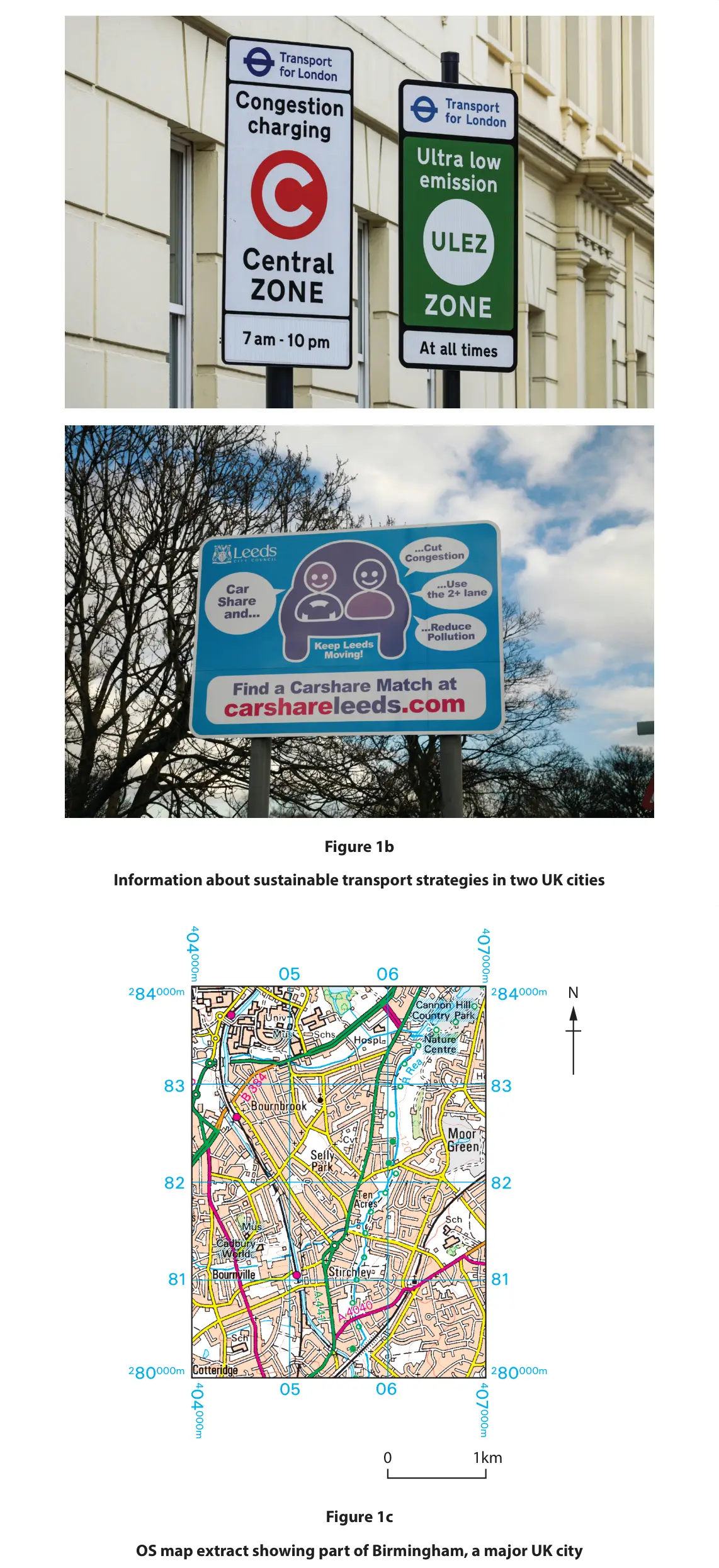
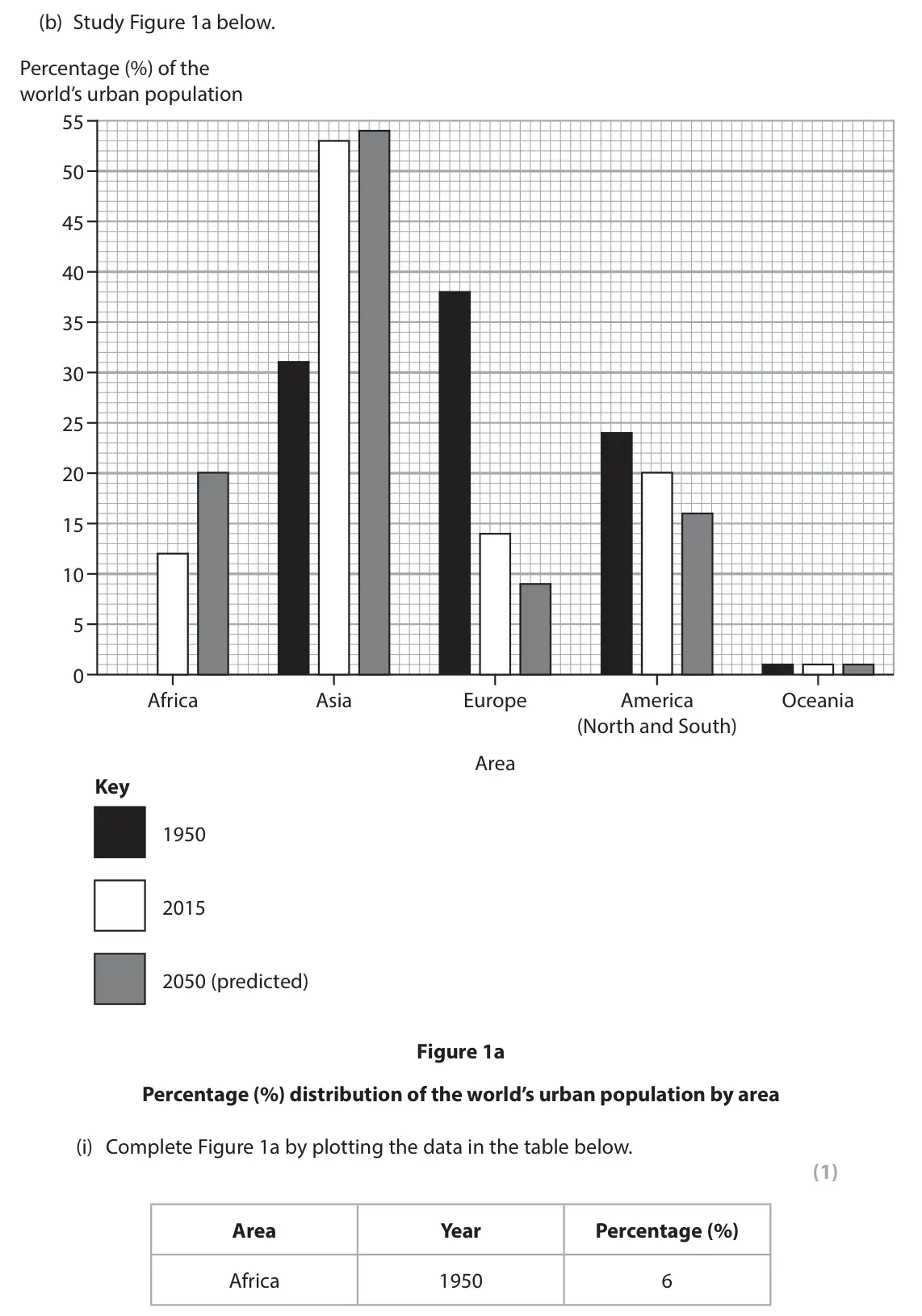
    Original question 1(b)(i): Complete Figure 1a by plotting the data in the table below. (1) Area Year Percentage (%) Africa 1950 6 Figure 1b Information about sustainable transport strateg

    Loading the question…

    (Total for Question 1 is 1 mark)
  2. Q1(b)(ii)

    June 2025 · Paper 2

    The whole paper ↗
    Setup for original question 1(b)(ii)

    Loading the question setup…

    Original question 1(b)(ii): Identify the area with the largest decrease in percentage between 1950 and 2015. (1) A America (North and South) B Asia C Europe D Oceania Figure 1b Information

    Loading the question…

    (Total for Question 1 is 1 mark)
  3. Q1(b)(iii)

    June 2025 · Paper 2

    The whole paper ↗
    Setup for original question 1(b)(iii)

    Loading the question setup…

    Original question 1(b)(iii): Calculate the range of the 2050 (predicted) percentage distribution shown in Figure 1a. (1) Figure 1b Information about sustainable transport strategies in two

    Loading the question…

    (Total for Question 1 is 1 mark)
  4. Q1(b)(iv)

    June 2025 · Paper 2

    The whole paper ↗
    Setup for original question 1(b)(iv)

    Loading the question setup…

    Original question 1(b)(iv): Compare the trend for Asia with the trend for America (North and South). You must use data from Figure 1a in your answer. (3) Figure 1b Information about sustai

    Loading the question…

    (Total for Question 1 is 3 marks)
  5. Q1(a)(i)

    June 2024 · Paper 2

    The whole paper ↗
    Setup for original question 1(a)(i)

    Loading the question setup…

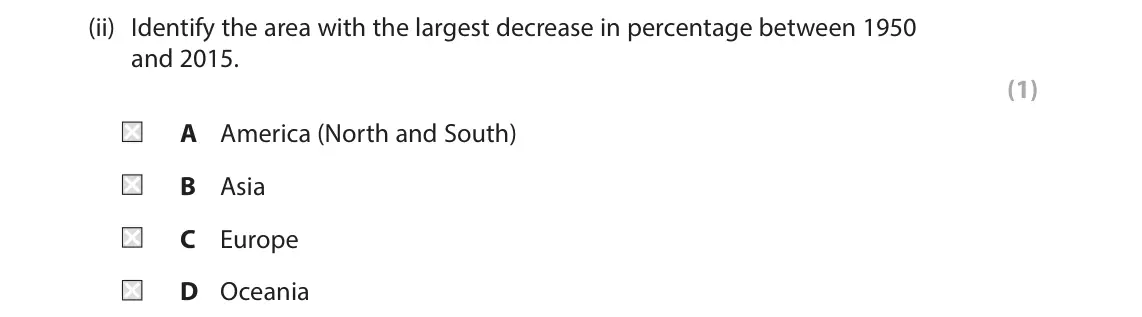
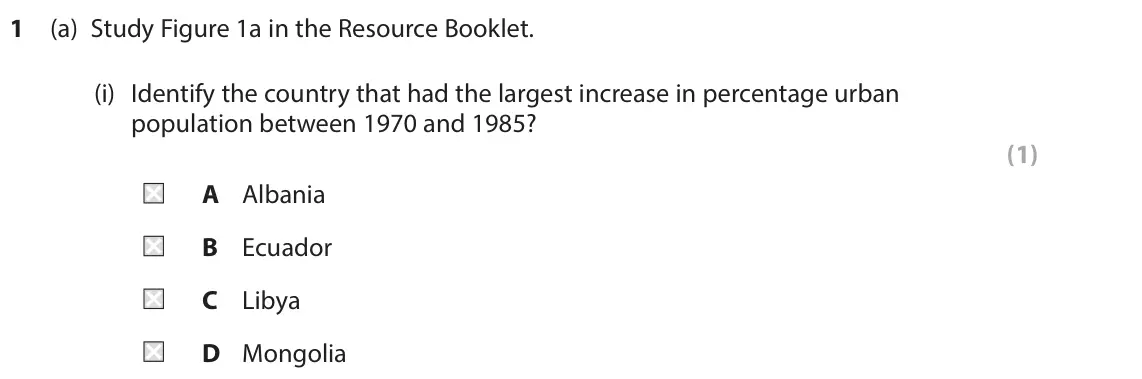
    Original question 1(a)(i): Identify the country that had the largest increase in percentage urban population between 1970 and 1985? (1) A Albania B Ecuador C Libya D Mongolia 100 Libya 80

    Loading the question…

    (Total for Question 1 is 1 mark)
  6. Q1(a)(ii)

    June 2024 · Paper 2

    The whole paper ↗
    Setup for original question 1(a)(ii)

    Loading the question setup…

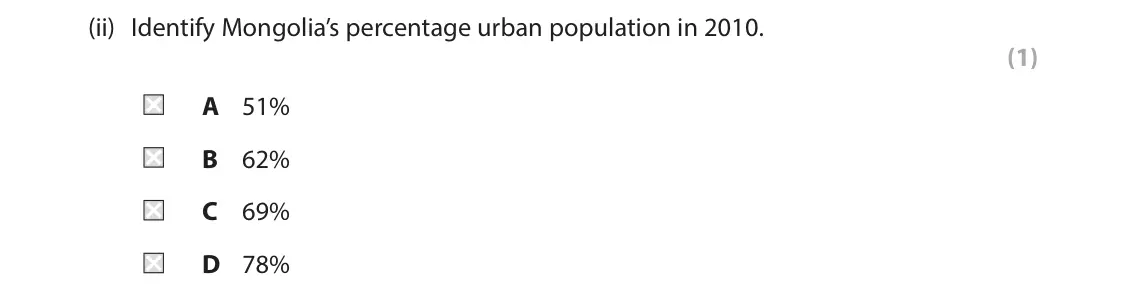
    Original question 1(a)(ii): Identify Mongolia’s percentage urban population in 2010. (1) A 51% B 62% C 69% D 78% 100 Libya 80 Mongolia Ecuador 60 Albania Percentage (%) urban population 40

    Loading the question…

    (Total for Question 1 is 1 mark)
  7. Q1(a)(iii)

    June 2024 · Paper 2

    The whole paper ↗
    Setup for original question 1(a)(iii)

    Loading the question setup…

    Original question 1(a)(iii): State two possible reasons for the overall trend in urbanisation shown in Figure 1a. (2) 100 Libya 80 Mongolia Ecuador 60 Albania Percentage (%) urban populatio

    Loading the question…

    (Total for Question 1 is 2 marks)
  8. Q1(a)(i)

    June 2023 · Paper 2

    The whole paper ↗
    Setup for original question 1(a)(i)

    Loading the question setup…

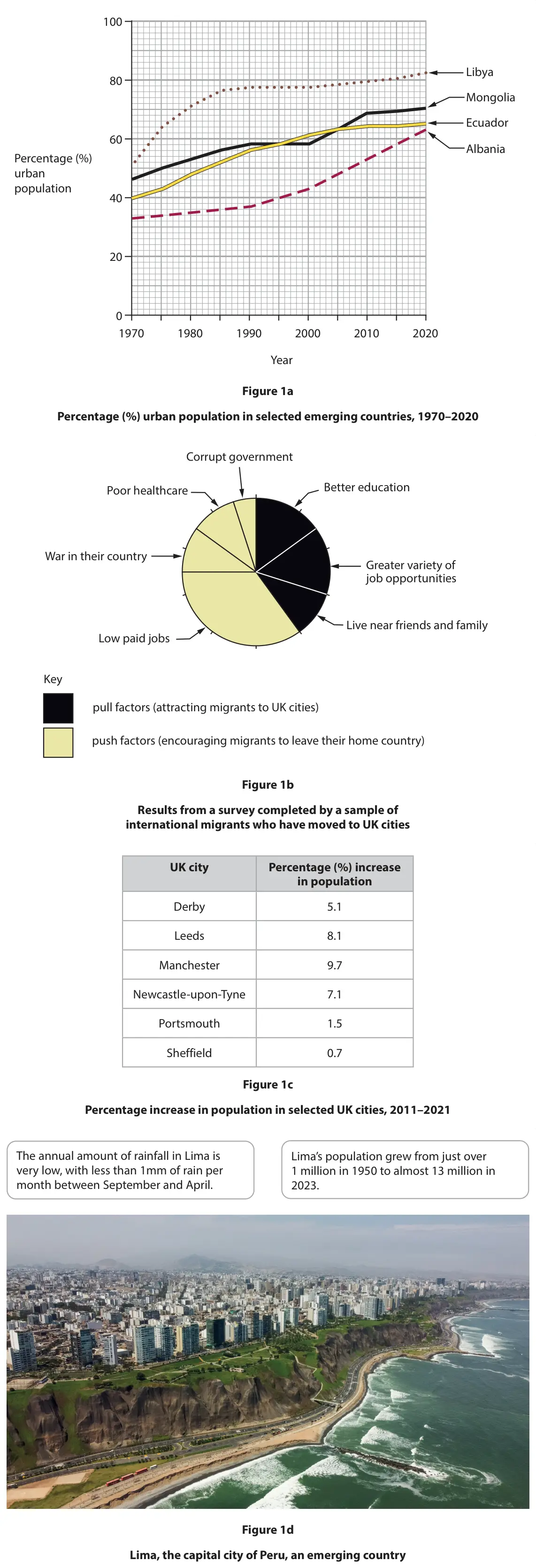
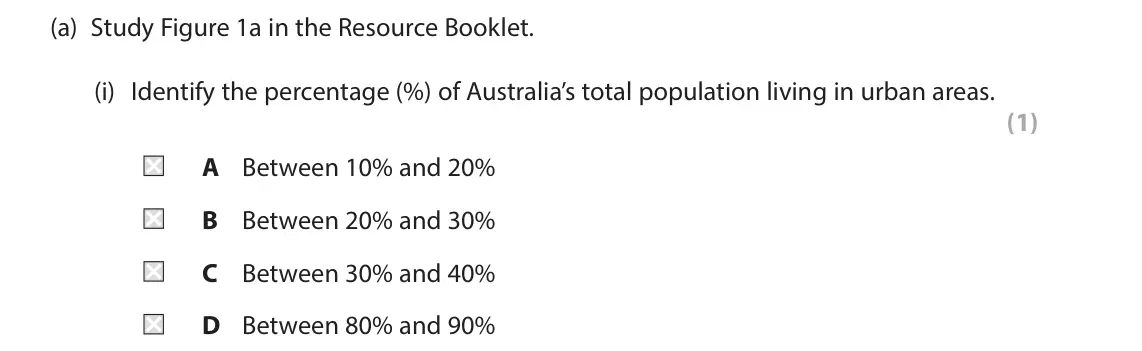
    Original question 1(a)(i): Identify the percentage (%) of Australia’s total population living in urban areas. (1) A Between 10% and 20% B Between 20% and 30% C Between 30% and 40% D Betwe

    Loading the question…

    (Total for Question 1 is 1 mark)
  9. Q1(a)(ii)

    June 2023 · Paper 2

    The whole paper ↗
    Setup for original question 1(a)(ii)

    Loading the question setup…

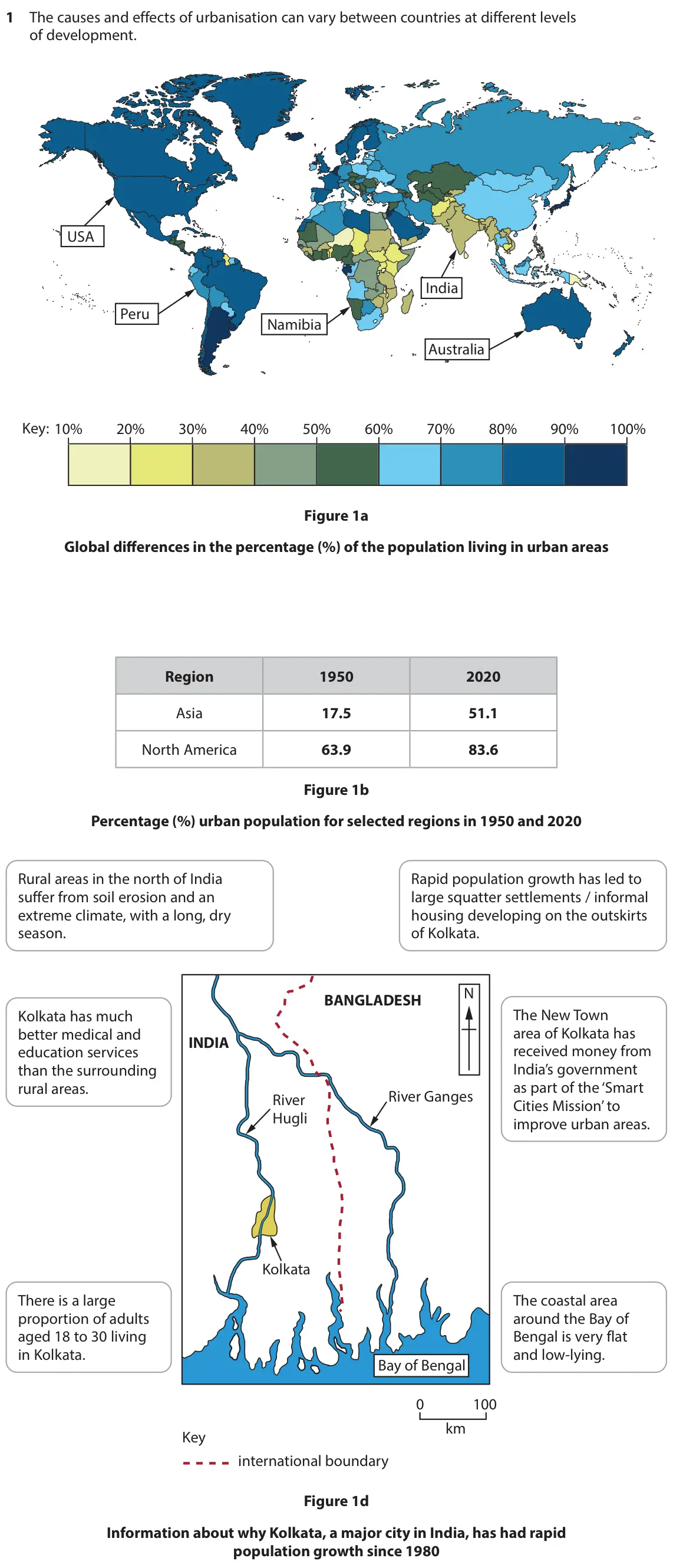
    Original question 1(a)(ii): Name the country labelled on Figure 1a that has between 50% and 60% of its total population living in urban areas. (1) 1 The causes and effects of urbanisation

    Loading the question…

    (Total for Question 1 is 1 mark)
  10. Q1(a)(iii)

    June 2023 · Paper 2

    The whole paper ↗
    Setup for original question 1(a)(iii)

    Loading the question setup…

    Original question 1(a)(iii): Explain one reason why some countries have low percentages (%) of their population living in urban areas. (2) 1 The causes and effects of urbanisation can vary

    Loading the question…

    (Total for Question 1 is 2 marks)
  11. Q1(b)

    June 2023 · Paper 2

    The whole paper ↗
    Setup for original question 1(b)

    Loading the question setup…

    Original question 1(b): Study Figure 1b in the Resource Booklet. Compare the changes in the urban populations of Asia and North America between 1950 and 2020. (3) 1 The causes and effe

    Loading the question…

    (Total for Question 1 is 3 marks)
  12. Q1(a)

    November 2021 · Paper 2

    The whole paper ↗
    Setup for original question 1(a)

    Loading the question setup…

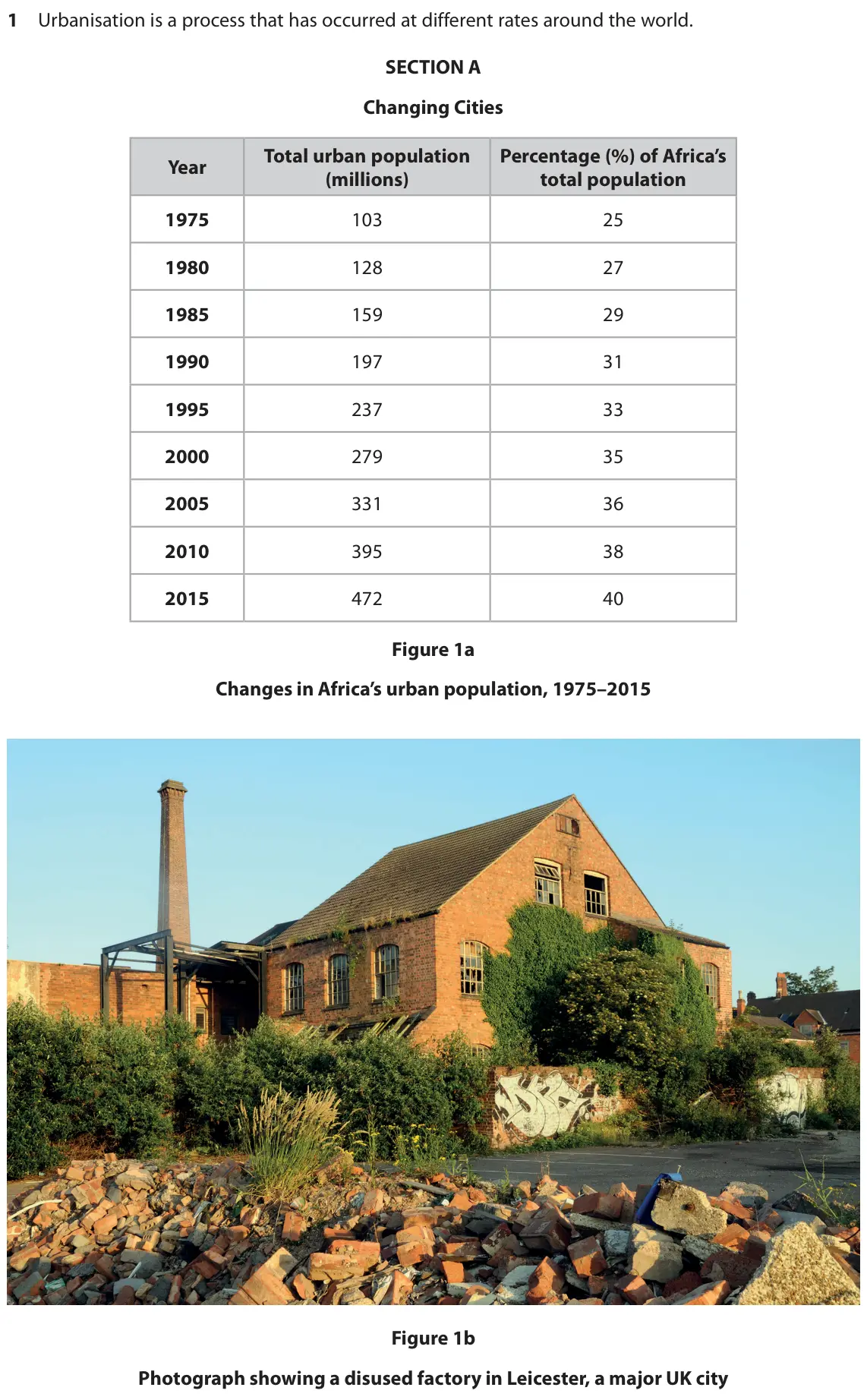
    Original question 1(a): Define the term urbanisation. (1) 1 Urbanisation is a process that has occurred at different rates around the world. SECTION A Changing Cities Total urban popul

    Loading the question…

    (Total for Question 1 is 1 mark)
  13. Q1(b)(i)

    November 2021 · Paper 2

    The whole paper ↗
    Setup for original question 1(b)(i)

    Loading the question setup…

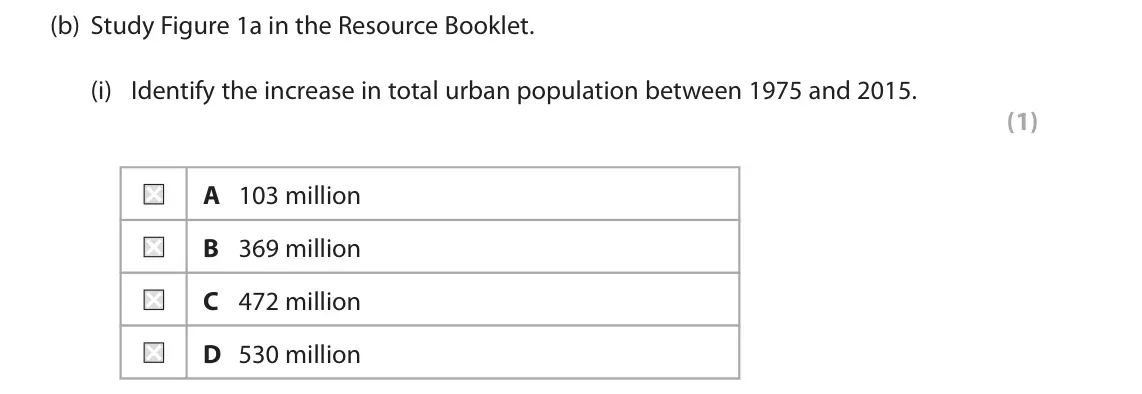
    Original question 1(b)(i): Identify the increase in total urban population between 1975 and 2015. (1) A 103 million B 369 million C 472 million D 530 million 1 Urbanisation is a process t

    Loading the question…

    (Total for Question 1 is 1 mark)
  14. Q1(b)(ii)

    November 2021 · Paper 2

    The whole paper ↗
    Setup for original question 1(b)(ii)

    Loading the question setup…

    Original question 1(b)(ii): Calculate Africa’s total population in 2015. You must show your working in the space below. (2) 1 Urbanisation is a process that has occurred at different rates

    Loading the question…

    (Total for Question 1 is 2 marks)
  15. Q1(b)(iii)

    November 2021 · Paper 2

    The whole paper ↗
    Setup for original question 1(b)(iii)

    Loading the question setup…

    Original question 1(b)(iii): Line graphs are often used to show population change over time. Describe one other method that could be used to present the changing ‘percentage (%) of Africa’s

    Loading the question…

    (Total for Question 1 is 2 marks)
  16. Q1(b)(iv)

    November 2021 · Paper 2

    The whole paper ↗
    Setup for original question 1(b)(iv)

    Loading the question setup…

    Original question 1(b)(iv): Suggest two reasons for the growth in urbanisation shown in Figure 1a. (4) 1 Urbanisation is a process that has occurred at different rates around the world. SE

    Loading the question…

    (Total for Question 1 is 4 marks)
  17. Q1(e)

    November 2020 · Paper 2

    The whole paper ↗
    Setup for original question 1(e)

    Loading the question setup…

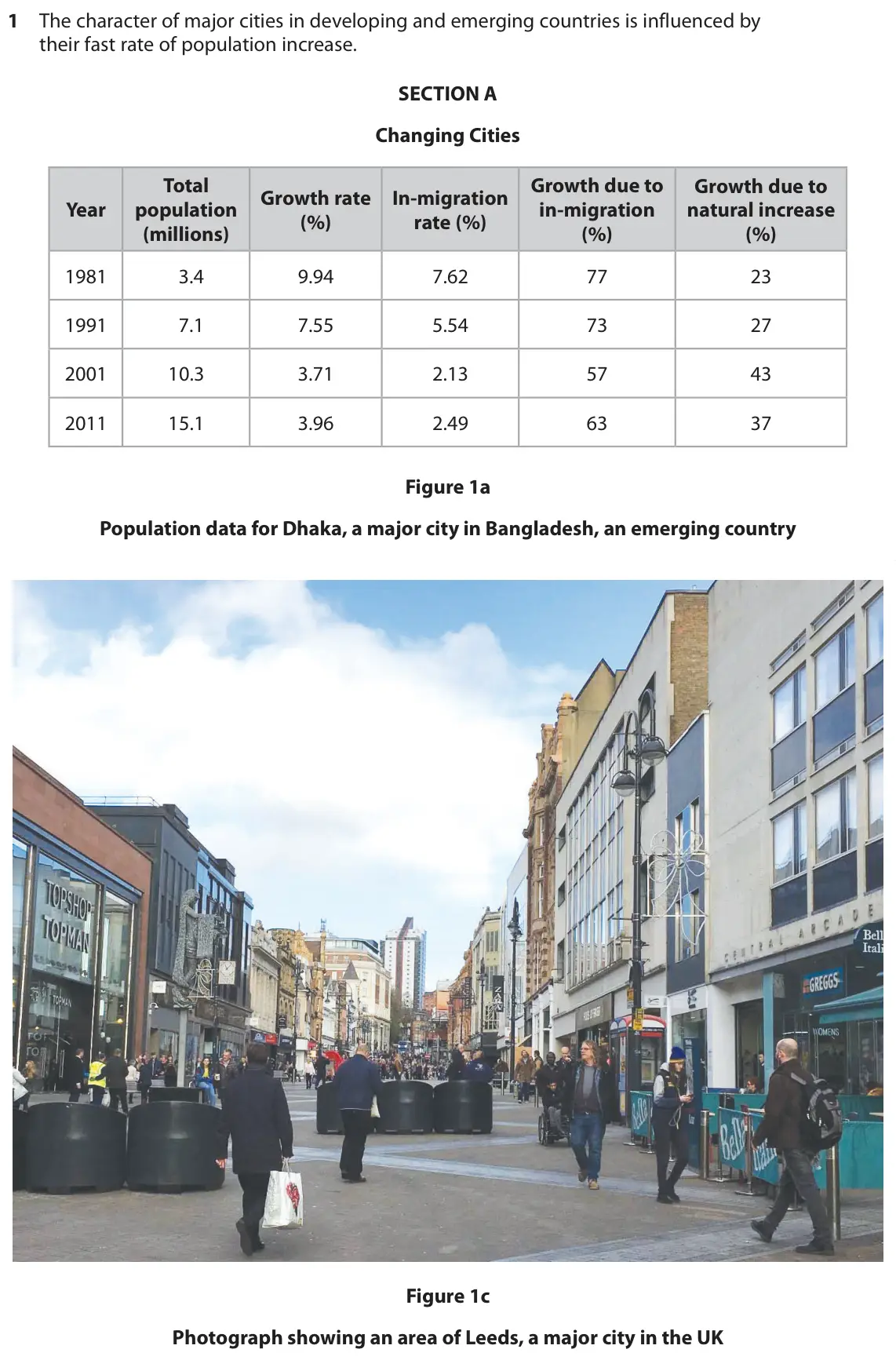
    Original question 1(e): Explain two reasons why urbanisation occurs at different rates around the world. (4) 1 The character of major cities in developing and emerging countries is inf

    Loading the question…

    (Total for Question 1 is 4 marks)
All 17 questions on Urbanisation is a global process, as a list
  1. June 2025, Paper 2, Q1(b)(i) (1 mark): Complete Figure 1a by plotting the data in the table below. (1) Area Year Percentage (%) Africa 1950 6 Figure 1b Information about sustainable transport strateg
  2. June 2025, Paper 2, Q1(b)(ii) (1 mark): Identify the area with the largest decrease in percentage between 1950 and 2015. (1) A America (North and South) B Asia C Europe D Oceania Figure 1b Information
  3. June 2025, Paper 2, Q1(b)(iii) (1 mark): Calculate the range of the 2050 (predicted) percentage distribution shown in Figure 1a. (1) Figure 1b Information about sustainable transport strategies in two
  4. June 2025, Paper 2, Q1(b)(iv) (3 marks): Compare the trend for Asia with the trend for America (North and South). You must use data from Figure 1a in your answer. (3) Figure 1b Information about sustai
  5. June 2024, Paper 2, Q1(a)(i) (1 mark): Identify the country that had the largest increase in percentage urban population between 1970 and 1985? (1) A Albania B Ecuador C Libya D Mongolia 100 Libya 80
  6. June 2024, Paper 2, Q1(a)(ii) (1 mark): Identify Mongolia’s percentage urban population in 2010. (1) A 51% B 62% C 69% D 78% 100 Libya 80 Mongolia Ecuador 60 Albania Percentage (%) urban population 40
  7. June 2024, Paper 2, Q1(a)(iii) (2 marks): State two possible reasons for the overall trend in urbanisation shown in Figure 1a. (2) 100 Libya 80 Mongolia Ecuador 60 Albania Percentage (%) urban populatio
  8. June 2023, Paper 2, Q1(a)(i) (1 mark): Identify the percentage (%) of Australia’s total population living in urban areas. (1) A Between 10% and 20% B Between 20% and 30% C Between 30% and 40% D Betwe
  9. June 2023, Paper 2, Q1(a)(ii) (1 mark): Name the country labelled on Figure 1a that has between 50% and 60% of its total population living in urban areas. (1) 1 The causes and effects of urbanisation
  10. June 2023, Paper 2, Q1(a)(iii) (2 marks): Explain one reason why some countries have low percentages (%) of their population living in urban areas. (2) 1 The causes and effects of urbanisation can vary
  11. June 2023, Paper 2, Q1(b) (3 marks): Study Figure 1b in the Resource Booklet. Compare the changes in the urban populations of Asia and North America between 1950 and 2020. (3) 1 The causes and effe
  12. November 2021, Paper 2, Q1(a) (1 mark): Define the term urbanisation. (1) 1 Urbanisation is a process that has occurred at different rates around the world. SECTION A Changing Cities Total urban popul
  13. November 2021, Paper 2, Q1(b)(i) (1 mark): Identify the increase in total urban population between 1975 and 2015. (1) A 103 million B 369 million C 472 million D 530 million 1 Urbanisation is a process t
  14. November 2021, Paper 2, Q1(b)(ii) (2 marks): Calculate Africa’s total population in 2015. You must show your working in the space below. (2) 1 Urbanisation is a process that has occurred at different rates
  15. November 2021, Paper 2, Q1(b)(iii) (2 marks): Line graphs are often used to show population change over time. Describe one other method that could be used to present the changing ‘percentage (%) of Africa’s
  16. November 2021, Paper 2, Q1(b)(iv) (4 marks): Suggest two reasons for the growth in urbanisation shown in Figure 1a. (4) 1 Urbanisation is a process that has occurred at different rates around the world. SE
  17. November 2020, Paper 2, Q1(e) (4 marks): Explain two reasons why urbanisation occurs at different rates around the world. (4) 1 The character of major cities in developing and emerging countries is inf

Questions, mark schemes and examiner’s reports are © Pearson Edexcel, from their published past papers. Plumi isn’t affiliated with any exam board. Want whole papers? Edexcel GCSE Geography A past papers.

The Plumi iPad app also offers exam-style questions with AI feedback on your handwritten working.