 plumi
Tropical cyclones are extreme weather events that develop under specific conditions and in certain locations: Edexcel GCSE Geography A questions
Edexcel GCSE Geography A past-paper questions on 2.5 Tropical cyclones are extreme weather events that develop under specific conditions and in certain locations, 2018–2025, with mark schemes and examiner’s reports where available.
Paper
All papers
Exam
All years
Calculations
Loading the full question list…
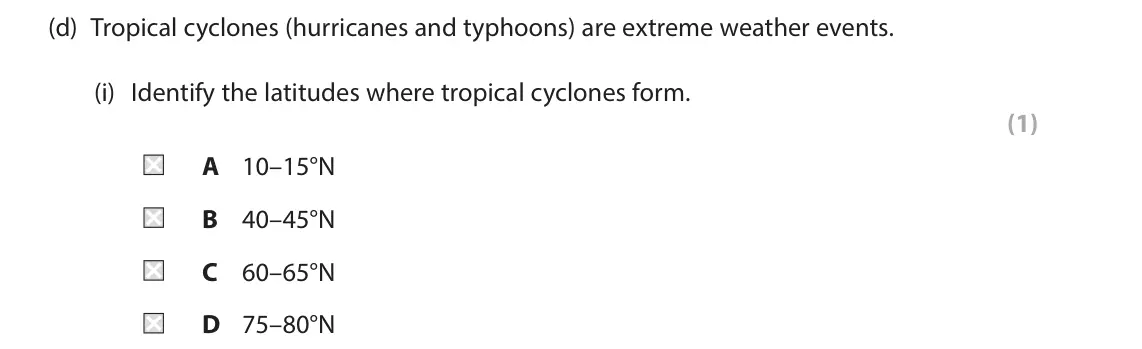
Q6(d)(i)
The whole paper ↗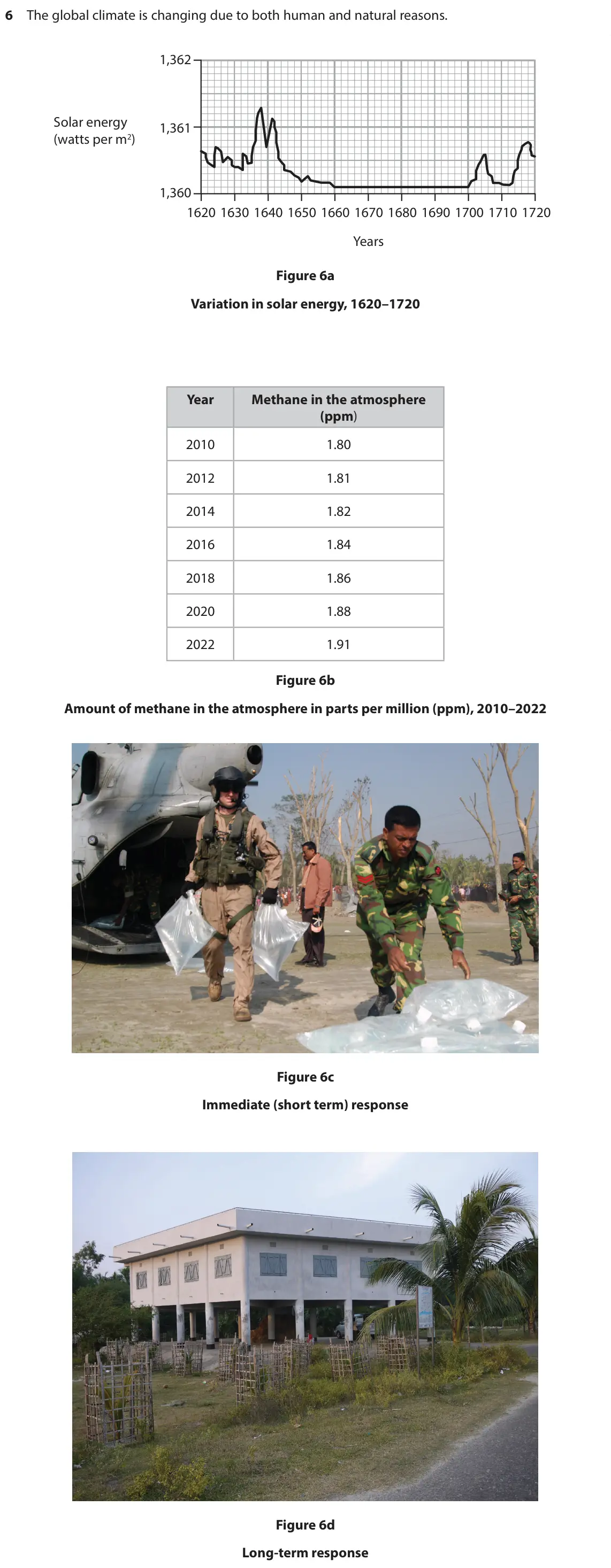 (Total for Question 6 is 1 mark)
Q6(f)
The whole paper ↗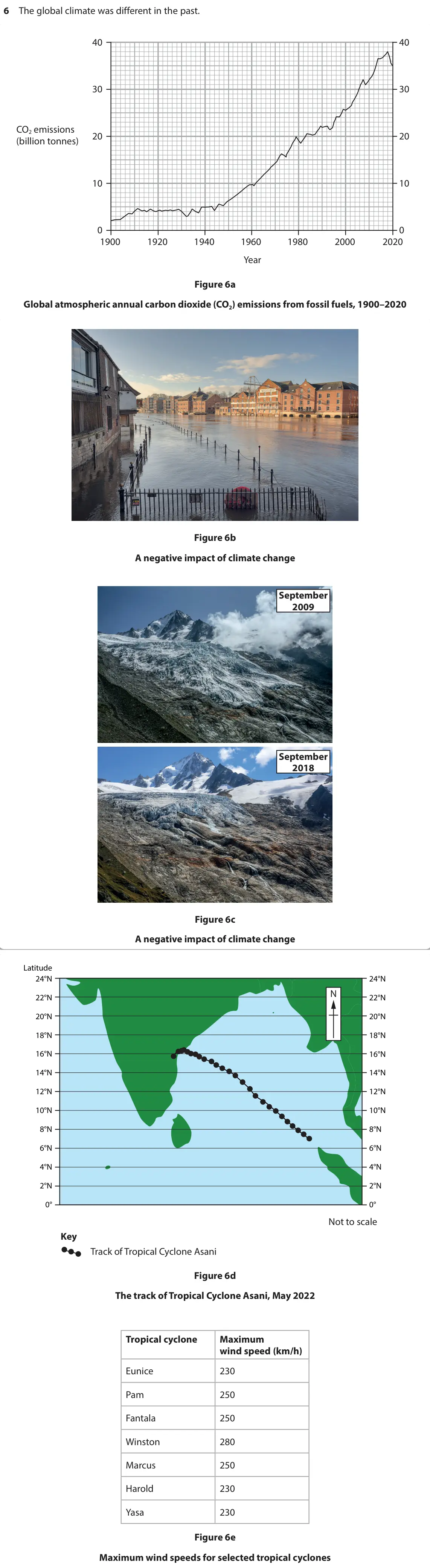 (Total for Question 6 is 1 mark)
Q6(g)
The whole paper ↗(Total for Question 6 is 2 marks)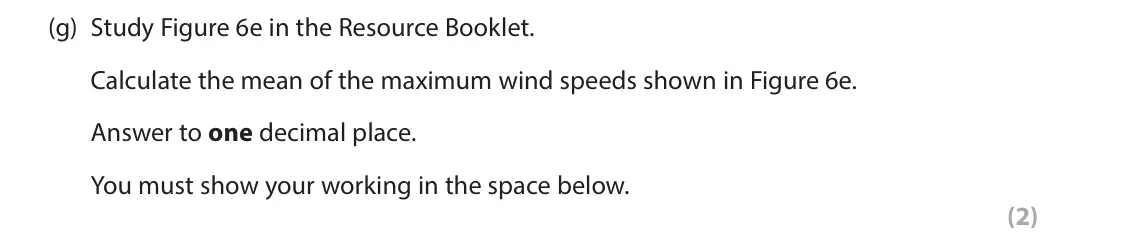
Q6(f)(i)
The whole paper ↗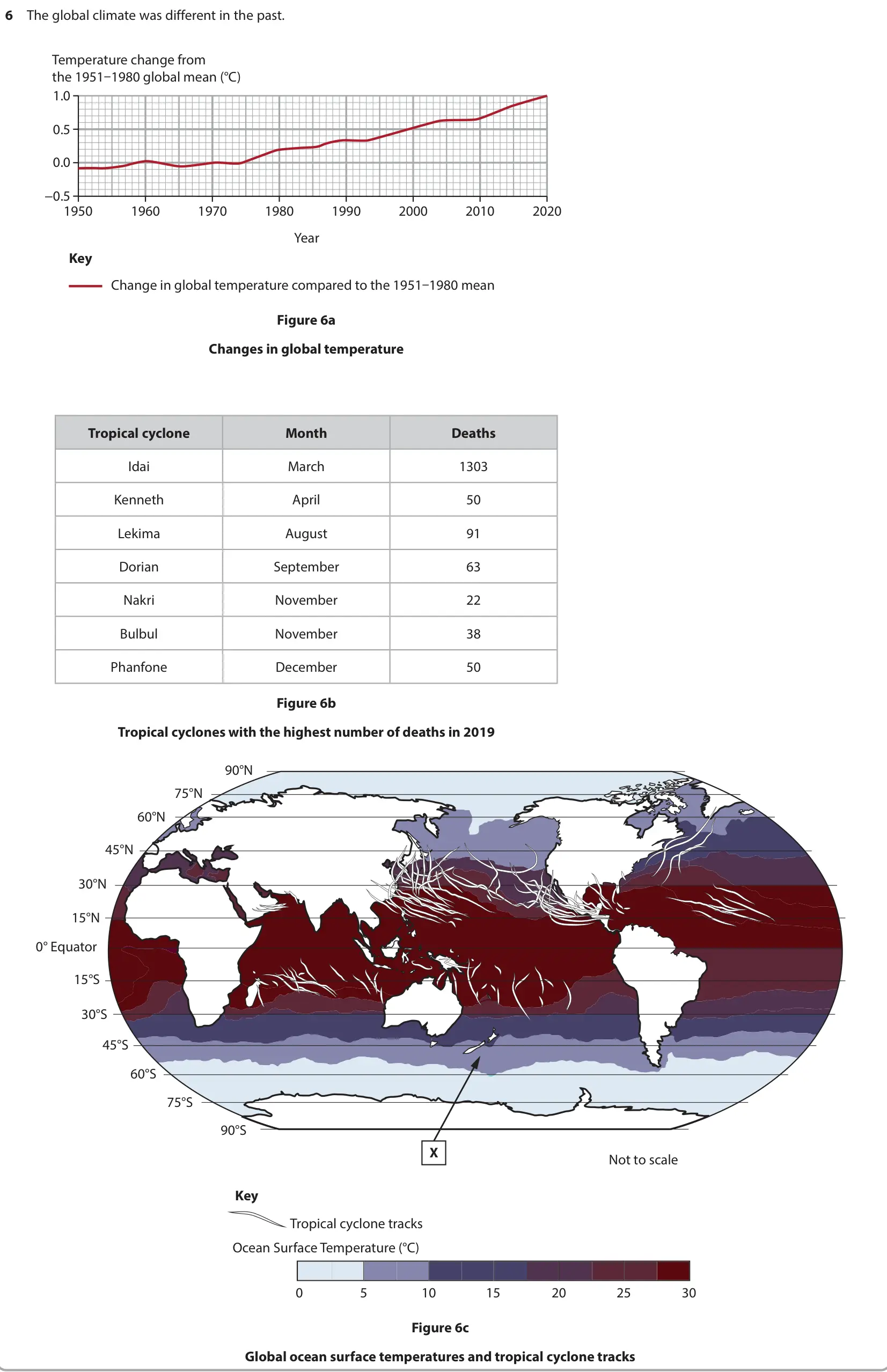 (Total for Question 6 is 1 mark)
Q6(f)(ii)
The whole paper ↗(Total for Question 6 is 2 marks)
Q6(d)(i)
The whole paper ↗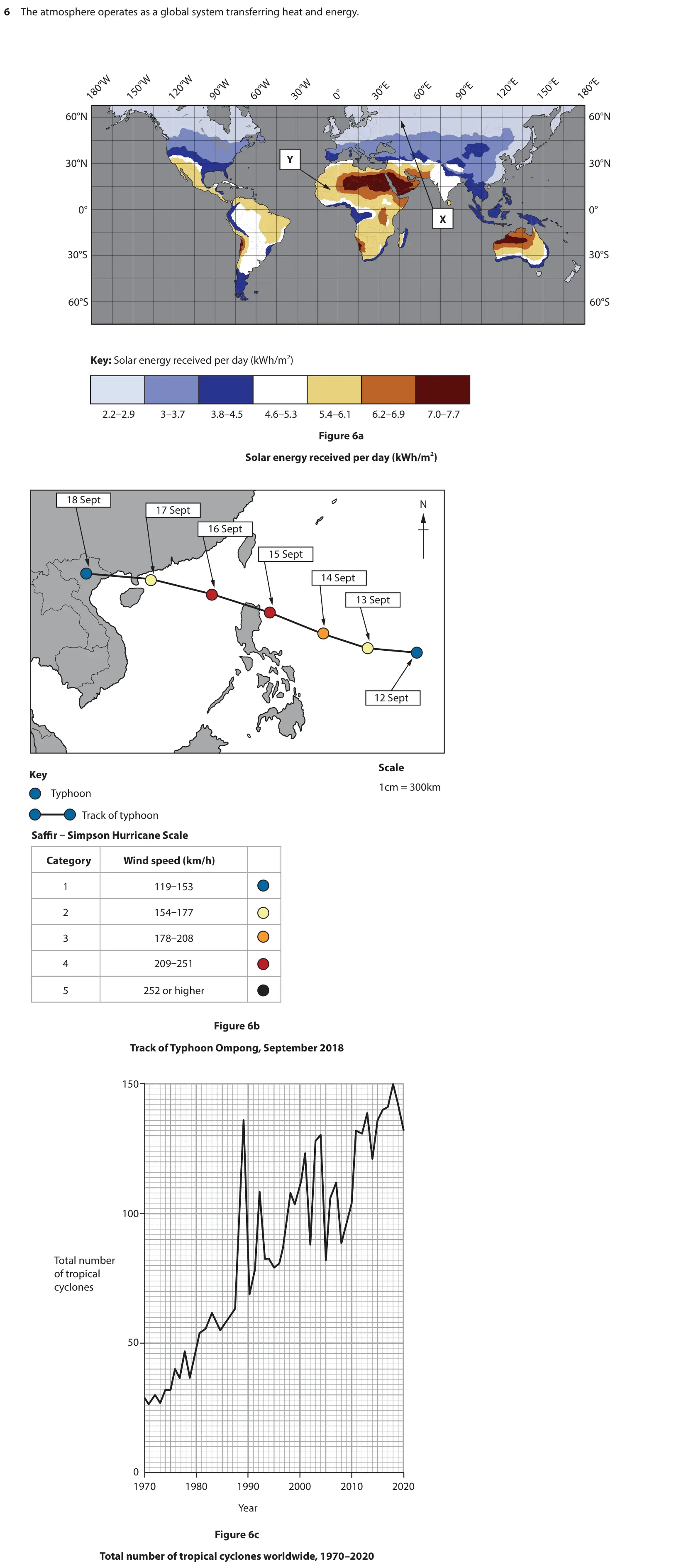 (Total for Question 6 is 1 mark)
Q6(d)(ii)
The whole paper ↗(Total for Question 6 is 2 marks)
Q6(e)(i)
The whole paper ↗(Total for Question 6 is 1 mark)
Q6(e)(ii)
The whole paper ↗(Total for Question 6 is 3 marks)
Q6(c)
The whole paper ↗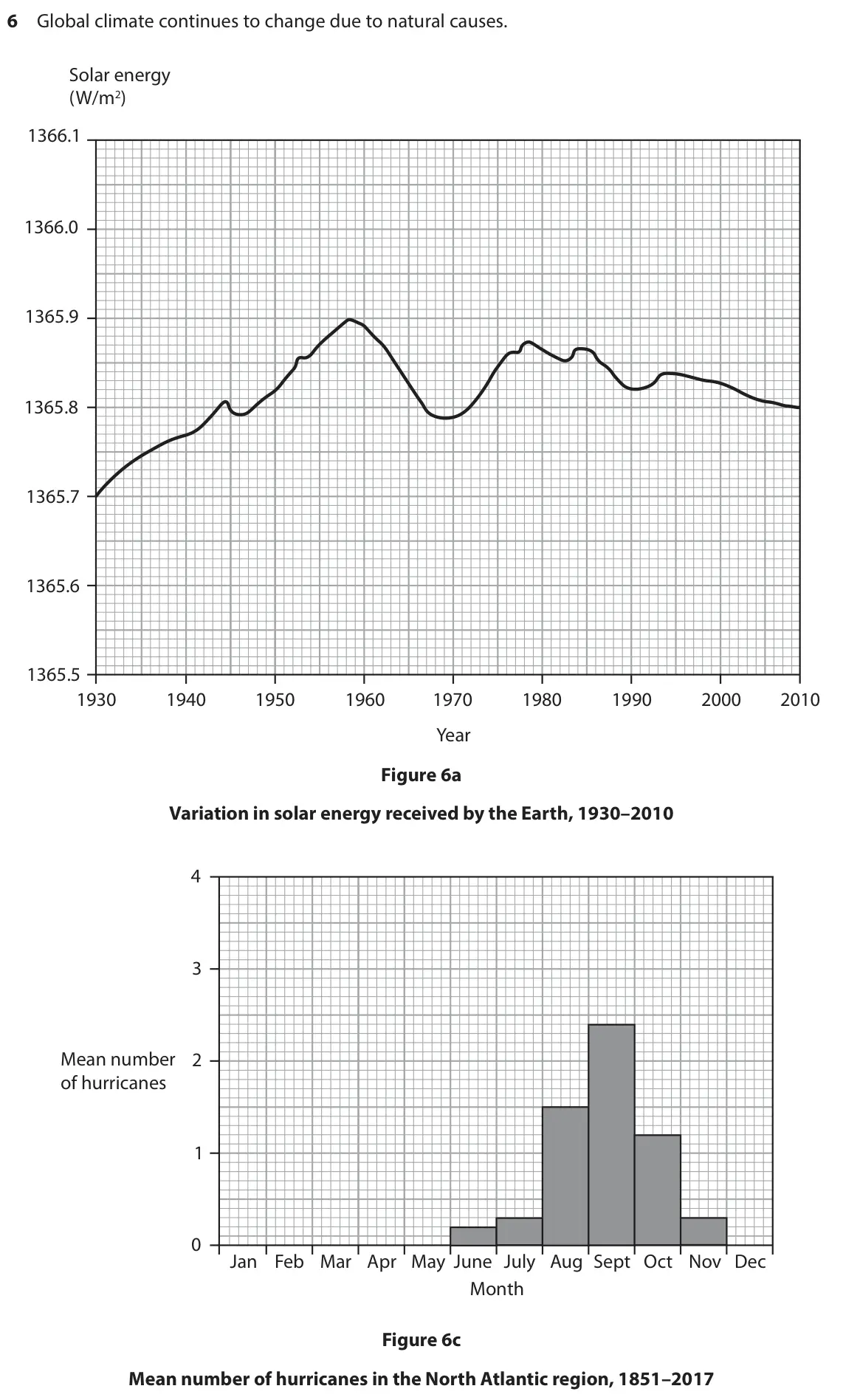 (Total for Question 6 is 3 marks)
Q6(c)(i)
The whole paper ↗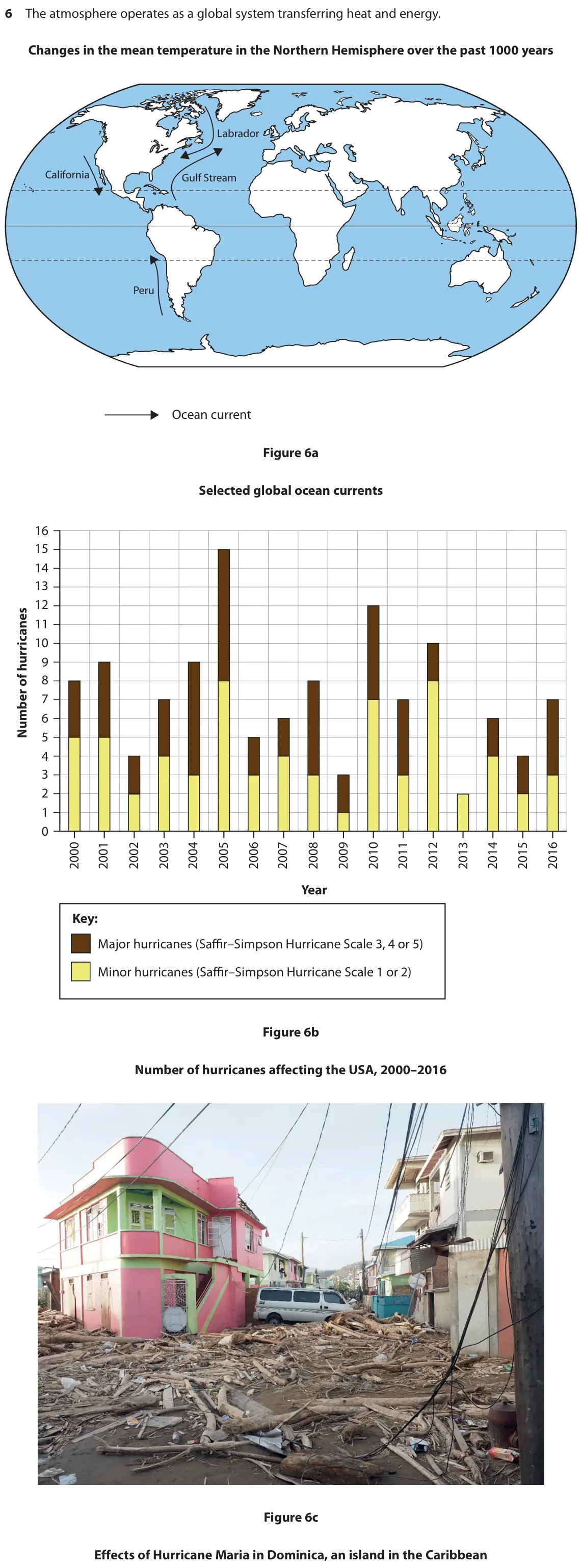 (Total for Question 6 is 1 mark)

Q6(c)(ii)
The whole paper ↗(Total for Question 6 is 1 mark)
Q6(c)(i)
The whole paper ↗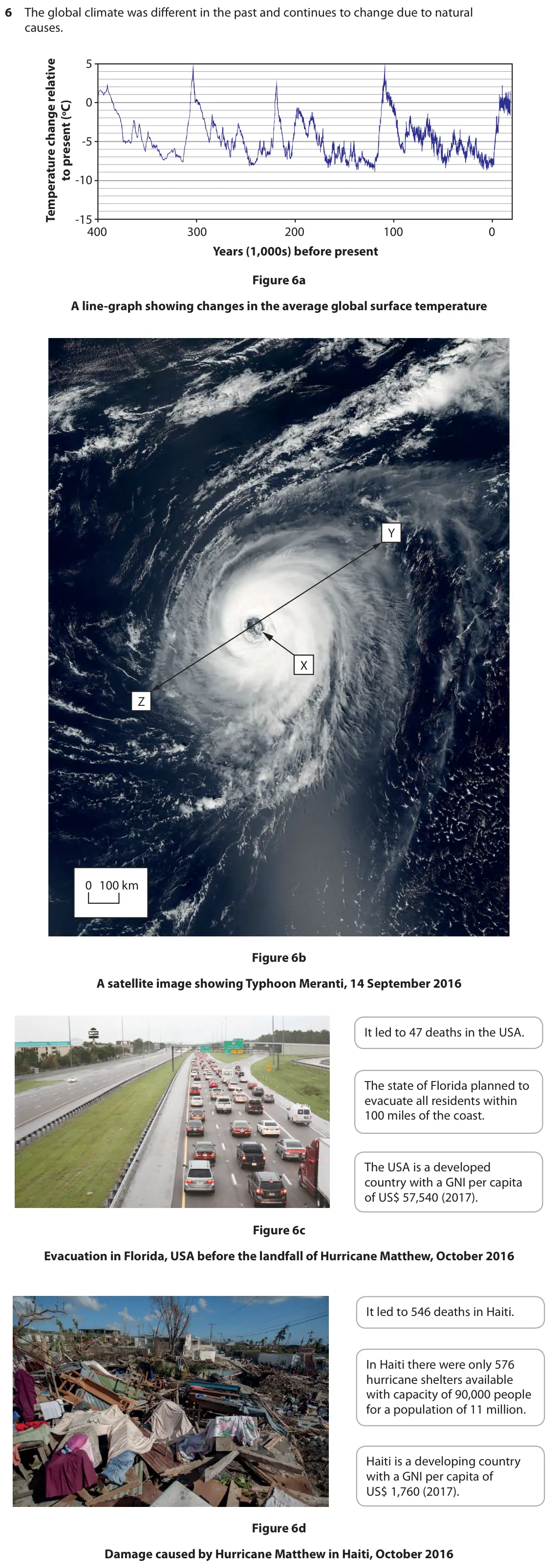 (Total for Question 6 is 1 mark)

Q6(c)(ii)
The whole paper ↗(Total for Question 6 is 2 marks)
Q6(c)(iii)
The whole paper ↗(Total for Question 6 is 1 mark)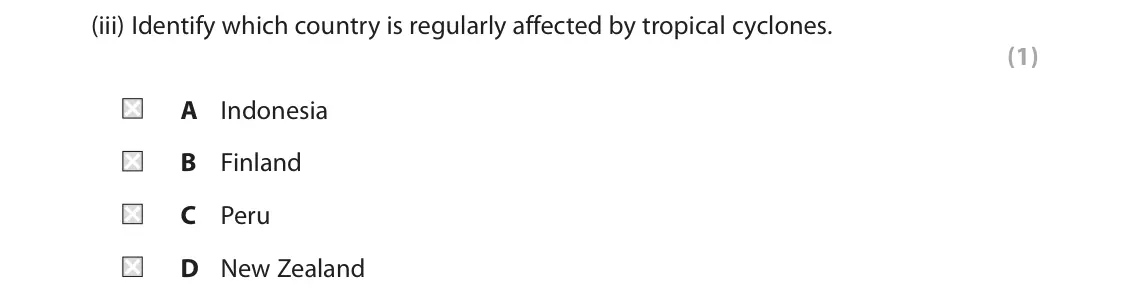
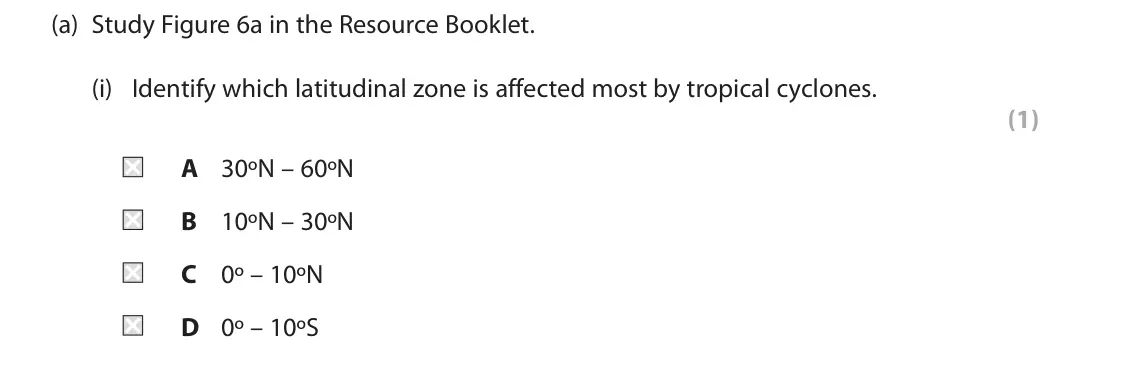
Q6(a)(i)
The whole paper ↗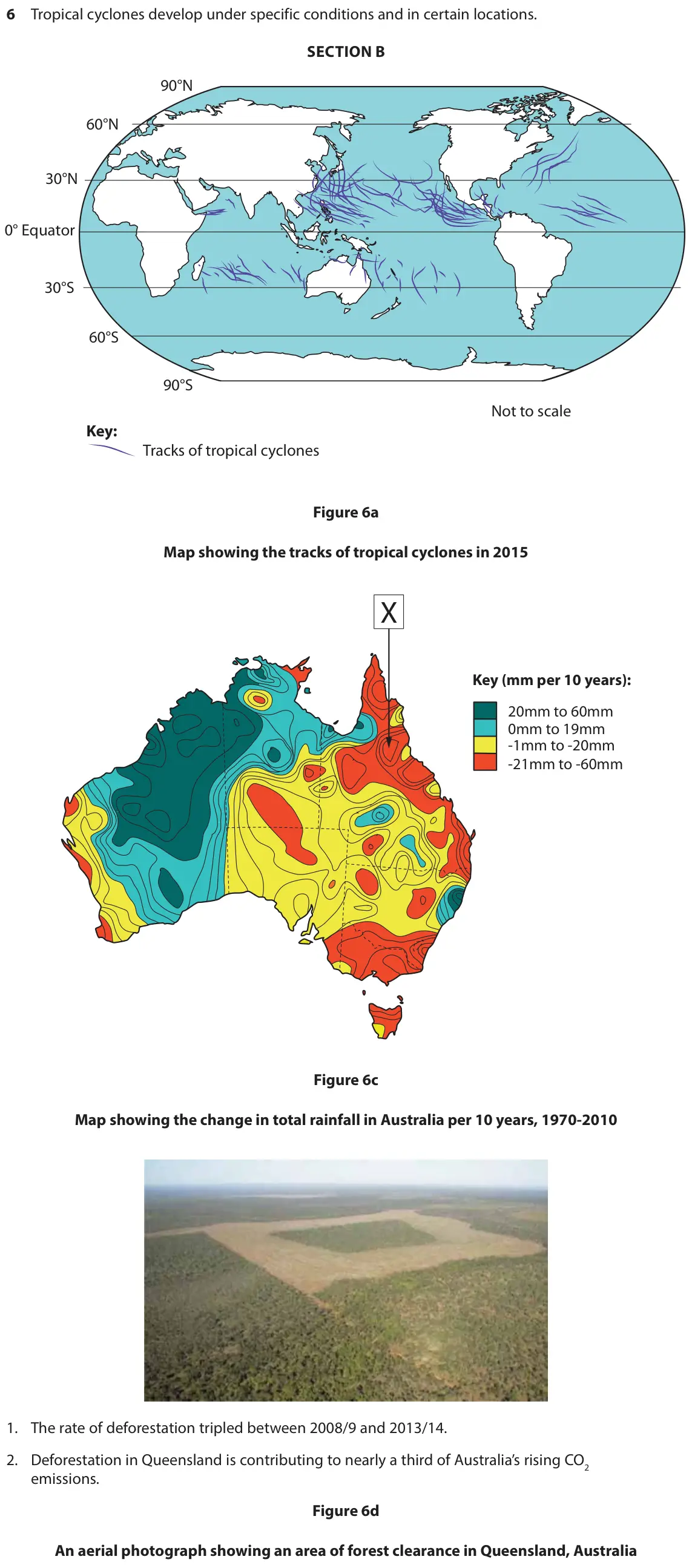 (Total for Question 6 is 1 mark)
Q6(a)(ii)
The whole paper ↗(Total for Question 6 is 3 marks)
All 17 questions on Tropical cyclones are extreme weather events that develop under specific conditions and in certain locations, as a list
- June 2025, Paper 1, Q6(d)(i) (1 mark): Identify the latitudes where tropical cyclones form. (1) A 10–15°N B 40–45°N C 60–65°N D 75–80°N 6 The global climate is changing due to both human and natural
- June 2024, Paper 1, Q6(f) (1 mark): Tropical cyclones are extreme weather events. Study Figure 6d in the Resource Booklet. Identify the latitudes within which Tropical Cyclone Asani travelled. (1)
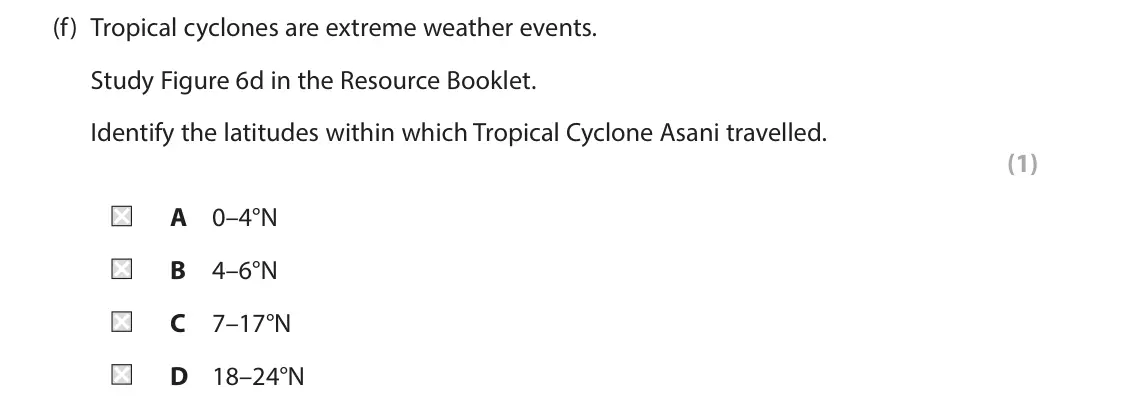
- June 2024, Paper 1, Q6(g) (2 marks): Study Figure 6e in the Resource Booklet. Calculate the mean of the maximum wind speeds shown in Figure 6e. Answer to one decimal place. You must show your worki
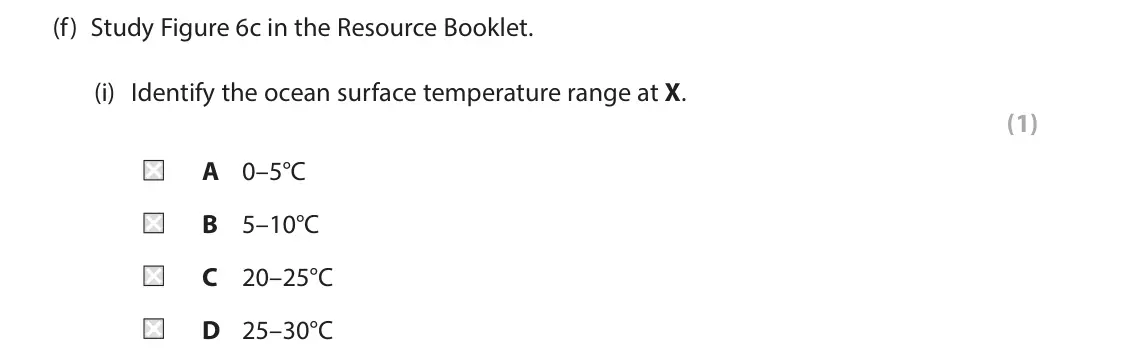
- June 2023, Paper 1, Q6(f)(i) (1 mark): Identify the ocean surface temperature range at X. (1) A 0–5°C B 5–10°C C 20–25°C D 25–30°C 6 The global climate was different in the past. Temperature change f
- June 2023, Paper 1, Q6(f)(ii) (2 marks): Suggest one reason for the link between ocean surface temperature and the location of tropical cyclones. You must use evidence from Figure 6c in your answer. (2
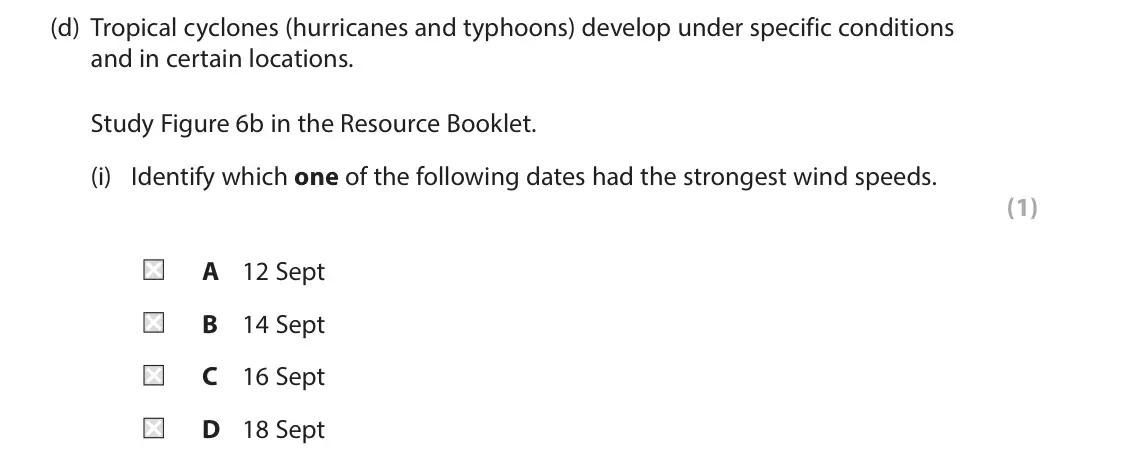
- June 2022, Paper 1, Q6(d)(i) (1 mark): Identify which one of the following dates had the strongest wind speeds. (1) A 12 Sept B 14 Sept C 16 Sept D 18 Sept 6 The atmosphere operates as a global syste
- June 2022, Paper 1, Q6(d)(ii) (2 marks): Calculate the total distance travelled by Typhoon Ompong between 12–18 September 2018. Answer to one decimal place. You must show your working in the space belo
- June 2022, Paper 1, Q6(e)(i) (1 mark): Identify the year with the highest number of tropical cyclones. (1) 6 The atmosphere operates as a global system transferring heat and energy. 60°N 60°N Y 30°N
- June 2022, Paper 1, Q6(e)(ii) (3 marks): Suggest one reason for the overall change in the frequency of tropical cyclones between 1970 and 2020. You must use evidence from Figure 6c in your answer. (3)
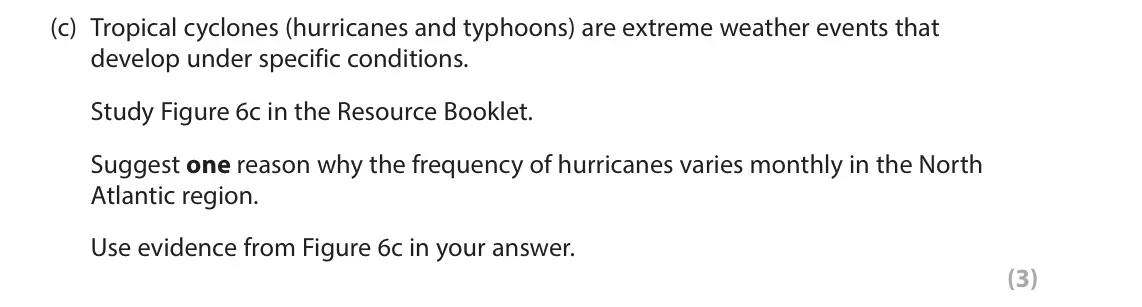
- November 2021, Paper 1, Q6(c) (3 marks): Tropical cyclones (hurricanes and typhoons) are extreme weather events that develop under specific conditions. Study Figure 6c in the Resource Booklet. Suggest
- November 2020, Paper 1, Q6(c)(i) (1 mark): Study Figure 6b in the Resource Booklet. Calculate the number of major hurricanes affecting the USA in 2016. (1) 6 The atmosphere operates as a global system tr
- November 2020, Paper 1, Q6(c)(ii) (1 mark): State one condition of the ocean required for a hurricane to form. (1) 6 The atmosphere operates as a global system transferring heat and energy. Changes in the
- June 2019, Paper 1, Q6(c)(i) (1 mark): Study Figure 6b in the Resource Booklet. Identify the feature labelled X on Figure 6b. (1) 6 The global climate was different in the past and continues to chang
- June 2019, Paper 1, Q6(c)(ii) (2 marks): Calculate the diameter of the tropical cyclone (shown by the line Y-Z) on Figure 6b. You must show your workings in the space below. (2) 6 The global climate wa
- June 2019, Paper 1, Q6(c)(iii) (1 mark): Identify which country is regularly affected by tropical cyclones. (1) A Indonesia B Finland C Peru D New Zealand 6 The global climate was different in the past
- June 2018, Paper 1, Q6(a)(i) (1 mark): Identify which latitudinal zone is affected most by tropical cyclones. (1) A 30ºN – 60ºN B 10ºN – 30ºN C 0º – 10ºN D 0º – 10ºS 6 Tropical cyclones develop under
- June 2018, Paper 1, Q6(a)(ii) (3 marks): Explain one reason why tropical cyclones do not travel far inland. (3) 6 Tropical cyclones develop under specific conditions and in certain locations. SECTION B
Questions, mark schemes and examiner’s reports are © Pearson Edexcel, from their published past papers. Plumi isn’t affiliated with any exam board. Want whole papers? Edexcel GCSE Geography A past papers.
The Plumi iPad app also offers exam-style questions with AI feedback on your handwritten working.