 plumi
The atmosphere operates as a global system transferring heat and energy: Edexcel GCSE Geography A questions
Edexcel GCSE Geography A past-paper questions on 2.1 The atmosphere operates as a global system transferring heat and energy, 2018–2025, with mark schemes and examiner’s reports where available.
Paper
All papers
Exam
All years
Calculations
Loading the full question list…
Q5(a)(i)
The whole paper ↗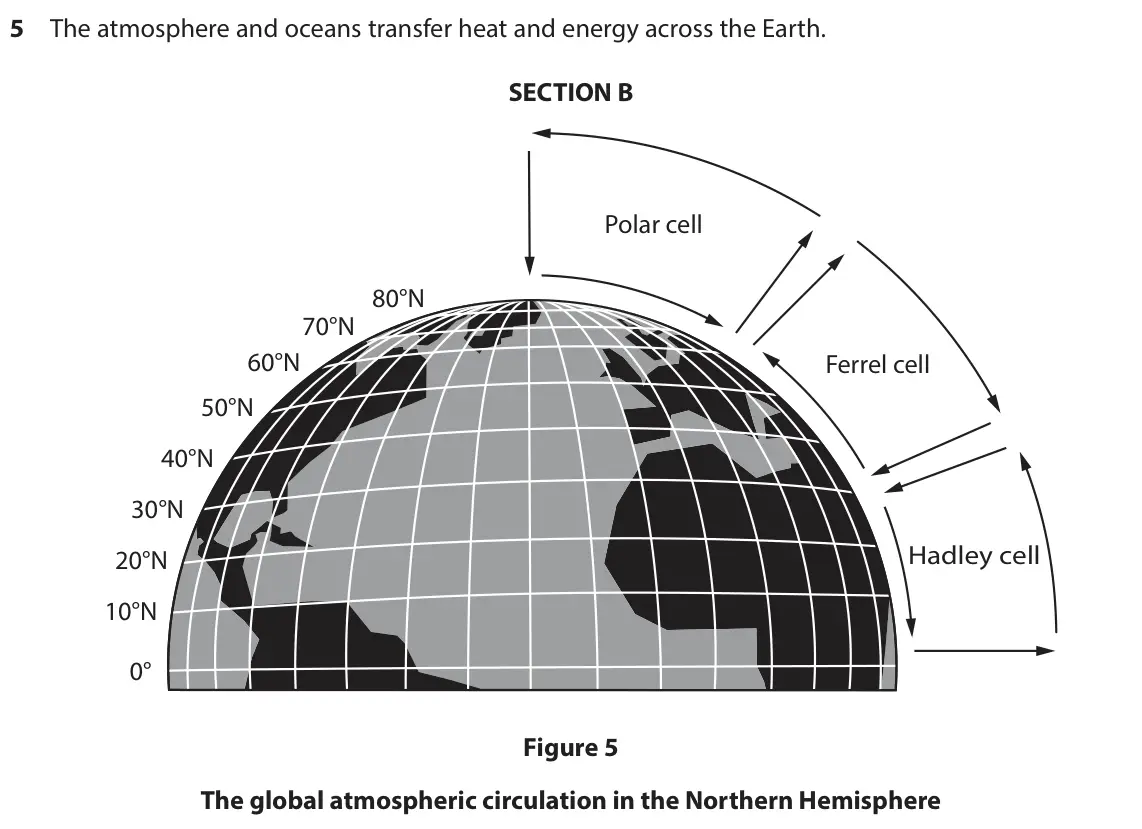 (Total for Question 5 is 1 mark)
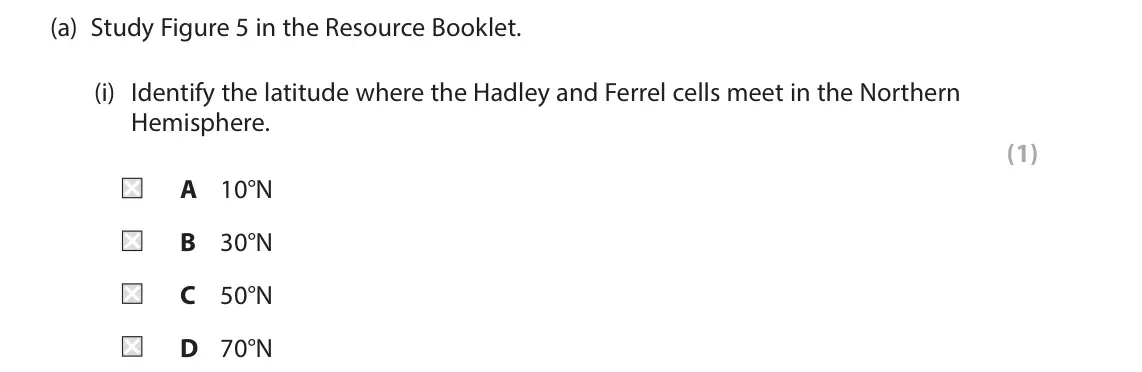
Q5(a)(ii)
The whole paper ↗(Total for Question 5 is 2 marks)
Q5(b)
The whole paper ↗(Total for Question 5 is 1 mark)
Q5(a)(i)
The whole paper ↗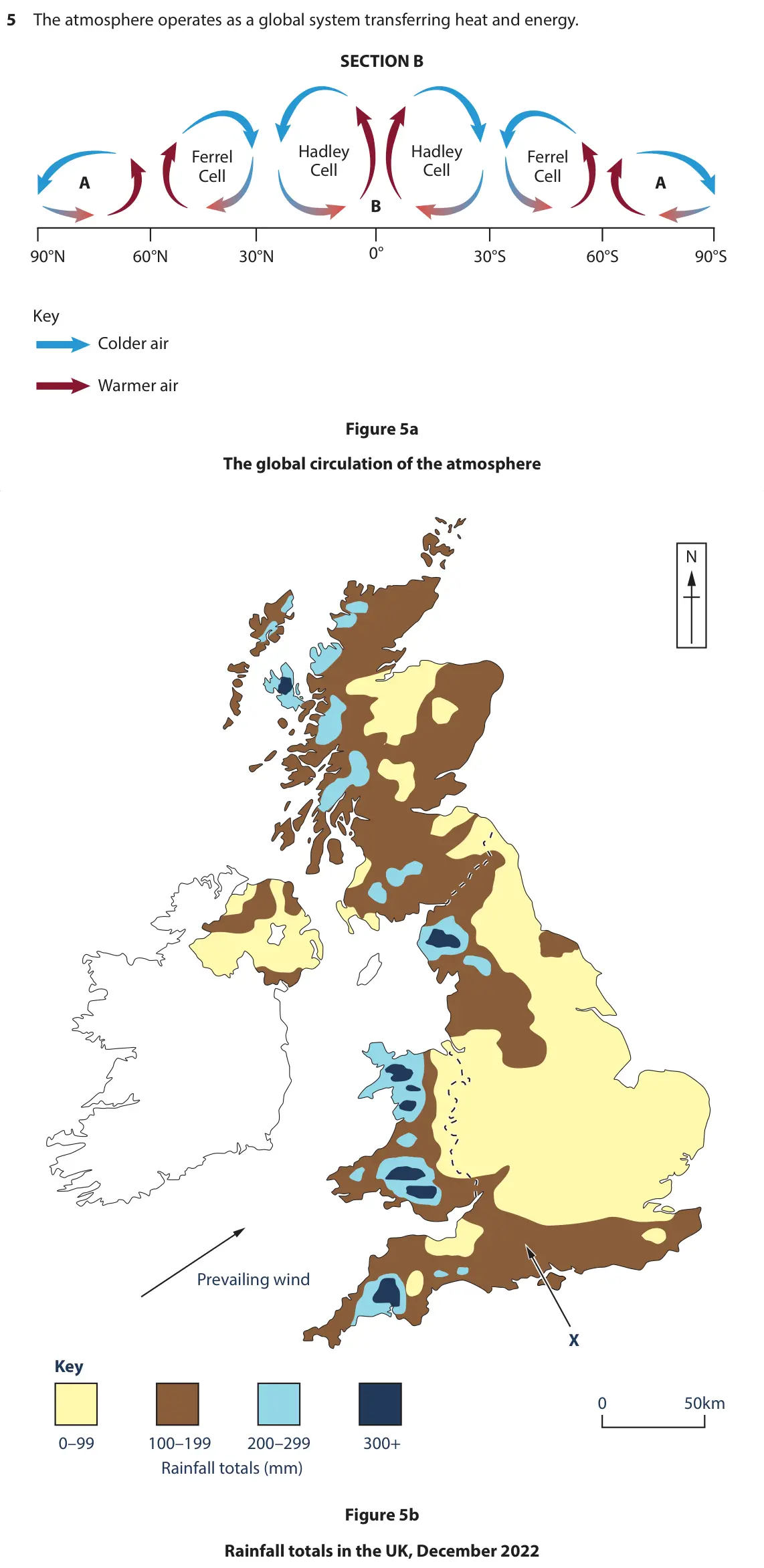 (Total for Question 5 is 1 mark)

Q5(a)(ii)
The whole paper ↗(Total for Question 5 is 2 marks)
Q6(a)
The whole paper ↗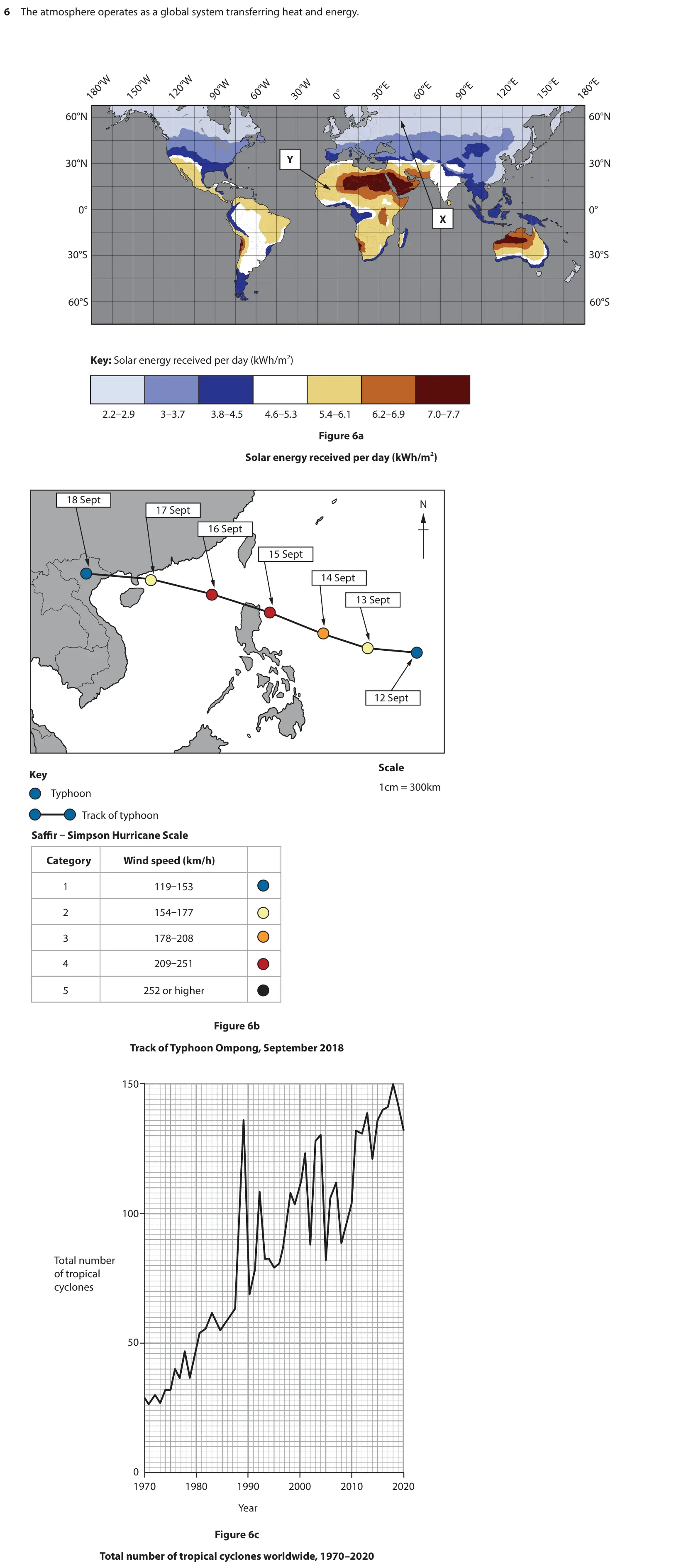 (Total for Question 6 is 1 mark)

Q6(b)(i)
The whole paper ↗(Total for Question 6 is 1 mark)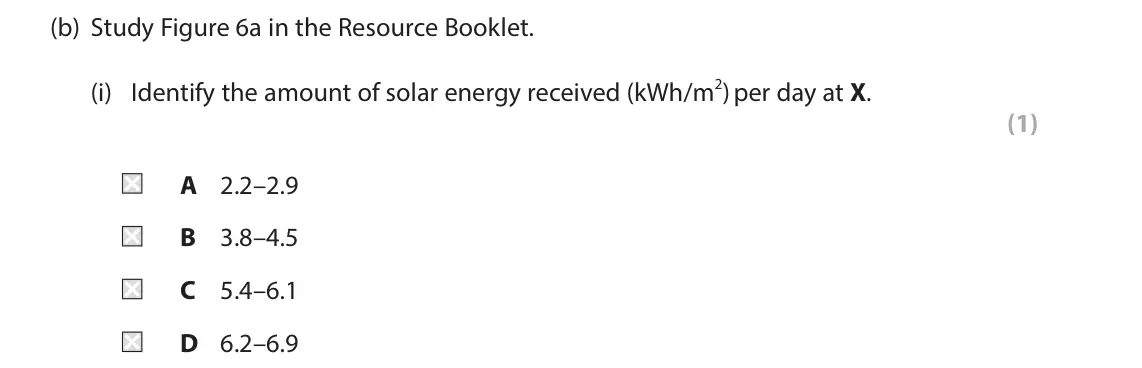
Q6(b)(ii)
The whole paper ↗(Total for Question 6 is 3 marks)
Q6(a)(i)
The whole paper ↗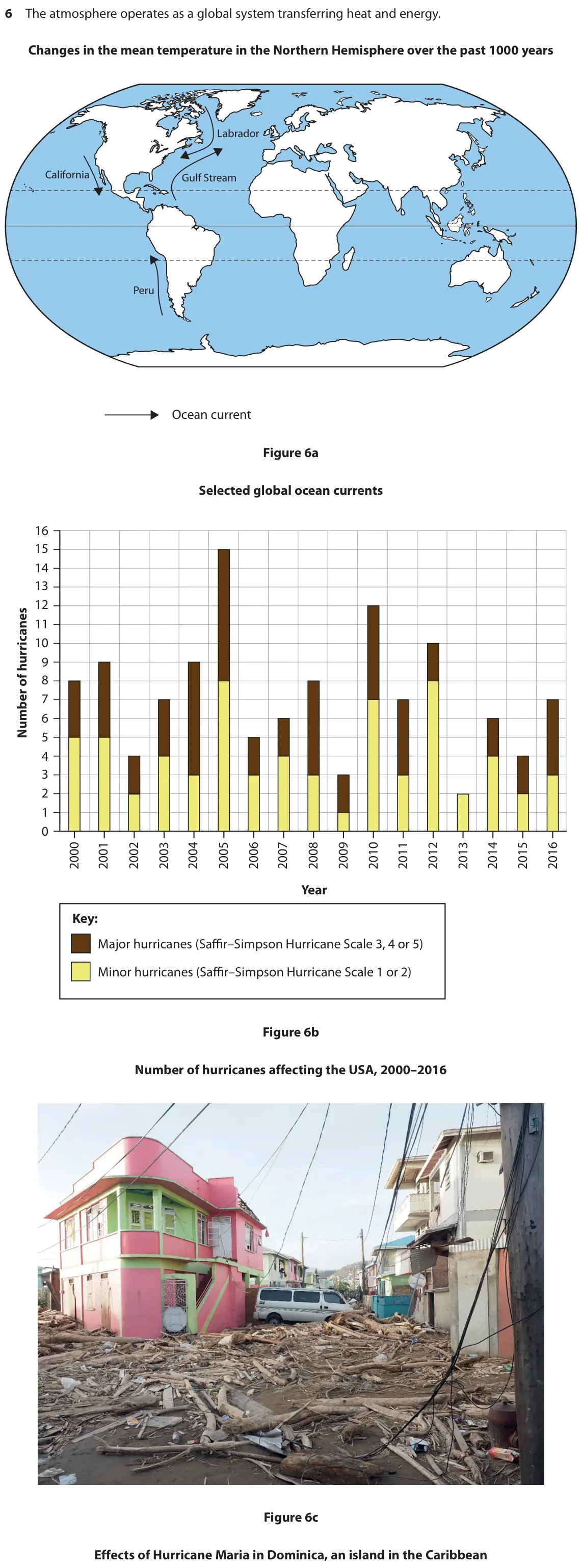 (Total for Question 6 is 1 mark)
Q6(a)(ii)
The whole paper ↗(Total for Question 6 is 2 marks)
Q5(a)
The whole paper ↗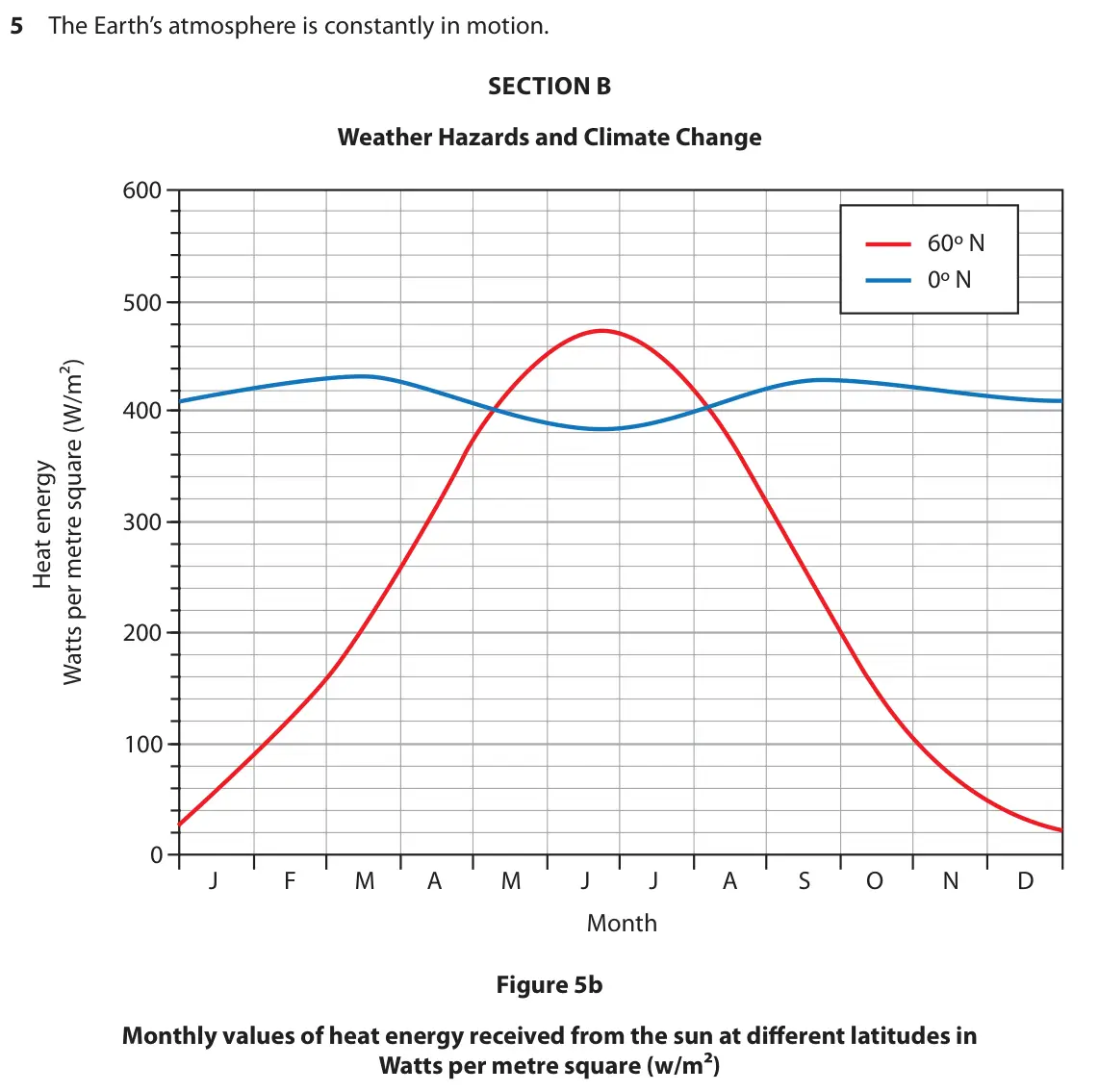 (Total for Question 5 is 2 marks)
Q5(b)(i)
The whole paper ↗(Total for Question 5 is 1 mark)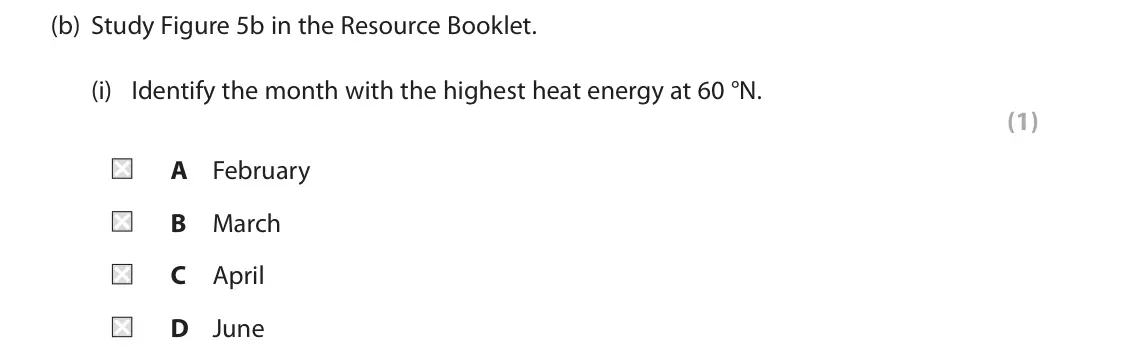
Q5(b)(ii)
The whole paper ↗(Total for Question 5 is 1 mark)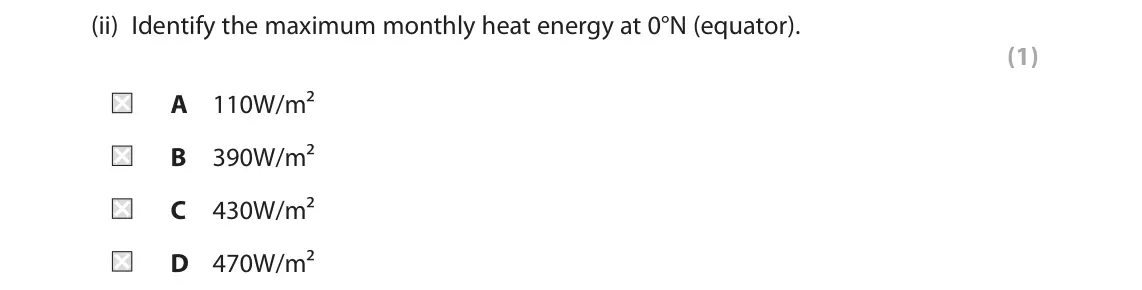
Q5(c)
The whole paper ↗(Total for Question 5 is 3 marks)
All 14 questions on The atmosphere operates as a global system transferring heat and energy, as a list
- June 2025, Paper 1, Q5(a)(i) (1 mark): Identify the latitude where the Hadley and Ferrel cells meet in the Northern Hemisphere. (1) A 10°N B 30°N C 50°N D 70°N 5 The atmosphere and oceans transfer he
- June 2025, Paper 1, Q5(a)(ii) (2 marks): Explain one reason why less heat is received at the poles than at the equator. (2) 5 The atmosphere and oceans transfer heat and energy across the Earth. SECTIO
- June 2025, Paper 1, Q5(b) (1 mark): Name one ocean current. (1) 5 The atmosphere and oceans transfer heat and energy across the Earth. SECTION B Polar cell 80°N 70°N 60°N Ferrel cell 50°N 40°N 30°
- June 2024, Paper 1, Q5(a)(i) (1 mark): Name the circulation cells labelled A. (1) 5 The atmosphere operates as a global system transferring heat and energy. SECTION B Hadley Hadley Ferrel Ferrel Cell
- June 2024, Paper 1, Q5(a)(ii) (2 marks): Explain why air is rising in the area labelled B. (2) 5 The atmosphere operates as a global system transferring heat and energy. SECTION B Hadley Hadley Ferrel
- June 2022, Paper 1, Q6(a) (1 mark): Name one of the global atmospheric circulation cells. (1) 6 The atmosphere operates as a global system transferring heat and energy. 60°N 60°N Y 30°N 30°N 0° 0°
- June 2022, Paper 1, Q6(b)(i) (1 mark): Identify the amount of solar energy received (kWh/m2) per day at X. (1) A 2.2–2.9 B 3.8–4.5 C 5.4–6.1 D 6.2–6.9 6 The atmosphere operates as a global system tra
- June 2022, Paper 1, Q6(b)(ii) (3 marks): Explain one reason why location X receives a different amount of solar energy than location Y. You must use evidence from Figure 6a in your answer. (3) 6 The at
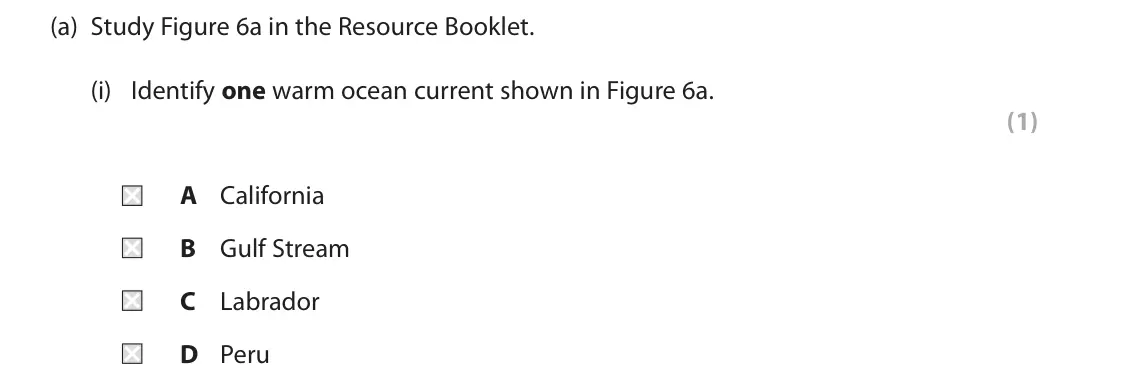
- November 2020, Paper 1, Q6(a)(i) (1 mark): Identify one warm ocean current shown in Figure 6a. (1) A California B Gulf Stream C Labrador D Peru 6 The atmosphere operates as a global system transferring h
- November 2020, Paper 1, Q6(a)(ii) (2 marks): Explain one way in which ocean currents redistribute heat energy across the Earth. (2) 6 The atmosphere operates as a global system transferring heat and energy
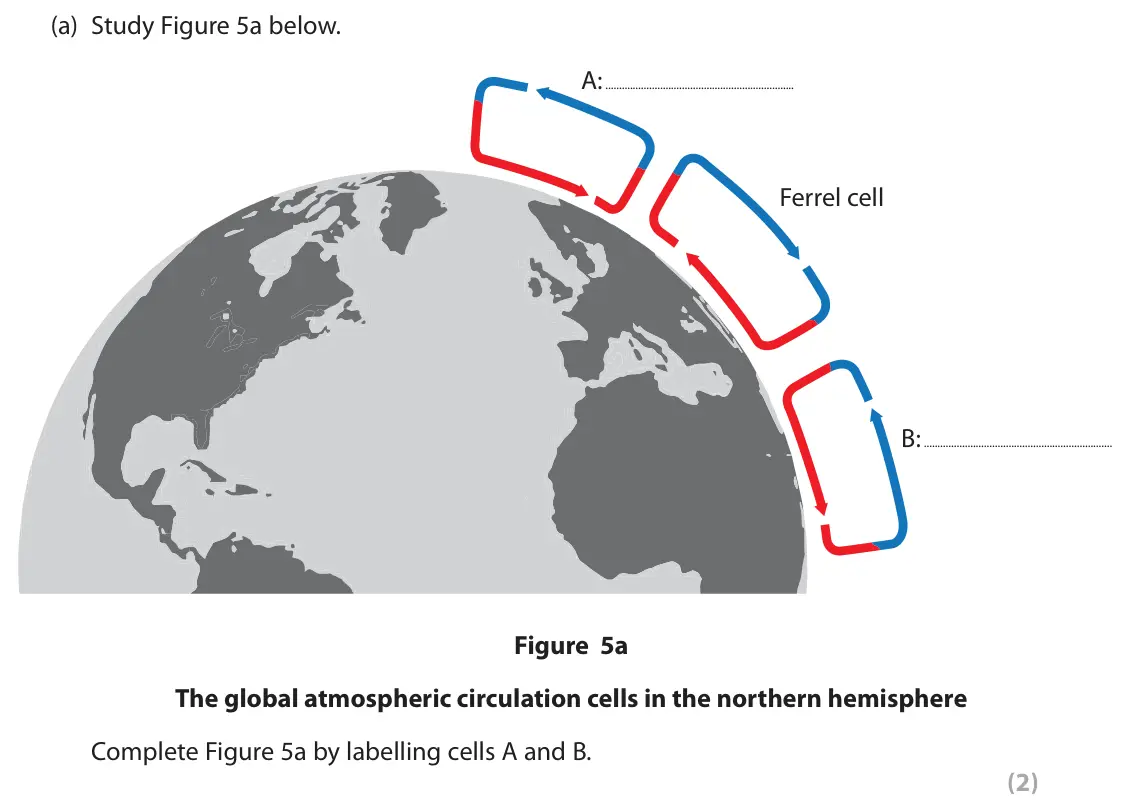
- June 2019, Paper 1, Q5(a) (2 marks): Study Figure 5a below. A: Ferrel cell B: Figure 5a The global atmospheric circulation cells in the northern hemisphere Complete Figure 5a by labelling cells A a
- June 2019, Paper 1, Q5(b)(i) (1 mark): Identify the month with the highest heat energy at 60 °N. (1) A February B March C April D June 5 The Earth’s atmosphere is constantly in motion. SECTION B Weat
- June 2019, Paper 1, Q5(b)(ii) (1 mark): Identify the maximum monthly heat energy at 0°N (equator). (1) A 110W/m² B 390W/m² C 430W/m² D 470W/m² 5 The Earth’s atmosphere is constantly in motion. SECTION
- June 2019, Paper 1, Q5(c) (3 marks): Explain one reason why more heat energy is received at the Equator than at the poles. (3) 5 The Earth’s atmosphere is constantly in motion. SECTION B Weather Ha
Questions, mark schemes and examiner’s reports are © Pearson Edexcel, from their published past papers. Plumi isn’t affiliated with any exam board. Want whole papers? Edexcel GCSE Geography A past papers.
The Plumi iPad app also offers exam-style questions with AI feedback on your handwritten working.