 plumi
Noble gases: Edexcel GCSE Chemistry questions
Every Edexcel GCSE Chemistry exam question on Noble gases (specification points 6.14–6.16), 2018–2025, with its mark scheme and examiner’s report.
Find questions1,880
Exam
All years
Calculations
Q6(a)
The whole paper ↗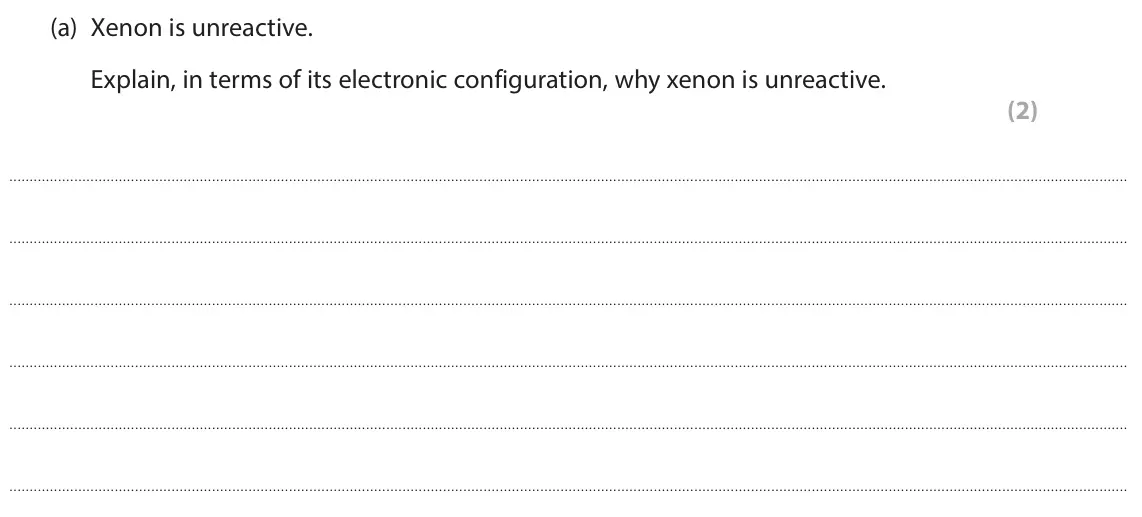
Q6(b)(i)
The whole paper ↗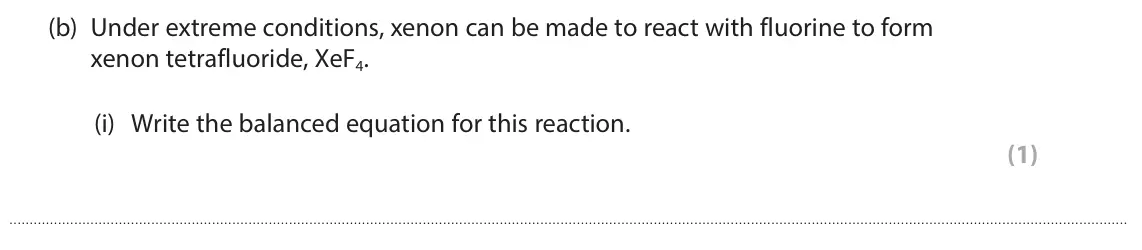
Q5(d)(i)
The whole paper ↗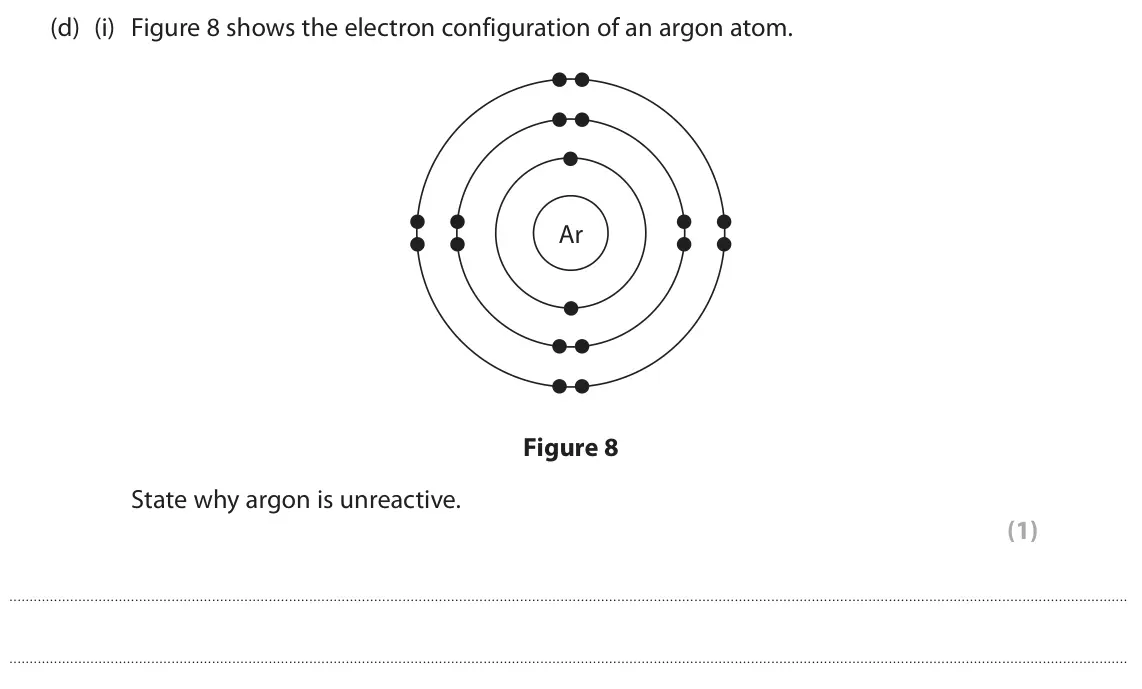
Q3(c)(i)
The whole paper ↗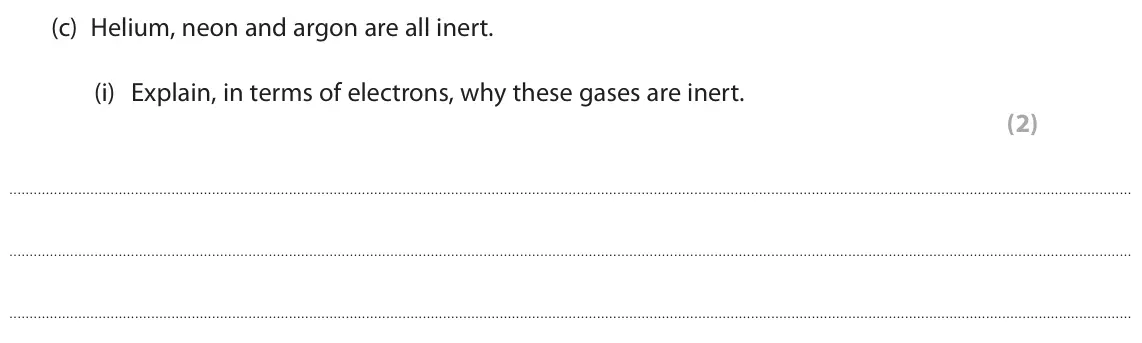
Q3(c)(ii)
The whole paper ↗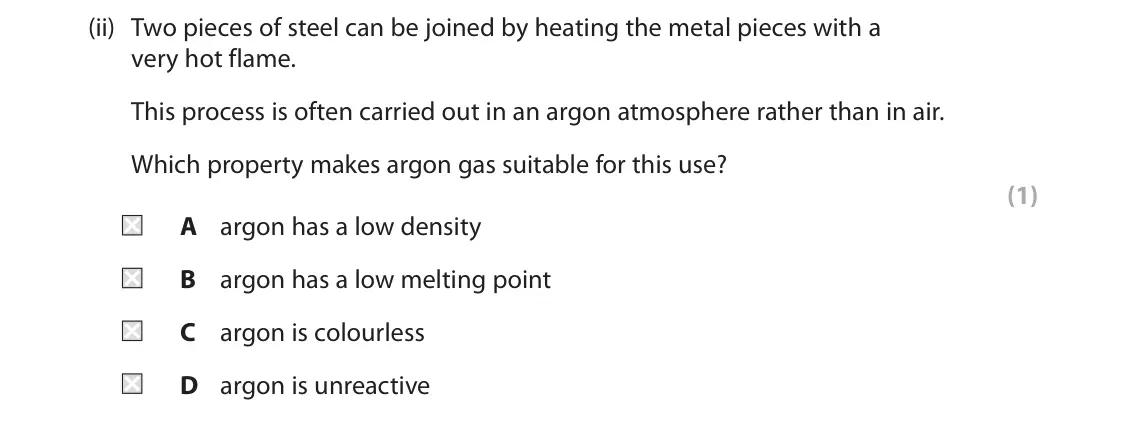
Q9(c)(i)
The whole paper ↗
Q9(c)(ii)
The whole paper ↗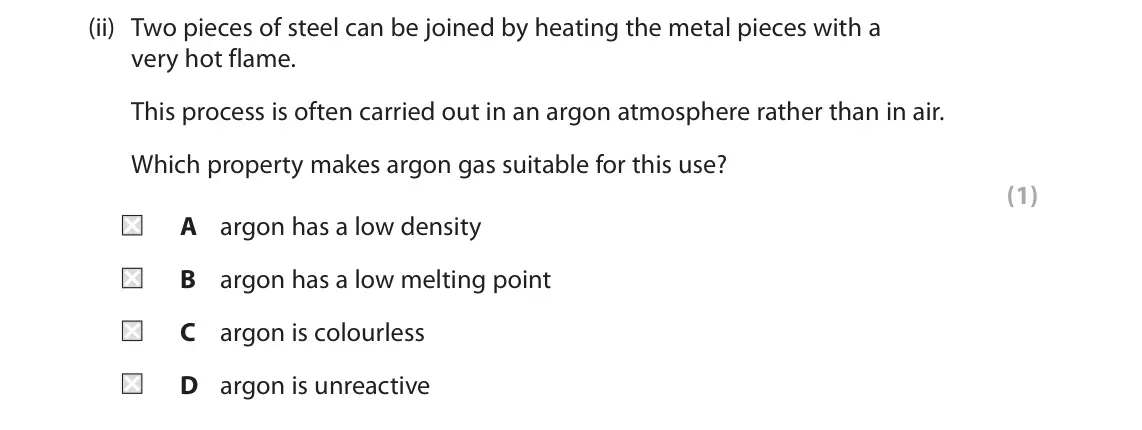
Q3(d)(i)
The whole paper ↗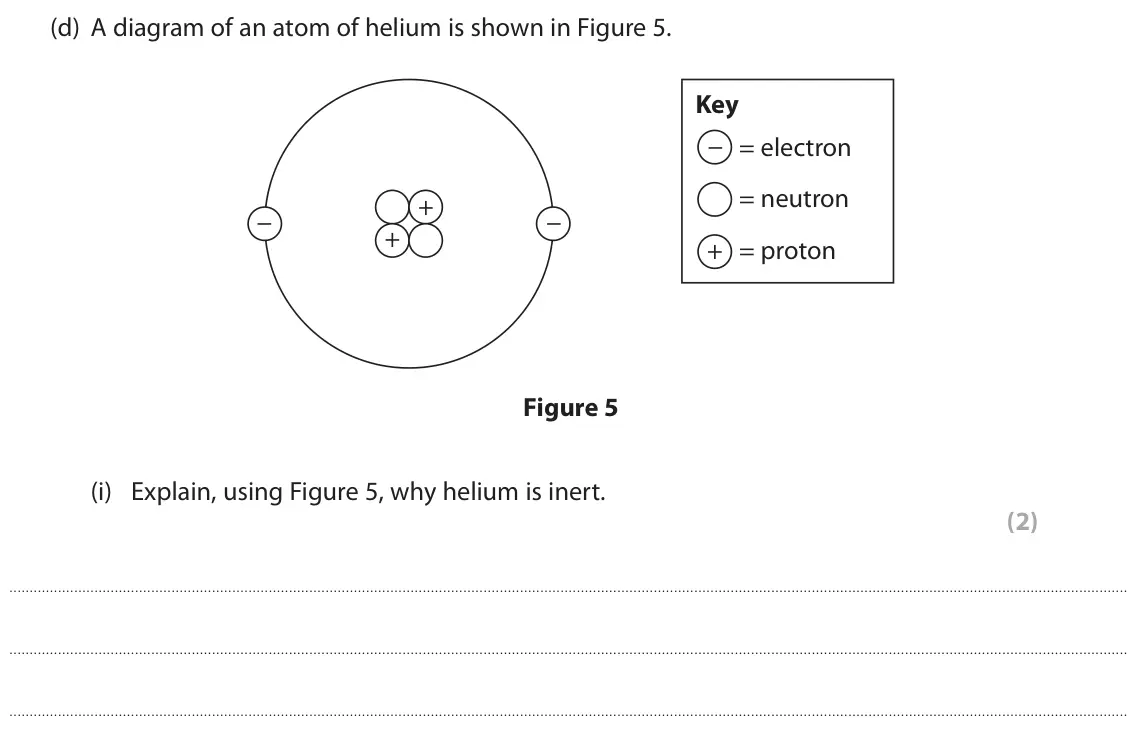
Q3(d)(ii)
The whole paper ↗
Q9(d)(i)
The whole paper ↗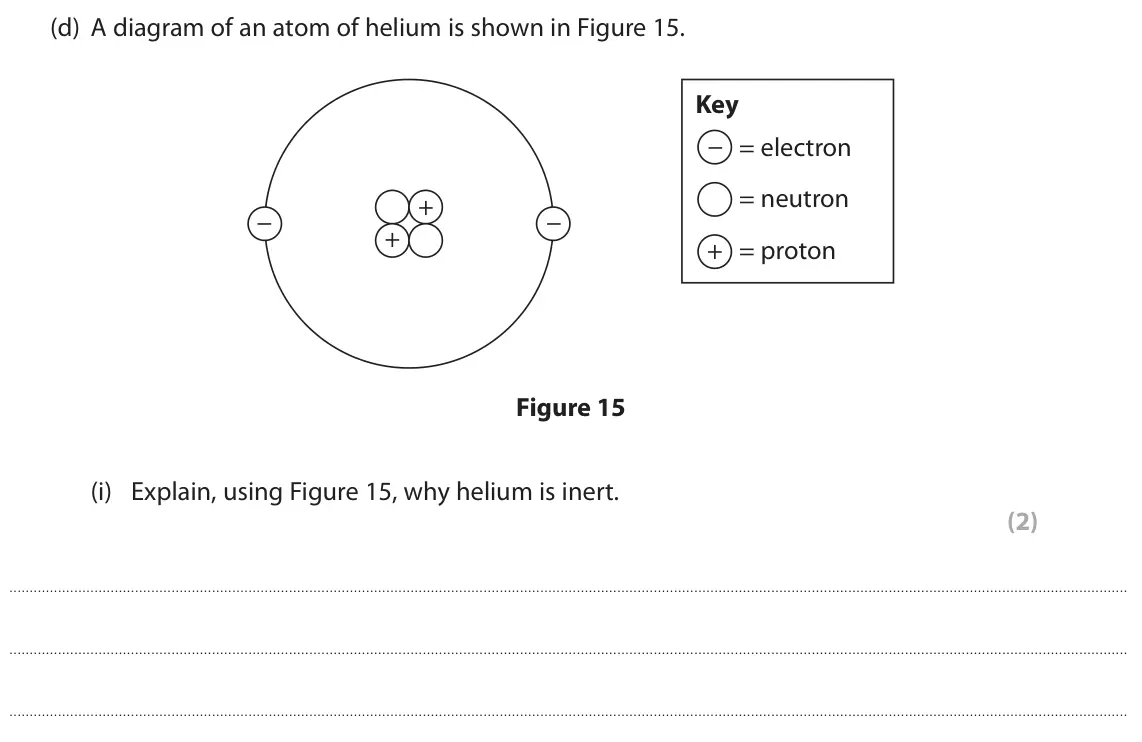
Q9(d)(ii)
The whole paper ↗
Q3(a)(i)
The whole paper ↗
Q3(a)(ii)
The whole paper ↗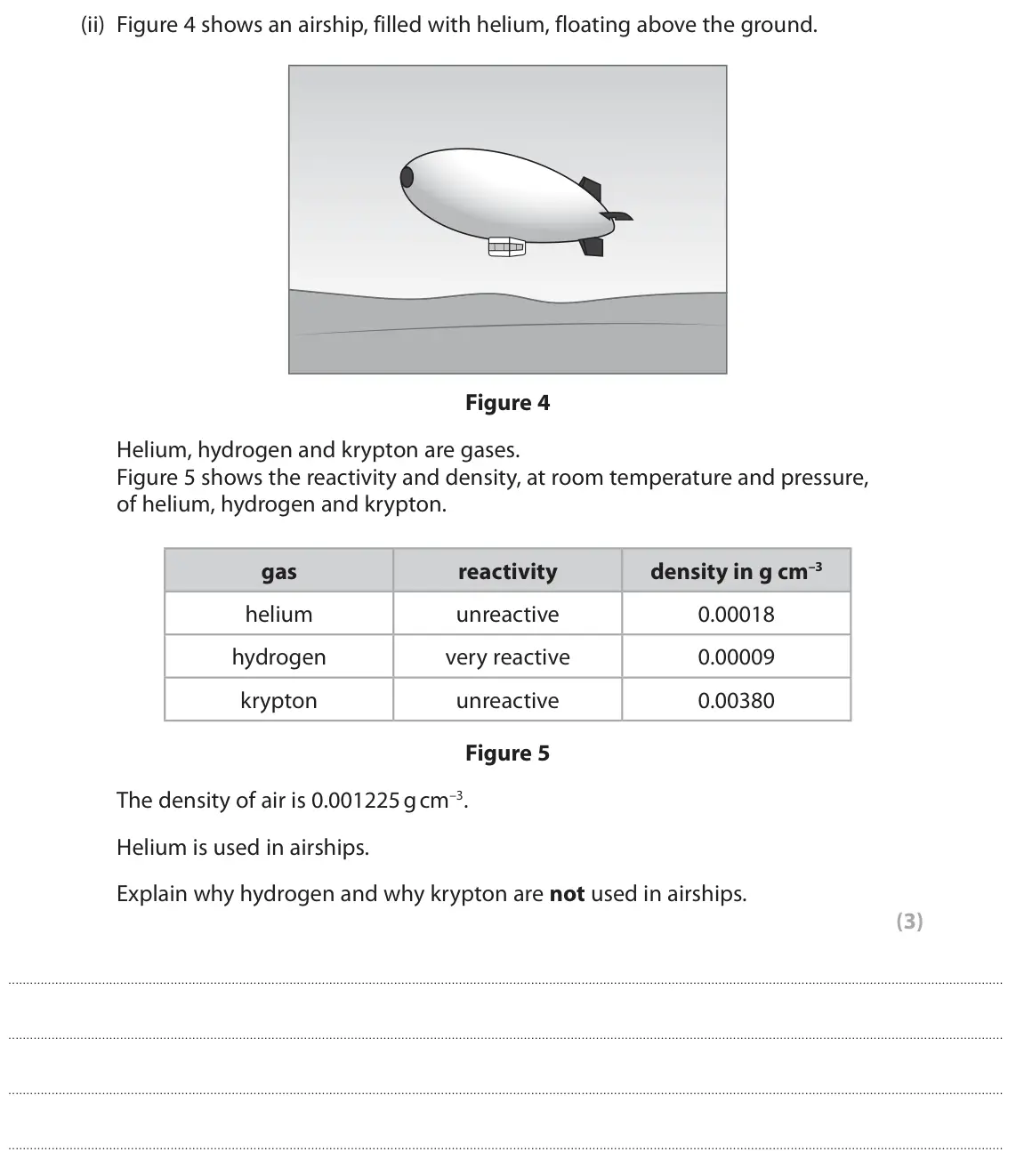
Q3(c)(i)
The whole paper ↗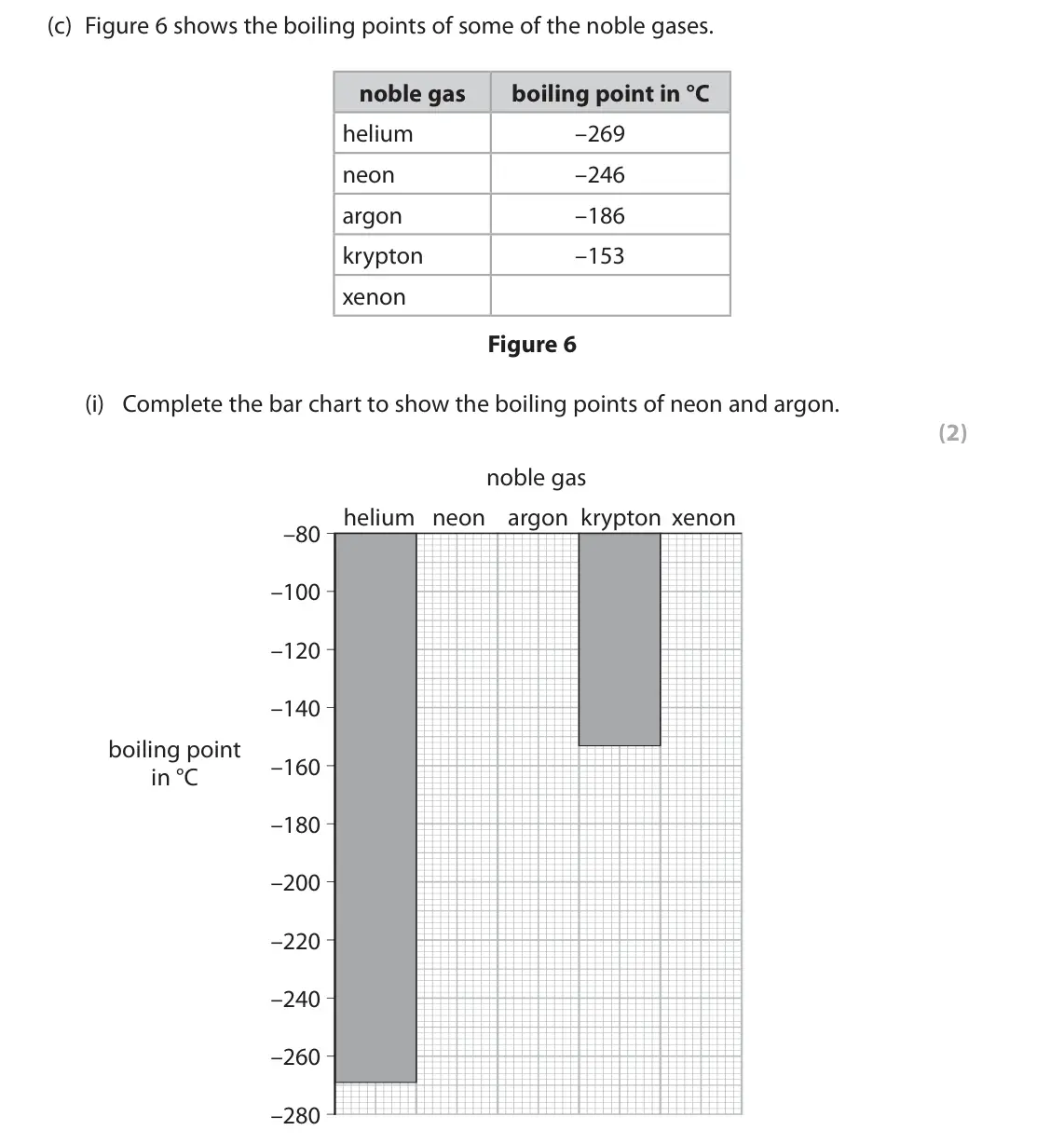
Q3(c)(ii)
The whole paper ↗
Q7(b)(i)
The whole paper ↗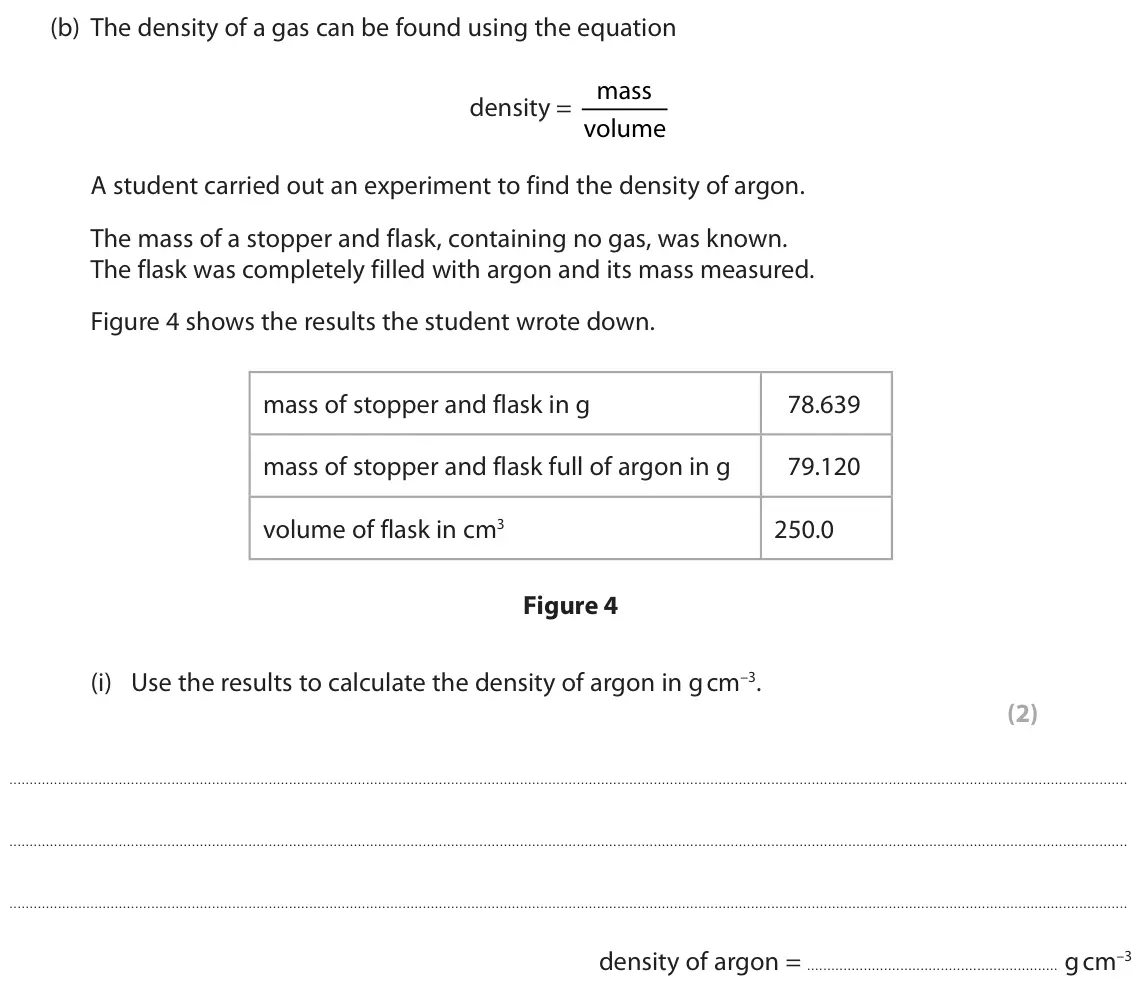
Q7(b)(ii)
The whole paper ↗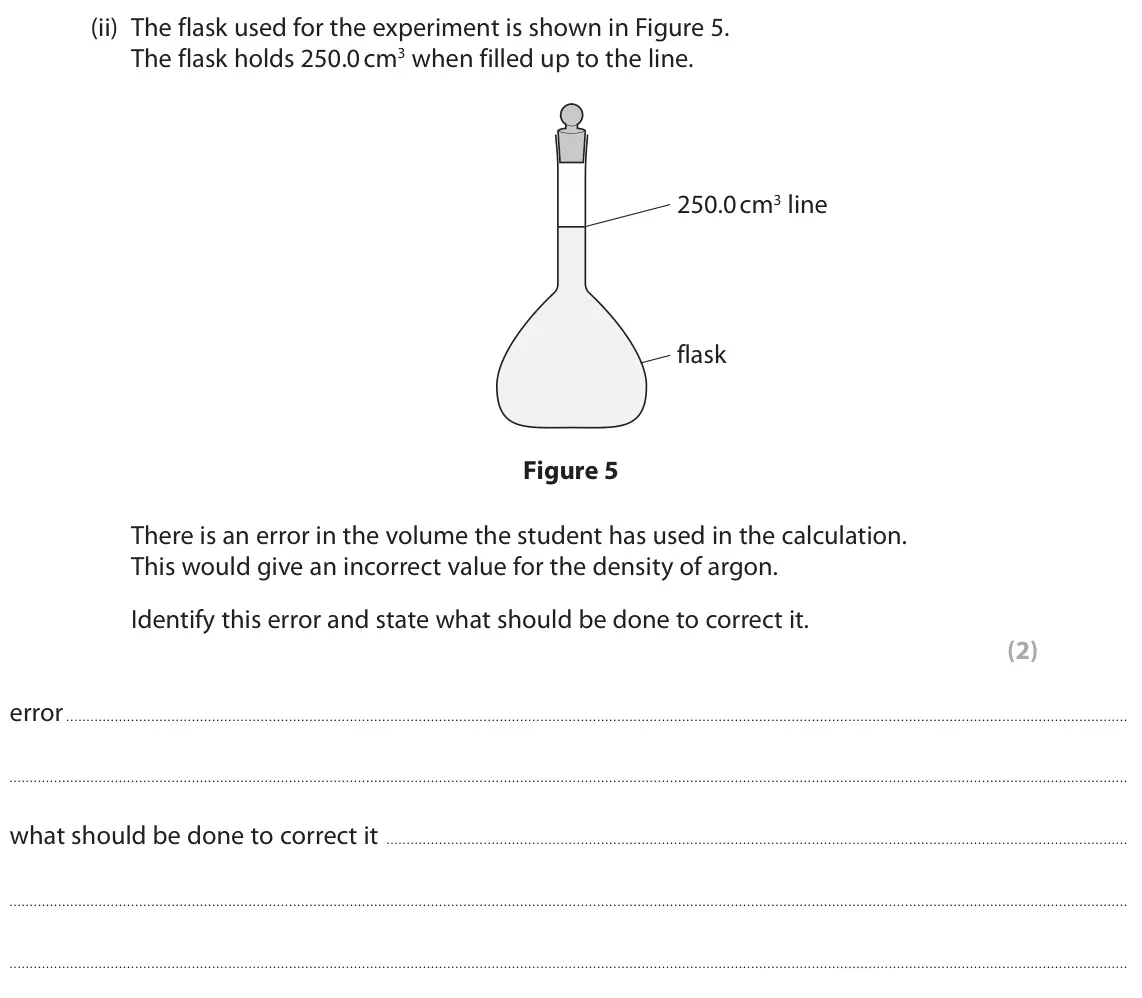
Q7(c)
The whole paper ↗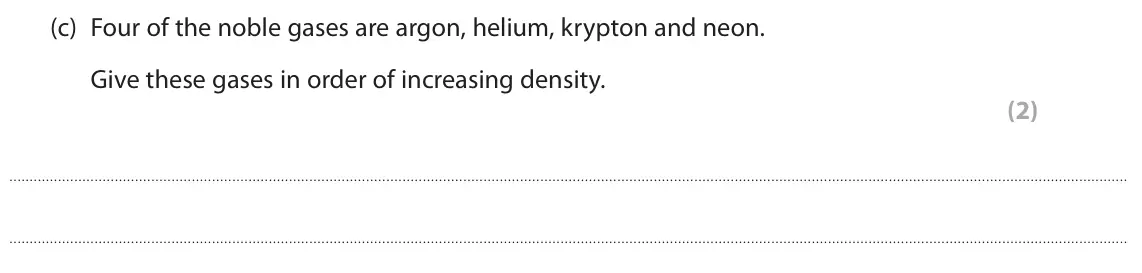
Q2(a)(ii)
The whole paper ↗
Q2(d)
The whole paper ↗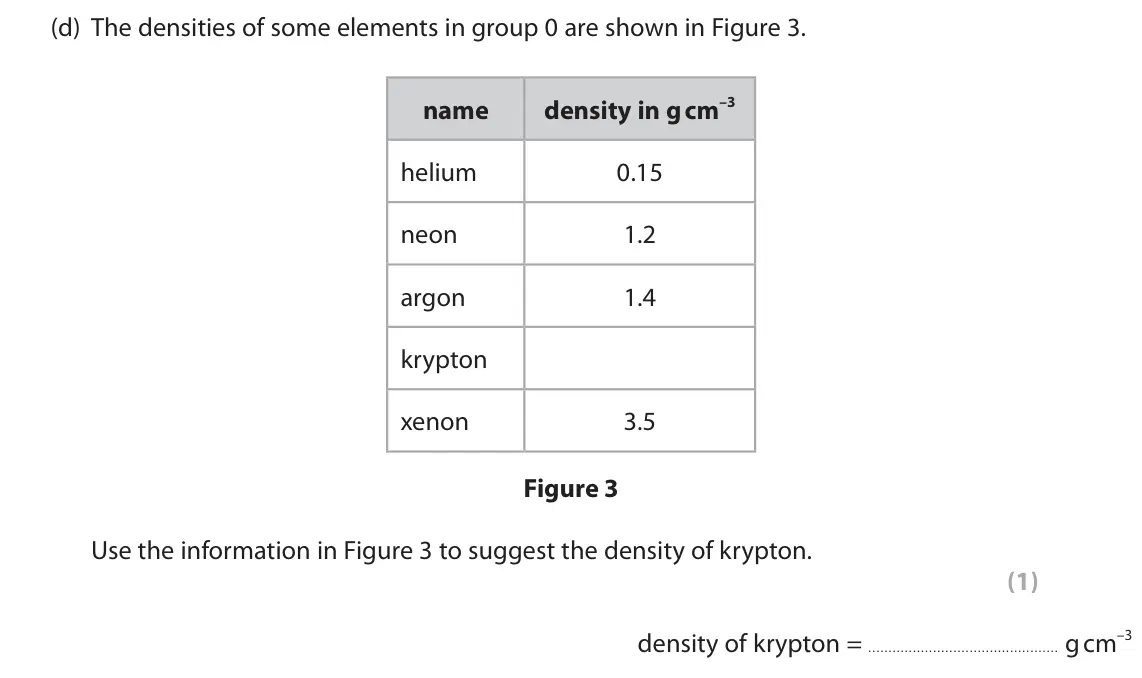
All 21 questions on Noble gases, as a list
- June 2025, Paper 2 Higher, Q6(a) (2 marks): Xenon is unreactive. Explain, in terms of its electronic configuration, why xenon is unreactive. (2)
- June 2025, Paper 2 Higher, Q6(b)(i) (1 mark): Write the balanced equation for this reaction. (1)
- June 2025, Paper 2 Foundation, Q5(d)(i) (1 mark): Figure 8 shows the electron configuration of an argon atom. Ar Figure 8 State why argon is unreactive. (1)
- June 2024, Paper 2 Higher, Q3(c)(i) (2 marks): Explain, in terms of electrons, why these gases are inert. (2)
- June 2024, Paper 2 Higher, Q3(c)(ii) (1 mark): Two pieces of steel can be joined by heating the metal pieces with a very hot flame. This process is often carried out in an argon atmosphere rather than in air
- June 2024, Paper 2 Foundation, Q9(c)(i) (2 marks): Explain, in terms of electrons, why these gases are inert. (2)
- June 2024, Paper 2 Foundation, Q9(c)(ii) (1 mark): Two pieces of steel can be joined by heating the metal pieces with a very hot flame. This process is often carried out in an argon atmosphere rather than in air
- June 2022, Paper 2 Higher, Q3(d)(i) (2 marks): Explain, using Figure 5, why helium is inert. (2)
- June 2022, Paper 2 Higher, Q3(d)(ii) (1 mark): Helium is used to fill balloons. State one property of helium, apart from it being inert, that makes it suitable for filling balloons. (1)
- June 2022, Paper 2 Foundation, Q9(d)(i) (2 marks): Explain, using Figure 15, why helium is inert. (2)
- June 2022, Paper 2 Foundation, Q9(d)(ii) (1 mark): Helium is used to fill balloons. State one property of helium, apart from it being inert, that makes it suitable for filling balloons. (1)
- November 2021, Paper 2 Foundation, Q3(a)(i) (1 mark): State, in terms of outer shell electrons, why the noble gases are unreactive. (1)
- November 2021, Paper 2 Foundation, Q3(a)(ii) (3 marks): Figure 4 shows an airship, filled with helium, floating above the ground. Figure 4 Helium, hydrogen and krypton are gases. Figure 5 shows the reactivity and den
- November 2021, Paper 2 Foundation, Q3(c)(i) (2 marks): Complete the bar chart to show the boiling points of neon and argon. (2) noble gas helium neon argon krypton xenon –80 –100 –120 –140 boiling point –160 in °C –
- November 2021, Paper 2 Foundation, Q3(c)(ii) (1 mark): Predict the boiling point of xenon. (1) boiling point of xenon = °C
- November 2020, Paper 2 Higher, Q7(b)(i) (2 marks): Use the results to calculate the density of argon in g cm–3. (2) density of argon = g cm–3
- November 2020, Paper 2 Higher, Q7(b)(ii) (2 marks): The flask used for the experiment is shown in Figure 5. The flask holds 250.0 cm3 when filled up to the line. 250.0 cm3 line flask Figure 5 There is an error in
- November 2020, Paper 2 Higher, Q7(c) (2 marks): Four of the noble gases are argon, helium, krypton and neon. Give these gases in order of increasing density. (2)
- June 2019, Paper 2 Foundation, Q2(a)(ii) (1 mark): The name given to group 0 in the periodic table is . (1)
- June 2019, Paper 2 Foundation, Q2(d) (1 mark): The densities of some elements in group 0 are shown in Figure 3. name density in g cm–3 helium 0.15 neon 1.2 argon 1.4 krypton xenon 3.5 Figure 3 Use the inform
- June 2019, Paper 2 Foundation, Q2(e) (2 marks): For many years, argon was used to fill filament light bulbs. A filament light bulb is shown in Figure 4. metal filament argon Figure 4 When the bulb is in use t
Questions, mark schemes and examiner’s reports are © Pearson Edexcel, from their published past papers. Plumi isn’t affiliated with any exam board. Want whole papers? Every Edexcel GCSE Chemistry paper.
Rather write your answers by hand on iPad? Plumi marks them against the same mark schemes.