 plumi
Reproduction and meiosis: Edexcel GCSE Biology questions
Every Edexcel GCSE Biology exam question on Reproduction and meiosis (specification points 3.1–3.3), 2018–2025, with its mark scheme and examiner’s report.
Find questions1,834
Exam
All years
Calculations
Q4(c)(i)
The whole paper ↗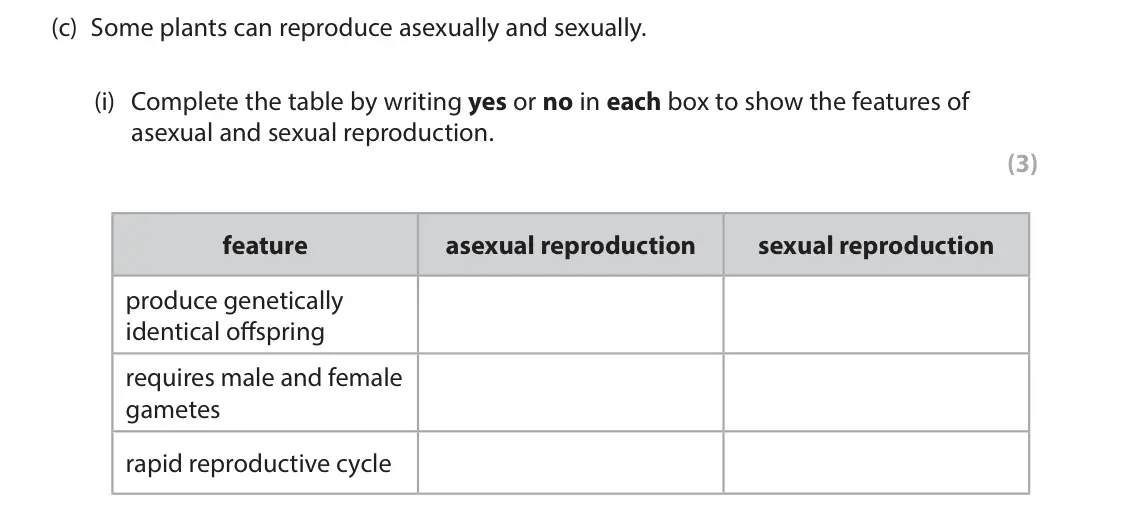
Q4(c)(ii)
The whole paper ↗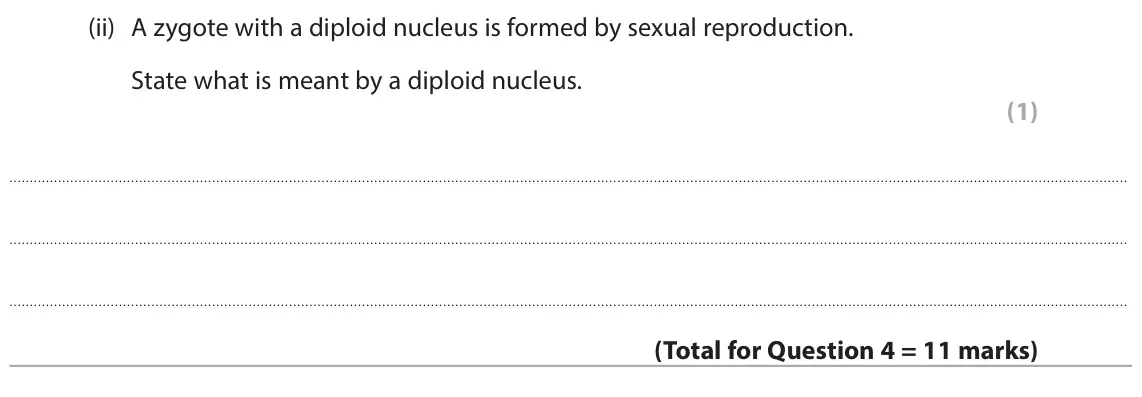
Q10(c)(i)
The whole paper ↗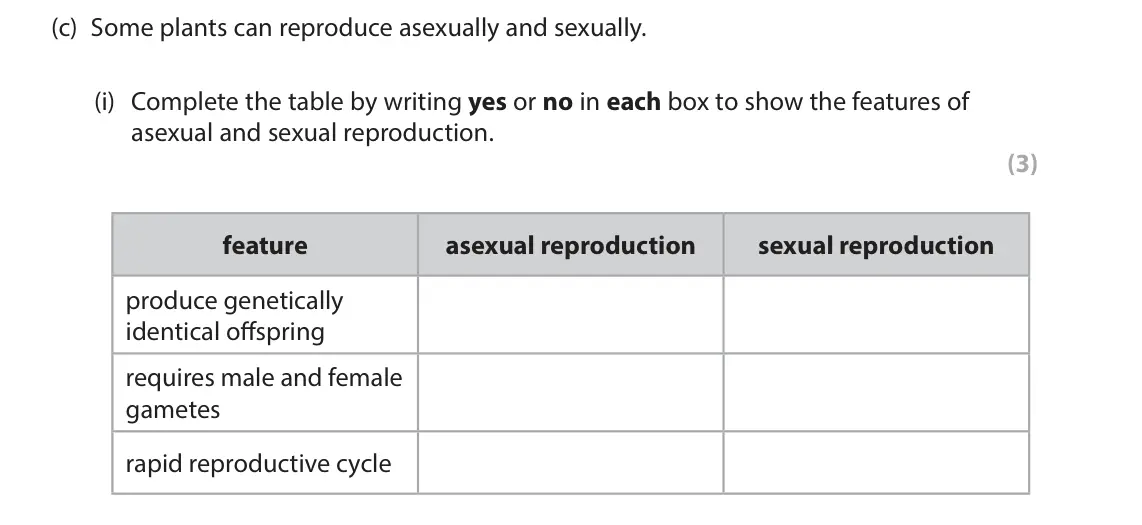
Q10(c)(ii)
The whole paper ↗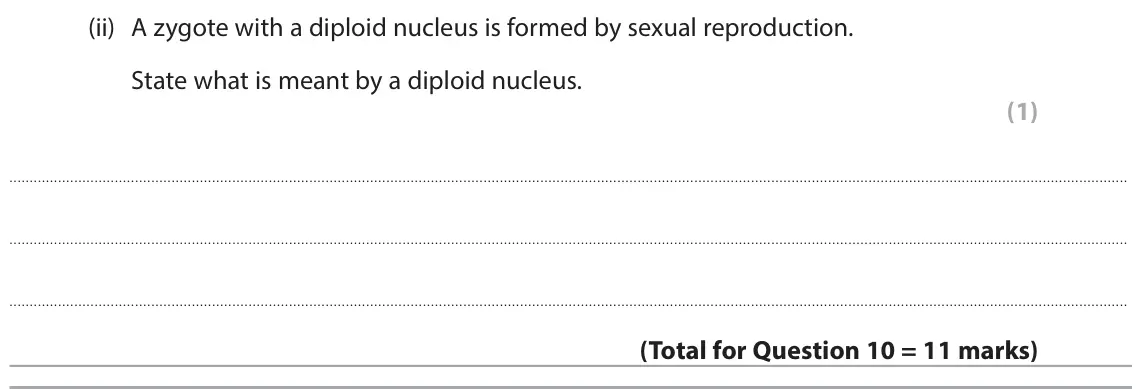
Q4(b)
The whole paper ↗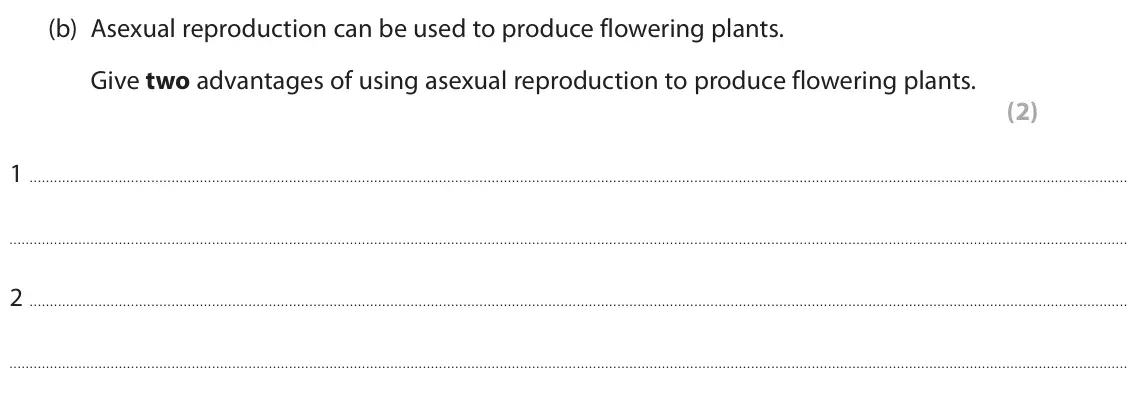
Q4(b)(i)
The whole paper ↗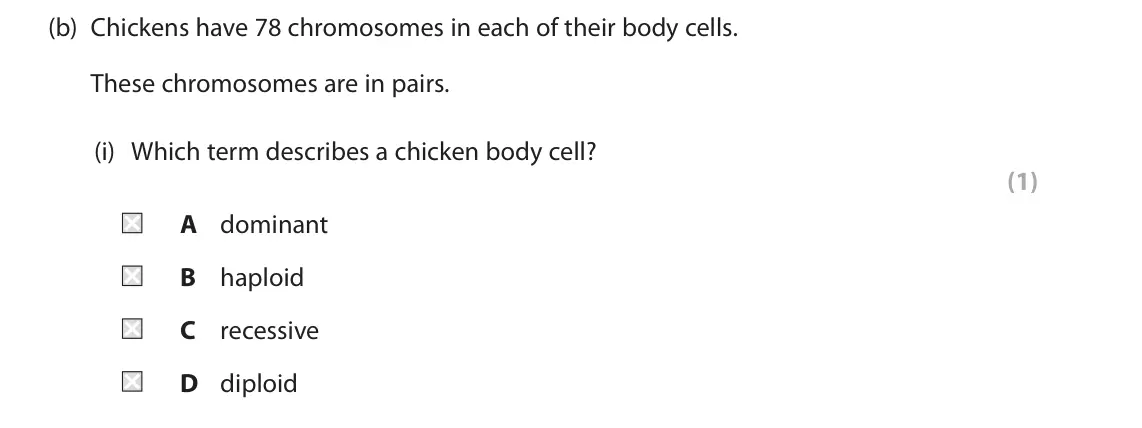
Q4(b)(ii)
The whole paper ↗
Q4(c)
The whole paper ↗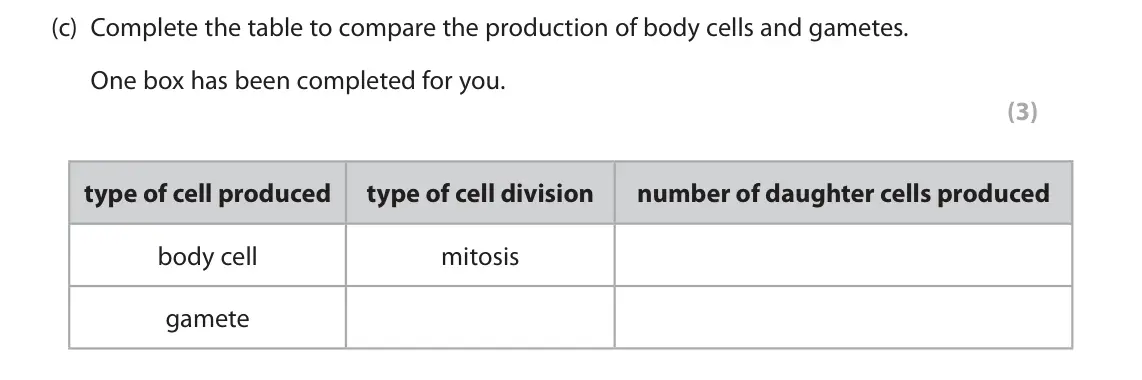
Q10(b)
The whole paper ↗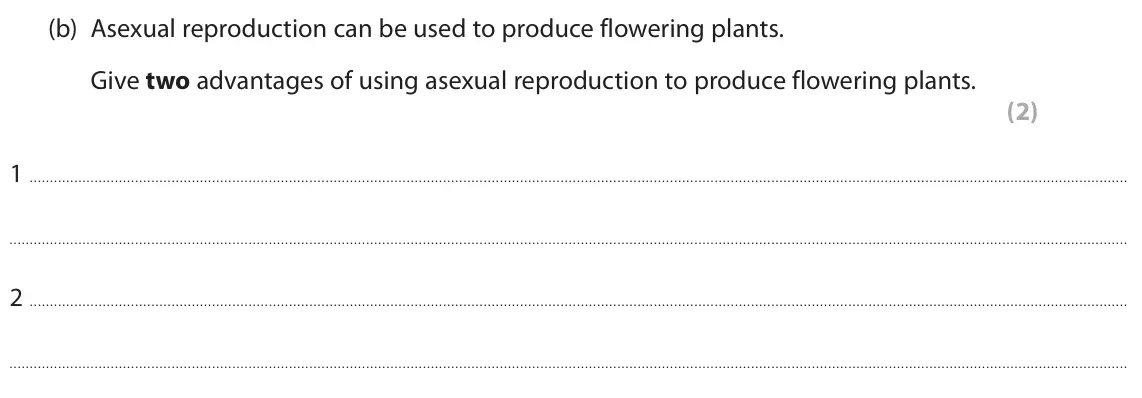
Q2(a)
The whole paper ↗
Q2(b)
The whole paper ↗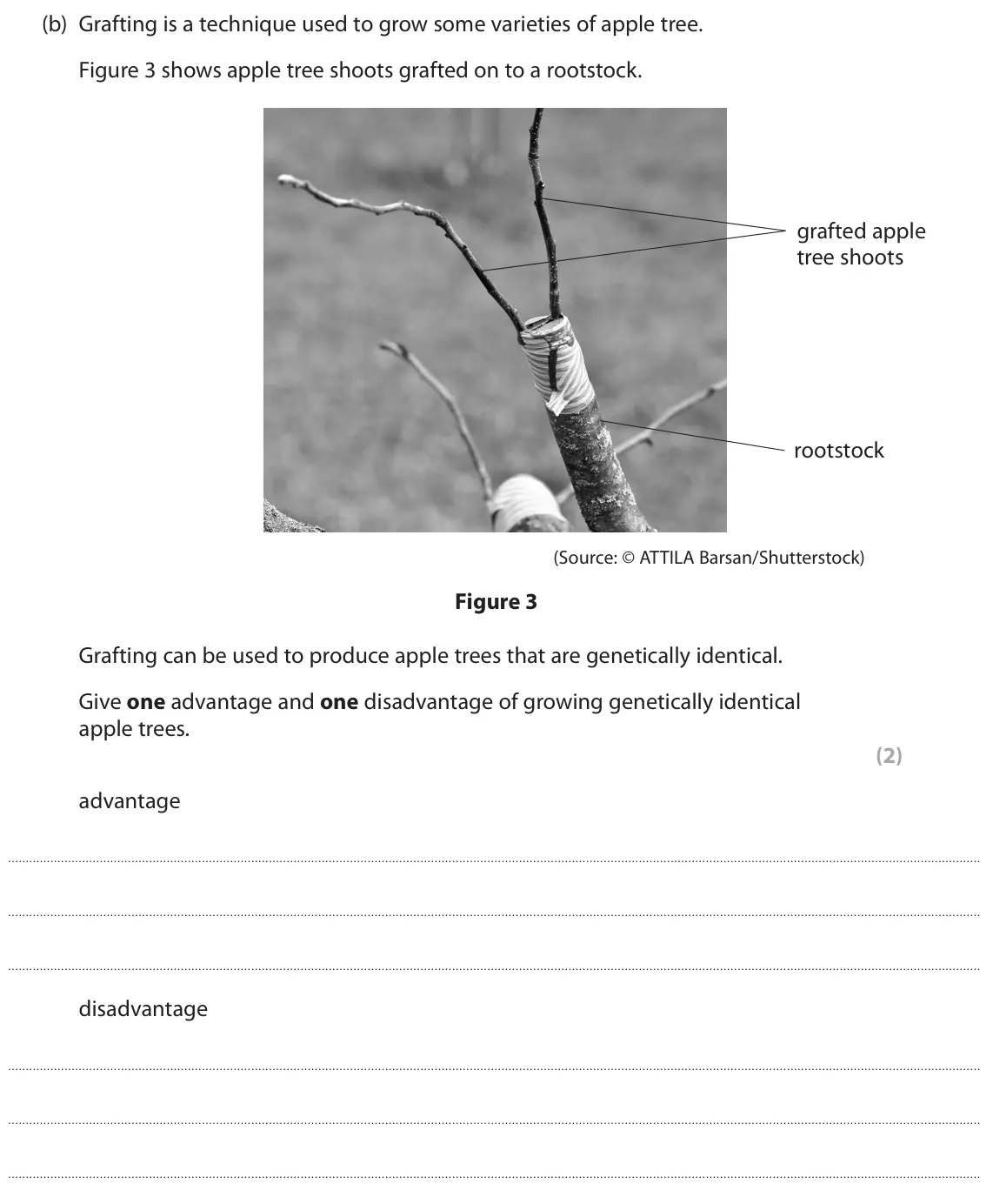
Q5(a)(ii)
The whole paper ↗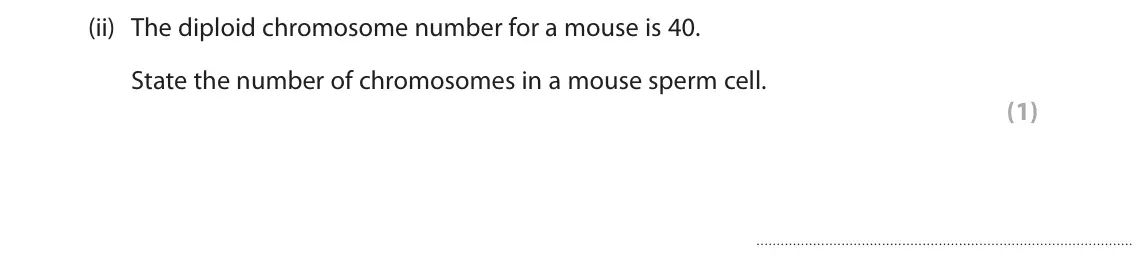
Q6(d)(i)
The whole paper ↗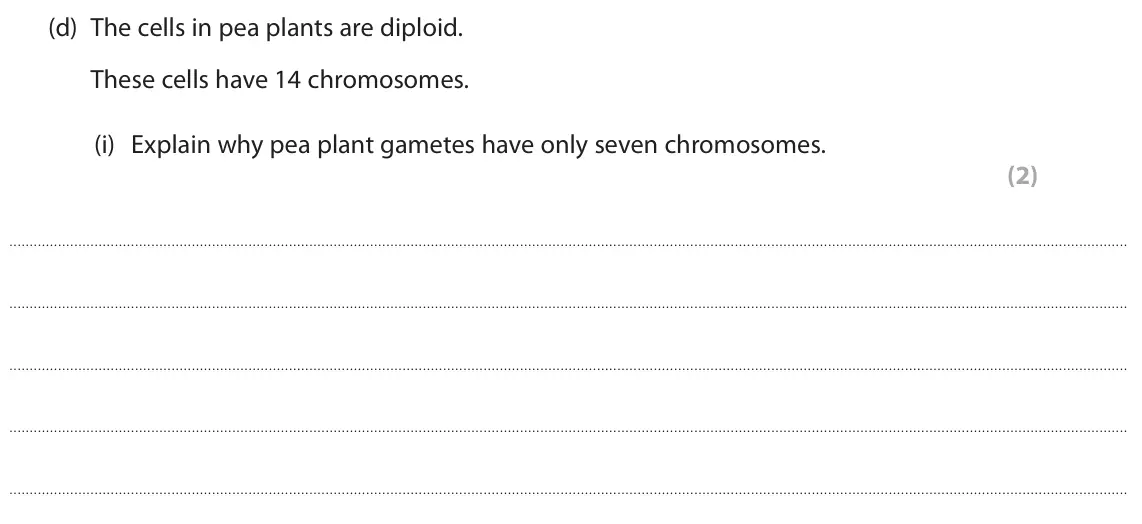
Q6(d)(ii)
The whole paper ↗
Q8(b)
The whole paper ↗
Q8(c)
The whole paper ↗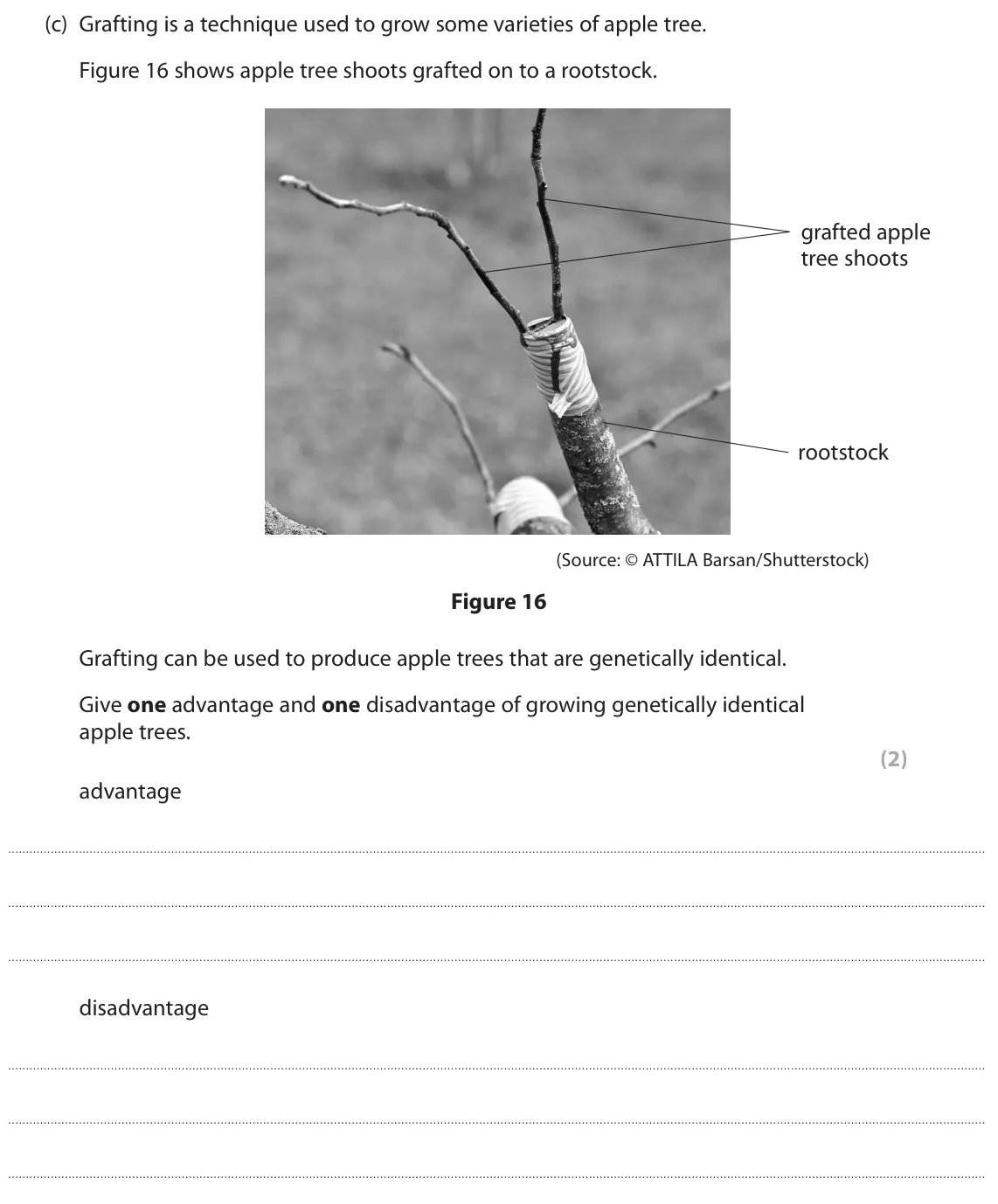
Q1(c)(i)
The whole paper ↗
Q1(c)(ii)
The whole paper ↗
Q5(a)
The whole paper ↗
Q5(b)(i)
The whole paper ↗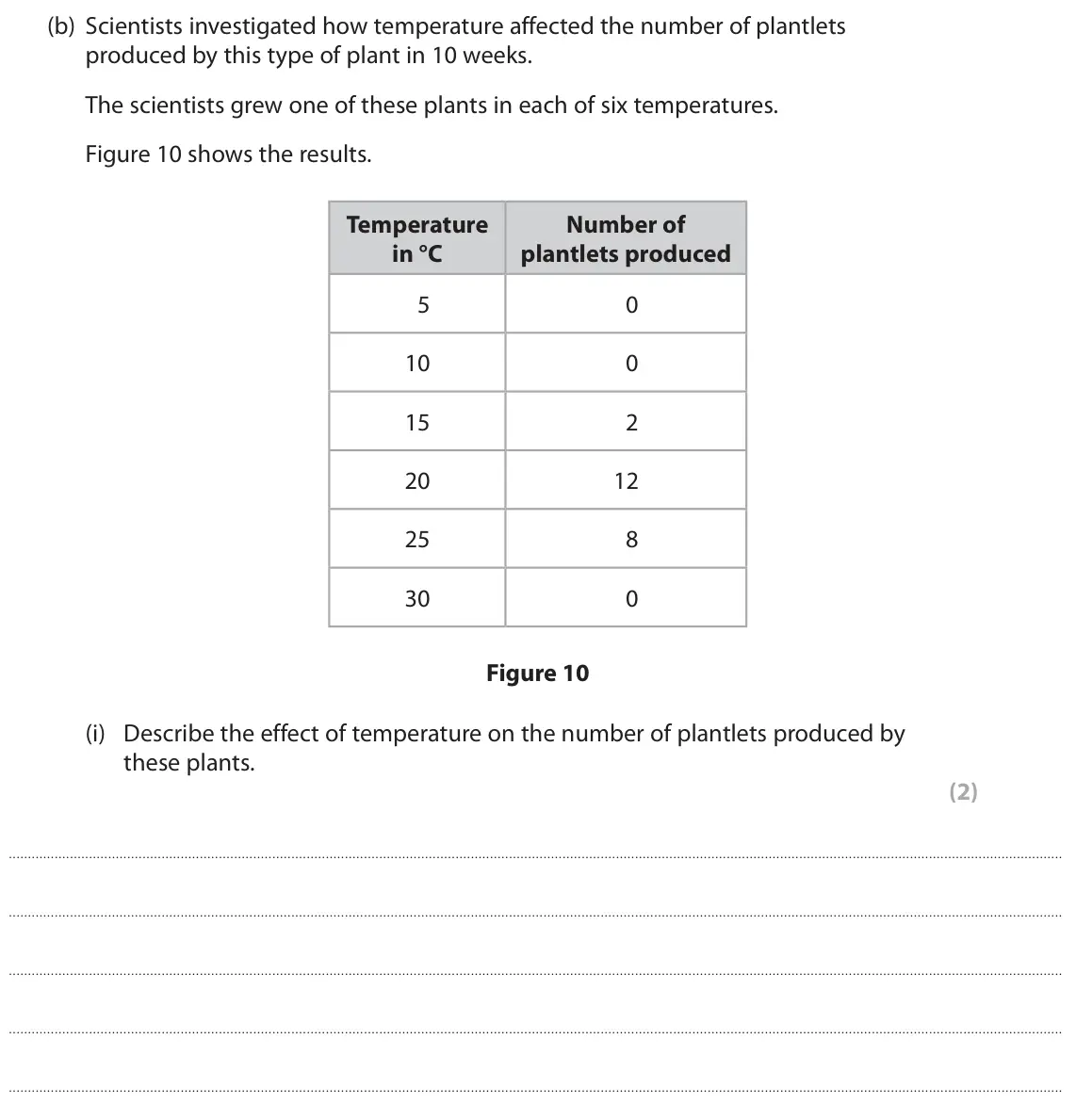
All 40 questions on Reproduction and meiosis, as a list
- June 2025, Paper 1 Higher, Q4(c)(i) (3 marks): Complete the table by writing yes or no in each box to show the features of asexual and sexual reproduction. (3) feature asexual reproduction sexual reproductio
- June 2025, Paper 1 Higher, Q4(c)(ii) (1 mark): A zygote with a diploid nucleus is formed by sexual reproduction. State what is meant by a diploid nucleus. (1)
- June 2025, Paper 1 Foundation, Q10(c)(i) (3 marks): Complete the table by writing yes or no in each box to show the features of asexual and sexual reproduction. (3) feature asexual reproduction sexual reproductio
- June 2025, Paper 1 Foundation, Q10(c)(ii) (1 mark): A zygote with a diploid nucleus is formed by sexual reproduction. State what is meant by a diploid nucleus. (1)
- June 2024, Paper 1 Higher, Q4(b) (2 marks): Asexual reproduction can be used to produce flowering plants. Give two advantages of using asexual reproduction to produce flowering plants. (2) 1 2
- June 2024, Paper 1 Foundation, Q4(b)(i) (1 mark): Which term describes a chicken body cell? (1) A dominant B haploid C recessive D diploid
- June 2024, Paper 1 Foundation, Q4(b)(ii) (1 mark): State the number of chromosomes found in the gametes produced by chickens. (1)
- June 2024, Paper 1 Foundation, Q4(c) (3 marks): Complete the table to compare the production of body cells and gametes. One box has been completed for you. (3) type of cell produced type of cell division numb
- June 2024, Paper 1 Foundation, Q10(b) (2 marks): Asexual reproduction can be used to produce flowering plants. Give two advantages of using asexual reproduction to produce flowering plants. (2) 1 2
- June 2023, Paper 1 Higher, Q2(a) (1 mark): Name the type of reproduction that produces genetically identical organisms. (1)
- June 2023, Paper 1 Higher, Q2(b) (2 marks): Grafting is a technique used to grow some varieties of apple tree. Figure 3 shows apple tree shoots grafted on to a rootstock. grafted apple tree shoots rootsto
- June 2023, Paper 1 Higher, Q5(a)(ii) (1 mark): The diploid chromosome number for a mouse is 40. State the number of chromosomes in a mouse sperm cell. (1)
- June 2023, Paper 1 Foundation, Q6(d)(i) (2 marks): Explain why pea plant gametes have only seven chromosomes. (2)
- June 2023, Paper 1 Foundation, Q6(d)(ii) (2 marks): Describe what happens at fertilisation. (2)
- June 2023, Paper 1 Foundation, Q8(b) (1 mark): Name the type of reproduction that produces genetically identical organisms. (1)
- June 2023, Paper 1 Foundation, Q8(c) (2 marks): Grafting is a technique used to grow some varieties of apple tree. Figure 16 shows apple tree shoots grafted on to a rootstock. grafted apple tree shoots rootst
- June 2022, Paper 1 Higher, Q1(c)(i) (1 mark): Some plants reproduce sexually. Give one advantage of this type of reproduction. (1)
- June 2022, Paper 1 Higher, Q1(c)(ii) (1 mark): Name the process that forms gametes for sexual reproduction. (1)
- June 2022, Paper 1 Foundation, Q5(a) (1 mark): State one advantage of asexual reproduction for this plant. (1)
- June 2022, Paper 1 Foundation, Q5(b)(i) (2 marks): Describe the effect of temperature on the number of plantlets produced by these plants. (2)
- June 2022, Paper 1 Foundation, Q5(b)(ii) (1 mark): Which of these would improve the results of this investigation? (1) A grow a plant at 0 °C B grow each plant in a different type of soil C grow a different spec
- June 2022, Paper 1 Foundation, Q5(c) (2 marks): The plant in Figure 9 also produces flowers for sexual reproduction. Explain one advantage of sexual reproduction. (2)
- June 2022, Paper 1 Foundation, Q6(b)(ii) (4 marks): Complete the table to show the results when a cell divides by mitosis or meiosis in humans. Human body cells, except gametes, have 23 pairs of chromosomes. (4)
- November 2021, Paper 1 Higher, Q7(c) (6 marks): Discuss the advantages and disadvantages of sexual reproduction and asexual reproduction. (6)
- November 2020, Paper 1 Higher, Q4(b)(ii) (2 marks): Explain one advantage to pea plants of using sexual reproduction to produce offspring. (2)
- November 2020, Paper 1 Foundation, Q5(b)(i) (1 mark): State the number of chromosomes found in each sex cell of a chicken. (1)
- November 2020, Paper 1 Foundation, Q5(b)(ii) (1 mark): Name the type of cell division which produces sex cells. . (1)
- November 2020, Paper 1 Foundation, Q10(b)(ii) (2 marks): Explain one advantage to pea plants of using sexual reproduction to produce offspring. (2)
- June 2019, Paper 1 Higher, Q2(a) (2 marks): A scientist obtained a mass of 0.0062 nanograms of DNA from a diploid human cell. Calculate the mass of DNA the scientist should obtain from a haploid human cel
- June 2019, Paper 1 Higher, Q2(c) (3 marks): Mitosis and meiosis are processes that produce new cells. Compare the outcomes of mitosis and meiosis. (3)
- June 2019, Paper 1 Foundation, Q1(a)(i) (1 mark): Name the type of reproduction involving flowers. (1)
- June 2019, Paper 1 Foundation, Q1(a)(ii) (1 mark): What is the advantage of reproduction involving flowers? (1) A all the offspring are identical B there is variation in the offspring C there is no fertilisation
- June 2019, Paper 1 Foundation, Q6(a)(i) (2 marks): State two reasons why this karyogram cannot be from a gamete (sex cell). (2) 1 2
- June 2019, Paper 1 Foundation, Q8(b) (2 marks): A scientist obtained a mass of 0.0062 nanograms of DNA from a diploid human cell. Calculate the mass of DNA the scientist should obtain from a haploid human cel
- June 2019, Paper 1 Foundation, Q8(d) (3 marks): Mitosis and meiosis are processes that produce new cells. Compare the outcomes of mitosis and meiosis. (3)
- Specimen, Paper 1 Higher, Q4(b)(i) (2 marks): Explain why asexual reproduction in strawberries is beneficial to strawberry farmers. (2)
- Specimen, Paper 1 Higher, Q4(b)(ii) (2 marks): Strawberry fruits, containing seeds, are produced after a flower is fertilised. Explain why seed production is an advantage to the strawberry plant. (2)
- Specimen, Paper 1 Foundation, Q5(a)(i) (1 mark): State the number of chromosomes in each pollen grain from this daffodil. (1)
- Specimen, Paper 1 Foundation, Q10(c)(i) (2 marks): Explain why asexual reproduction in strawberries is beneficial to strawberry farmers. (2) Strawberry fruits, containing seeds, are produced after a flower is fe
- Specimen, Paper 1 Foundation, Q10(c)(ii) (2 marks): Explain why seed production is an advantage to the strawberry plant. (2)
Questions, mark schemes and examiner’s reports are © Pearson Edexcel, from their published past papers. Plumi isn’t affiliated with any exam board. Want whole papers? Every Edexcel GCSE Biology paper.
Rather write your answers by hand on iPad? Plumi marks them against the same mark schemes.