 plumi
Electromagnetic induction and alternating current: Edexcel A‑Level Physics questions
Every Edexcel A-Level Physics exam question on Electromagnetic induction and alternating current (specification points 124–129), 2016–2025, with its mark scheme and examiner’s report.
Find questions1,540
Calculations
Q17(a)
The whole paper ↗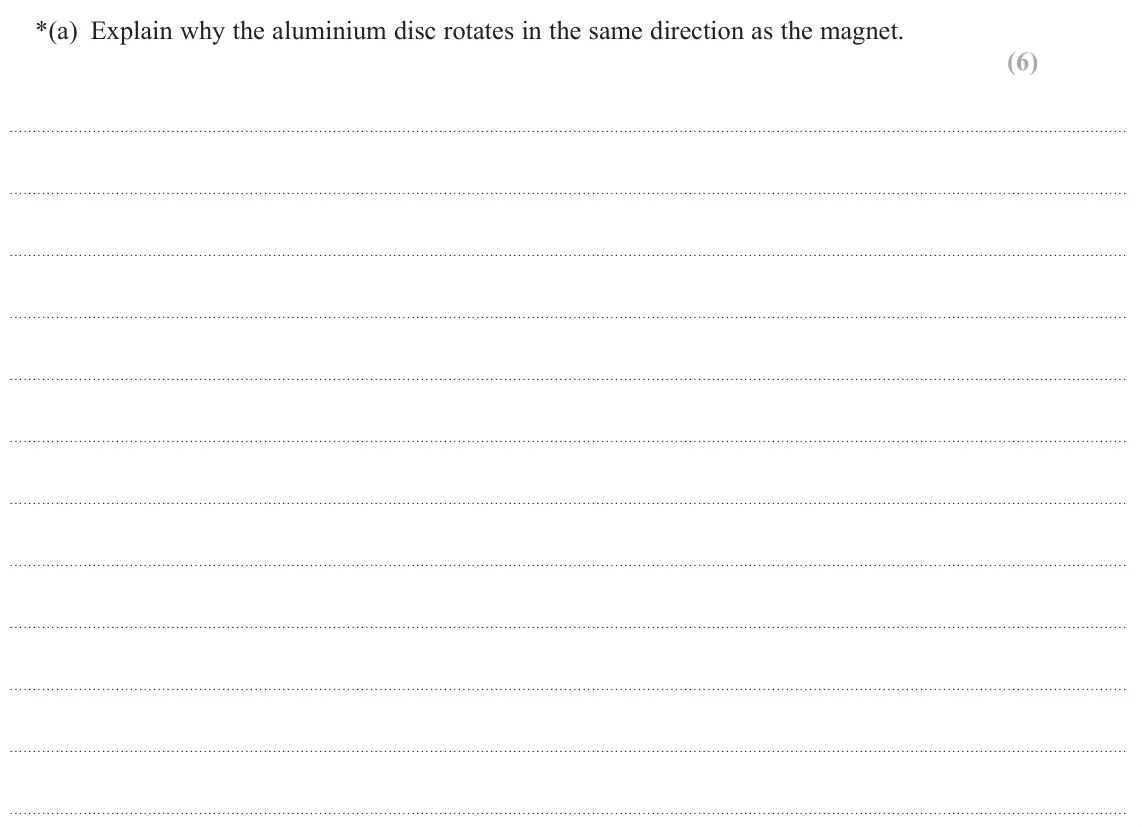
Q10(a)
The whole paper ↗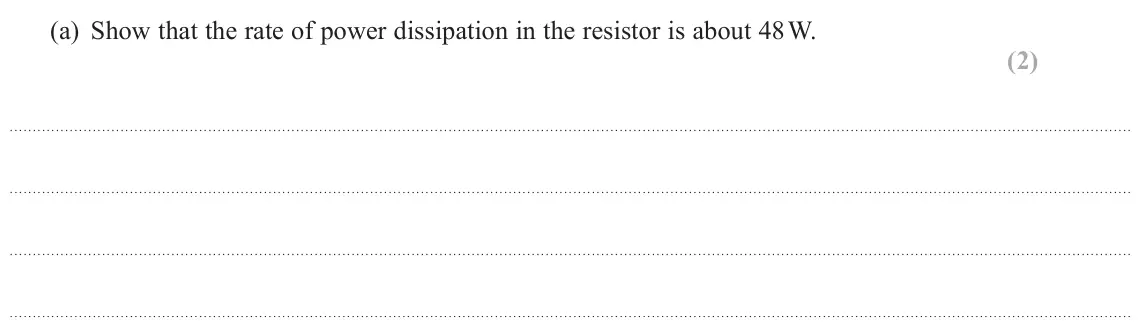
Q10(c)
The whole paper ↗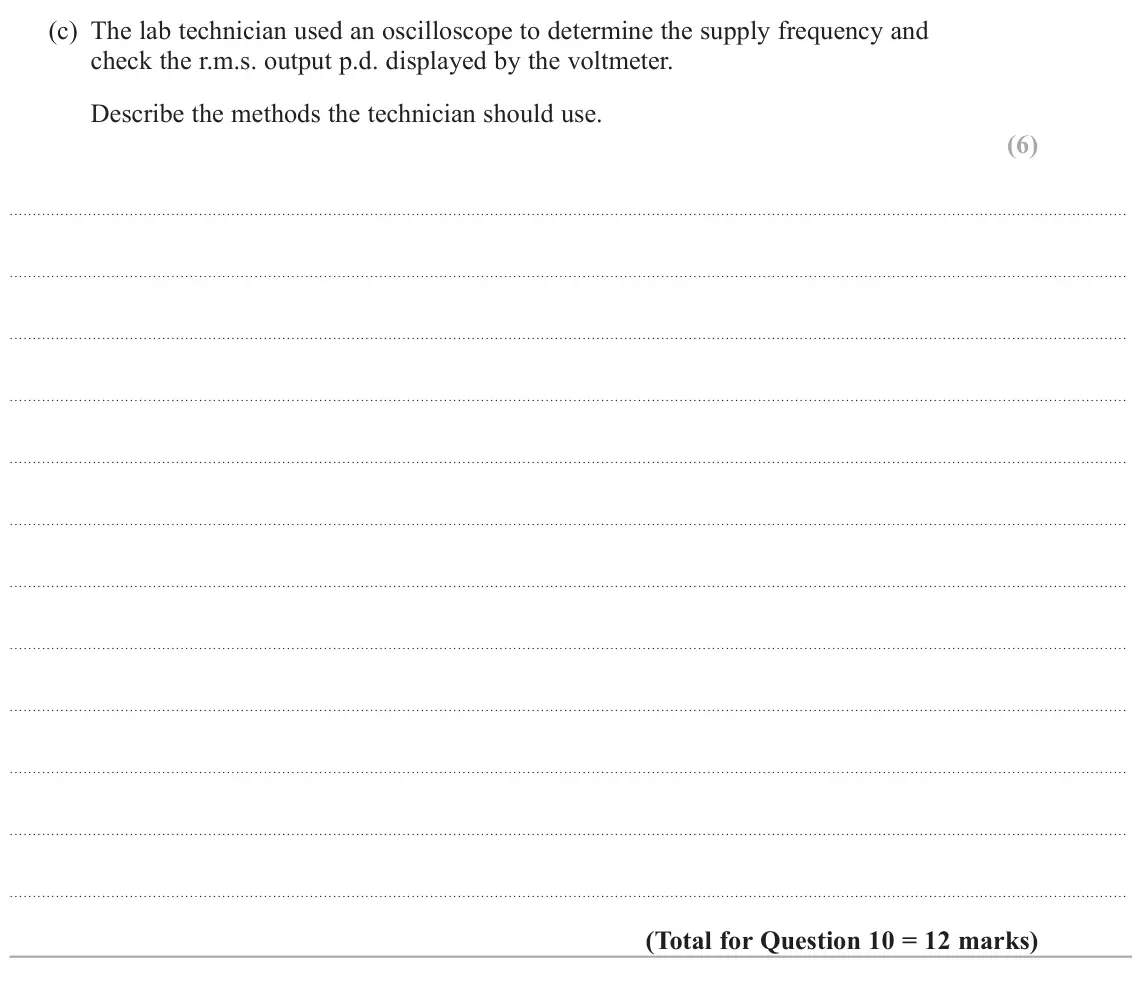
Q18(a)
The whole paper ↗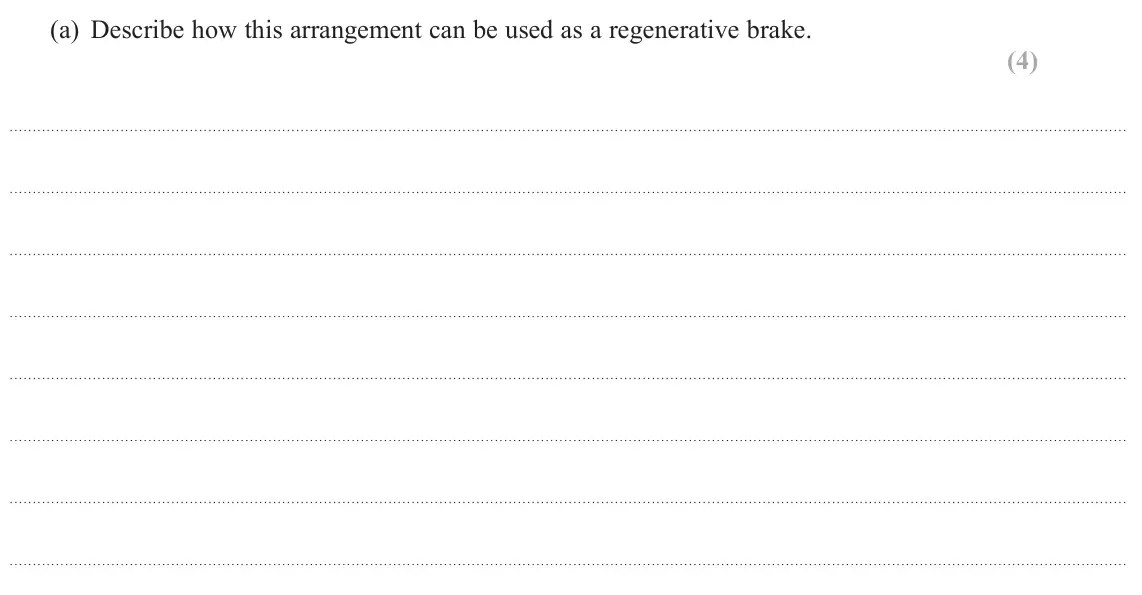
Q11(a)
The whole paper ↗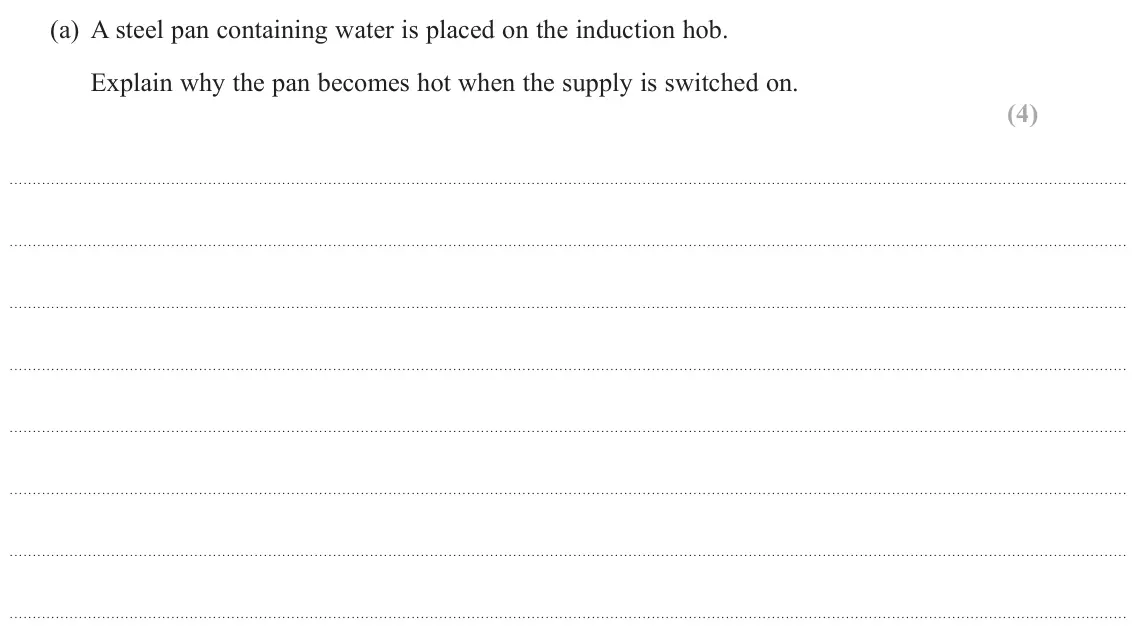
Q11(b)
The whole paper ↗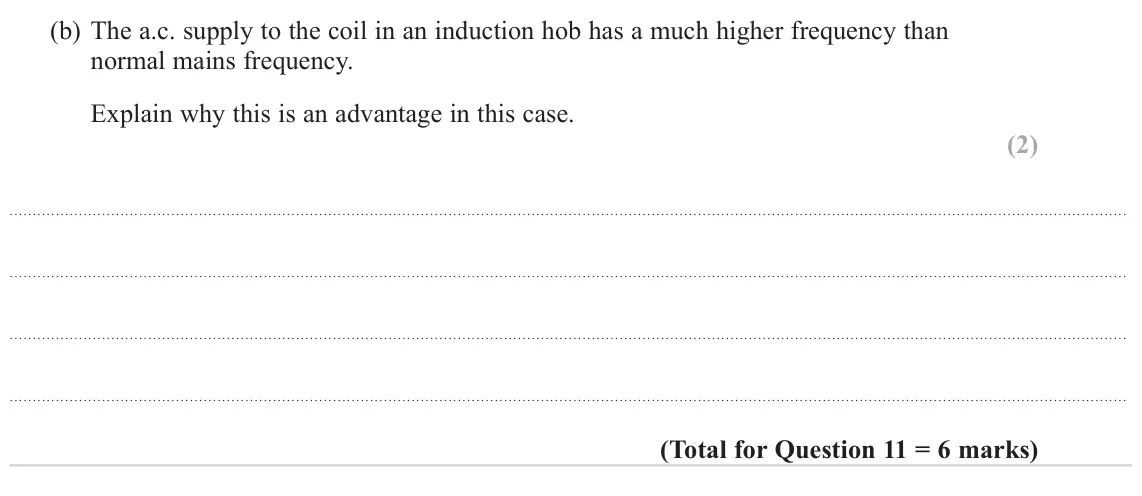
Q18(a)(i)
The whole paper ↗
Q18(a)(ii)
The whole paper ↗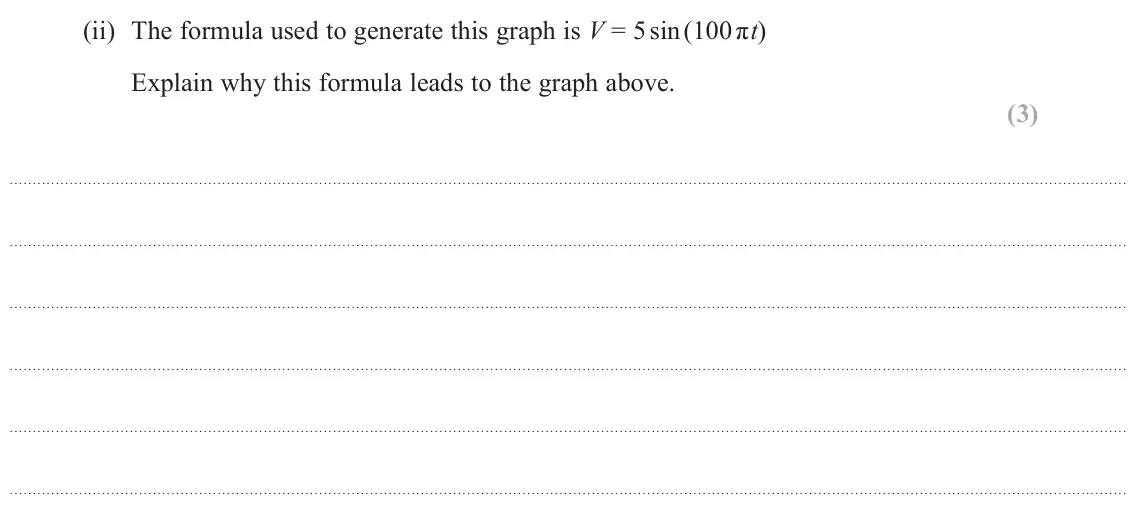
Q14(a)(i)
The whole paper ↗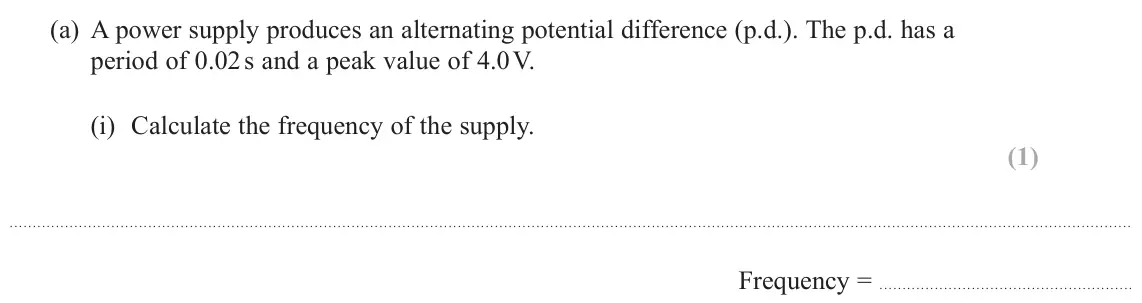
Q14(a)(ii)
The whole paper ↗
Q16(a)(i)
The whole paper ↗
Q16(a)(ii)
The whole paper ↗
Q16(c)
The whole paper ↗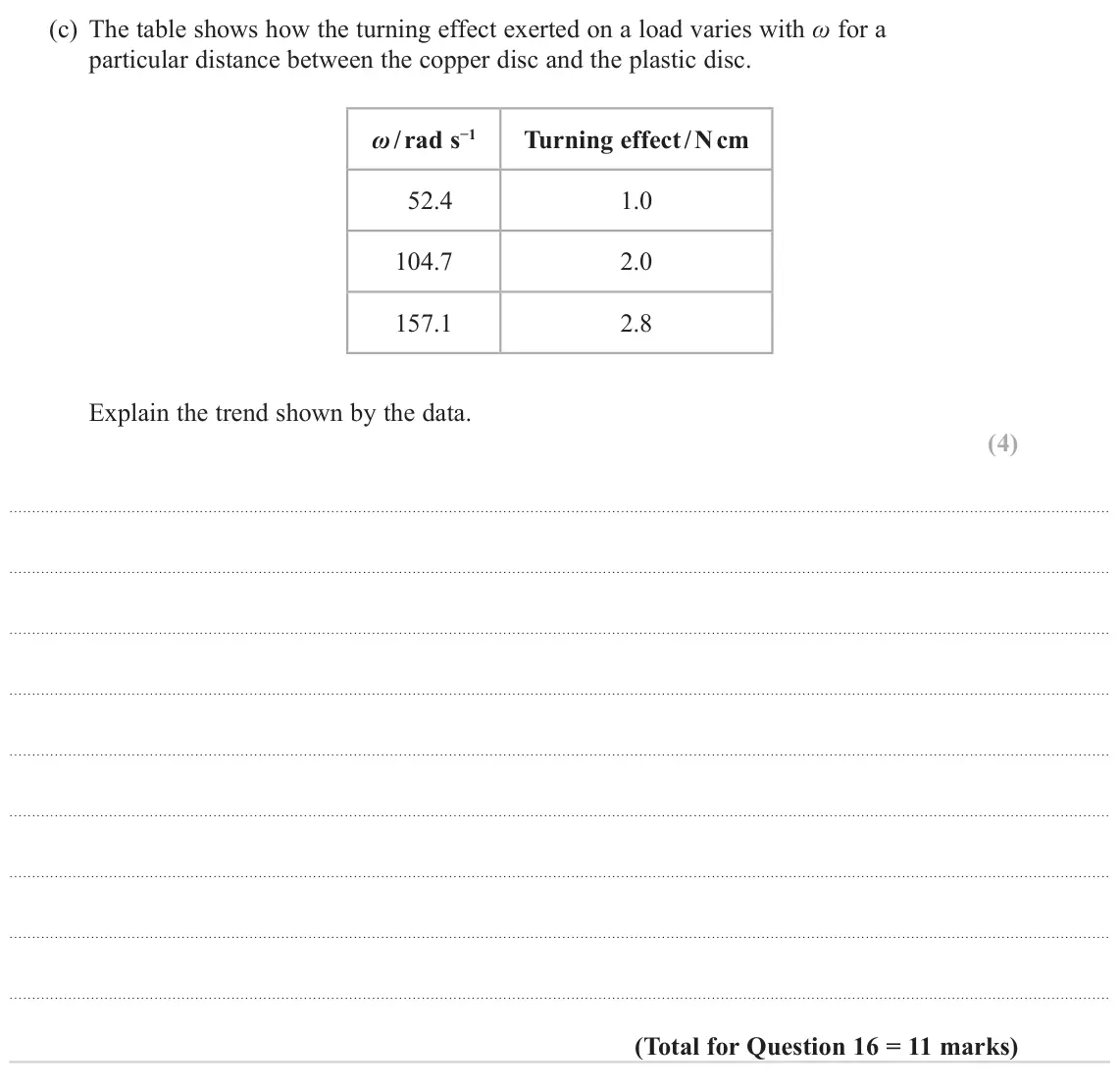
Q17(c)
The whole paper ↗
Q7(a)(i)
The whole paper ↗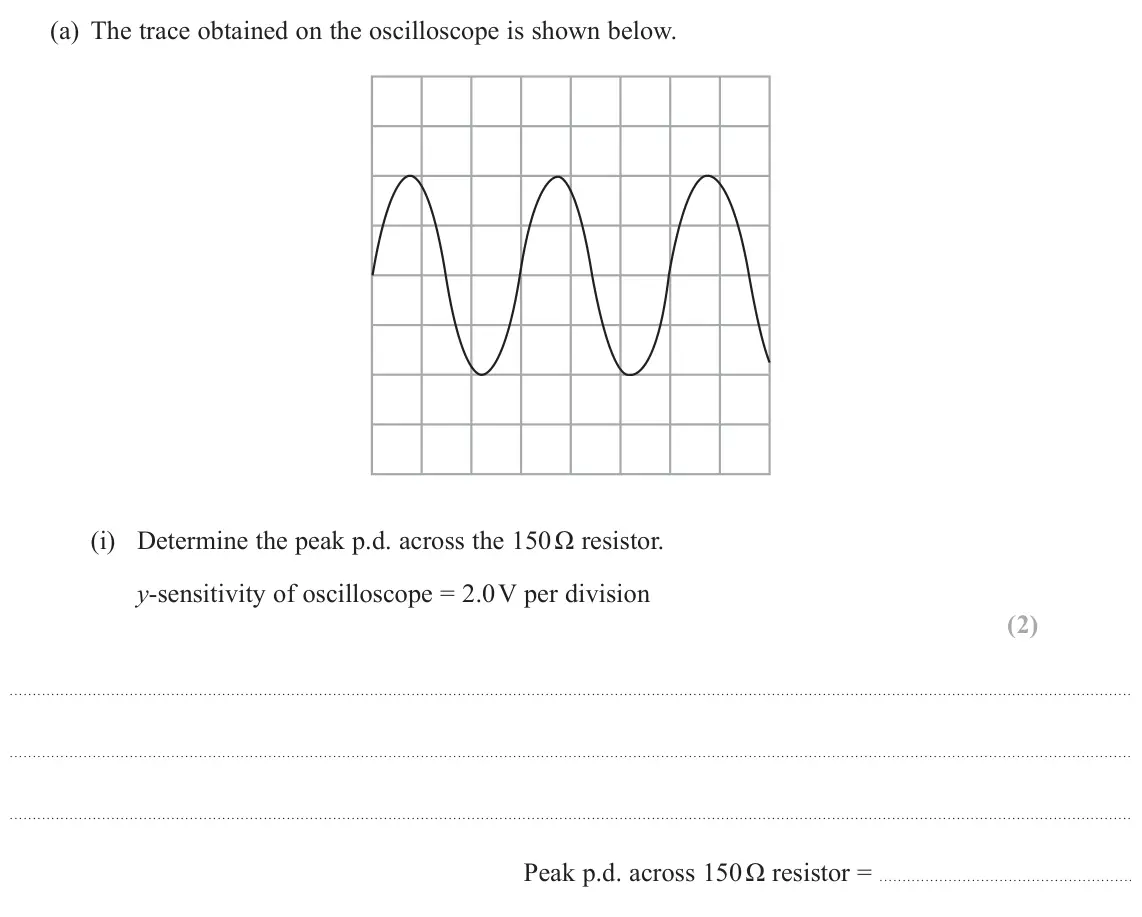
Q7(a)(ii)
The whole paper ↗
Q7(a)(iii)
The whole paper ↗
Q7(b)
The whole paper ↗
All 26 questions on Electromagnetic induction and alternating current, as a list
- June 2025, Paper 1, Q17(a) (6 marks): Explain why the aluminium disc rotates in the same direction as the magnet. (6)
- June 2025, Paper 3, Q10(a) (2 marks): Show that the rate of power dissipation in the resistor is about 48 W. (2)
- June 2025, Paper 3, Q10(c) (6 marks): The lab technician used an oscilloscope to determine the supply frequency and check the r.m.s. output p.d. displayed by the voltmeter. Describe the methods the
- June 2024, Paper 1, Q18(a) (4 marks): Describe how this arrangement can be used as a regenerative brake. (4)
- June 2023, Paper 1, Q11(a) (4 marks): A steel pan containing water is placed on the induction hob. Explain why the pan becomes hot when the supply is switched on. (4)
- June 2023, Paper 1, Q11(b) (2 marks): The a.c. supply to the coil in an induction hob has a much higher frequency than normal mains frequency. Explain why this is an advantage in this case. (2)
- June 2023, Paper 1, Q18(a)(i) (1 mark): Calculate the root‑mean‑square potential difference. (1) Root‑mean‑square potential difference =
- June 2023, Paper 1, Q18(a)(ii) (3 marks): The formula used to generate this graph is V = 5 sin (100 πt) Explain why this formula leads to the graph above. (3)
- June 2022, Paper 1, Q14(a)(i) (1 mark): Calculate the frequency of the supply. (1) Frequency =
- June 2022, Paper 1, Q14(a)(ii) (1 mark): Calculate the root‑mean‑square p.d. (1) Root‑mean‑square p.d. =
- June 2022, Paper 1, Q16(a)(i) (2 marks): Explain why a current is induced in the copper disc when the motor is switched on. (2)
- June 2022, Paper 1, Q16(a)(ii) (3 marks): Explain, using Lenz’s law, why the copper disc rotates. (3)
- June 2022, Paper 1, Q16(c) (4 marks): The table shows how the turning effect exerted on a load varies with ω for a particular distance between the copper disc and the plastic disc. ω / rad s−1 Turni
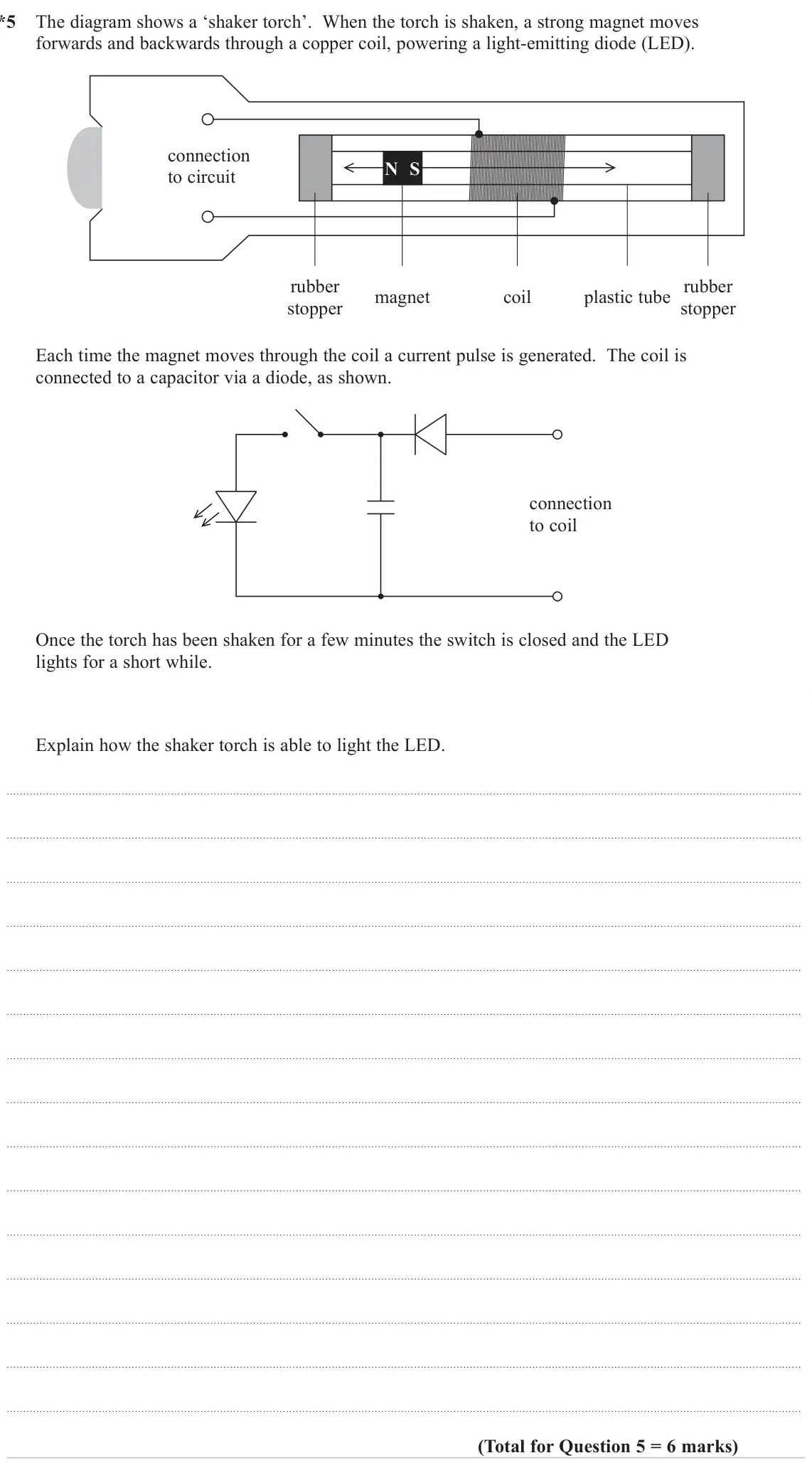
- June 2022, Paper 3, Q5 (6 marks): *5 The diagram shows a ‘shaker torch’. When the torch is shaken, a strong magnet moves forwards and backwards through a copper coil, powering a light-emitting d
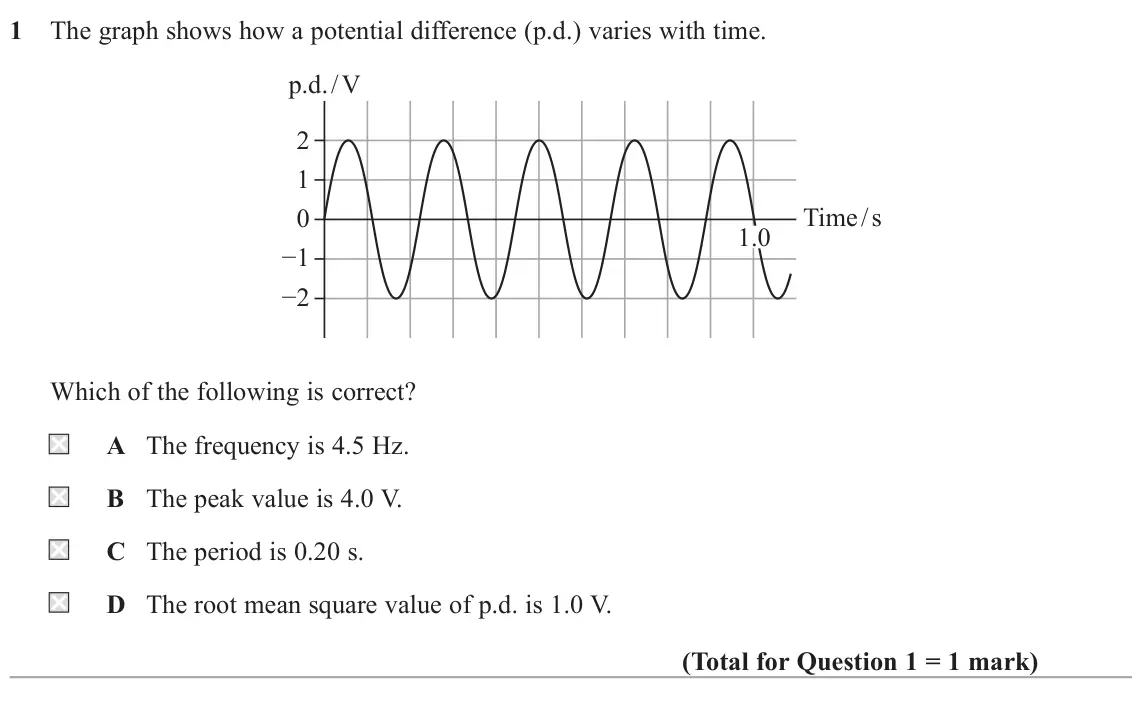
- November 2021, Paper 1, Q1 (1 mark): The graph shows how a potential difference (p.d.) varies with time. p.d. / V 2 1 Time / s 0 1.0 −1 −2 Which of the following is correct? A The frequency is 4.5
- November 2021, Paper 1, Q17(c) (4 marks): The coil within a very sensitive moving coil ammeter can be damaged when the ammeter is transported. The two ends of the coil are connected together when the am
- November 2021, Paper 3, Q7(a)(i) (2 marks): Determine the peak p.d. across the 150 Ω resistor. y-sensitivity of oscilloscope = 2.0 V per division (2) Peak p.d. across 150 Ω resistor =
- November 2021, Paper 3, Q7(a)(ii) (3 marks): Calculate the root mean square (r.m.s.) value of the current in the circuit. (3) r.m.s. value of current =
- November 2021, Paper 3, Q7(a)(iii) (3 marks): Calculate the power dissipated in the circuit. (3) Power dissipated in circuit =
- November 2021, Paper 3, Q7(b) (3 marks): Another student suggested that a voltmeter would be more accurate than using an oscilloscope to determine the magnitude of the p.d. Comment on this suggestion.
- October 2020, Paper 1, Q17(a) (6 marks): Describe how the device can be used as both a generator and an electric motor. (6)
- June 2018, Paper 1, Q8 (1 mark): A wire carries an alternating current of peak value 3 A. Which of the following is the root-mean-square value of this current? A 1.5 A B 2.1 A C 4.2 A D 9.0 A
- June 2018, Paper 1, Q12 (6 marks): * 12 A simple electric motor consists of a coil that is free to rotate in a magnetic field. A student connects the motor to an ammeter and a battery. coil N S A
- June 2018, Paper 3, Q10(c) (6 marks): A linear induction motor provides the force to accelerate the train forwards. A current flows in sequence through coils of wire mounted in the track. The train
- June 2017, Paper 1, Q7 (1 mark): A circuit is set up as shown in the diagram. Lamps X and Y are identical. The coil has a soft iron core. The resistor and the coil have the same resistance. X Y
- June 2017, Paper 3, Q11(d) (6 marks): Identical bar magnets are suspended from identical springs, with the North pole of each magnet inside a coil of wire as shown. The two coils are connected toget
Questions, mark schemes and examiner’s reports are © Pearson Edexcel, from their published past papers. Plumi isn’t affiliated with any exam board. Want whole papers? Every Edexcel A-Level Physics paper.
Rather write your answers by hand on iPad? Plumi marks them against the same mark schemes.