 plumi
How do characteristic coastal landforms contribute to coastal landscapes?: Edexcel A‑Level Geography questions
Every Edexcel A-Level Geography exam question on How do characteristic coastal landforms contribute to coastal landscapes? (specification points 2B.4–2B.6), 2017–2025, with its mark scheme and examiner’s report.
Find questions868
Calculations
Q3(a)
The whole paper ↗
Q3(b)
The whole paper ↗
Q3(c)
The whole paper ↗
Q6(a)(i)
The whole paper ↗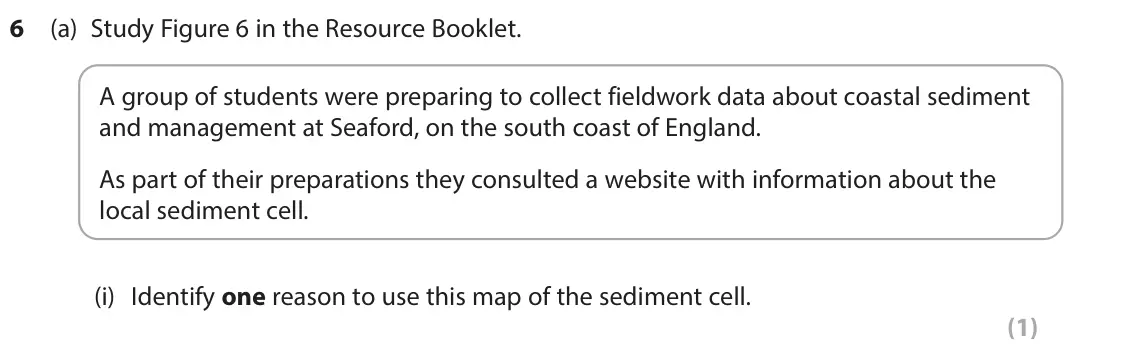
Q6(a)(ii)
The whole paper ↗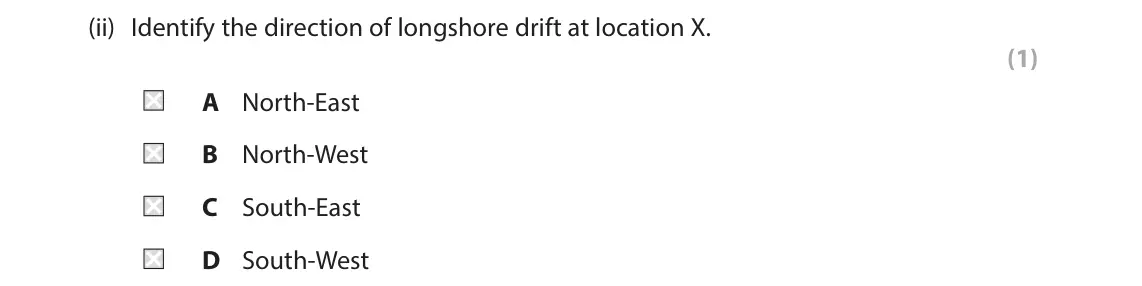
Q6(a)(iii)
The whole paper ↗
Q6(a)(iv)
The whole paper ↗
Q6(a)(v)
The whole paper ↗
Q6(b)
The whole paper ↗
Q3(b)
The whole paper ↗
Q3(c)
The whole paper ↗
Q5(a)
The whole paper ↗
Q5(d)
The whole paper ↗
Q5(e)
The whole paper ↗
Q3(a)
The whole paper ↗
Q5(c)
The whole paper ↗
Q6(a)(i)
The whole paper ↗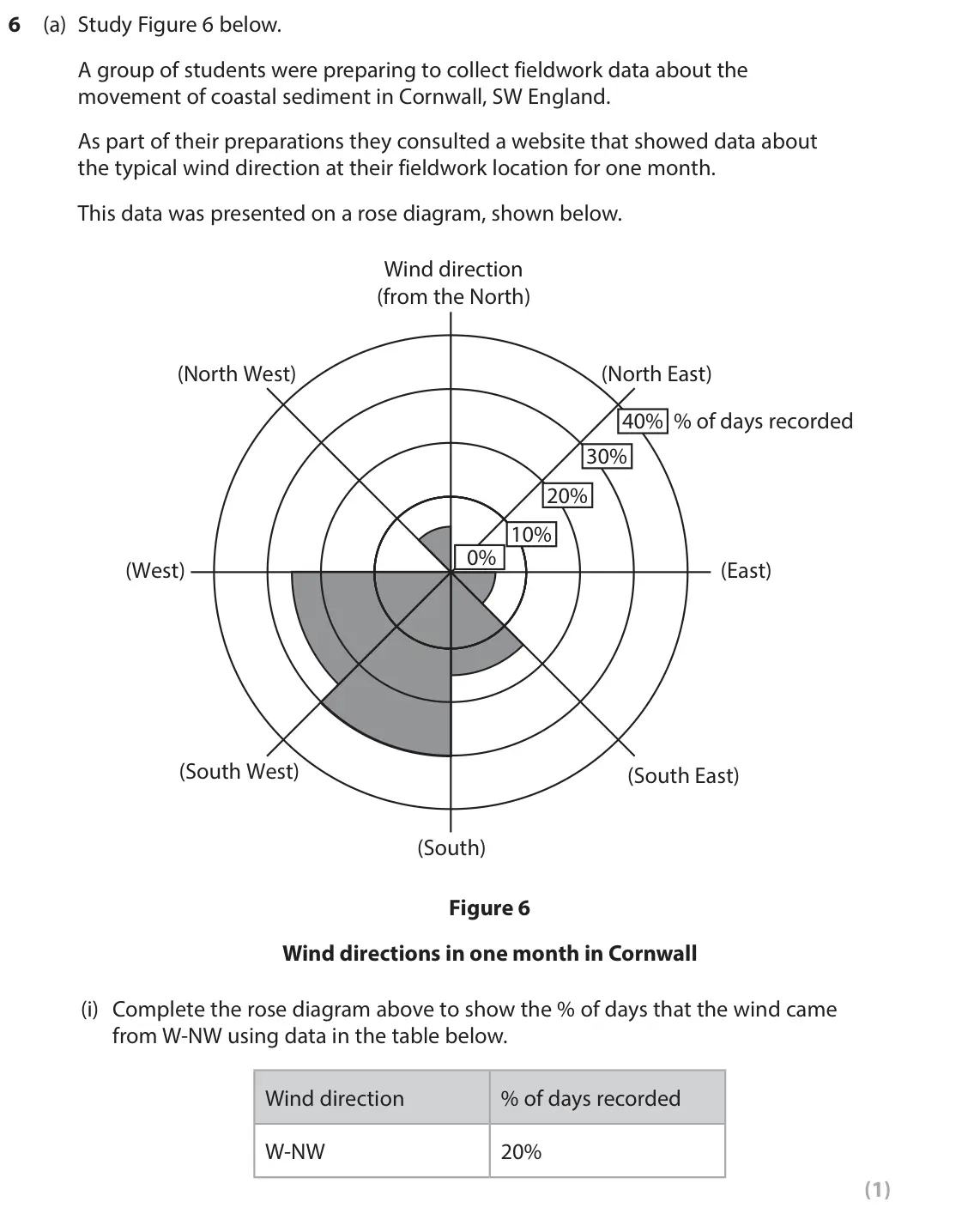
Q6(a)(ii)
The whole paper ↗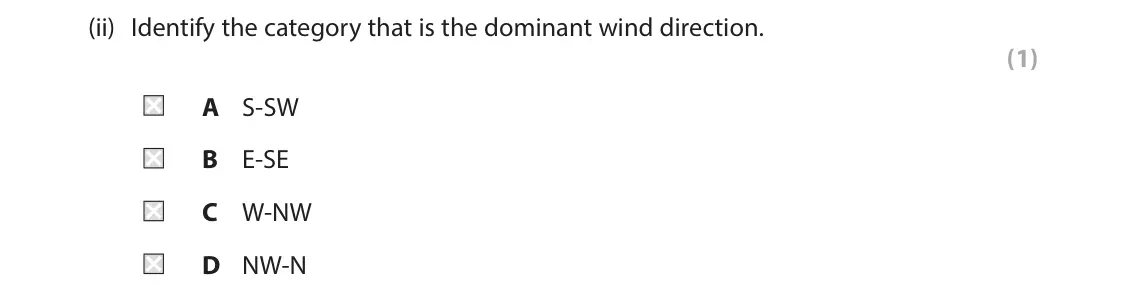
Q6(a)(iii)
The whole paper ↗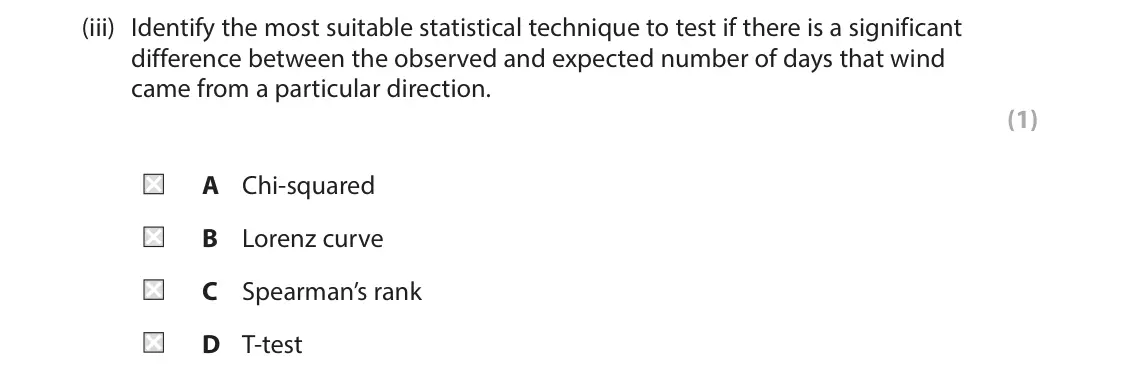
Q6(a)(iv)
The whole paper ↗
All 68 questions on How do characteristic coastal landforms contribute to coastal landscapes?, as a list
- June 2025, Paper 1, Q3(a) (6 marks): Explain the role of destructive waves in the formation of this landscape. (6) 3 Study Figure 3a in the Resource Booklet. The following resources relate to Quest
- June 2025, Paper 1, Q3(b) (6 marks): Explain the influence of constructive waves in the formation of this landscape. (6) 3 Study Figure 3a in the Resource Booklet. The following resources relate to
- June 2025, Paper 1, Q3(c) (8 marks): Explain why subaerial processes influence the rate of coastal recession. (8) 3 Study Figure 3a in the Resource Booklet. The following resources relate to Questi
- June 2025, AS Paper 1, Q6(a)(i) (1 mark): Identify one reason to use this map of the sediment cell. (1) N Seaford X 20,000m3/yr Seaford 18,000m3/yr Head Y 3,000m3/yr 2,000m3/yr English Channel 1km Key R
- June 2025, AS Paper 1, Q6(a)(ii) (1 mark): Identify the direction of longshore drift at location X. (1) A North-East B North-West C South-East D South-West N Seaford X 20,000m3/yr Seaford 18,000m3/yr Hea
- June 2025, AS Paper 1, Q6(a)(iii) (1 mark): Calculate the difference in the rate of sediment moved per year at locations X and Y. (1) N Seaford X 20,000m3/yr Seaford 18,000m3/yr Head Y 3,000m3/yr 2,000m3/
- June 2025, AS Paper 1, Q6(a)(iv) (2 marks): Suggest one reason why students should plan ahead before visiting locations X and Y. (2) N Seaford X 20,000m3/yr Seaford 18,000m3/yr Head Y 3,000m3/yr 2,000m3/y
- June 2025, AS Paper 1, Q6(a)(v) (4 marks): The students used ICT to help manage, collate and process the information from their primary fieldwork. Explain two ways students might have used ICT. (4) N Sea
- June 2025, AS Paper 1, Q6(b) (9 marks): You have carried out an investigation into coastal landscapes and change. Assess the value of the data collection methods used in your primary fieldwork. (9) N
- June 2024, Paper 1, Q3(b) (6 marks): Explain how sediment transport and deposition contribute to the formation of this landscape. (6) 3 Study Figure 3a in the Resource Booklet. The following resour
- June 2024, Paper 1, Q3(c) (8 marks): Explain the role of mass movement in creating distinctive coastal landforms. (8) 3 Study Figure 3a in the Resource Booklet. The following resources relate to Qu
- June 2024, AS Paper 1, Q5(a) (1 mark): Identify one landform caused by mass movement. (1) SECTION C The following resources relate to Questions 5 and 6. Figure 5b Two images showing the coast at Port
- June 2024, AS Paper 1, Q5(d) (4 marks): Explain two parts of a coastal sediment cell system. (4) SECTION C The following resources relate to Questions 5 and 6. Figure 5b Two images showing the coast a
- June 2024, AS Paper 1, Q5(e) (6 marks): Explain how vegetation helps stabilise sandy coastlines. (6) SECTION C The following resources relate to Questions 5 and 6. Figure 5b Two images showing the coa
- June 2023, Paper 1, Q3(a) (6 marks): Explain the contribution of erosional processes in producing sediment. (6) 3 Study Figure 3a in the Resource Booklet. The following resources relate to Question
- June 2023, AS Paper 1, Q5(c) (6 marks): Explain how transport and deposition processes produce distinctive coastal landforms. (6) SECTION C The following resources relate to Question 5 Key N Sea/River
- June 2023, AS Paper 1, Q6(a)(i) (1 mark): Complete the rose diagram above to show the % of days that the wind came from W-NW using data in the table below. Wind direction % of days recorded W-NW 20% (1)
- June 2023, AS Paper 1, Q6(a)(ii) (1 mark): Identify the category that is the dominant wind direction. (1) A S-SW B E-SE C W-NW D NW-N
- June 2023, AS Paper 1, Q6(a)(iii) (1 mark): Identify the most suitable statistical technique to test if there is a significant difference between the observed and expected number of days that wind came fr
- June 2023, AS Paper 1, Q6(a)(iv) (2 marks): Suggest a suitable hypothesis or key question that the students could investigate. (2)
- June 2023, AS Paper 1, Q6(a)(v) (4 marks): Explain two primary fieldwork methods that could be used to extend this investigation. (4)
- June 2023, AS Paper 1, Q6(b) (9 marks): You have carried out an investigation into coastal landscapes and change. Assess the value of secondary data at different stages of your geographical investigat
- June 2022, Paper 1, Q3(a) (6 marks): Explain the contribution of marine processes in the development of these landforms. (6) 3 Study Figure 3a in the Resource Booklet. The following resources relat
- June 2022, Paper 1, Q3(b) (6 marks): Explain how subaerial processes contribute to the development of this landscape. (6) 3 Study Figure 3a in the Resource Booklet. The following resources relate t
- June 2022, AS Paper 1, Q4(b)(i) (2 marks): Describe the direction of sediment transport in Figure 4. (2) SECTION C The following resources relate to Questions 4–5. A B N Figure 4 The beach either side of
- June 2022, AS Paper 1, Q4(b)(ii) (3 marks): Suggest one reason for the change in sediment size along transect AB shown in Figure 4. (3) SECTION C The following resources relate to Questions 4–5. A B N Fig
- June 2022, AS Paper 1, Q4(e) (12 marks): Assess the extent to which transport and deposition processes are more important than erosional processes in creating distinctive coastal landscapes. (12) SECTI
- June 2022, AS Paper 2, Q7(a) (1 mark): Identify one risk students might have had to consider when carrying out fieldwork in this environment. (1) 7 A group of students collected fieldwork data about
- June 2022, AS Paper 2, Q7(b) (1 mark): Calculate the % of sites where sea water was observed. Give your answer to one decimal place. (1) 7 A group of students collected fieldwork data about cliff pro
- June 2022, AS Paper 2, Q7(c) (1 mark): Identify the modal class for the evidence of weathering. (1) 7 A group of students collected fieldwork data about cliff profiles at 15 different locations along
- June 2022, AS Paper 2, Q7(d) (2 marks): The students concluded that the coastal profile was heavily influenced by marine processes. Suggest one reason why the data shows this might be a sensible concl
- June 2022, AS Paper 2, Q7(e) (4 marks): Explain two ways the data collection methods could be improved. (4) 7 A group of students collected fieldwork data about cliff profiles at 15 different location
- November 2021, Paper 1, Q3(b) (6 marks): Explain the differences in the characteristics of beaches over time, such as between summer and winter. (6) 3 Study Figure 3a in the Resource Booklet. The follo
- October 2020, Paper 1, Q3(b) (6 marks): Explain the role of sediment transport in the development of this coastal landscape. (6) 3 Study Figure 3a in the Resource Booklet. The following resources rela
- October 2020, AS Paper 1, Q5(b)(i) (1 mark): Using the partially completed Student’s t-test below, calculate the value of t. Give your answer to 1 decimal place. (1) SECTION C The following resources relat
- October 2020, AS Paper 1, Q5(b)(ii) (1 mark): Identify the significance level of your t-test result using Figure 5b in the Resource Booklet. (1) SECTION C The following resources relate to Questions 5–7. De
- October 2020, AS Paper 1, Q5(b)(iii) (3 marks): Suggest one reason for the difference in pebble size. (3) SECTION C The following resources relate to Questions 5–7. Degrees of freedom 0.20 0.10 0.05 0.02 0.01
- October 2020, AS Paper 1, Q5(d) (6 marks): Using a named example, explain the sediment cell concept. (6) SECTION C The following resources relate to Questions 5–7. Degrees of freedom 0.20 0.10 0.05 0.02
- October 2020, AS Paper 1, Q5(e) (12 marks): Assess the importance of subaerial processes in contributing to the rate of coastal recession. (12) SECTION C The following resources relate to Questions 5–7. D
- October 2020, AS Paper 1, Q6(a)(ii) (1 mark): Study Figure 6. Identify one coastal landform shown in box A. (1) Box A Box A N 0 300m 0 300m Key Slope angle Extremely high / steep Roads 31–90° Rivers / Strea
- October 2020, AS Paper 1, Q6(a)(iii) (3 marks): Describe the angle of slope the students might expect to find at this stretch of coastline. (3) Box A Box A N 0 300m 0 300m Key Slope angle Extremely high / ste
- October 2020, AS Paper 1, Q6(a)(iv) (4 marks): Explain two decisions these students would have to make as part of a risk assessment. (4) Box A Box A N 0 300m 0 300m Key Slope angle Extremely high / steep Roa
- October 2020, AS Paper 1, Q6(b) (9 marks): You have carried out primary fieldwork to investigate coastal landscapes and change. Assess the effectiveness of the techniques you used to present and analyse
- June 2019, Paper 1, Q3(a) (6 marks): Explain the contribution of marine erosional processes to the development of this landscape. (6) 3 Study Figure 3a in the Resource Booklet. The following resour
- June 2019, Paper 1, Q3(b) (6 marks): Explain the contribution of coastal deposition to the development of this landscape. (6) 3 Study Figure 3a in the Resource Booklet. The following resources rela
- June 2019, AS Paper 1, Q5(a) (1 mark): Identify the factor which affects the direction of coastal sediment movement. (1) A Wave type B Longshore drift C Sediment cell D Sediment shape SECTION C The f
- June 2019, AS Paper 1, Q5(b) (2 marks): Complete A and B in Figure 5a below. (2) Eroding River sea cliffs Key: Rip current = A Offshore = B ridge = Sediment sink Figure 5a Coastal sediment system SECTIO
- June 2019, AS Paper 1, Q5(c) (3 marks): Suggest one reason for the cliff collapse. (3) SECTION C The following resources relate to Questions 5–7. Figure 5b Recent cliff collapse on the South East coas
- June 2019, AS Paper 1, Q5(d) (4 marks): Explain two processes of weathering on a coastline. (4) SECTION C The following resources relate to Questions 5–7. Figure 5b Recent cliff collapse on the South
- June 2019, AS Paper 1, Q6(a)(i) (1 mark): State one reason for studying sediment size. (1)
- June 2019, AS Paper 1, Q6(a)(ii) (1 mark): Complete the table above by calculating the missing number in the Site 3 column. (1)
- June 2019, AS Paper 1, Q6(a)(iii) (1 mark): Calculate the value of Chi2 (X2) for the data given. (1)
- June 2019, AS Paper 1, Q6(a)(iv) (2 marks): Suggest one reason for carrying out a Chi2 (X2)test on this data set. (2)
- June 2019, AS Paper 1, Q6(a)(v) (4 marks): Explain two primary fieldwork methods that might have been used to extend this investigation on spit formation. (4)
- June 2019, AS Paper 1, Q6(b) (9 marks): You have carried out primary fieldwork to investigate coastal landscapes and change. Assess how the sampling procedures and sample size affected your results. (
- June 2018, Paper 1, Q3(c) (8 marks): Explain the role of sediment transport in creating distinctive landforms. (8) 3 Study Figure 3a in the Resource Booklet. The following resources relate to Quest
- June 2018, AS Paper 1, Q5(a) (1 mark): State one process of mass movement that occurs in coastal landscapes. (1) SECTION C The following resources relate to Questions 5–7. 180 180 120 120 60 60 0 0 -
- June 2018, AS Paper 1, Q5(d) (6 marks): Explain how vegetation helps stabilise sandy coastlines. (6) SECTION C The following resources relate to Questions 5–7. 180 180 120 120 60 60 0 0 -60 -60 -120 -
- June 2018, AS Paper 1, Q7 (16 marks): Study Figures 7a, 7b, 7c and 7d in the Resource Booklet. Evaluate the importance of tectonic and marine processes in creating distinctive coastal landscapes in
- June 2017, AS Paper 1, Q5(a) (1 mark): State one factor that affects coastal sediment transport. (1) SECTION C The following resources relate to Questions 5–7. N St Alban’s Head Prevailing wind direc
- June 2017, AS Paper 1, Q5(b)(i) (2 marks): Study Figure 5 in the Resource Booklet, which shows sets of wave frequency data for two locations in Dorset. Calculate the average wave frequency at each locati
- June 2017, AS Paper 1, Q5(b)(ii) (3 marks): Suggest one reason why the wave frequency at the two locations differ. (3) SECTION C The following resources relate to Questions 5–7. N St Alban’s Head Prevaili
- June 2017, AS Paper 1, Q5(c) (4 marks): Explain two coastal depositional processes. (4) SECTION C The following resources relate to Questions 5–7. N St Alban’s Head Prevailing wind direction Location
- June 2017, AS Paper 1, Q6(a)(i) (1 mark): Complete Figure 6a below by adding the following data for Site X. (1) Clast Size (cm) Number recorded 5.1–7.5 13 15.1–17.5 11 45 40 35 30 25 20 15 10 5 0 0–2.5
- June 2017, AS Paper 1, Q6(a)(ii) (2 marks): At both sites, X and Y, the student decided to use a stratified sampling approach to collect their data. State two reasons why this could be an appropriate appr
- June 2017, AS Paper 1, Q6(a)(iii) (2 marks): Suggest one reason why the clast size at Site X is different to that at Site Y. (2) N Hurlstone Point Gore Porlock Site Y Point Bay Site X Prevailing wind direc
- June 2017, AS Paper 1, Q6(a)(iv) (4 marks): The student collected this data to investigate changes to coastal sediment. Explain two other techniques the student could have used as part of their investigat
- June 2017, AS Paper 1, Q6(b) (9 marks): You have carried out secondary research to investigate coastal landscapes and change. Assess the value of secondary research in undertaking your geographical in
Questions, mark schemes and examiner’s reports are © Pearson Edexcel, from their published past papers. Plumi isn’t affiliated with any exam board. Want whole papers? Full past papers.
Rather write your answers by hand on iPad? Plumi marks them against the same mark schemes.