 plumi
How are the carbon and water cycles linked to the global climate system?: Edexcel A‑Level Geography questions
Every Edexcel A-Level Geography exam question on How are the carbon and water cycles linked to the global climate system? (specification points 6.7–6.9), 2017–2025, with its mark scheme and examiner’s report.
Find questions868
Calculations
Q4(e)
The whole paper ↗
Q4(a)
The whole paper ↗
Q4(d)
The whole paper ↗
Q4(b)
The whole paper ↗
Q2(a)(i)
The whole paper ↗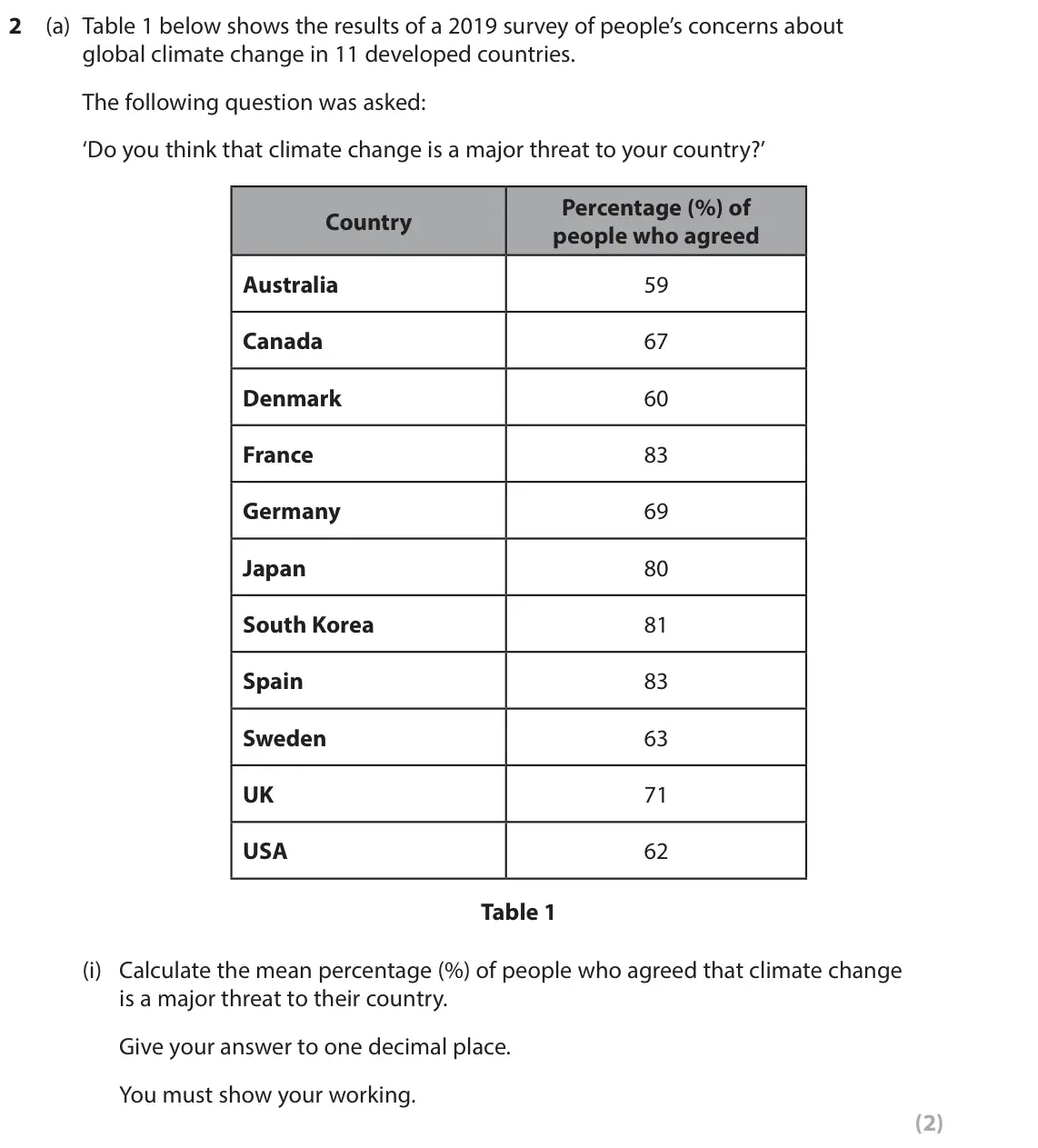
Q2(a)(ii)
The whole paper ↗
Q2(b)
The whole paper ↗





Q4(c)
The whole paper ↗
Q2(a)
The whole paper ↗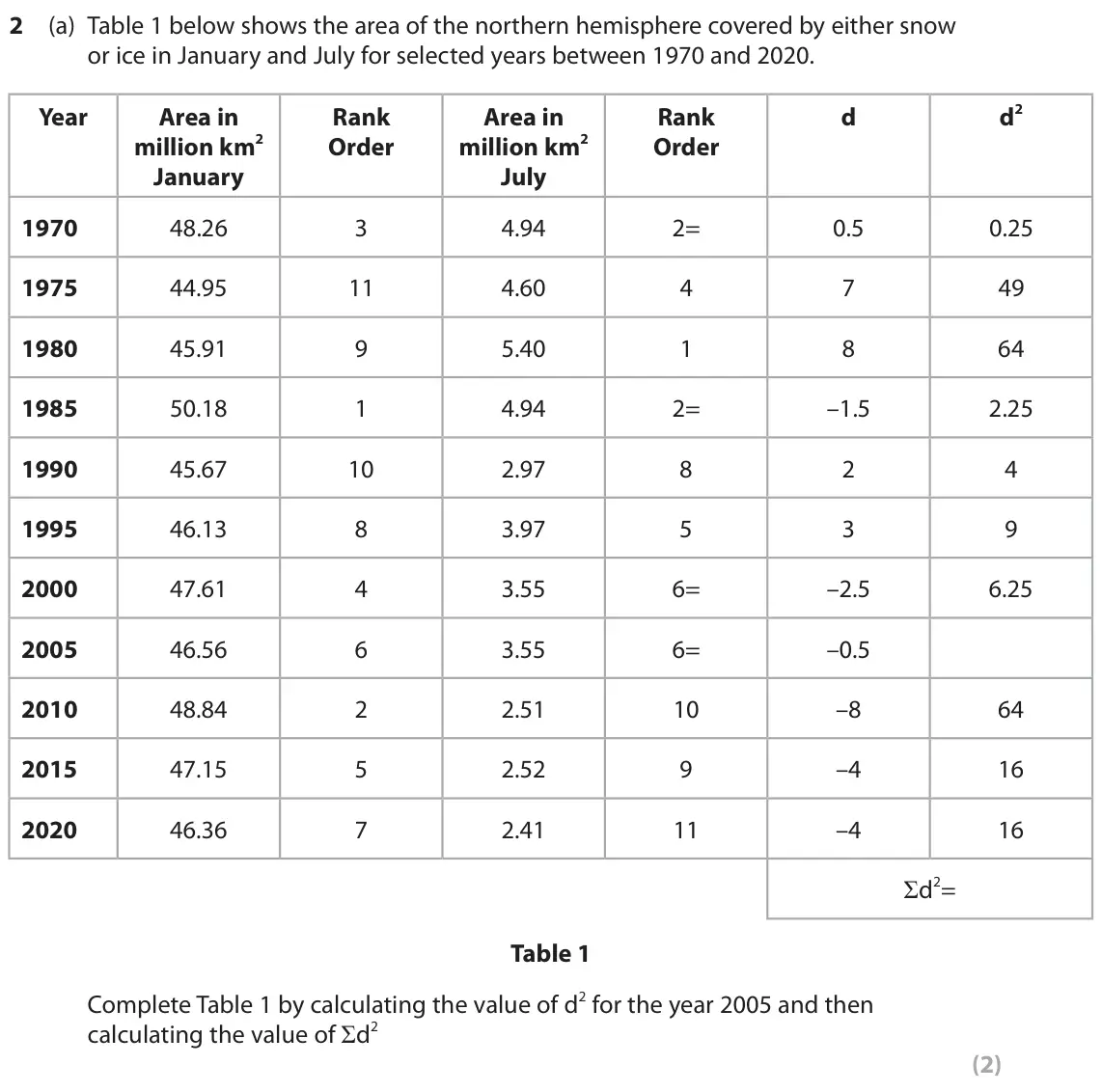
Q2(b)
The whole paper ↗
Q4(d)
The whole paper ↗
All 24 questions on How are the carbon and water cycles linked to the global climate system?, as a list
- June 2025, Paper 1, Q4(e) (20 marks): Evaluate the view that global agreements are essential in order to reduce further planetary warming. (20) 4 Study Figure 4 in the Resource Booklet. SECTION C Th
- June 2025, Paper 3, Q1 (4 marks): Explain why global agreements are vital if the environmental challenges of climate change are to be met.
- June 2024, Paper 1, Q4(a) (3 marks): Suggest one possible impact of the changes shown on forest ecosystems. (3) 4 Study Figure 4 in the Resource Booklet. SECTION C The following resource relates to
- June 2024, Paper 1, Q4(d) (12 marks): Assess the impact of increasing ocean acidification on people and marine ecosystems. (12) 4 Study Figure 4 in the Resource Booklet. SECTION C The following reso
- June 2023, Paper 1, Q4(b) (6 marks): Explain how adaptation strategies, such as water conservation, may help communities cope with a changed climate. (6) 4 Study Figure 4a in the Resource Booklet.
- June 2023, Paper 3, Q2(a)(i) (2 marks): Calculate the mean percentage (%) of people who agreed that climate change is a major threat to their country. Give your answer to one decimal place. You must s
- June 2023, Paper 3, Q2(a)(ii) (2 marks): Calculate the interquartile range of the % of people who agreed that climate change is a major threat to their country. You must show your working. (2)
- June 2023, Paper 3, Q2(b) (4 marks): Explain why the data on Table 1 may not be a reliable guide to global opinions about the threat of climate change. (4)
- June 2023, Paper 3, Q3 (8 marks): Study Figure 1 and Figure 2 in Section A of the Resource Booklet. Analyse the relationship between global population growth and land-use changes. (8) SECTION A
- June 2023, Paper 3, Q4 (8 marks): Study Figure 3, Figure 4a and Figure 4b in Section A of the Resource Booklet. Analyse the variations in European forest coverage. (8) More than half of Europe’s
- June 2023, Paper 3, Q5 (18 marks): Study the resources in Section B of the Resource Booklet. Evaluate the view that to be effective the mitigation of climate change requires many contrasting stra
- June 2023, Paper 3, Q6 (24 marks): Evaluate the view that the crisis of biodiversity loss is both more serious and more challenging to solve than climate change. (24) SECTION A Population and lan
- June 2022, Paper 3, Q6 (24 marks): Evaluate the view that without significant global action to address climate change, the future of SIDS is one of decline. (24) SECTION A The characteristics of
- November 2021, Paper 1, Q4(c) (8 marks): Explain why changes in ocean health may threaten people’s well-being. (8) SECTION C The following resources relates to Question 4. 7 000 ACTUAL PREDICTED 6 000
- November 2021, Paper 3, Q1 (4 marks): Explain why future global warming may be inevitable.
- November 2021, Paper 3, Q2(a) (4 marks): Table 1 below shows the area of the northern hemisphere covered by either snow or ice in January and July for selected years between 1970 and 2020. d2 Year Area
- November 2021, Paper 3, Q2(b) (4 marks): Explain why the data used in Table 1 might not be a reliable guide to the impact of global warming on snow and ice coverage. (4)
- November 2021, Paper 3, Q3 (8 marks): Study Figure 1, Figure 2 and Figure 3 in Section A of the Resource Booklet. Analyse the evidence that Arctic and Antarctic temperature changes are extreme. SECT
- November 2021, Paper 3, Q4 (8 marks): Study Figure 4, Figure 5 and Figure 6 in Section A of the Resource Booklet. Analyse the global implications of climate change in these polar regions. Sea-ice is
- October 2020, Paper 1, Q4(d) (12 marks): Assess the importance of renewable energy in reducing the risks of further planetary warming. (12) 4 Study Figure 4 in the Resource Booklet. SECTION C The follo
- October 2020, Paper 1, Q4(e) (20 marks): Evaluate the view that changes to the carbon cycle pose more threats to people than changes to the water cycle. (20) 4 Study Figure 4 in the Resource Booklet. S
- June 2019, Paper 1, Q4(c) (8 marks): Explain why there are uncertainties about future levels of carbon release from peatlands and permafrost. (8) SECTION C The following resources relate to Questio
- June 2018, Paper 1, Q4(e) (20 marks): Evaluate the view that mitigation strategies are more important than adaptation strategies in addressing the risks posed by the degradation of the carbon cycle.
- June 2018, Paper 3, Q6 (24 marks): Evaluate the view that climate change and natural hazards pose the most serious threat to the economic, social and political stability of Southeast Asia. (24) C
Questions, mark schemes and examiner’s reports are © Pearson Edexcel, from their published past papers. Plumi isn’t affiliated with any exam board. Want whole papers? Full past papers.
Rather write your answers by hand on iPad? Plumi marks them against the same mark schemes.