 plumi
Mass spectrometry: Edexcel A‑Level Chemistry questions
Every Edexcel A-Level Chemistry exam question on 7A Mass spectrometry, 2016–2025, with its mark scheme and examiner’s report.
Find questions2,028
Calculations
Q1(a)
The whole paper ↗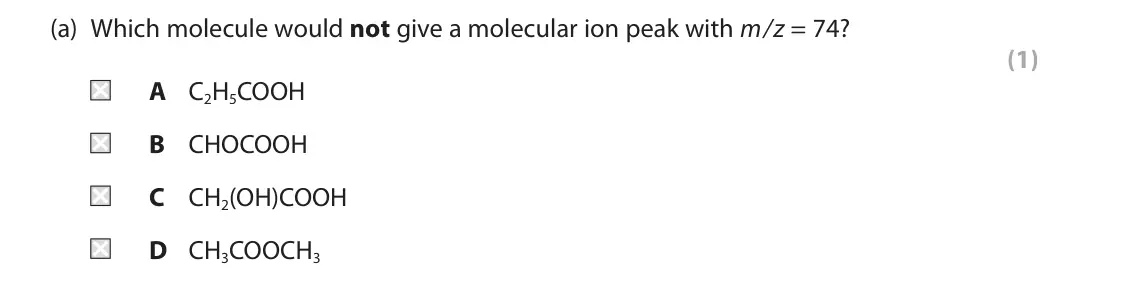
Q1(b)
The whole paper ↗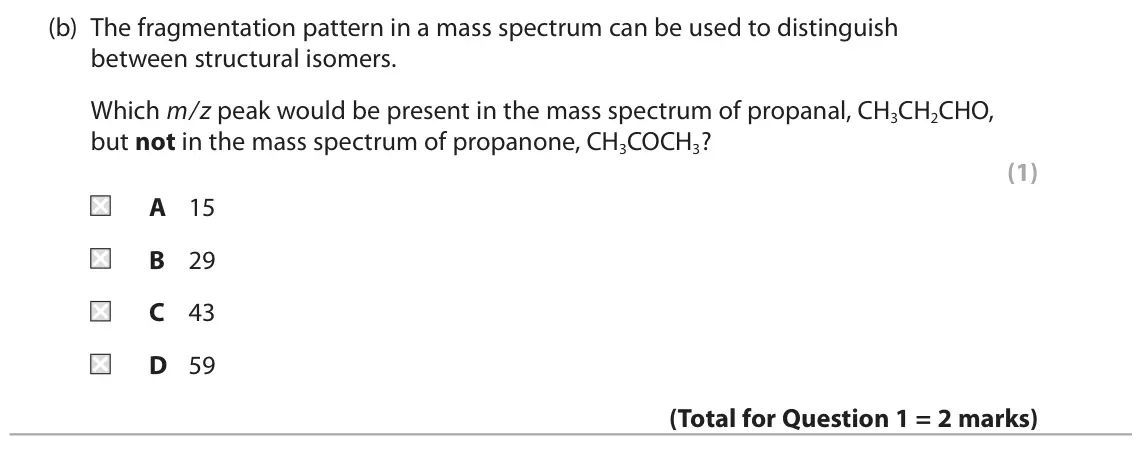
Q5(a)(i)
The whole paper ↗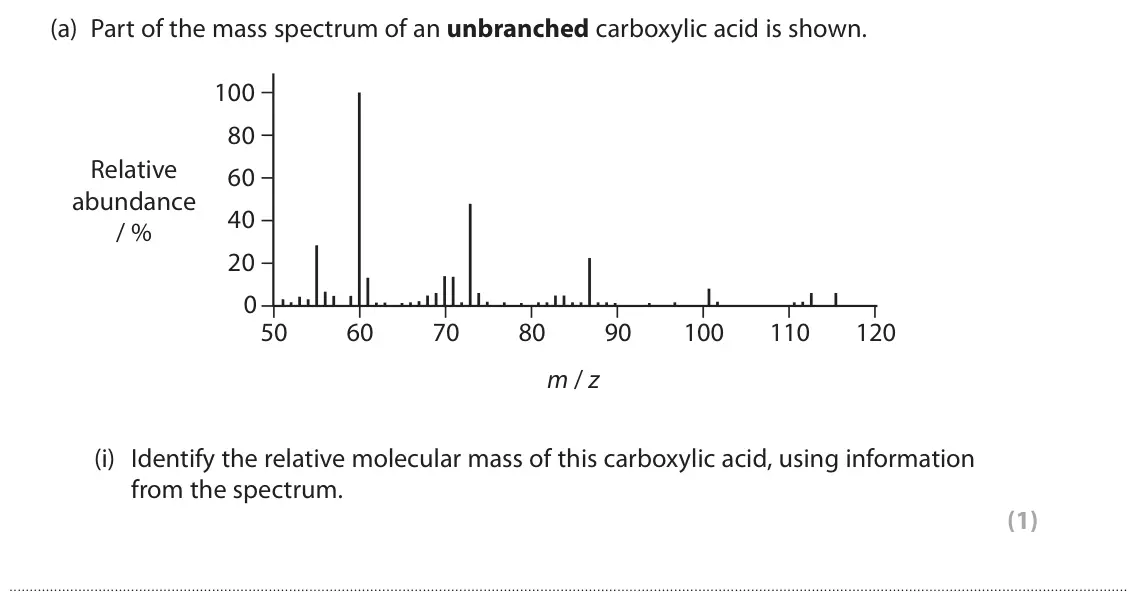
Q5(a)(ii)
The whole paper ↗
Q5(a)(iii)
The whole paper ↗
Q6(d)
The whole paper ↗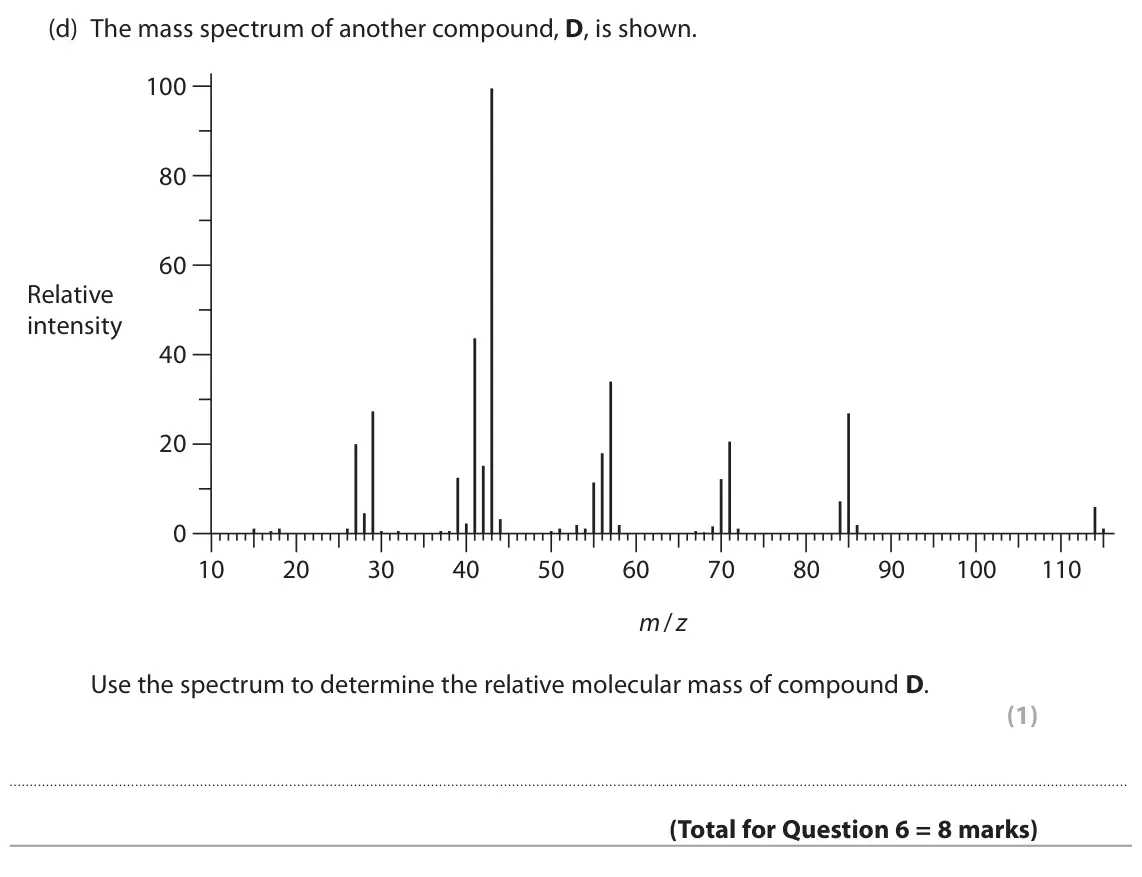
Q5(c)
The whole paper ↗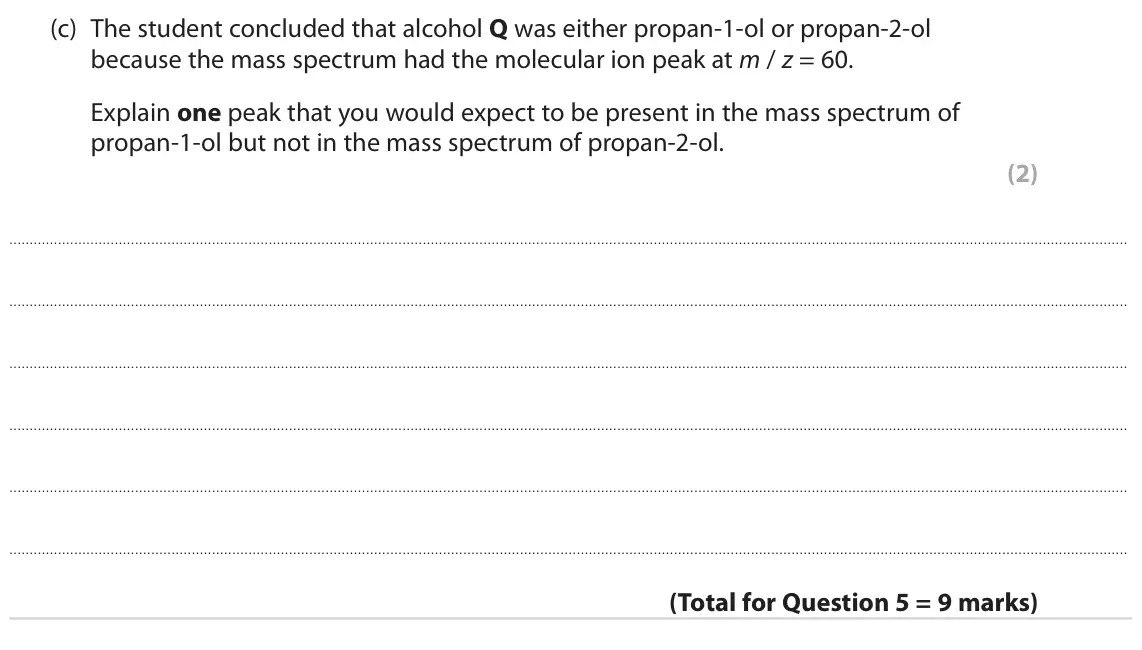
Q4(c)(i)
The whole paper ↗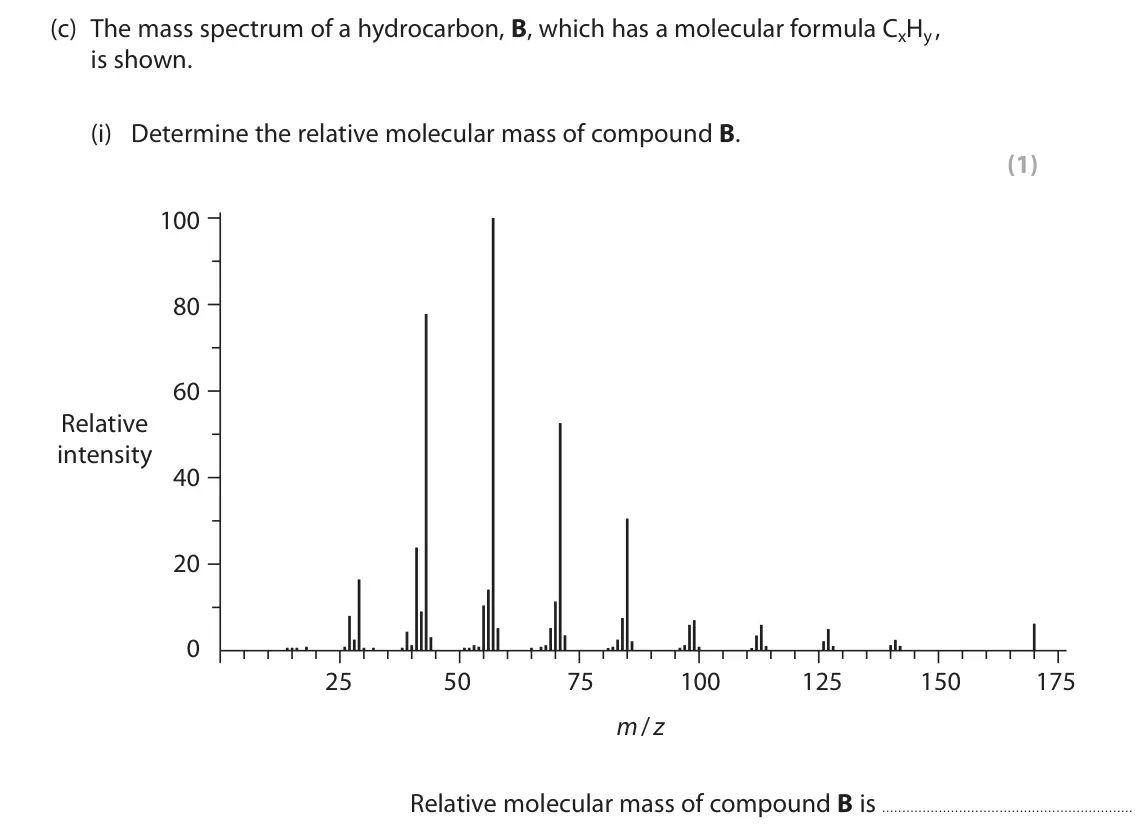
Q4(c)(ii)
The whole paper ↗
Q5(b)(iv)
The whole paper ↗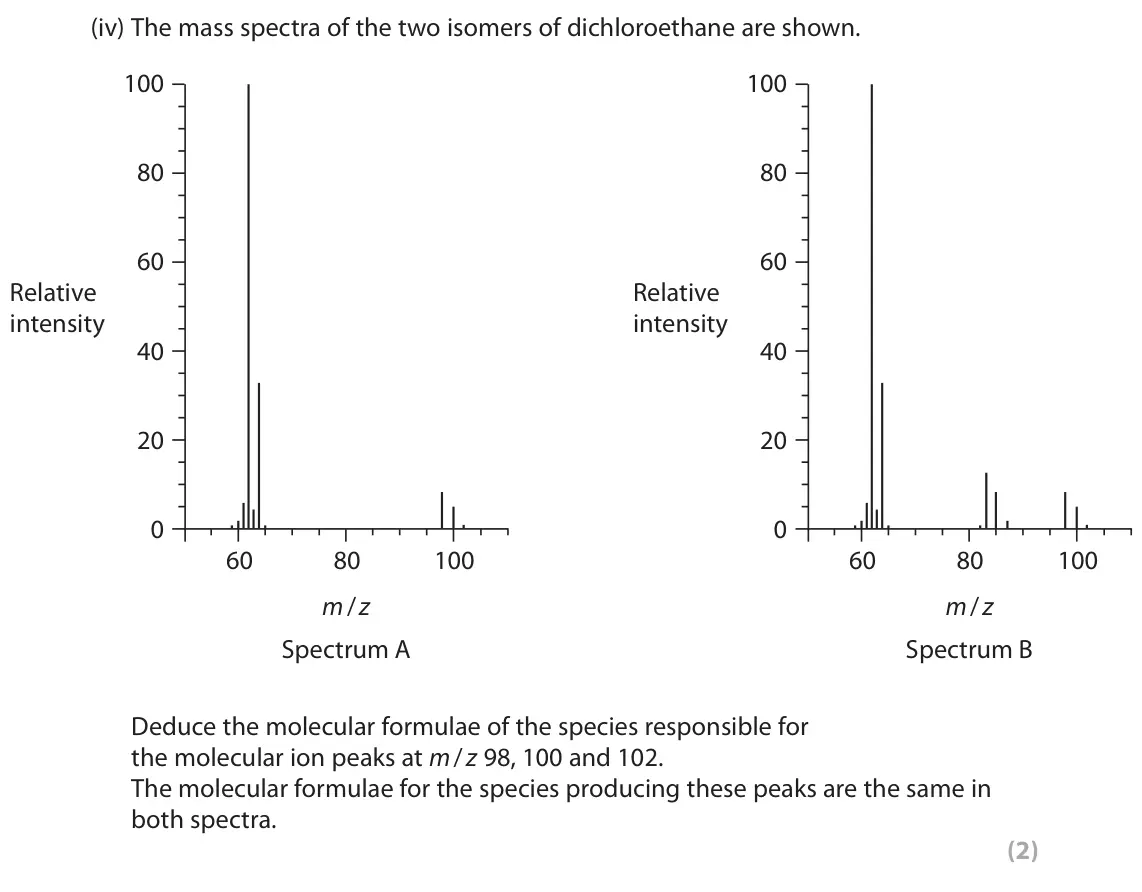
Q5(b)(v)
The whole paper ↗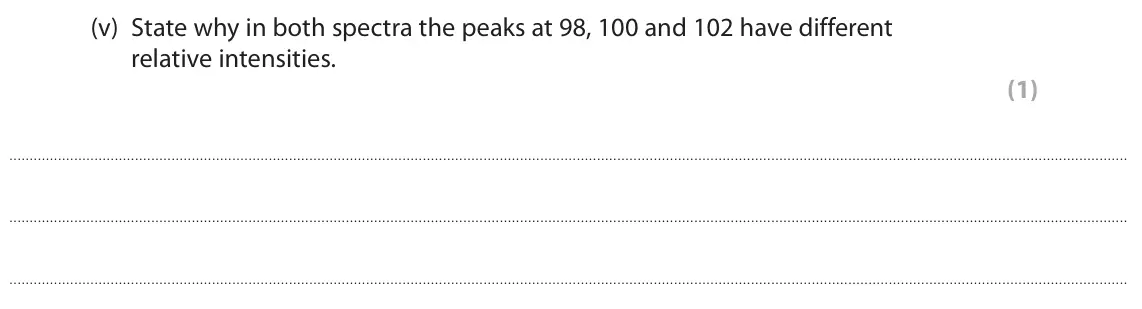
Q5(b)(vi)
The whole paper ↗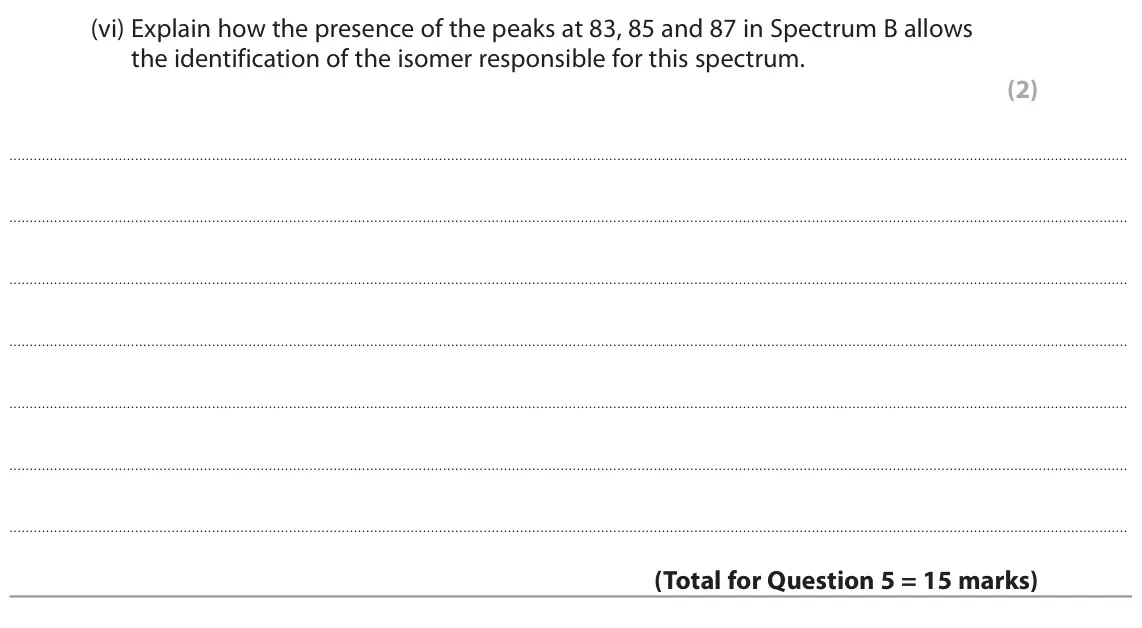
Q8(b)(iii)
The whole paper ↗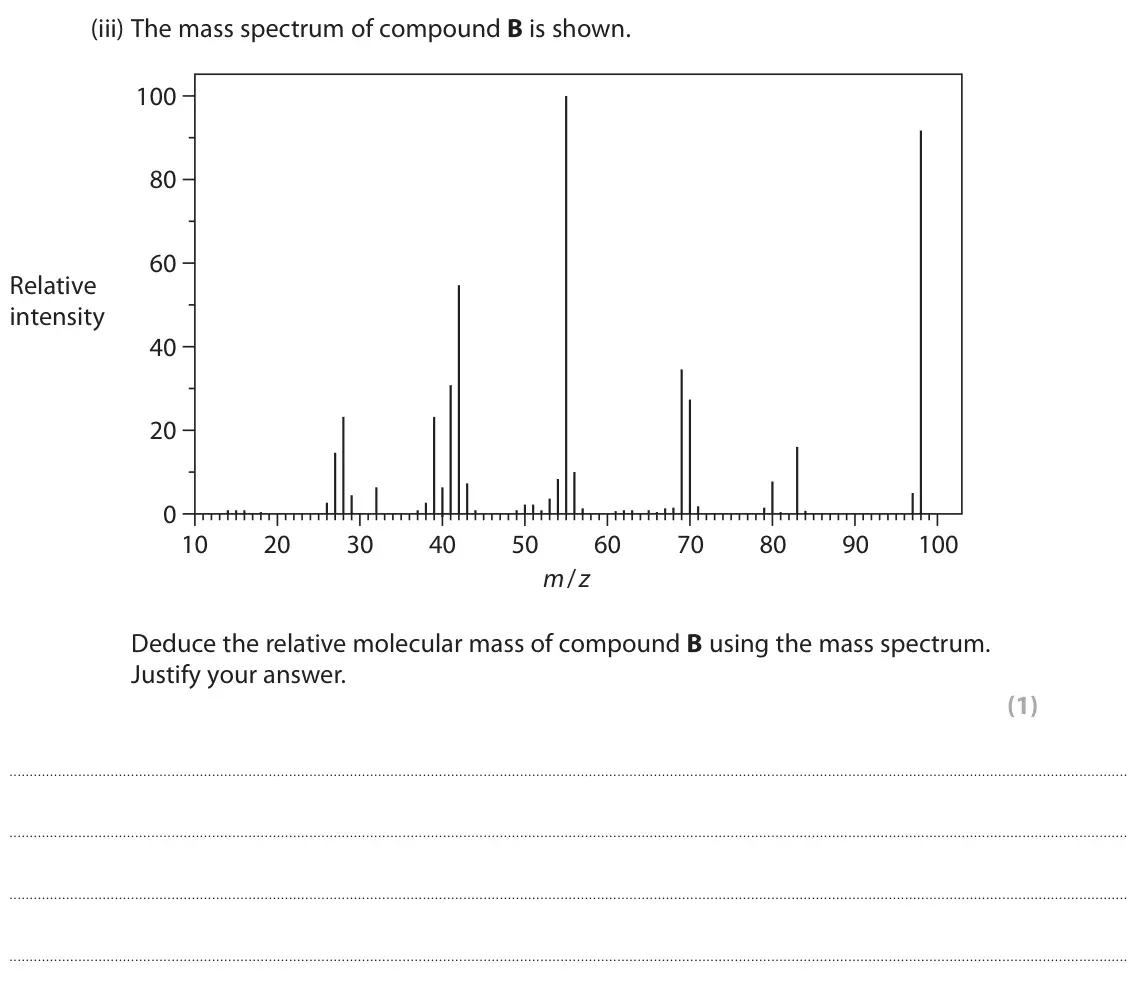
Q8(b)(iv)
The whole paper ↗
Q6(c)(iii)
The whole paper ↗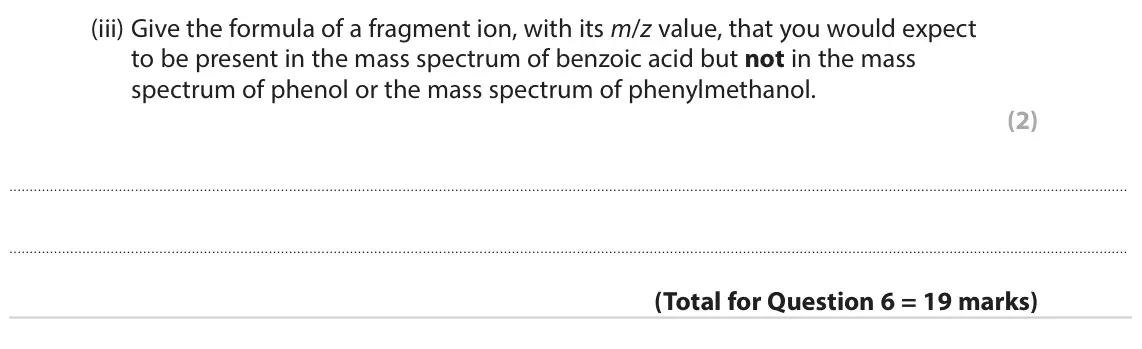
Q1(b)(ii)
The whole paper ↗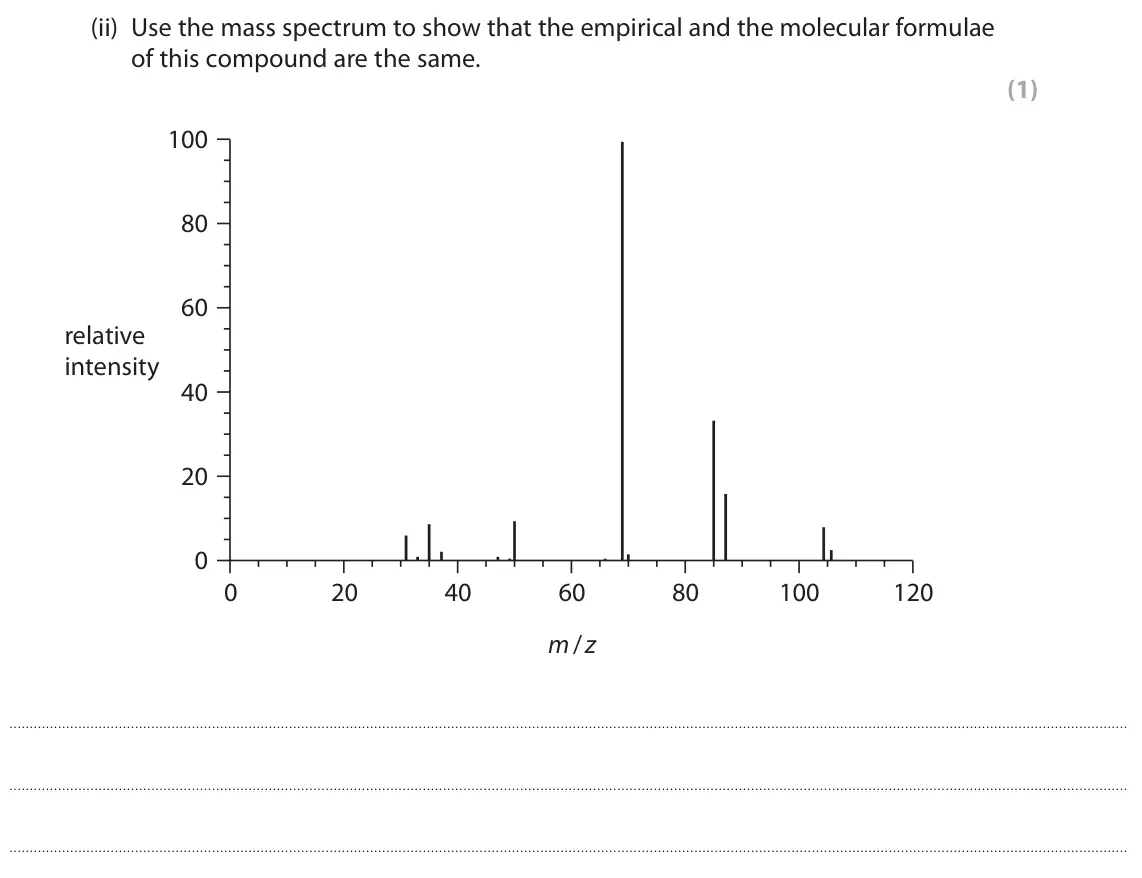
Q1(b)(iii)
The whole paper ↗
Q10(b)
The whole paper ↗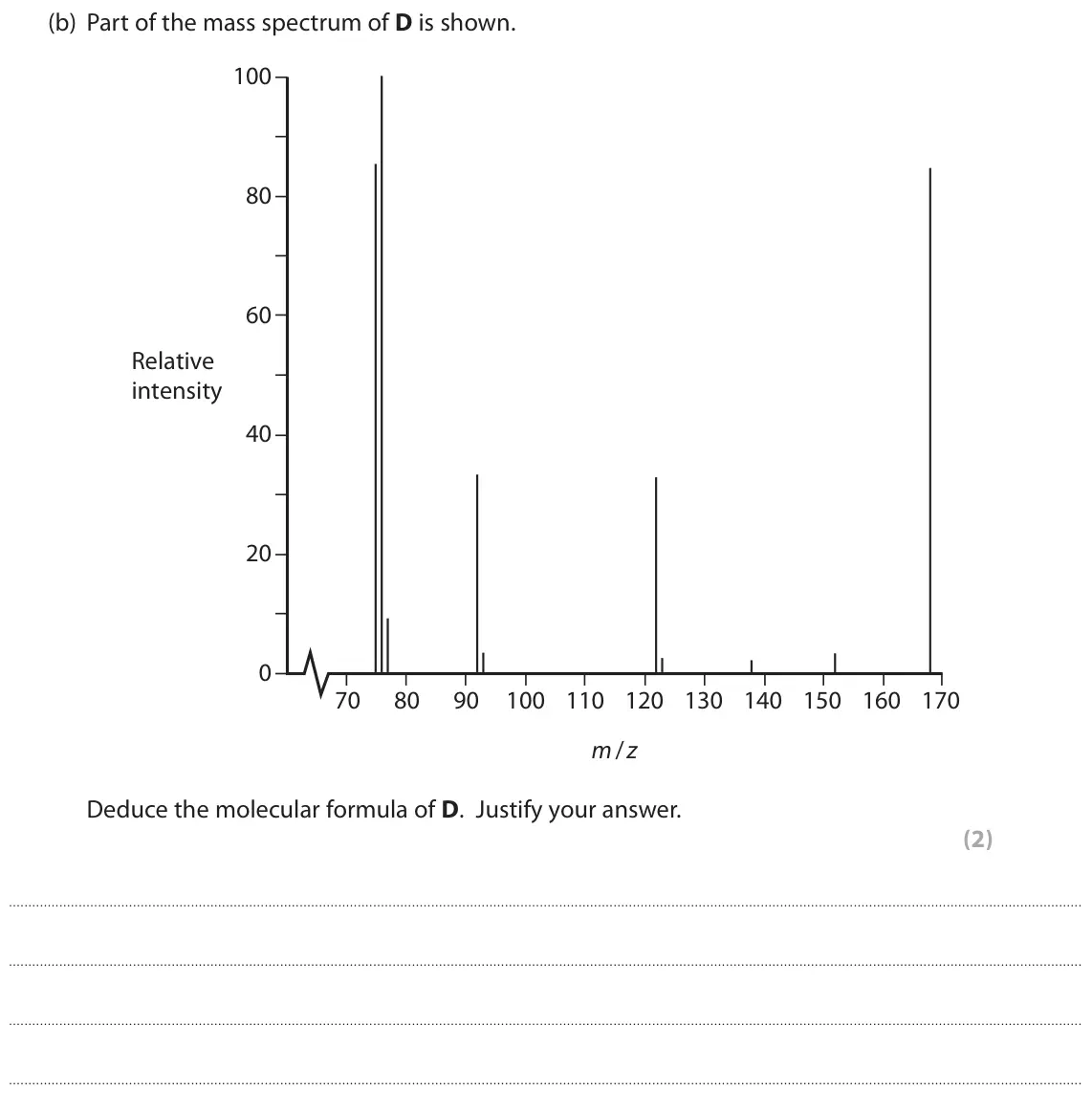
Q10(c)(i)
The whole paper ↗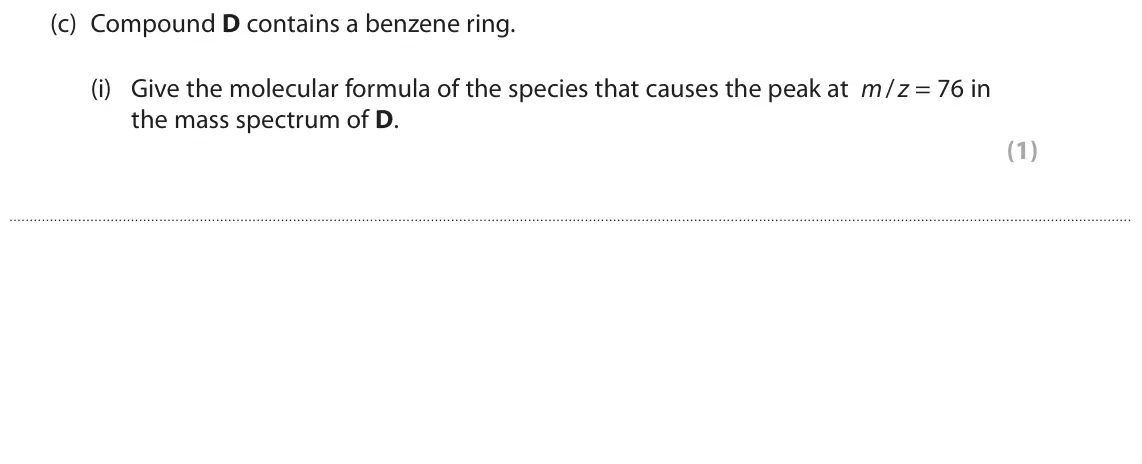
Q8(b)(i)
The whole paper ↗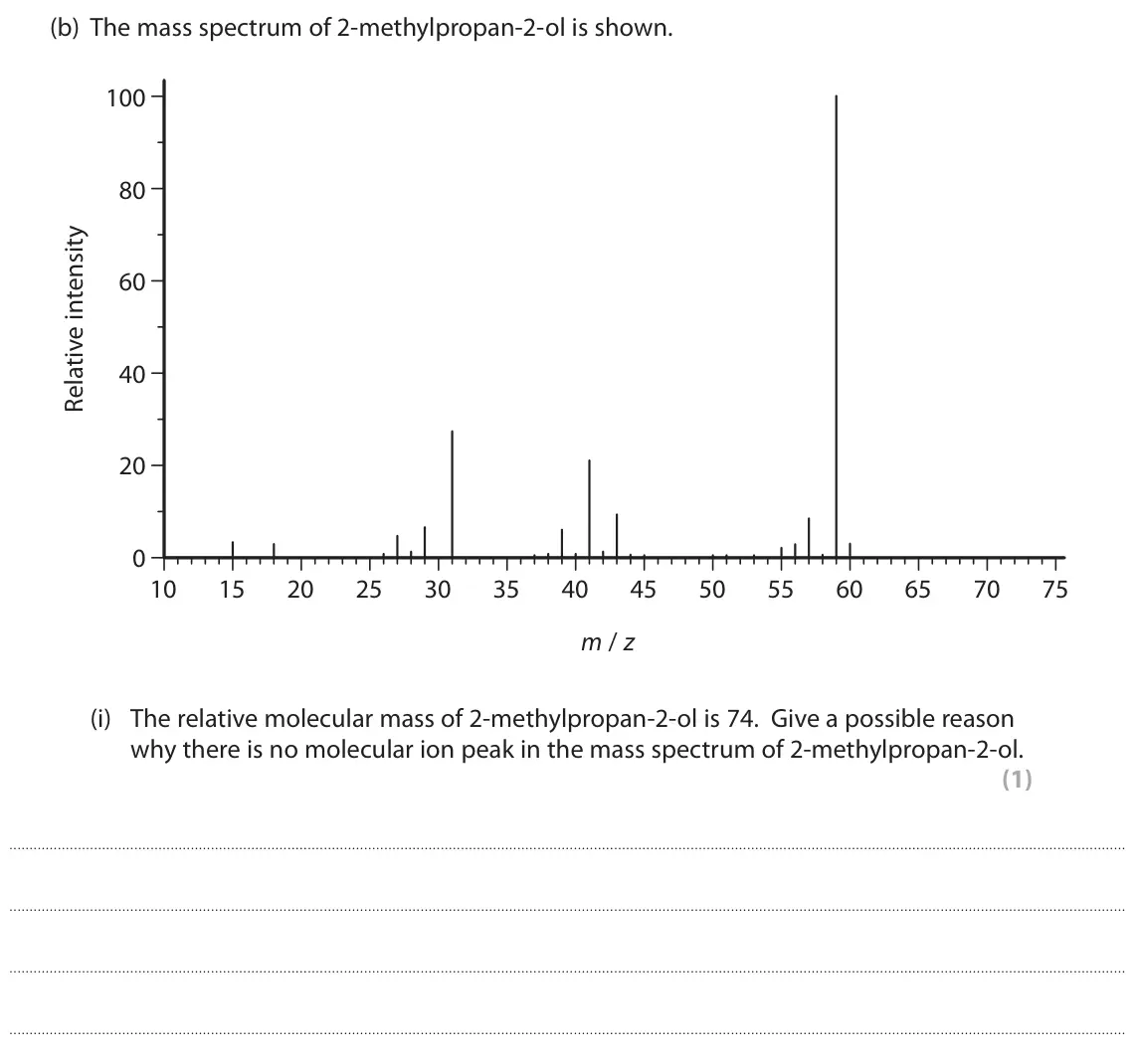
All 27 questions on Mass spectrometry, as a list
- June 2025, Paper 2, Q1(a) (1 mark): Which molecule would not give a molecular ion peak with m/z = 74? (1) A C2H5COOH B CHOCOOH C CH2(OH)COOH D CH3COOCH3
- June 2025, Paper 2, Q1(b) (1 mark): The fragmentation pattern in a mass spectrum can be used to distinguish between structural isomers. Which m/z peak would be present in the mass spectrum of prop
- June 2025, AS Paper 2, Q5(a)(i) (1 mark): Identify the relative molecular mass of this carboxylic acid, using information from the spectrum. (1)
- June 2025, AS Paper 2, Q5(a)(ii) (2 marks): Write the formula of a possible fragment ion with a peak at m / z = 15. (2)
- June 2025, AS Paper 2, Q5(a)(iii) (1 mark): Identify, by name or formula, this carboxylic acid. (1)
- June 2024, AS Paper 1, Q6(d) (1 mark): The mass spectrum of another compound, D, is shown. 100 80 60 Relative intensity 40 20 0 10 20 30 40 50 60 70 80 90 100 110 m / z Use the spectrum to determine
- June 2023, AS Paper 2, Q5(c) (2 marks): The student concluded that alcohol Q was either propan‑1‑ol or propan‑2‑ol because the mass spectrum had the molecular ion peak at m / z = 60. Explain one peak
- June 2022, AS Paper 1, Q4(c)(i) (1 mark): Determine the relative molecular mass of compound B. (1) 100 80 60 Relative intensity 40 20 0 25 50 75 100 125 150 175 m / z Relative molecular mass of compound
- June 2022, AS Paper 1, Q4(c)(ii) (1 mark): Deduce the molecular formula of hydrocarbon B. (1)
- June 2022, AS Paper 2, Q5(b)(iv) (2 marks): The mass spectra of the two isomers of dichloroethane are shown. 100 100 80 80 60 60 Relative Relative intensity intensity 40 40 20 20 0 0 60 80 100 60 80 100 m
- June 2022, AS Paper 2, Q5(b)(v) (1 mark): State why in both spectra the peaks at 98, 100 and 102 have different relative intensities. (1)
- June 2022, AS Paper 2, Q5(b)(vi) (2 marks): Explain how the presence of the peaks at 83, 85 and 87 in Spectrum B allows the identification of the isomer responsible for this spectrum. (2)
- November 2021, AS Paper 2, Q8(b)(iii) (1 mark): The mass spectrum of compound B is shown. 100 80 60 Relative intensity 40 20 0 10 20 30 40 50 60 70 80 90 100 m/z Deduce the relative molecular mass of compound
- November 2021, AS Paper 2, Q8(b)(iv) (2 marks): In the mass spectrum of cyclohexanol, there is a peak at m/z = 83. Give the formula of a fragment that could be responsible for this peak. (2)
- October 2020, Paper 3, Q6(c)(iii) (2 marks): Give the formula of a fragment ion, with its m/z value, that you would expect to be present in the mass spectrum of benzoic acid but not in the mass spectrum of
- October 2020, AS Paper 2, Q1(b)(ii) (1 mark): Use the mass spectrum to show that the empirical and the molecular formulae of this compound are the same. (1) 100 80 60 relative intensity 40 20 0 0 20 40 60 8
- October 2020, AS Paper 2, Q1(b)(iii) (1 mark): Suggest the species responsible for the peak at m / z = 69 . (1)
- June 2019, Paper 3, Q10(b) (2 marks): Part of the mass spectrum of D is shown. 100 80 60 Relative intensity 40 20 0 70 80 90 100 110 120 130 140 150 160 170 m / z Deduce the molecular formula of D.
- June 2019, Paper 3, Q10(c)(i) (1 mark): Give the molecular formula of the species that causes the peak at m / z = 76 in the mass spectrum of D. (1)
- June 2018, AS Paper 2, Q8(b)(i) (1 mark): The relative molecular mass of 2-methylpropan-2-ol is 74. Give a possible reason why there is no molecular ion peak in the mass spectrum of 2-methylpropan-2-ol.
- June 2018, AS Paper 2, Q8(b)(ii) (1 mark): Write the formula for a species that could be responsible for the peak at m / z = 59. (1)
- June 2017, Paper 3, Q2(e)(i) (1 mark): State how you would find the molar mass of 3-methylbutan-2-one from the mass spectrum. (1)
- June 2017, Paper 3, Q2(e)(ii) (2 marks): The mass spectrum shows a peak at m/z = 43. Draw the displayed formulae of two fragment ions that might be responsible for this peak. (2)
- June 2017, AS Paper 2, Q4(b)(i) (1 mark): Show that this mass spectrum can be used to confirm the molar mass of geraniol. (1)
- June 2017, AS Paper 2, Q4(b)(ii) (1 mark): Identify an ion that could be responsible for the peak at m / z = 69. (1)
- June 2016, AS Paper 2, Q7(b)(iii) (1 mark): The mass spectrum of alcohol X has a major peak at m/z = 45. Draw the structure of the species that could give this peak. (1)
- June 2016, AS Paper 2, Q7(b)(iv) (2 marks): Alcohol X has a branched chain. Identify alcohol X, explaining your reasoning. (2)
Questions, mark schemes and examiner’s reports are © Pearson Edexcel, from their published past papers. Plumi isn’t affiliated with any exam board. Want whole papers? Every Edexcel A-Level Chemistry paper.
Rather write your answers by hand on iPad? Plumi marks them against the same mark schemes.