 plumi
Carbonyl compounds: Edexcel A‑Level Chemistry questions
Every Edexcel A-Level Chemistry exam question on 17B Carbonyl compounds, 2016–2025, with its mark scheme and examiner’s report.
Find questions2,028
Calculations
Q6(a)
The whole paper ↗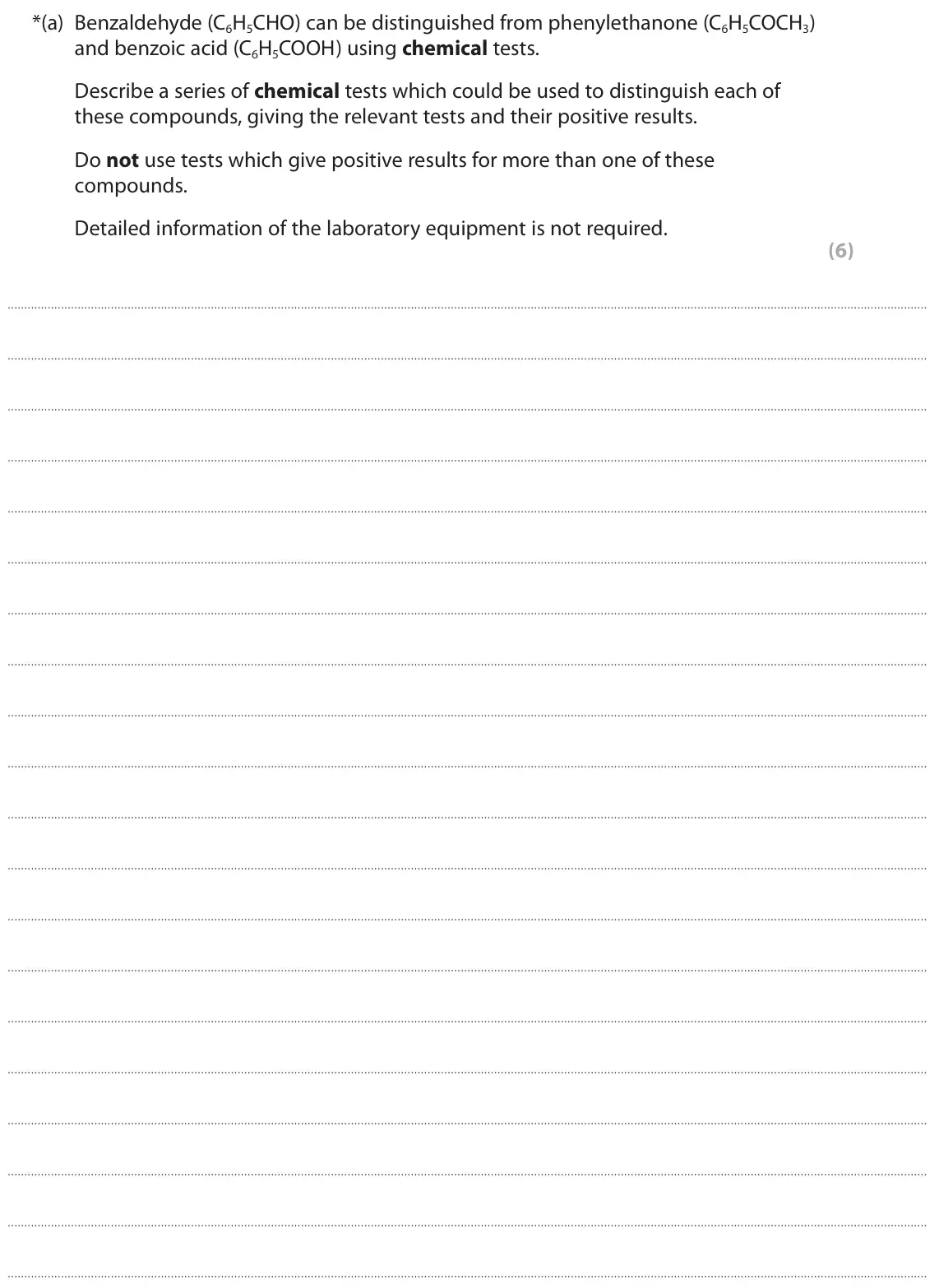
Q6(b)(i)
The whole paper ↗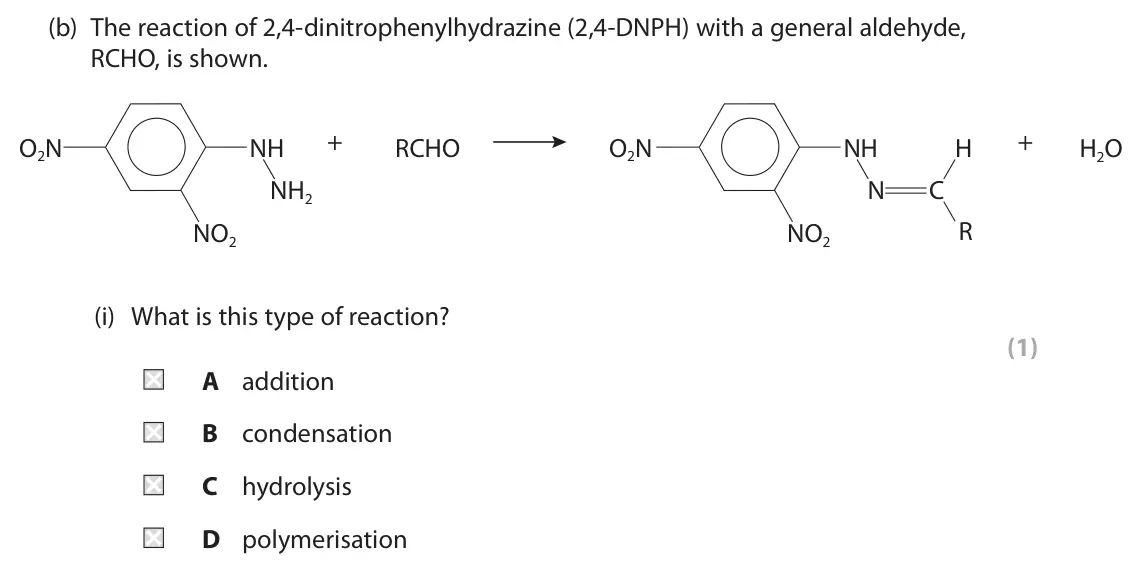
Q6(b)(ii)
The whole paper ↗
Q7(d)(i)
The whole paper ↗
Q7(d)(ii)
The whole paper ↗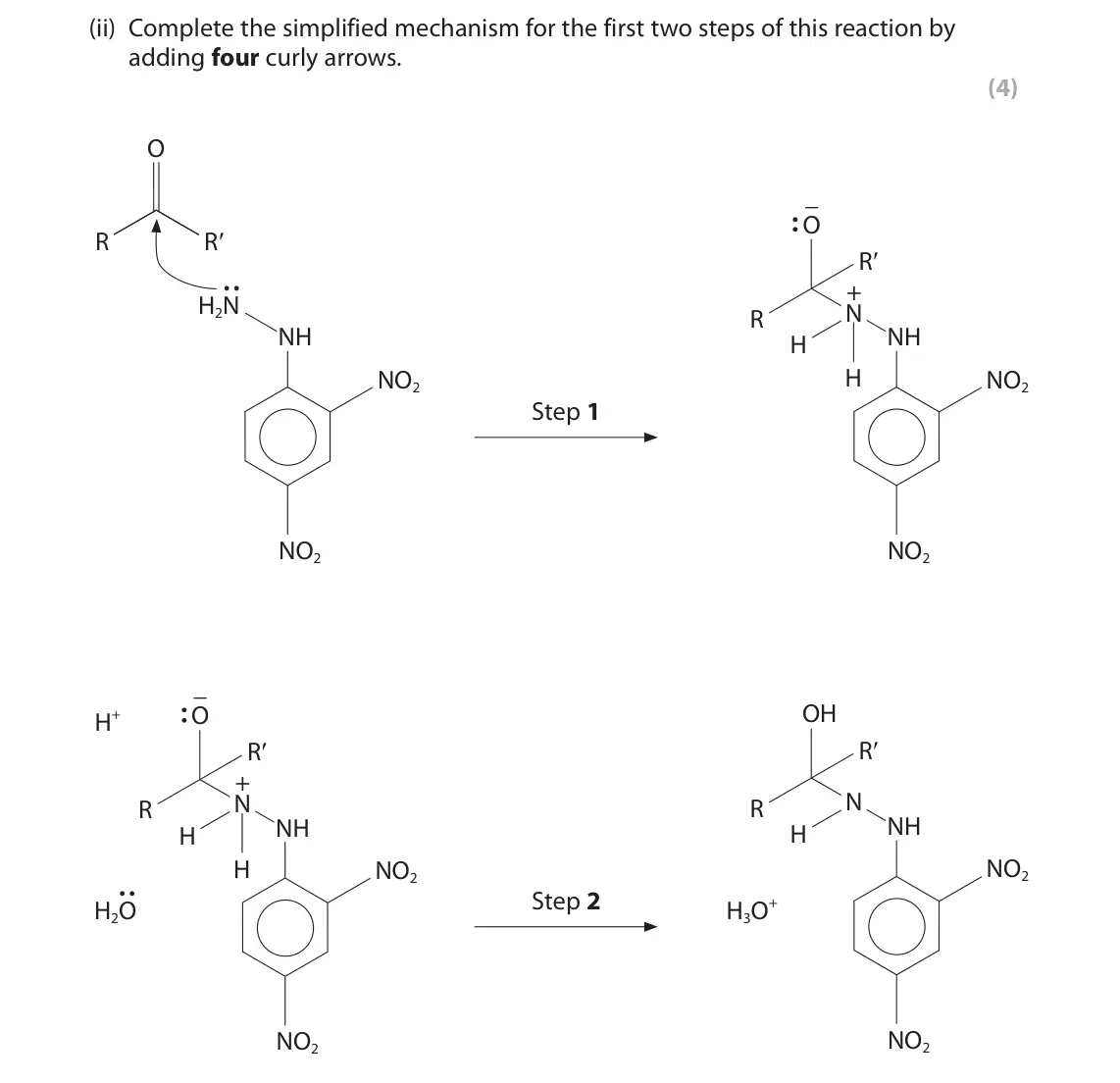
Q7(b)(i)
The whole paper ↗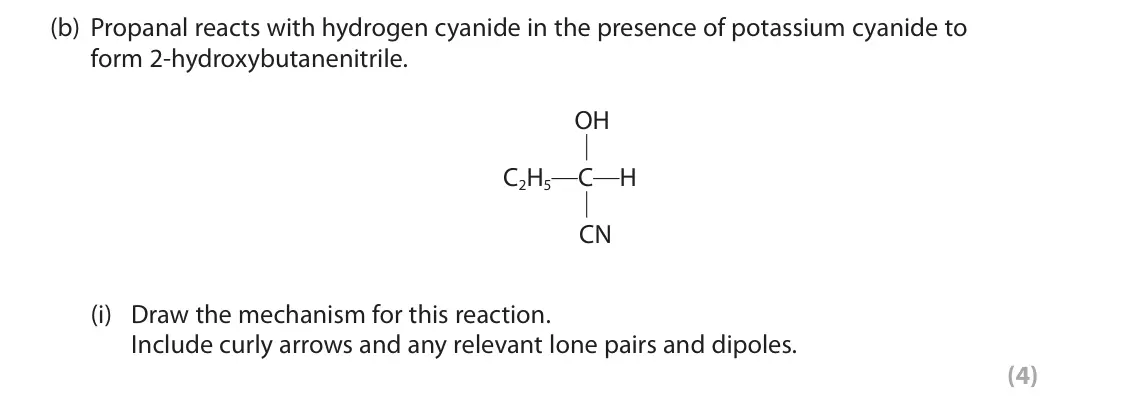
Q7(c)(ii)
The whole paper ↗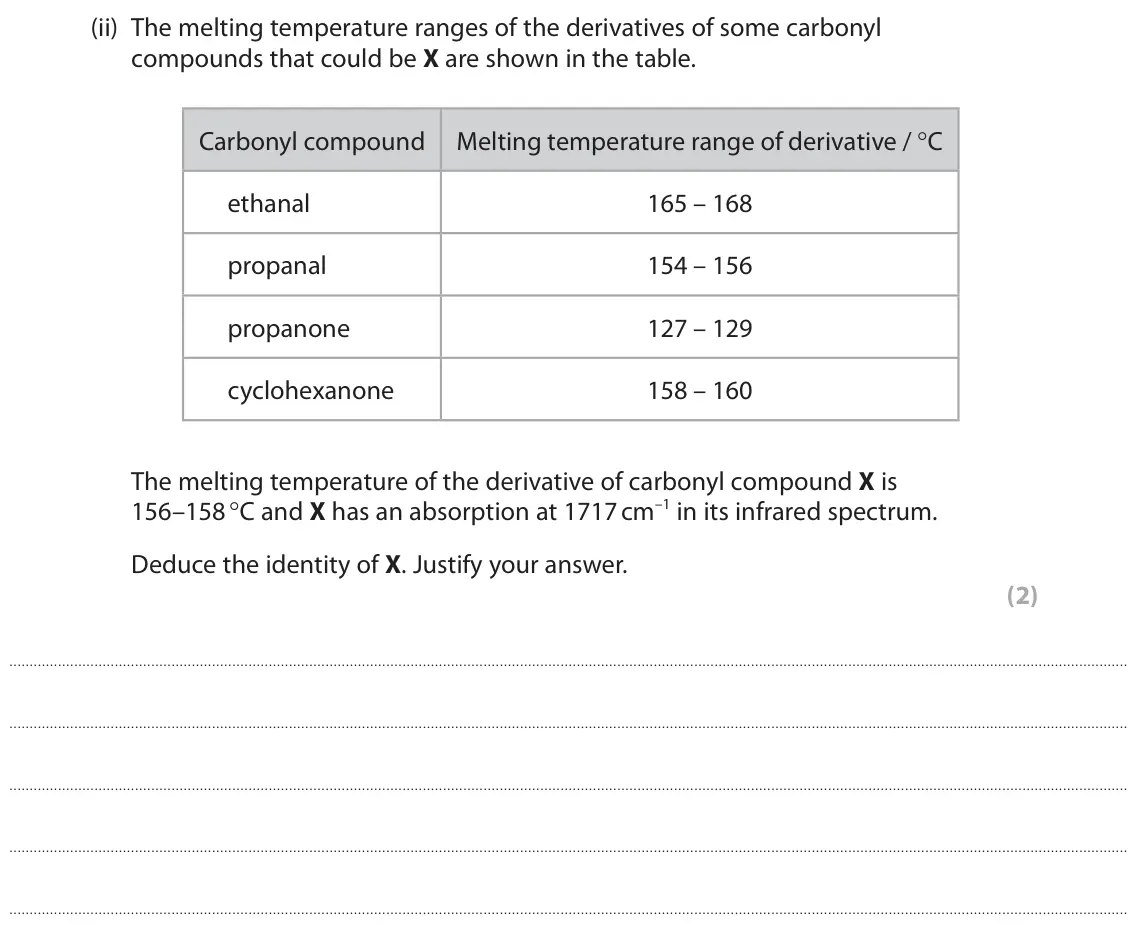
Q9(c)(ii)
The whole paper ↗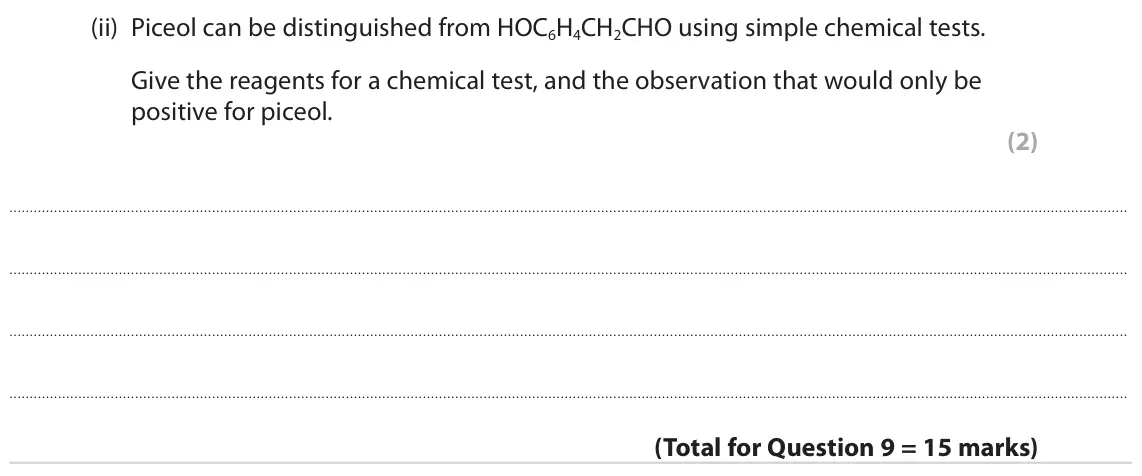
Q6(a)
The whole paper ↗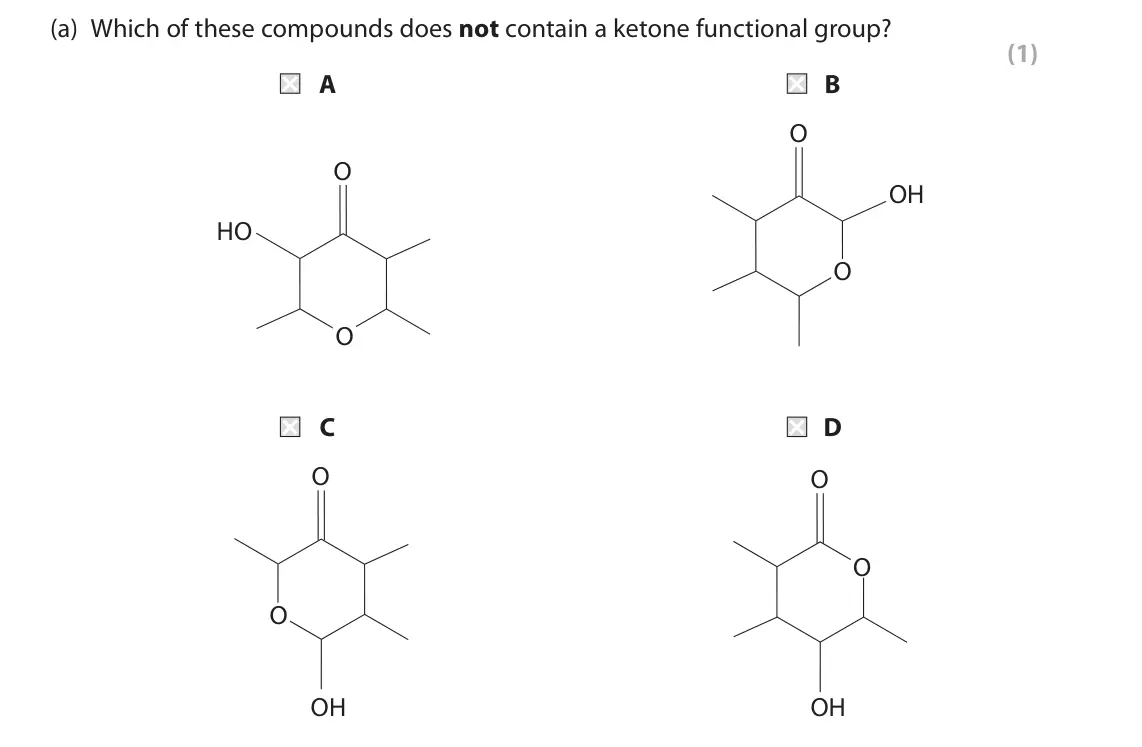
Q6(b)
The whole paper ↗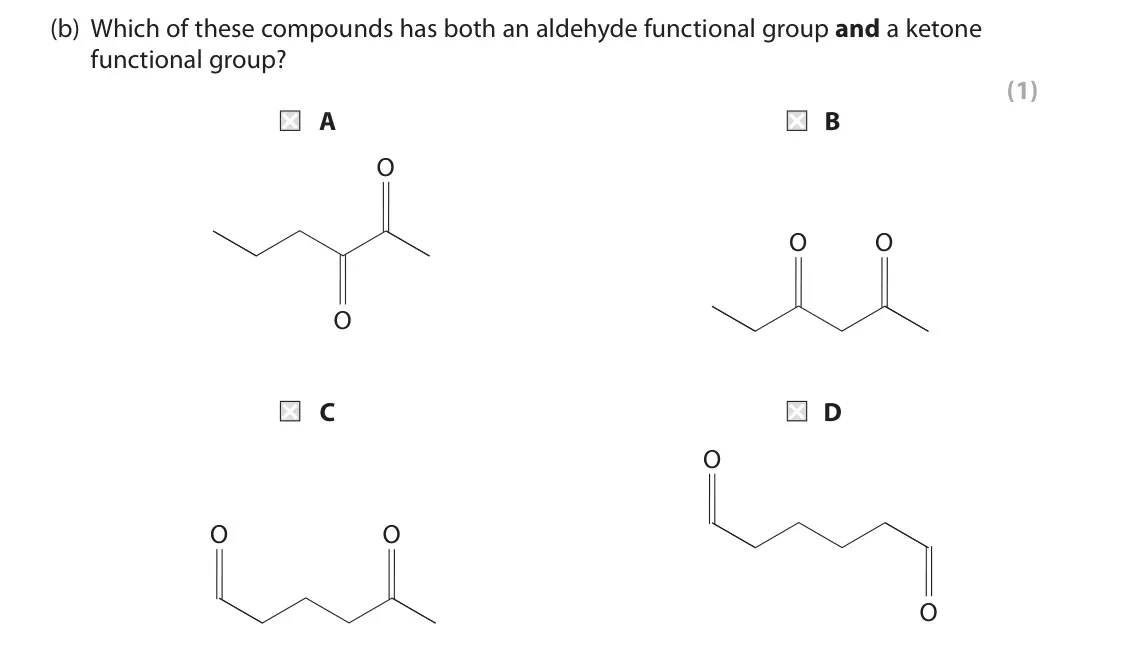
Q7(a)(i)
The whole paper ↗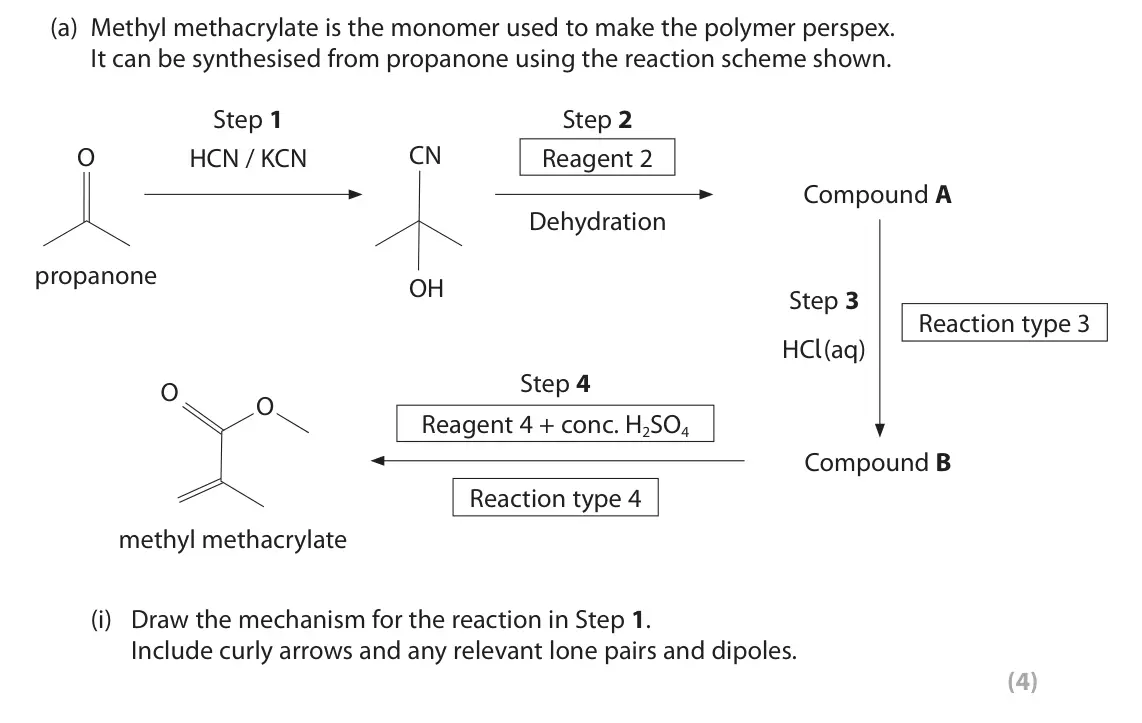
Q7(c)(iii)
The whole paper ↗
Q8(a)
The whole paper ↗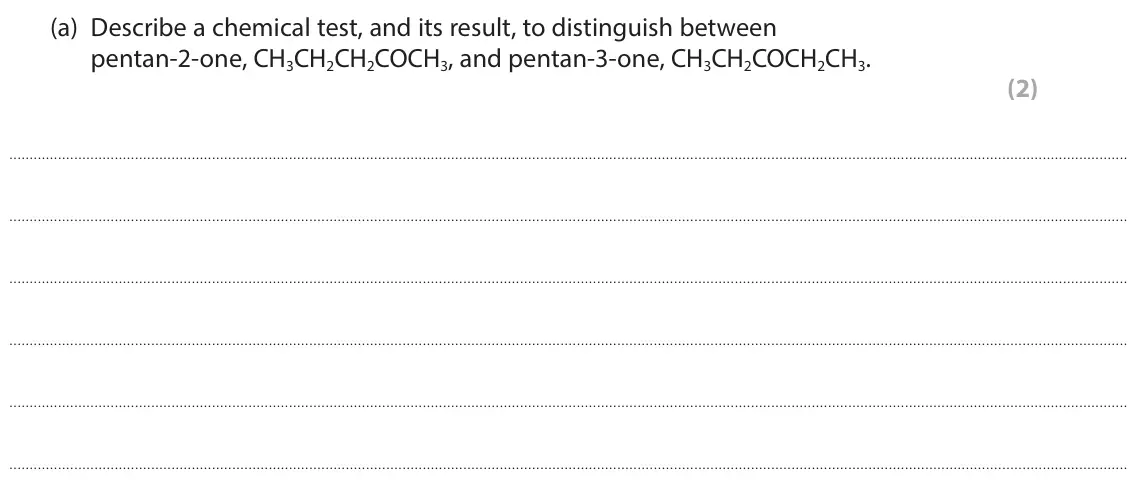
Q8(b)(i)
The whole paper ↗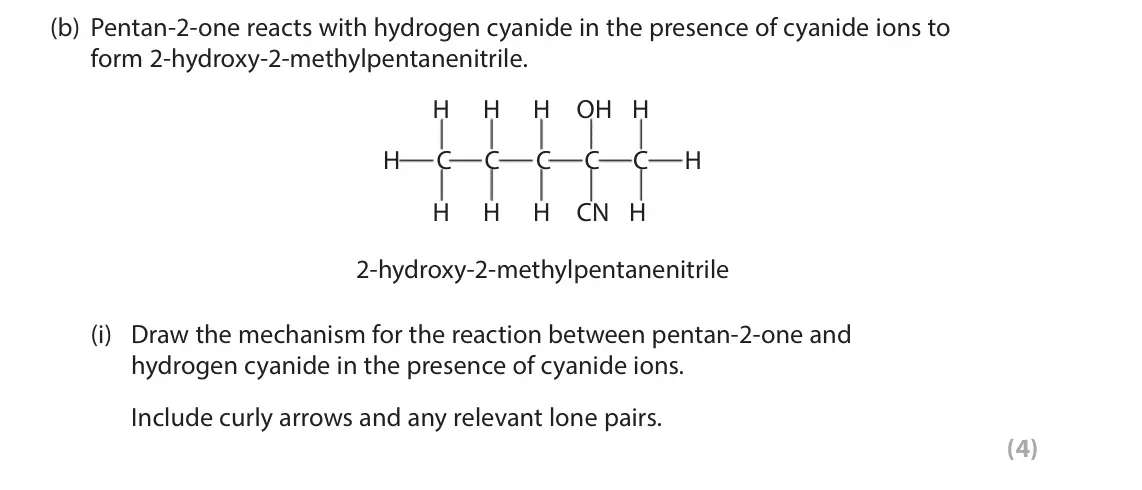
Q8(d)
The whole paper ↗
Q1(a)(ii)
The whole paper ↗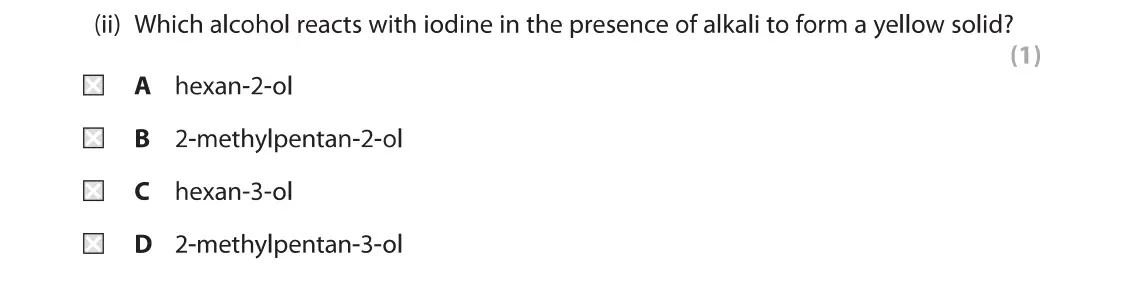
Q5(e)(ii)
The whole paper ↗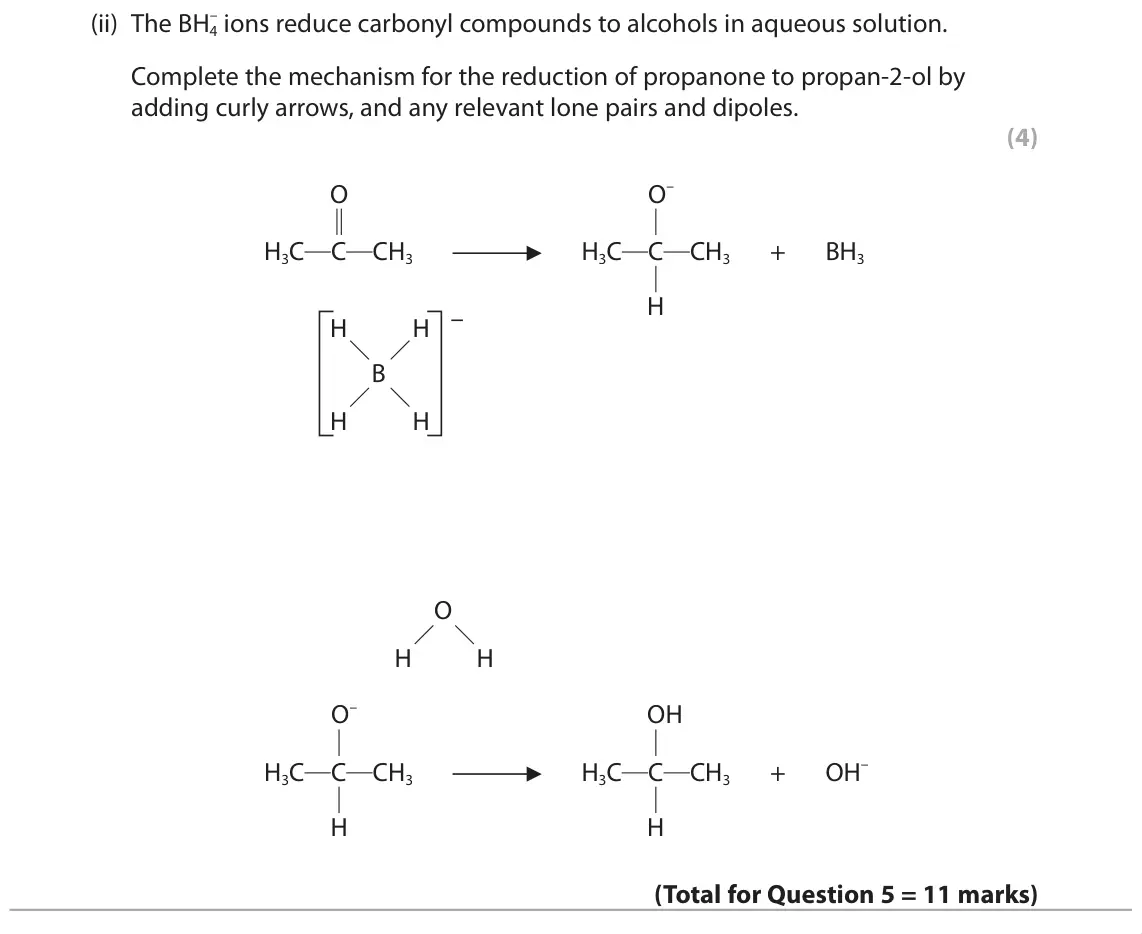
Q8(b)(i)
The whole paper ↗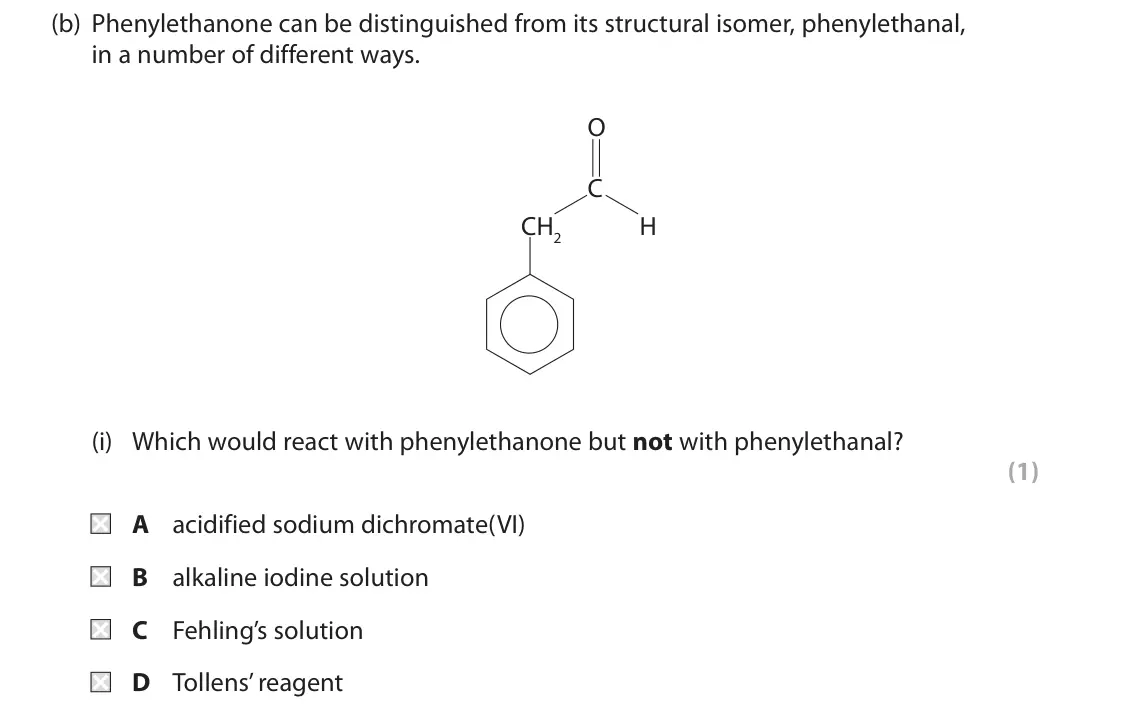
Q8(b)(ii)
The whole paper ↗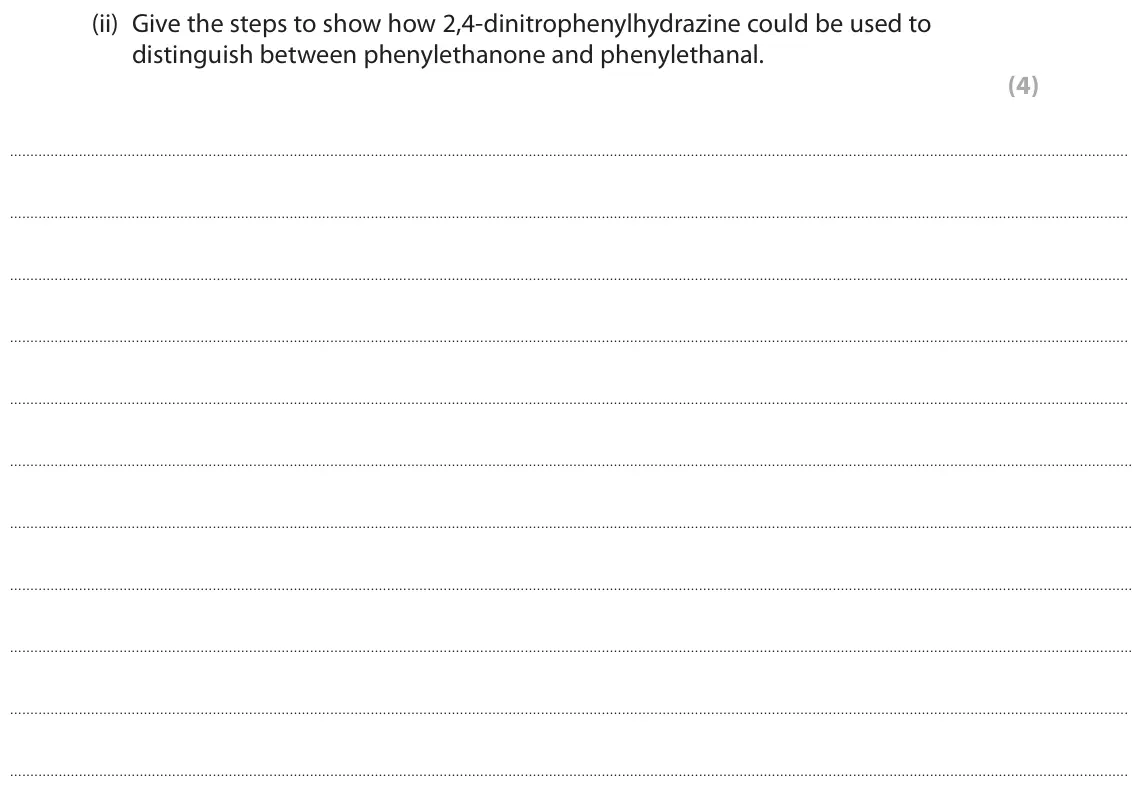
Q8(c)
The whole paper ↗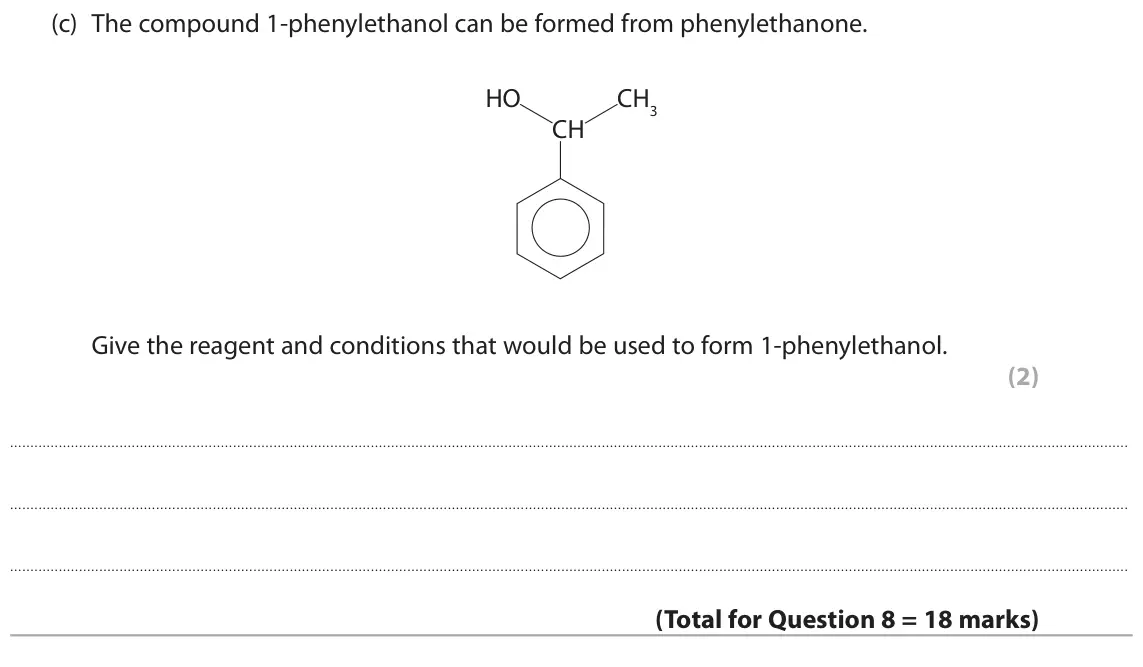
All 20 questions on Carbonyl compounds, as a list
- June 2025, Paper 2, Q6(a) (6 marks): Benzaldehyde (C6H5CHO) can be distinguished from phenylethanone (C6H5COCH3) and benzoic acid (C6H5COOH) using chemical tests. Describe a series of chemical test
- June 2025, Paper 2, Q6(b)(i) (1 mark): What is this type of reaction? (1) A addition B condensation C hydrolysis D polymerisation
- June 2025, Paper 2, Q6(b)(ii) (1 mark): Draw the structure of the organic product of the reaction of 2,4‑DNPH with benzaldehyde. (1)
- June 2024, Paper 3, Q7(d)(i) (1 mark): Give the colour of the precipitate formed in this reaction. (1)
- June 2024, Paper 3, Q7(d)(ii) (4 marks): Complete the simplified mechanism for the first two steps of this reaction by adding four curly arrows. (4) O _ O R′ R R′ . . + H2N N R NH NH H H NO2 NO2 Step 1
- June 2023, Paper 2, Q7(b)(i) (4 marks): Draw the mechanism for this reaction. Include curly arrows and any relevant lone pairs and dipoles. (4)
- June 2023, Paper 2, Q7(c)(ii) (2 marks): The melting temperature ranges of the derivatives of some carbonyl compounds that could be X are shown in the table. Melting temperature range of derivative / °
- June 2023, Paper 3, Q9(c)(ii) (2 marks): Piceol can be distinguished from HOC6H4CH2CHO using simple chemical tests. Give the reagents for a chemical test, and the observation that would only be positiv
- June 2022, Paper 2, Q6(a) (1 mark): Which of these compounds does not contain a ketone functional group? (1) A B O O OH HO O O C D O O O O OH OH
- June 2022, Paper 2, Q6(b) (1 mark): Which of these compounds has both an aldehyde functional group and a ketone functional group? (1) A B O O O O C D O O O O
- June 2022, Paper 3, Q7(a)(i) (4 marks): Draw the mechanism for the reaction in Step 1. Include curly arrows and any relevant lone pairs and dipoles. (4)
- June 2022, Paper 3, Q7(c)(iii) (2 marks): State how the purified crystals can be used to identify the carbonyl compound that reacts with 2,4‑dinitrophenylhydrazine. Detailed descriptions of practical pr
- November 2021, Paper 3, Q8(a) (2 marks): Describe a chemical test, and its result, to distinguish between pentan-2-one, CH3CH2CH2COCH3, and pentan-3-one, CH3CH2COCH2CH3. (2)
- November 2021, Paper 3, Q8(b)(i) (4 marks): Draw the mechanism for the reaction between pentan-2-one and hydrogen cyanide in the presence of cyanide ions. Include curly arrows and any relevant lone pairs.
- November 2021, Paper 3, Q8(d) (6 marks): Describe the oxidation and reduction reactions of pentanal and pentan-3-one. Include the reagents and the structures of the organic products formed in any react
- June 2019, Paper 2, Q1(a)(ii) (1 mark): Which alcohol reacts with iodine in the presence of alkali to form a yellow solid? (1) A hexan-2-ol B 2-methylpentan-2-ol C hexan-3-ol D 2-methylpentan-3-ol
- June 2019, Paper 3, Q5(e)(ii) (4 marks): The BH4 Complete the mechanism for the reduction of propanone to propan-2-ol by adding curly arrows, and any relevant lone pairs and dipoles. (4) O– O H3C C CH3
- June 2017, Paper 2, Q8(b)(i) (1 mark): Which would react with phenylethanone but not with phenylethanal? (1) A acidified sodium dichromate(VI) B alkaline iodine solution C Fehling’s solution D Tollen
- June 2017, Paper 2, Q8(b)(ii) (4 marks): Give the steps to show how 2,4-dinitrophenylhydrazine could be used to distinguish between phenylethanone and phenylethanal. (4)
- June 2017, Paper 2, Q8(c) (2 marks): The compound 1-phenylethanol can be formed from phenylethanone. HO CH3 CH Give the reagent and conditions that would be used to form 1-phenylethanol. (2)
Questions, mark schemes and examiner’s reports are © Pearson Edexcel, from their published past papers. Plumi isn’t affiliated with any exam board. Want whole papers? Every Edexcel A-Level Chemistry paper.
Rather write your answers by hand on iPad? Plumi marks them against the same mark schemes.