 plumi
Sustainability and conservation: Edexcel A‑Level Biology A questions
Every Edexcel A-Level Biology A exam question on Sustainability and conservation (specification points 4.15–4.16), 2016–2025, with its mark scheme and examiner’s report.
Find questions1,749
Calculations
Q4(b)(i)
The whole paper ↗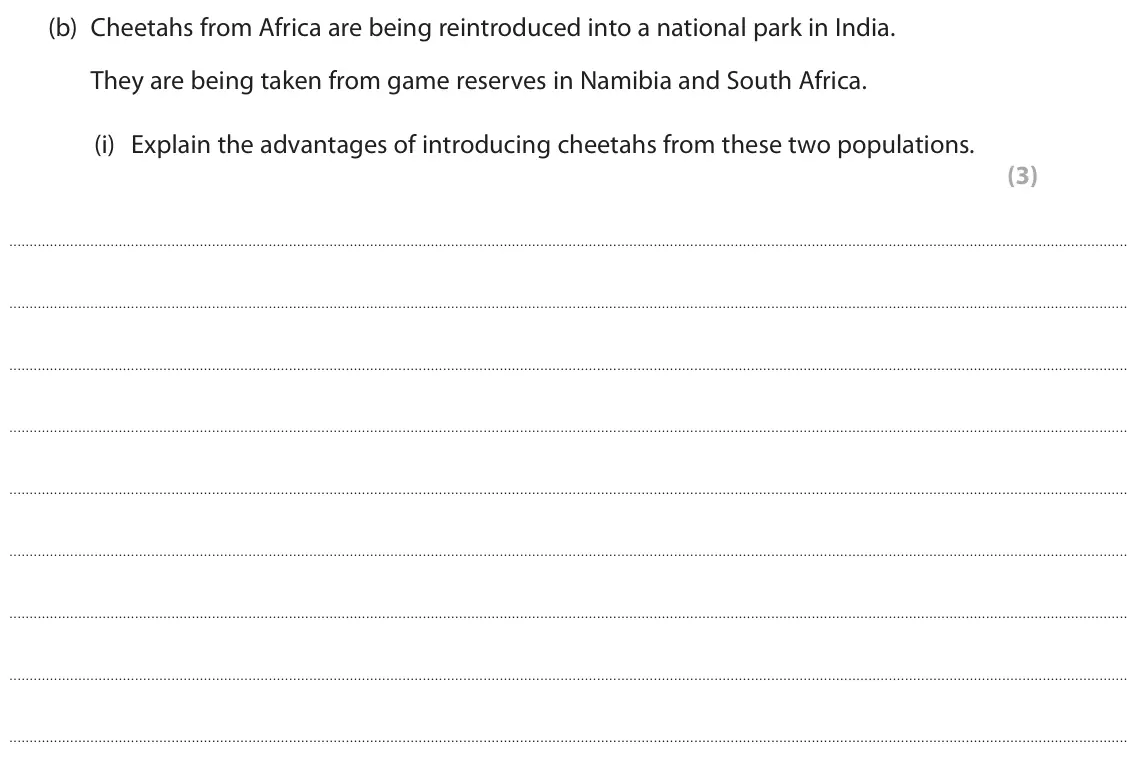
Q4(b)(ii)
The whole paper ↗
Q9(a)(iii)
The whole paper ↗
Q8(a)(i)
The whole paper ↗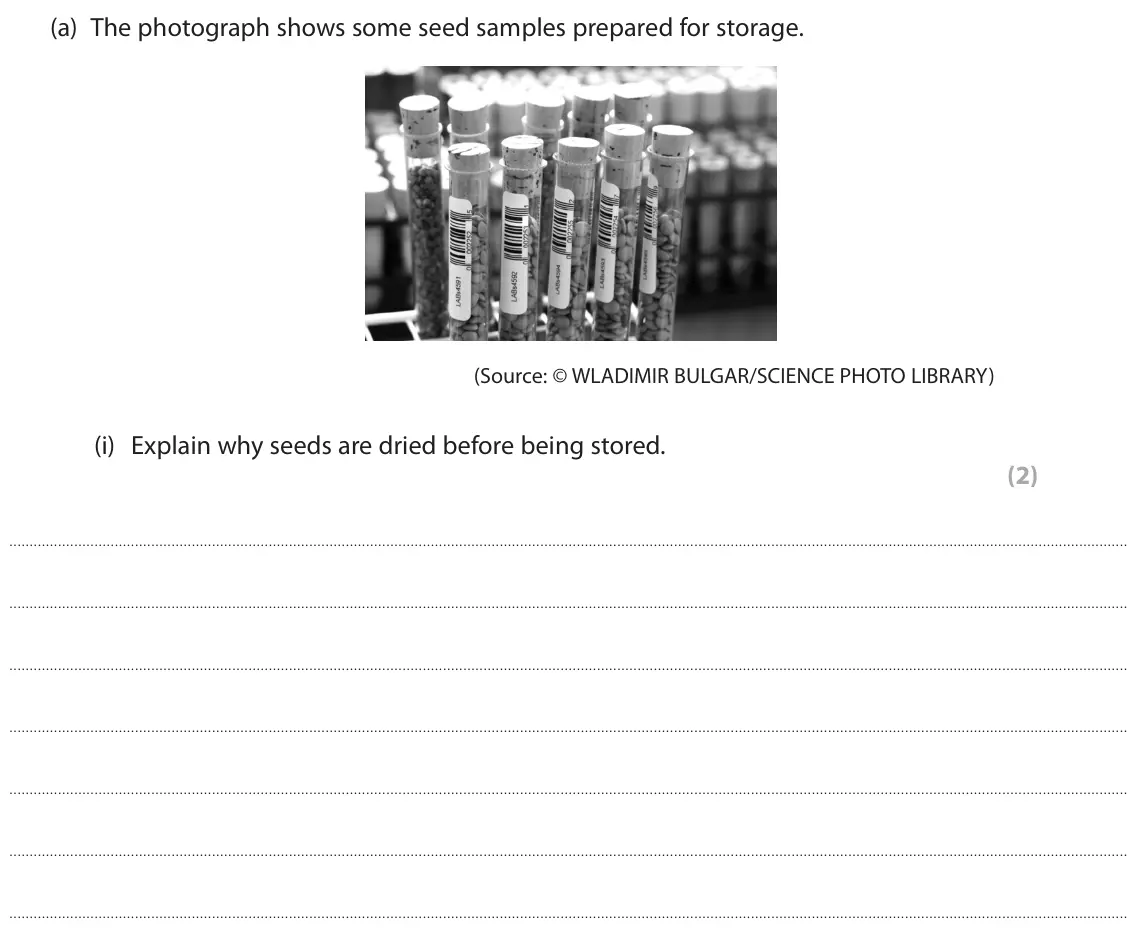
Q6(c)
The whole paper ↗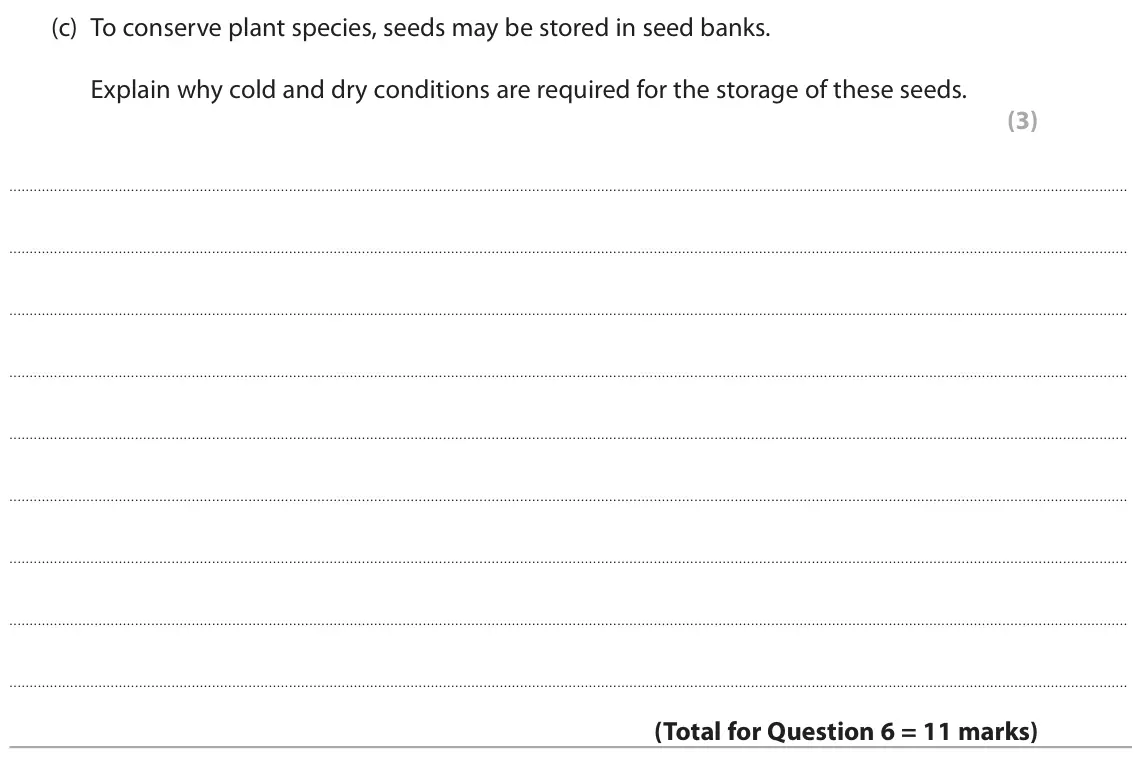
Q5(b)(ii)
The whole paper ↗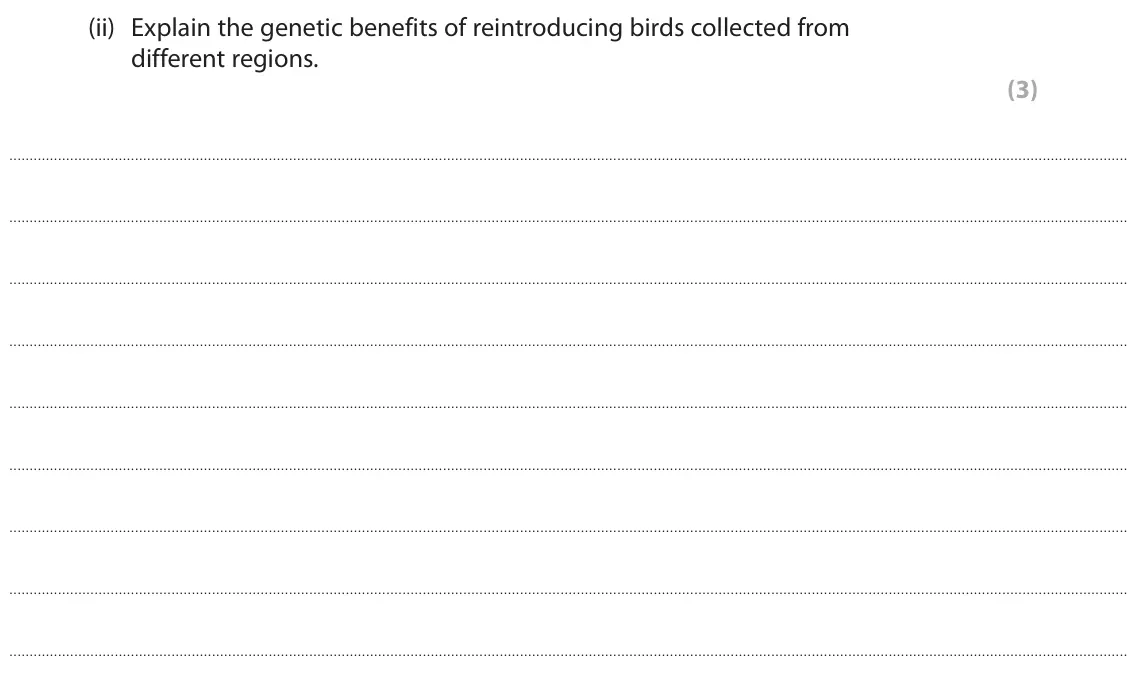
Q5(c)
The whole paper ↗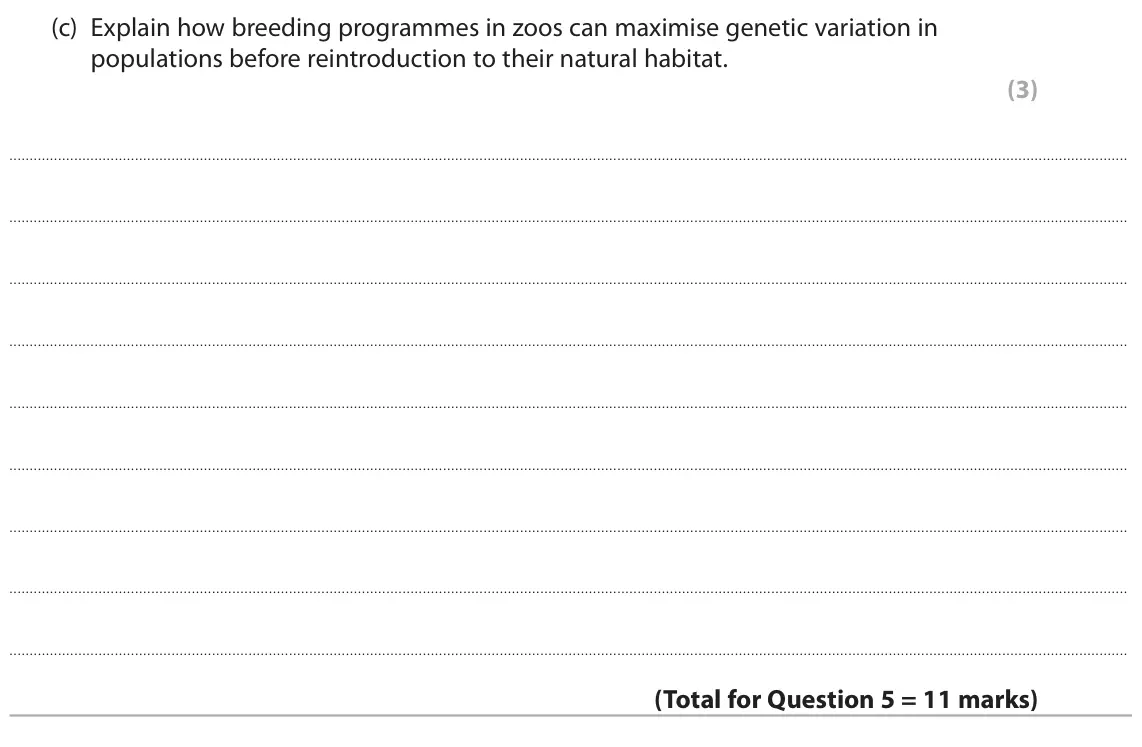
Q5(a)(i)
The whole paper ↗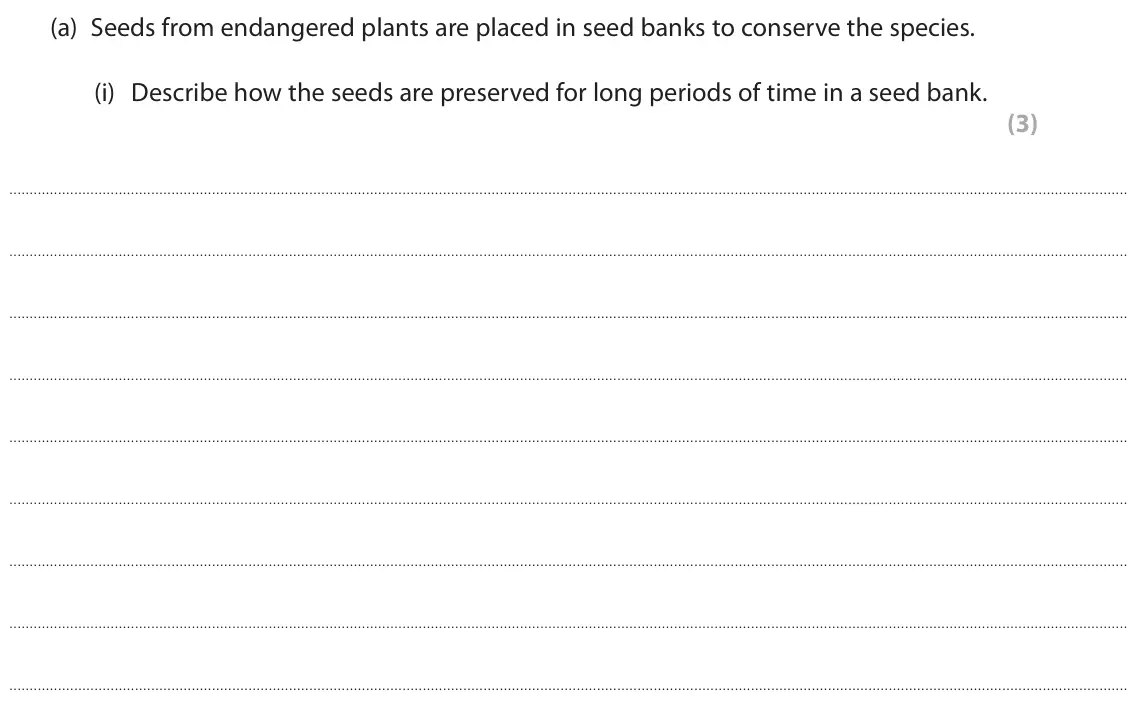
Q5(a)(ii)
The whole paper ↗
Q7(b)(ii)
The whole paper ↗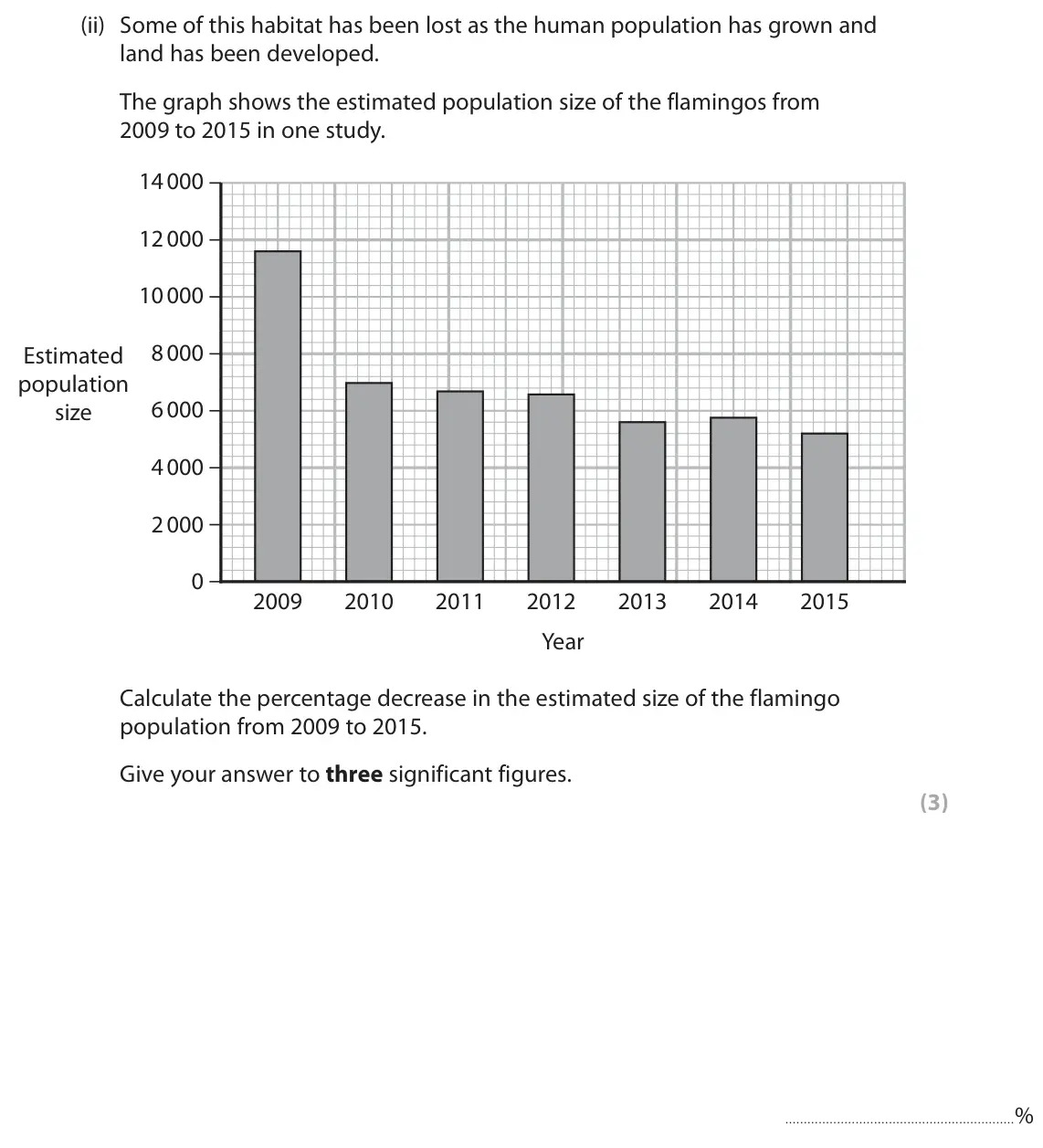
Q7(b)(iii)
The whole paper ↗
Q6(a)(i)
The whole paper ↗
Q6(a)(ii)
The whole paper ↗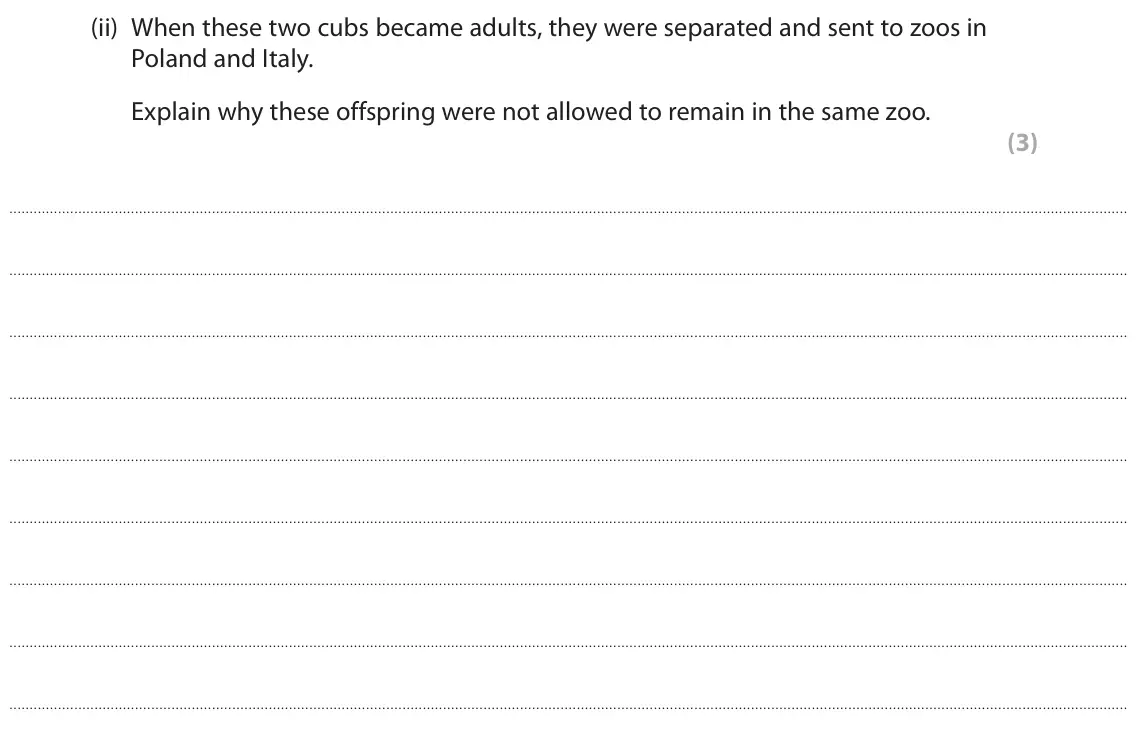
Q6(b)(i)
The whole paper ↗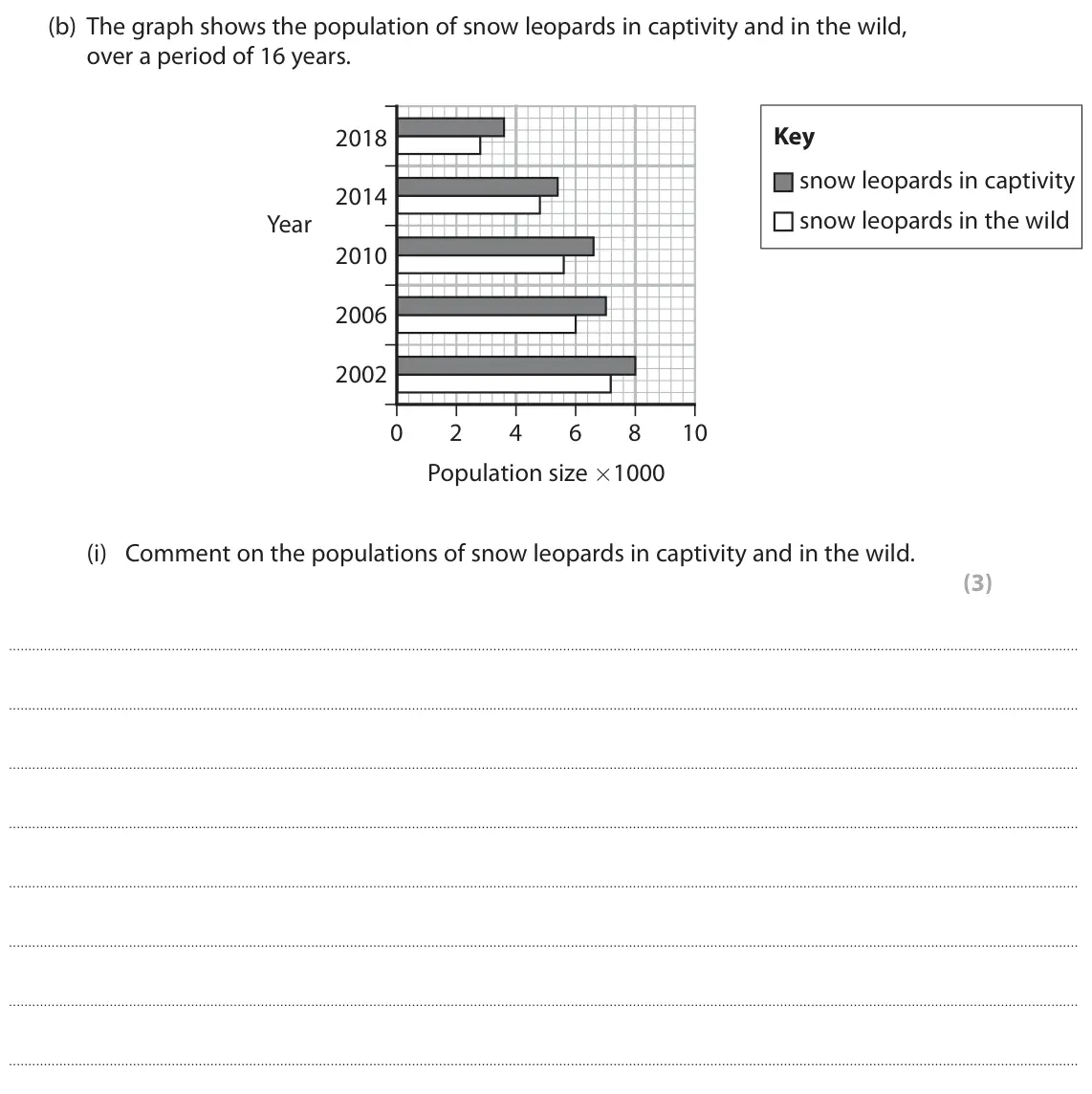
Q6(b)(ii)
The whole paper ↗
Q8(c)
The whole paper ↗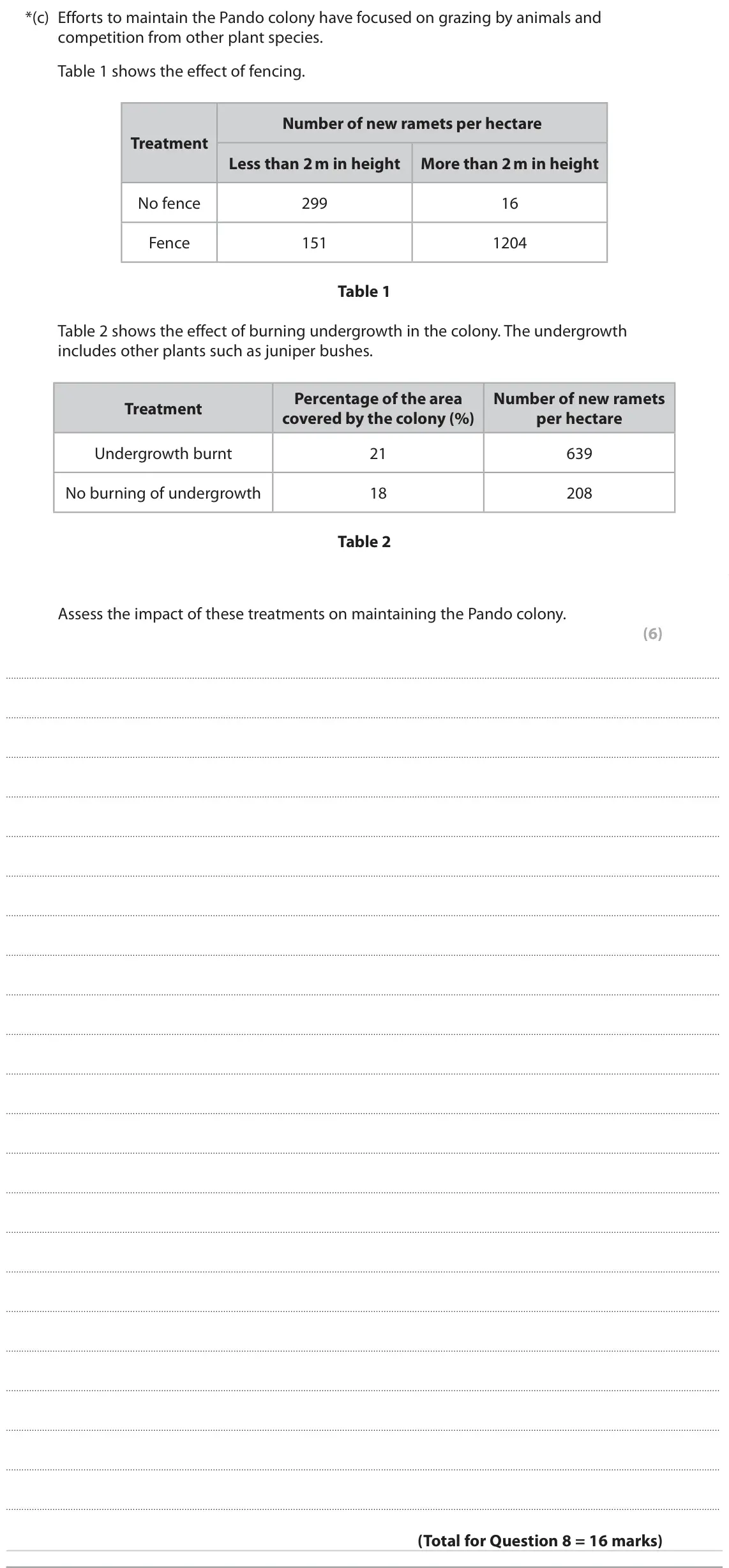
Q5(a)
The whole paper ↗
Q7(c)
The whole paper ↗
Q8(a)
The whole paper ↗
Q8(b)(i)
The whole paper ↗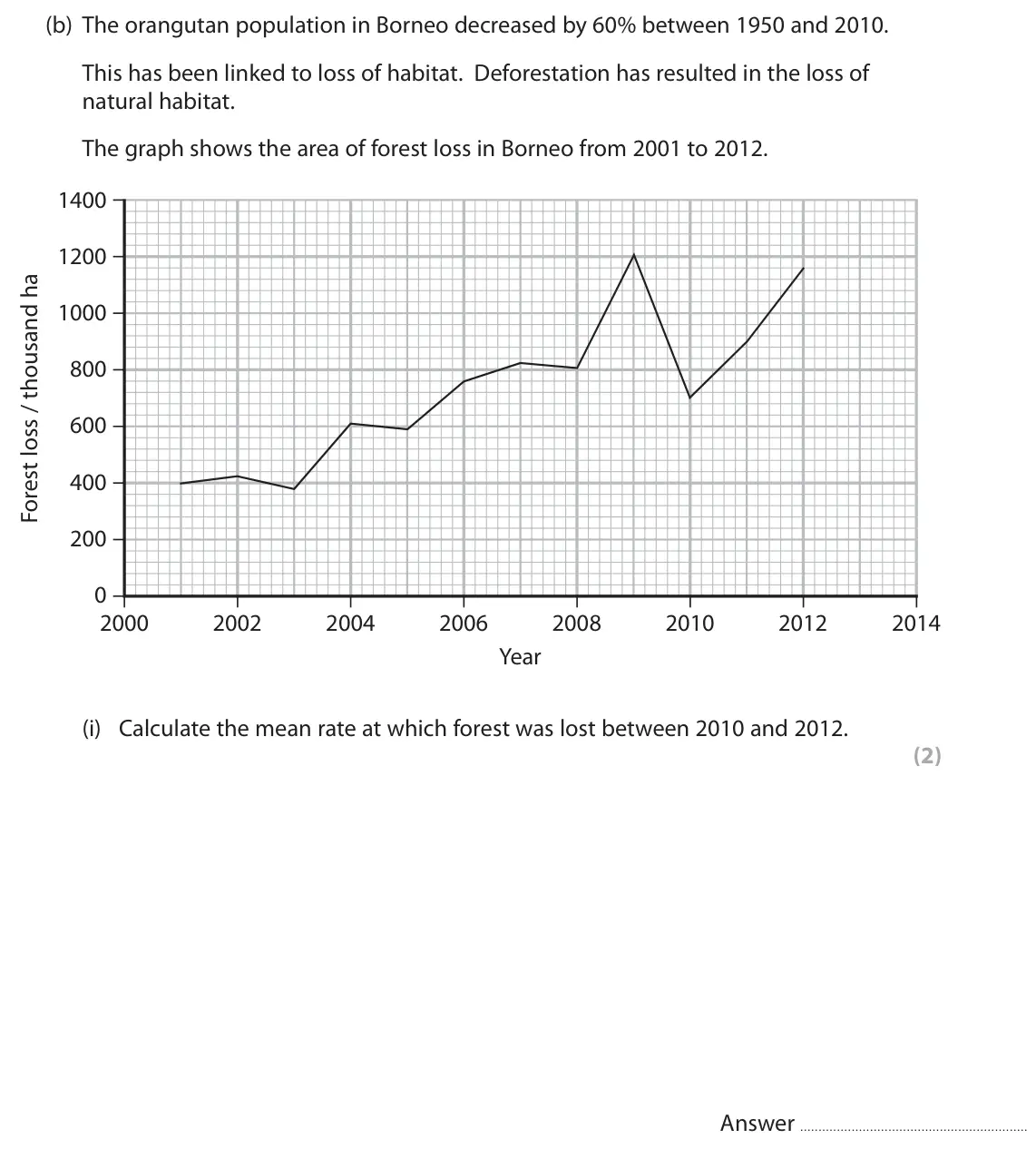
All 39 questions on Sustainability and conservation, as a list
- June 2025, Paper 1, Q4(b)(i) (3 marks): Explain the advantages of introducing cheetahs from these two populations. (3)
- June 2025, Paper 1, Q4(b)(ii) (2 marks): The animals chosen were all born in the wild alongside other predators. Deduce why this may increase the survival chances of the cheetahs when they are relocate
- June 2025, Paper 2, Q9(a)(iii) (2 marks): Explain one reason for using stem cells from more than one individual of the same species to produce a population of thylacines that can survive for a long time
- June 2025, AS Paper 2, Q8(a)(i) (2 marks): Explain why seeds are dried before being stored. (2)
- June 2024, Paper 1, Q6(c) (3 marks): To conserve plant species, seeds may be stored in seed banks. Explain why cold and dry conditions are required for the storage of these seeds. (3)
- June 2024, AS Paper 2, Q5(b)(ii) (3 marks): Explain the genetic benefits of reintroducing birds collected from different regions. (3)
- June 2024, AS Paper 2, Q5(c) (3 marks): Explain how breeding programmes in zoos can maximise genetic variation in populations before reintroduction to their natural habitat. (3)
- June 2023, Paper 1, Q5(a)(i) (3 marks): Describe how the seeds are preserved for long periods of time in a seed bank. (3)
- June 2023, Paper 1, Q5(a)(ii) (2 marks): Seed banks obtain seeds collected from a number of plants of each species. Explain the advantages of this for the conservation of a plant species. (2)
- June 2023, AS Paper 2, Q7(b)(ii) (3 marks): Some of this habitat has been lost as the human population has grown and land has been developed. The graph shows the estimated population size of the flamingos
- June 2023, AS Paper 2, Q7(b)(iii) (4 marks): Captive breeding programmes can be used to increase the number of flamingos. Flamingos kept in zoos are given food containing carotene pigments to make their fe
- June 2022, AS Paper 2, Q6(a)(i) (3 marks): Explain why captive breeding programmes are important for maintaining biodiversity. (3)
- June 2022, AS Paper 2, Q6(a)(ii) (3 marks): When these two cubs became adults, they were separated and sent to zoos in Poland and Italy. Explain why these offspring were not allowed to remain in the same
- June 2022, AS Paper 2, Q6(b)(i) (3 marks): Comment on the populations of snow leopards in captivity and in the wild. (3)
- June 2022, AS Paper 2, Q6(b)(ii) (2 marks): Give two reasons why snow leopard cubs born in captivity have not been released into the wild. (2) 1 2
- June 2022, AS Paper 2, Q8(c) (6 marks): Efforts to maintain the Pando colony have focused on grazing by animals and competition from other plant species. Table 1 shows the effect of fencing. Number of
- November 2021, Paper 1, Q5(a) (3 marks): Describe the roles that zoos play in animal conservation. (3)
- November 2021, Paper 1, Q7(c) (3 marks): Fibres can be extracted from the stems of nettle plants and used to make clothing. Explain why the production of fibres from nettles is more sustainable than fi
- October 2020, Paper 1, Q8(a) (3 marks): Explain how breeding programmes in zoos maintain the genetic diversity of captive populations. (3)
- October 2020, Paper 1, Q8(b)(i) (2 marks): Calculate the mean rate at which forest was lost between 2010 and 2012. (2) Answer
- October 2020, Paper 1, Q8(b)(ii) (6 marks): Land use has changed over time in Borneo, with areas of forest being removed due to logging. The land may then be used for planting oil palms, which are not a s
- October 2020, Paper 2, Q4(a) (3 marks): When a seed bank receives new seeds, it processes them in several ways. The processes can include the following stages: • washing the seeds with disinfectant •
- October 2020, Paper 2, Q4(c) (3 marks): The processed seeds are stored at minus 20 °C. At intervals, samples of seeds are removed from storage and tested for viability. If at least 75% of the seeds in
- October 2020, AS Paper 2, Q7(a) (1 mark): The percentage of species reintroduced successfully to this area was (1) A 14% B 15% C 85% D 86%
- October 2020, AS Paper 2, Q7(b) (2 marks): In May 2004, two male and two female lions were released into this game reserve. Explain why these lions were not released into this game reserve until 2004. (2
- October 2020, AS Paper 2, Q7(c) (2 marks): The two male lions were relocated from one region of South Africa. The females were relocated from a different region of South Africa. Explain why choosing lion
- October 2020, AS Paper 2, Q7(d)(i) (3 marks): Calculate the difference in the number of hectares (ha) per lion in Kwandwe compared with Kariega. (3) Answer
- October 2020, AS Paper 2, Q7(d)(ii) (4 marks): Evaluate the statement that Pumba Game Reserve has a more successful reintroduction programme than the one at Schotia Game Reserve. (4)
- June 2019, AS Paper 2, Q4(a) (1 mark): What percentage of the species with medical uses has been cited in medical journals, and is shown to three significant figures? (1) A 15.9% B 16.0% C 0.159% D 0
- June 2019, AS Paper 2, Q4(b) (1 mark): The global value of plant species used in herbal medicine has increased as shown in the graph. 120 100 80 60 40 20 0 2000 2005 2010 2015 2020 Year Predict the v
- June 2019, AS Paper 2, Q4(c)(i) (2 marks): Explain the advantages of drying seeds before storage. (2)
- June 2019, AS Paper 2, Q4(c)(ii) (3 marks): Justify the benefits of conserving seeds from Boyacá. (3)
- June 2018, Paper 3, Q4(a)(i) (3 marks): Describe the effect of storage time on the germination of seeds for these two varieties of wheat. (3)
- June 2018, Paper 3, Q4(a)(ii) (2 marks): Explain how the results for the control were useful in this investigation. (2)
- June 2017, Paper 3, Q1(a) (2 marks): Describe one advantage and one disadvantage of using ropes made from plant fibres rather than ropes made from oil-based plastics. (2)
- June 2017, AS Paper 2, Q3(c) (4 marks): Describe how the proposed conservation programme could prevent the Scottish wildcat from becoming extinct. (4)
- June 2016, AS Paper 2, Q6(a) (2 marks): State suitable conditions for keeping seeds in a seed bank. (2)
- June 2016, AS Paper 2, Q6(c) (3 marks): The purpose of SGSV is to store seeds for use in the future, 50 or more years from now. Seeds from three varieties of maize were tested to see the effects of lo
- June 2016, AS Paper 2, Q6(d) (3 marks): SGSV keeps seeds from more than 865 000 varieties of plant, including 200 000 varieties of wheat and rice. Some of these varieties are rare or extinct in the wi
Questions, mark schemes and examiner’s reports are © Pearson Edexcel, from their published past papers. Plumi isn’t affiliated with any exam board. Want whole papers? Every Edexcel A-Level Biology A paper.
Rather write your answers by hand on iPad? Plumi marks them against the same mark schemes.