 plumi
Hardy-Weinberg and classification: Edexcel A‑Level Biology A questions
Every Edexcel A-Level Biology A exam question on Hardy-Weinberg and classification (specification points 4.5–4.6), 2016–2025, with its mark scheme and examiner’s report.
Find questions1,749
Calculations
Q4(a)(i)
The whole paper ↗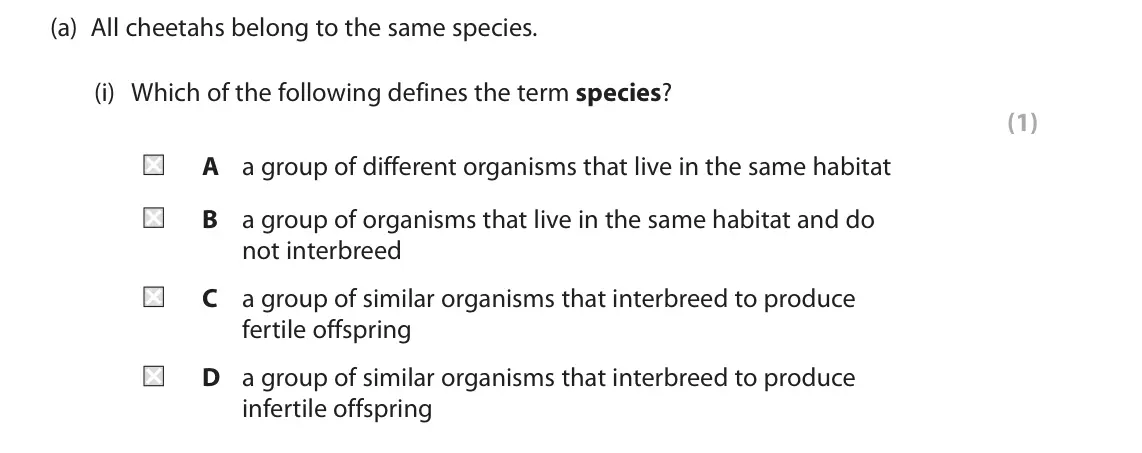
Q2(a)(ii)
The whole paper ↗
Q4(a)
The whole paper ↗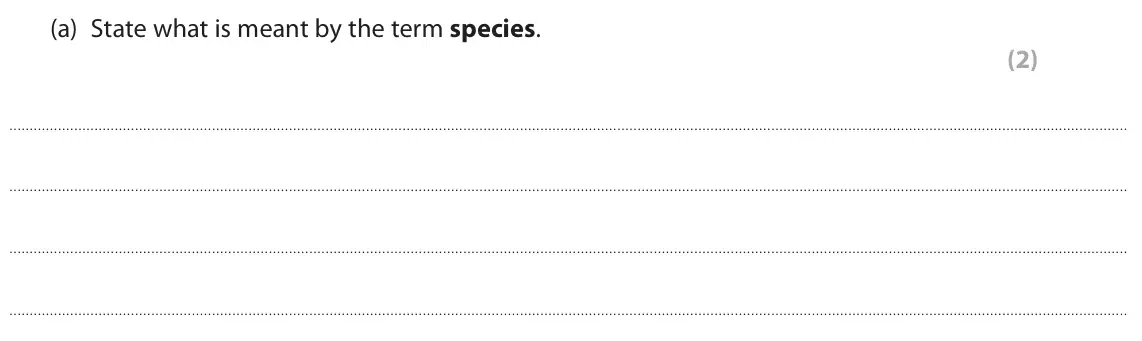
Q7(b)(i)
The whole paper ↗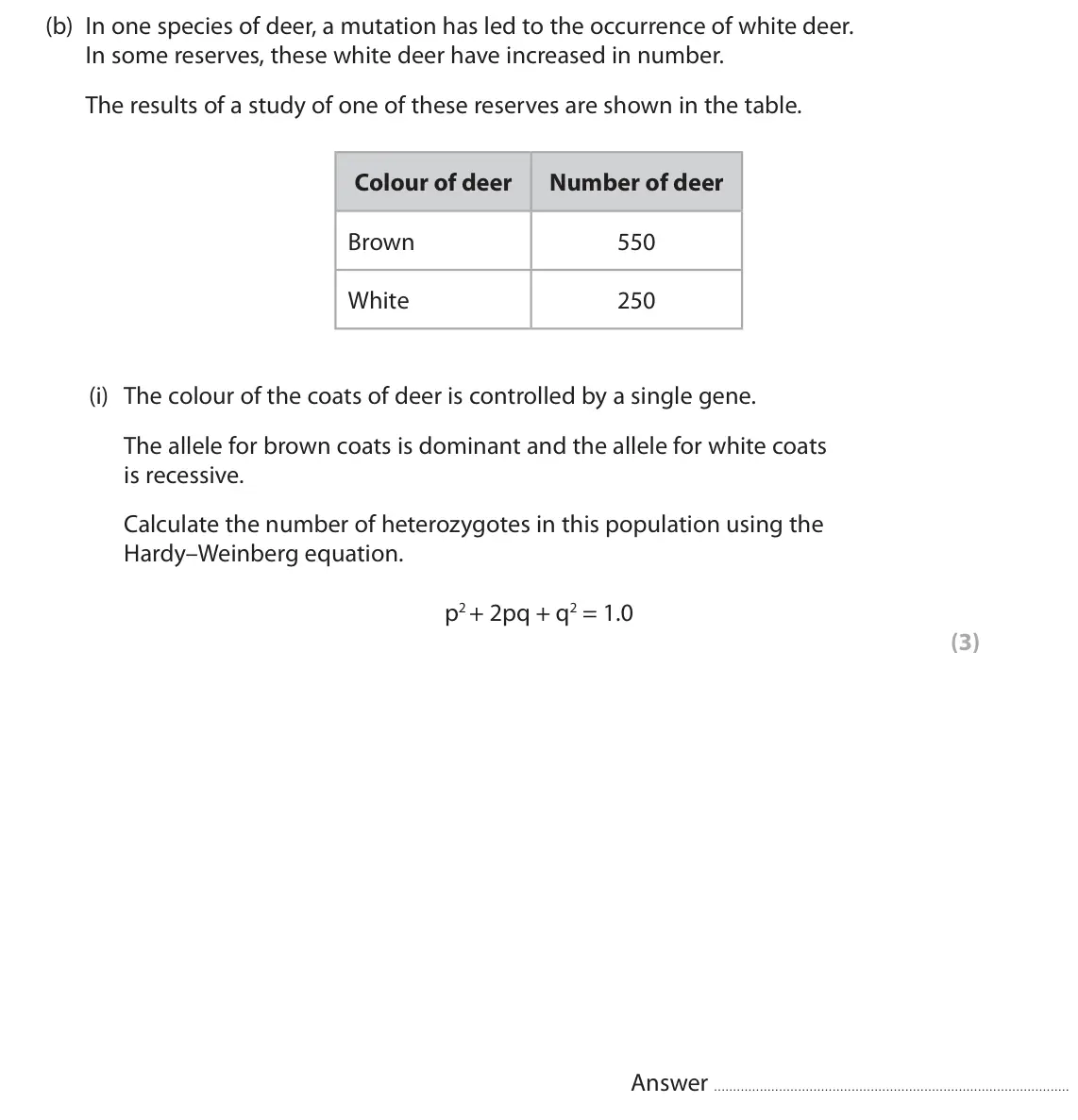
Q8(a)
The whole paper ↗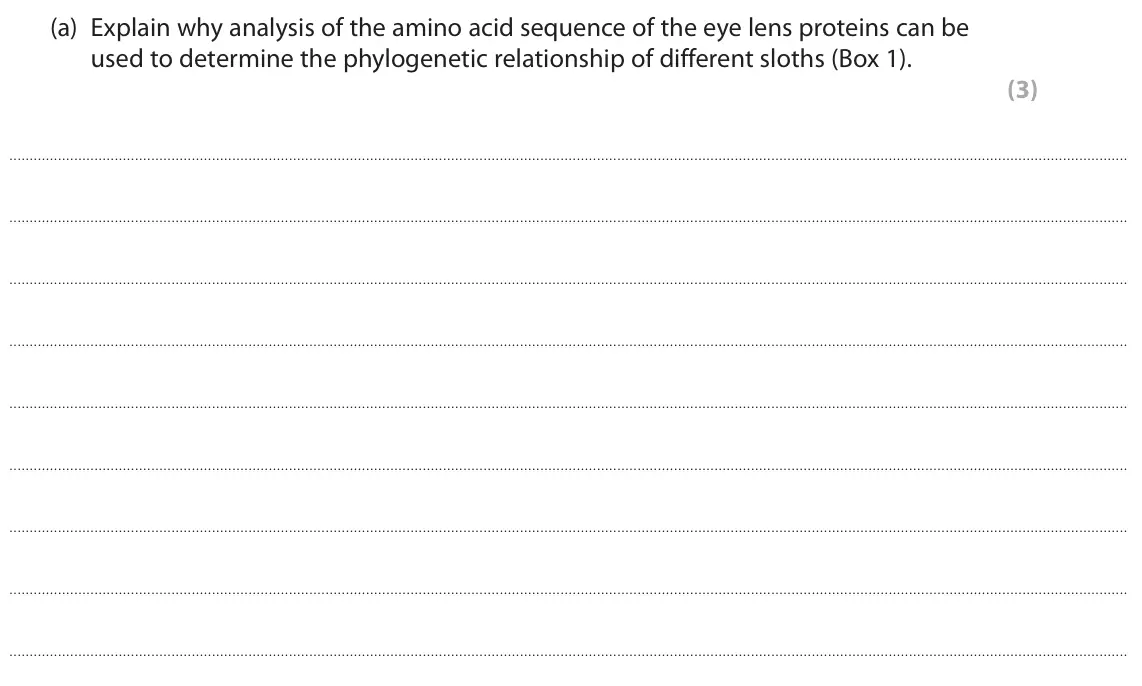
Q8(b)
The whole paper ↗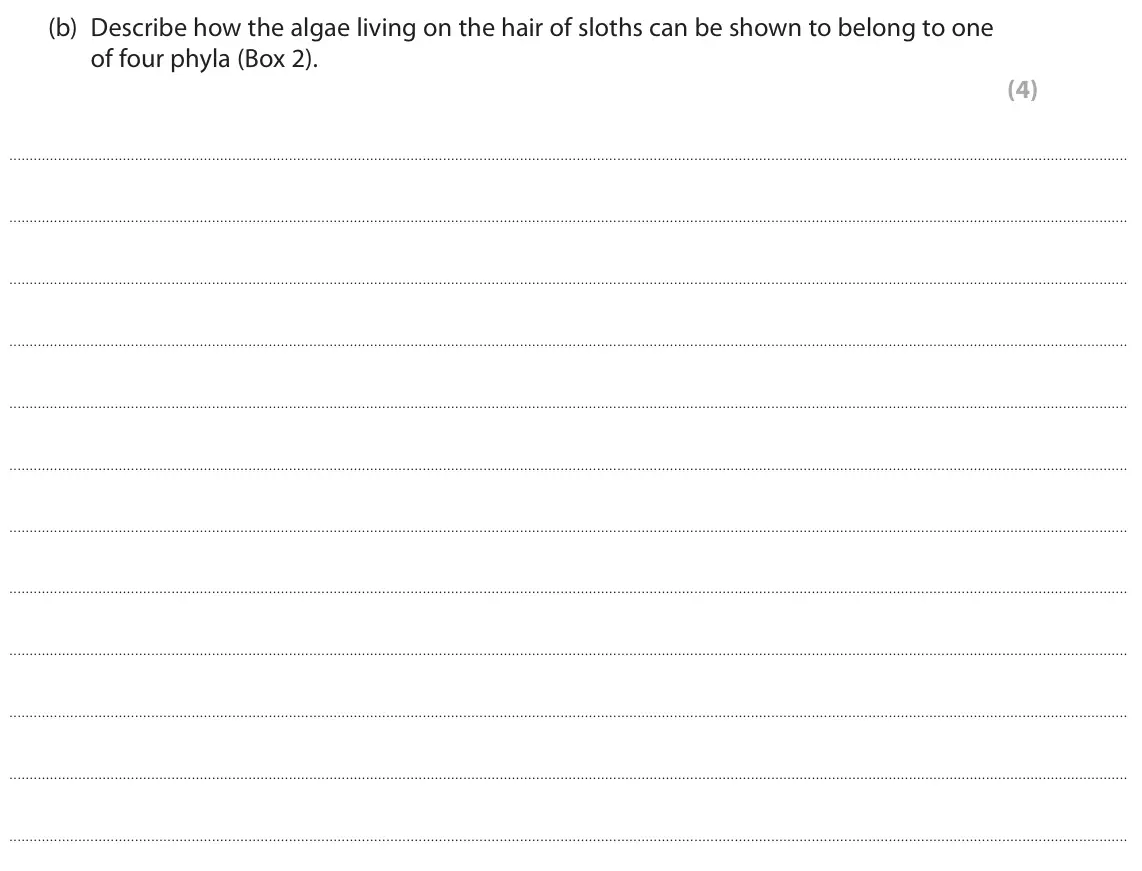
Q5(a)(i)
The whole paper ↗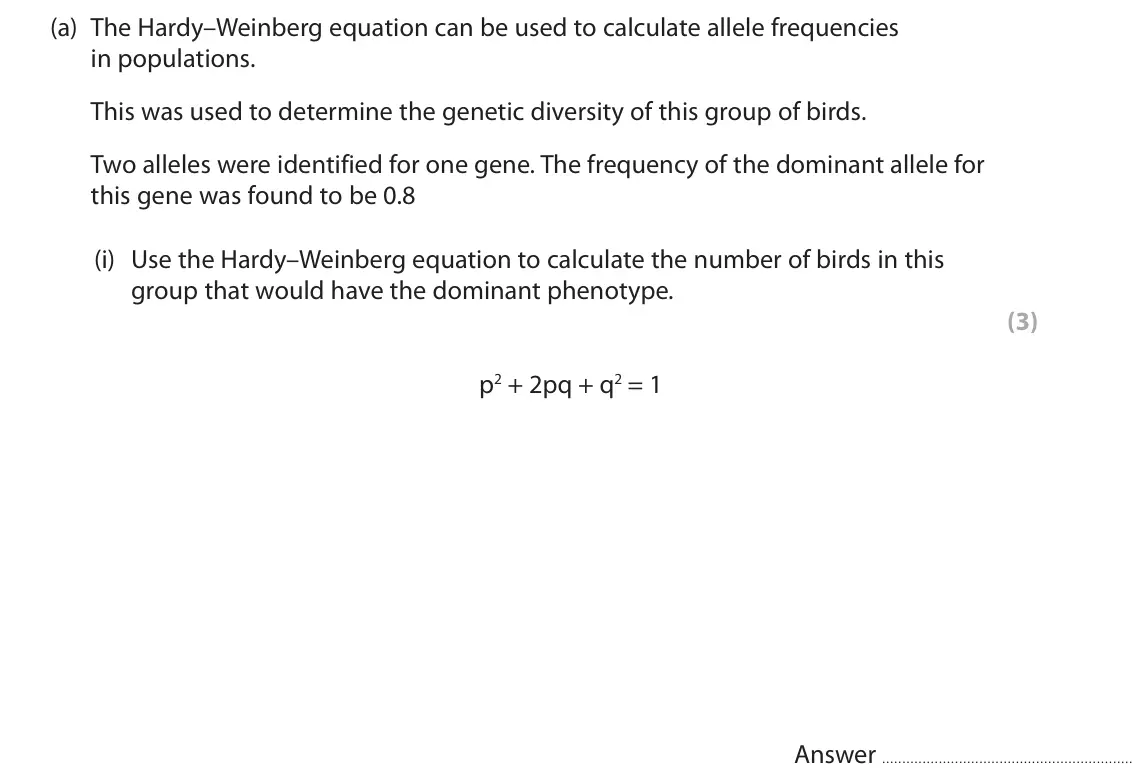
Q5(a)(ii)
The whole paper ↗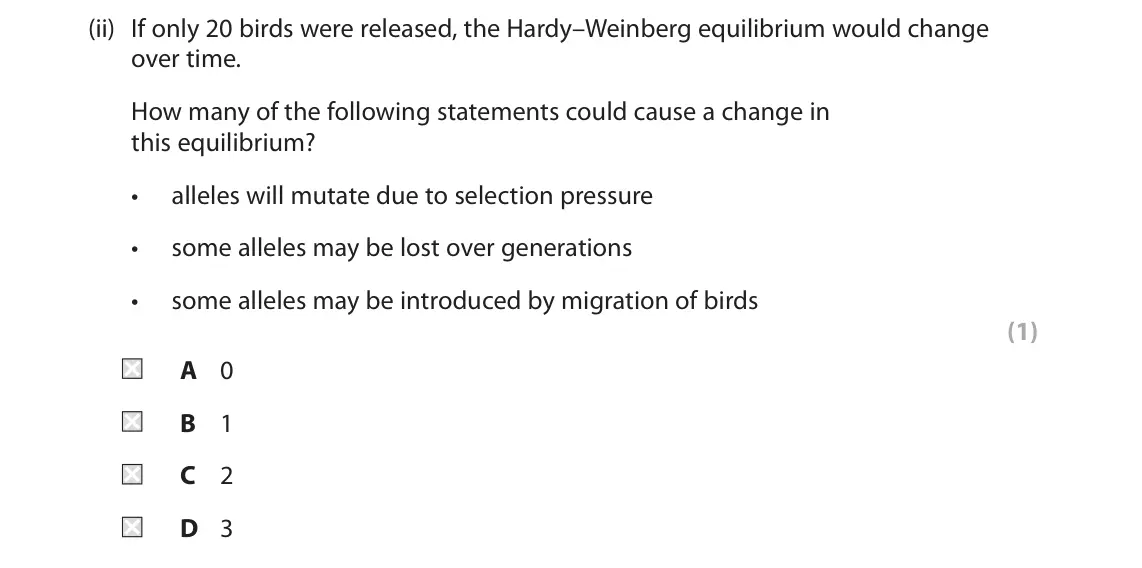
Q3(a)(i)
The whole paper ↗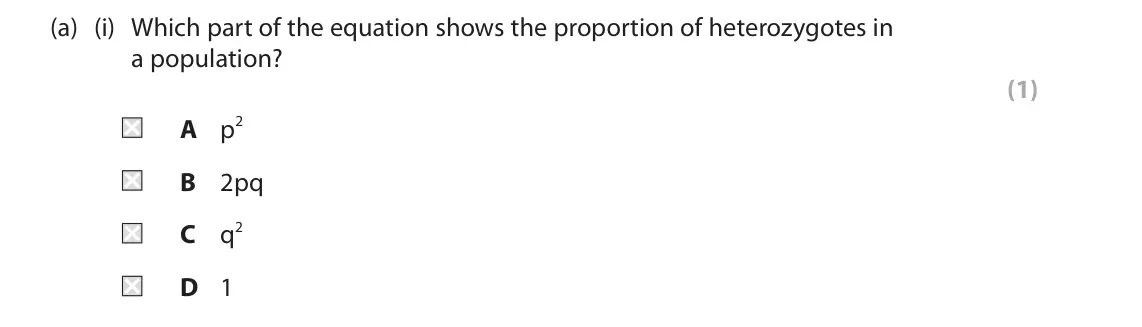
Q3(a)(ii)
The whole paper ↗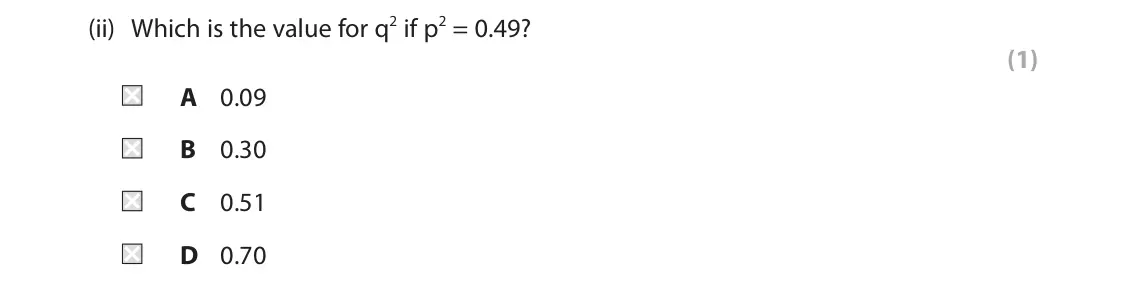
Q3(b)(i)
The whole paper ↗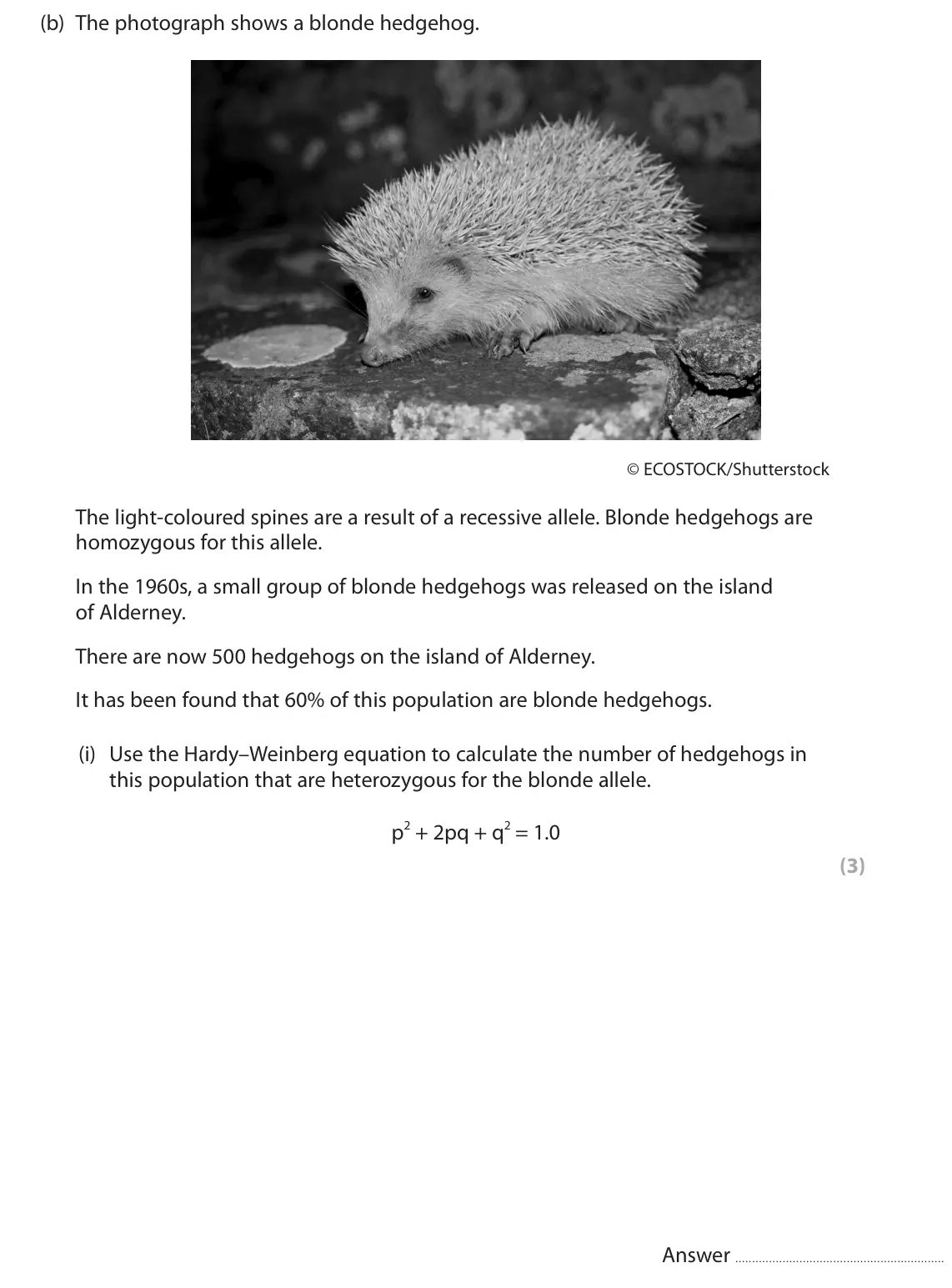
Q7(a)(ii)
The whole paper ↗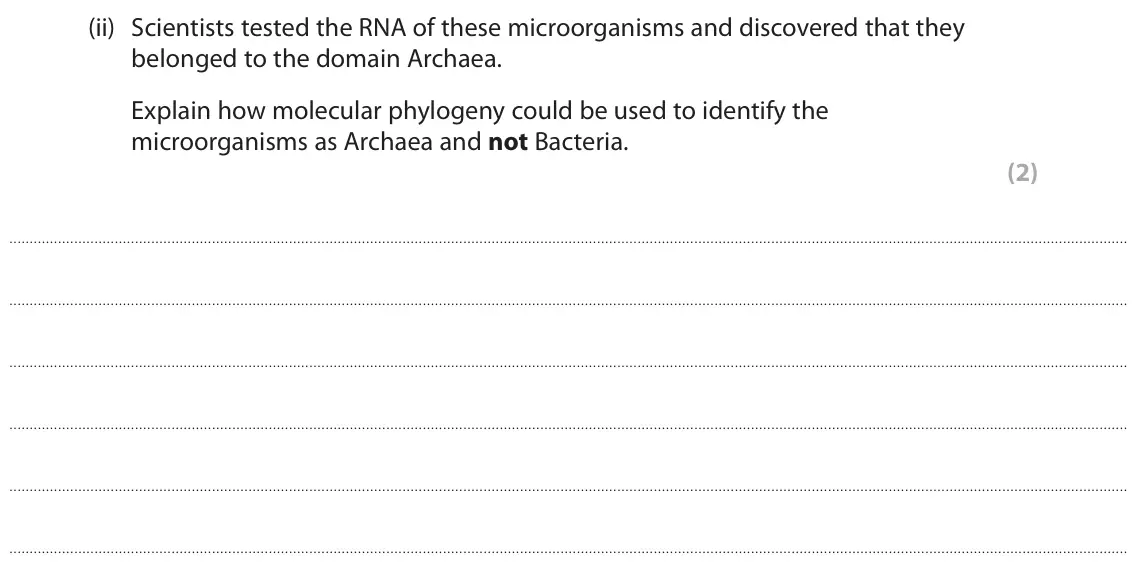
Q3(a)
The whole paper ↗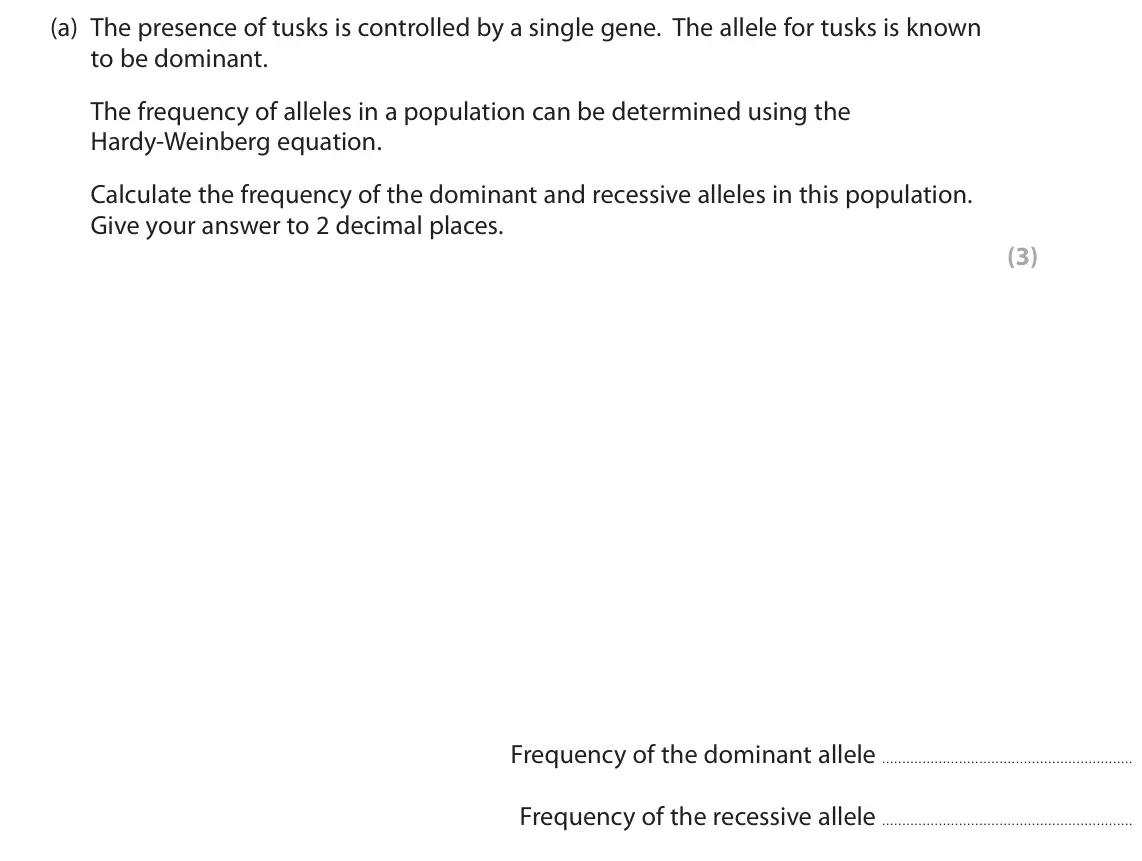
Q3(b)(ii)
The whole paper ↗
Q1(a)
The whole paper ↗
Q1(b)
The whole paper ↗
Q8(a)
The whole paper ↗
Q8(c)
The whole paper ↗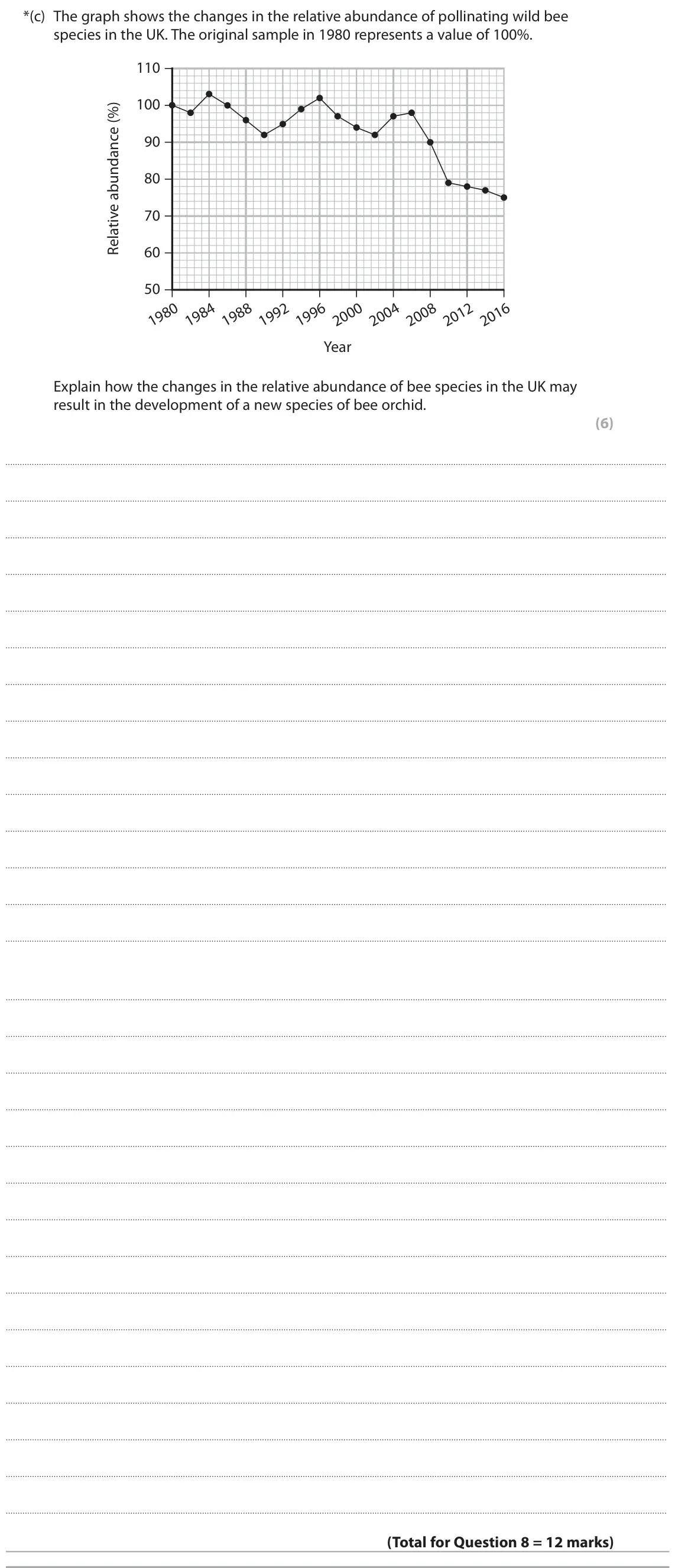
Q8(c)(i)
The whole paper ↗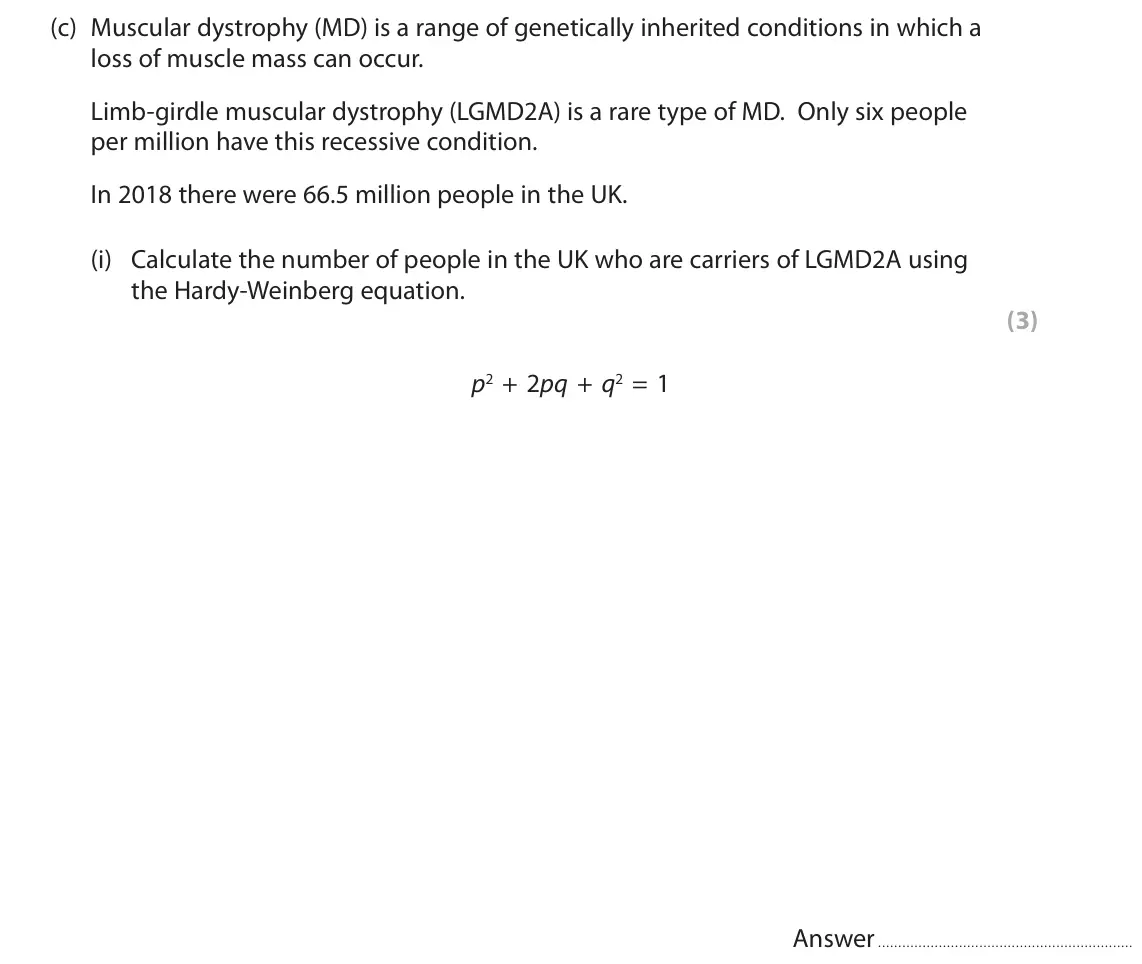
Q8(c)(ii)
The whole paper ↗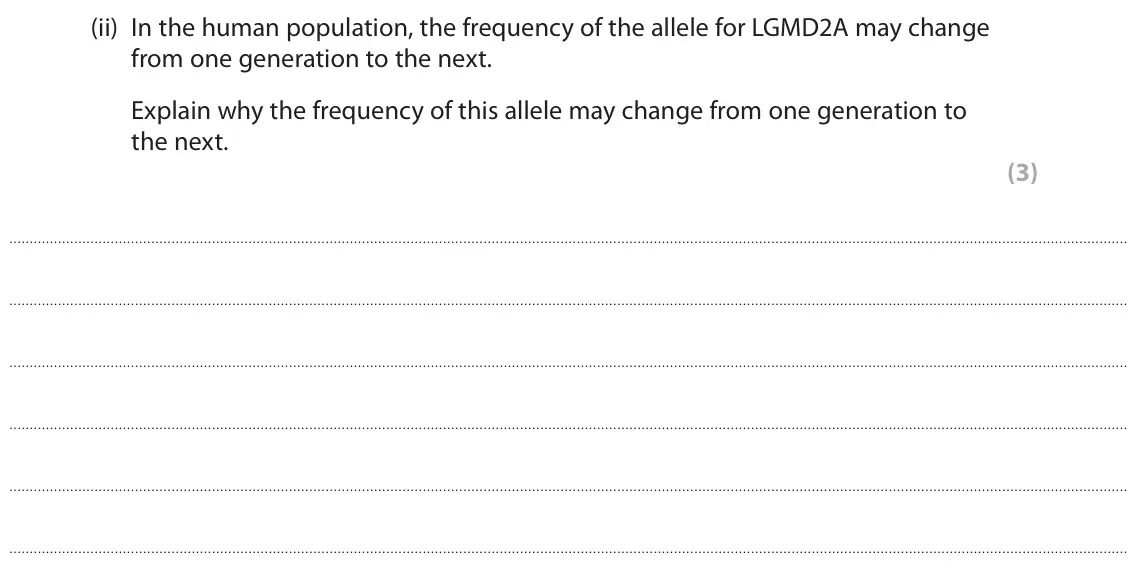
All 42 questions on Hardy-Weinberg and classification, as a list
- June 2025, Paper 1, Q4(a)(i) (1 mark): Which of the following defines the term species? (1) A a group of different organisms that live in the same habitat B a group of organisms that live in the same
- June 2025, Paper 3, Q2(a)(ii) (1 mark): Give the domain to which Stentor coeruleus belongs. (1)
- June 2025, AS Paper 2, Q4(a) (2 marks): State what is meant by the term species. (2)
- June 2024, Paper 1, Q7(b)(i) (3 marks): The colour of the coats of deer is controlled by a single gene. The allele for brown coats is dominant and the allele for white coats is recessive. Calculate th
- June 2024, Paper 3, Q8(a) (3 marks): Explain why analysis of the amino acid sequence of the eye lens proteins can be used to determine the phylogenetic relationship of different sloths (Box 1). (3)
- June 2024, Paper 3, Q8(b) (4 marks): Describe how the algae living on the hair of sloths can be shown to belong to one of four phyla (Box 2). (4)
- June 2024, AS Paper 2, Q5(a)(i) (3 marks): Use the Hardy–Weinberg equation to calculate the number of birds in this group that would have the dominant phenotype. (3) p2 + 2pq + q2 = 1 Answer
- June 2024, AS Paper 2, Q5(a)(ii) (1 mark): If only 20 birds were released, the Hardy–Weinberg equilibrium would change over time. How many of the following statements could cause a change in this equilib
- June 2023, AS Paper 2, Q3(a)(i) (1 mark): Which part of the equation shows the proportion of heterozygotes in a population? (1) A p2 B 2pq C q2 D 1
- June 2023, AS Paper 2, Q3(a)(ii) (1 mark): Which is the value for q2 if p2 = 0.49? (1) A 0.09 B 0.30 C 0.51 D 0.70
- June 2023, AS Paper 2, Q3(b)(i) (3 marks): Use the Hardy–Weinberg equation to calculate the number of hedgehogs in this population that are heterozygous for the blonde allele. p2 + 2pq + q2 = 1.0 (3) Ans
- June 2023, AS Paper 2, Q7(a)(ii) (2 marks): Scientists tested the RNA of these microorganisms and discovered that they belonged to the domain Archaea. Explain how molecular phylogeny could be used to iden
- November 2021, Paper 1, Q3(a) (3 marks): The presence of tusks is controlled by a single gene. The allele for tusks is known to be dominant. The frequency of alleles in a population can be determined u
- November 2021, Paper 1, Q3(b)(ii) (2 marks): Describe how the Hardy‑Weinberg equation can be used to provide evidence for changes in the elephant population in Mozambique. (2)
- November 2021, Paper 2, Q1(a) (2 marks): Complete the table to show the features in Bacteria and in Eukaryota. (2)
- November 2021, Paper 2, Q1(b) (3 marks): Explain how the information in the table can be used to show that the Archaea are more closely related to the Eukaryota than to the Bacteria. (3)
- November 2021, Paper 3, Q8(a) (2 marks): Explain how two populations of mosquito could be shown to belong to different species (paragraph 4). (2)
- November 2021, AS Paper 2, Q8(c) (6 marks): The graph shows the changes in the relative abundance of pollinating wild bee species in the UK. The original sample in 1980 represents a value of 100%. 110 100
- October 2020, Paper 2, Q8(c)(i) (3 marks): Calculate the number of people in the UK who are carriers of LGMD2A using the Hardy-Weinberg equation. (3) p2 + 2pq + q2 = 1 Answer
- October 2020, Paper 2, Q8(c)(ii) (3 marks): In the human population, the frequency of the allele for LGMD2A may change from one generation to the next. Explain why the frequency of this allele may change
- October 2020, Paper 3, Q5(a)(ii) (3 marks): The frequency of the G20210A allele in a population of 10 000 individuals was investigated. In this population, 50 individuals were homozygous for G20210A. Calc
- October 2020, AS Paper 2, Q5(a) (1 mark): The pairing that would be expected to be able to mate and produce fertile offspring is (1) A Asian badger and South Asian badger B Eurasian badger and Asian bad
- October 2020, AS Paper 2, Q5(b)(i) (3 marks): Explain how molecular phylogeny can be used to show that these two populations are reproductively isolated. (3)
- October 2020, AS Paper 2, Q5(b)(ii) (4 marks): Describe how mutations in badgers to the east of the Bosphorus Strait may lead to this population becoming a separate species. (4)
- October 2020, AS Paper 2, Q5(c) (2 marks): Explain how the Hardy-Weinberg equation can be used to show that natural selection is occurring in a population. (2)
- June 2019, Paper 1, Q3(a) (1 mark): State what is meant by the term species. (1)
- June 2019, Paper 2, Q3(a) (3 marks): Use the Hardy-Weinberg equation to calculate the probability of babies born in the UK being carriers for cystic fibrosis. (3) Answer
- June 2019, AS Paper 2, Q2(a) (1 mark): The two squirrels are classified as different species because they (1) A are geographically isolated B cannot produce fertile offspring C have different coloure
- June 2019, AS Paper 2, Q2(b)(ii) (1 mark): The red squirrels on Brownsea Island are geographically isolated from other red squirrel populations on the UK mainland. Over time, the Brownsea Island populati
- June 2019, AS Paper 2, Q2(c)(i) (1 mark): Woese classified organisms into domains. Which of the following contain prokaryotic organisms? (1) A Archaea, Bacteria and Eukaryota B only Archaea C only Archa
- June 2019, AS Paper 2, Q8(a) (3 marks): Calculate the number of carriers in a population of 17.02 million. Use the Hardy-Weinberg equation, p2 + 2pq + q2 = 1 (3) Answer
- June 2019, AS Paper 2, Q8(b)(ii) (2 marks): Explain why the genotype frequency for males with DMD cannot be calculated using this Hardy-Weinberg equation. (2)
- June 2018, Paper 1, Q7(a) (1 mark): The electron micrograph shows a section through a fungal cell. Magnification ×1000 To which group do fungi belong? (1) A Archaea B Eukaryota C Prokaryota D Viru
- June 2018, Paper 1, Q8(b) (3 marks): The primary structures of trypsin molecules from different species have been used to produce a phylogenetic tree for trypsin. Each branch of the following phylo
- June 2018, AS Paper 2, Q6(c)(i) (2 marks): Explain how this diagram indicates that saiga antelopes are more closely related to Antilope than to Antidorcas. (2)
- June 2018, AS Paper 2, Q6(c)(ii) (3 marks): This is a more recent classification diagram based on a study of the mitochondrial genomes of antelopes. Gazella Nanger Eudorcas Antilope Litocranius Antidorcas
- June 2018, AS Paper 2, Q8(b)(i) (2 marks): Explain why they are now classed as different species. (2)
- June 2018, AS Paper 2, Q8(c) (6 marks): The map shows the distribution of two species of sloth. There are currently two major populations of C. hoffmanni in South America. B. pygmaeus is restricted to
- June 2017, Paper 1, Q10(a)(ii) (3 marks): Use the Hardy-Weinberg equation to show that more than 50% of the forest elephant population are homozygous for the GBA gene. (3) Answer
- June 2017, Paper 1, Q10(b)(i) (6 marks): Analyse the data and the information provided to comment on the validity of this conclusion. (6)
- June 2017, AS Paper 2, Q3(b) (2 marks): Explain how molecular phylogeny could be used to determine the relationships between the Scottish wildcat and other subspecies of European wildcat. (2)
- June 2017, AS Paper 2, Q4(b)(ii) (3 marks): People with a heterozygous genotype for this condition do not develop severe sickle cell anaemia. The Yoruba are a group of people who live in West Africa. In a
Questions, mark schemes and examiner’s reports are © Pearson Edexcel, from their published past papers. Plumi isn’t affiliated with any exam board. Want whole papers? Every Edexcel A-Level Biology A paper.
Rather write your answers by hand on iPad? Plumi marks them against the same mark schemes.