 plumi
Magnetic fields due to currents: CAIE A‑Level Physics questions
CAIE A-Level Physics past-paper questions on 20.4 Magnetic fields due to currents, 2017 to 2025 and the specimen papers, with mark schemes and examiner’s reports where available.
Past paper difficulty
Paper
All papers
Exam
All years
Calculations
Loading the full question list…
- 1
Q7(b)
The whole paper ↗2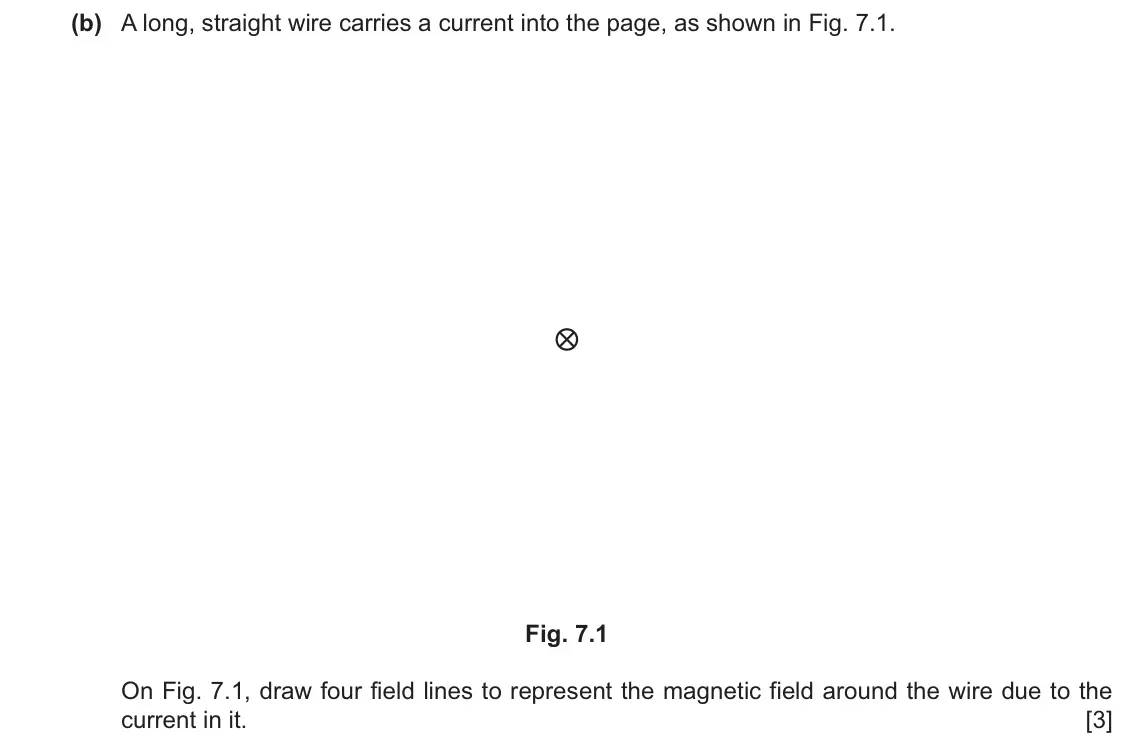
Q7(c)(i)
The whole paper ↗3
Q7(c)(ii)
The whole paper ↗4
Q7(c)(iii)
The whole paper ↗5
Q7(c)(iv)
The whole paper ↗6
Q7(b)
The whole paper ↗7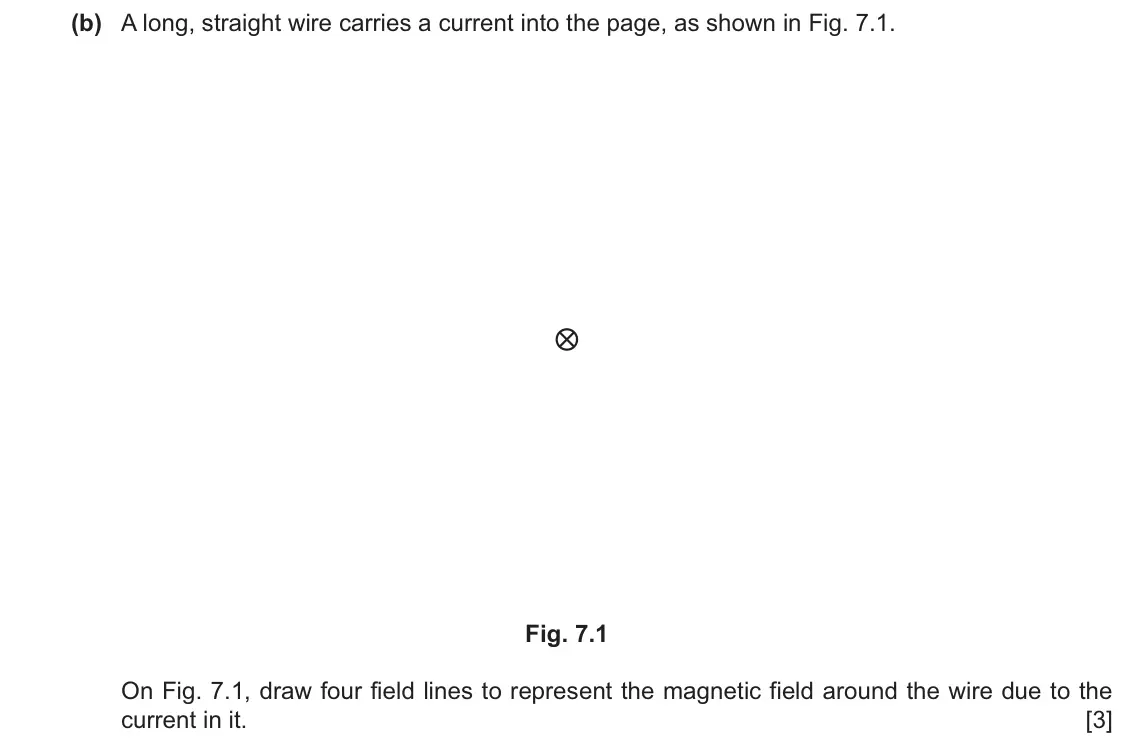
Q7(c)(i)
The whole paper ↗8
Q7(c)(ii)
The whole paper ↗9
Q7(c)(iii)
The whole paper ↗10
Q7(c)(iv)
The whole paper ↗11
Q6(b)
The whole paper ↗12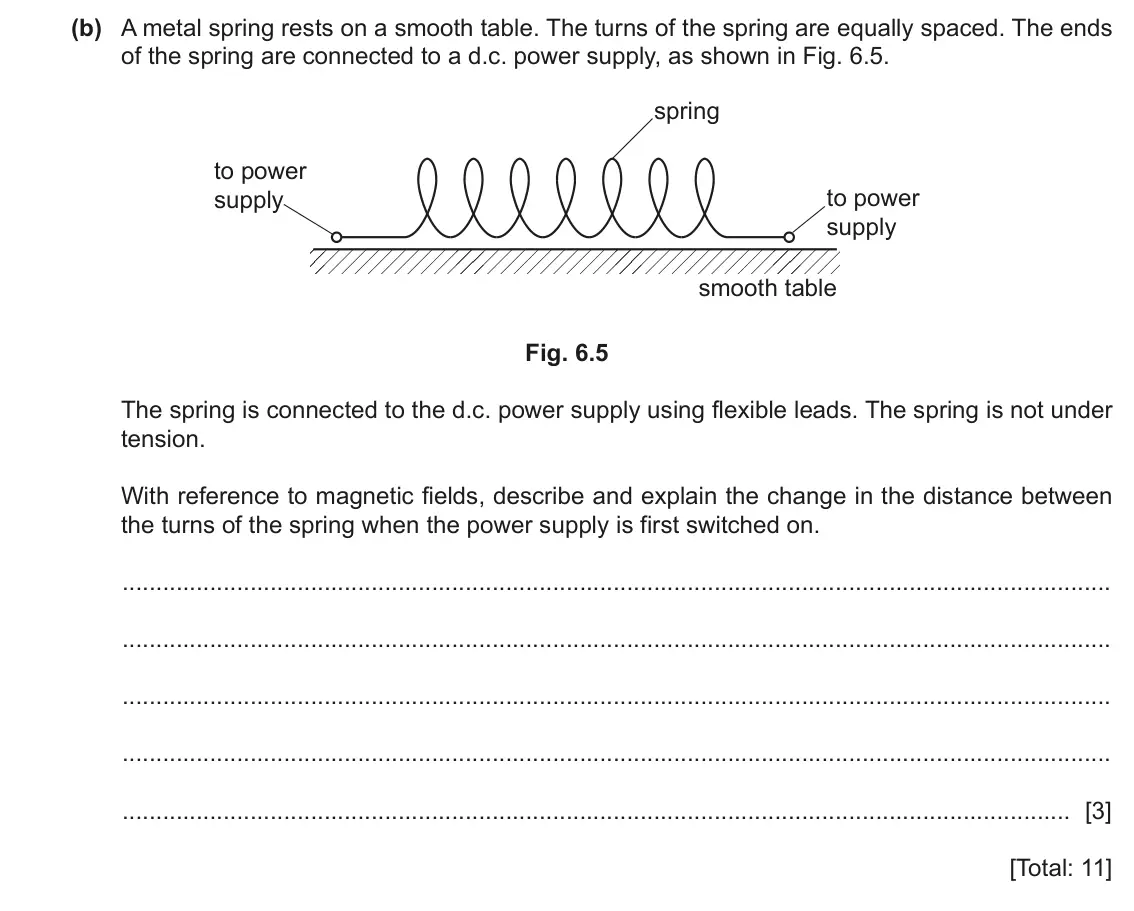
Q6(b)
The whole paper ↗13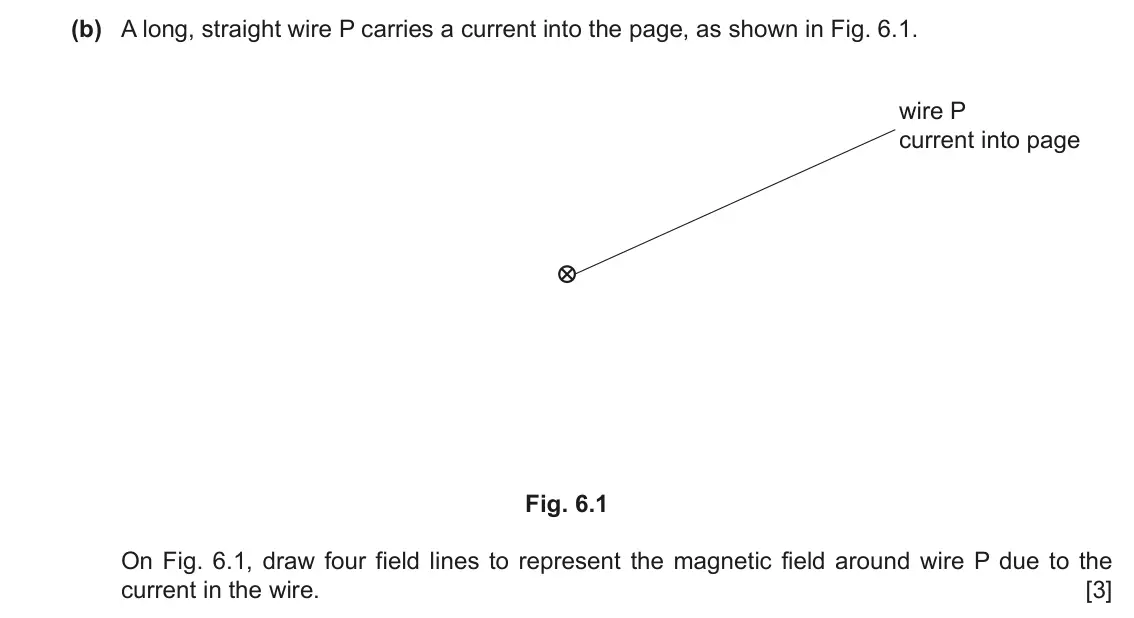
Q6(c)(iii)
The whole paper ↗14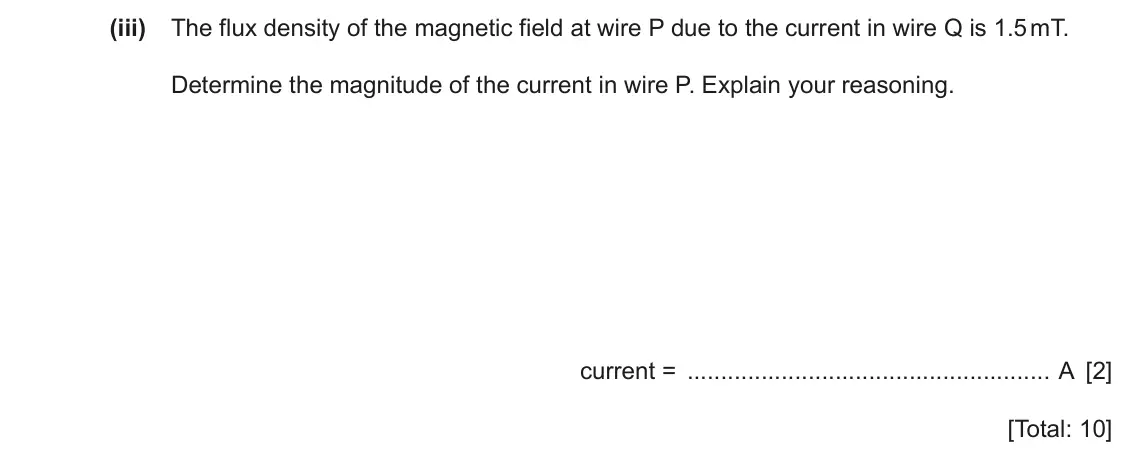
Q6(b)
The whole paper ↗15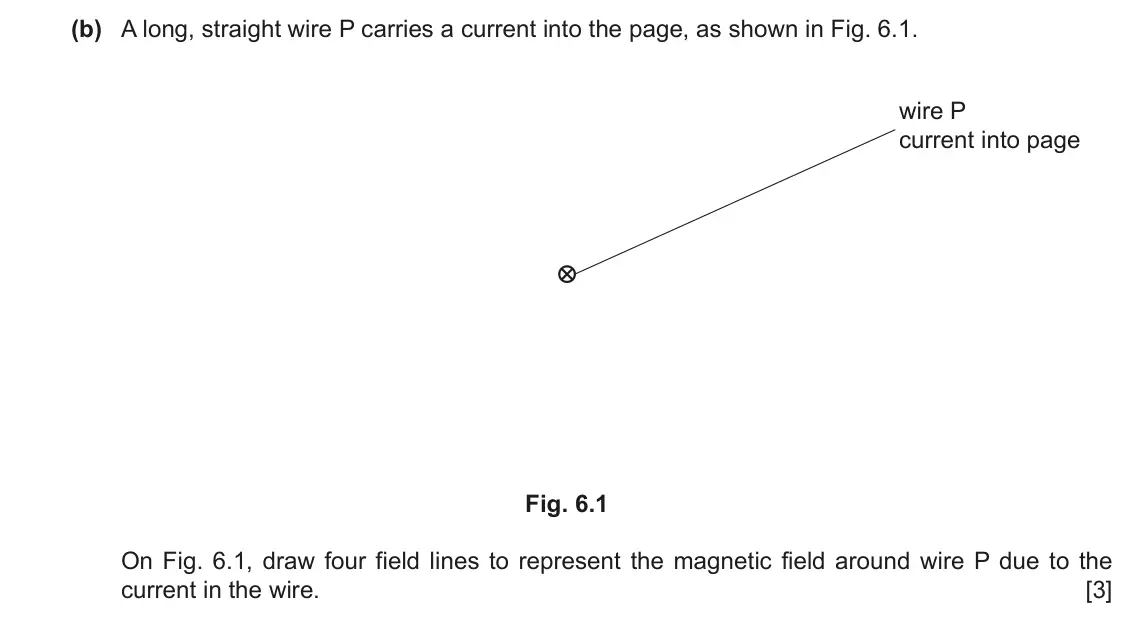
Q6(c)(i)
The whole paper ↗16
Q6(c)(ii)
The whole paper ↗17
Q6(c)(iii)
The whole paper ↗18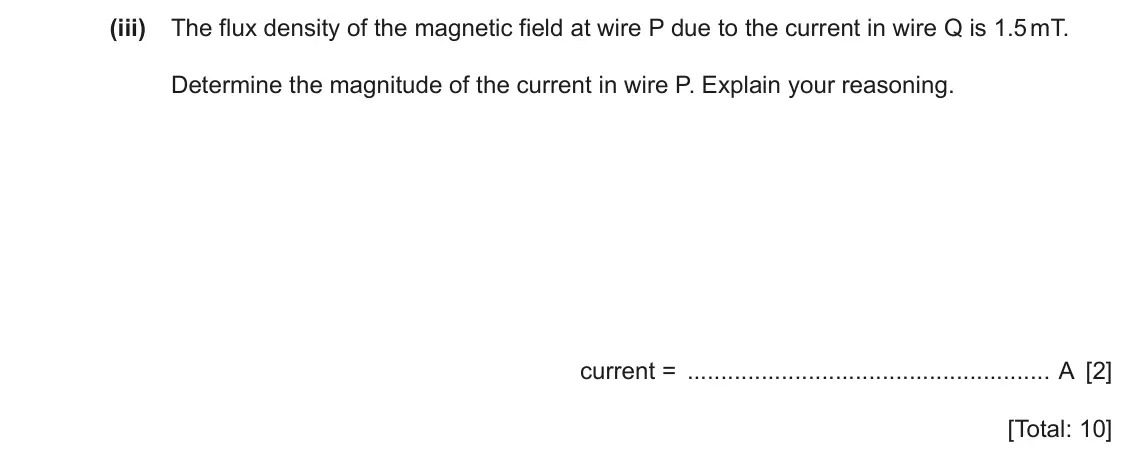
Q6(b)(i)
The whole paper ↗19
Q6(b)(ii)
The whole paper ↗20
All 43 questions on Magnetic fields due to currents, as a list
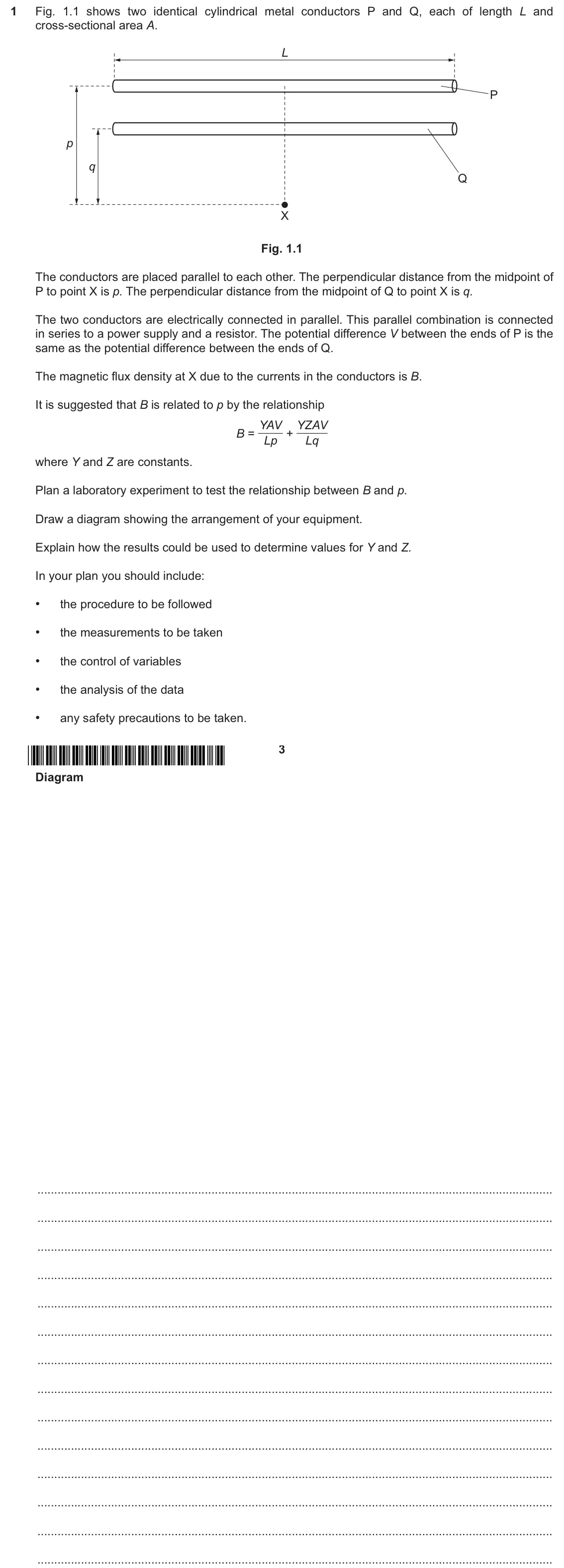
- March 2025, Paper 5, Q1 (15 marks): Fig. 1.1 shows two identical cylindrical metal conductors P and Q, each of length L and cross‑sectional area A. L P p q Q X Fig. 1.1 The conductors are placed p
- November 2024, Paper 4, Q7(b) (3 marks): A long, straight wire carries a current into the page, as shown in Fig. 7.1. Fig. 7.1 On Fig. 7.1, draw four field lines to represent the magnetic field around
- November 2024, Paper 4, Q7(c)(i) (2 marks): Explain why the two wires exert a magnetic force on each other. [2]
- November 2024, Paper 4, Q7(c)(ii) (1 mark): On Fig. 7.2, draw an arrow to show the direction of the magnetic force exerted on wire X. Label your arrow F. [1]
- November 2024, Paper 4, Q7(c)(iii) (2 marks): The current in X is double the current in Y. State how the magnetic force exerted on wire Y compares with the magnetic force exerted on wire X. [2]
- November 2024, Paper 4, Q7(c)(iv) (1 mark): The direction of the current in both wires is now reversed. State, with a reason, the effect of this change on the direction of the force on wire X. [1] [Total:
- November 2024 (variant 3), Paper 4, Q7(b) (3 marks): A long, straight wire carries a current into the page, as shown in Fig. 7.1. Fig. 7.1 On Fig. 7.1, draw four field lines to represent the magnetic field around
- November 2024 (variant 3), Paper 4, Q7(c)(i) (2 marks): Explain why the two wires exert a magnetic force on each other. [2]
- November 2024 (variant 3), Paper 4, Q7(c)(ii) (1 mark): On Fig. 7.2, draw an arrow to show the direction of the magnetic force exerted on wire X. Label your arrow F. [1]
- November 2024 (variant 3), Paper 4, Q7(c)(iii) (2 marks): The current in X is double the current in Y. State how the magnetic force exerted on wire Y compares with the magnetic force exerted on wire X. [2]
- November 2024 (variant 3), Paper 4, Q7(c)(iv) (1 mark): The direction of the current in both wires is now reversed. State, with a reason, the effect of this change on the direction of the force on wire X. [1] [Total:
- March 2024, Paper 4, Q6(b) (3 marks): A metal spring rests on a smooth table. The turns of the spring are equally spaced. The ends of the spring are connected to a d.c. power supply, as shown in Fig
- June 2023, Paper 4, Q6(b) (3 marks): A long, straight wire P carries a current into the page, as shown in Fig. 6.1. wire P current into page Fig. 6.1 On Fig. 6.1, draw four field lines to represent
- June 2023, Paper 4, Q6(c)(iii) (2 marks): The flux density of the magnetic field at wire P due to the current in wire Q is 1.5 mT. Determine the magnitude of the current in wire P. Explain your reasonin
- June 2023 (variant 3), Paper 4, Q6(b) (3 marks): A long, straight wire P carries a current into the page, as shown in Fig. 6.1. wire P current into page Fig. 6.1 On Fig. 6.1, draw four field lines to represent
- June 2023 (variant 3), Paper 4, Q6(c)(i) (2 marks): Calculate the magnetic force per unit length exerted on wire Q by wire P. force per unit length = N m–1 [2]
- June 2023 (variant 3), Paper 4, Q6(c)(ii) (1 mark): State the direction of the force exerted on wire Q by wire P. [1]
- June 2023 (variant 3), Paper 4, Q6(c)(iii) (2 marks): The flux density of the magnetic field at wire P due to the current in wire Q is 1.5 mT. Determine the magnitude of the current in wire P. Explain your reasonin
- June 2022 (variant 2), Paper 4, Q6(b)(i) (3 marks): On Fig. 6.1, draw arrows to indicate the direction of the magnetic field at each of the points X, Y and Z. [3]
- June 2022 (variant 2), Paper 4, Q6(b)(ii) (2 marks): Compare the magnitude of the flux density of the magnetic field: ● at X and at W ● at Y and at Z. [2]
- June 2022 (variant 2), Paper 4, Q6(c) (3 marks): Two long parallel current-carrying wires are placed near to each other in a vacuum. Explain why these wires exert a magnetic force on each other. You may draw a
- November 2021 (variant 2), Paper 4, Q8(a)(i) (1 mark): On Fig. 8.1, draw an arrow to show the direction of the magnetic field at wire Q due to the current in wire P. Label this arrow B. [1]
- November 2021 (variant 2), Paper 4, Q8(a)(ii) (1 mark): On Fig. 8.1, draw another arrow to show the direction of the force acting on wire Q due to the current in wire P. Label this arrow F. [1]
- November 2021 (variant 2), Paper 4, Q8(b)(i) (2 marks): State, with a reason, how the magnitude of the force acting on wire P compares with the magnitude of the force acting on wire Q. [2]
- November 2021 (variant 2), Paper 4, Q8(b)(ii) (1 mark): State how the direction of the force on wire P compares with the direction of the force on wire Q. [1] [Total: 5]
- March 2021, Paper 4, Q8(a)(i) (1 mark): Draw arrows on the magnetic field lines in Fig. 8.1 around wire P to show the direction of the field. [1]
- March 2021, Paper 4, Q8(a)(ii) (1 mark): Determine the direction of the force on wire Q due to the magnetic field from wire P. [1]
- March 2021, Paper 4, Q8(a)(iii) (2 marks): The current in wire Q is less than the current in wire P. State and explain whether the magnitude of the force on wire P is less than, equal to, or greater than
- November 2020 (variant 2), Paper 4, Q10(a) (3 marks): A long straight vertical wire A carries a current in an upward direction. The wire passes through the centre of a horizontal card, as illustrated in Fig. 10.1.
- November 2020 (variant 2), Paper 4, Q10(b)(i) (2 marks): Explain why a magnetic force is exerted on each wire. [2]
- November 2020 (variant 2), Paper 4, Q10(b)(ii) (1 mark): State the directions of the forces. [1]
- November 2020 (variant 2), Paper 4, Q10(c) (1 mark): The currents in the two wires are not equal. Explain whether the magnetic forces on the two wires are equal in magnitude. [1] [Total: 7]
- November 2019, Paper 4, Q8(a) (3 marks): A long straight vertical wire carries a current I. The wire passes through a horizontal card EFGH, as shown in Fig. 8.1 and Fig. 8.2. current out of plane of pa
- November 2019, Paper 4, Q8(b)(i) (2 marks): the magnetic flux density at wire Q due to the current in wire P flux density = T [2]
- November 2019, Paper 4, Q8(b)(ii) (2 marks): the force per unit length, in N m–1, acting on wire Q due to the current in wire P. force per unit length = N m–1 [2]
- November 2019, Paper 4, Q8(c) (2 marks): The currents in wires P and Q are different in magnitude. State and explain whether the forces per unit length on the two wires will be different. [2] [Total: 9
- November 2019 (variant 3), Paper 4, Q8(a) (3 marks): A long straight vertical wire carries a current I. The wire passes through a horizontal card EFGH, as shown in Fig. 8.1 and Fig. 8.2. current out of plane of pa
- November 2019 (variant 3), Paper 4, Q8(b)(i) (2 marks): the magnetic flux density at wire Q due to the current in wire P flux density = T [2]
- November 2019 (variant 3), Paper 4, Q8(b)(ii) (2 marks): the force per unit length, in N m–1, acting on wire Q due to the current in wire P. force per unit length = N m–1 [2]
- November 2019 (variant 3), Paper 4, Q8(c) (2 marks): The currents in wires P and Q are different in magnitude. State and explain whether the forces per unit length on the two wires will be different. [2] [Total: 9
- June 2019, Paper 4, Q8(a)(ii) (1 mark): On Fig. 8.1, draw an arrow on the axis of the solenoid to show the direction of the magnetic field inside the solenoid. Label this arrow P. [1]
- June 2019 (variant 3), Paper 4, Q8(a)(ii) (1 mark): On Fig. 8.1, draw an arrow on the axis of the solenoid to show the direction of the magnetic field inside the solenoid. Label this arrow P. [1]
- March 2019, Paper 4, Q10(a) (3 marks): A cross-section through a current-carrying solenoid is shown in Fig. 10.1. current into page current out of page Fig. 10.1 On Fig. 10.1, draw field lines to rep
Questions, mark schemes and examiner’s reports are © Cambridge University Press & Assessment, from their published past papers. Plumi isn’t affiliated with any exam board. Want whole papers? CAIE A-Level Physics past papers.
The Plumi iPad app also offers exam-style questions with AI feedback on your handwritten working.