 plumi
Variation: CAIE A‑Level Biology questions
Every CAIE A-Level Biology exam question on 17.1 Variation, June 2024 and the specimen papers, with its mark scheme and examiner’s report.
Find questions240
Calculations
Q9(a)
The whole paper ↗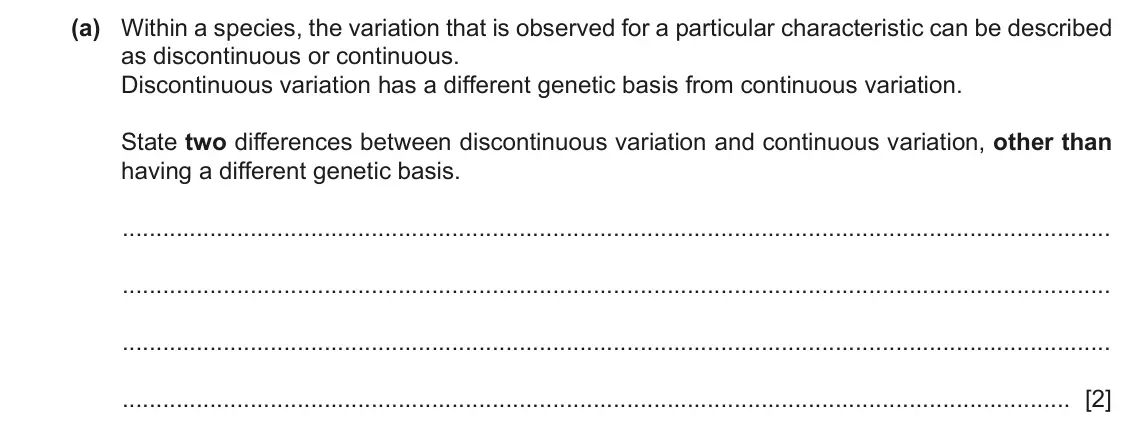
Q9(b)
The whole paper ↗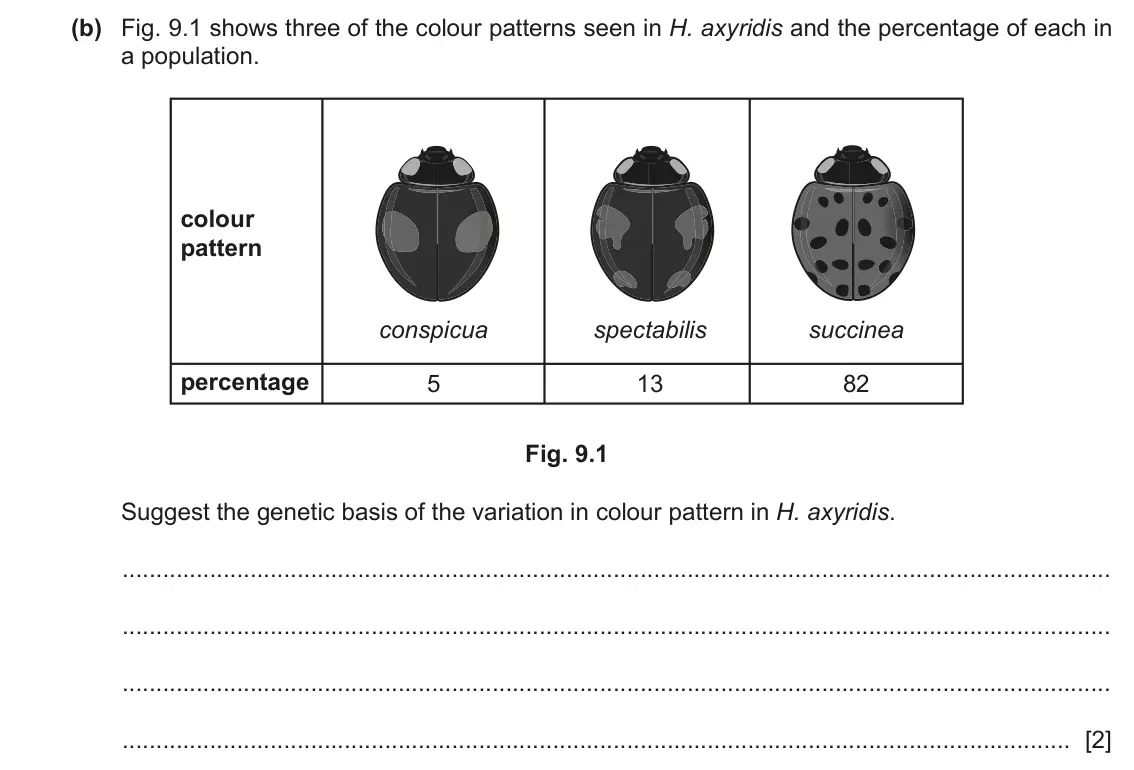
Q9(c)
The whole paper ↗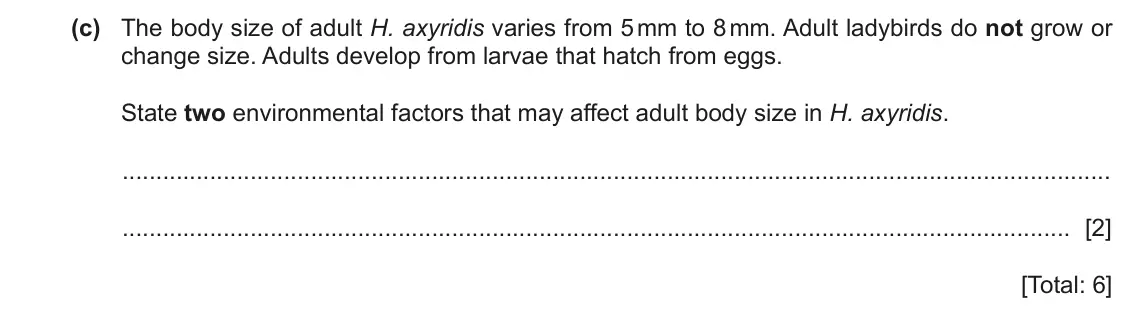
Q2(d)(i)
The whole paper ↗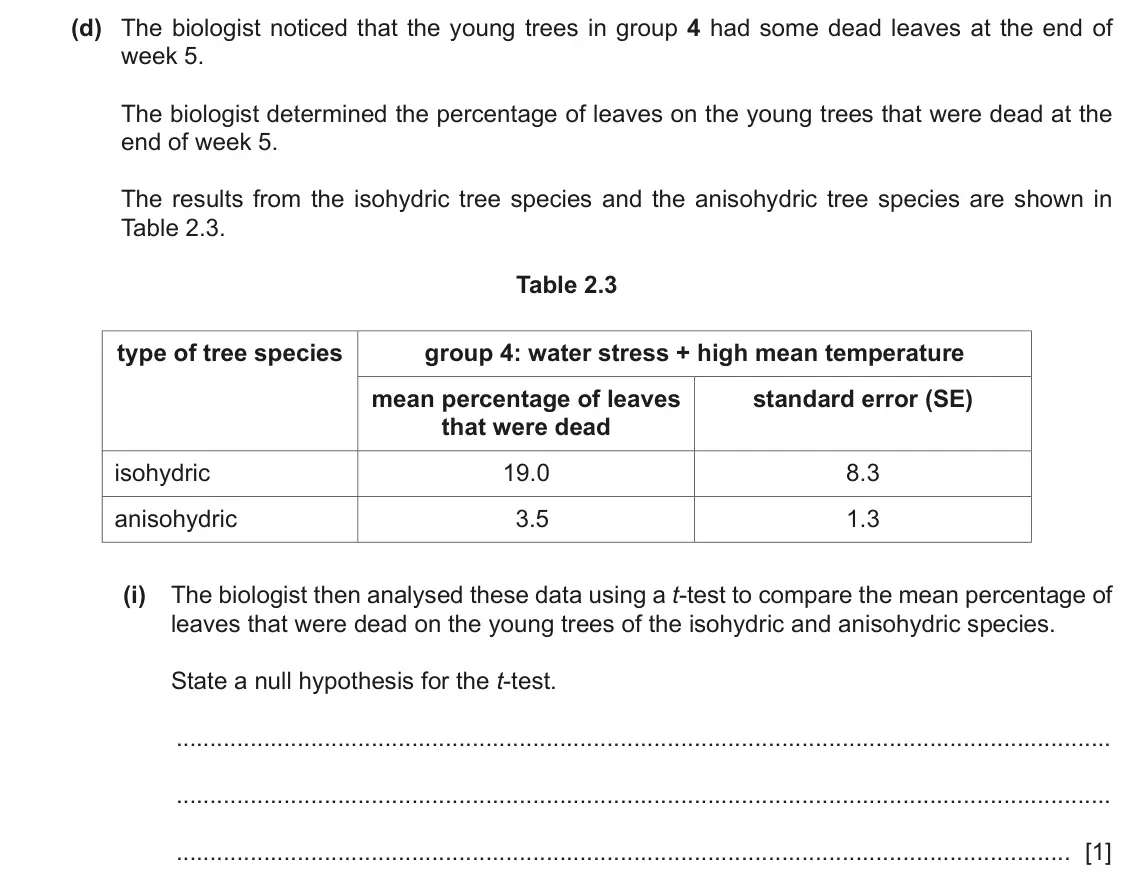
Q2(d)(ii)
The whole paper ↗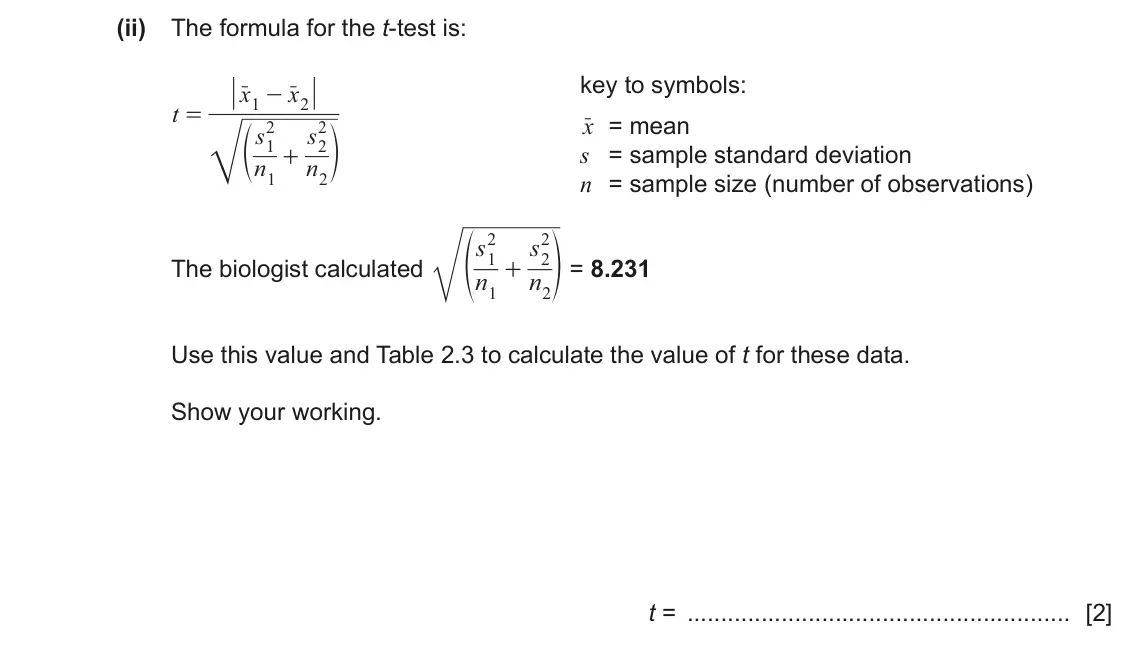
Q2(d)(iii)
The whole paper ↗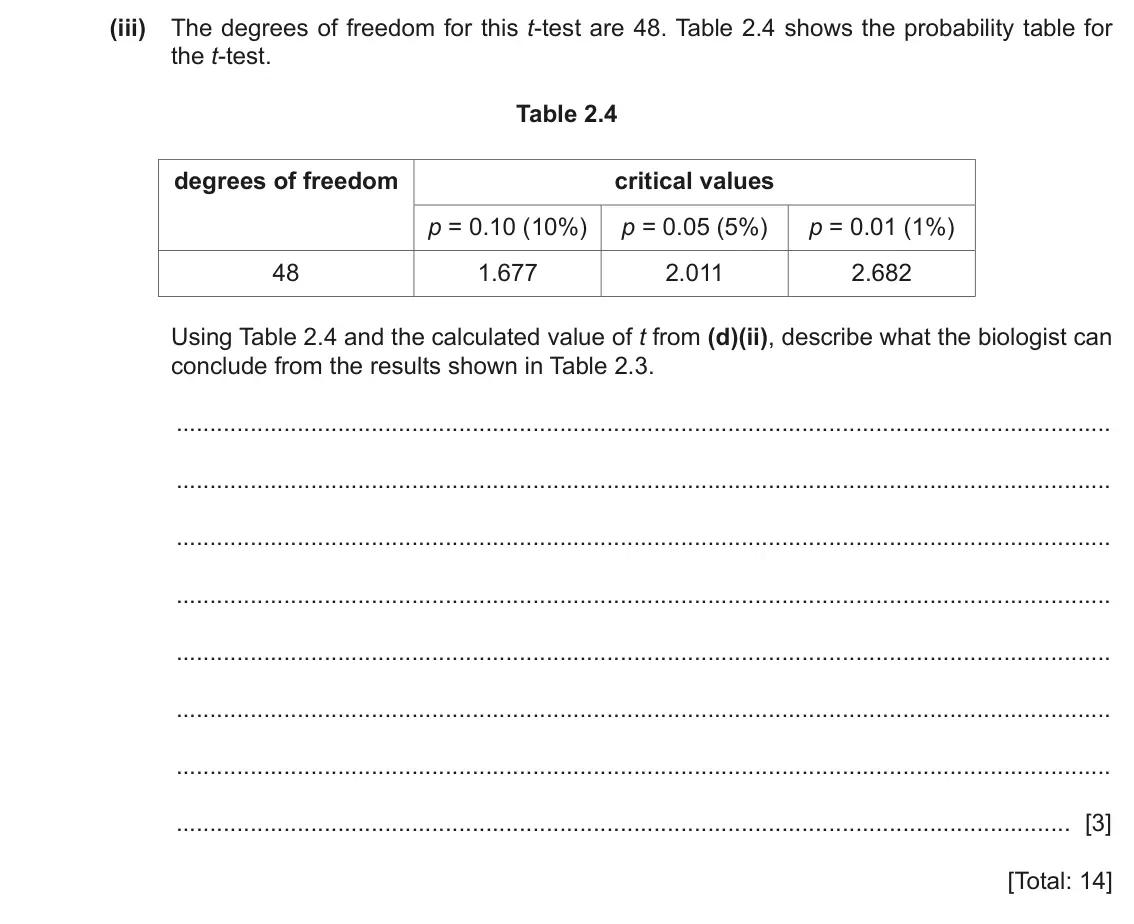
Q2(d)(i)
The whole paper ↗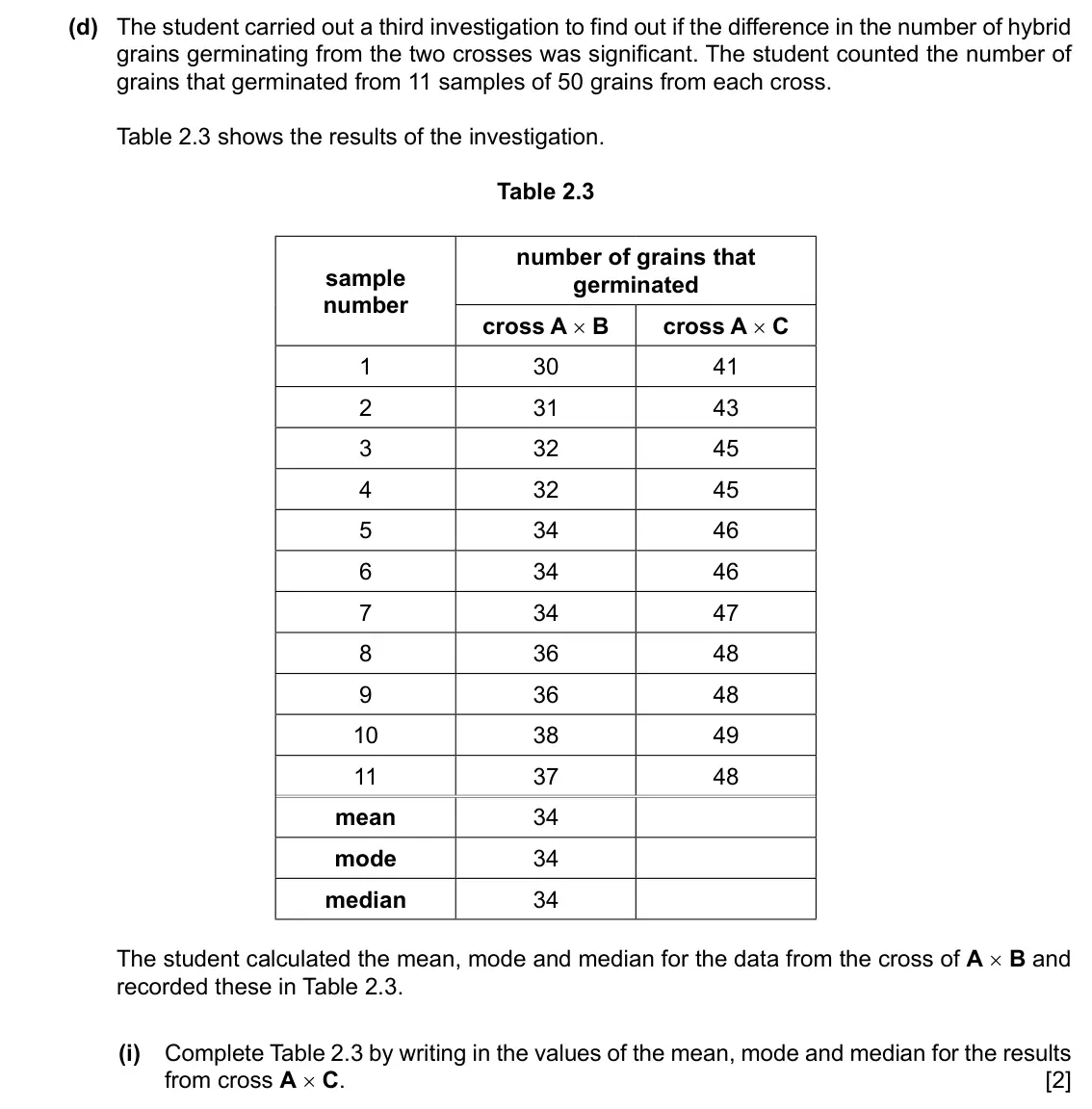
Q2(d)(ii)
The whole paper ↗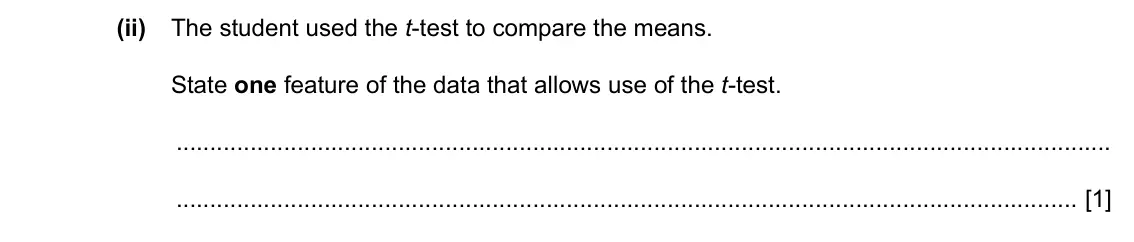
Q2(d)(iii)
The whole paper ↗
Q2(d)(iv)
The whole paper ↗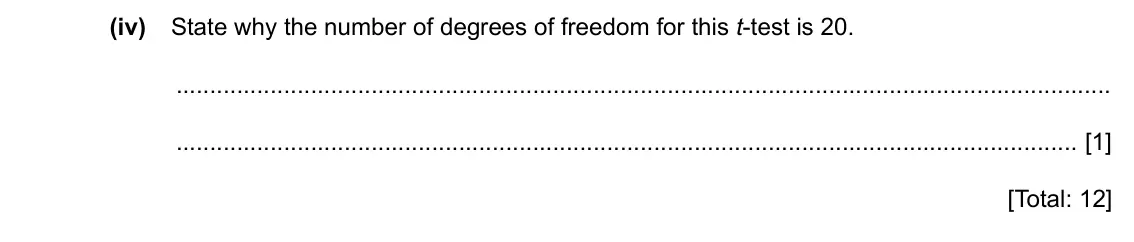
All 10 questions on Variation, as a list
- June 2024, Paper 4, Q9(a) (2 marks): Within a species, the variation that is observed for a particular characteristic can be described as discontinuous or continuous. Discontinuous variation has a
- June 2024, Paper 4, Q9(b) (2 marks): Fig. 9.1 shows three of the colour patterns seen in H. axyridis and the percentage of each in a population. colour pattern conspicua spectabilis succinea percen
- June 2024, Paper 4, Q9(c) (2 marks): The body size of adult H. axyridis varies from 5 mm to 8 mm. Adult ladybirds do not grow or change size. Adults develop from larvae that hatch from eggs. State
- June 2024, Paper 5, Q2(d)(i) (1 mark): The biologist noticed that the young trees in group 4 had some dead leaves at the end of week 5. The biologist determined the percentage of leaves on the young
- June 2024, Paper 5, Q2(d)(ii) (2 marks): The formula for the t-test is: key to symbols: x x r - r 1 2 t = xr = mean e s 2 s 2 o 1 2 s = sample standard deviation + n n 1 2 n = sample size (number of ob
- June 2024, Paper 5, Q2(d)(iii) (3 marks): The degrees of freedom for this t-test are 48. Table 2.4 shows the probability table for the t-test. Table 2.4 degrees of freedom critical values p = 0.10 (10%)
- Specimen, Paper 5, Q2(d)(i) (2 marks): The student carried out a third investigation to find out if the difference in the number of hybrid grains germinating from the two crosses was significant. The
- Specimen, Paper 5, Q2(d)(ii) (1 mark): The student used the t-test to compare the means. State one feature of the data that allows use of the t-test. [1]
- Specimen, Paper 5, Q2(d)(iii) (1 mark): State a null hypothesis for this t-test. [1]
- Specimen, Paper 5, Q2(d)(iv) (1 mark): State why the number of degrees of freedom for this t-test is 20. [1] [Total: 12]
Questions, mark schemes and examiner’s reports are © Cambridge University Press & Assessment, from their published past papers. Plumi isn’t affiliated with any exam board. Want whole papers? Every CAIE A-Level Biology paper.
Rather write your answers by hand on iPad? Plumi marks them against the same mark schemes.