 plumi
The determination of equilibrium market prices: AQA A‑Level Economics questions
Every AQA A-Level Economics exam question on 4.1.3.5 The determination of equilibrium market prices, 2020–2025, with its mark scheme and examiner’s report.
Find questions686
Calculations





All 13 questions on The determination of equilibrium market prices, as a list
- June 2025, Paper 1, Q02 (4 marks): Explain how the data in Extract A (Figure 1 and Figure 2) show that the rice export ban by India in 2022 is likely to have had a significant impact on the world
- June 2025, Paper 1, Q03 (9 marks): Extract B (line 19) states: ‘In Nigeria, the demand for rice is very price inelastic’. With the help of a diagram, explain how the Indian export ban is likely t
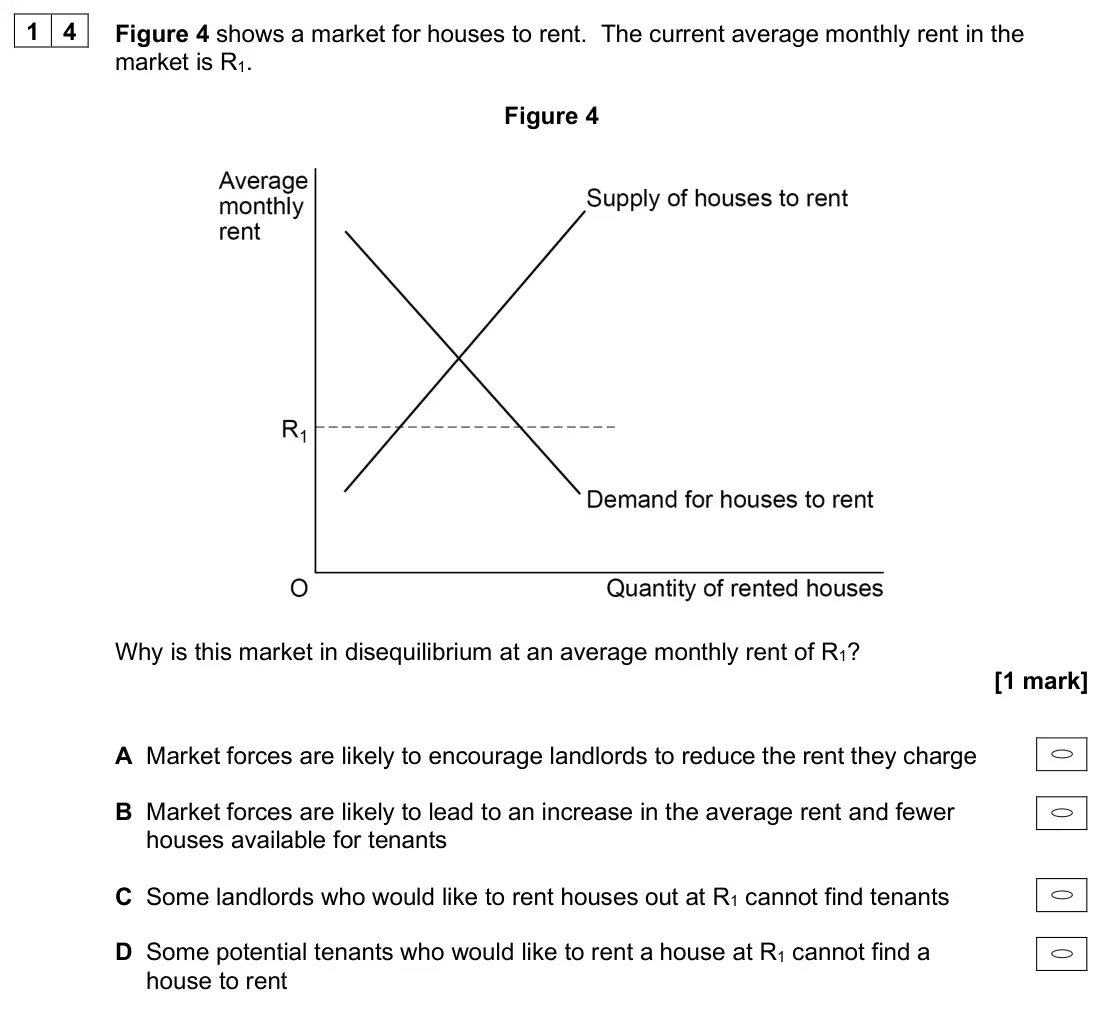
- June 2025, Paper 3, Q14 (1 mark): Figure 4 shows a market for houses to rent. The current average monthly rent in the market is R1. Figure 4 Why is this market in disequilibrium at an average mo
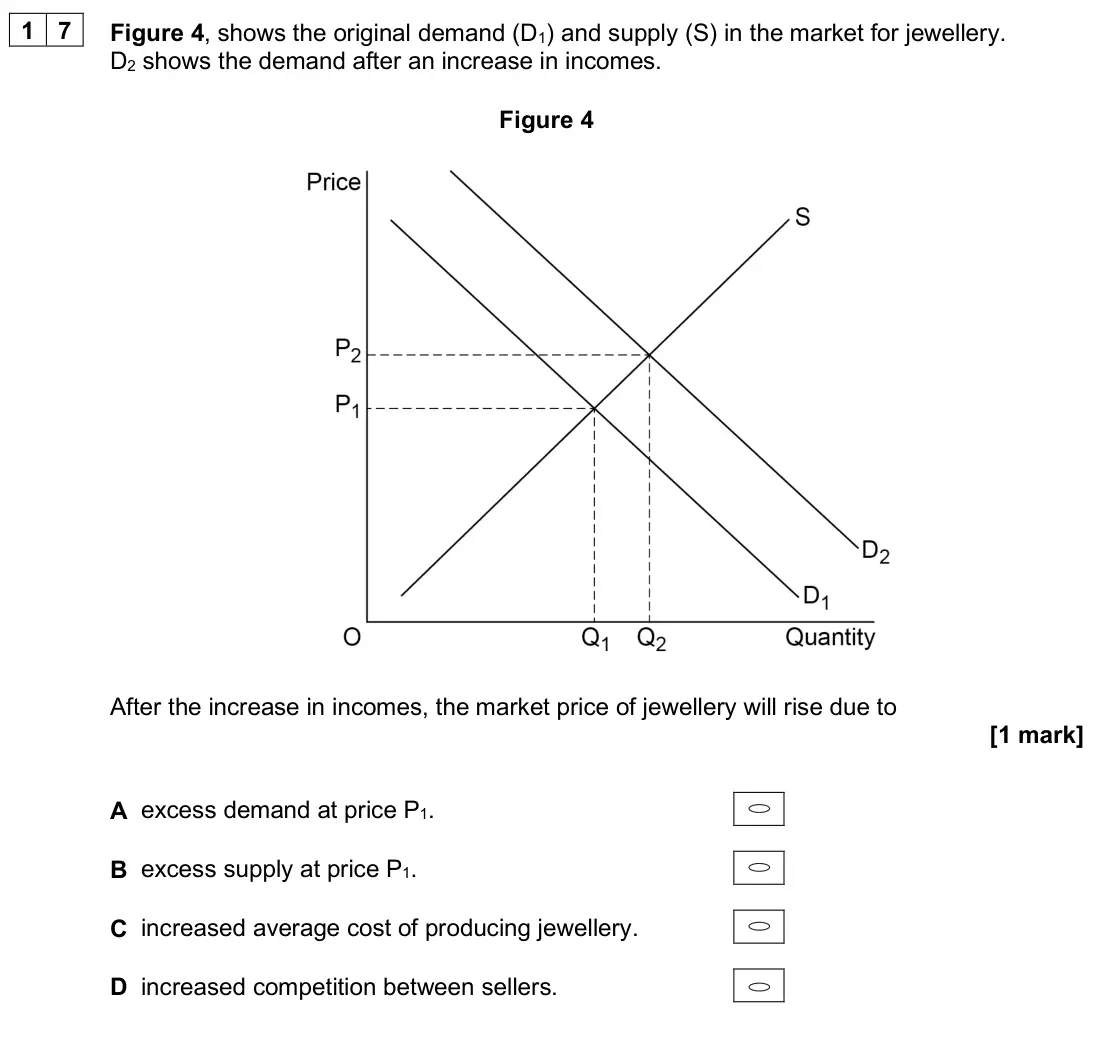
- June 2025, AS Paper 1, Q17 (1 mark): Figure 4, shows the original demand (D1) and supply (S) in the market for jewellery. D2 shows the demand after an increase in incomes. Figure 4 After the increa
- June 2024, Paper 1, Q02 (4 marks): Explain how the data in Extract A (Figure 1 and Table 1) show that the supply of university and private rental accommodation has failed to match the increase in
- June 2024, Paper 1, Q03 (9 marks): Extract B (lines 3–4) states that ‘Universities have expanded the number of places on offer to students, but the supply of student accommodation is highly inela
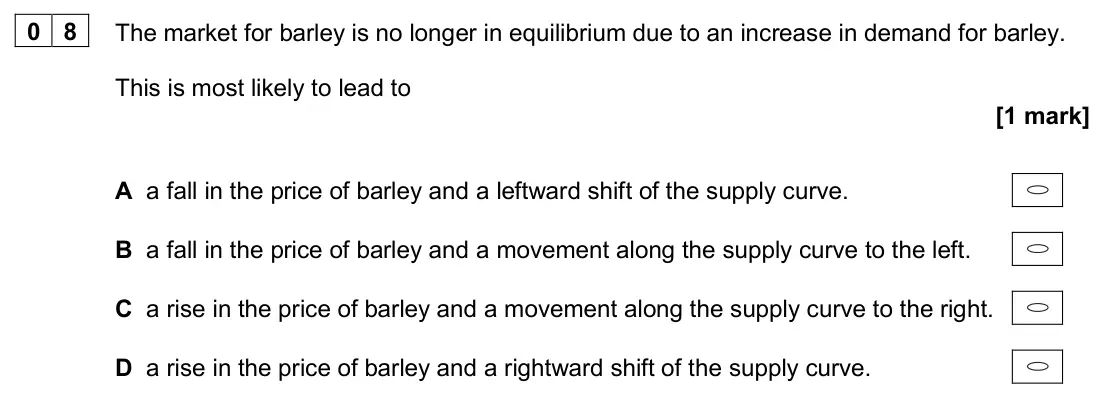
- June 2024, AS Paper 1, Q08 (1 mark): The market for barley is no longer in equilibrium due to an increase in demand for barley. This is most likely to lead to [1 mark] A a fall in the price of barl
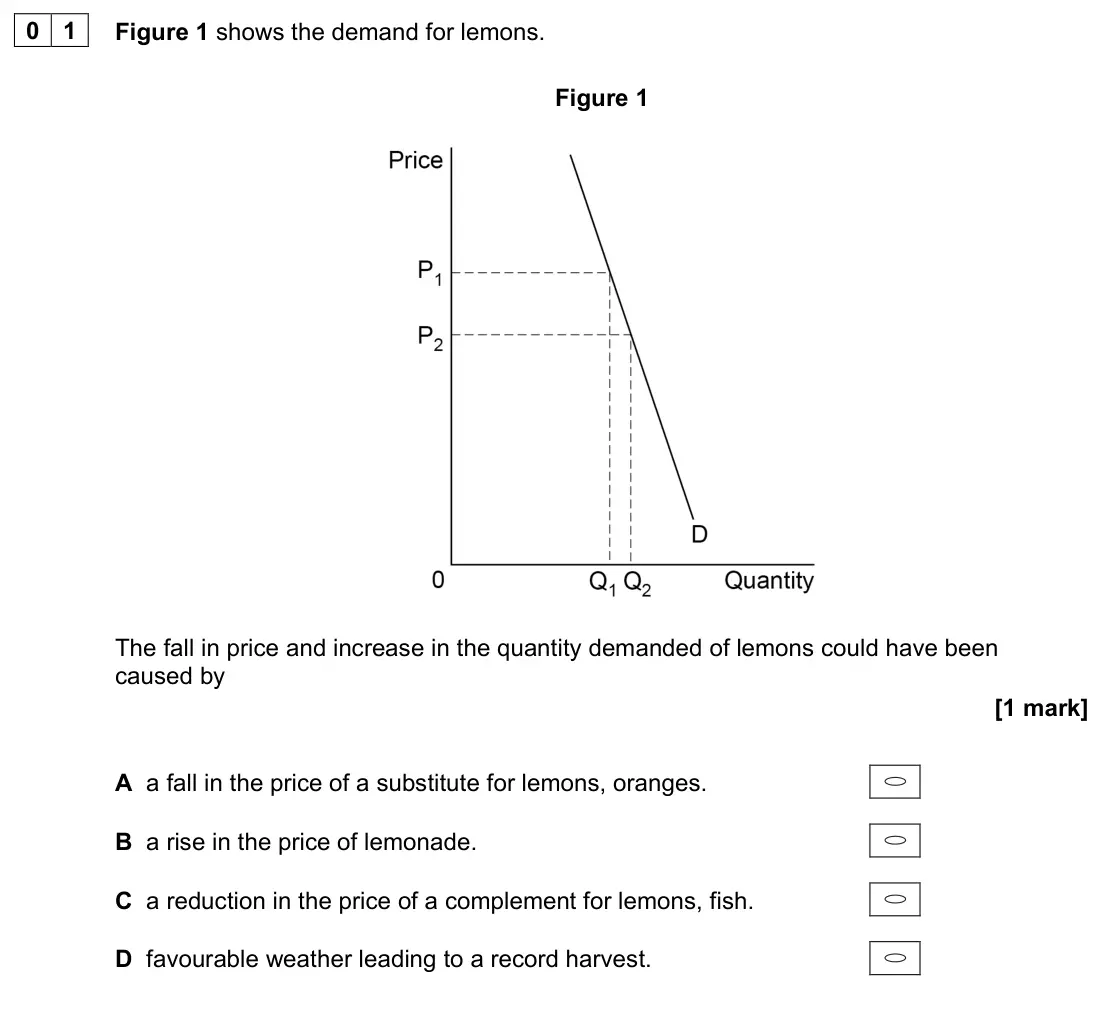
- June 2023, Paper 3, Q01 (1 mark): Figure 1 shows the demand for lemons. Figure 1 The fall in price and increase in the quantity demanded of lemons could have been caused by [1 mark] A a fall in
- June 2023, Paper 3, Q32 (15 marks): Explain possible reasons for fluctuations in the world market price of tea. [15 marks] Section B Answer all questions in this section. Refer to the Insert for E
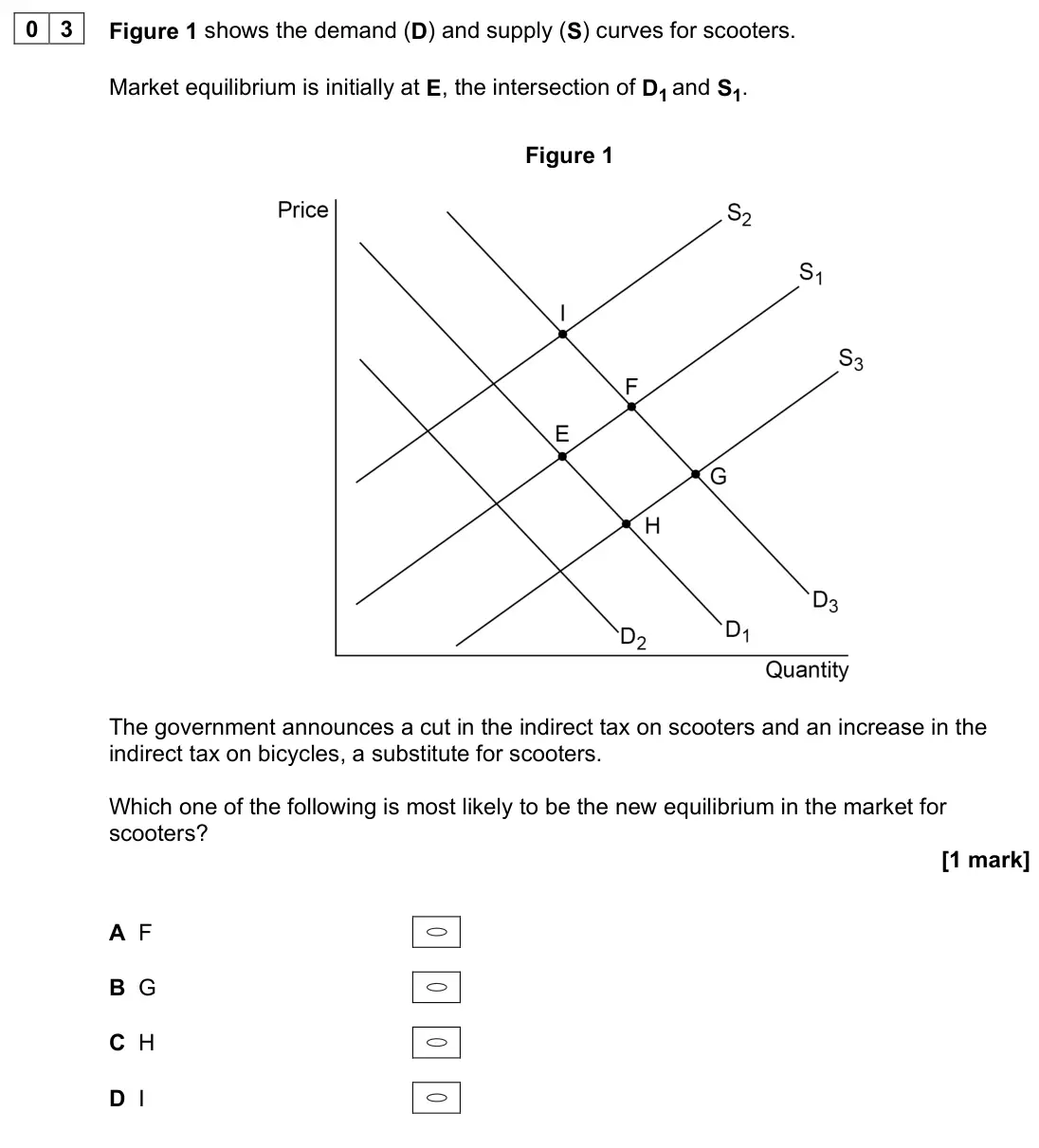
- June 2023, AS Paper 1, Q03 (1 mark): Figure 1 shows the demand (D) and supply (S) curves for scooters. Market equilibrium is initially at E, the intersection of D1 and S1. Figure 1 The government a
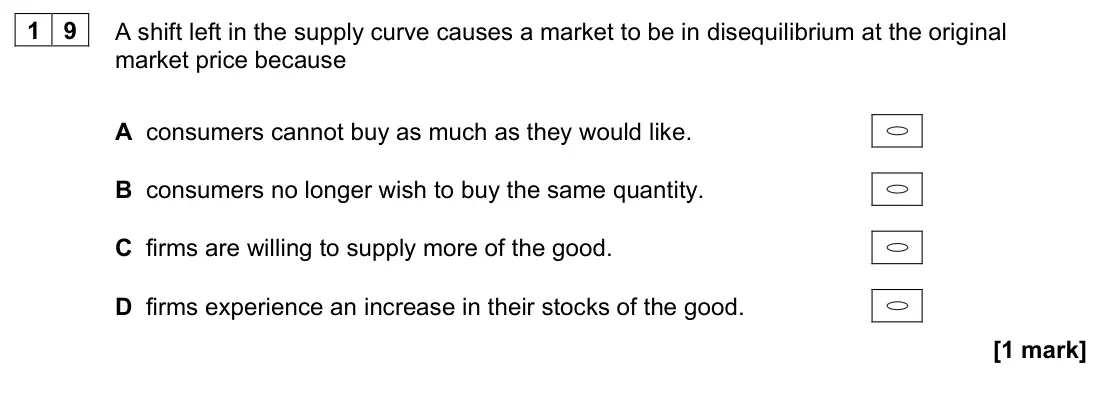
- June 2022, AS Paper 1, Q19 (1 mark): A shift left in the supply curve causes a market to be in disequilibrium at the original market price because A consumers cannot buy as much as they would like.
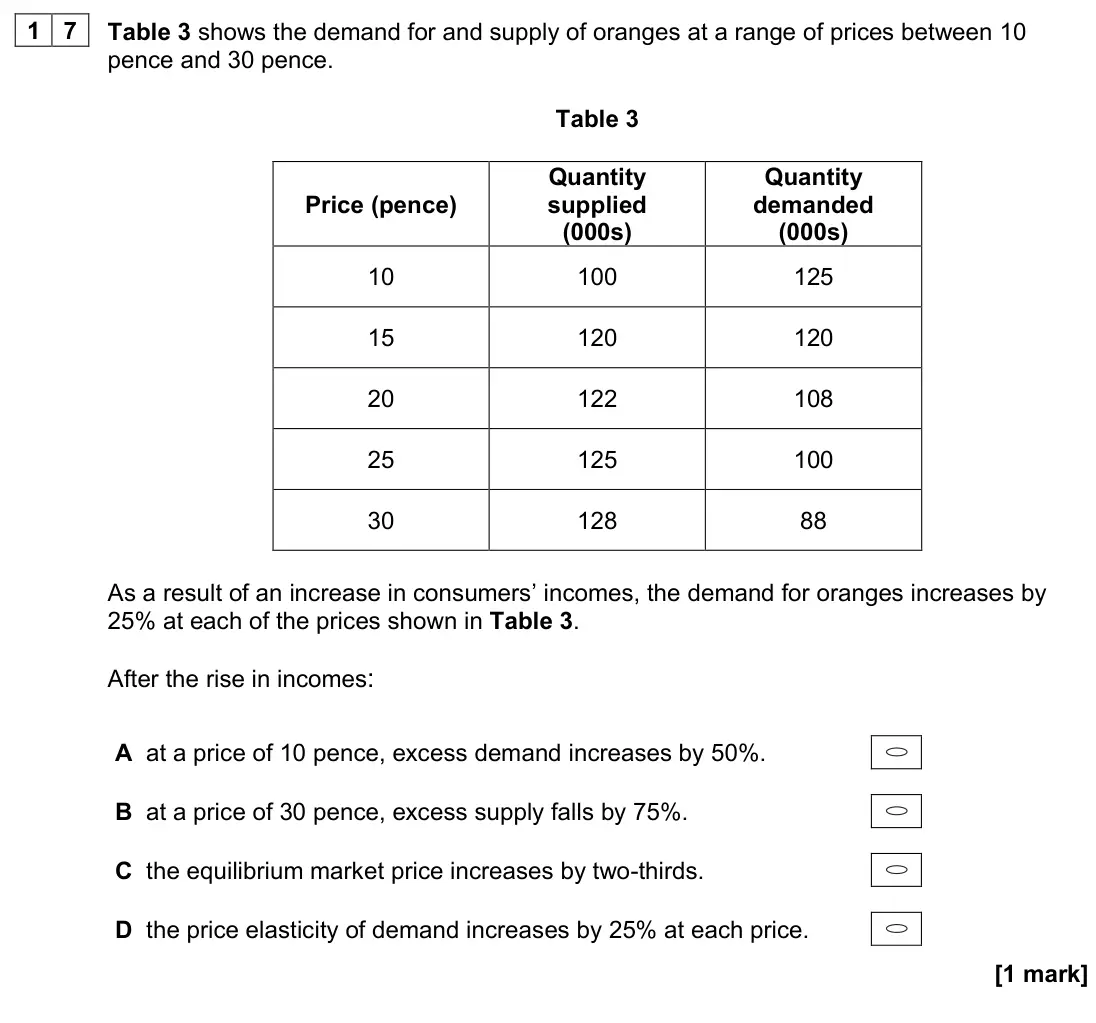
- November 2020, Paper 3, Q17 (1 mark): Table 3 shows the demand for and supply of oranges at a range of prices between 10 pence and 30 pence. Table 3 Price (pence) Quantity supplied (000s) Quantity d
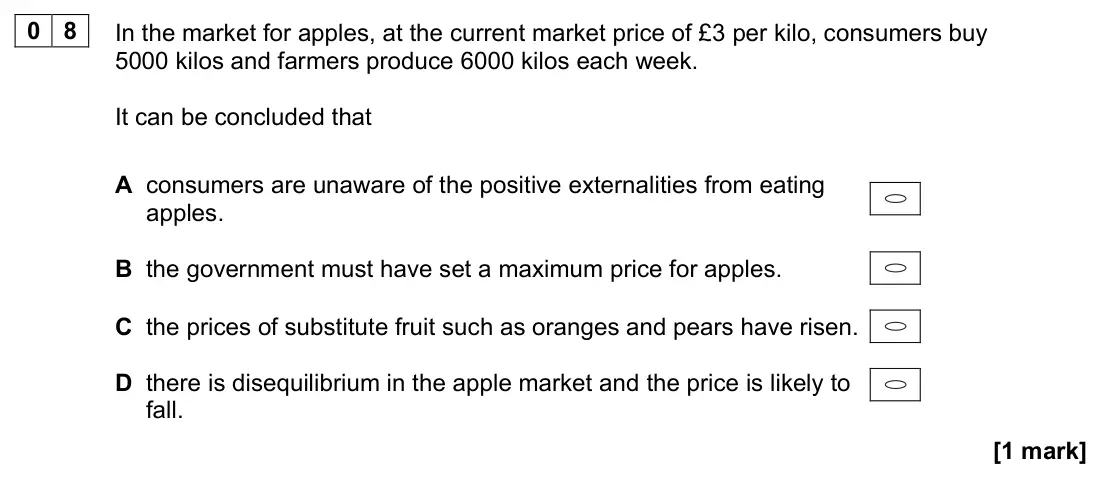
- November 2020, AS Paper 1, Q08 (1 mark): In the market for apples, at the current market price of £3 per kilo, consumers buy 5000 kilos and farmers produce 6000 kilos each week. It can be concluded tha
Questions, mark schemes and examiner’s reports are © AQA, from their published past papers. Plumi isn’t affiliated with any exam board. Want whole papers? Full past papers.
Rather write your answers by hand on iPad? Plumi marks them against the same mark schemes.