 plumi
Biodegradability and disposal of polymers: AQA A‑Level Chemistry questions
AQA A-Level Chemistry past-paper questions on 3.3.12.2 Biodegradability and disposal of polymers, 2008–2025, with mark schemes and examiner’s reports where available.
Paper
All papers
Exam
All years
Calculations
Q03.2
The whole paper ↗
Q01.2
The whole paper ↗
Q03.4
The whole paper ↗
Q10.7
The whole paper ↗
Q07.3
The whole paper ↗Q4(e)(ii)
The whole paper ↗
Q7(b)(iv)
The whole paper ↗Q5(d)(v)
The whole paper ↗
Q4(d)
The whole paper ↗Q4(b)(iii)
The whole paper ↗
Q5(e)(i)
The whole paper ↗
Q4(c)
The whole paper ↗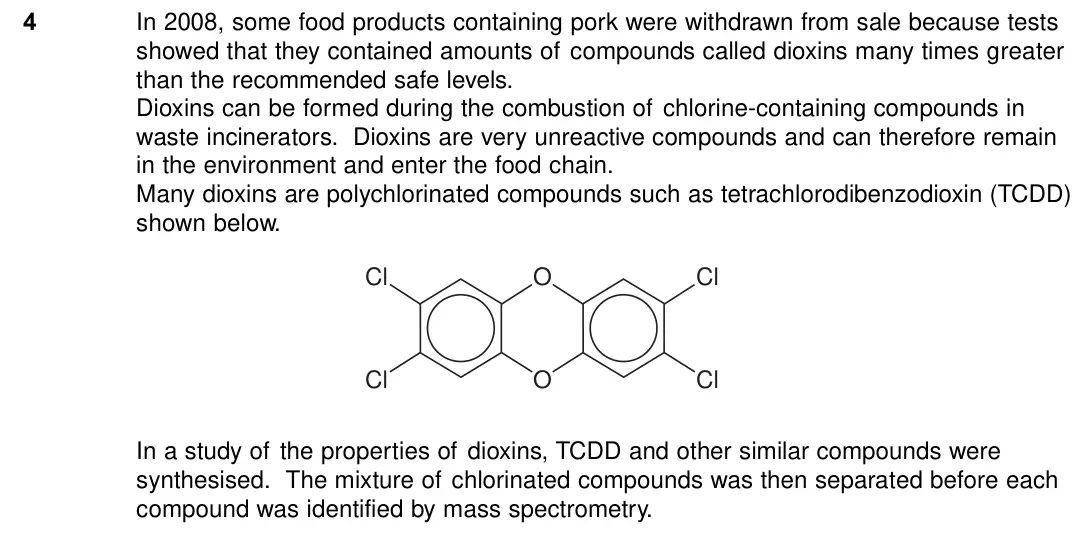
Q7(e)
The whole paper ↗
Q8(c)(iii)
The whole paper ↗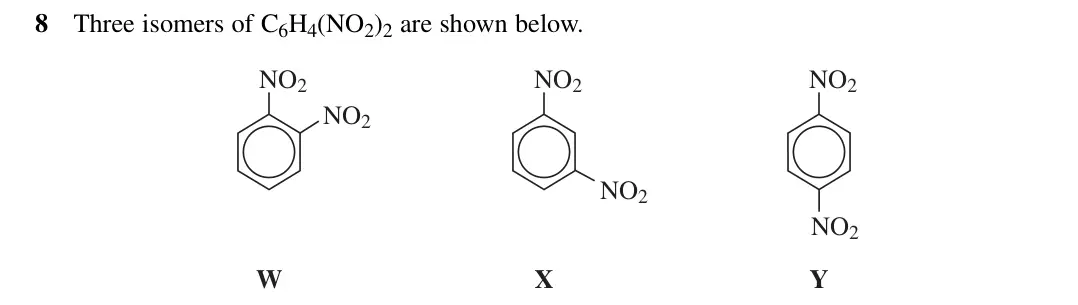
All 17 questions on Biodegradability and disposal of polymers, as a list
- June 2025, Paper 2, Q03.2 (1 mark): State why PVC is not biodegradable. [1 mark]
- June 2024, Paper 3, Q31 (1 mark): Which type of polymer is most difficult to hydrolyse? [1 mark] A polyalkene B polyamide C polyester D protein
- June 2022, Paper 3, Q28 (1 mark): Which polymer is not hydrolysed when heated with aqueous alkali? [1 mark] A Kevlar B Nylon 6,6 C Poly(propene) D Terylene
- November 2021, Paper 3, Q01.2 (2 marks): Explain why polyesters are biodegradable but polyalkenes are not biodegradable. [2 marks]
- November 2021, Paper 3, Q34 (1 mark): Which type of polymer is not hydrolysed by heating with concentrated aqueous sodium hydroxide? [1 mark] A poly(alkene) B poly(amide) C poly(ester) D protein
- June 2019, Paper 2, Q03.4 (1 mark): Golf balls recovered from lakes and ponds can be used again even after being in water for several years. Explain why these golf balls do not biodegrade. [1 mark
- June 2017, Paper 2, Q10.7 (3 marks): Isomer U is shown. The polymer formed by U and the polymer formed by 5-hydroxyhexanoic acid in Question 10.6 both contain ester groups that can be hydrolysed. D
- Specimen, Paper 2, Q07.3 (3 marks): Advantage Justification 8
- June 2016, CHEM4 (old spec), Q4(e)(ii) (2 marks): Suggest an advantage of surgical sutures made from PGA rather than from poly(propene). Explain your answer. [2 marks]
- June 2015, CHEM4 (old spec), Q7(b)(iv) (1 mark): Explain why polymer L is non-biodegradable. [1 mark]
- June 2013, CHEM4 (old spec), Q5(d)(v) (1 mark): The manufacturers of PLA claim that the material will break down to compost in just 12 weeks. Suggest one reason why PLA in landfill may take longer than 12 wee
- January 2013, CHEM4 (old spec), Q4(d) (2 marks): One of the three compounds shown in parts (a), (b) and (c) cannot be broken down by hydrolysis. Write the letter (a), (b) or (c) to identify this compound and e
- June 2012, CHEM4 (old spec), Q4(b)(iii) (3 marks): A shirt was made from this polyester. A student wearing the shirt accidentally splashed aqueous sodium hydroxide on a sleeve. Holes later appeared in the sleeve
- June 2011, CHEM4 (old spec), Q5(e)(i) (1 mark): Hydrolysis of DEP in an excess of water was found to follow first order kinetics. Write a rate equation for this hydrolysis reaction using DEP to represent the
- June 2010, CHEM4 (old spec), Q4(c) (1 mark): Suggest one operating condition in an incinerator that would minimise the formation of dioxins. (1 mark) 13
- June 2010, CHEM4 (old spec), Q7(e) (4 marks): Draw the repeating unit of the polyester Terylene that is made from benzene-1,4-dicarboxylic acid and ethane-1,2-diol. Although Terylene is biodegradeable, it i
- January 2010, CHEM4 (old spec), Q8(c)(iii) (4 marks): Kevlar can be used as the inner lining of bicycle tyres. The rubber used for the outer part of the tyre is made of polymerised alkenes. State the difference in
Questions, mark schemes and examiner’s reports are © AQA, from their published past papers. Plumi isn’t affiliated with any exam board. Want whole papers? AQA A-Level Chemistry past papers.
The Plumi iPad app also offers exam-style questions with AI feedback on your handwritten working.