 plumi
Proteins: AQA A‑Level Biology questions
Every AQA A-Level Biology exam question on 3.1.4 Proteins, 2016–2025, with its mark scheme and examiner’s report.
Find questions1,383
Calculations
Q02.3
The whole paper ↗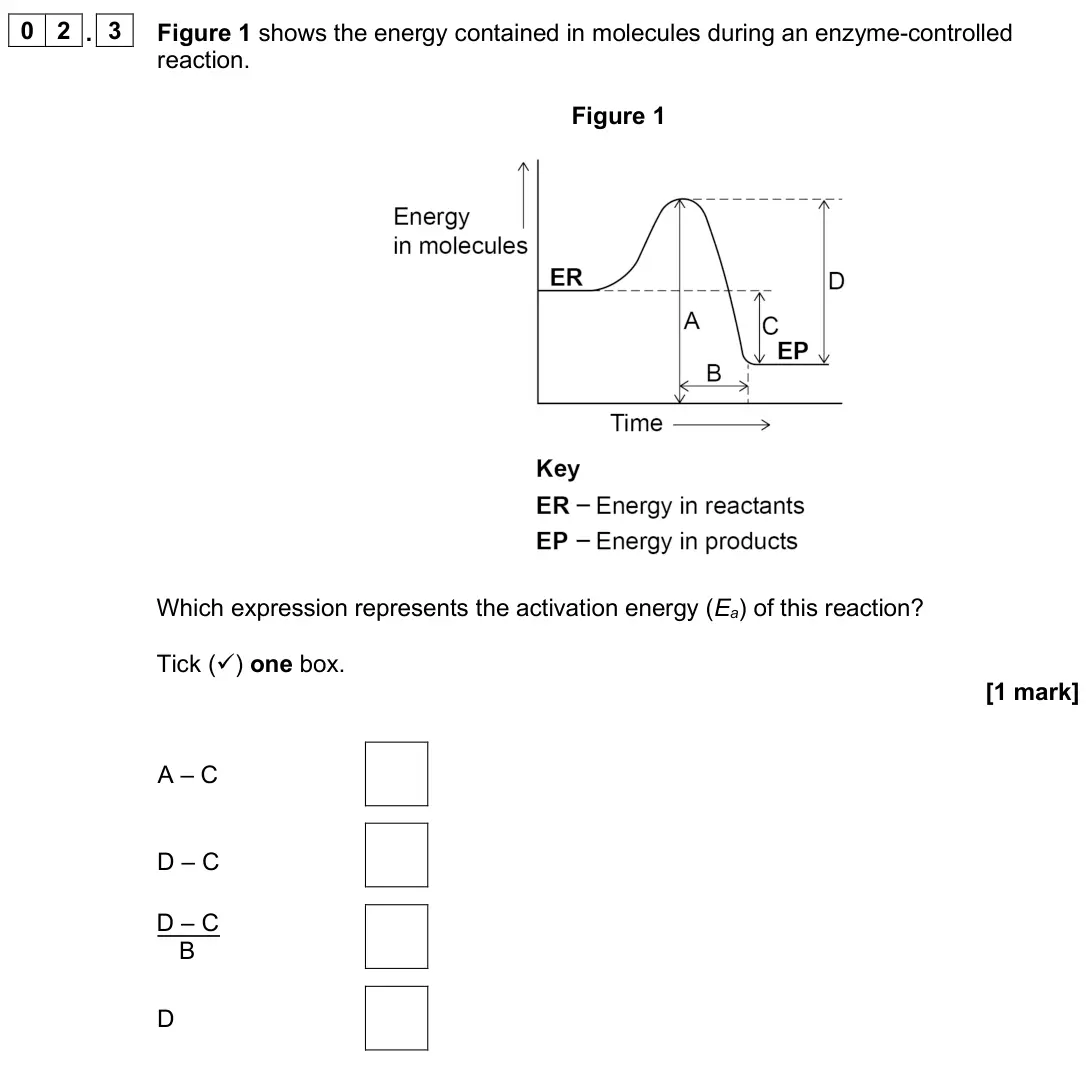
Q02.4
The whole paper ↗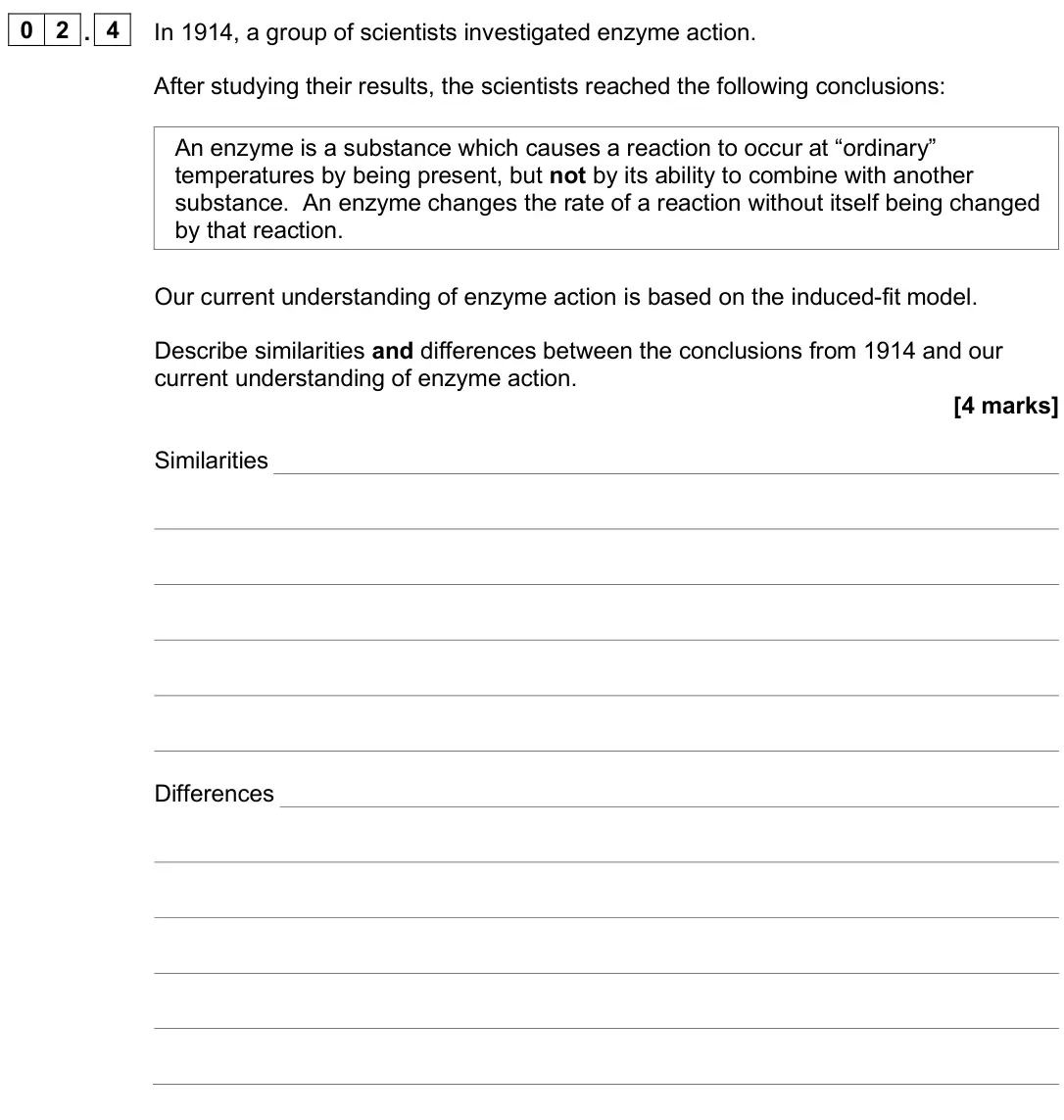
Q03.2
The whole paper ↗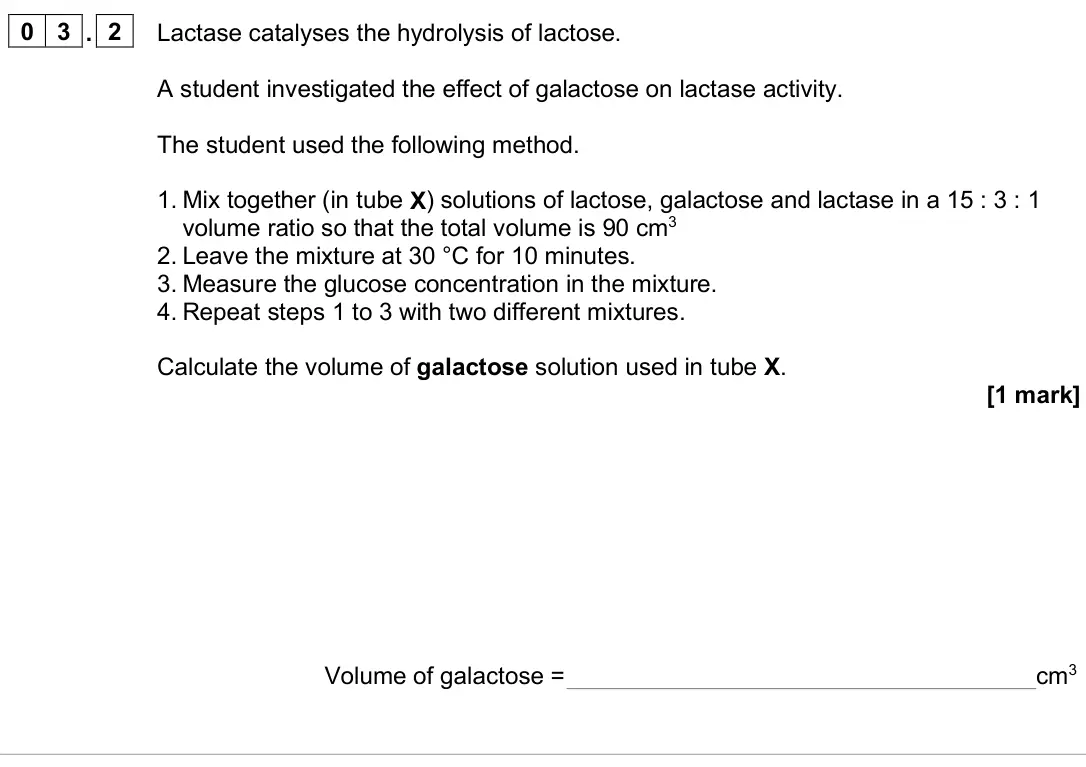
Q03.3
The whole paper ↗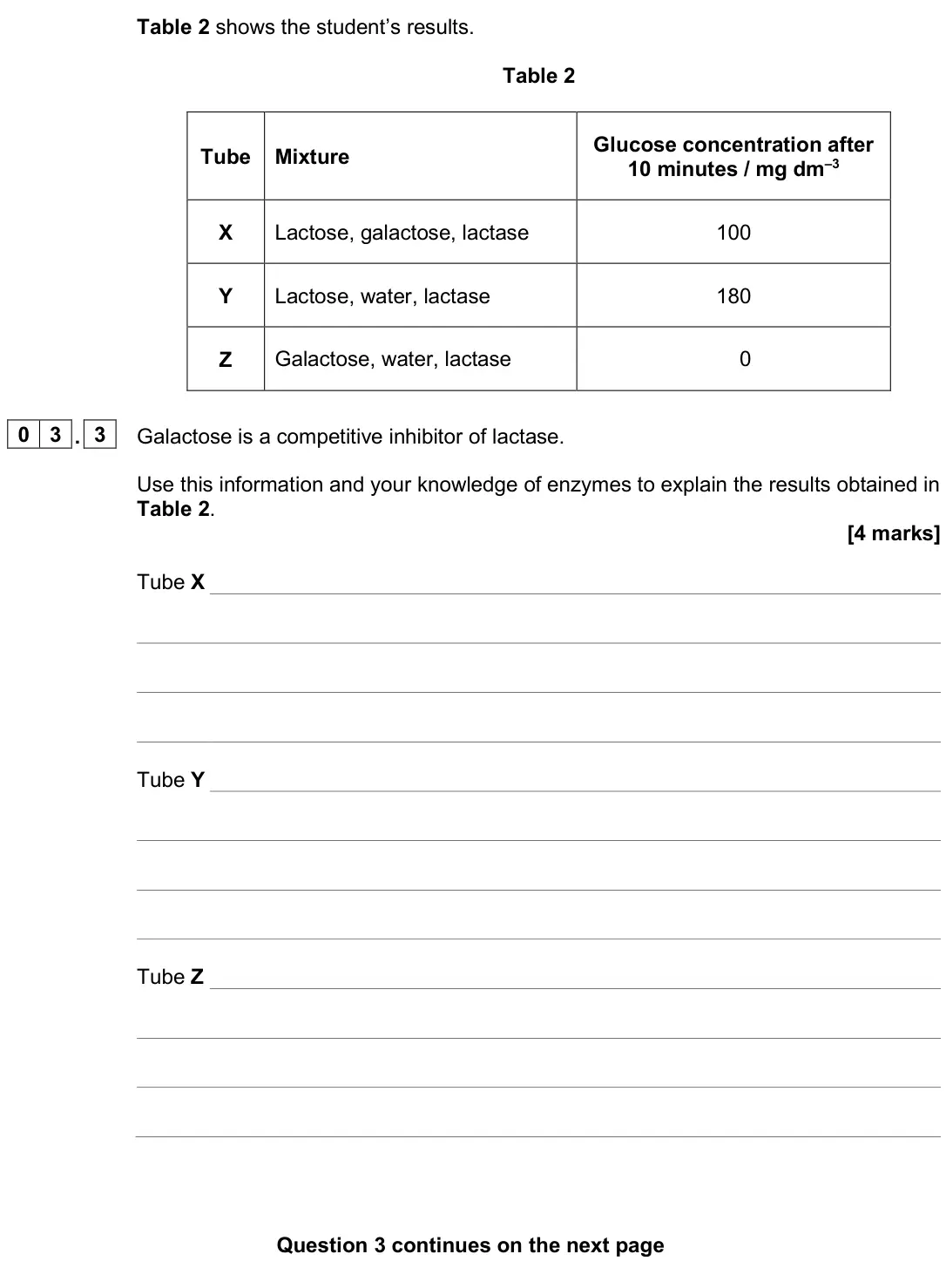
Q03.4
The whole paper ↗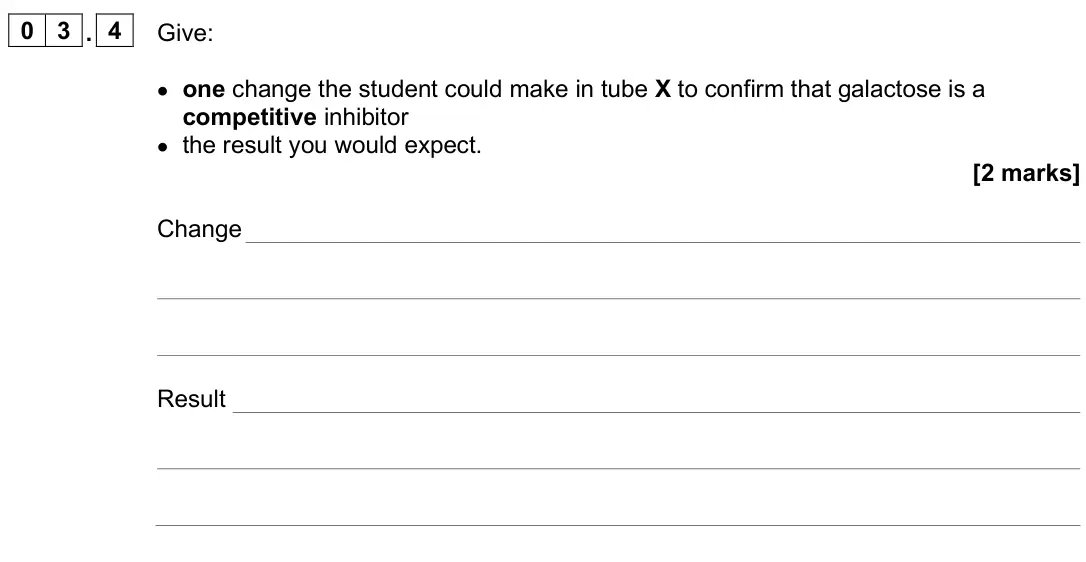
Q04.1
The whole paper ↗
Q04.2
The whole paper ↗
Q01.1
The whole paper ↗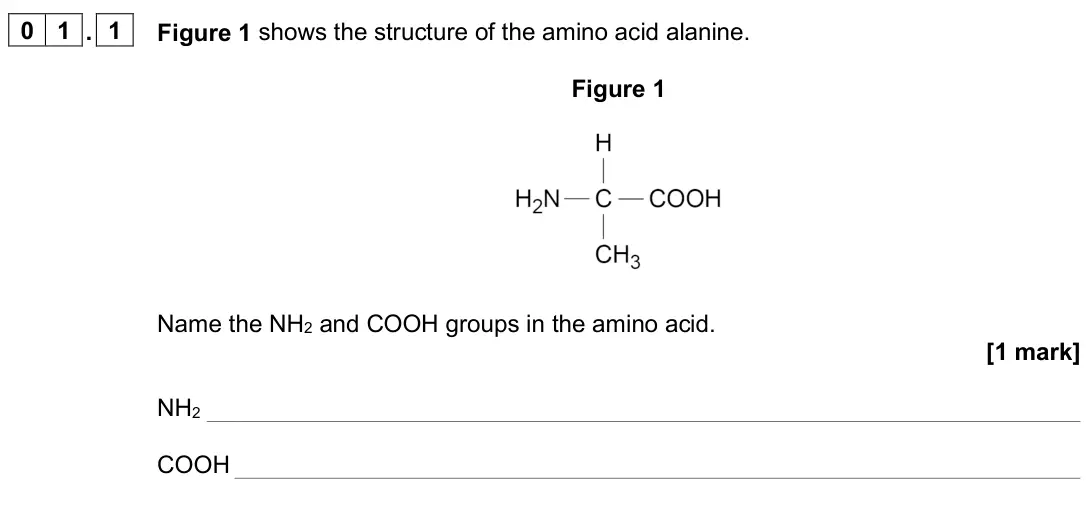
Q01.2
The whole paper ↗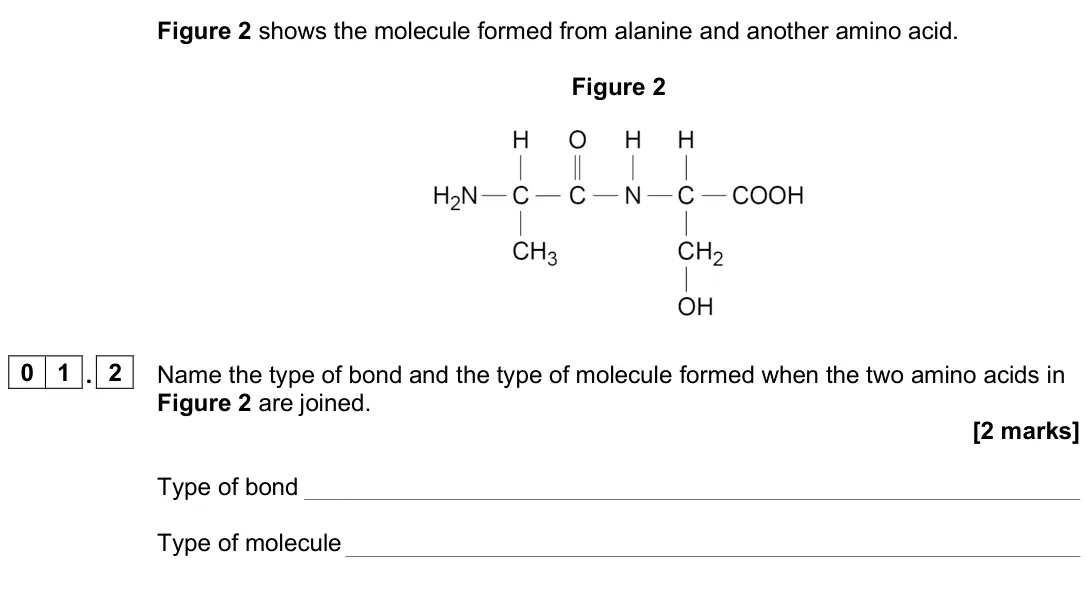
Q01.3
The whole paper ↗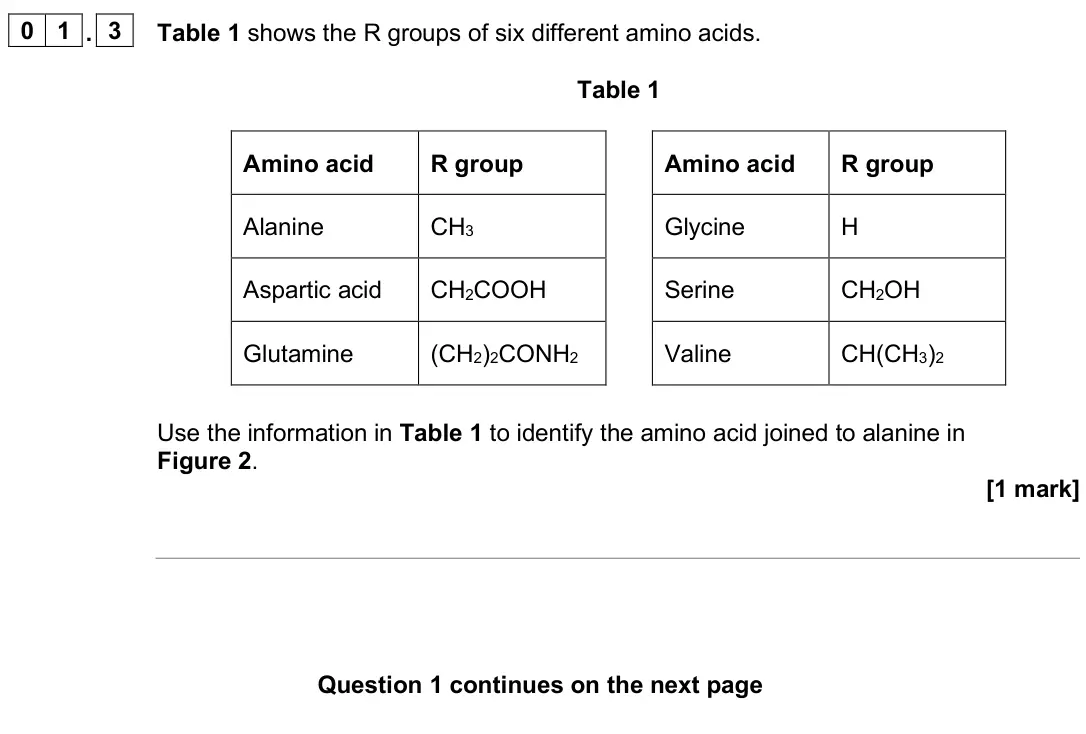
Q01.4
The whole paper ↗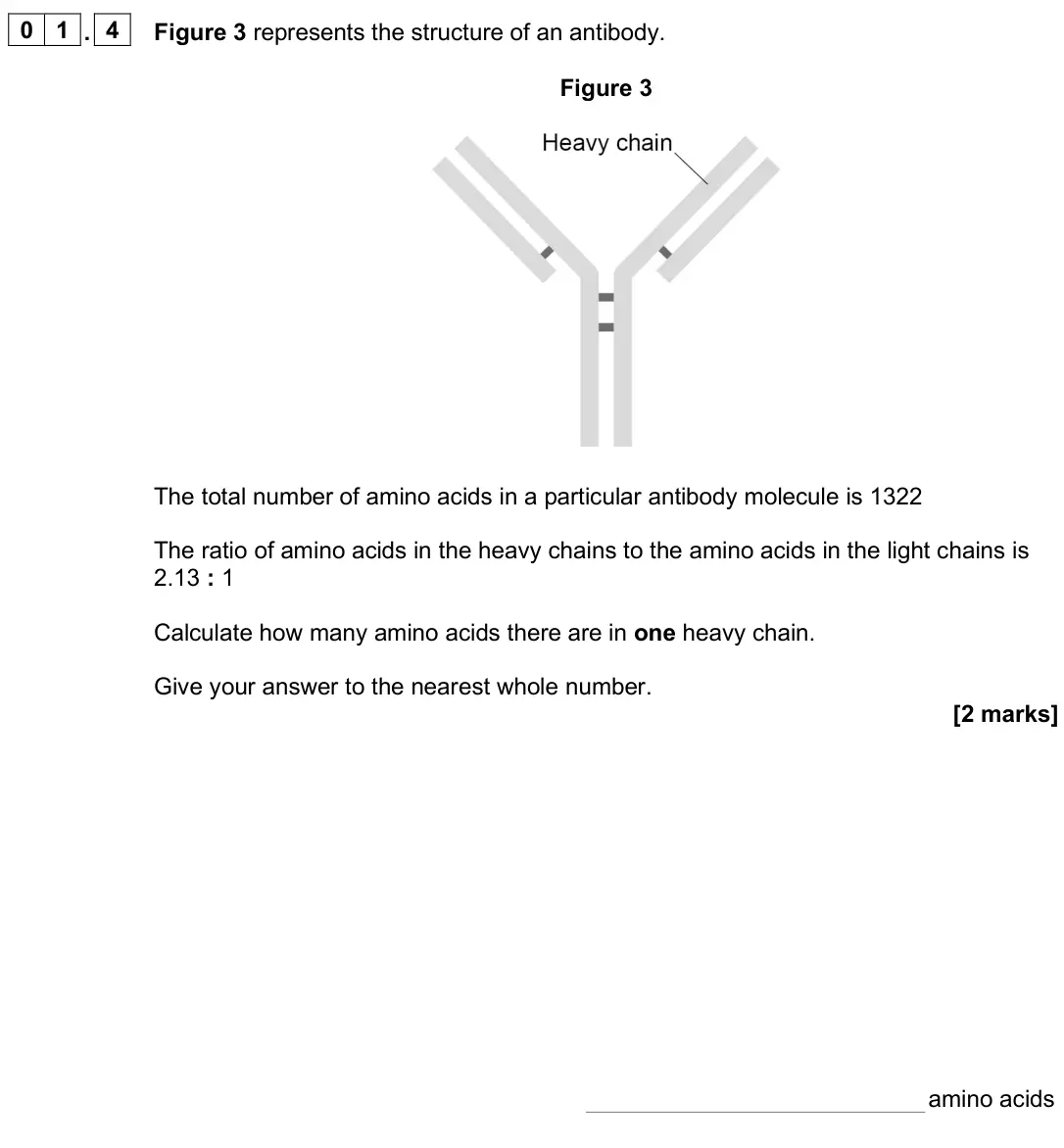
Q01.3
The whole paper ↗
Q06.1
The whole paper ↗
Q06.2
The whole paper ↗
Q06.3
The whole paper ↗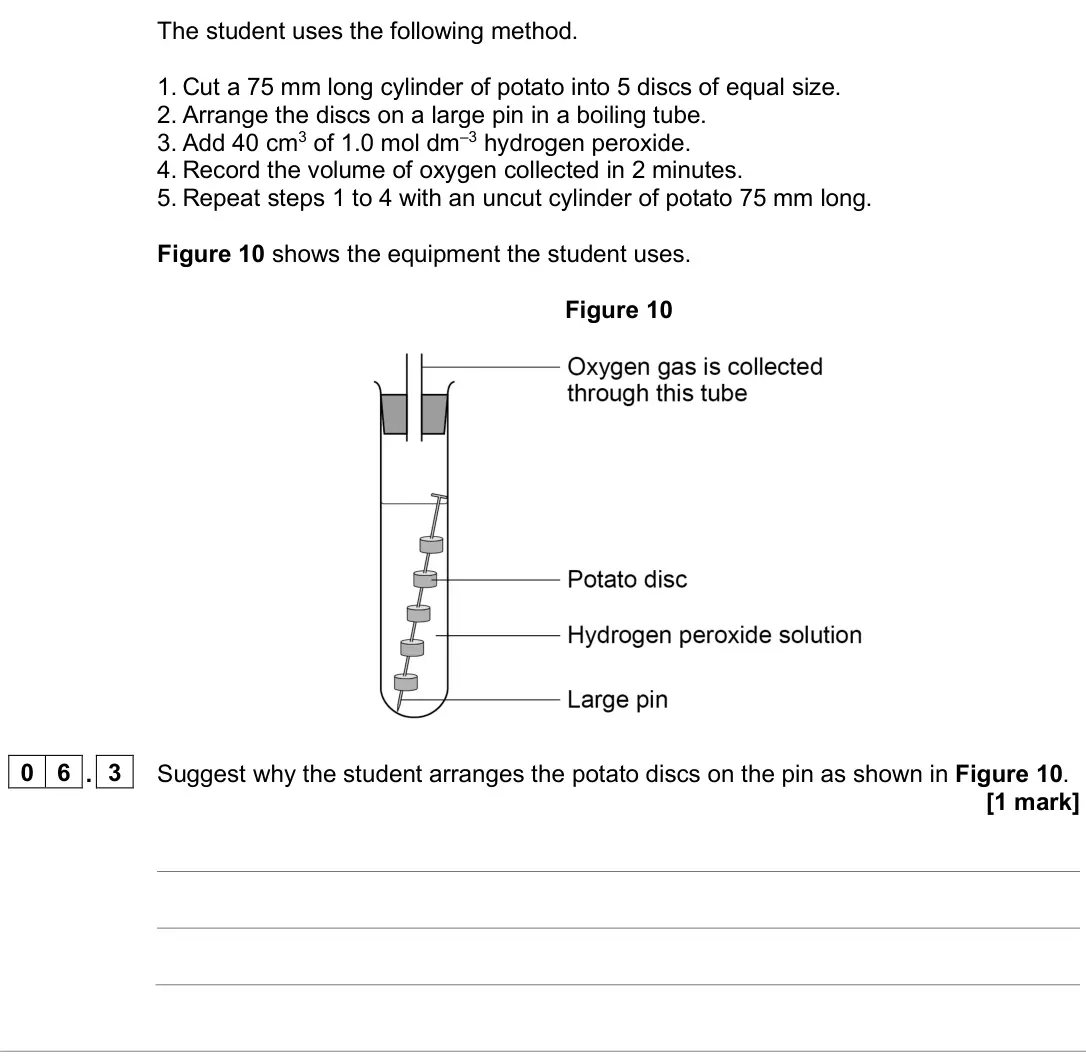
Q06.4
The whole paper ↗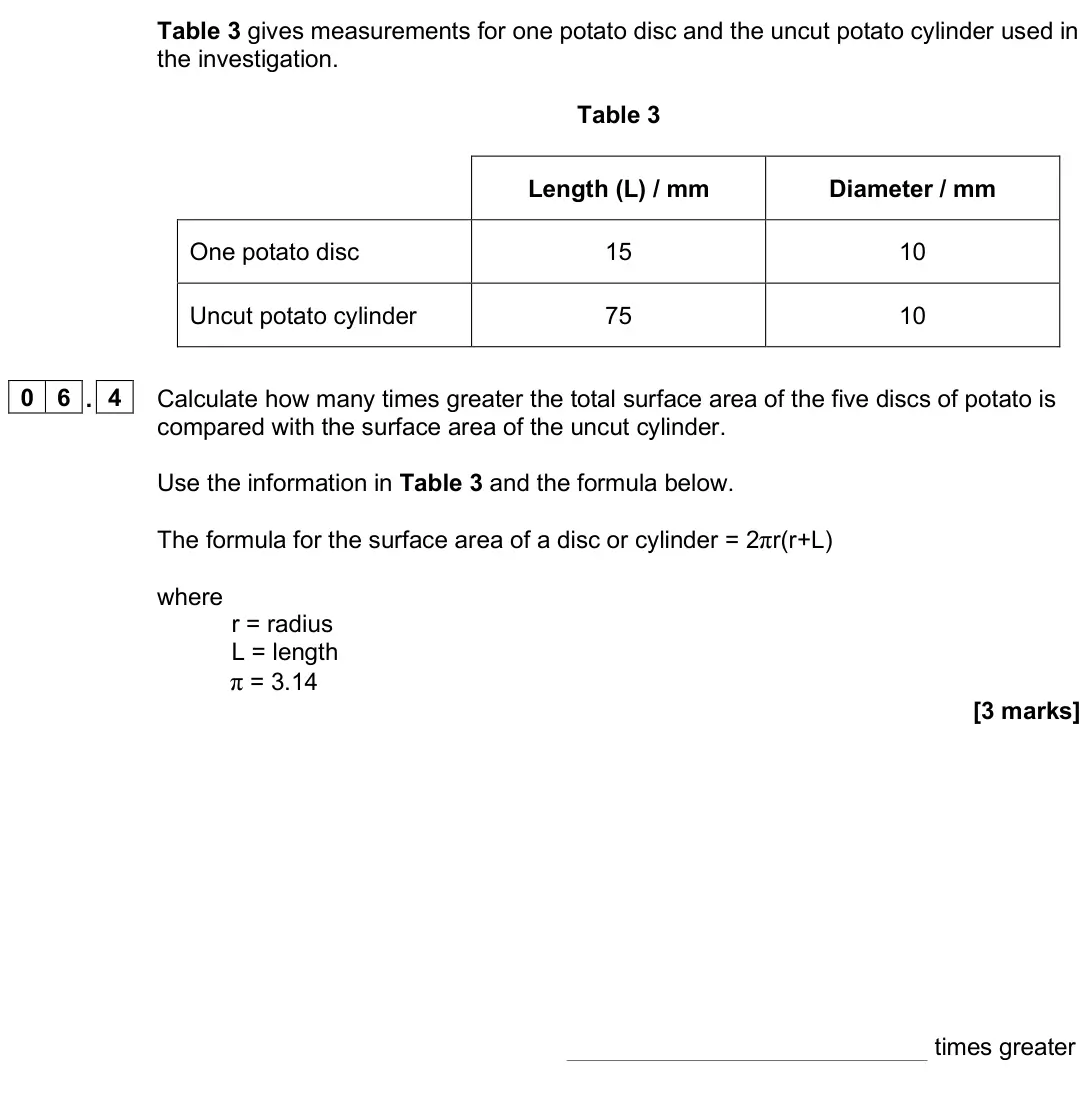
Q06.5
The whole paper ↗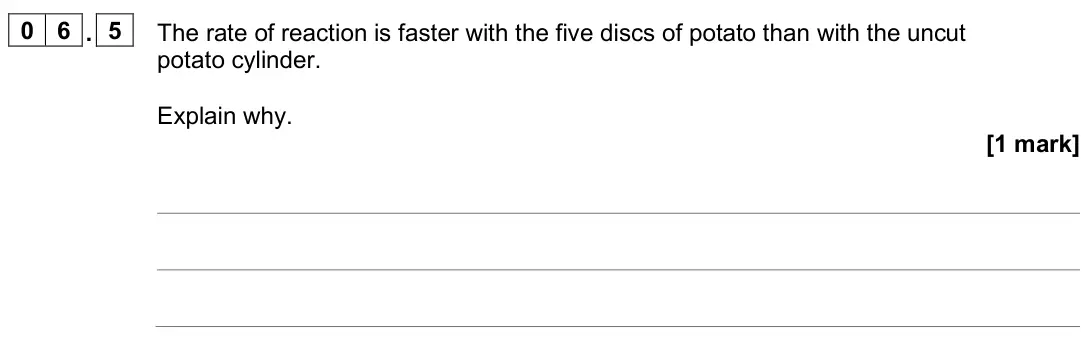
Q07.2
The whole paper ↗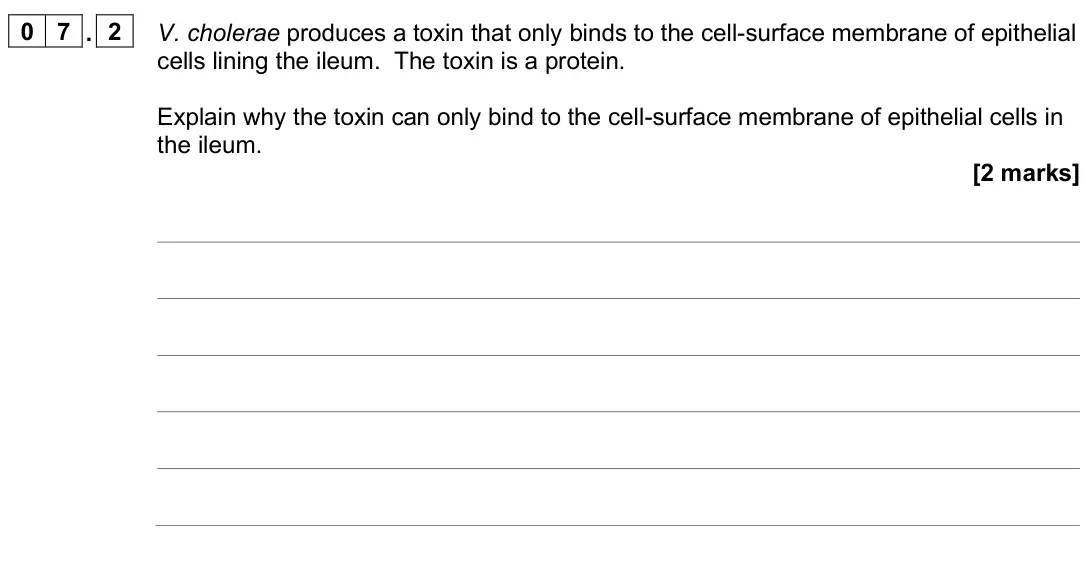
Q07.1
The whole paper ↗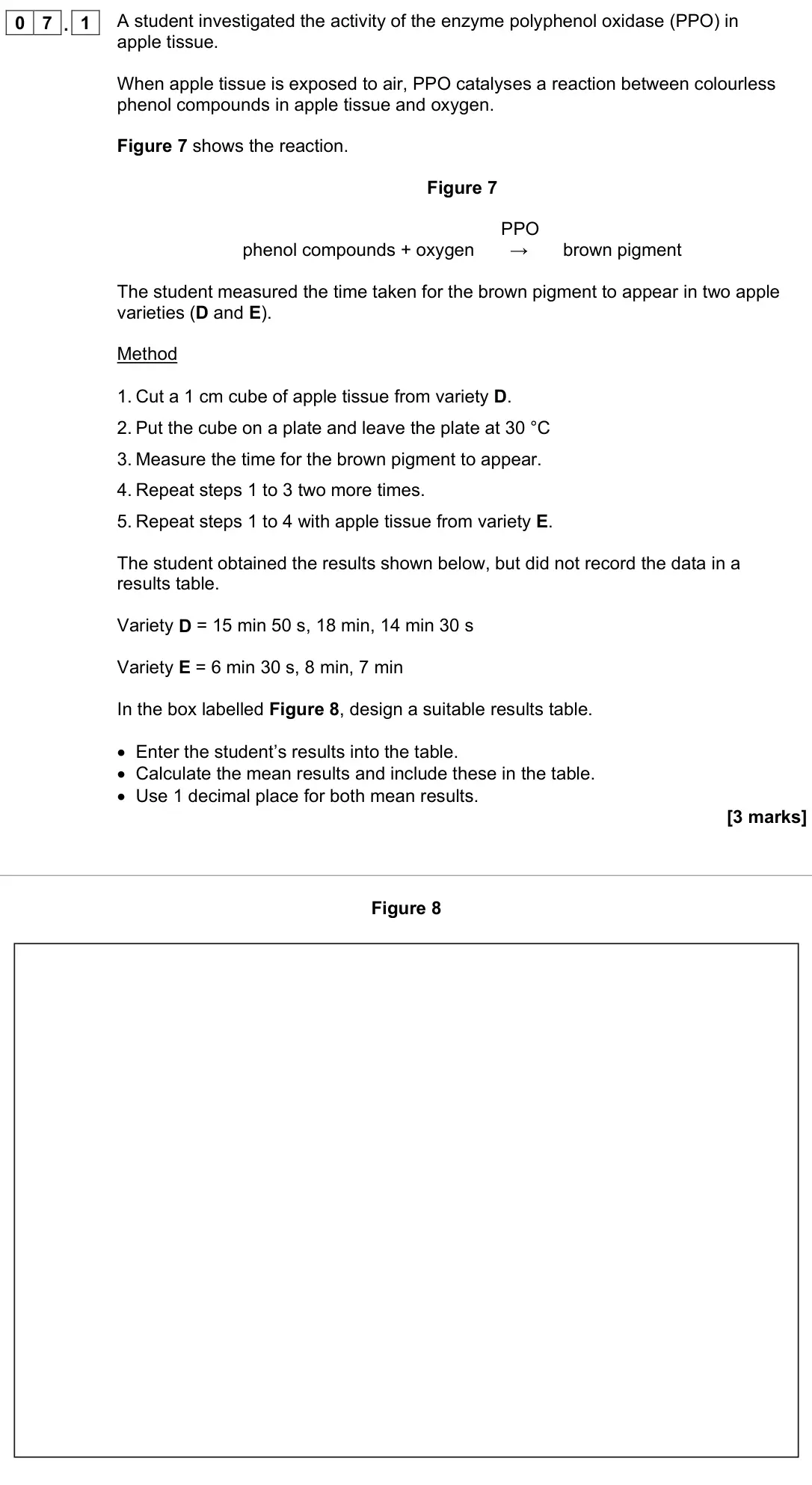
Q07.2
The whole paper ↗
All 95 questions on Proteins, as a list
- June 2025, Paper 1, Q02.3 (1 mark): Figure 1 shows the energy contained in molecules during an enzyme-controlled reaction. Figure 1 Which expression represents the activation energy (Ea) of this r
- June 2025, Paper 1, Q02.4 (4 marks): In 1914, a group of scientists investigated enzyme action. After studying their results, the scientists reached the following conclusions: An enzyme is a substa
- June 2025, Paper 1, Q03.2 (1 mark): Lactase catalyses the hydrolysis of lactose. A student investigated the effect of galactose on lactase activity. The student used the following method. 1. Mix t
- June 2025, Paper 1, Q03.3 (4 marks): Galactose is a competitive inhibitor of lactase. Use this information and your knowledge of enzymes to explain the results obtained in Table 2. [4 marks] Tube X
- June 2025, Paper 1, Q03.4 (2 marks): Give: • one change the student could make in tube X to confirm that galactose is a competitive inhibitor • the result you would expect. [2 marks] Change Result
- June 2025, Paper 3, Q04.1 (1 mark): Draw the general structure of an amino acid. [1 mark]
- June 2025, Paper 3, Q04.2 (1 mark): Which statement describing protein structure is correct? Tick ( ) one box. [1 mark]
- June 2025, AS Paper 1, Q01.1 (1 mark): Figure 1 shows the structure of the amino acid alanine. Figure 1 Name the NH2 and COOH groups in the amino acid. [1 mark] NH2 COOH
- June 2025, AS Paper 1, Q01.2 (2 marks): Name the type of bond and the type of molecule formed when the two amino acids in Figure 2 are joined. [2 marks] Type of bond Type of molecule
- June 2025, AS Paper 1, Q01.3 (1 mark): Table 1 shows the R groups of six different amino acids. Table 1 Amino acid R group Amino acid R group Alanine CH3 Glycine H Aspartic acid CH2COOH Serine CH2OH
- June 2025, AS Paper 1, Q01.4 (2 marks): Figure 3 represents the structure of an antibody. Figure 3 The total number of amino acids in a particular antibody molecule is 1322 The ratio of amino acids in
- June 2025, AS Paper 2, Q01.3 (3 marks): Many animals are adapted to their environments by having different types of haemoglobin with different tertiary structures. Using your knowledge of the structur
- June 2025, AS Paper 2, Q06.1 (3 marks): Use your knowledge of the induced-fit model to explain how catalase breaks down hydrogen peroxide. [3 marks] Potato cells contain catalase.
- June 2025, AS Paper 2, Q06.2 (2 marks): Before starting the investigation, the student reads the following information. Hydrogen peroxide: • is a clear, colourless solution • is harmful if swallowed •
- June 2025, AS Paper 2, Q06.3 (1 mark): Suggest why the student arranges the potato discs on the pin as shown in Figure 10. [1 mark]
- June 2025, AS Paper 2, Q06.4 (3 marks): Calculate how many times greater the total surface area of the five discs of potato is compared with the surface area of the uncut cylinder. Use the information
- June 2025, AS Paper 2, Q06.5 (1 mark): The rate of reaction is faster with the five discs of potato than with the uncut potato cylinder. Explain why. [1 mark]
- June 2025, AS Paper 2, Q07.2 (2 marks): V. cholerae produces a toxin that only binds to the cell-surface membrane of epithelial cells lining the ileum. The toxin is a protein. Explain why the toxin ca
- June 2024, Paper 1, Q07.1 (3 marks): A student investigated the activity of the enzyme polyphenol oxidase (PPO) in apple tissue. When apple tissue is exposed to air, PPO catalyses a reaction betwee
- June 2024, Paper 1, Q07.2 (2 marks): Suggest and explain why the results for variety D are different from the results for variety E. [2 marks]
- June 2024, Paper 1, Q07.3 (3 marks): The student repeated the investigation but made one change to the method used to prepare the apple tissue. The student then observed shorter times for the brown
- June 2024, Paper 1, Q07.4 (1 mark): The student wants to change the procedure to obtain a measure of PPO activity either in terms of how much substrate is used or how much product is produced. Whi
- June 2024, Paper 3, Q04.1 (1 mark): Describe how the scientists determined the median of the stiffness scores. [1 mark]
- June 2024, Paper 3, Q04.2 (5 marks): Using all the information, evaluate the use of pralnacasan as an effective treatment for OA in humans. [5 marks]
- June 2024, AS Paper 1, Q02.2 (2 marks): Describe a biochemical test to show the presence of protein. [2 marks]
- June 2024, AS Paper 1, Q02.3 (2 marks): The student’s test for protein was positive. Explain why. [2 marks]
- June 2024, AS Paper 1, Q02.4 (2 marks): An enzyme’s turnover number (kcat) is the number of substrate molecules converted into product molecules by one enzyme molecule in 1 second. It is determined us
- June 2024, AS Paper 1, Q08.1 (3 marks): A non-competitive inhibitor decreases the rate of an enzyme-controlled reaction. Explain how. [3 marks]
- June 2024, AS Paper 1, Q08.2 (2 marks): A scientist investigated the hydrolysis of the protein casein. The scientist: • mixed a solution of a protease enzyme with a solution of casein • then measured
- June 2024, AS Paper 1, Q08.3 (2 marks): Figure 10 shows the scientist’s results. Figure 10 Use Figure 10 to determine the rate of casein hydrolysis at 2 minutes. Show how you obtained your answer. [2
- June 2024, AS Paper 1, Q08.4 (2 marks): The scientist repeated the investigation but increased the temperature to the optimum temperature for this protease. Sketch a line on Figure 10 showing the resu
- June 2023, Paper 1, Q08.2 (3 marks): MiTMAB acts as a non-competitive inhibitor of an enzyme called dynamin. Suggest how MiTMAB can cause dynamin to become inactive. [3 marks] When active, dynamin
- June 2023, Paper 1, Q10.1 (5 marks): Describe how a quaternary protein is formed from its monomers. Do not include the process of translation in your answer. [5 marks]
- June 2023, AS Paper 1, Q01.1 (2 marks): Describe the primary structure of all proteins. [2 marks]
- June 2023, AS Paper 1, Q09.4 (1 mark): Which statement correctly describes the structure of both a sucrose-transport protein and a glucose-transport protein? Tick () one box. [1 mark] The secondary
- June 2023, AS Paper 2, Q02.2 (4 marks): As shown in Figure 1, ATP synthase has two functions. • It catalyses the synthesis of ATP. • It allows the movement of H+ ions. Suggest how the shape of the ATP
- June 2023, AS Paper 2, Q03.3 (2 marks): Explain why amylase produced in the human digestive system does not digest GOS. [2 marks]
- June 2023, AS Paper 2, Q08.1 (2 marks): A student investigated a method for estimating the concentration of protein in solution by using a measure of the density of the solutions. Copper sulfate solut
- June 2023, AS Paper 2, Q08.2 (2 marks): Table 4 shows the densities of the dilution series of the copper sulfate solution. Table 4 Concentration of copper sulfate solution / g kg–1 Density of solution
- June 2023, AS Paper 2, Q08.3 (1 mark): State the range of possible concentrations of a protein solution that sinks in 75 g kg–1 copper sulfate solution and floats in 100 g kg–1 copper sulfate solutio
- June 2023, AS Paper 2, Q08.4 (3 marks): Blood donation involves healthy donors giving blood that can be used to treat hospital patients. When donors arrive, the haemoglobin concentration of their bloo
- June 2022, Paper 1, Q03.2 (1 mark): This AP has a secondary structure in a helical shape. Tick () the box to show which type of bond maintains the helical structure of the polypeptide. [1 mark] D
- June 2022, Paper 1, Q05.1 (1 mark): Define the quaternary structure of a protein. [1 mark]
- June 2022, Paper 1, Q05.2 (2 marks): Explain how two enzymes with different amino acid sequences can catalyse the same reaction. [2 marks]
- June 2022, Paper 1, Q05.3 (3 marks): Describe what the scientists should place in the control tubes in this investigation. [3 marks]
- June 2022, Paper 1, Q05.4 (3 marks): Give three conclusions you can make from Figure 8. [3 marks] 1 2 3
- June 2022, Paper 3, Q01.1 (2 marks): Use Table 1 to identify the three different amino acids used to make the polypeptide shown in Figure 1. [2 marks] Figure 1 Left amino acid Middle amino acid Rig
- June 2022, Paper 3, Q01.3 (2 marks): The number of amino acids in the beta chains in Figure 2 is 3.546% greater than in the alpha chains. Each alpha chain contains 141 amino acids. Calculate how ma
- June 2022, AS Paper 1, Q05.1 (3 marks): Describe how monomers join to form the primary structure of a protein. [3 marks]
- June 2022, AS Paper 1, Q05.2 (2 marks): Many proteins are enzymes. In 1894, a scientist suggested the lock and key model of enzyme action. Figure 5 shows the lock and key model. Figure 5 Describe one
- June 2022, AS Paper 1, Q05.3 (1 mark): State how enzymes help reactions to proceed quickly at lower temperatures. Do not write about active sites in your answer. [1 mark]
- June 2022, AS Paper 1, Q05.4 (2 marks): The enzyme maltase catalyses the hydrolysis of maltose to glucose. A scientist investigated maltase activity in two different maltose solutions, G and H. For ea
- June 2022, AS Paper 1, Q05.5 (1 mark): Figure 6 shows the scientist’s results for solution G. Curve I shows the results of a similar investigation in which he changed one independent variable. Figure
- November 2021, Paper 1, Q01.1 (3 marks): Describe the induced-fit model of enzyme action and how an enzyme acts as a catalyst. [3 marks]
- November 2021, Paper 1, Q01.3 (2 marks): The scientists investigated the effect of concentration of inorganic phosphate (Pi) on ATP synthase activity. After 2 minutes, they stopped each reaction and th
- November 2021, Paper 1, Q01.4 (2 marks): Explain the change in ATP concentration with increasing inorganic phosphate concentration. [2 marks]
- November 2021, Paper 1, Q03.2 (2 marks): Crystallin is a structural protein found in the human eye. An inherited disease that leads to blindness is caused by changes in properties of crystallin. The re
- November 2021, Paper 3, Q05.2 (2 marks): As humans age, there is a decrease in body protein. Give the name of one body protein that could have resulted in: [2 marks] reduced muscle power reduced immuni
- November 2021, Paper 3, Q07.1 (25 marks): The importance of complementary shapes of molecules in organisms [25 marks] Or
- November 2021, AS Paper 1, Q05.2 (1 mark): Name the type of peptidase which will hydrolyse the bond labelled G in Figure 5. [1 mark]
- November 2021, AS Paper 1, Q05.3 (1 mark): Give the number of different R groups in the polypeptide shown in Figure 5. [1 mark]
- November 2021, AS Paper 1, Q05.4 (2 marks): Use the information in Table 1 to calculate the number of polypeptides: [2 marks] 6 amino acids in length 20 amino acids in length
- November 2021, AS Paper 2, Q05.1 (2 marks): Explain the appearance of the agar in the clear area surrounding well D. [2 marks]
- November 2021, AS Paper 2, Q05.2 (2 marks): What can you conclude about the activity of amylase from the appearance of the agar surrounding well E and well F in Figure 7? [2 marks]
- November 2021, AS Paper 2, Q05.4 (2 marks): Use all of this information to predict the diameter of the clear area that will form around the well containing the diluted amylase solution. Give your answer t
- November 2021, AS Paper 2, Q05.5 (1 mark): The student used a ruler to measure the diameter in mm of the clear area around well D in Figure 7. Use this information to explain why the answer to Question 0
- November 2021, AS Paper 2, Q06.1 (3 marks): The enzyme encoded by the ADF allele catalyses the breakdown of alcohol faster than the enzyme encoded by the ADS allele. Suggest why. [3 marks] A scientist too
- November 2021, AS Paper 2, Q08.1 (1 mark): Use Figure 9 to identify all of the products formed when this sequence of reactions is completed. [1 mark]
- November 2021, AS Paper 2, Q08.2 (3 marks): The scientist joined DNA molecules together to make tiny cages. The cages are exactly 20 nm long, 20 nm wide and 17 nm deep. He trapped one GOx molecule and one
- November 2021, AS Paper 2, Q08.3 (3 marks): What can you conclude from Figure 10 about the effect of trapping GOx and HRP inside cages? [3 marks]
- November 2021, AS Paper 2, Q08.4 (1 mark): The design of the scientist’s investigation did not include a suitable control. Suggest a suitable control. [1 mark]
- November 2020, Paper 1, Q01.5 (2 marks): Figure 2 shows the SGLT1 polypeptide with NH2 at one end and COOH at the other end. Describe how amino acids join to form a polypeptide so there is always NH2 a
- November 2020, Paper 2, Q02.2 (2 marks): In the cytoplasm, testosterone binds to a specific androgen receptor (AR). An AR is a protein. Suggest and explain why testosterone binds to a specific AR. [2 m
- November 2020, Paper 3, Q07.1 (25 marks): The functions of enzymes and their importance in organisms. [25 marks] or
- November 2020, AS Paper 1, Q03.4 (1 mark): A disulfide bridge is labelled in Figure 2. What is the role of the disulfide bridge in forming the quaternary structure of an antibody? [1 mark]
- November 2020, AS Paper 2, Q05.1 (2 marks): A student investigated starch hydrolysis using the enzyme amylase. During the procedure, the student: • treated the starch to make it soluble • prepared 10 cm3
- November 2020, AS Paper 2, Q05.2 (1 mark): Describe the results you would expect the student to obtain. [1 mark]
- November 2020, AS Paper 2, Q05.3 (3 marks): A competitive inhibitor decreases the rate of an enzyme-controlled reaction. Explain how. [3 marks]
- November 2020, AS Paper 2, Q05.4 (3 marks): When bread becomes stale, the structure of some of the starch is changed. This changed starch is called retrograded starch. Scientists have suggested retrograde
- November 2020, AS Paper 2, Q09.2 (5 marks): Describe how the structure of a protein depends on the amino acids it contains. [5 marks]
- June 2019, Paper 3, Q06.3 (3 marks): Use the information provided to suggest how Trexall slows cell division. [3 marks]
- June 2018, Paper 2, Q08.6 (2 marks): The soybean cells were screened for the presence of the P34 protein. This process involved the use of gel electrophoresis to separate proteins extracted from so
- June 2017, Paper 3, Q03.1 (2 marks): Artificial fertiliser is used to replace mineral ions removed from the land when crops are harvested. One of the mineral ions is nitrate. Give two examples of b
- June 2017, Paper 3, Q05.2 (2 marks): Sometimes, damage occurs during DNA replication. One enzyme involved in repairing damage to DNA is called ATR. ATR works as follows. • ATR phosphorylates other
- June 2017, Paper 3, Q05.3 (1 mark): The enzyme-catalysed reactions activated by ATR only occur if the substrates have been phosphorylated. Use your knowledge of energy changes in enzyme-catalysed
- June 2017, Paper 3, Q07.1 (25 marks): The importance of nitrogen-containing substances in biological systems. [25 marks] OR
- June 2017, AS Paper 1, Q05.1 (1 mark): Which test could the scientists have used to identify that there are amino acids in white wine? [1 mark]
- June 2017, AS Paper 1, Q05.2 (1 mark): All amino acids have the same general structure. Figure 4 shows the structure of the amino acid isoleucine. Draw a box around the part of the molecule that woul
- June 2017, AS Paper 1, Q05.3 (1 mark): Name the chemical element found in all amino acids that is not found in triglycerides. [1 mark]
- June 2017, AS Paper 1, Q05.4 (3 marks): The scientists used a statistical test to determine whether there was a significant difference in the amino acid concentration in the two types of white wine. T
- Specimen, Paper 1, Q01.1 (1 mark): 1 2
- Specimen, Paper 1, Q01.2 (2 marks): Ratio = :1 3
- Specimen, Paper 1, Q01.3 (2 marks): Explain the difference in the initial rate of reaction at 60 °C and 37 °C. [2 marks] 0 1 . 3
- Specimen, Paper 1, Q01.4 (4 marks): [ ]
- Specimen, Paper 1, Q11.2 (5 marks): [ ]
Questions, mark schemes and examiner’s reports are © AQA, from their published past papers. Plumi isn’t affiliated with any exam board. Want whole papers? Every AQA A-Level Biology paper.
Rather write your answers by hand on iPad? Plumi marks them against the same mark schemes.