 plumi
How does our understanding of biology help us classify the diversity of organisms on Earth?: OCR GCSE Combined Science B questions
Every OCR GCSE Combined Science B exam question on B6.2 How does our understanding of biology help us classify the diversity of organisms on Earth?, 2018–2025, with its mark scheme and examiner’s report.
Paper
All papers
Exam
All years
Calculations
Q7(c)
The whole paper ↗Q7(d)(i)
The whole paper ↗Q7(d)(ii)
The whole paper ↗Q4(a)(i)
The whole paper ↗
Q4(a)(ii)
The whole paper ↗Q4(e)
The whole paper ↗
Q7(d)
The whole paper ↗
Q6(d)
The whole paper ↗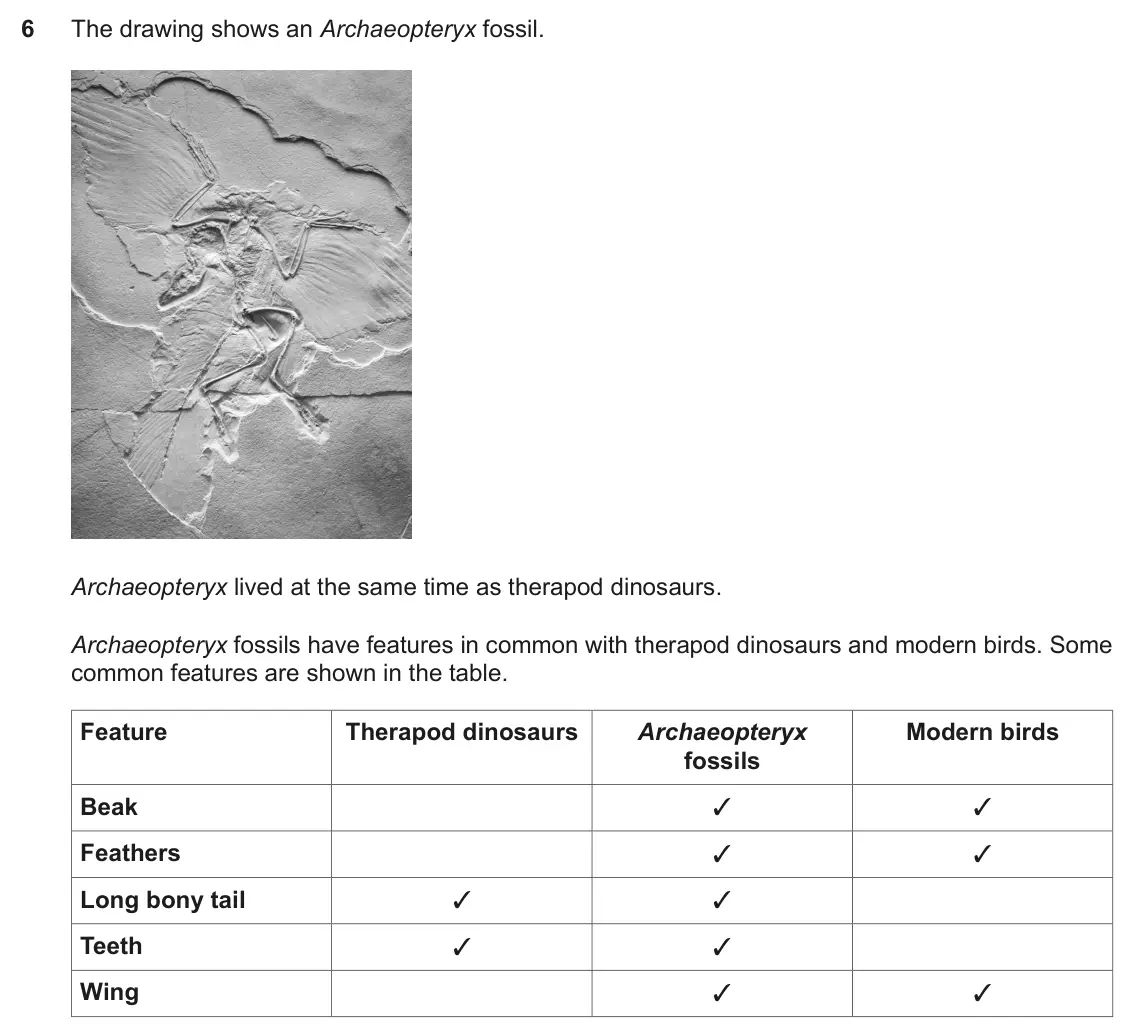
Q7(a)
The whole paper ↗
Q4(b)
The whole paper ↗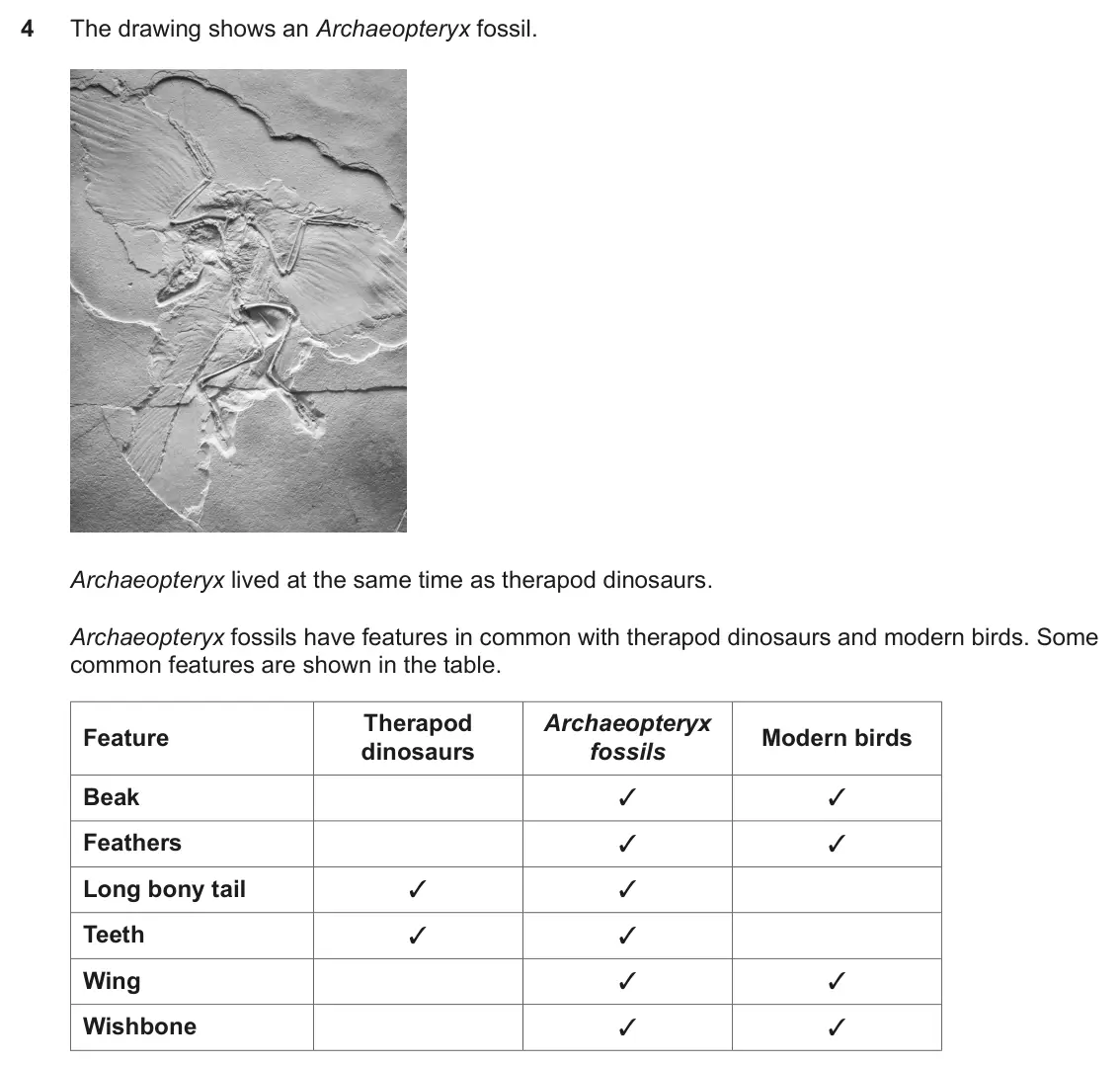
Q5(b)
The whole paper ↗
Q5(c)
The whole paper ↗Q5(c)
The whole paper ↗
All 13 questions on How does our understanding of biology help us classify the diversity of organisms on Earth?, as a list
- June 2025, Biology Paper 1 Foundation, Q7(c) (1 mark): Scientists used to classify organisms based only on their visible features. Scientists now also use evidence from the cells of organisms. Describe one piece of
- June 2025, Biology Paper 1 Foundation, Q7(d)(i) (1 mark): Which species is the most closely related species to humans? Tick (✓) one box. Armadillo Lizard Salamander Shark [1]
- June 2025, Biology Paper 1 Foundation, Q7(d)(ii) (1 mark): Which species is a common ancestor of both sharks and humans? Put a ring around the correct option. A B C D [1]
- June 2025, Biology Paper 5 Higher, Q4(a)(i) (1 mark): Describe how scientists such as Linnaeus classified organisms into groups. [1]
- June 2025, Biology Paper 5 Higher, Q4(a)(ii) (1 mark): Describe one additional piece of evidence from cells that modern scientists use to classify organisms. [1]
- June 2023, Biology Paper 1 Foundation, Q4(e) (2 marks): Scientists can classify organisms into species based on similarities in their physical features. Describe how DNA analysis can also be used to classify organism
- June 2023, Biology Paper 5 Higher, Q7(d) (2 marks): Explain how modern technology could convince scientists to classify white carrots and orange carrots as separate species. [2]
- November 2021, Biology Paper 1 Foundation, Q6(d) (1 mark): Name one modern source of evidence used to help classify organisms. [1]
- November 2021, Biology Paper 1 Foundation, Q7(a) (1 mark): Which piece of evidence shows that the two groups of mosquitoes are different species? Tick (✓) one box. Underground mosquitoes bite mammals. Underground mosqui
- November 2021, Biology Paper 5 Higher, Q4(b) (2 marks): No Archaeopteryx fossil DNA has been found. Describe how DNA would help scientists to decide if the Archaeopteryx fossil was a bird or is a missing link between
- June 2019, Biology Paper 1 Foundation, Q5(b) (2 marks): Scientists think all animals with backbones evolved from a common ancestor. The diagram shows the likely evolutionary relationships between some groups of anima
- June 2019, Biology Paper 1 Foundation, Q5(c) (1 mark): Evolution can result in the formation of new species. Explain why although horses and donkeys can breed they are classed as two different species. [1]
- June 2018, Biology Paper 5 Higher, Q5(c) (1 mark): Living and fossilised organisms can be classified into groups. Early classification systems put organisms into large groups called kingdoms. Later evidence sugg
Questions, mark schemes and examiner’s reports are © OCR, from their published past papers. Plumi isn’t affiliated with any exam board. Want whole papers? Full past papers.
Rather write your answers by hand on iPad? Plumi marks them against the same mark schemes.