 plumi
How are chemicals separated and tested for purity?: OCR GCSE Combined Science B questions
Every OCR GCSE Combined Science B exam question on C5.1 How are chemicals separated and tested for purity?, 2018–2025, with its mark scheme and examiner’s report.
Paper
All papers
Exam
All years
Calculations
Q6(a)
The whole paper ↗
Q6(b)(i)
The whole paper ↗Q6(b)(ii)
The whole paper ↗Q6(c)
The whole paper ↗Q6(d)
The whole paper ↗Q5(a)(i)
The whole paper ↗
Q5(a)(ii)
The whole paper ↗Q5(a)(iii)
The whole paper ↗Q5(b)
The whole paper ↗Q5(c)(i)
The whole paper ↗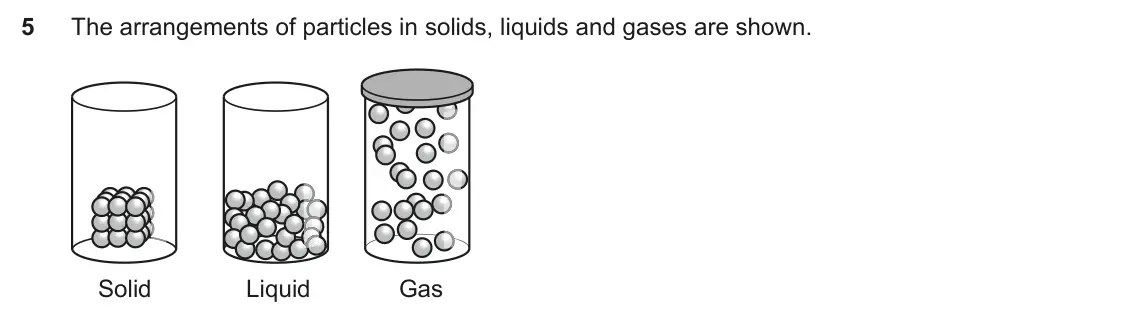
Q5(c)(ii)
The whole paper ↗Q5(d)(i)
The whole paper ↗Q5(d)(ii)
The whole paper ↗Q5(d)(iii)
The whole paper ↗Q11(a)
The whole paper ↗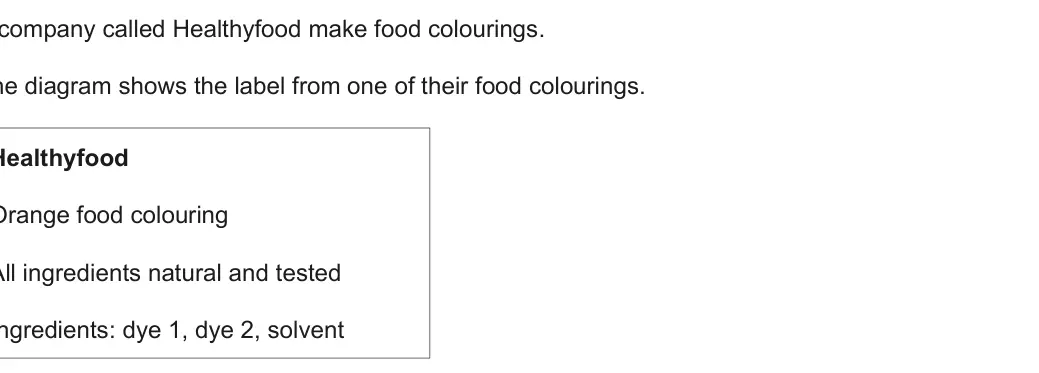
Q11(b)
The whole paper ↗Q11(c)(i)
The whole paper ↗Q11(c)(ii)
The whole paper ↗Q11(d)(i)
The whole paper ↗Q11(d)(ii)
The whole paper ↗
All 57 questions on How are chemicals separated and tested for purity?, as a list
- June 2025, Combined Science Paper 4 Foundation, Q6(a) (2 marks): The student sets up the experiment as shown in the diagram. Lid Beaker Chromatography paper Start line drawn in ink Solvent A B X Identify two mistakes that the
- June 2025, Combined Science Paper 4 Foundation, Q6(b)(i) (3 marks): Ink Sample X is a mixture. One of the substances in Ink Sample X travels 24 mm on the chromatogram. The solvent travels 39 mm. Calculate the Rf value of this su
- June 2025, Combined Science Paper 4 Foundation, Q6(b)(ii) (1 mark): How could you conclude from the chromatogram that Ink Sample X is a mixture? [1]
- June 2025, Combined Science Paper 4 Foundation, Q6(c) (1 mark): Another substance in Ink Sample X does not travel up the chromatography paper. Suggest one change to the experiment that would cause this substance to travel up
- June 2025, Combined Science Paper 4 Foundation, Q6(d) (1 mark): Ink Sample B is also a mixture. All of the components of Ink Sample B have similar solubility in the solvent, but have different boiling points. Explain why sim
- June 2025, Chemistry Paper 6 Higher, Q5(a)(i) (6 marks): The scientist decides to use paper chromatography to test the samples. The diagram shows the results for one of the samples. (i)* Describe how the scientist use
- June 2025, Chemistry Paper 6 Higher, Q5(a)(ii) (1 mark): The scientist says that the results show that the sample is impure. Explain why they are correct. [1]
- June 2025, Chemistry Paper 6 Higher, Q5(a)(iii) (1 mark): The scientist wants to increase the distance between the spots on the chromatogram. How can the method be adapted to increase the distance between the spots? Ti
- June 2025, Chemistry Paper 6 Higher, Q5(b) (1 mark): What other method could the scientist use to check the purity of the solid samples? [1]
- June 2024, Chemistry Paper 2 Foundation, Q5(c)(i) (1 mark): What does a scientist mean by a pure substance? Tick (✓) one box. It contains only one element or compound. It contains only one type of atom. It does not conta
- June 2024, Chemistry Paper 2 Foundation, Q5(c)(ii) (1 mark): How does the melting point of a substance show if it is pure? [1]
- June 2024, Chemistry Paper 2 Foundation, Q5(d)(i) (3 marks): Draw lines to connect each letter with its correct label. Letter Label A Chromatography Paper B Solvent C Solvent Front D Starting Line [3]
- June 2024, Chemistry Paper 2 Foundation, Q5(d)(ii) (1 mark): How would the results of this experiment show that a substance was pure? [1]
- June 2024, Chemistry Paper 2 Foundation, Q5(d)(iii) (1 mark): What step is needed if the substance being tested is colourless? Tick (✓) one box. Use a locating agent at the end. Use a second piece of paper. Use an extra so
- June 2023, Chemistry Paper 2 Foundation, Q11(a) (2 marks): A representative for Healthyfood says that the food colouring is pure. A scientist says that it is not pure. Explain the different meanings of the word ‘pure’ u
- June 2023, Chemistry Paper 2 Foundation, Q11(b) (1 mark): The table shows the melting points of some substances. Substance Melting point (°C) A 42 B 60–66 C 92–98 D 104 Which two substances are chemically pure? and [1]
- June 2023, Chemistry Paper 2 Foundation, Q11(c)(i) (2 marks): Draw lines to connect each letter with its correct label. A Mobile phase B Solvent front C Stationary phase [2]
- June 2023, Chemistry Paper 2 Foundation, Q11(c)(ii) (1 mark): Which property causes the dyes in the food colouring to separate? Tick (3) one box. Their different boiling points. Their different colours. Their different dis
- June 2023, Chemistry Paper 2 Foundation, Q11(d)(i) (2 marks): Measure the distance moved by dye 1 and by the solvent. Use a ruler. Distance moved by dye 1 = cm Distance moved by solvent = cm [2]
- June 2023, Chemistry Paper 2 Foundation, Q11(d)(ii) (2 marks): Calculate the Rf value of dye 1. Use this formula. Rf = distance moved by the dye (cm) distance moved by the solvent (cm) Rf = [2]
- June 2023, Chemistry Paper 6 Higher, Q2(a) (2 marks): A representative for Healthyfood says that the food colouring is pure. A scientist says that it is not pure. Explain the different meanings of the word ‘pure’ u
- June 2023, Chemistry Paper 6 Higher, Q2(b) (1 mark): The table shows the melting points of some substances. Substance Melting point (°C) A 42 B 60–66 C 92–98 D 104 Which two substances are chemically pure? and [1]
- June 2023, Chemistry Paper 6 Higher, Q2(c)(i) (2 marks): Draw lines to connect each letter with its correct label. A Mobile phase B Solvent front C Stationary phase [2]
- June 2023, Chemistry Paper 6 Higher, Q2(c)(ii) (1 mark): Which property causes the dyes in the food colouring to separate? Tick (3) one box. Their different boiling points. Their different colours. Their different dis
- June 2023, Chemistry Paper 6 Higher, Q2(d)(i) (2 marks): Measure the distance moved by dye 1 and by the solvent. Use a ruler. Distance moved by dye 1 = cm Distance moved by solvent = cm [2]
- June 2023, Chemistry Paper 6 Higher, Q2(d)(ii) (2 marks): Calculate the Rf value of dye 1. Use this formula. Rf = distance moved by the dye (cm) distance moved by the solvent (cm) Rf = [2]
- June 2022, Chemistry Paper 2 Foundation, Q5(a) (4 marks): Complete the sentence to describe how chromatography works. Use words from the list. condensed distributed dyes mobile paper solvent stationary The in the mixtu
- June 2022, Chemistry Paper 2 Foundation, Q5(b) (3 marks): Rf values are used to identify dyes. They are calculated using this equation: distance moved by the substance Rf = distance moved by the solvent The Rf value of
- June 2022, Chemistry Paper 2 Foundation, Q5(c) (6 marks): Paper chromatography can be used to identify dyes in a mixture. (c)* A student checks the Rf value of sunshine yellow using chromatography. The chromatogram pro
- November 2021, Chemistry Paper 2 Foundation, Q8(e)(i) (1 mark): Tablets are an example of a type of substance called a formulation. Complete the sentences to describe a formulation. Put a ring around the correct answers. A f
- November 2021, Chemistry Paper 2 Foundation, Q8(e)(ii) (1 mark): Which method can be used to show if a substance is pure or impure? Tick (✓) one box. Chromatography Combustion Measurement of pH Neutralisation [1]
- November 2020, Chemistry Paper 2 Foundation, Q3(d) (2 marks): Sodium chloride is soluble in water. Sodium chloride crystals can be made from a solution of sodium chloride in water by the process of crystallisation. Which t
- November 2020, Chemistry Paper 6 Higher, Q3(b)(i) (2 marks): The melting point of a substance can be used to test its purity. Ben measures the melting point of an aspirin tablet and compares his results with the melting p
- November 2020, Chemistry Paper 6 Higher, Q3(b)(ii) (1 mark): Which other experiment can Ben use to find out whether his sample of aspirin is pure? Tick (3) one box. Dissolve the aspirin in water Use paper chromatography D
- June 2019, Chemistry Paper 2 Foundation, Q2(a) (3 marks): Complete the sentences to explain how solid salt forms. Put a ring around each correct choice to complete the sentences. The heat / light from the sun decreases
- June 2019, Chemistry Paper 2 Foundation, Q2(b)(i) (3 marks): Put the steps in the correct order. B [3]
- June 2019, Chemistry Paper 2 Foundation, Q2(b)(ii) (2 marks): Jack finds that his method makes very small crystals. How could he change step D so that he makes larger crystals? [2]
- June 2019, Chemistry Paper 2 Foundation, Q2(b)(iii) (1 mark): Jack used 10.0 g of the mixture for his sample. He used a dish to weigh the pure salt he made. Mass of empty dish = 50.0 g Mass of dish with pure salt = 58.4 g
- June 2019, Chemistry Paper 2 Foundation, Q2(b)(iv) (2 marks): The percentage of pure salt in the mixture can be calculated using the formula: Percentage = mass of pure salt mass of mixture × 100 Calculate the percentage of
- June 2019, Combined Science Paper 4 Foundation, Q2(c) (3 marks): The pigments in red and blue tomatoes are water soluble. The students use paper chromatography to investigate the pigments in red and blue tomatoes. Complete th
- June 2019, Combined Science Paper 4 Foundation, Q2(d)(i) (3 marks): Calculate the Rf value of the red pigment in the red tomato extract, using Fig. 2.1. Use the formula: Rf = distance moved by red pigment in the red tomato extra
- June 2019, Combined Science Paper 4 Foundation, Q2(d)(ii) (2 marks): Explain why the line at the bottom of the chromatogram was drawn in pencil. [2]
- June 2019, Combined Science Paper 4 Foundation, Q2(d)(iii) (2 marks): Give two conclusions that the students can make from these results. Conclusion 1 Conclusion 2 [2]
- June 2019, Chemistry Paper 6 Higher, Q4(a) (2 marks): Why does this method work well in countries with warm climates? [2]
- June 2019, Chemistry Paper 6 Higher, Q4(b)(i) (4 marks): Jack collects a sample of solid salt. Describe an experiment that Jack could do to find out an accurate value for the mass of pure salt in his sample. [4]
- June 2019, Chemistry Paper 6 Higher, Q4(b)(ii) (3 marks): Here are the results of one experiment. Mass of salt mixed with sand = 5.42 g Mass of pure salt obtained = 1.36 g Calculate the percentage of pure salt in the s
- June 2019, Combined Science Paper 8 Higher, Q2(c) (3 marks): Outline the method to produce the chromatogram in Fig. 2.1. [3]
- June 2019, Combined Science Paper 8 Higher, Q2(d)(i) (2 marks): What do the results in Fig. 2.1 show? [2]
- June 2019, Combined Science Paper 8 Higher, Q2(d)(ii) (3 marks): Calculate the Rf of anthocyanin, using Fig. 2.1. Give your answer to 2 significant figures. Rf of anthocyanin = [3]
- June 2018, Chemistry Paper 2 Foundation, Q7(a) (2 marks): The tablets are a formulation and not a pure substance. Put ticks (✓) in one box in each row to show which statements about formulations and pure substances are
- June 2018, Chemistry Paper 6 Higher, Q6(a) (2 marks): The tablets are a formulation. What is the difference between a formulation and a pure substance? [2]
- June 2018, Chemistry Paper 6 Higher, Q6(b)(i) (1 mark): How can she tell that the dyes have not dissolved in the water? [1]
- June 2018, Chemistry Paper 6 Higher, Q6(b)(ii) (1 mark): What should she do to make a solution of the dyes? [1]
- June 2018, Chemistry Paper 6 Higher, Q6(c)(i) (2 marks): Use the scale given on the diagram to complete the table of results. Distance moved Distance moved by solvent (cm) by dye (cm) Red dye Yellow dye [2]
- June 2018, Chemistry Paper 6 Higher, Q6(c)(ii) (2 marks): Mia uses this formula to calculate the Rf value of each dye: distance moved by the dye Rf = distance moved by the solvent How could she use the Rf values of the
- June 2018, Chemistry Paper 6 Higher, Q6(c)(iii) (2 marks): Mia does a chromatography experiment for a green dye. This dye has an Rf value of 0.52. After the experiment the solvent front has travelled 8 cm from the start
- June 2018, Chemistry Paper 6 Higher, Q6(d) (1 mark): Explain why it was not necessary to use a locating agent in this experiment. [1]
Questions, mark schemes and examiner’s reports are © OCR, from their published past papers. Plumi isn’t affiliated with any exam board. Want whole papers? Full past papers.
Rather write your answers by hand on iPad? Plumi marks them against the same mark schemes.