 plumi
What can happen when organs and control systems stop working?: OCR GCSE Biology B questions
Every OCR GCSE Biology B exam question on B5.6 What can happen when organs and control systems stop working?, 2018–2025, with its mark scheme and examiner’s report.
Paper
All papers
Exam
All years
Calculations
Q5(b)(i)
The whole paper ↗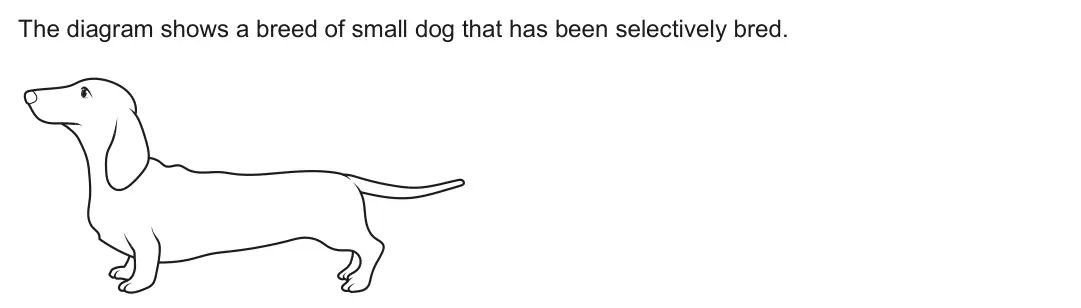
Q5(b)(ii)
The whole paper ↗Q6(c)
The whole paper ↗
Q6(d)
The whole paper ↗Q8(a)
The whole paper ↗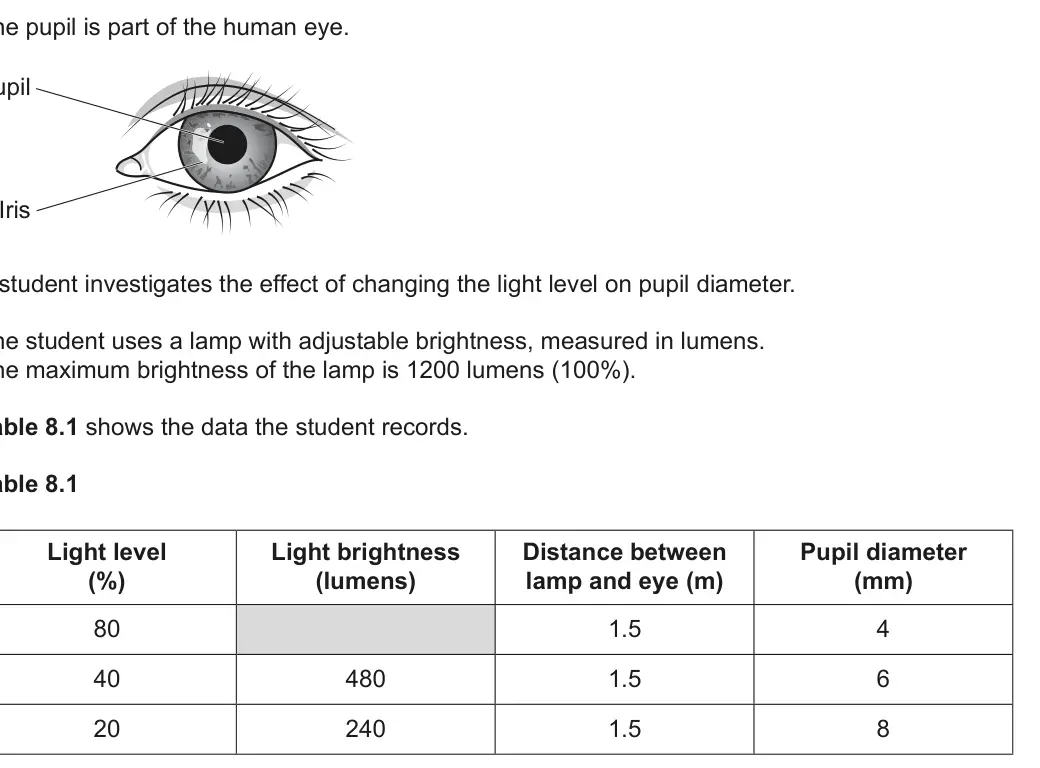
Q8(b)
The whole paper ↗Q8(c)
The whole paper ↗Q8(d)
The whole paper ↗Q8(e)
The whole paper ↗Q1(a)
The whole paper ↗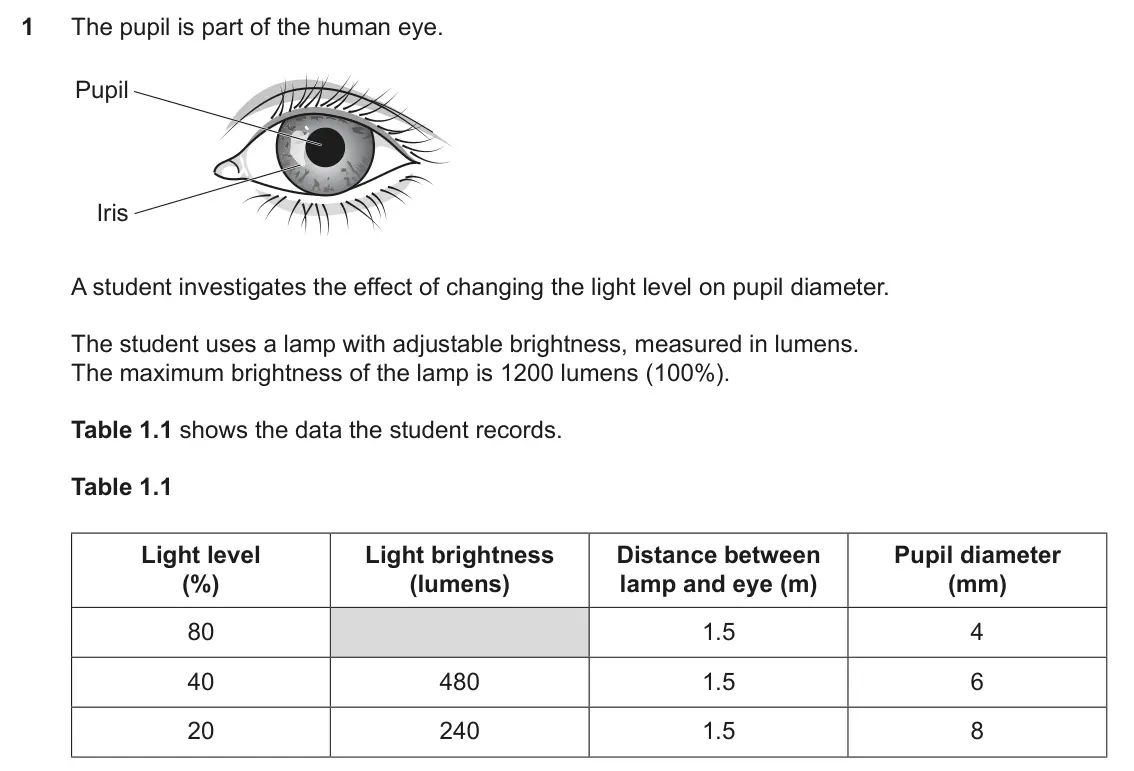
Q1(b)
The whole paper ↗Q1(c)
The whole paper ↗Q1(d)
The whole paper ↗Q1(e)
The whole paper ↗Q6(a)
The whole paper ↗
Q6(b)
The whole paper ↗Q6(c)
The whole paper ↗Q6(d)
The whole paper ↗Q7(a)
The whole paper ↗
Q6(a)
The whole paper ↗
All 58 questions on What can happen when organs and control systems stop working?, as a list
- June 2025, Paper 1 Foundation, Q5(b)(i) (1 mark): Which part of the eye do cataracts affect? Tick (✓) one box. Cornea Iris Lens Retina [1]
- June 2025, Paper 1 Foundation, Q5(b)(ii) (2 marks): Dogs can have surgery for cataracts. Give one benefit and one risk of this treatment. Benefit Risk [2]
- June 2025, Paper 1 Foundation, Q6(c) (1 mark): Some people have kidney disease. This stops their kidneys from working efficiently. One solution for these people is to have a kidney transplant. A kidney is ta
- June 2025, Paper 1 Foundation, Q6(d) (2 marks): The graph shows information about organ transplants. It shows: • the number of people who received one of four types of transplant in a year • the number of peo
- June 2025, Paper 2 Foundation, Q8(a) (2 marks): Complete Table 8.2 to identify the variables in the investigation. Put one tick (3) in each row to show whether the variable is the dependent variable, the inde
- June 2025, Paper 2 Foundation, Q8(b) (1 mark): Suggest one other variable not included in Table 8.2 that should be controlled. [1]
- June 2025, Paper 2 Foundation, Q8(c) (2 marks): Calculate the number of lumens equivalent to a light level of 80%. Use the data in Table 8.1. Number of lumens equivalent to a light level of 80% = lumens [2]
- June 2025, Paper 2 Foundation, Q8(d) (1 mark): The student measures the pupil diameter by holding a ruler against the person’s eye. Suggest a safer way to measure the pupil diameter. [1]
- June 2025, Paper 2 Foundation, Q8(e) (3 marks): The student predicts that if a light brightness of 1200 lumens is tested, the pupil diameter will be approximately 2 mm. Explain why the student is correct. [3]
- June 2025, Paper 4 Higher, Q1(a) (2 marks): Complete Table 1.2 to identify the variables in the investigation. Put one tick (3) in each row to show whether the variable is the dependent variable, the inde
- June 2025, Paper 4 Higher, Q1(b) (1 mark): Suggest one other variable not included in Table 1.2 that should be controlled. [1]
- June 2025, Paper 4 Higher, Q1(c) (2 marks): Calculate the number of lumens equivalent to a light level of 80%. Use the data in Table 1.1. Number of lumens equivalent to a light level of 80% = lumens [2]
- June 2025, Paper 4 Higher, Q1(d) (1 mark): The student measures the pupil diameter by holding a ruler against the person’s eye. Suggest a safer way to measure the pupil diameter. [1]
- June 2025, Paper 4 Higher, Q1(e) (3 marks): The student predicts that if a light brightness of 1200 lumens is tested, the pupil diameter will be approximately 2 mm. Explain why the student is correct. [3]
- June 2024, Paper 1 Foundation, Q6(a) (1 mark): Which letter shows the retina? [1]
- June 2024, Paper 1 Foundation, Q6(b) (1 mark): Which letter shows the iris? [1]
- June 2024, Paper 1 Foundation, Q6(c) (1 mark): What role does the optic nerve have in the functioning of the eye? Tick (✓) one box. Bends light to focus it on the retina. Controls the amount of light that en
- June 2024, Paper 1 Foundation, Q6(d) (2 marks): Some babies are born with cataracts. Cataracts affect the lens. Explain how cataracts would affect a baby’s vision. [2]
- June 2024, Paper 3 Higher, Q7(a) (1 mark): Cataracts affect the lens. What role does the lens have in the functioning of the eye? [1]
- June 2023, Paper 3 Higher, Q6(a) (3 marks): Explain why horses that are at risk of laminitis should spend less time in fields eating grass. [3]
- June 2023, Paper 3 Higher, Q6(c) (1 mark): Blood glucose concentration is controlled by the same hormones in horses and humans. Name a hormone that controls the blood glucose concentration of the horses’
- June 2023, Paper 4 Higher, Q4(a) (2 marks): Draw lines to connect each structure with its correct function. Structure Function Ciliary muscle Changes the shape of the lens Cornea Changes the size of the p
- June 2023, Paper 4 Higher, Q4(b) (1 mark): Fig. 4.2 shows four ray diagrams. Fig. 4.2 Ray diagram A Ray diagram B Ray diagram C Ray diagram D Which ray diagram explains how the lens of the eye focuses li
- June 2023, Paper 4 Higher, Q4(c) (2 marks): Nina has cataracts in her eyes. Explain why Nina can only read if she uses a bright light. [2]
- June 2023, Paper 4 Higher, Q4(d)(i) (1 mark): Complete the ray diagram in Fig. 4.3 to show why Tom cannot see a distant object clearly. Fig. 4.3 Light from a distant object [1]
- June 2023, Paper 4 Higher, Q4(d)(ii) (1 mark): Tom tries on a pair of glasses. Complete the ray diagram in Fig. 4.4 to show how a lens in a pair of glasses allows Tom to see the distant object clearly. Fig.
- June 2023, Paper 4 Higher, Q5(c) (2 marks): The blood transports sugar and hormones that control the blood sugar level. Complete the sentences to explain how hormones control blood sugar level. Use words
- June 2023, Paper 4 Higher, Q5(d)(i) (2 marks): Explain how injecting embryonic stem cells into the pancreas could help to treat type 1 diabetes. [2]
- June 2023, Paper 4 Higher, Q5(d)(iii) (3 marks): People with type 2 diabetes have asked if they can also have the stem cell treatment. Explain why other treatments may be better for people with type 2 diabetes
- June 2022, Paper 1 Foundation, Q2(b) (1 mark): Insulin is an example of a hormone produced by the human body. Which disease can insulin be used to treat? [1]
- June 2022, Paper 1 Foundation, Q4(b) (1 mark): The organ that secretes insulin. [1]
- June 2022, Paper 1 Foundation, Q4(e) (1 mark): The part of the eye where an image forms. [1]
- June 2022, Paper 2 Foundation, Q7(a) (1 mark): A diagram of the eye is shown in Fig. 7.1. A B E D C Fig. 7.1 Which structure in the eye changes the size of the pupil? Tick (3) one box. A Ciliary muscles B Co
- June 2022, Paper 2 Foundation, Q7(c)(i) (2 marks): Identify the structure in the person’s eye that could be damaged by step 1, and suggest why the damage would affect the person’s vision. Structure that could be
- June 2022, Paper 2 Foundation, Q7(c)(ii) (2 marks): Identify the structure in the person’s eye that could be damaged by step 2, and suggest why the damage would affect the person’s vision. Structure that could be
- June 2022, Paper 3 Higher, Q7(b) (2 marks): State two conclusions that can be drawn from the data in Fig. 7.2. 1 2 [2]
- June 2022, Paper 4 Higher, Q1(a) (1 mark): A diagram of the eye is shown in Fig. 1.1. A B E D C Fig. 1.1 Which structure in the eye changes the size of the pupil? Tick (3) one box. A Ciliary muscles B Co
- June 2022, Paper 4 Higher, Q1(c)(i) (2 marks): Identify the structure in the person’s eye that could be damaged by step 1, and suggest why the damage would affect the person’s vision. Structure that could be
- June 2022, Paper 4 Higher, Q1(c)(ii) (2 marks): Identify the structure in the person’s eye that could be damaged by step 2, and suggest why the damage would affect the person’s vision. Structure that could be
- June 2022, Paper 4 Higher, Q1(d)(i) (1 mark): What was the diameter of the person’s pupil in complete darkness? Diameter = mm [1]
- June 2022, Paper 4 Higher, Q1(d)(ii) (2 marks): What would you conclude is the smallest possible diameter of the person’s pupil? Explain your answer. Smallest possible diameter = mm Explanation [2]
- June 2022, Paper 4 Higher, Q1(d)(iii) (2 marks): Calculate the rate at which the pupil diameter changed between 25% and 50% light brightness. Rate = mm / % [2]
- June 2022, Paper 4 Higher, Q1(e) (6 marks): The pupil of the human eye changes size in different light levels. (e)* Describe a method that can be used to collect the data shown in Fig. 1.3. Assume that 10
- November 2021, Paper 1 Foundation, Q2(a)(i) (1 mark): Which letter shows the lens? Tick (3) one box. A B C D [1]
- November 2021, Paper 1 Foundation, Q2(a)(ii) (1 mark): Which letter shows the part of the eye that controls the size of the pupil? Tick (3) one box. A B C D [1]
- November 2021, Paper 1 Foundation, Q2(b) (2 marks): Poor vision can be caused by a defect in the eye. Draw lines to connect each common defect with what it is caused by. Common defect Caused by Cataract The eyes
- November 2021, Paper 3 Higher, Q12(a) (3 marks): The statements explain how insulin and glucagon work together to control blood sugar. Complete the table by deciding if each statement explains the role of insu
- November 2020, Paper 1 Foundation, Q6(a) (3 marks): Complete the sentences to describe how insulin controls blood sugar levels. Use words from the list. You can use each word once, more than once, or not at all.
- November 2020, Paper 3 Higher, Q3(c) (1 mark): Humans also produce hormones. Name the hormone that lowers the blood sugar level in humans. [1]
- November 2020, Paper 3 Higher, Q9(a) (3 marks): Describe an experiment a doctor could perform to determine if a patient has iritis. [3]
- November 2020, Paper 3 Higher, Q9(b) (3 marks): Fig. 9.1 and Fig. 9.2 show the pupil size of an eye without iritis and an eye with iritis. Eye without iritis Eye with iritis Fig. 9.1 Fig. 9.2 Calculate the pe
- November 2020, Paper 4 Higher, Q5(c)(i) (2 marks): Explain why it is difficult to investigate brain function in a person with Huntington’s disease. [2]
- November 2020, Paper 4 Higher, Q5(c)(ii) (2 marks): The neurons that make up the brain cannot undergo mitosis. Explain what this means, and therefore why the brain damage caused by Huntington’s disease does not h
- June 2019, Paper 1 Foundation, Q9(b) (2 marks): What condition could the insulin produced in this process be used to treat? [2]
- June 2018, Paper 1 Foundation, Q1(a) (3 marks): Each part of the eye is adapted to its specific function. The table describes the functions of different parts of the eye. Complete the table by writing the par
- June 2018, Paper 1 Foundation, Q1(c) (3 marks): Amir is reading a newspaper but the words look blurry. When he looks out the window he can see everything outside clearly. Explain to Amir why the words in the
- June 2018, Paper 2 Foundation, Q1(a) (4 marks): There are two different types of diabetes. Put one tick (✓) in each row of the table to show whether the statement applies to both types of diabetes, only type
- June 2018, Paper 3 Higher, Q3(c)(iii) (1 mark): Scientists have been investigating the use of stem cells in the treatment of Parkinson’s disease. Suggest one feature of stem cells that makes them useful in th
Questions, mark schemes and examiner’s reports are © OCR, from their published past papers. Plumi isn’t affiliated with any exam board. Want whole papers? Every OCR GCSE Biology B paper.
Rather write your answers by hand on iPad? Plumi marks them against the same mark schemes.