 plumi
Applied engineering mathematics and science: OCR A‑Level Design Engineering questions
OCR A-Level Design Engineering past-paper questions on 3.6 Applied engineering mathematics and science, 2021–2025, with mark schemes and examiner’s reports where available.
Past paper difficulty
Paper
All papers
Exam
All years
Loading the full question list…
Q2(a)(i)
The whole paper ↗1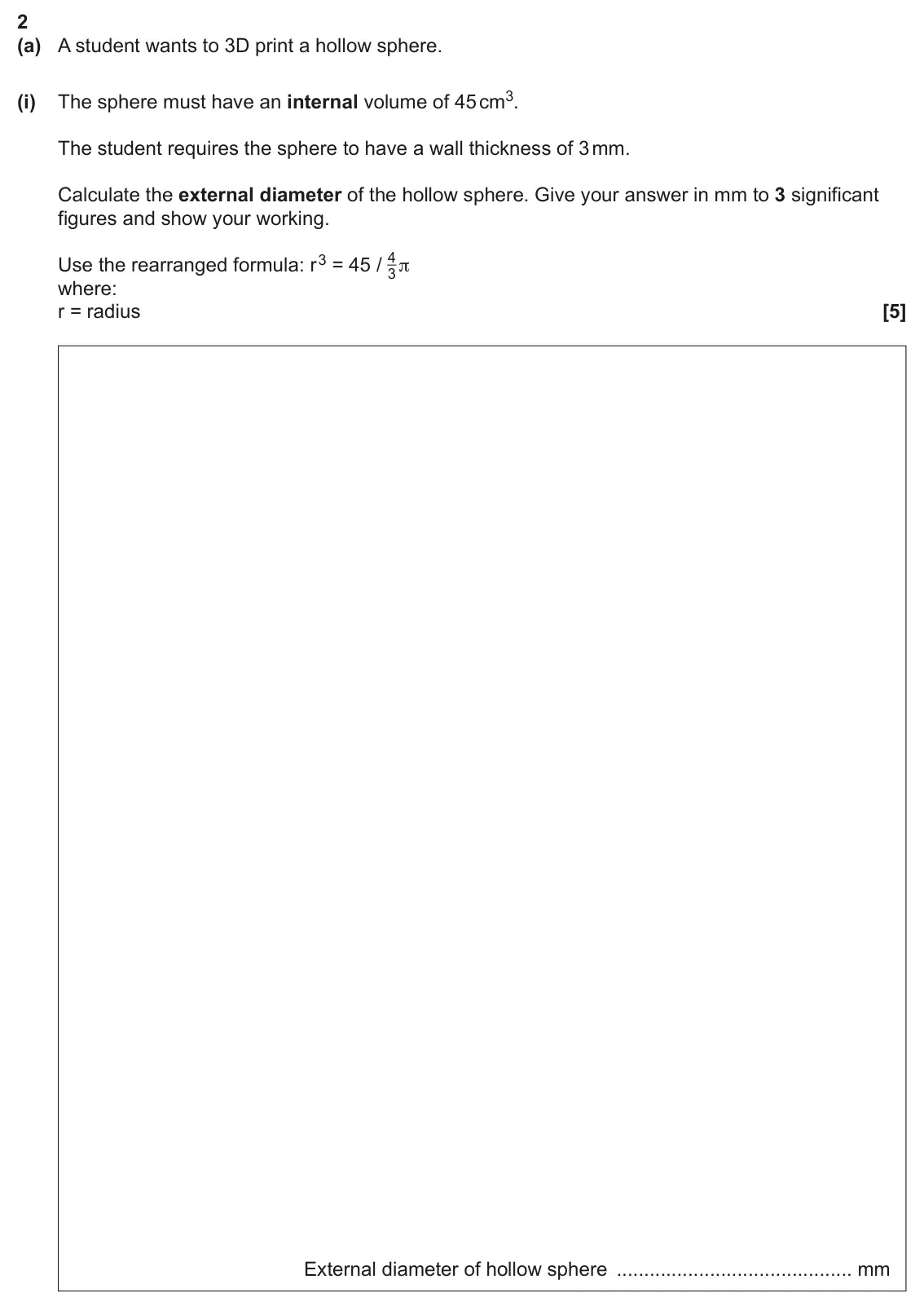
Q2(a)(ii)
The whole paper ↗2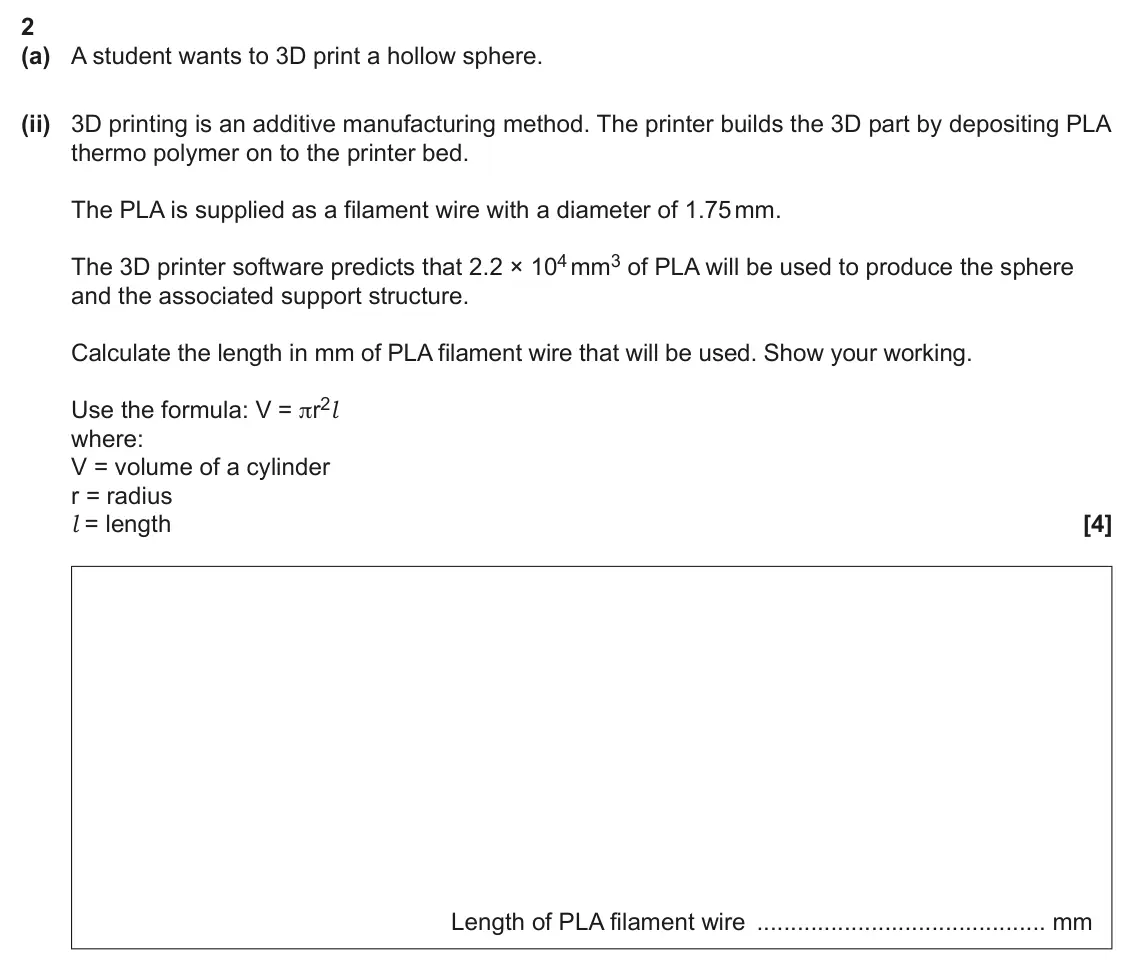
Q2(b)(i)
The whole paper ↗3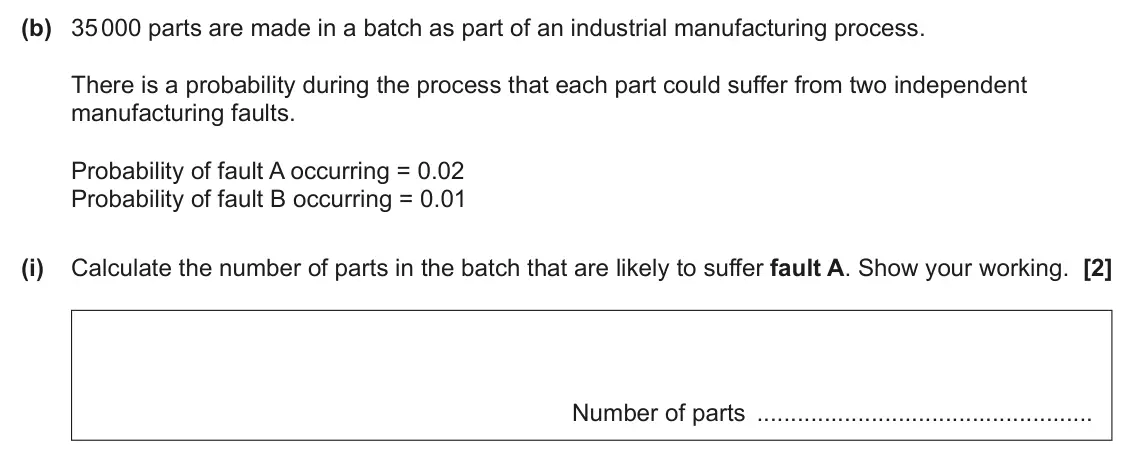
Q2(b)(ii)
The whole paper ↗4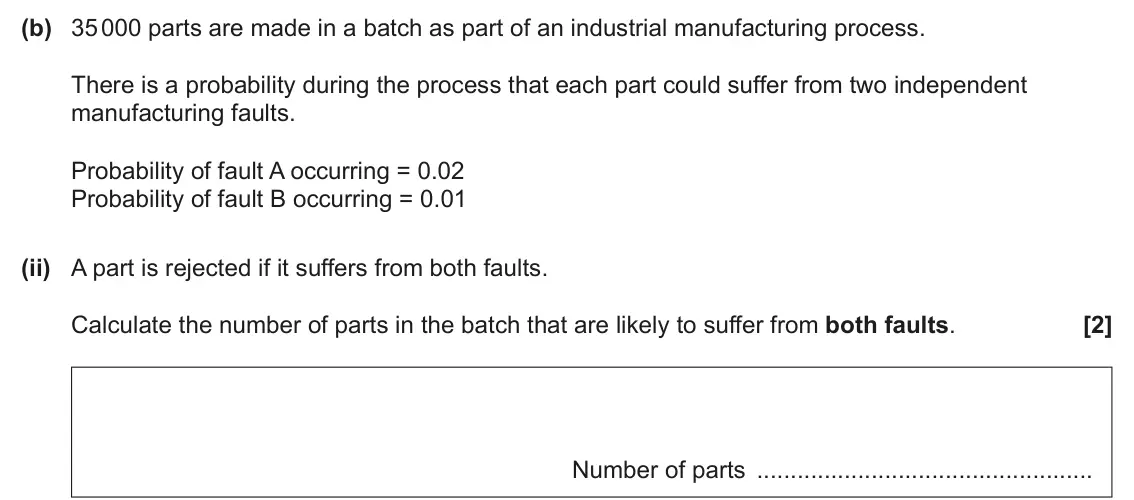
Q2(c)(i)
The whole paper ↗5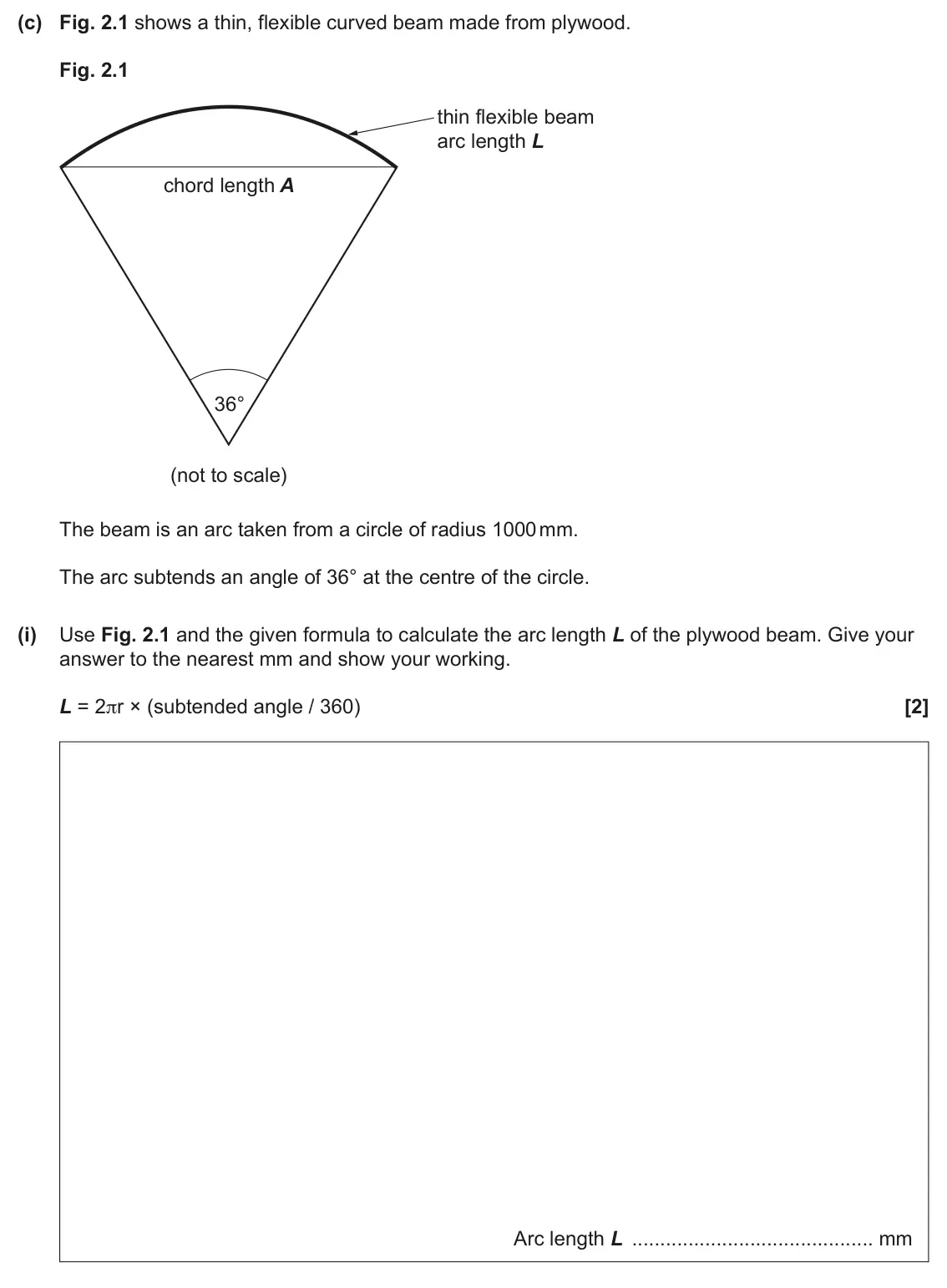
Q2(c)(ii)
The whole paper ↗6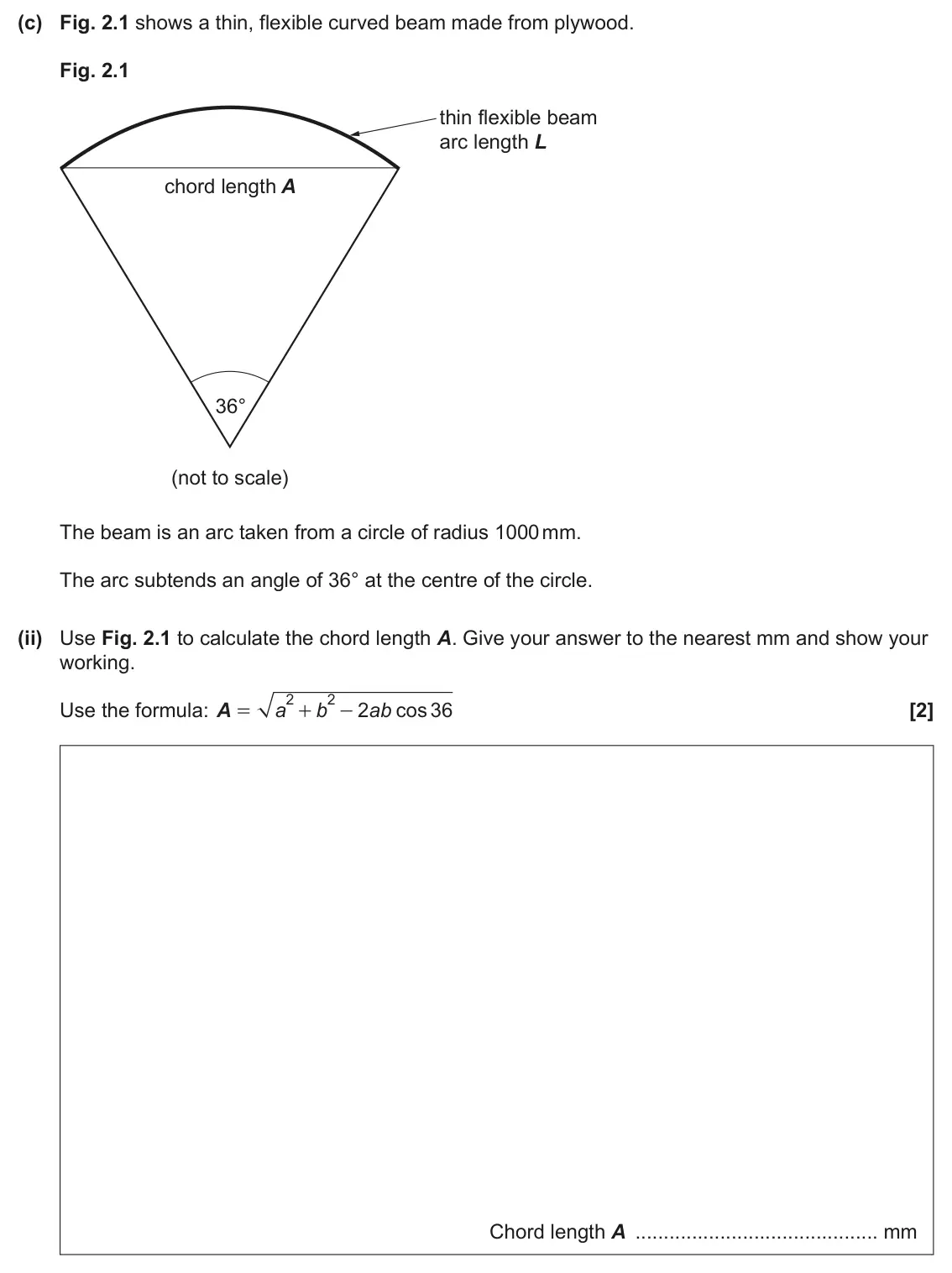
Q4(b)(i)
The whole paper ↗7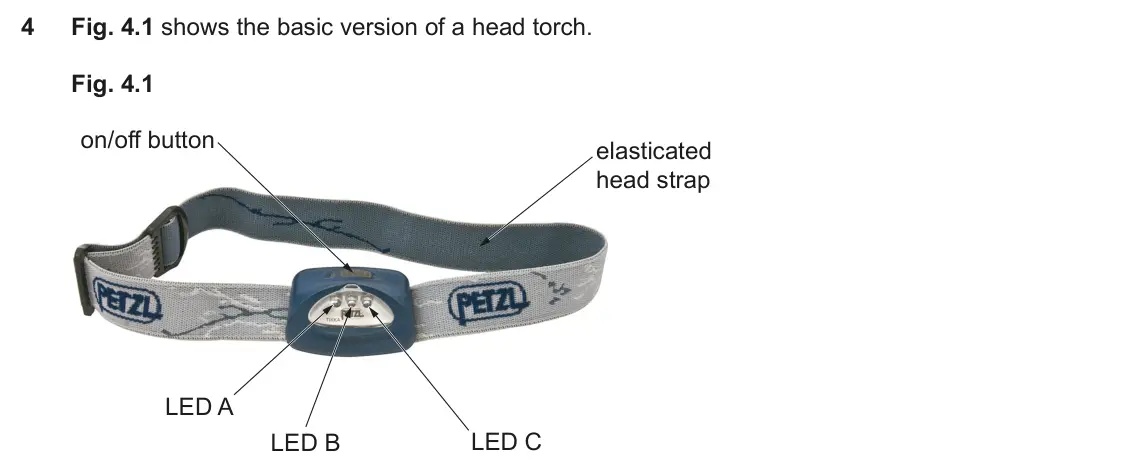
Q4(b)(ii)
The whole paper ↗8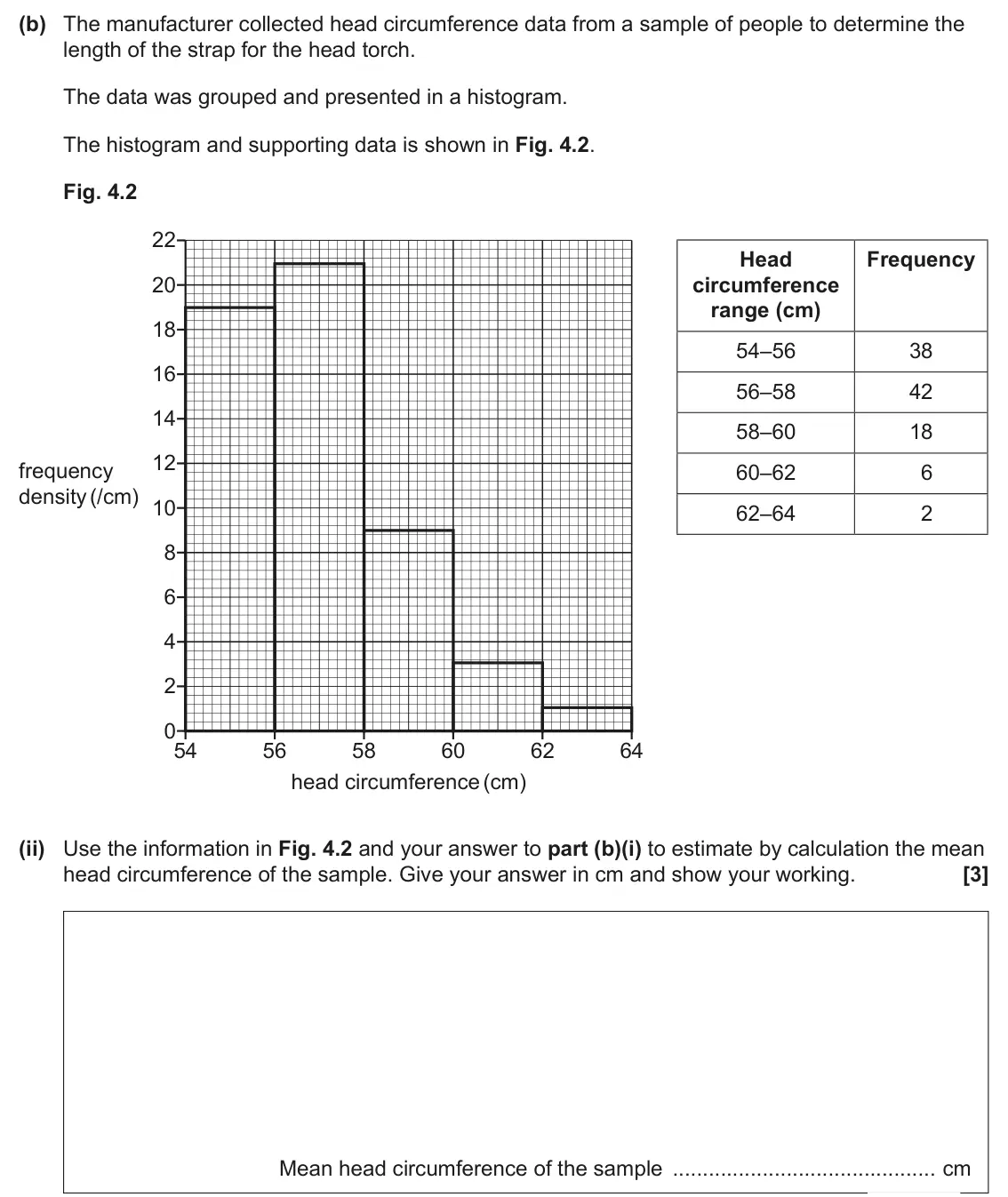
- 9
- 10
Q2(a)(i)
The whole paper ↗11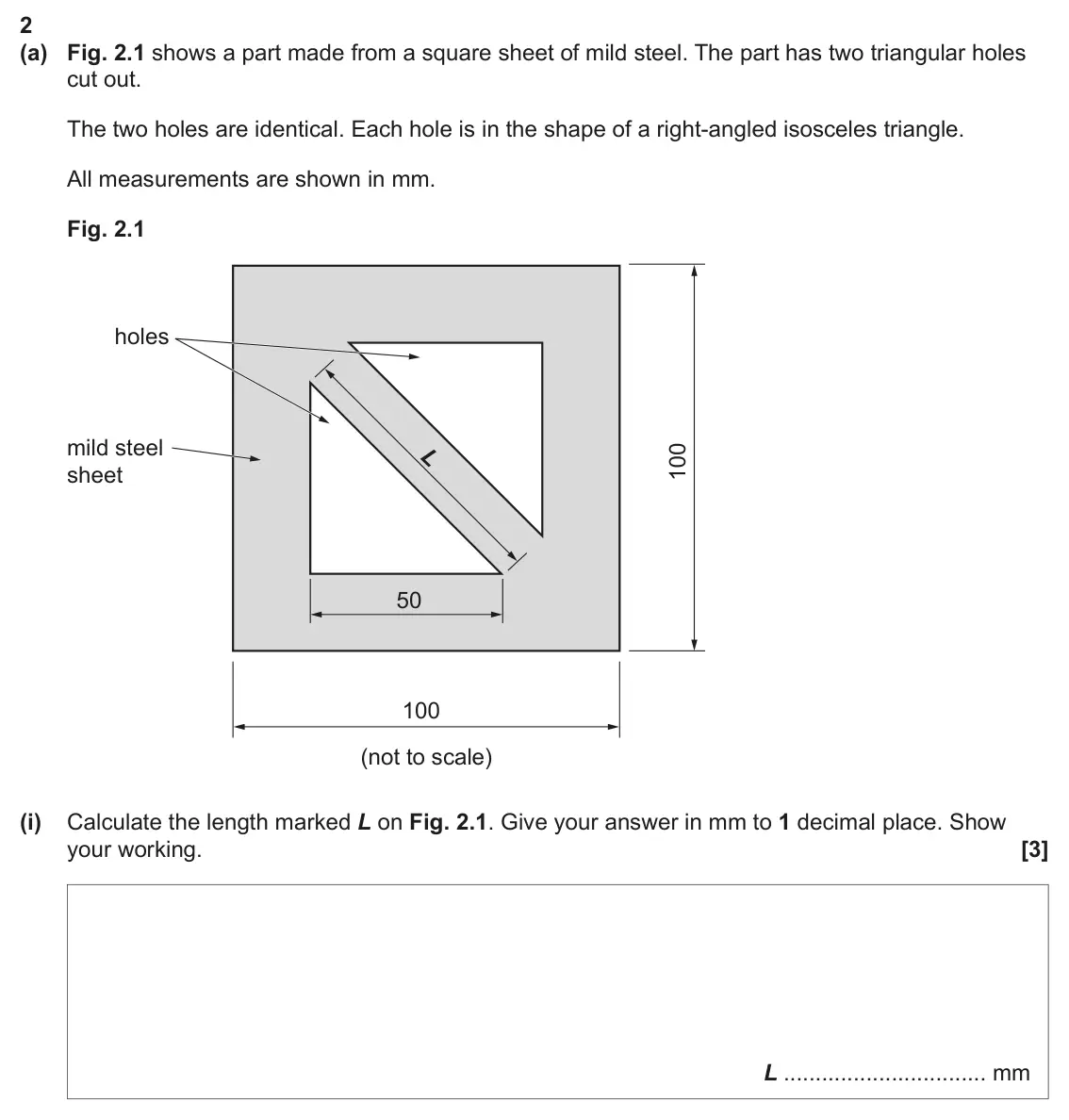
Q2(a)(ii)
The whole paper ↗12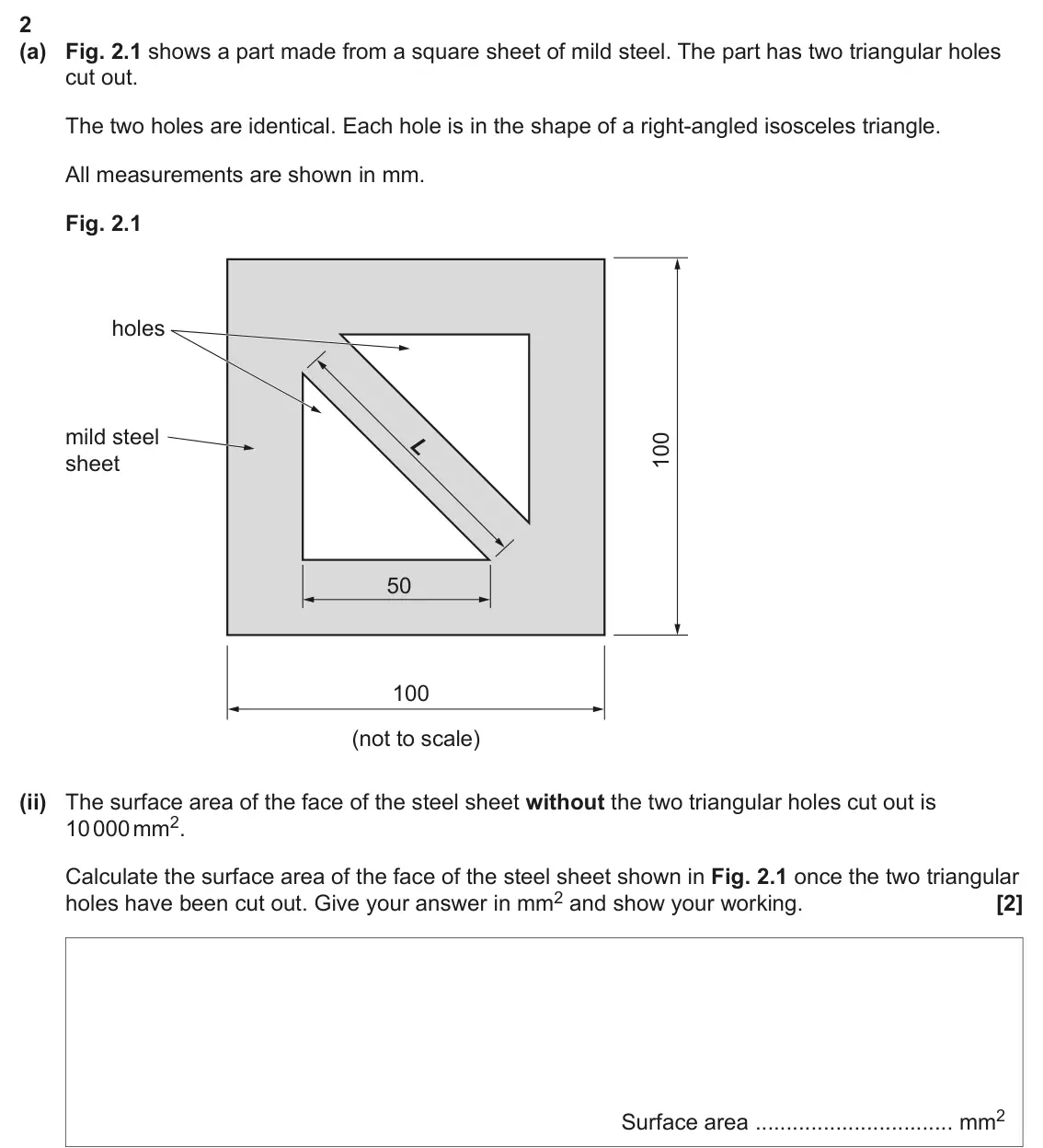
Q2(a)(iii)
The whole paper ↗13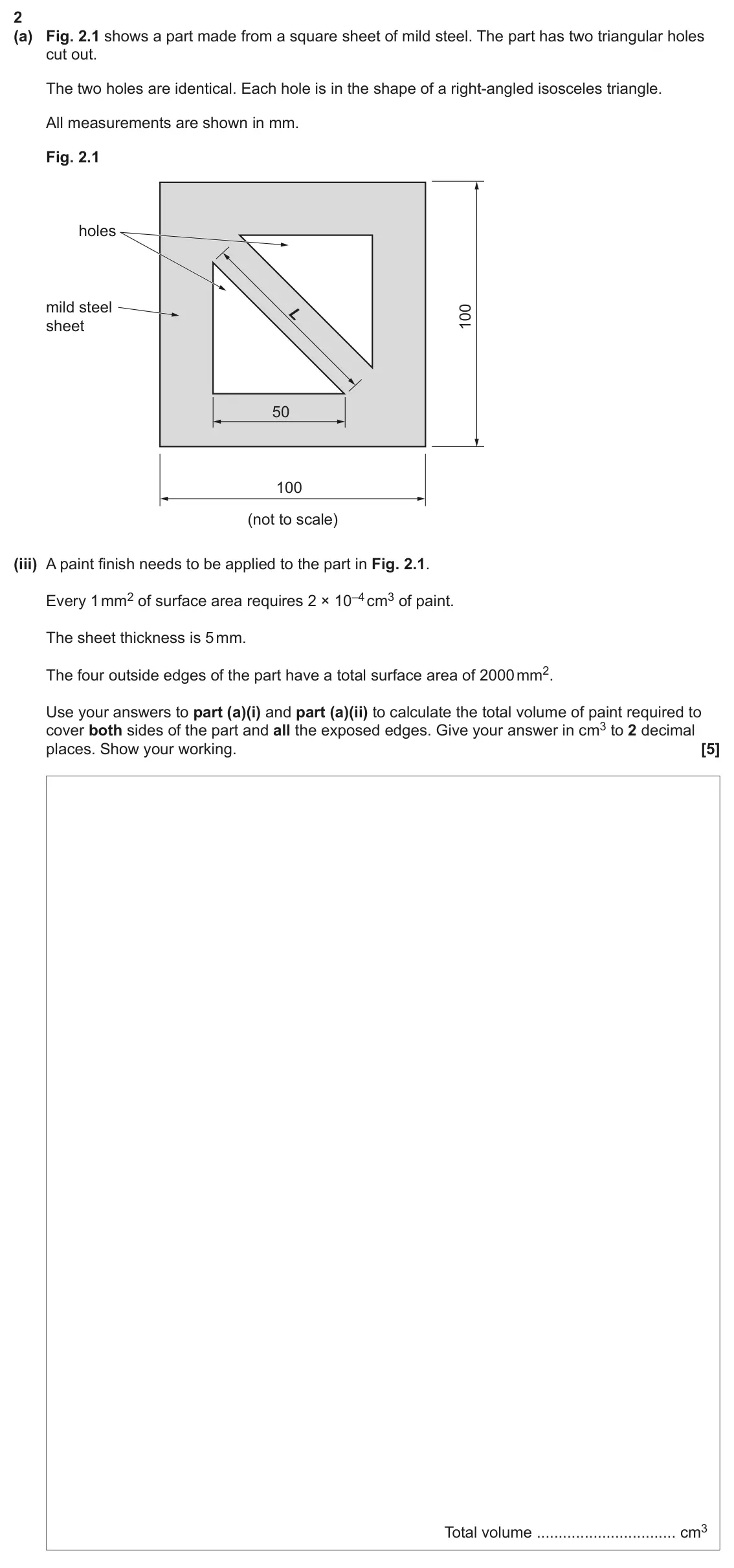
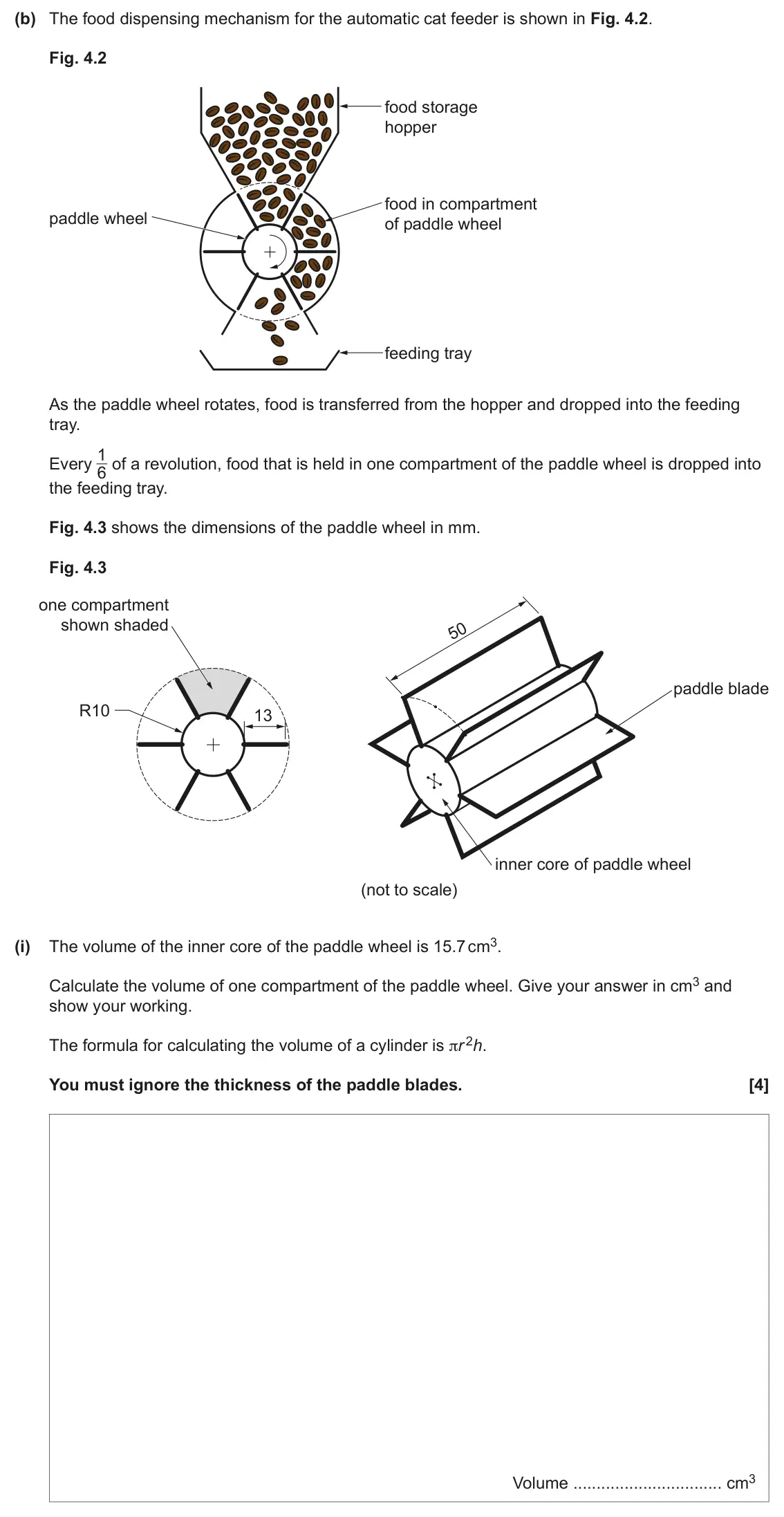
Q4(b)(i)
The whole paper ↗14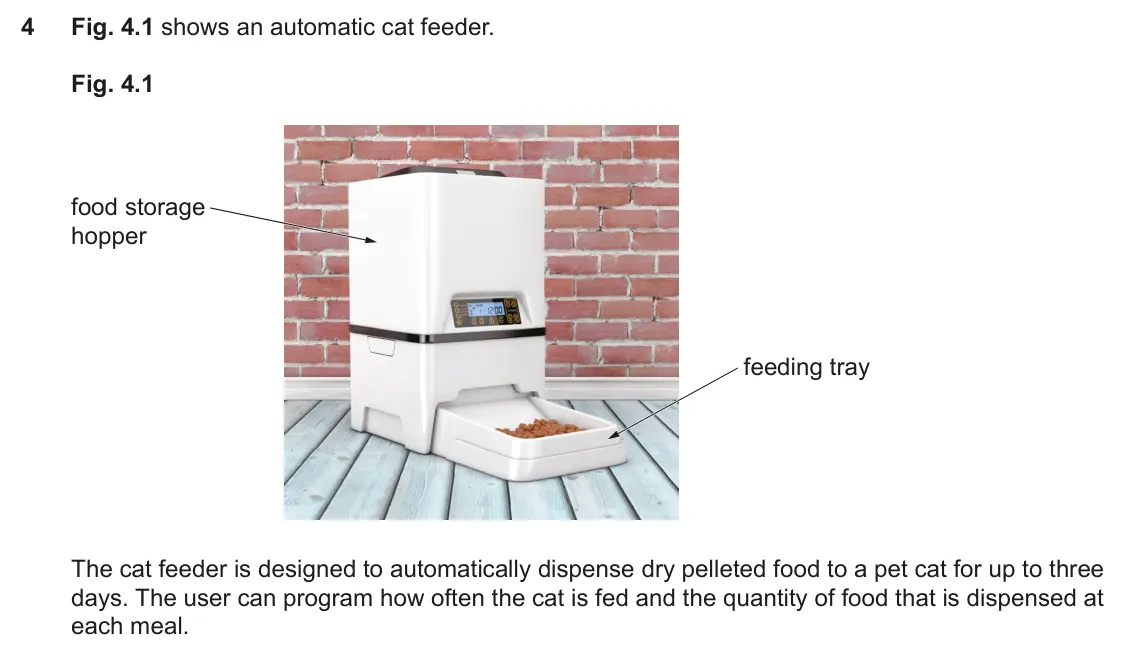
Q4(b)(ii)
The whole paper ↗15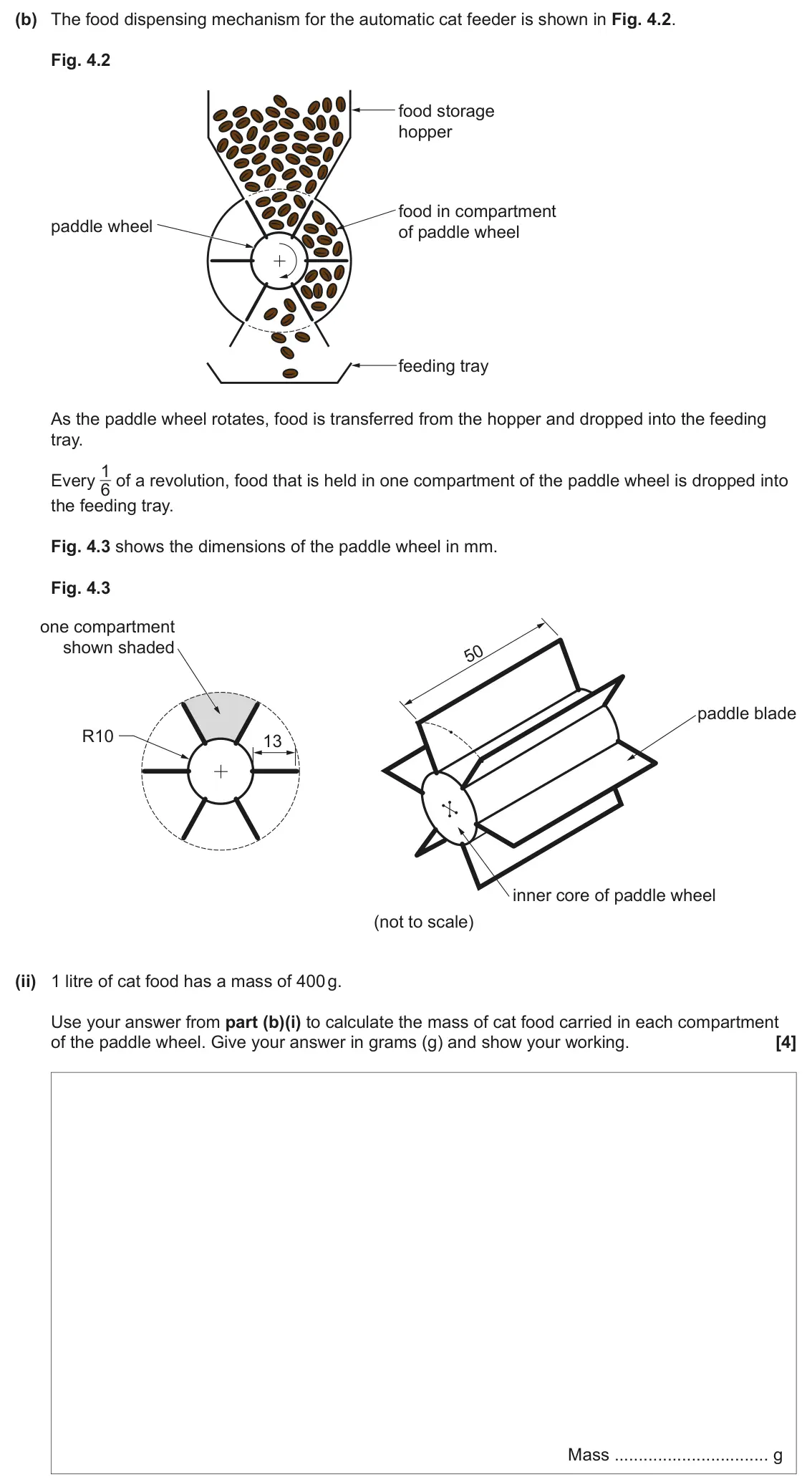
- 16
- 17
Q2(a)
The whole paper ↗18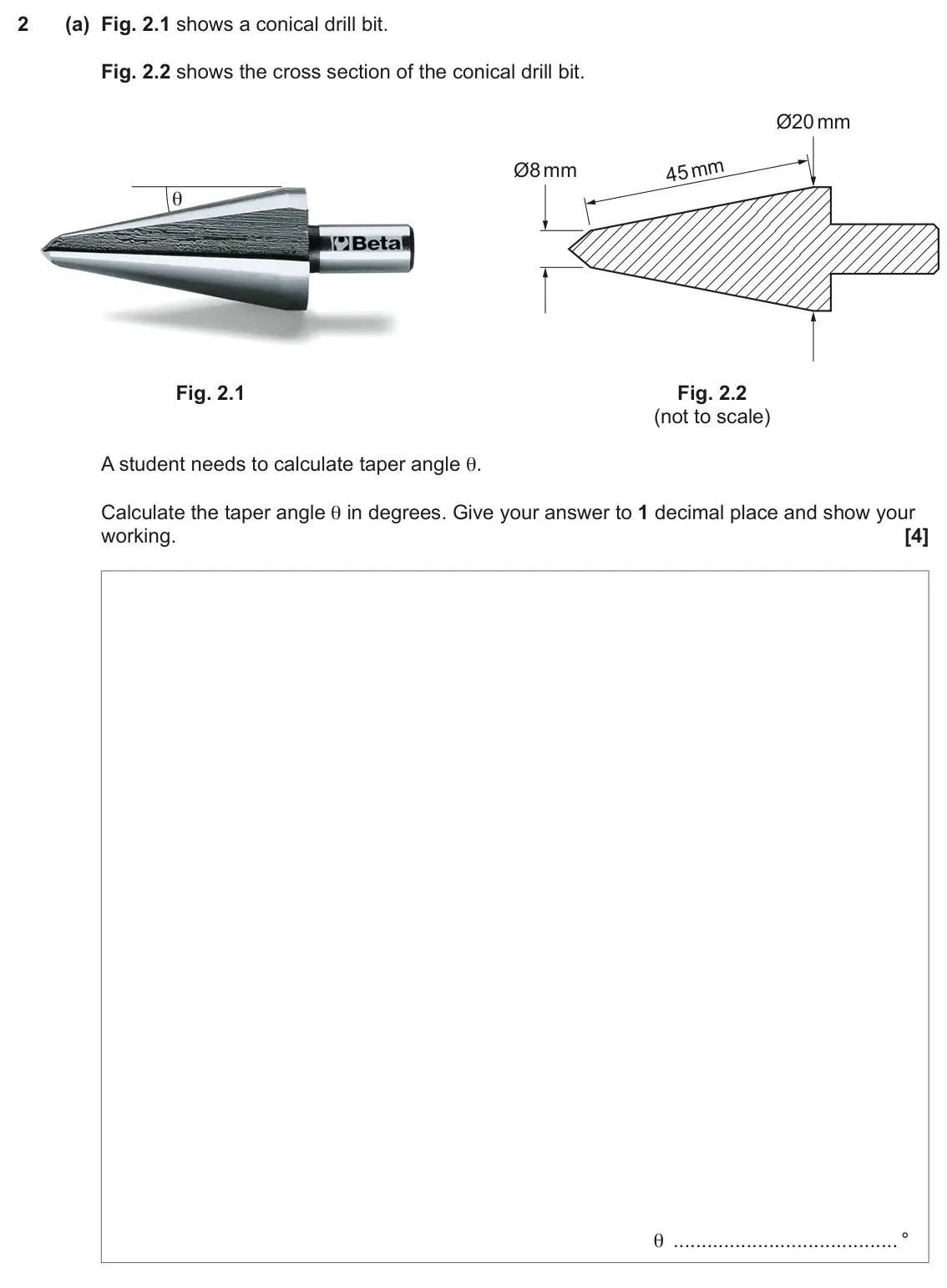
Q2(b)(ii)
The whole paper ↗19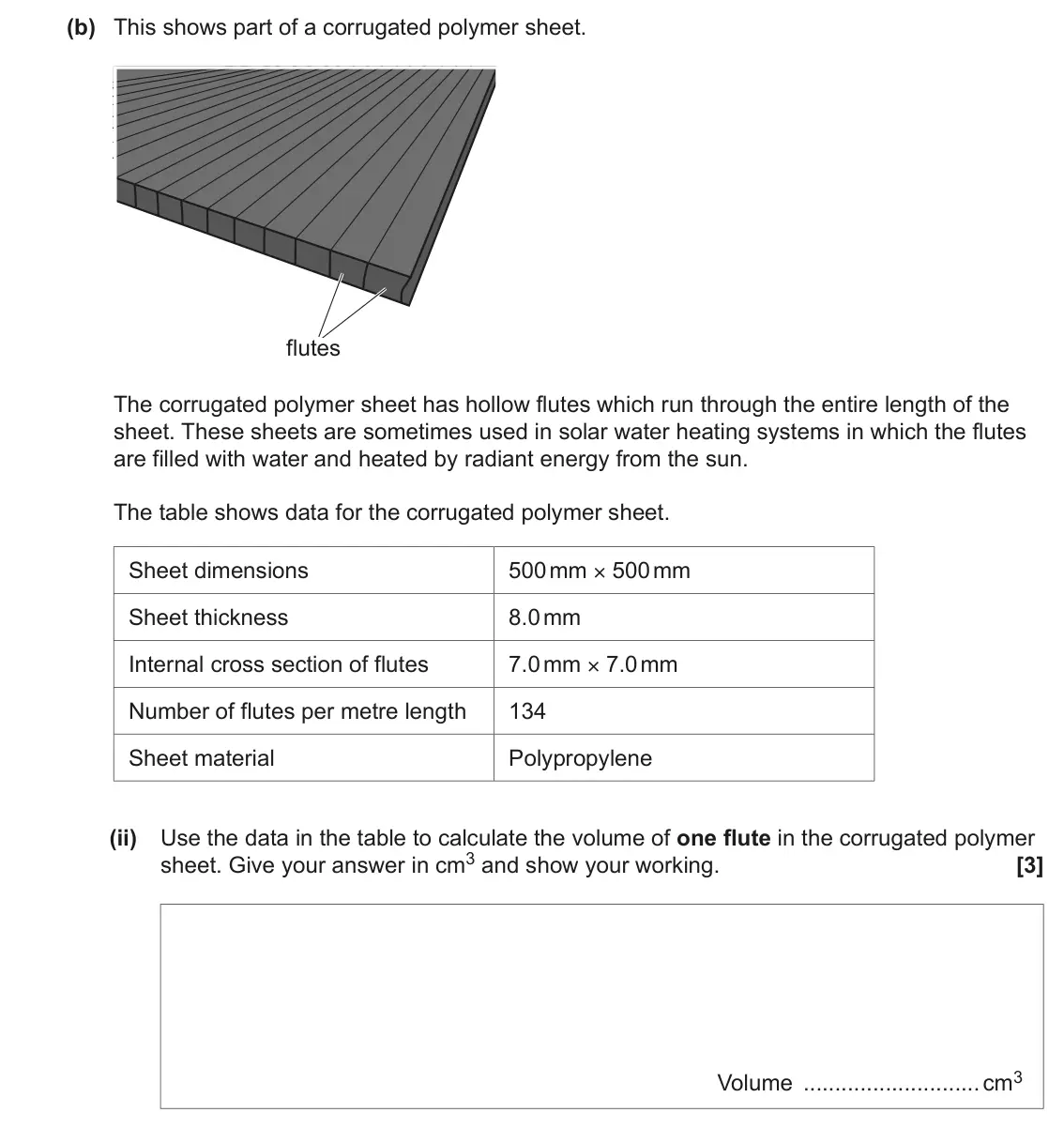
Q2(b)(iii)
The whole paper ↗20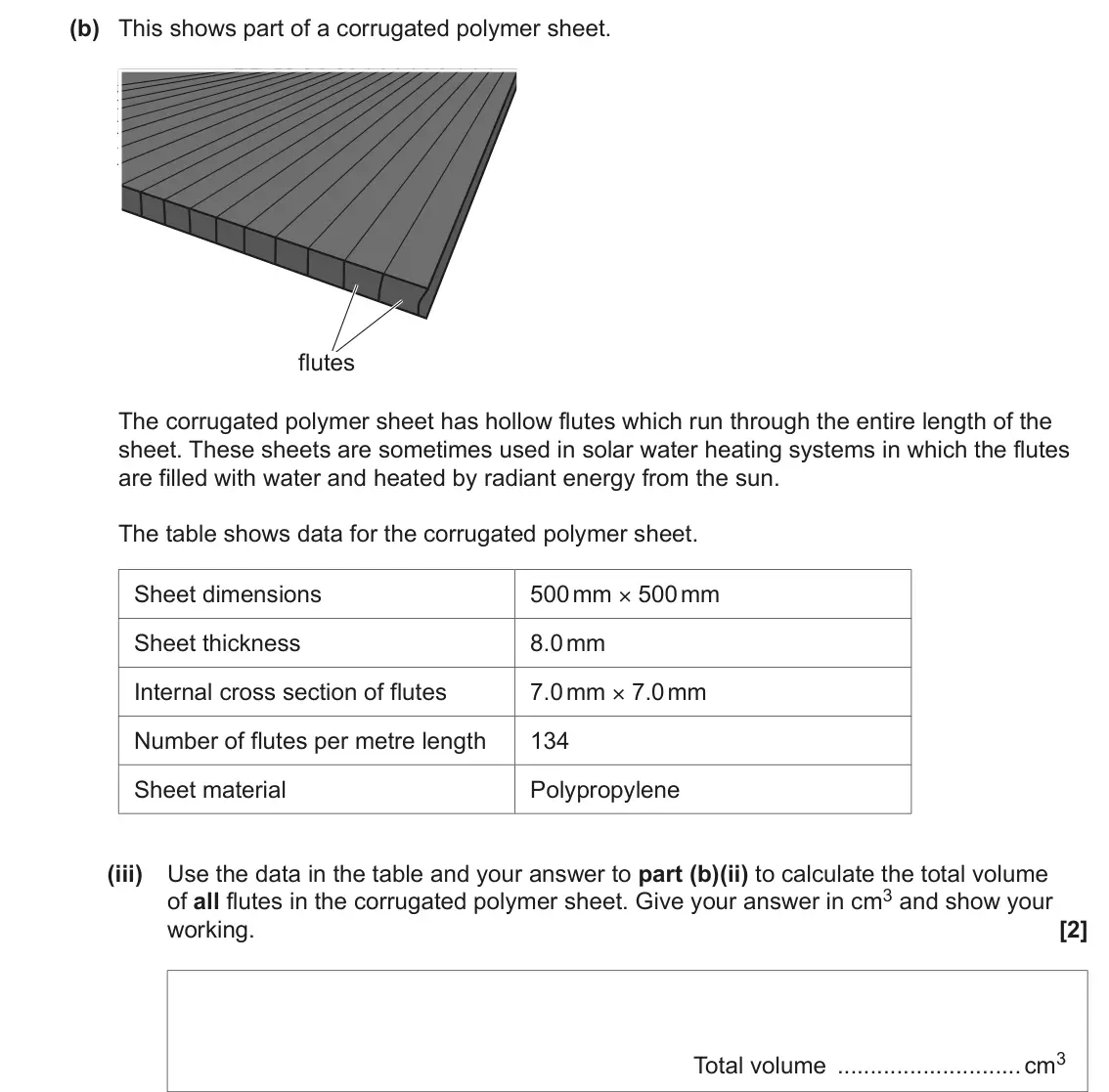
All 37 questions on Applied engineering mathematics and science, as a list
- June 2025, H404/01, Q2(a)(i) (5 marks): The student requires the sphere to have a wall thickness of 3 mm. Calculate the external diameter of the hollow sphere. Give your answer in mm to 3 significant
- June 2025, H404/01, Q2(a)(ii) (4 marks): 3D printing is an additive manufacturing method. The printer builds the 3D part by depositing PLA thermo polymer on to the printer bed. The PLA is supplied as a
- June 2025, H404/01, Q2(b)(i) (2 marks): Calculate the number of parts in the batch that are likely to suffer fault A. Show your working. [2] Number of parts
- June 2025, H404/01, Q2(b)(ii) (2 marks): A part is rejected if it suffers from both faults. Calculate the number of parts in the batch that are likely to suffer from both faults. [2] Number of parts
- June 2025, H404/01, Q2(c)(i) (2 marks): Use Fig. 2.1 and the given formula to calculate the arc length L of the plywood beam. Give your answer to the nearest mm and show your working. L = 2πr × (subte
- June 2025, H404/01, Q2(c)(ii) (2 marks): Use Fig. 2.1 to calculate the chord length A. Give your answer to the nearest mm and show your working. 2 2 Use the formula: A a b 2 ab cos 36 [2] = + - Chord l
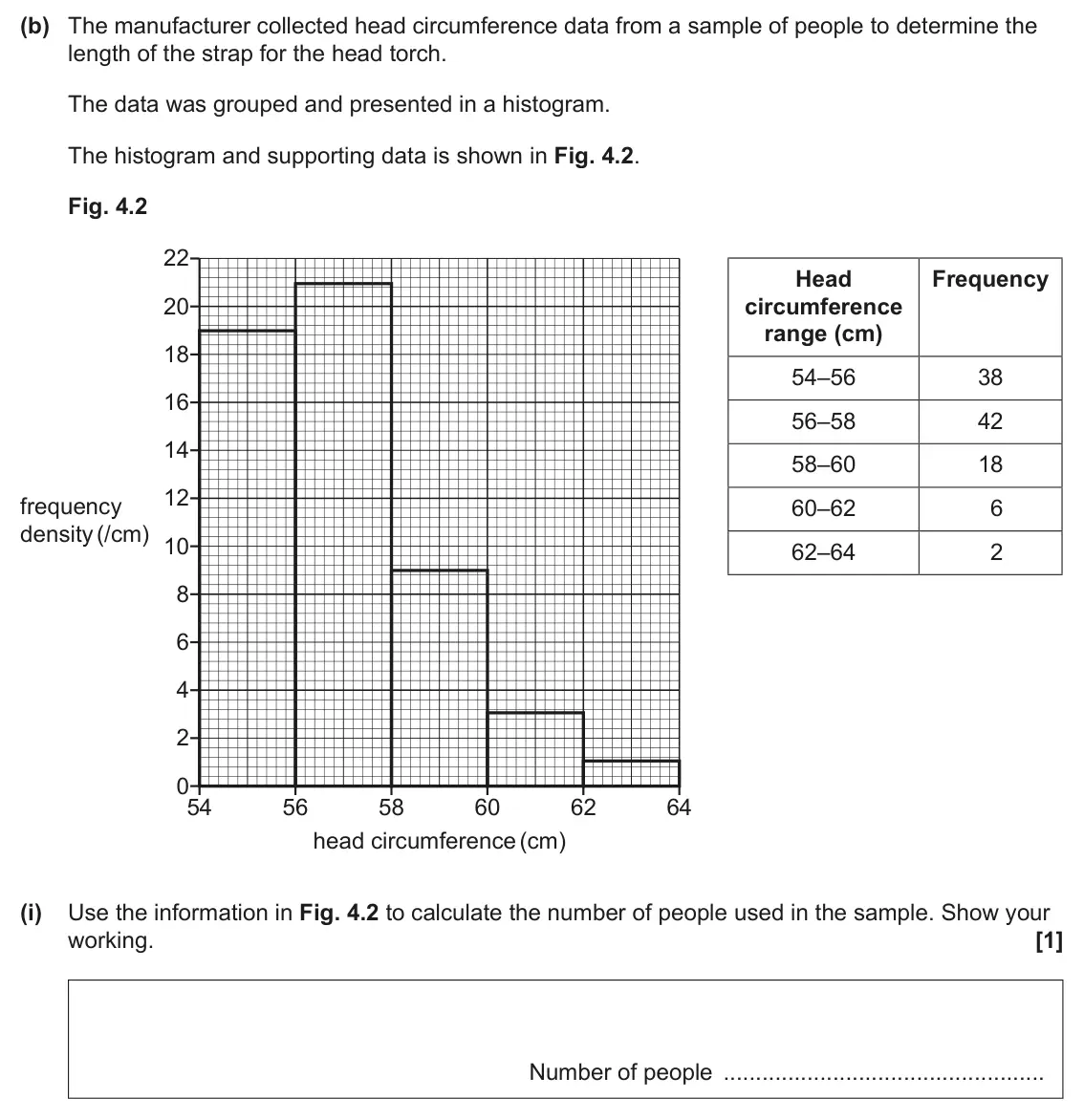
- June 2025, H404/01, Q4(b)(i) (1 mark): Use the information in Fig. 4.2 to calculate the number of people used in the sample. Show your working. [1] Number of people
- June 2025, H404/01, Q4(b)(ii) (3 marks): Use the information in Fig. 4.2 and your answer to part (b)(i) to estimate by calculation the mean head circumference of the sample. Give your answer in cm and
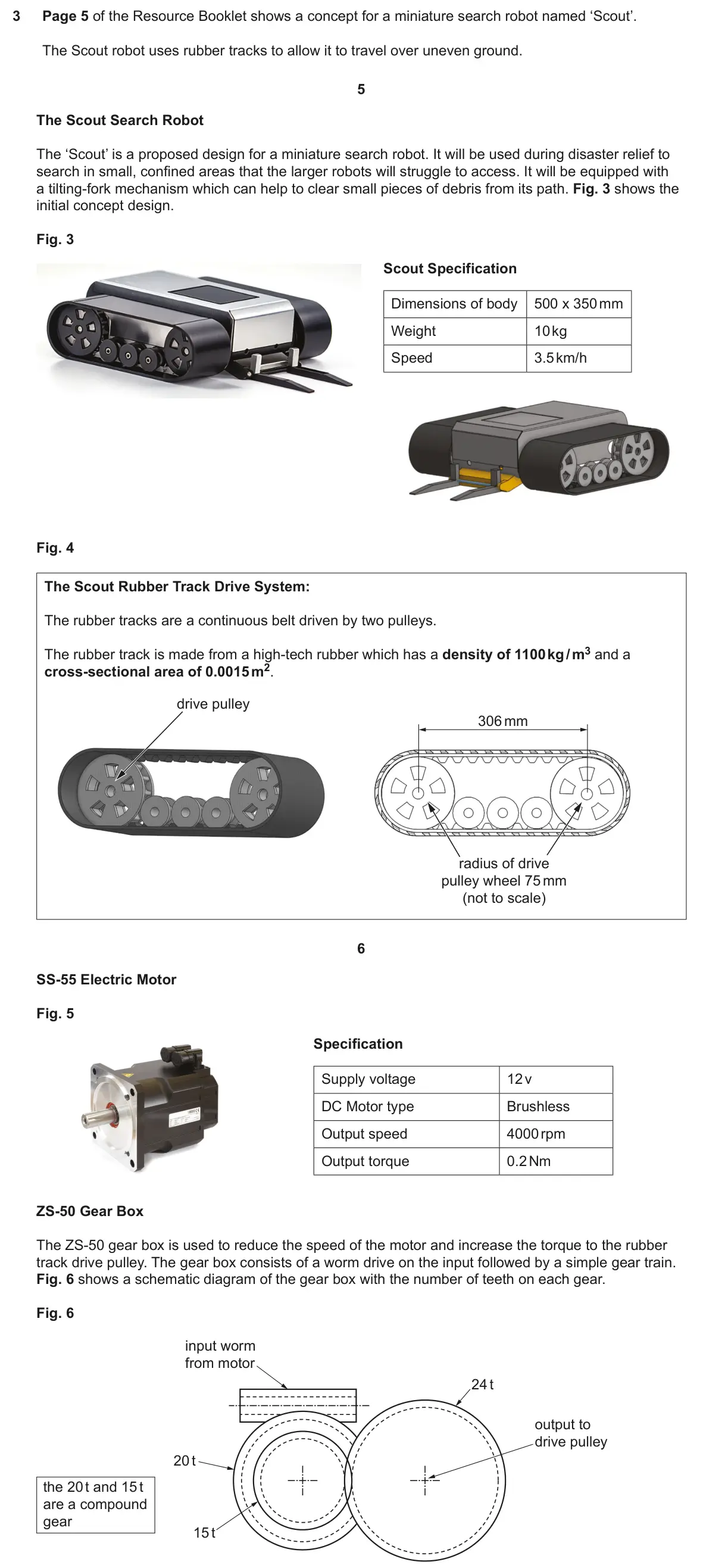
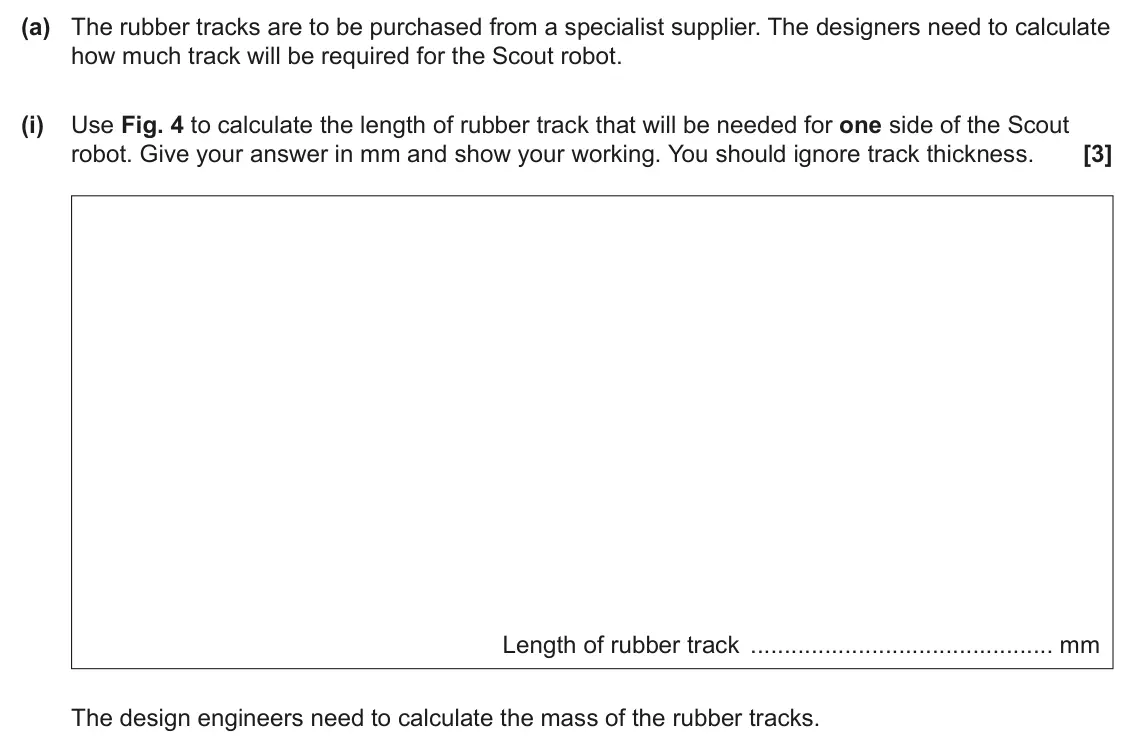
- June 2025, H404/02, Q3(a)(i) (3 marks): Use Fig. 4 to calculate the length of rubber track that will be needed for one side of the Scout robot. Give your answer in mm and show your working. You should
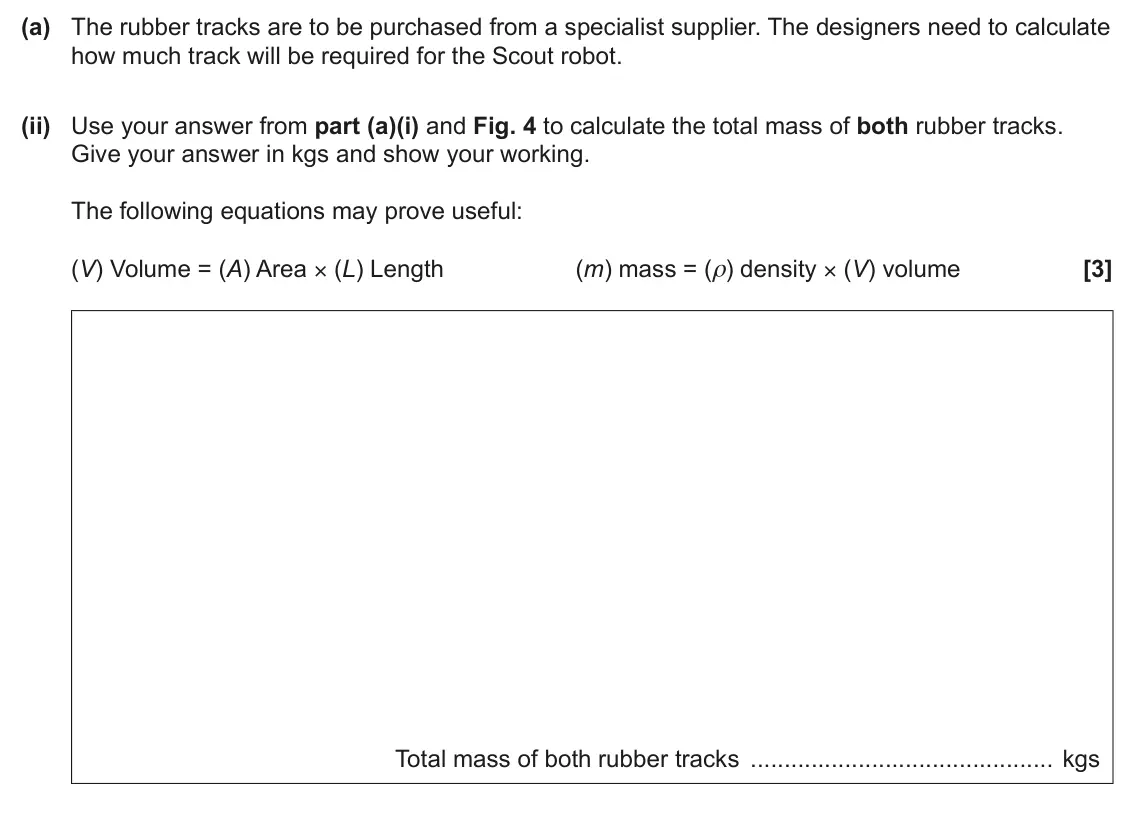
- June 2025, H404/02, Q3(a)(ii) (3 marks): Use your answer from part (a)(i) and Fig. 4 to calculate the total mass of both rubber tracks. Give your answer in kgs and show your working. The following equa
- June 2024, H404/01, Q2(a)(i) (3 marks): Calculate the length marked L on Fig. 2.1. Give your answer in mm to 1 decimal place. Show your working. [3] L mm
- June 2024, H404/01, Q2(a)(ii) (2 marks): The surface area of the face of the steel sheet without the two triangular holes cut out is 10 000 mm2. Calculate the surface area of the face of the steel shee
- June 2024, H404/01, Q2(a)(iii) (5 marks): A paint finish needs to be applied to the part in Fig. 2.1. Every 1 mm2 of surface area requires 2 × 10⁻⁴ cm3 of paint. The sheet thickness is 5 mm. The four ou
- June 2024, H404/01, Q4(b)(i) (4 marks): Calculate the volume of one compartment of the paddle wheel. Give your answer in cm3 and show your working. The formula for calculating the volume of a cylinder
- June 2024, H404/01, Q4(b)(ii) (4 marks): 1 litre of cat food has a mass of 400 g. Use your answer from part (b)(i) to calculate the mass of cat food carried in each compartment of the paddle wheel. Giv
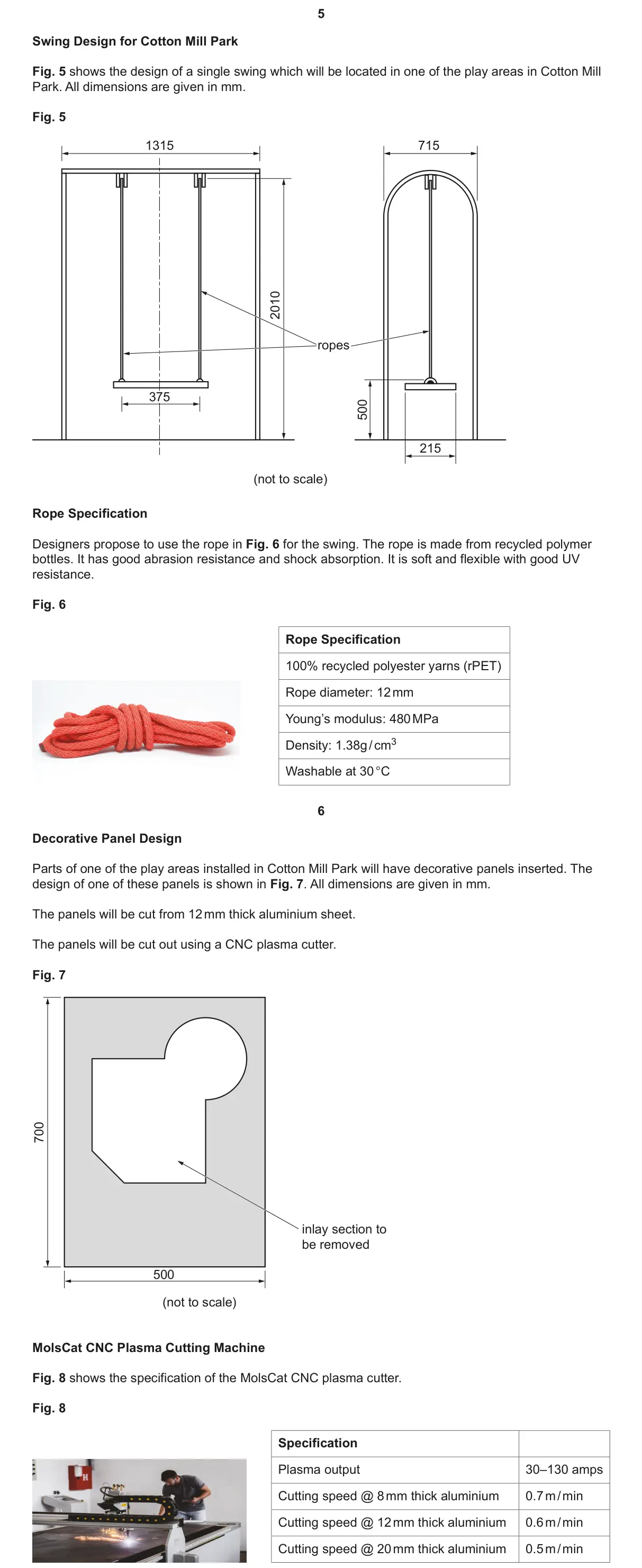
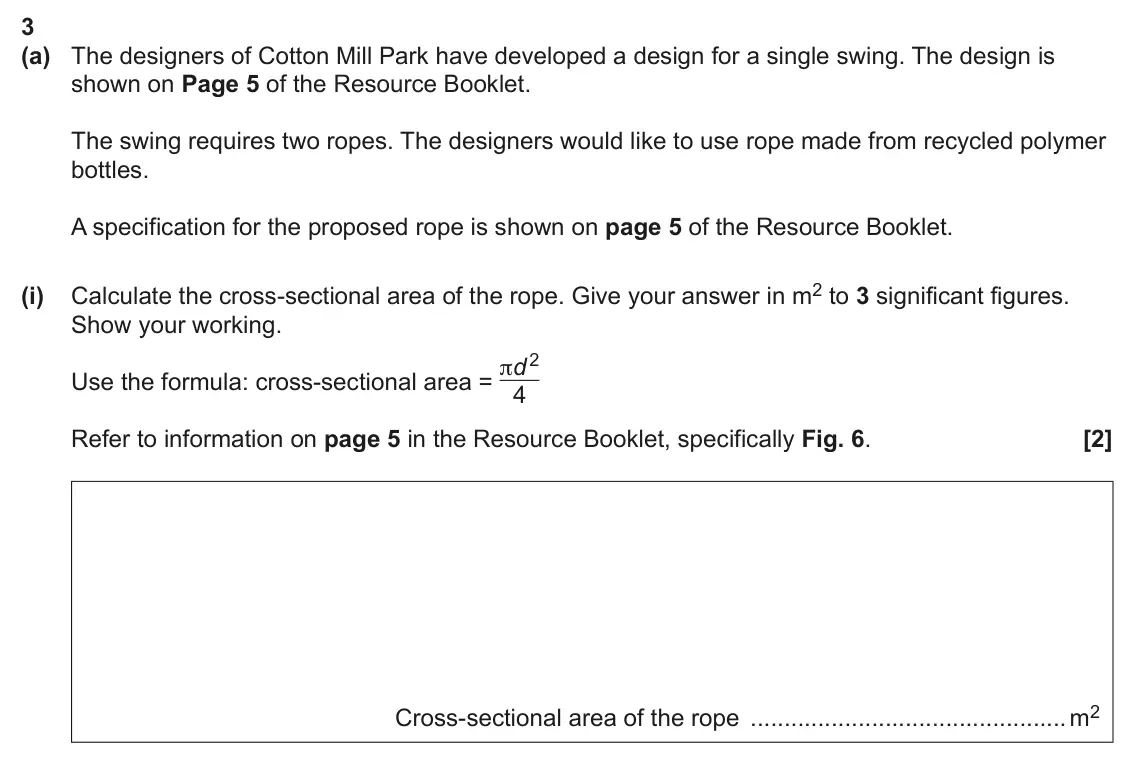
- June 2024, H404/02, Q3(a)(i) (2 marks): Show your working. Use the formula: cross-sectional area = πd 2 4 Refer to information on page 5 in the Resource Booklet, specifically Fig. 6. [2] Cross-section
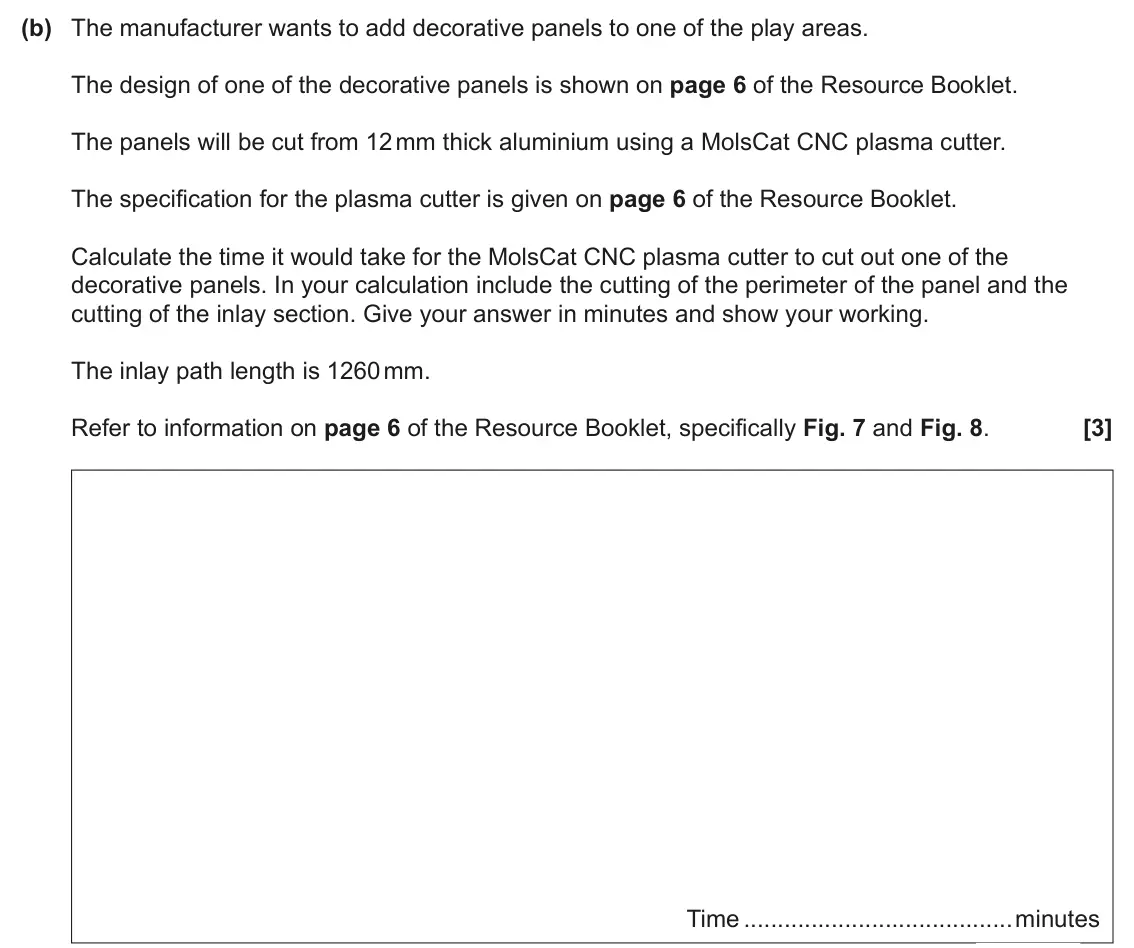
- June 2024, H404/02, Q3(b) (3 marks): The manufacturer wants to add decorative panels to one of the play areas. The design of one of the decorative panels is shown on page 6 of the Resource Booklet.
- June 2023, H404/01, Q2(a) (4 marks): Fig. 2.1 shows a conical drill bit. Fig. 2.2 shows the cross section of the conical drill bit. Ø20 mm 45mm Ø8 mm θ Fig. 2.1 Fig. 2.2 (not to scale) A student ne
- June 2023, H404/01, Q2(b)(ii) (3 marks): Use the data in the table to calculate the volume of one flute in the corrugated polymer sheet. Give your answer in cm3 and show your working. [3] Volume cm3
- June 2023, H404/01, Q2(b)(iii) (2 marks): Use the data in the table and your answer to part (b)(ii) to calculate the total volume of all flutes in the corrugated polymer sheet. Give your answer in cm3 a
- June 2023, H404/02, Q3(a)(i) (6 marks): Use the information in Fig. 5 of the Resource Booklet to calculate the total volume of the funnel (both sections). Give your answer in cm3 to 2 decimal places.
- June 2023, H404/02, Q3(a)(ii) (3 marks): The 3D projection of the funnel is shown below in grayscale: Conical section Cylindrical section During a period of rain, the rain falls steadily at a rate of 0
- June 2022, H404/01, Q2(a)(i) (3 marks): The stranded electrical wire in Fig. 2.1 is made from 50 strands of copper. The diameter of each strand is 0.25 mm. Calculate the total cross-sectional area of
- June 2022, H404/01, Q2(a)(ii) (2 marks): The manufacturer states that the cross-sectional area of copper in the wire is 2.50 mm2. Calculate the percentage error between the cross-sectional area calcula
- June 2022, H404/01, Q2(b)(iii) (2 marks): Calculate the total cutting length of the combined tessellated shape. Give your answer in mm and show your working. [2] Total cutting length mm
- June 2022, H404/02, Q3(a) (6 marks): Stand-up paddle boards are made in different sizes to suit the weight of the user and the load they wish to carry. The Resource Booklet contains data for five s
- June 2022, H404/02, Q3(b)(i) (3 marks): Using Fig. 9 as the basis for your calculations, estimate the time taken for the NW20 air pump to inflate Board-16 to the required pressure. Give your answer in
- November 2021, H404/01, Q2(a)(i) (2 marks): Assuming 1 inch = 25.4 mm, identify the drill bit that will drill a hole closest to the required size. Show your working. Drill bit mm [2]
- November 2021, H404/01, Q2(a)(ii) (3 marks): Determine whether the drill bit you specified in part (a)(i) would produce a hole that is within this tolerance. State Yes or No. Show your working. Within tole
- November 2021, H404/01, Q2(b)(i) (1 mark): Calculate the probability of a gear being faulty in the batch. Probability [1]
- November 2021, H404/01, Q2(b)(ii) (2 marks): Use your answer to part (b)(i) to calculate the minimum number of gears which should be inspected if the probability of a faulty gear remains the same. Show you
- November 2021, H404/01, Q2(c)(i) (3 marks): Calculate the height h in m. Give your answer to 1 decimal place and show your working. Assume that the zip-line does not sag. h m [3]
- November 2021, H404/01, Q2(c)(ii) (4 marks): Fig. 2.2 shows construction details of the start point for the zip-line. zip-line support pole 66° guy line 69° d Fig. 2.2 (not to scale) Calculate the distance
- November 2021, H404/01, Q2(c)(iii) (4 marks): A risk assessment is carried out on the zip-line for the children’s play park. The assessment suggests there is a 1 in 25 000 chance of failure each day it is u
- November 2021, H404/02, Q4(b)(i) (3 marks): Calculate the diameter of the polymer rope in mm. Give your answer to the nearest mm and show your working. Diameter of polymer rope mm [3]
- Specimen, H404/01, Q1(c)(ii) (2 marks): 2.78gcm-3. 4079cm3 of alloy is used in the manufacture of each casing. All other fixtures and fittings have a mass of 3 467g. Calculate the overall mass of the
- Specimen, H404/02, Q5(a) (3 marks): Calculate the total mass of the bridge shown in Fig. 3, plus the person, in kg. Total mass of the bridge = kg [3]
Questions, mark schemes and examiner’s reports are © OCR, from their published past papers. Plumi isn’t affiliated with any exam board. Want whole papers? OCR A-Level Design Engineering past papers.
The Plumi iPad app also offers exam-style questions with AI feedback on your handwritten working.