 plumi
Textiles: sources, properties and footprint: Eduqas GCSE Design and Technology questions
Eduqas GCSE Design and Technology past-paper questions on F1 Textiles: sources, properties and footprint, 2019–2025, with mark schemes and examiner’s reports where available.
Past paper difficulty
Paper
All papers
Exam
All years
Calculations
Loading the full question list…
Q6(a)(i)
The whole paper ↗Q6(a)(ii)
The whole paper ↗Q6(c)
The whole paper ↗Q6(a)(i)
The whole paper ↗Q6(a)(ii)
The whole paper ↗Q6(d)
The whole paper ↗Q6(c)
The whole paper ↗Q6(a)(ii)
The whole paper ↗Q6(c)
The whole paper ↗










All 9 questions on Textiles: sources, properties and footprint, as a list
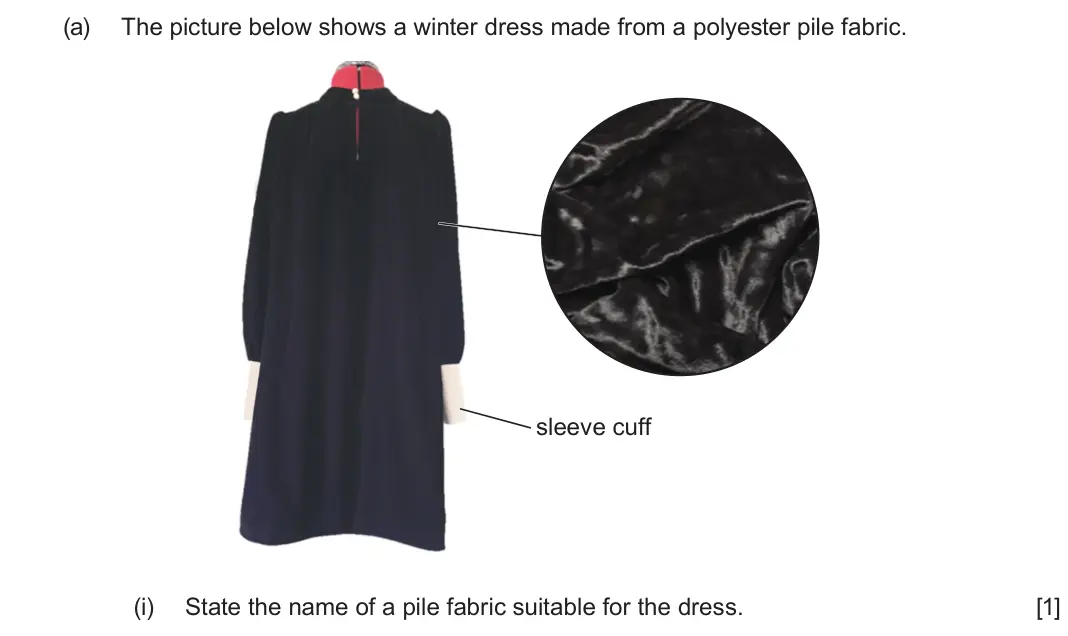
- June 2025, Section B, Q6(a)(i) (1 mark): State the name of a pile fabric suitable for the dress. [1]
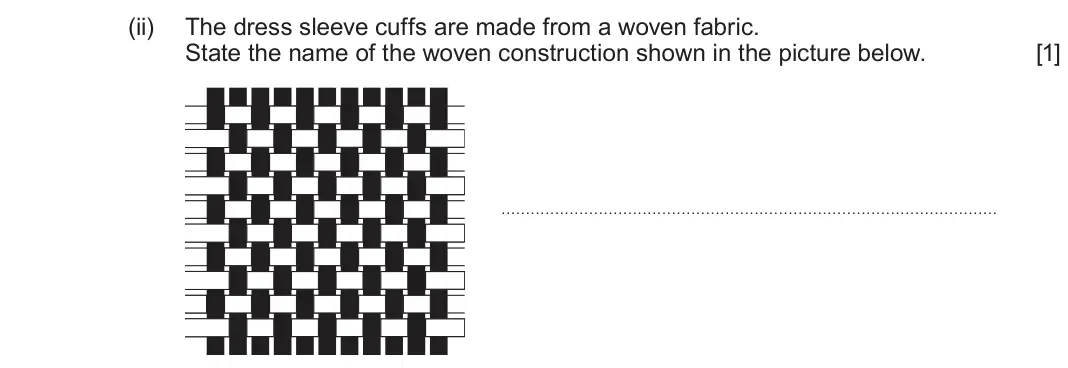
- June 2025, Section B, Q6(a)(ii) (1 mark): The dress sleeve cuffs are made from a woven fabric. State the name of the woven construction shown in the picture below. [1] . . . . . . . . . . . . . . . . .
- June 2025, Section B, Q6(c) (5 marks): Analyse the characteristics of woven and knitted fabrics that make them suitable for garment manufacture. [5]
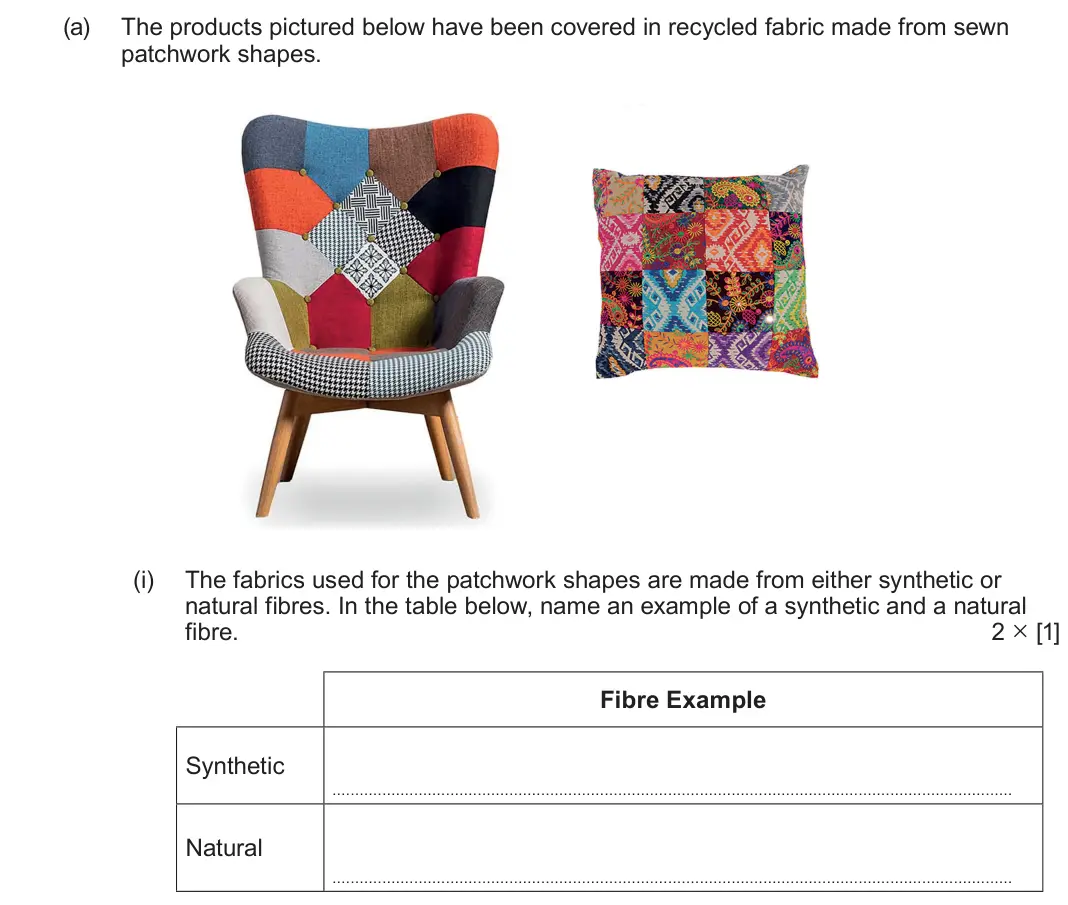
- June 2024, Section B, Q6(a)(i) (2 marks): The fabrics used for the patchwork shapes are made from either synthetic or natural fibres. In the table below, name an example of a synthetic and a natural fib
- June 2024, Section B, Q6(a)(ii) (2 marks): Synthetic fibres can be blended with natural fibres. Describe one advantage of fibre blending. [2]
- June 2024, Section B, Q6(d) (6 marks): Discuss other ways designers can extend the life of textile products to lessen their impact on our environment. [6]
- June 2022, Section B, Q6(c) (5 marks): Wool and silk are natural protein fibres and were used for the fabric of the skirt. Analyse the impact farming these fibres has on our ecological footprint. [5]
- Autumn 2020, Section B, Q6(a)(ii) (1 mark): The fabric used to make the dress was chosen for its high absorbency, handle and lustre. State the fibre used in the construction of the fabric. [1]
- Autumn 2020, Section B, Q6(c) (5 marks): Many of Matthew Williamson’s clothes are made from natural materials. Analyse the benefits of using natural fabrics instead of synthetic fabrics when manufactur
Questions, mark schemes and examiner’s reports are © WJEC Eduqas, from their published past papers. Plumi isn’t affiliated with any exam board. Want whole papers? Eduqas GCSE Design and Technology past papers.
The Plumi iPad app also offers exam-style questions with AI feedback on your handwritten working.