 plumi
The European Union and monetary integration: Eduqas A‑Level Economics questions
Eduqas A-Level Economics past-paper questions on The European Union and monetary integration, 2016–2025, with mark schemes and examiner’s reports where available.
Paper
All papers
Exam
All years
Calculations
Loading the full question list…
Q6(a)
The whole paper ↗Q6(b)
The whole paper ↗Q2(e)
The whole paper ↗Q6(a)
The whole paper ↗Q6(b)
The whole paper ↗Q2(d)
The whole paper ↗Q2(e)
The whole paper ↗









All 8 questions on The European Union and monetary integration, as a list
- June 2023, Component 3, Q6(a) (10 marks): Explain why a non-EU member such as Norway might become part of the single
- June 2023, Component 3, Q6(b) (20 marks): Evaluate the effects of membership of the European Monetary Union (EMU) (the
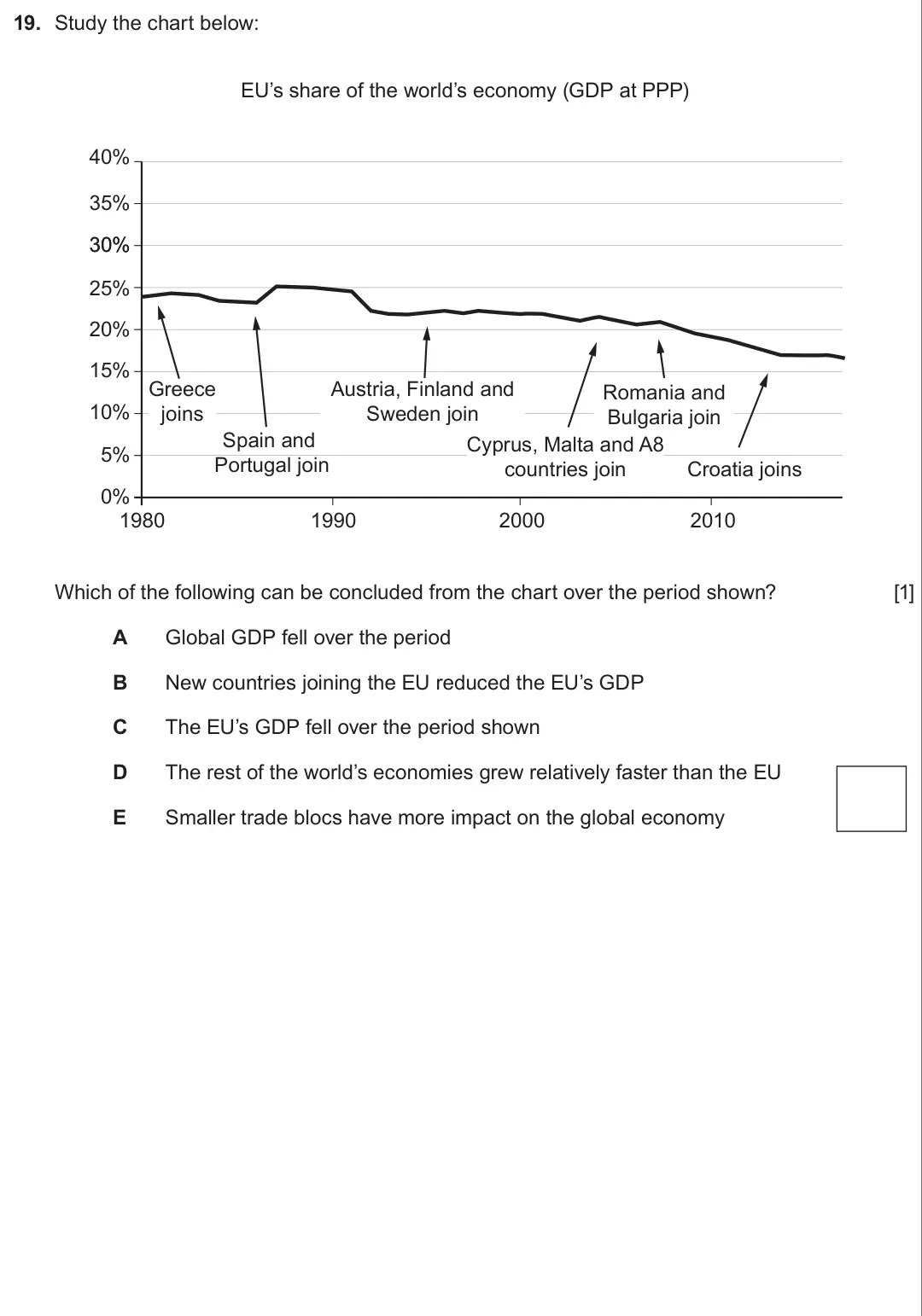
- Autumn 2020, Component 1, Q19 (1 mark): Study the chart below:
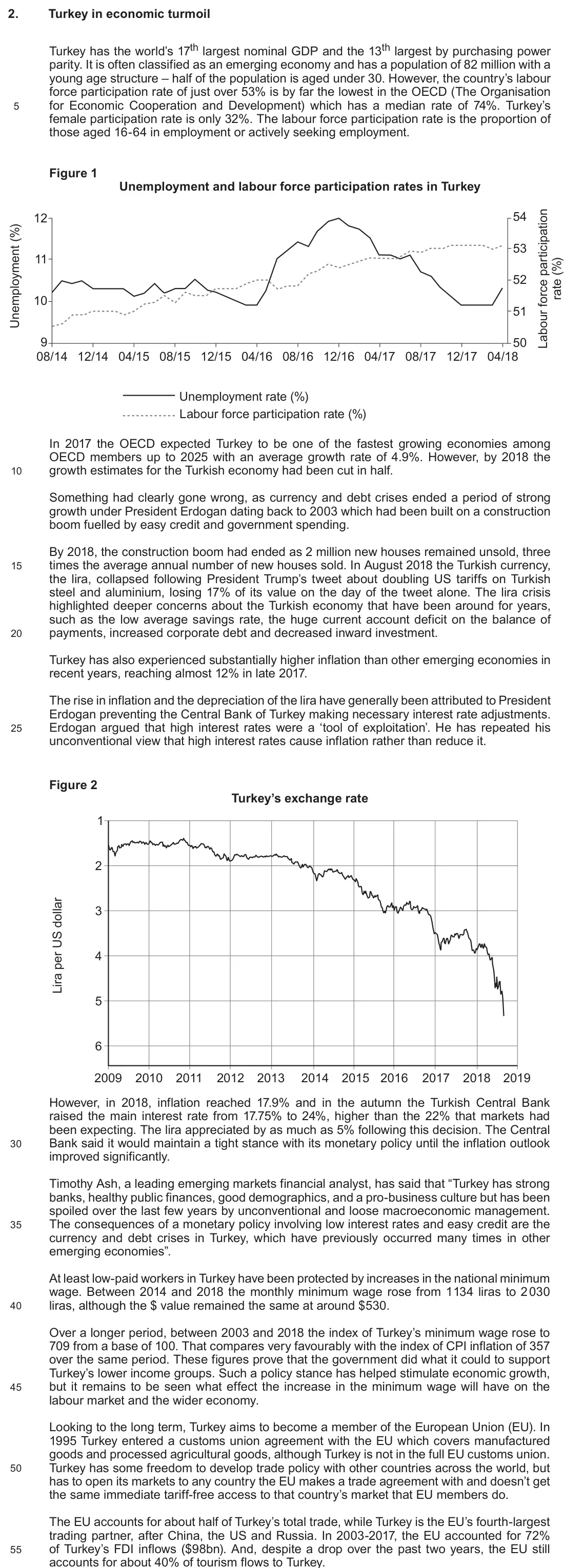
- Autumn 2020, Component 2, Q2(e) (9 marks): Using the data, evaluate the possible economic effects on the Turkish economy of Turkey
- Autumn 2020, Component 3, Q6(a) (10 marks): Explain, using a diagram, how an EU member could stabilise its currency against the euro
- Autumn 2020, Component 3, Q6(b) (20 marks): Discuss the possible benefits and drawbacks to EU member countries of adopting the
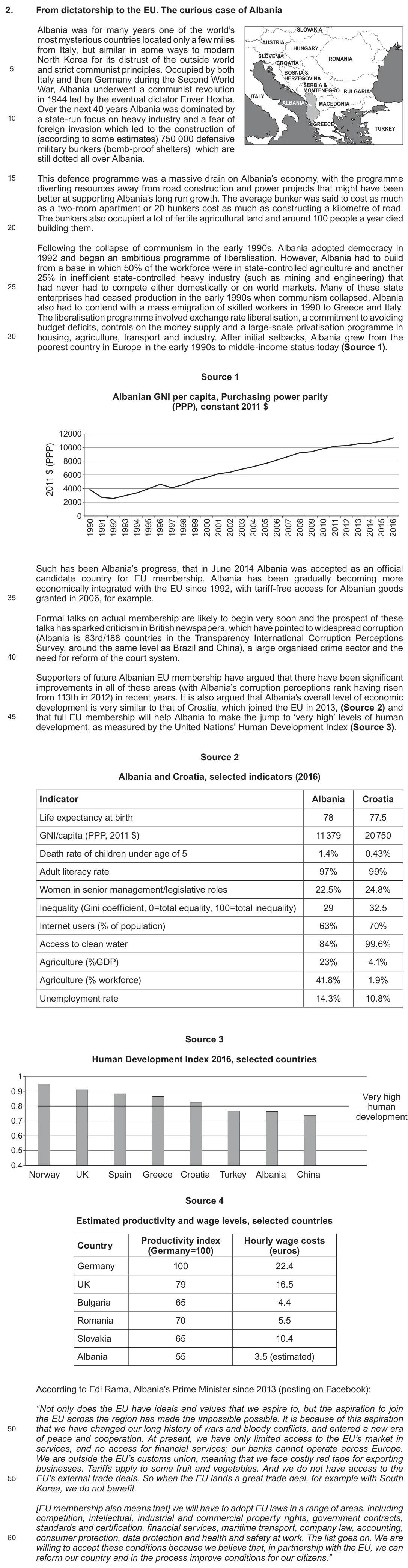
- June 2019, Component 2, Q2(d) (12 marks): Using the information in the case study, discuss whether EU membership “will help
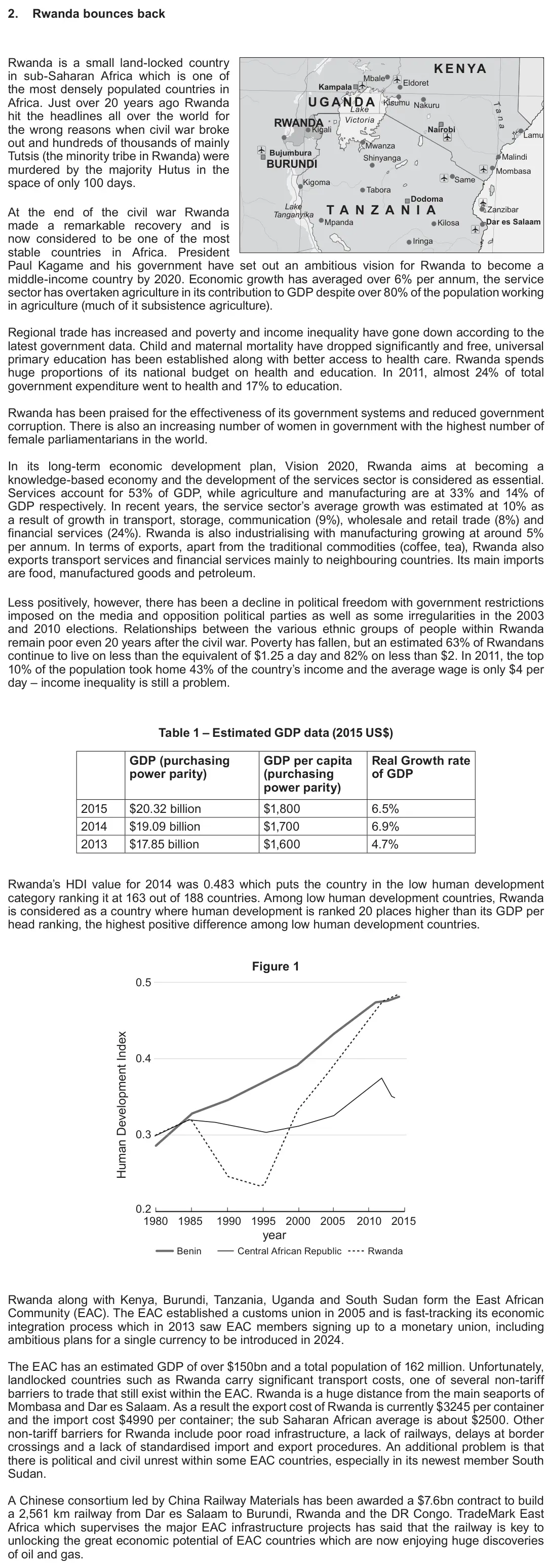
- June 2017, Component 2, Q2(e) (12 marks): To what extent might a monetary union within the East Africa Community (EAC) benefit
Questions, mark schemes and examiner’s reports are © WJEC Eduqas, from their published past papers. Plumi isn’t affiliated with any exam board. Want whole papers? Eduqas A-Level Economics past papers.
The Plumi iPad app also offers exam-style questions with AI feedback on your handwritten working.