 plumi
Product design: quantitative and qualitative testing: Eduqas A‑Level Design and Technology questions
Eduqas A-Level Design and Technology past-paper questions on PD1e Product design: quantitative and qualitative testing, 2018–2025, with mark schemes and examiner’s reports where available.
Past paper difficulty
Paper
All papers
Exam
All years
Calculations
Loading the full question list…
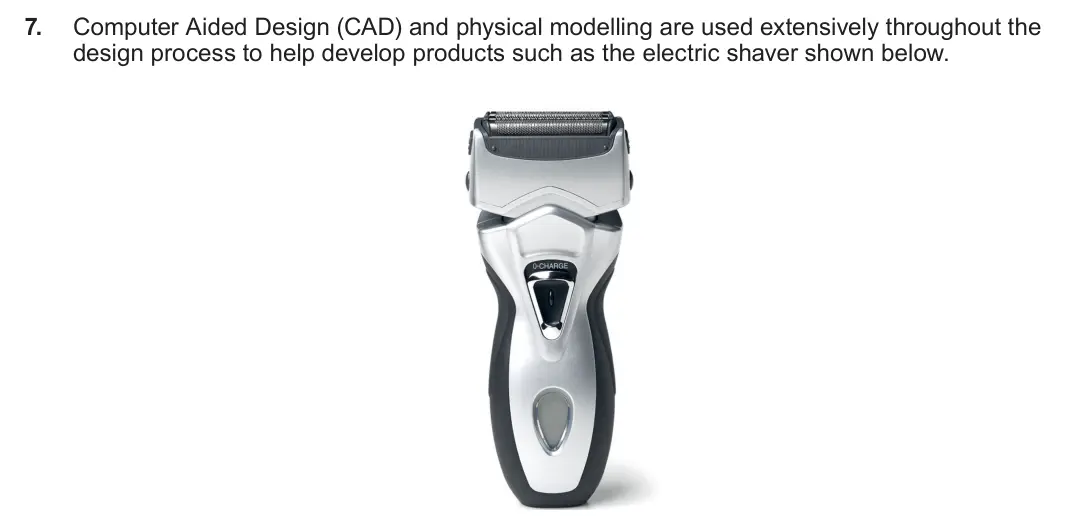
Q7(b)
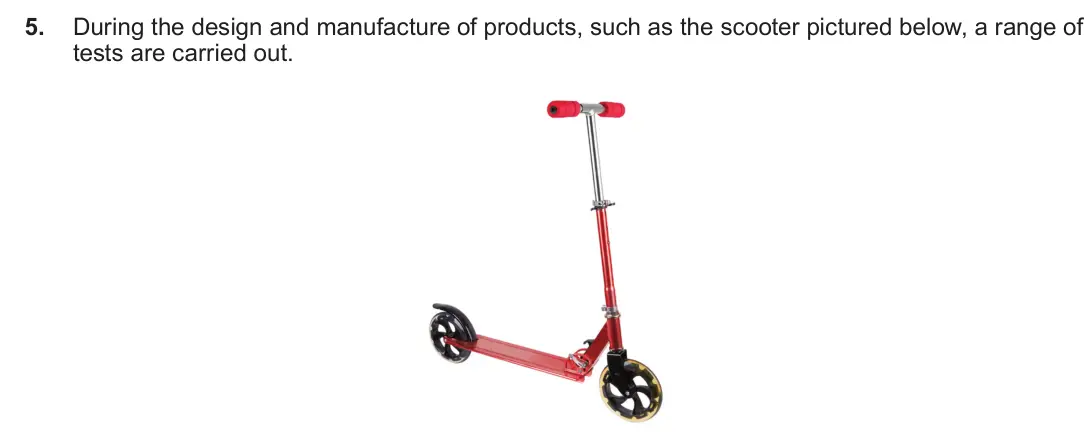
The whole paper ↗Q5(a)
The whole paper ↗Q5(b)
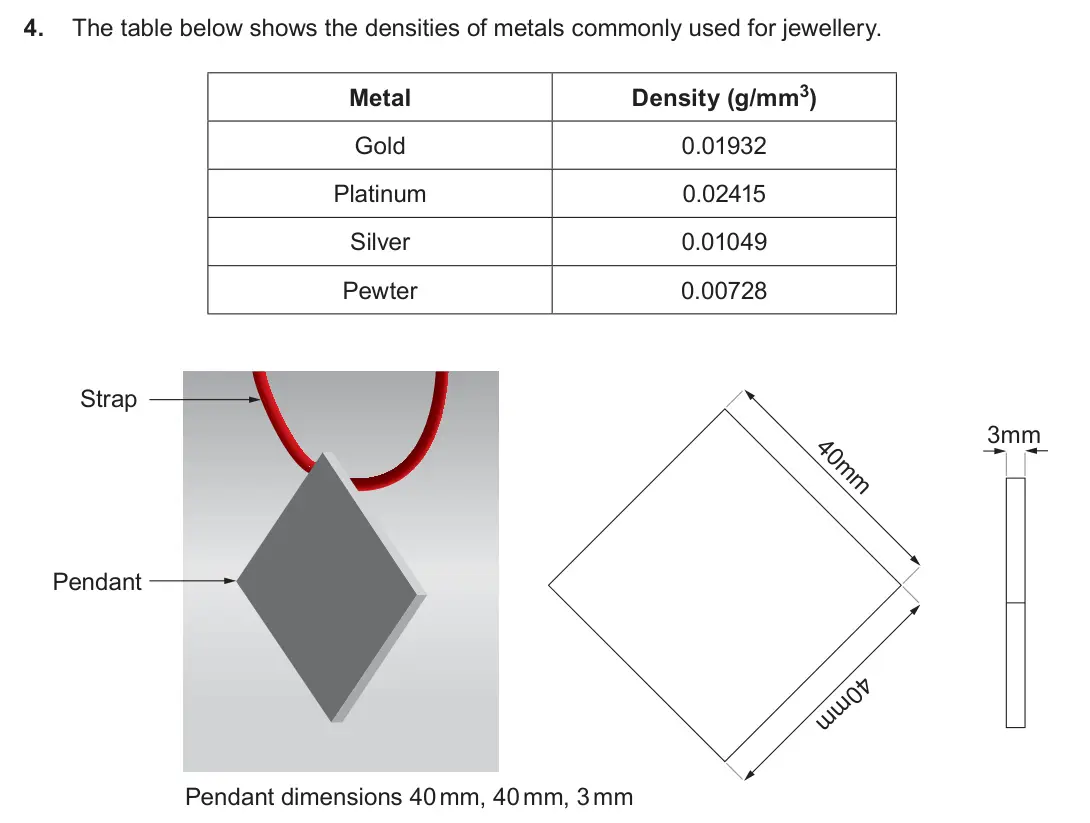
The whole paper ↗Q4(c)
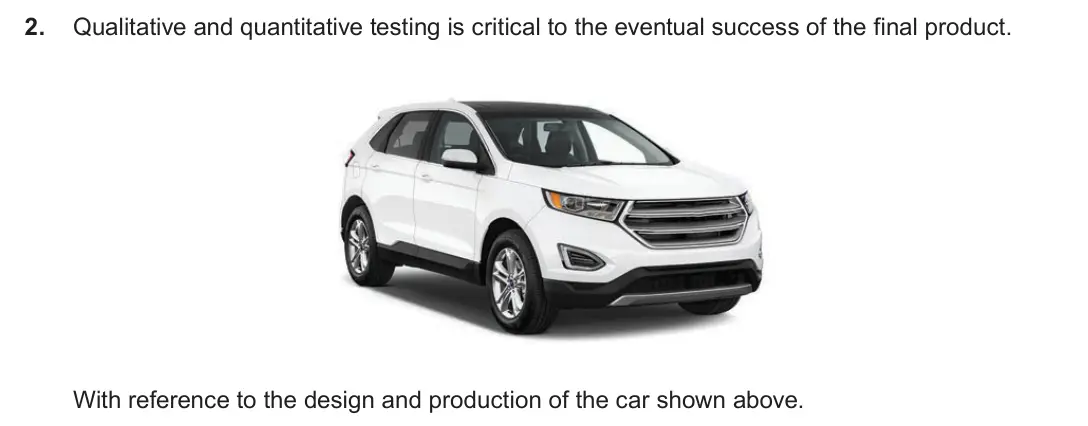
The whole paper ↗Q2(a)
The whole paper ↗Q2(b)
The whole paper ↗







All 7 questions on Product design: quantitative and qualitative testing, as a list
- June 2024, Component 1, Q7(b) (6 marks): Analyse the benefits physical models have on the design process for a new product such as an electric shaver. [6]
- June 2022, Component 1, Q5(a) (2 marks): Explain the difference between destructive and non-destructive material testing. [2]
- June 2022, Component 1, Q5(b) (4 marks): Describe the reasons why designers and manufacturers carry out both types of tests when designing the scooter. [4]
- June 2022, Component 1, Q9 (9 marks): 9. Explain how designers and/or manufacturers carry out feasibility studies for the design and manufacture of new and innovative products such as hybrid cars or
- Autumn 2021, Component 1, Q4(c) (4 marks): Qualitative testing and quantitative testing must be considered when selecting materials and processes for the design and manufacture of jewellery products. Exp
- June 2018, AS Component 1, Q2(a) (2 marks): Explain one qualitative test that the designer will carry out during the development of the car. [2]
- June 2018, AS Component 1, Q2(b) (2 marks): Explain one quantitative test that the manufacturer will carry out during the development of the car. [2]
Questions, mark schemes and examiner’s reports are © WJEC Eduqas, from their published past papers. Plumi isn’t affiliated with any exam board. Want whole papers? Eduqas A-Level Design and Technology past papers.
The Plumi iPad app also offers exam-style questions with AI feedback on your handwritten working.