 plumi
Product design: computer-aided manufacture: Eduqas A‑Level Design and Technology questions
Eduqas A-Level Design and Technology past-paper questions on PD3d Product design: computer-aided manufacture, 2018–2025, with mark schemes and examiner’s reports where available.
Past paper difficulty
Paper
All papers
Exam
All years
Calculations
Loading the full question list…
Q2(a)(ii)
The whole paper ↗Q2(a)(iii)
The whole paper ↗Q2(a)(iv)
The whole paper ↗Q2(b)
The whole paper ↗Q1(b)
The whole paper ↗Q7(a)
The whole paper ↗Q2(c)
The whole paper ↗







All 7 questions on Product design: computer-aided manufacture, as a list
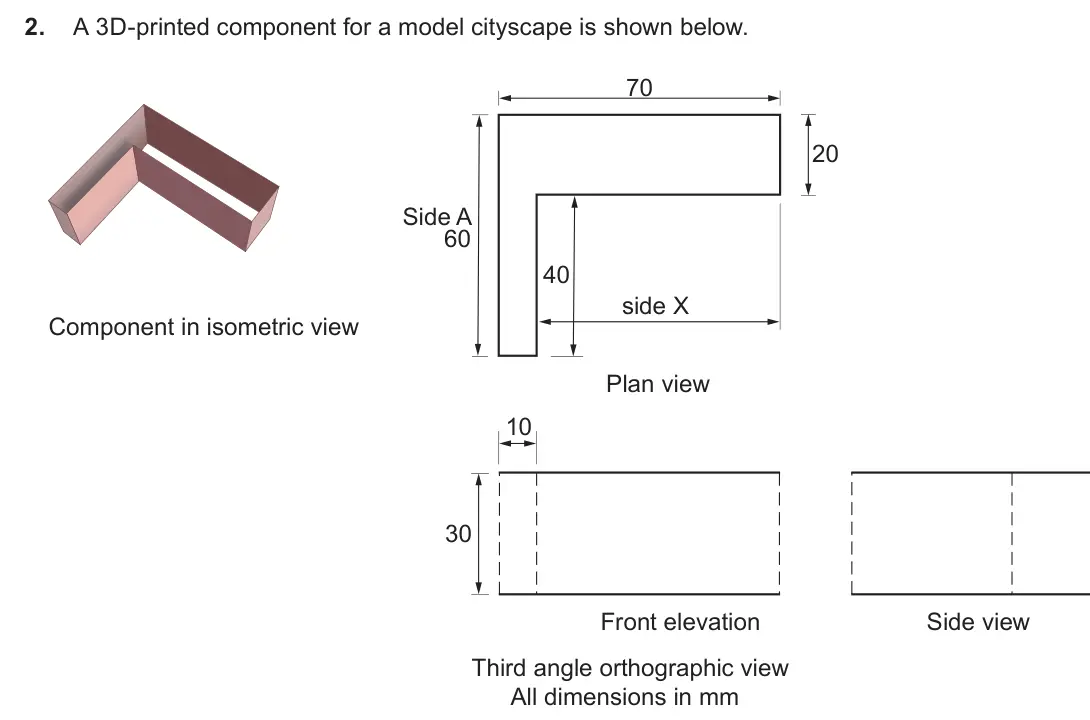
- June 2025, Component 1, Q2(a)(ii) (2 marks): It takes 7 seconds to print one layer of side A (60 mm). Calculate the speed of the print in mm/s. [2] Show all calculations.
- June 2025, Component 1, Q2(a)(iii) (2 marks): The layer height is set to 0.2 mm. Calculate how many layers are in the component shown. [2] Show all calculations.
- June 2025, Component 1, Q2(a)(iv) (4 marks): Calculate how long it would take to print the whole component assuming there is only one ‘wall’; there is no base and 0% infill. [4] Show all calculations.
- June 2025, Component 1, Q2(b) (4 marks): Identify the common faults associated with 3D printers and explain how these can have an impact on collaborative design projects. [4]
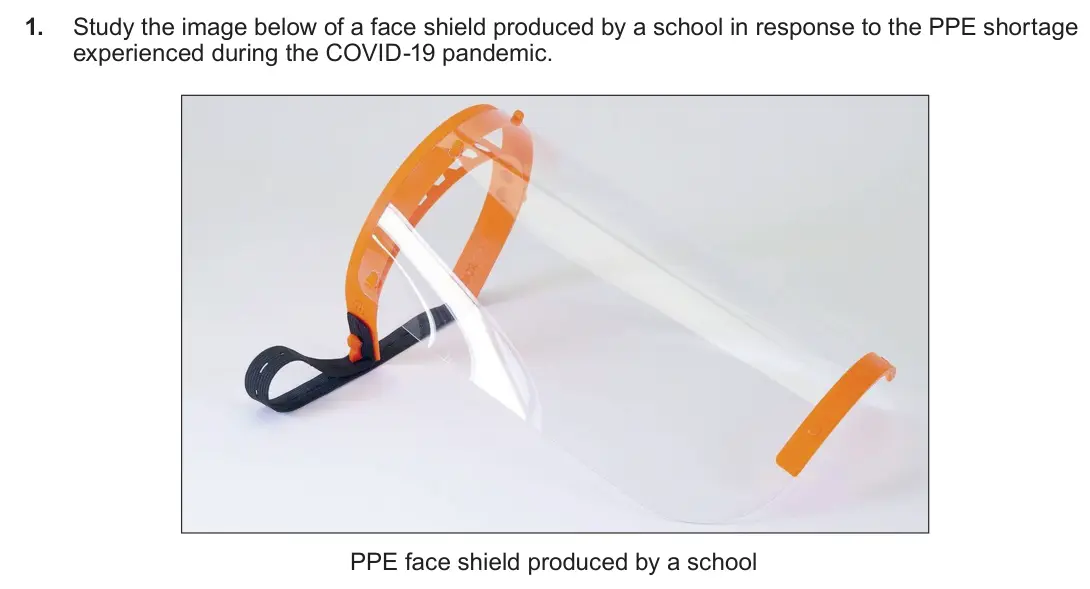
- June 2023, Component 1, Q1(b) (5 marks): Identify a suitable Computer Aided Manufacturing (CAM) method that could be used to produce a batch of face shields and explain why this method of manufacture i
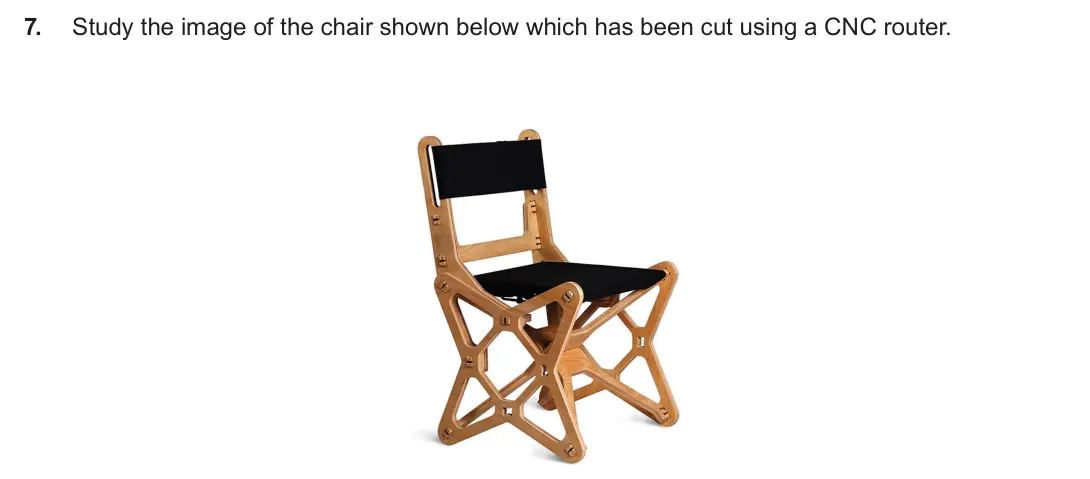
- Autumn 2021, Component 1, Q7(a) (6 marks): Analyse the benefits of using a CNC router to cut out the chair frame. [6]
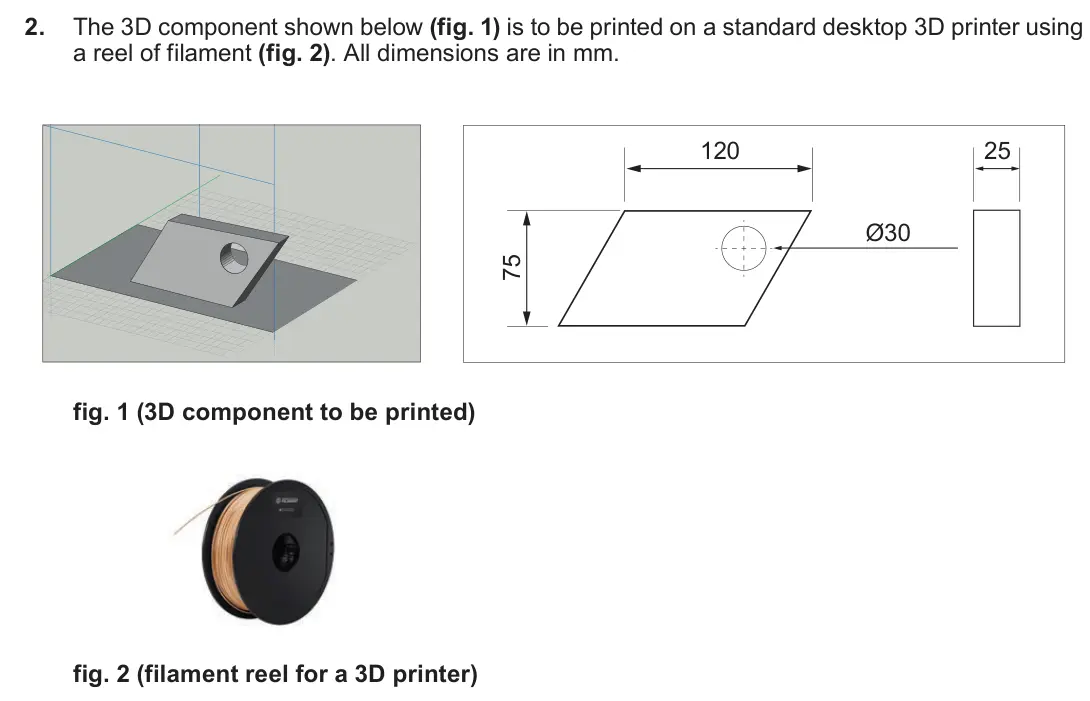
- June 2019, Component 1, Q2(c) (2 marks): Describe one advantage of producing the component shown in fig. 1 on a 3D printer, rather than producing it by hand. [2]
Questions, mark schemes and examiner’s reports are © WJEC Eduqas, from their published past papers. Plumi isn’t affiliated with any exam board. Want whole papers? Eduqas A-Level Design and Technology past papers.
The Plumi iPad app also offers exam-style questions with AI feedback on your handwritten working.