 plumi
Fashion and textiles: manufacturing industry: Eduqas A‑Level Design and Technology questions
Eduqas A-Level Design and Technology past-paper questions on FT4a Fashion and textiles: manufacturing industry, 2018–2025, with mark schemes and examiner’s reports where available.
Past paper difficulty
Paper
All papers
Exam
All years
Calculations
Loading the full question list…
Q4(c)
The whole paper ↗Q4(b)(i)
The whole paper ↗Q4(b)(ii)
The whole paper ↗





All 6 questions on Fashion and textiles: manufacturing industry, as a list
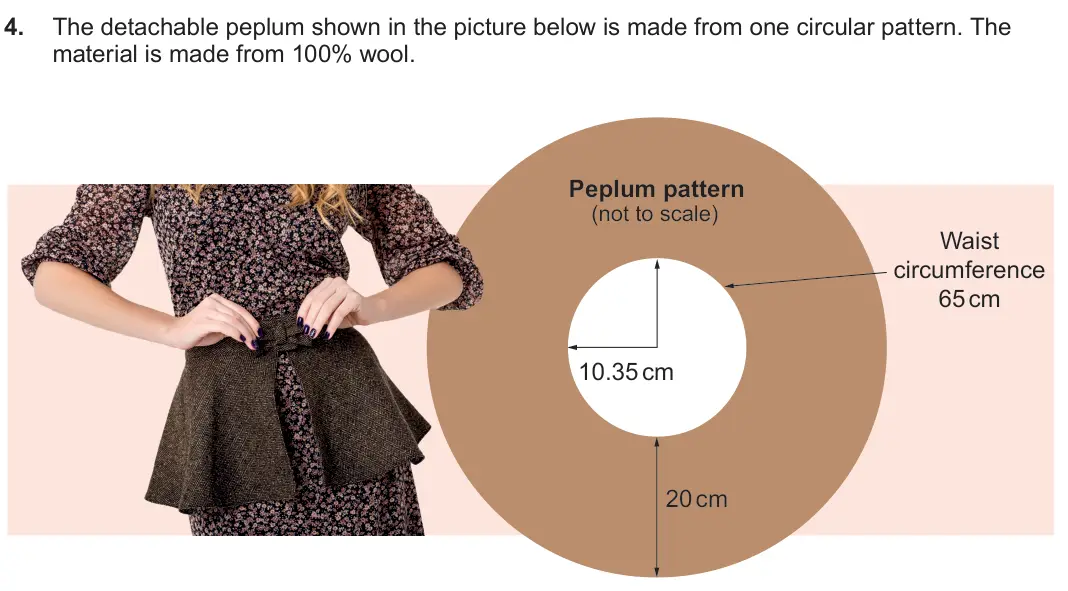
- June 2025, AS Component 1, Q4(c) (2 marks): The fabric costs the manufacturer £2.60 per peplum and all other components and overheads cost £7.20 per peplum. Calculate the cost to manufacture 145 000 peplu
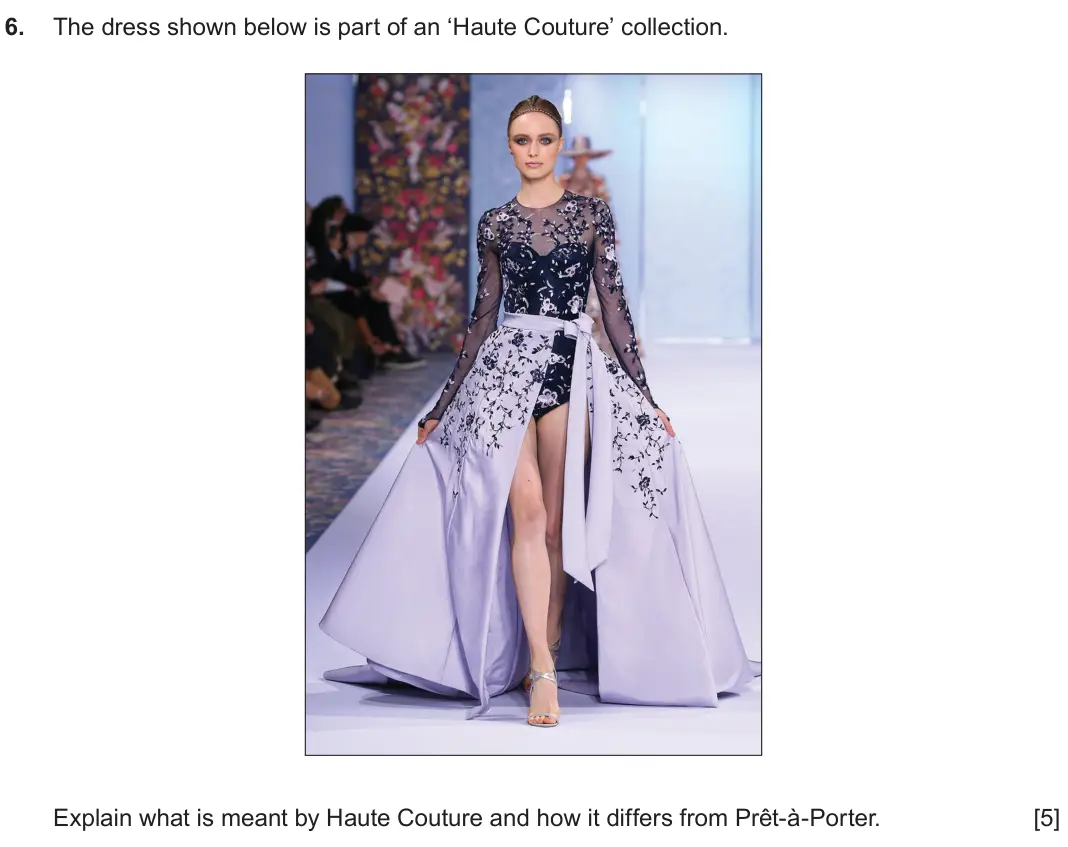
- June 2024, AS Component 1, Q6 (5 marks): 6. The dress shown below is part of an ‘Haute Couture’ collection. Explain what is meant by Haute Couture and how it differs from Prêt-à-Porter. [5]
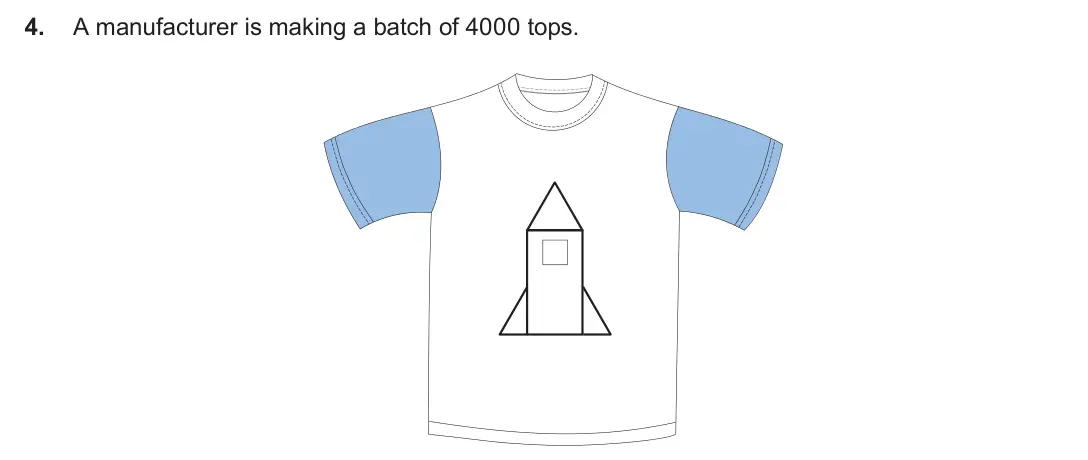
- June 2023, AS Component 1, Q4(b)(i) (3 marks): Calculate the total cost of fabric needed to make a batch of 4000 tops. [3] Show all calculations.
- June 2023, AS Component 1, Q4(b)(ii) (2 marks): The bias binding for the sleeves and neckline costs 75p for each top. Calculate the percentage increase to the nearest whole number in the cost of materials for
- Autumn 2020, Component 1, Q6 (5 marks): 6. Many fashion and textile manufacturers operate a just-in-time (JIT) system for stock control. Discuss the advantages and disadvantages of operating a JIT sys
- June 2019, Component 1, Q9 (9 marks): 9. Fashion and textile products are manufactured using different types of production systems. Explain what is meant by cell production and describe how it benef
Questions, mark schemes and examiner’s reports are © WJEC Eduqas, from their published past papers. Plumi isn’t affiliated with any exam board. Want whole papers? Eduqas A-Level Design and Technology past papers.
The Plumi iPad app also offers exam-style questions with AI feedback on your handwritten working.