 plumi
Cardiac output and control of heart and ventilation rate: Edexcel International A Level Biology questions
Edexcel International A Level Biology past-paper questions on 7.3.2 Cardiac output and control of heart and ventilation rate, 2019–2025, with mark schemes and examiner’s reports where available.
Paper
All papers
Exam
All years
Calculations
Q5(a)(i)
The whole paper ↗
Q5(a)(ii)
The whole paper ↗Q5(b)
The whole paper ↗Q6(c)
The whole paper ↗
Q8(f)
The whole paper ↗
Q4(c)
The whole paper ↗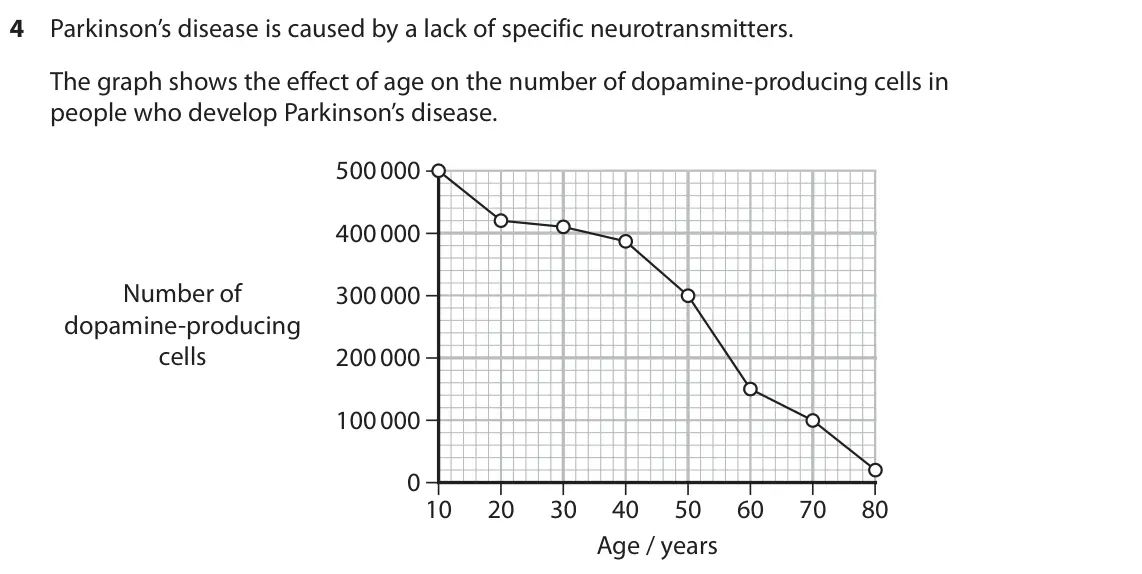
Q5(a)(ii)
The whole paper ↗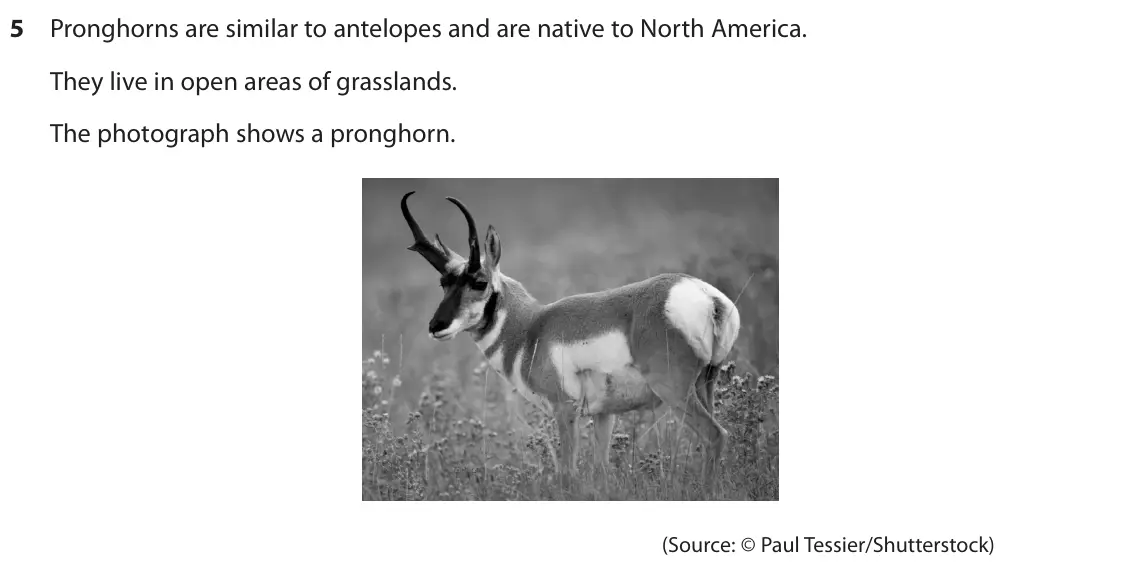
Q6(a)(ii)
The whole paper ↗
Q6(b)
The whole paper ↗
Q4(a)
The whole paper ↗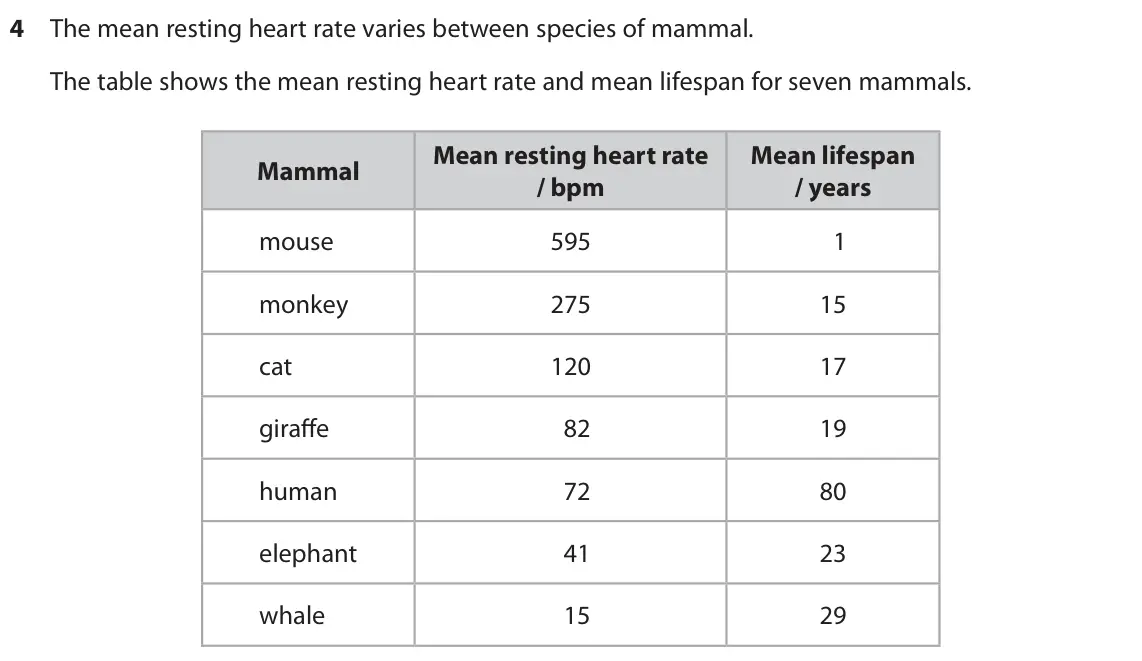
Q4(c)(i)
The whole paper ↗Q4(c)(ii)
The whole paper ↗Q4(c)(iii)
The whole paper ↗Q2(d)
The whole paper ↗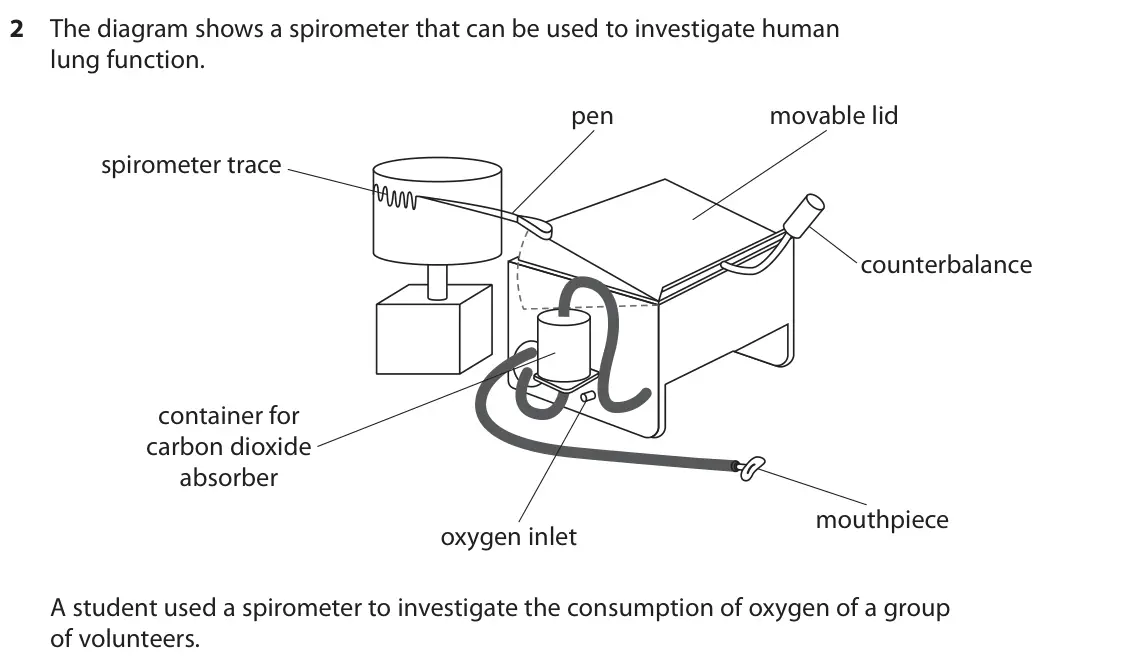
Q3(a)
The whole paper ↗
Q3(b)(i)
The whole paper ↗Q3(c)
The whole paper ↗Q8(b)
The whole paper ↗
Q5(c)(ii)
The whole paper ↗
Q6(c)(i)
The whole paper ↗
All 46 questions on Cardiac output and control of heart and ventilation rate, as a list
- June 2025, Unit 5, Q5(a)(i) (3 marks): Describe three conclusions from this investigation. (3)
- June 2025, Unit 5, Q5(a)(ii) (4 marks): Describe how the systole and diastole parts of the cardiac cycle are controlled during the exercise. (4)
- June 2025, Unit 5, Q5(b) (2 marks): At rest, a heart pumps 5 dm3 minute–1 of blood and has a heart rate of 72 beats minute–1. Calculate the stroke volume. Use the equation: cardiac output = heart
- January 2025, Unit 5, Q6(c) (6 marks): Cardiovascular disease (CVD) is one of the biggest causes of death in the world. In 2021, nearly 25% of all deaths were attributed to CVD. Exercise can help pre
- January 2025, Unit 5, Q8(f) (2 marks): Suggest how ‘a high nitrate content’ in beetroot juice can lead to an increased blood flow to muscles (paragraph 29). (2)
- October 2024, Unit 5, Q4(c) (4 marks): In an investigation, different concentrations of dopamine were given to Drosophila (fruit flies). The mean heart rates of groups of 10 Drosophila were recorded
- October 2024, Unit 5, Q5(a)(ii) (4 marks): Explain how the heart rate and ventilation rate of a pronghorn are increased to enable it to run long distances at high speeds. (4)
- June 2024, Unit 5, Q6(a)(ii) (6 marks): The table and graph show some of the results of this investigation. Lactate concentration in blood / mmol dm–3 Intensity of exercise / a.u. Athlete Non-athlete
- January 2024, Unit 5, Q6(b) (6 marks): Exercise has many benefits for the health and wellbeing of an individual. An investigation was carried out on non‑athletes and athletes. All participants did a
- October 2023, Unit 5, Q4(a) (2 marks): Describe two conclusions that can be drawn from these data. (2)
- October 2023, Unit 5, Q4(c)(i) (2 marks): Suggest two reasons why humans can have a different lifespan from other mammals. (2)
- October 2023, Unit 5, Q4(c)(ii) (1 mark): State why cardiac output provides more information than the resting heart rate. (1)
- October 2023, Unit 5, Q4(c)(iii) (4 marks): An African giraffe has the longest stride of all land mammals and can run at a speed of up to 60 km hr–1. Describe how the nervous system affects cardiac output
- October 2023, Unit 6, Q2(d) (3 marks): Describe how the ventilation centre in the medulla oblongata controls the ventilation rate. (3)
- June 2023, Unit 5, Q3(a) (2 marks): State two lung conditions that affect the ventilation rate of a human. (2)
- June 2023, Unit 5, Q3(b)(i) (3 marks): Comment on the relationship between the mean resting ventilation rate and the body mass of animals. (3)
- June 2023, Unit 5, Q3(c) (4 marks): An increase in activity level results in a change in the ventilation rate. Describe why this change occurs and how it is controlled. (4)
- June 2023, Unit 5, Q8(b) (4 marks): Describe how the vagus nerve is involved in the control of heart rate (paragraph 6). (4)
- January 2023, Unit 5, Q5(c)(ii) (4 marks): Cigarette smoking causes inflammation in the lungs. This can result in damage to the walls of the alveoli and lead to COPD. Cigarette smoking also causes the pr
- January 2023, Unit 5, Q6(c)(i) (2 marks): A patient had a heart rate of 65 beats min–1 and a stroke volume of 57 cm3 per beat. Calculate the cardiac output for this individual. Use the equation: stroke
- January 2023, Unit 5, Q6(c)(ii) (1 mark): The cardiac index for patient A was 2.92 dm3 min–1 m –2 Which is the correct cardiac index for patient B? (1) A 1.24 B 2.48 C 2.92 D 5.21
- January 2023, Unit 5, Q6(c)(iii) (1 mark): State the ratio of the body surface area of patient A to patient B. (1) Answer
- January 2023, Unit 5, Q6(d)(i) (2 marks): Comment on the effect of running speed on cardiac output. (2)
- January 2023, Unit 5, Q6(d)(ii) (3 marks): Exercise increases the rate of respiration in muscles. Explain how an increase in the rate of respiration causes an increase in the heart rate of an athlete. (3
- October 2022, Unit 5, Q4(a)(i) (2 marks): Describe the relationships between resting heart rate and the data shown in the table. (2)
- October 2022, Unit 5, Q4(b)(i) (4 marks): Explain how the heart rate of a cheetah can be increased during a chase. (4)
- June 2022, Unit 5, Q6(b)(i) (2 marks): Calculate the cardiac output for a person who has a heart rate of 77 bpm and a stroke volume of 70 cm3. Give your answer to two significant figures in dm3 hour–
- June 2022, Unit 5, Q6(b)(ii) (3 marks): The formula shows how to calculate the cardiac index. This is a method of adjusting cardiac output values for the body surface area of an individual. 3 − 1 card
- June 2022, Unit 5, Q6(b)(iii) (6 marks): Ageing is associated with changes in the way the heart responds to adrenaline. In an investigation, the effects of adrenaline on the hearts of young people and
- June 2022, Unit 5, Q8(a) (4 marks): The autonomic nervous system regulates aspects of respiration (paragraph 1). Describe how the autonomic nervous system regulates the breathing rate when a perso
- January 2022, Unit 5, Q2(c) (3 marks): In an investigation, an athlete ran for 10 minutes on a running machine moving at constant speed. The investigation was repeated at seven running speeds. At eac
- January 2022, Unit 5, Q3(b)(i) (3 marks): Comment on the changes in heart rate of the whale when diving. (3)
- January 2022, Unit 5, Q3(b)(ii) (3 marks): Explain how the changes in heart rate are controlled when the whale returns to the surface immediately after the dive. (3)
- October 2021, Unit 5, Q7(a) (3 marks): Calculate the percentage difference in the change in heart rate when using drug B between 5 and 12.5 minutes. (3) Answer %
- October 2021, Unit 5, Q7(b) (3 marks): Compare and contrast the effects of drug A and drug B on the heart rate during the investigation. (3)
- October 2021, Unit 5, Q7(c) (3 marks): Explain the effect of these drugs on the control of the heart rate. (3)
- October 2021, Unit 6, Q2(a)(iii) (2 marks): During exercise, respiratory minute ventilation increases. Explain why it is necessary for the respiratory minute ventilation to increase during exercise. (2)
- June 2021, Unit 5, Q6(b)(i) (3 marks): Explain why there is a change in the cardiac cycle during this exercise. (3)
- June 2021, Unit 5, Q6(b)(ii) (1 mark): The table shows the effect of the training programme on the cardiac output and resting heart rate of this football player. When measurements Cardiac output Rest
- January 2021, Unit 5, Q6(a) (3 marks): The heart rate of the unfit person decreased by 16%, 120 seconds after exercise. Calculate the difference in percentage decrease in heart rate of these two peop
- January 2021, Unit 5, Q6(b) (3 marks): Calculate the heart rate of the unfit person at 5 minutes. The change in heart rate of the unfit person is a linear relationship. Use the equation for a straigh
- January 2021, Unit 5, Q6(c) (3 marks): Explain the difference in the time it would take for these two individuals to recover from the exercise. (3)
- January 2021, Unit 5, Q6(d) (4 marks): Describe how heart rate is controlled in response to changes in the blood, following exercise. (4)
- October 2020, Unit 5, Q4(a) (2 marks): The table gives some information about the effect of the intensity of exercise on heart rate. Intensity of Heart rate exercise / a.u. / bpm 4 118 6 120 8 138 10
- October 2020, Unit 5, Q4(b) (3 marks): Regular swimming affects resting heart rate and cardiac output. cardiac output = stroke volume × heart rate The table shows the mean resting cardiac output and
- October 2020, Unit 5, Q4(c) (6 marks): Explain the role of the heart in responding to regular exercise. Use the information in both tables and your own knowledge to support your answer. (6)
Questions, mark schemes and examiner’s reports are © Pearson Edexcel, from their published past papers. Plumi isn’t affiliated with any exam board. Want whole papers? Edexcel International A Level Biology past papers.
The Plumi iPad app also offers exam-style questions with AI feedback on your handwritten working.