 plumi
Action potentials: Edexcel International A Level Biology questions
Edexcel International A Level Biology past-paper questions on 8.1.3 Action potentials, 2019–2025, with mark schemes and examiner’s reports where available.
Paper
All papers
Exam
All years
Calculations
Q3(c)
The whole paper ↗
Q4(a)
The whole paper ↗
Q4(b)
The whole paper ↗Q4(c)
The whole paper ↗Your answerQ4(d)(i)
The whole paper ↗Q1(b)(i)
The whole paper ↗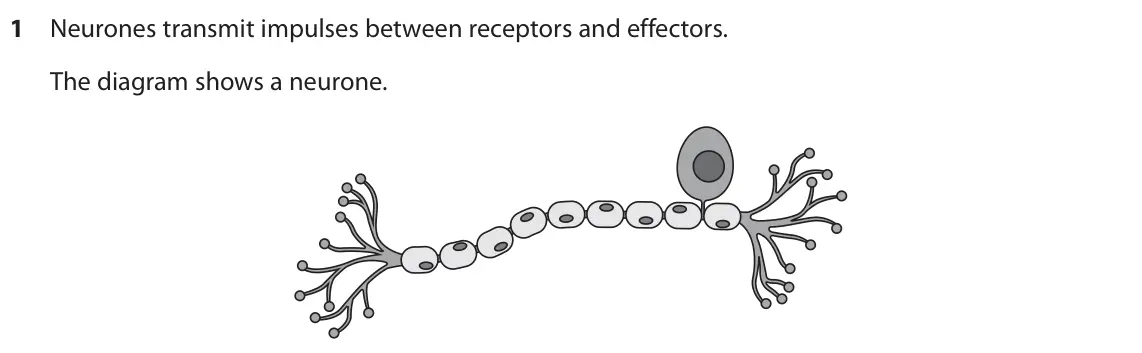 Your answer
Q1(b)(ii)
The whole paper ↗Your answerQ1(b)(iii)
The whole paper ↗Your answerQ5(c)(ii)
The whole paper ↗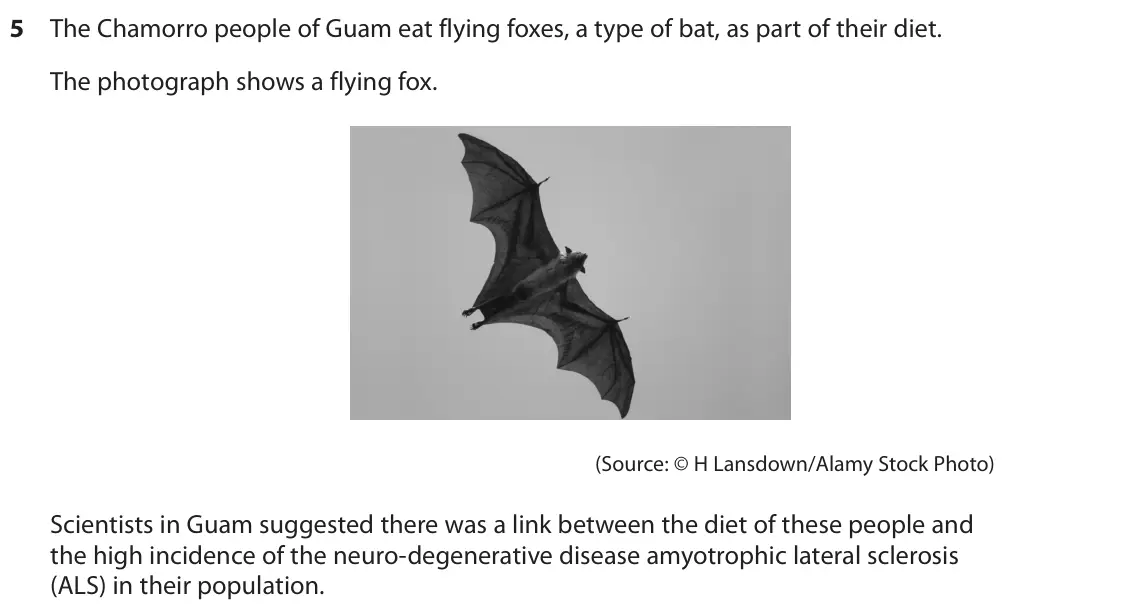
Q2(a)(i)
The whole paper ↗ Your answer
Q2(a)(ii)
The whole paper ↗Q3(a)(i)
The whole paper ↗ Your answer
Q3(a)(ii)
The whole paper ↗Your answerQ8(c)
The whole paper ↗
Q8(d)
The whole paper ↗Q6(b)
The whole paper ↗
Q2(b)(i)
The whole paper ↗
Q2(b)(ii)
The whole paper ↗Q2(b)(iii)
The whole paper ↗Q1(a)(i)
The whole paper ↗ Your answer
All 26 questions on Action potentials, as a list
- June 2025, Unit 5, Q3(c) (3 marks): The photograph shows a puffer fish. (Source: © ImageBROKER on Offset / Shutterstock) Tetrodotoxin (TTX) is a toxin found in puffer fish. This toxin works by bin
- January 2025, Unit 5, Q4(a) (4 marks): Describe how an action potential is produced in an axon. (4)
- January 2025, Unit 5, Q4(b) (2 marks): Axon membranes are permeable to potassium ions. The graph shows the permeability of an axon membrane to potassium ions after the start of an action potential. 2
- January 2025, Unit 5, Q4(c) (1 mark): The resting potential in a neurone is the result of the difference in concentration of ions on the outside and inside of the axon when no impulse is being trans
- January 2025, Unit 5, Q4(d)(i) (2 marks): Explain the effect of an increase in temperature on the speed of a nerve impulse along an axon. (2)
- October 2024, Unit 5, Q1(b)(i) (1 mark): Which is the resting potential for this neurone? (1) A –90 mV B –70 mV C +48 mV D +70 mV
- October 2024, Unit 5, Q1(b)(ii) (1 mark): Which letter on the graph shows where the neurone is hyperpolarised? (1) A U B V C W D X
- October 2024, Unit 5, Q1(b)(iii) (1 mark): Which is the difference in membrane potential between points V and W on the graph? (1) A 40 mV B 50 mV C 90 mV D 140 mV
- June 2024, Unit 5, Q5(c)(ii) (3 marks): A different neurotoxin called tetrodotoxin inhibits the transmission of nerve impulses along axons. In an experiment, axons of motor neurones were stimulated in
- January 2024, Unit 5, Q2(a)(i) (1 mark): Which row shows the events that happen during depolarisation of a neurone? (1) Sodium channels Membrane potential A closed decreasing B closed increasing C open
- January 2024, Unit 5, Q2(a)(ii) (3 marks): Explain what happens during repolarisation in a neurone. (3)
- January 2023, Unit 5, Q3(a)(i) (1 mark): Which description of the movement of ions will produce an action potential in an axon? (1) A K+ ions move into the axon B K+ ions move out of the axon C Na+ ion
- January 2023, Unit 5, Q3(a)(ii) (1 mark): Which row describes the events that occur during repolarisation of a neurone? (1) Sodium ion channel Membrane potential A closed decreasing B open decreasing C
- October 2022, Unit 5, Q8(c) (3 marks): Explain how capsaicin could activate nerve cells causing a pain sensation (paragraph 4). (3)
- October 2022, Unit 5, Q8(d) (3 marks): Explain how changes in ion channel protein can result in nerve impulses in the nervous system (paragraph 5). (3)
- January 2022, Unit 5, Q6(b) (2 marks): The diagram shows the change in membrane potential as an action potential is transmitted in a motor neurone. 30 0 membrane 2 potential / mV –55 1 –70 3 time Exp
- June 2021, Unit 5, Q2(b)(i) (3 marks): Describe how the resting potential of −70mV is maintained in the axon when no pressure is applied. (3)
- June 2021, Unit 5, Q2(b)(ii) (3 marks): Suggest how a change in pressure at the Pacinian corpuscle causes an action potential in the axon. (3)
- June 2021, Unit 5, Q2(b)(iii) (3 marks): Explain why the membrane potential at electrode Y was the same when medium or high pressure was applied to the fingertip. (3)
- January 2021, Unit 5, Q1(a)(i) (1 mark): Which is the resting potential for this axon? (1) A –70 mV B –78 mV C 38 mV D 108 mV
- January 2021, Unit 5, Q1(a)(ii) (1 mark): Both voltage-gated sodium and voltage-gated potassium ion channels are involved in generating an action potential. Which of these voltage-gated channels are ope
- January 2021, Unit 5, Q1(a)(iii) (1 mark): Which is the state of polarisation of the membrane at Z? (1) A depolarised B hyperpolarised C hypopolarised D unpolarised
- January 2021, Unit 5, Q1(a)(iv) (1 mark): How many of the following statements are correct? the magnitude of the action potential is proportional to the strength of stimulus that generates the action
- January 2021, Unit 5, Q1(b) (3 marks): Explain why maintaining a resting potential requires ATP. (3)
- October 2020, Unit 5, Q6(b) (4 marks): Describe the role of ion transport in maintaining the resting potential of a neurone. (4)
- October 2020, Unit 5, Q6(c) (3 marks): The pufferfish produces a neurotoxin called tetrodotoxin (TTX). The graph shows the effect of TTX on the nerve impulse in an axon. +50 Membrane 0 untreated axon
Questions, mark schemes and examiner’s reports are © Pearson Edexcel, from their published past papers. Plumi isn’t affiliated with any exam board. Want whole papers? Edexcel International A Level Biology past papers.
The Plumi iPad app also offers exam-style questions with AI feedback on your handwritten working.