 plumi
Large-scale ecosystems are found in different parts of the world and are important: Edexcel GCSE Geography A questions
Edexcel GCSE Geography A past-paper questions on 3.1 Large-scale ecosystems are found in different parts of the world and are important, 2018–2025, with mark schemes and examiner’s reports where available.
Paper
All papers
Exam
All years
Calculations
Loading the full question list…
Q7(a)(i)
The whole paper ↗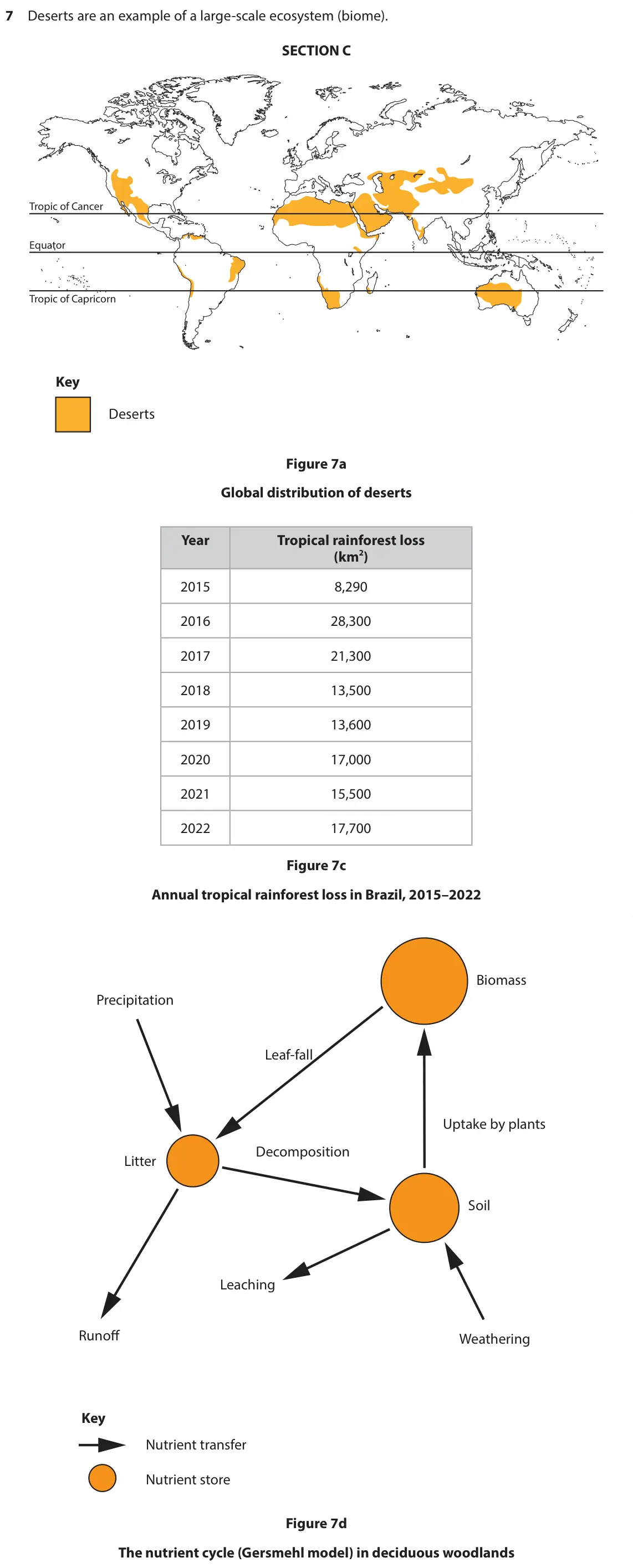 (Total for Question 7 is 1 mark)
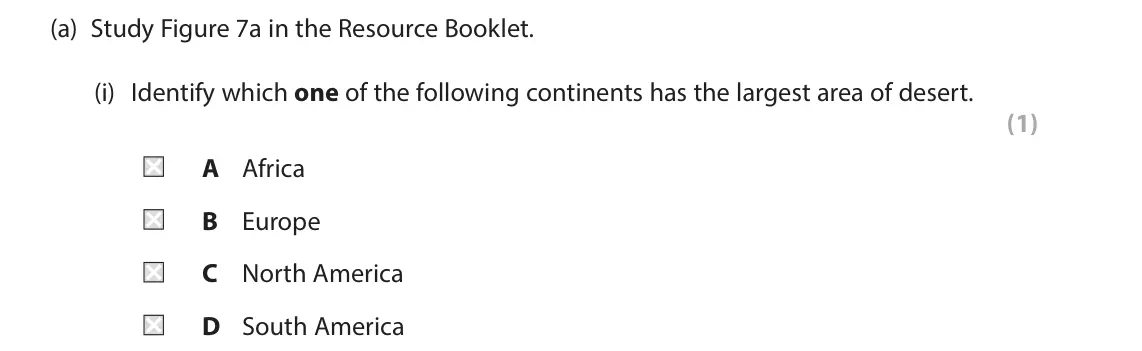
Q7(a)(ii)
The whole paper ↗(Total for Question 7 is 3 marks)
Q7(a)(i)
The whole paper ↗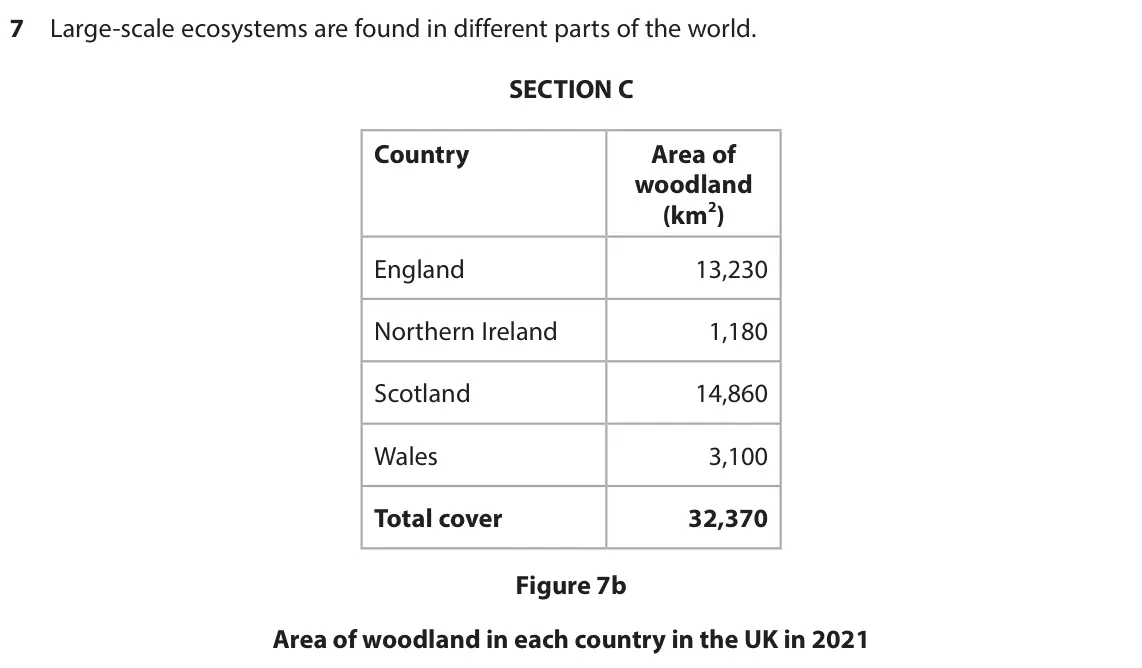 (Total for Question 7 is 1 mark)
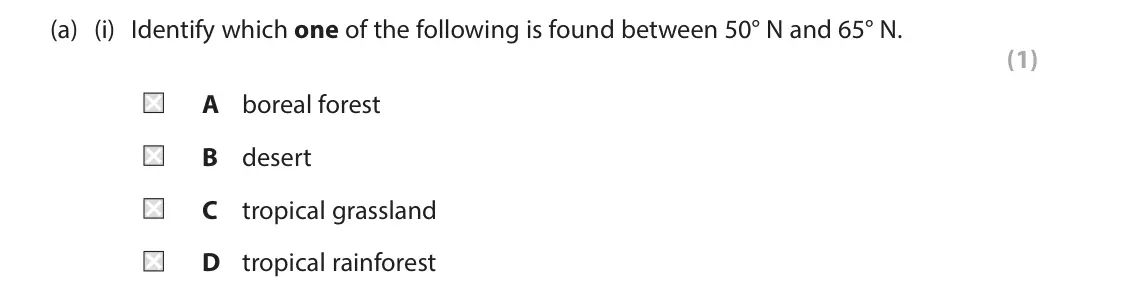
Q7(a)(ii)
The whole paper ↗(Total for Question 7 is 2 marks)
Q7(b)(i)
The whole paper ↗(Total for Question 7 is 1 mark)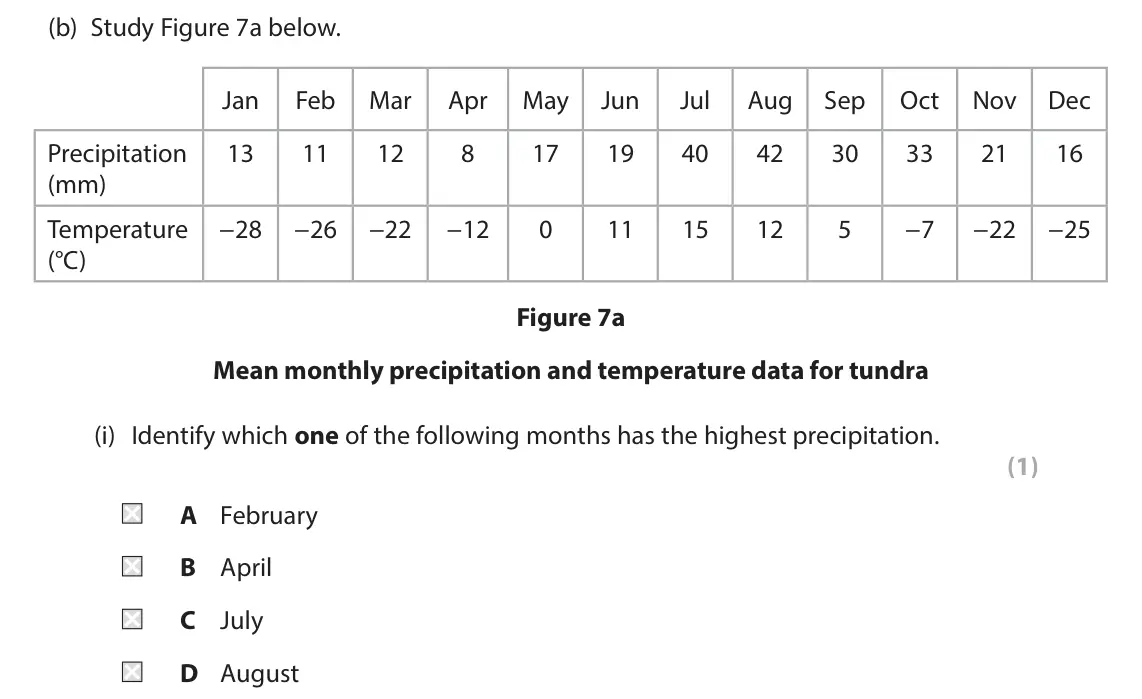
Q7(b)(ii)
The whole paper ↗(Total for Question 7 is 2 marks)
Q7(a)(i)
The whole paper ↗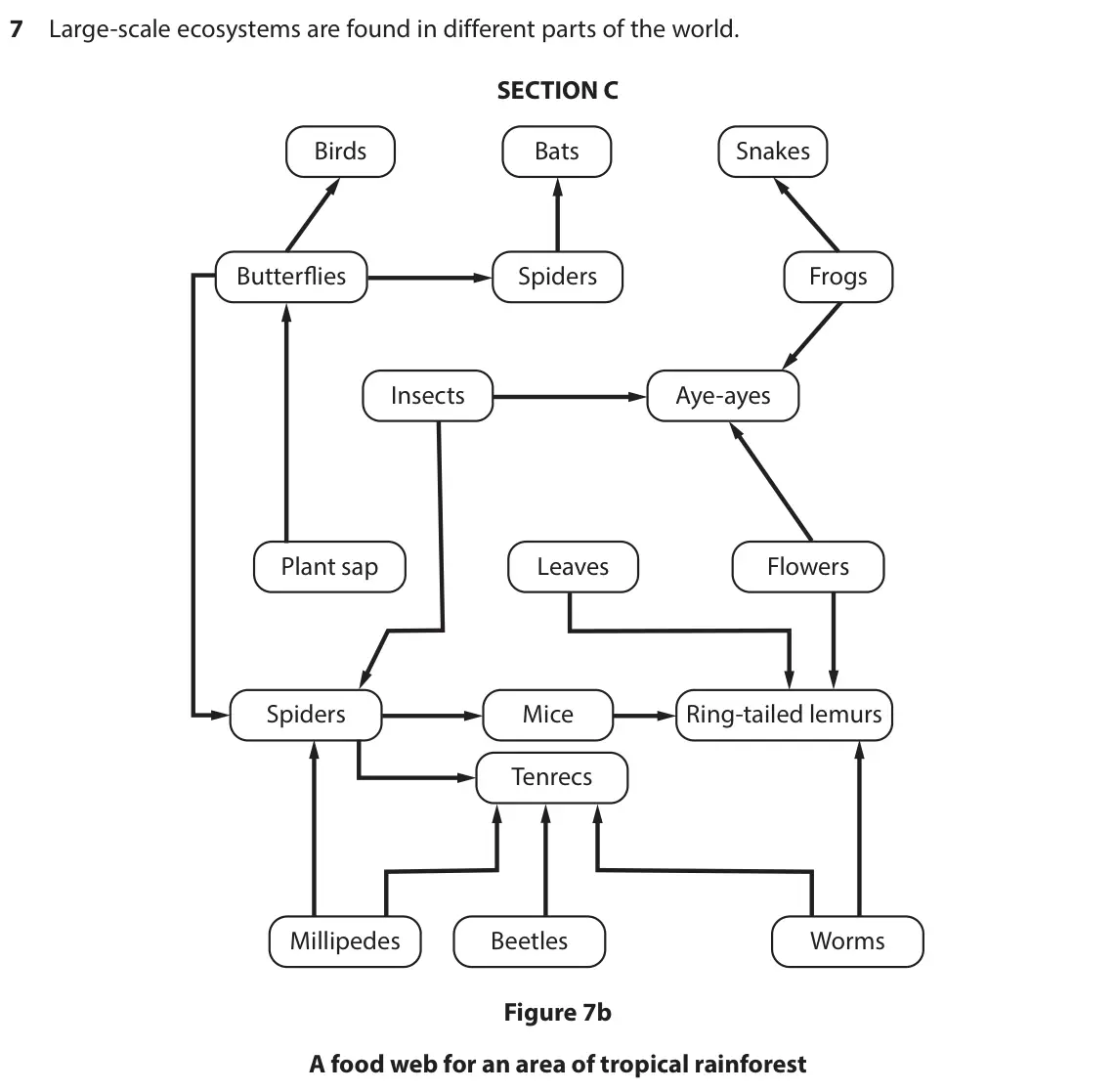 (Total for Question 7 is 2 marks)
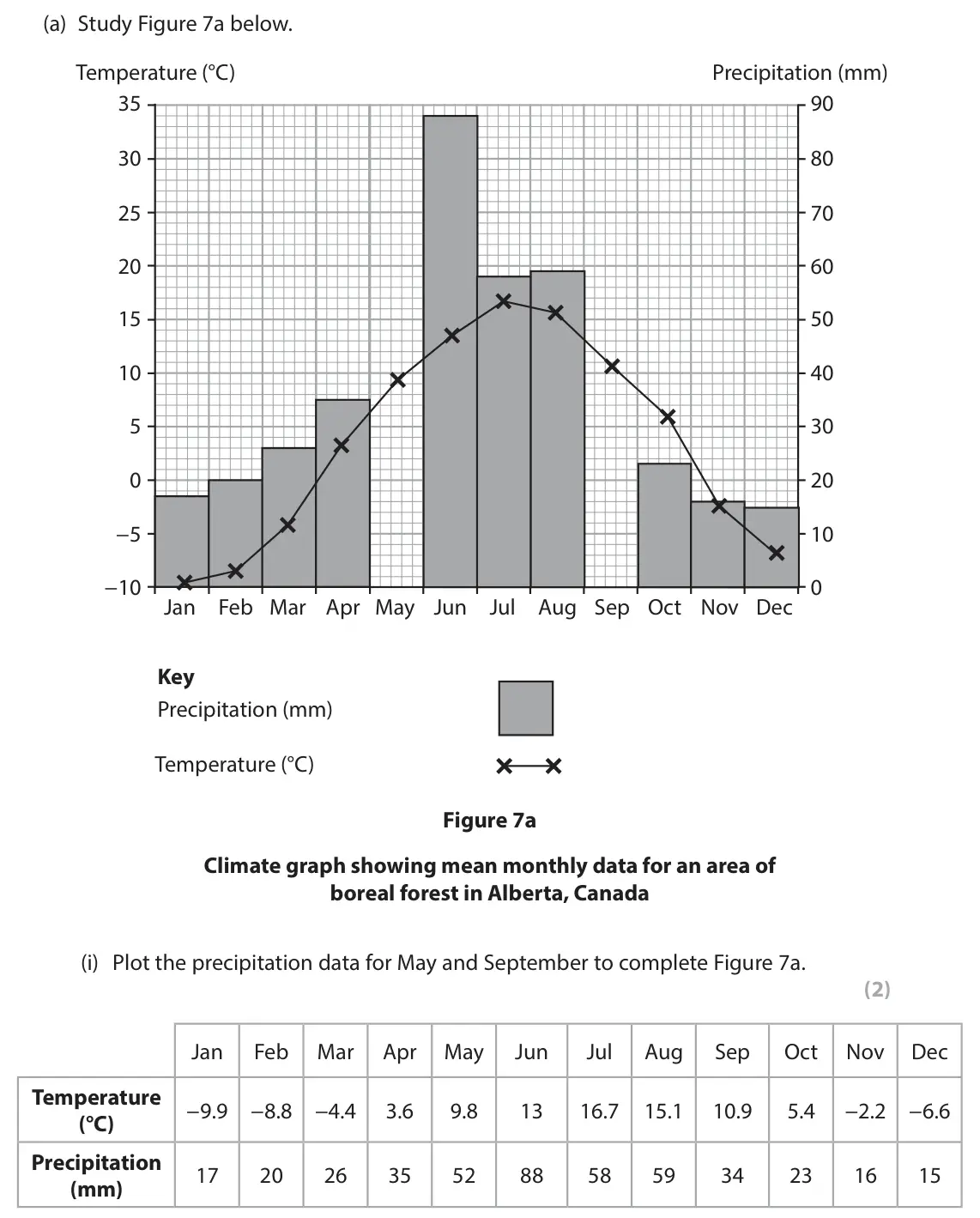
Q7(a)(ii)
The whole paper ↗(Total for Question 7 is 2 marks)
Q7(b)
The whole paper ↗(Total for Question 7 is 3 marks)
Q7(a)
The whole paper ↗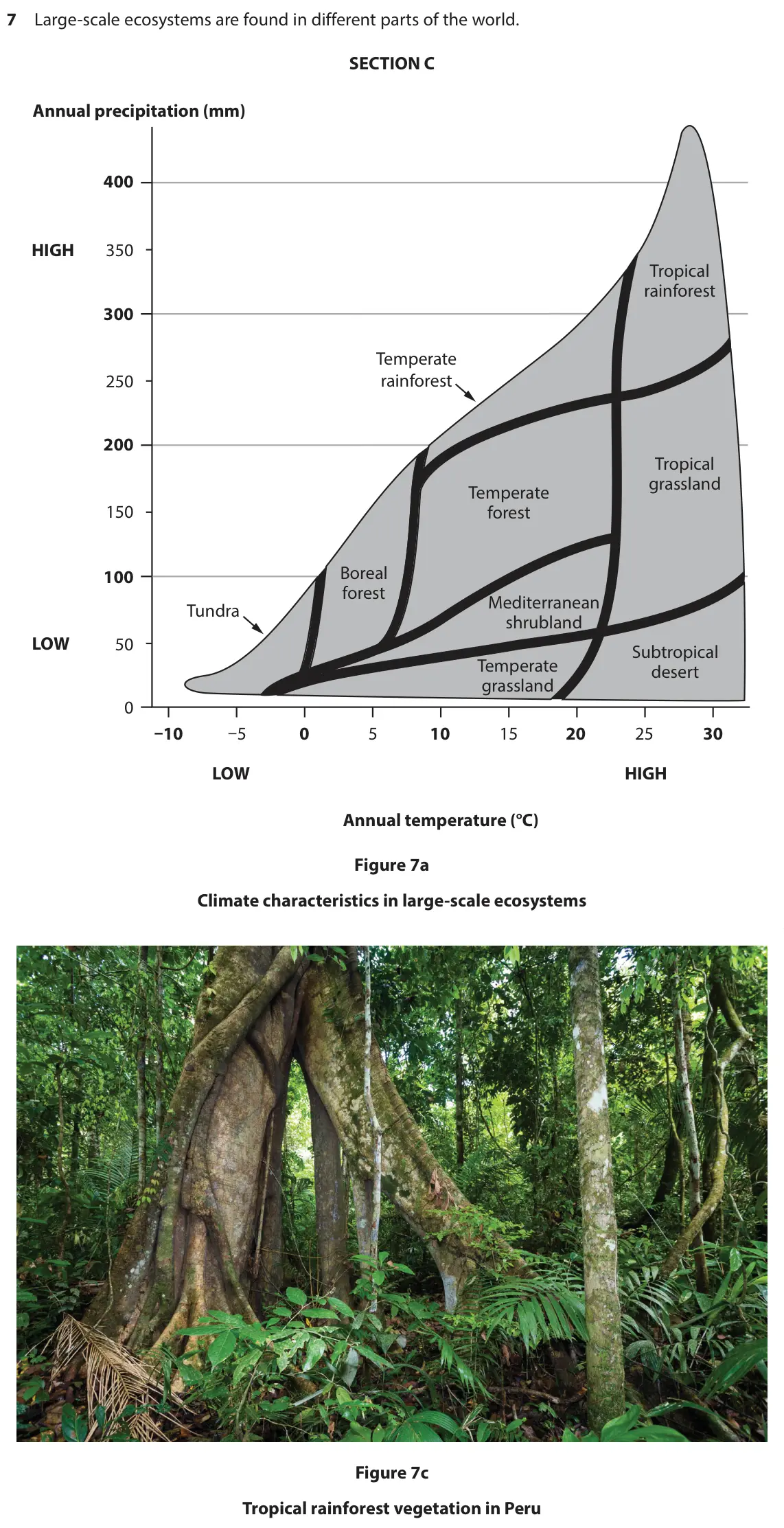 (Total for Question 7 is 1 mark)
Q7(b)
The whole paper ↗(Total for Question 7 is 2 marks)
Q7(a)(i)
The whole paper ↗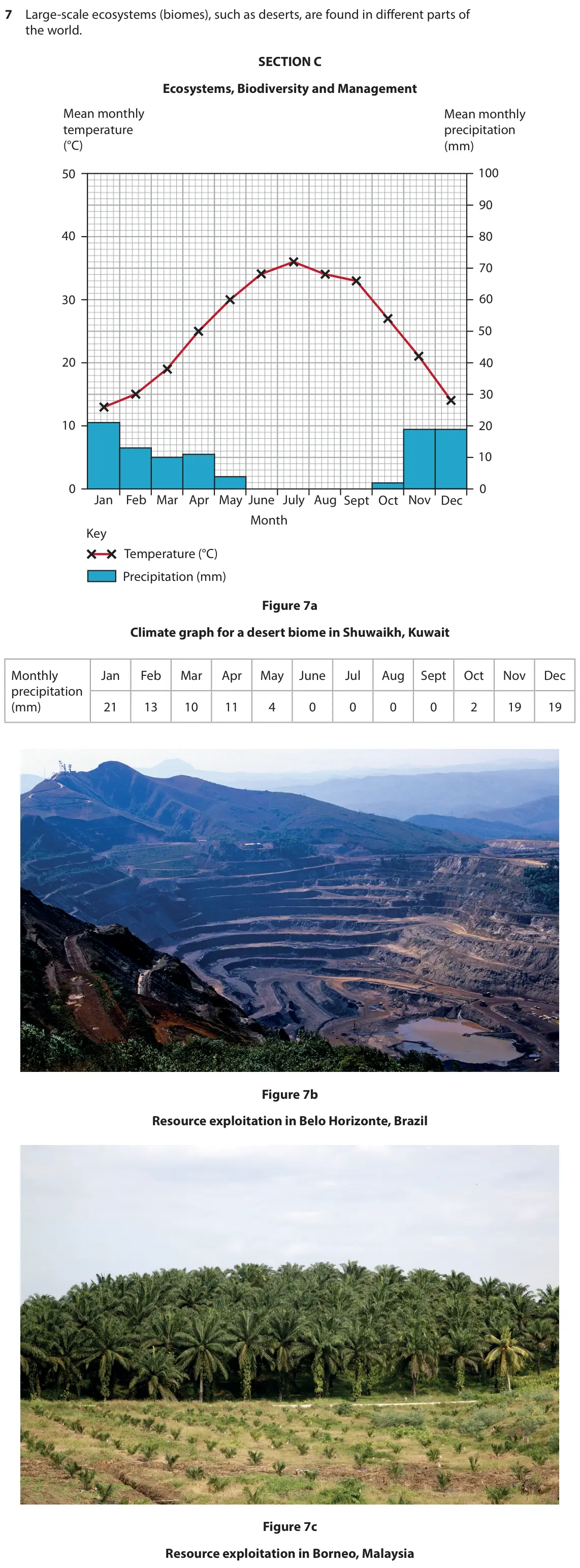 (Total for Question 7 is 1 mark)
Q7(a)(ii)
The whole paper ↗(Total for Question 7 is 2 marks)
Q7(a)(ii)
The whole paper ↗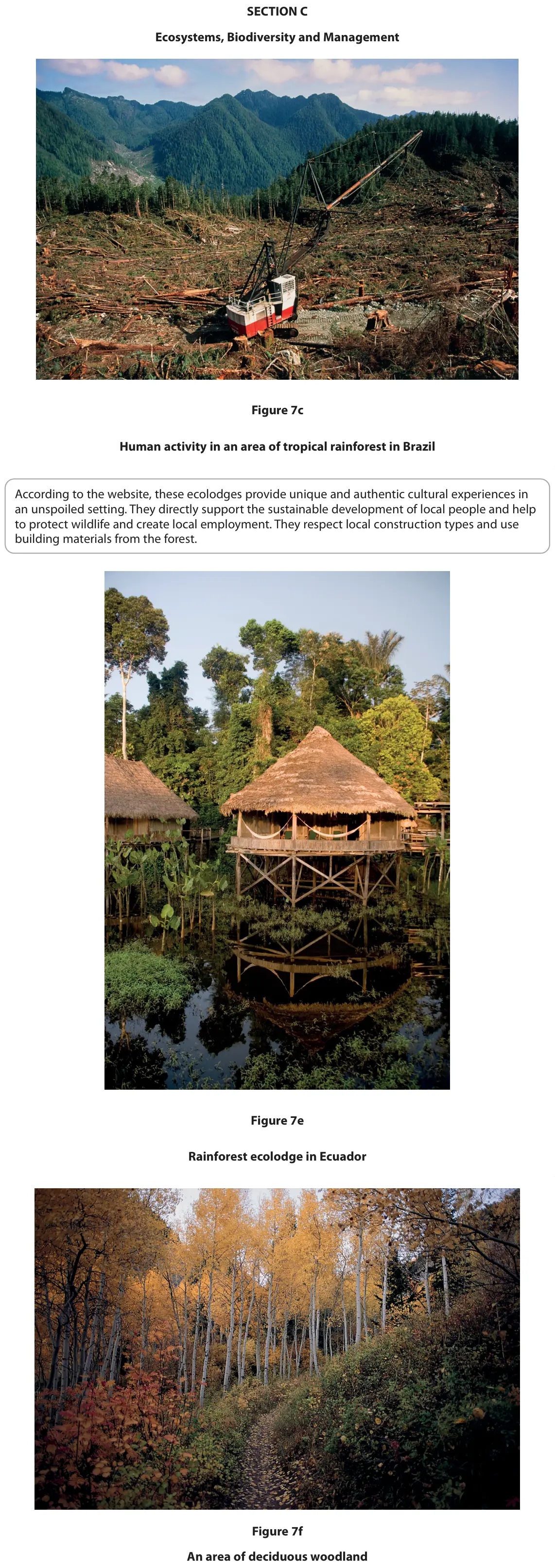 (Total for Question 7 is 2 marks)

Q7(e)
The whole paper ↗(Total for Question 7 is 8 marks)
Q7(a)(i)
The whole paper ↗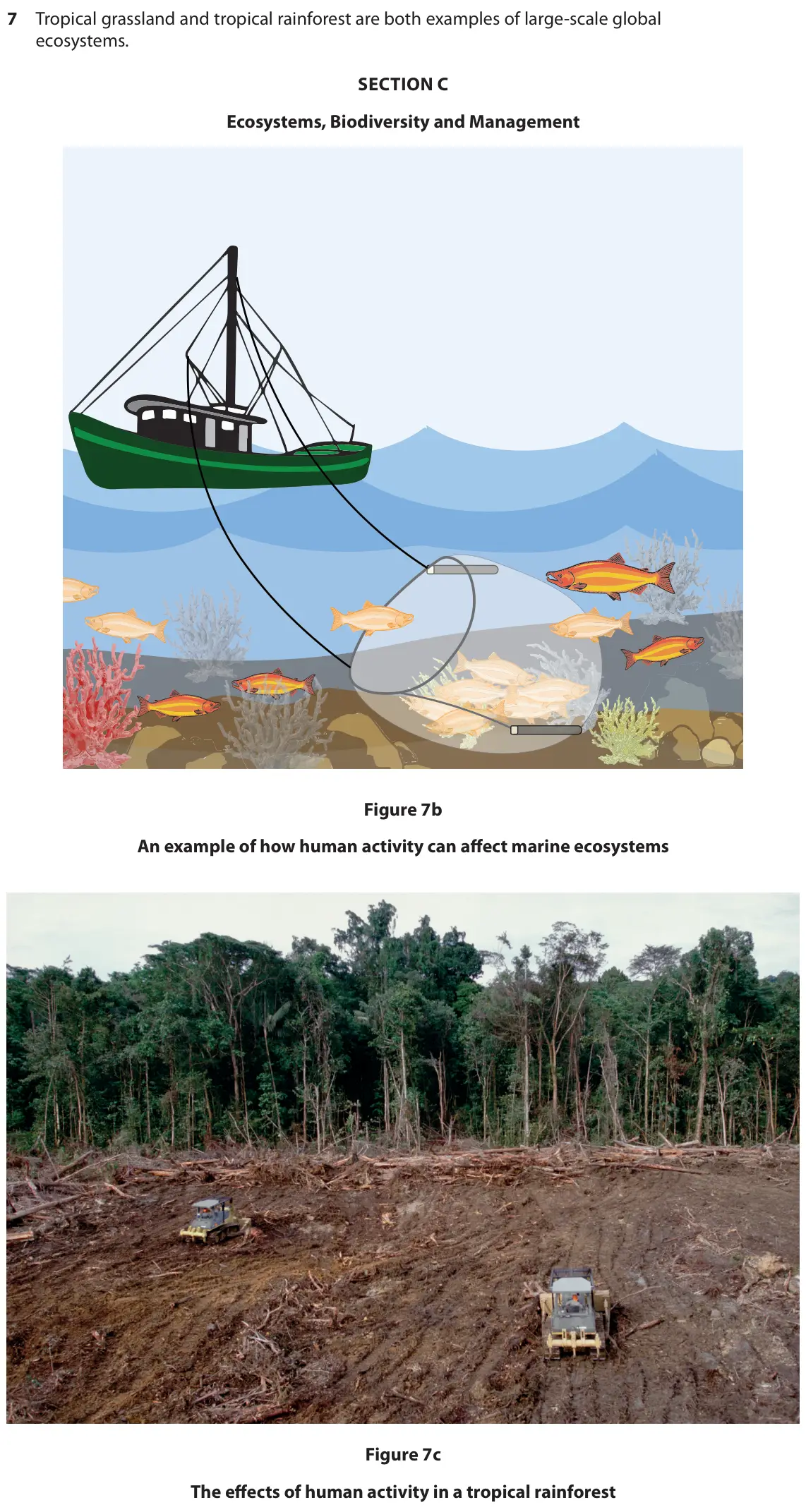 (Total for Question 7 is 3 marks)
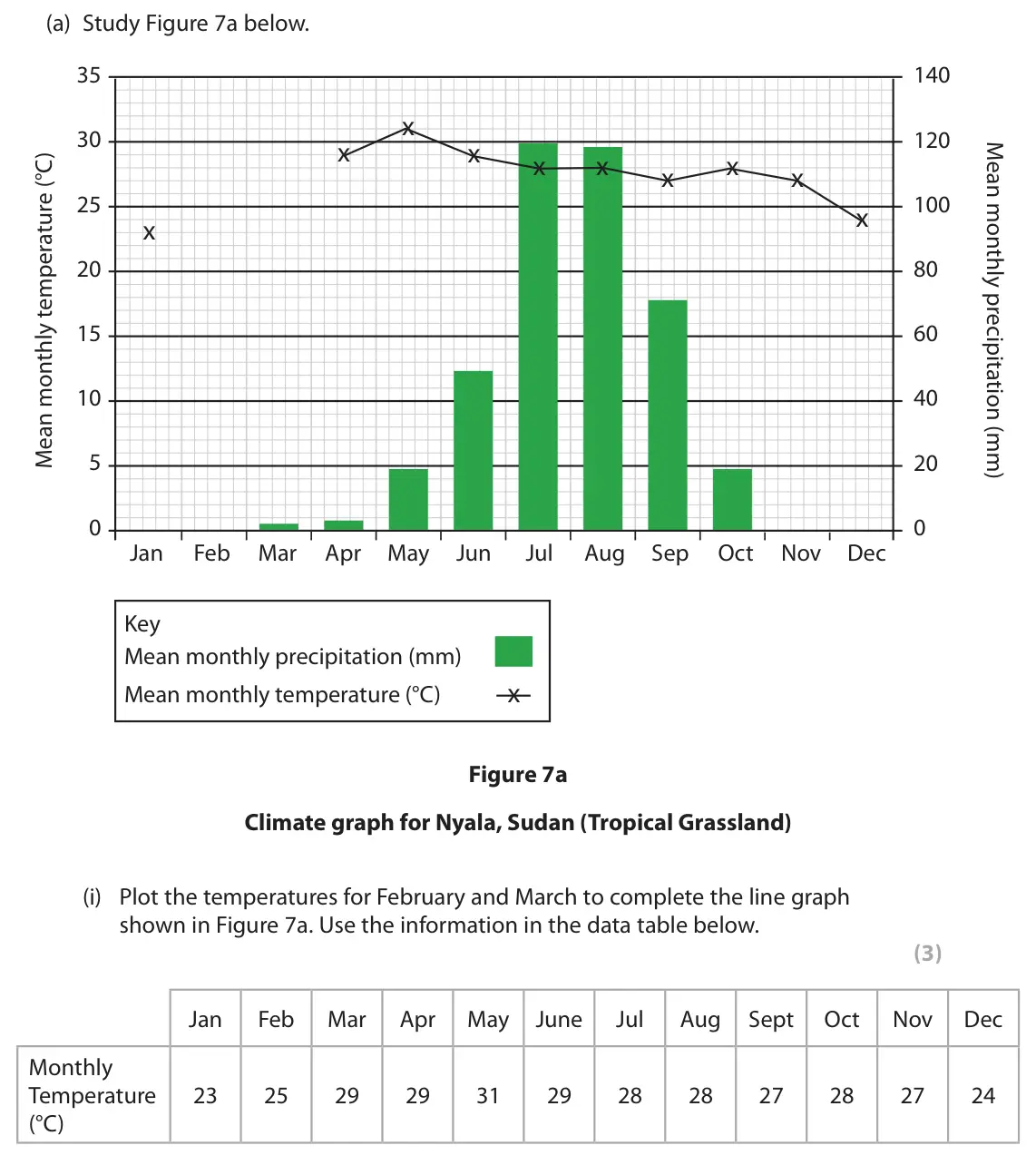
Q7(a)(ii)
The whole paper ↗(Total for Question 7 is 2 marks)
Q7(a)(iii)
The whole paper ↗(Total for Question 7 is 1 mark)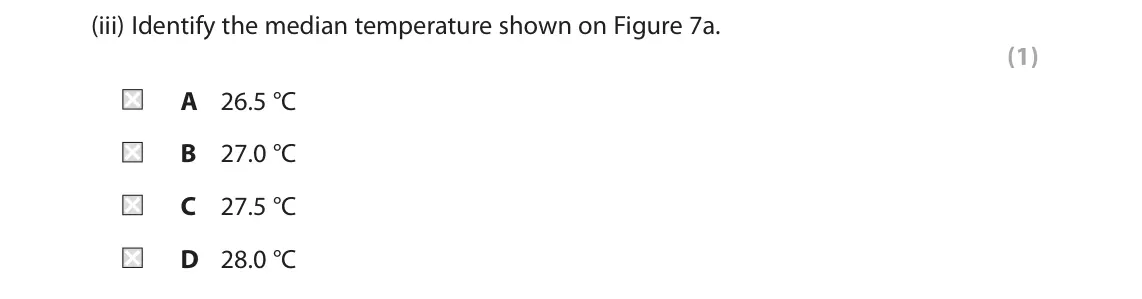
Q7(b)
The whole paper ↗(Total for Question 7 is 4 marks)
Q7(c)(i)
The whole paper ↗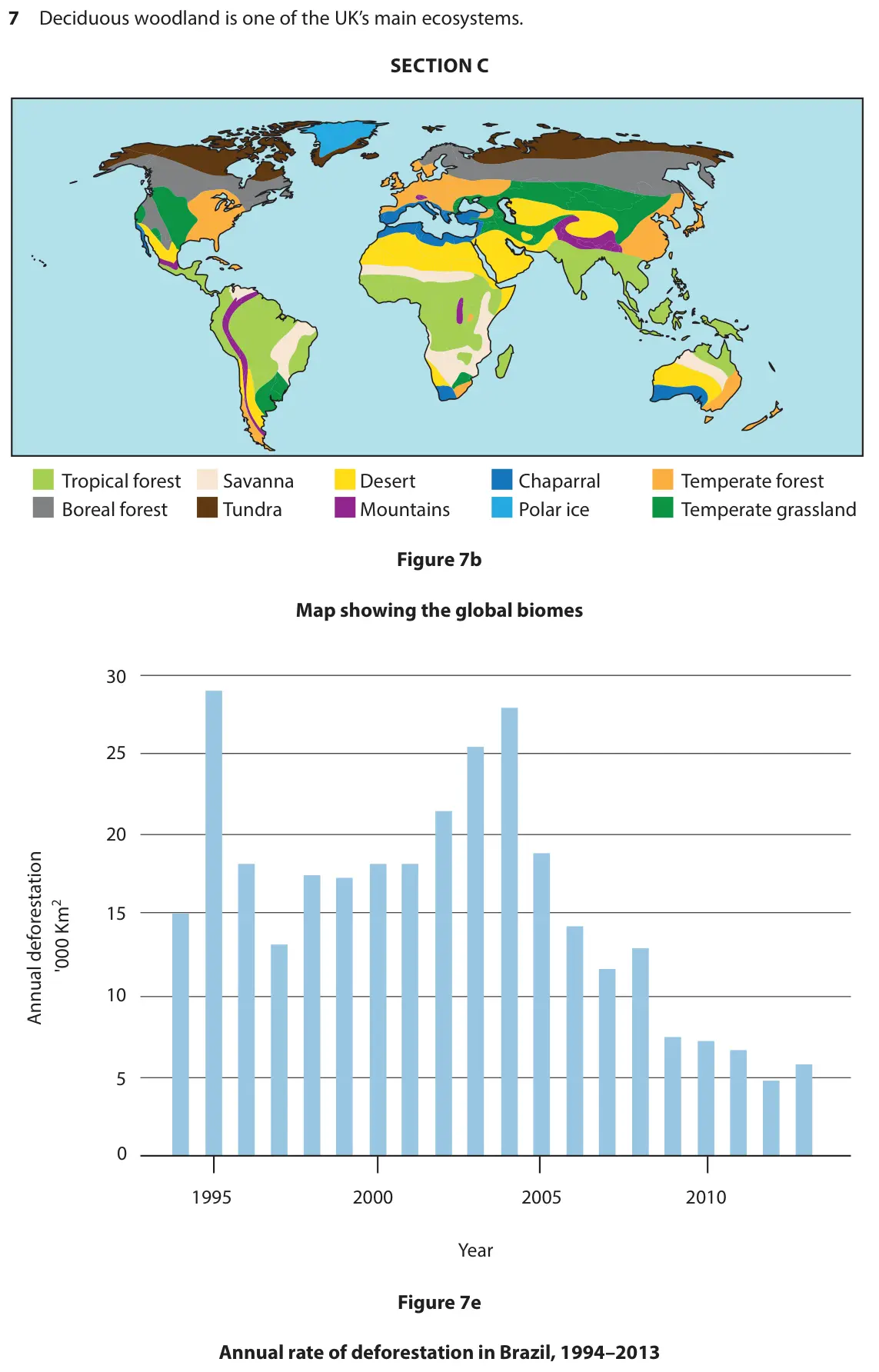 (Total for Question 7 is 1 mark)
All 22 questions on Large-scale ecosystems are found in different parts of the world and are important, as a list
- June 2025, Paper 1, Q7(a)(i) (1 mark): Identify which one of the following continents has the largest area of desert. (1) A Africa B Europe C North America D South America 7 Deserts are an example of
- June 2025, Paper 1, Q7(a)(ii) (3 marks): Explain one way climate influences the location of deserts. You must use evidence from Figure 7a in your answer. (3) 7 Deserts are an example of a large-scale e
- June 2024, Paper 1, Q7(a)(i) (1 mark): Identify which one of the following is found between 50° N and 65° N. (1) A boreal forest B desert C tropical grassland D tropical rainforest 7 Large-scale ecos
- June 2024, Paper 1, Q7(a)(ii) (2 marks): State two characteristics of temperate grassland. (2) 7 Large-scale ecosystems are found in different parts of the world. SECTION C Country Area of woodland (km
- June 2024, Paper 1, Q7(b)(i) (1 mark): Identify which one of the following months has the highest precipitation. (1) A February B April C July D August 7 Large-scale ecosystems are found in different
- June 2024, Paper 1, Q7(b)(ii) (2 marks): Calculate the median temperature shown in Figure 7a. Answer to one decimal place. You must show your working in the space below. (2) 7 Large-scale ecosystems ar
- June 2023, Paper 1, Q7(a)(i) (2 marks): Plot the precipitation data for May and September to complete Figure 7a. (2) Jan Feb Mar Apr May Jun Jul Aug Sep Oct Nov Dec Temperature −9.9 −8.8 −4.4 3.6 9.8
- June 2023, Paper 1, Q7(a)(ii) (2 marks): Calculate the median precipitation using the data table above. You must show your working in the space below. (2) 7 Large-scale ecosystems are found in differen
- June 2023, Paper 1, Q7(b) (3 marks): Explain one way climate can influence the distribution of large-scale ecosystems. (3) 7 Large-scale ecosystems are found in different parts of the world. SECTIO
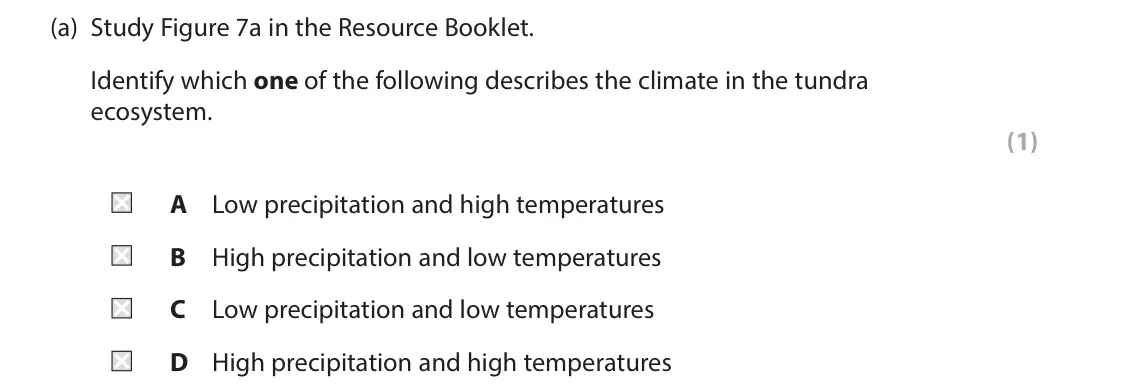
- June 2022, Paper 1, Q7(a) (1 mark): Study Figure 7a in the Resource Booklet. Identify which one of the following describes the climate in the tundra ecosystem. (1) A Low precipitation and high tem
- June 2022, Paper 1, Q7(b) (2 marks): Explain one way that altitude may affect the distribution of the temperate forest ecosystem. (2) 7 Large-scale ecosystems are found in different parts of the wo
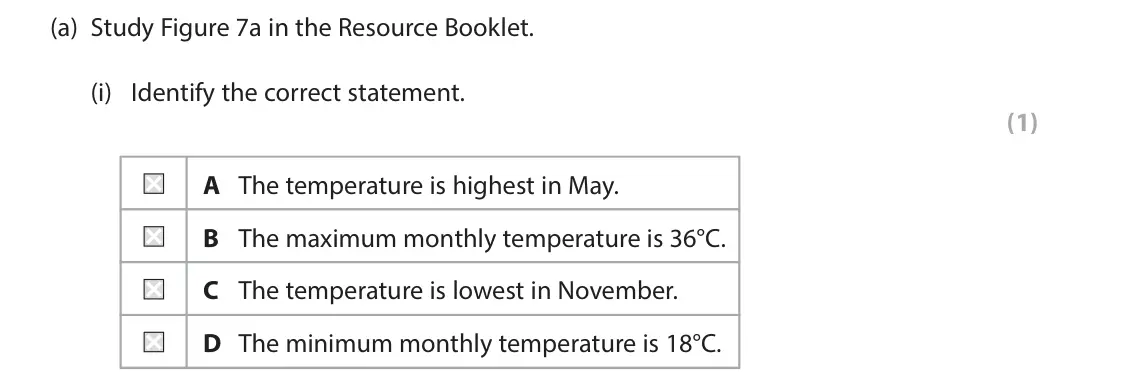
- November 2021, Paper 1, Q7(a)(i) (1 mark): Identify the correct statement. (1) A The temperature is highest in May. B The maximum monthly temperature is 36°C. C The temperature is lowest in November. D T
- November 2021, Paper 1, Q7(a)(ii) (2 marks): Calculate the mean monthly precipitation shown in Figure 7a. You must show your working in the space below. Answer to two decimal places. (2) 7 Large-scale ecos
- November 2020, Paper 1, Q7(a)(ii) (2 marks): Calculate the percentage (%) of the total land area shown in Figure 7a which is covered by temperate forest. You must show your working in the space below. (2)
- November 2020, Paper 1, Q7(e) (8 marks): Evaluate the following statement. Climate is the most important factor influencing the distribution of different large-scale ecosystems. (8) SECTION C Ecosystem
- June 2019, Paper 1, Q7(a)(i) (3 marks): Plot the temperatures for February and March to complete the line graph shown in Figure 7a. Use the information in the data table below. (3) Jan Feb Mar Apr May
- June 2019, Paper 1, Q7(a)(ii) (2 marks): Calculate the mean monthly temperature using the data table. Answer to one decimal place. You must show your working in the space below. (2) 7 Tropical grasslan
- June 2019, Paper 1, Q7(a)(iii) (1 mark): Identify the median temperature shown on Figure 7a. (1) A 26.5 °C B 27.0 °C C 27.5 °C D 28.0 °C 7 Tropical grassland and tropical rainforest are both examples o
- June 2019, Paper 1, Q7(b) (4 marks): Explain two ways climate can influence the distribution of large-scale ecosystems. (4) 7 Tropical grassland and tropical rainforest are both examples of large-s
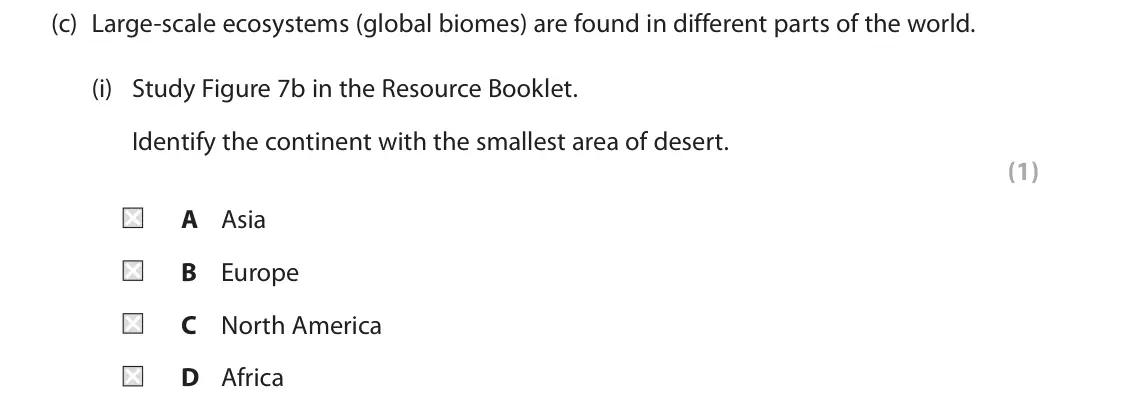
- June 2018, Paper 1, Q7(c)(i) (1 mark): Study Figure 7b in the Resource Booklet. Identify the continent with the smallest area of desert. (1) A Asia B Europe C North America D Africa 7 Deciduous woodl
- June 2018, Paper 1, Q7(c)(ii) (3 marks): Explain one way climate influences the distribution of deserts. (3) 7 Deciduous woodland is one of the UK’s main ecosystems. SECTION C Tropical forest Savanna D
- June 2018, Paper 1, Q7(d)(i) (2 marks): Plot the data from the table below on Figure 7c. (2) Large-scale ecosystem Number of animal species Tropical grasslands 7 500 Temperate grasslands 4 000 7 Decid
Questions, mark schemes and examiner’s reports are © Pearson Edexcel, from their published past papers. Plumi isn’t affiliated with any exam board. Want whole papers? Edexcel GCSE Geography A past papers.
The Plumi iPad app also offers exam-style questions with AI feedback on your handwritten working.