 plumi
Electoral systems: Edexcel A‑Level Politics questions
Every Edexcel A-Level Politics exam question on Electoral systems, 2019–2025, with its mark scheme and examiner’s report.
Find questions296
Exam
All years
Calculations

Q1(b)
The whole paper ↗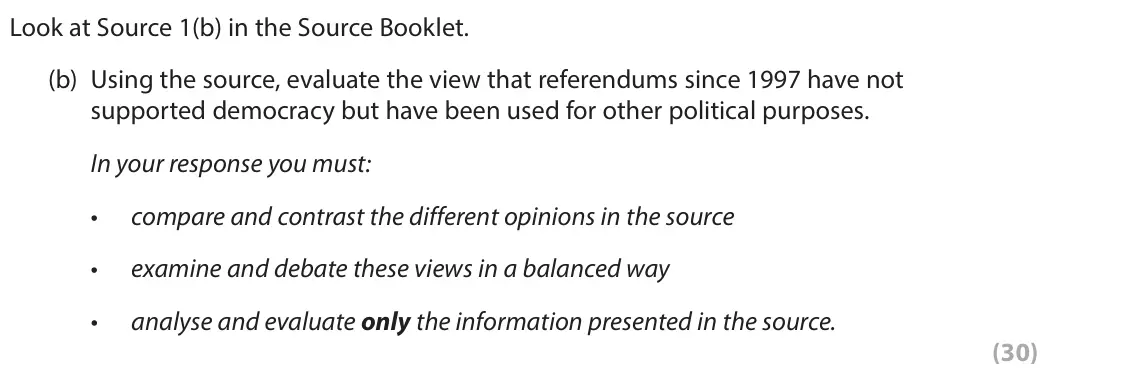
Q4(b)
The whole paper ↗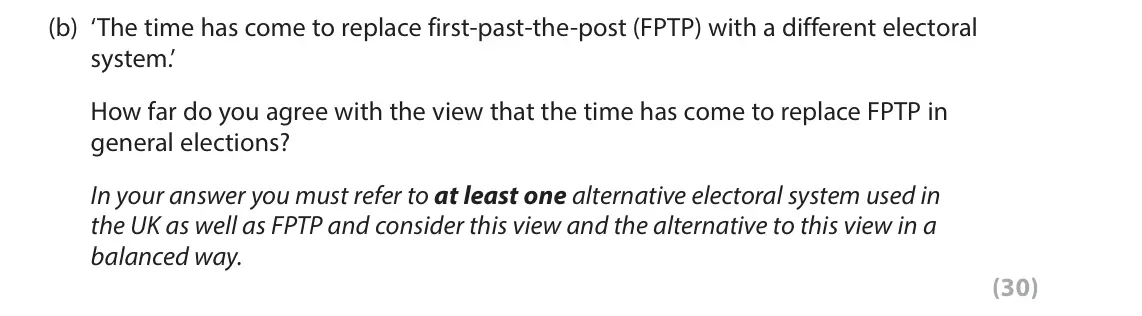
Q2(a)
The whole paper ↗
Q4(a)
The whole paper ↗
Q1(b)
The whole paper ↗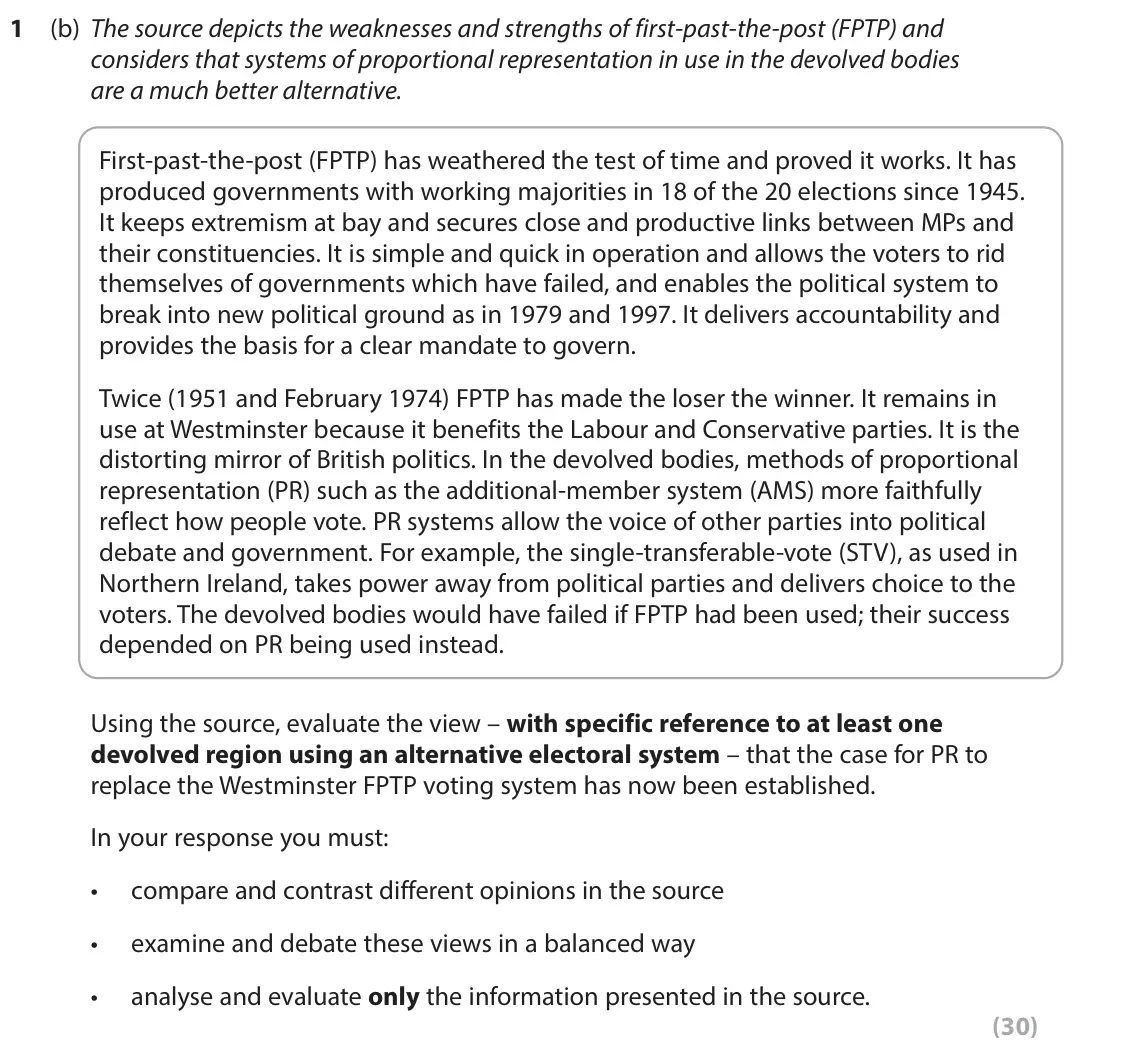
Q1(b)
The whole paper ↗
Q4(b)
The whole paper ↗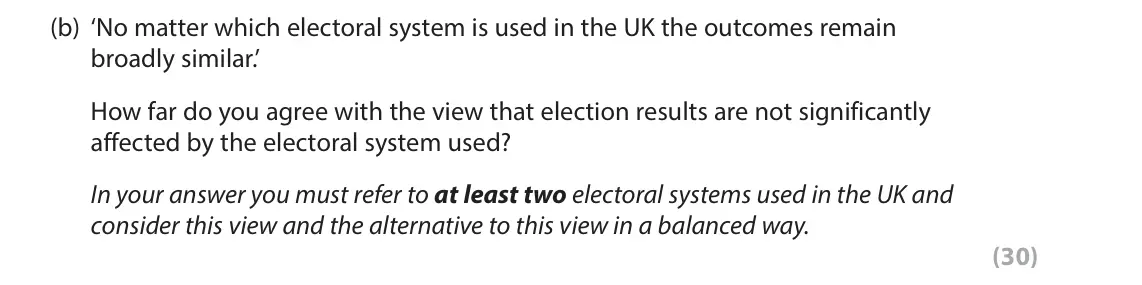
Q1(a)
The whole paper ↗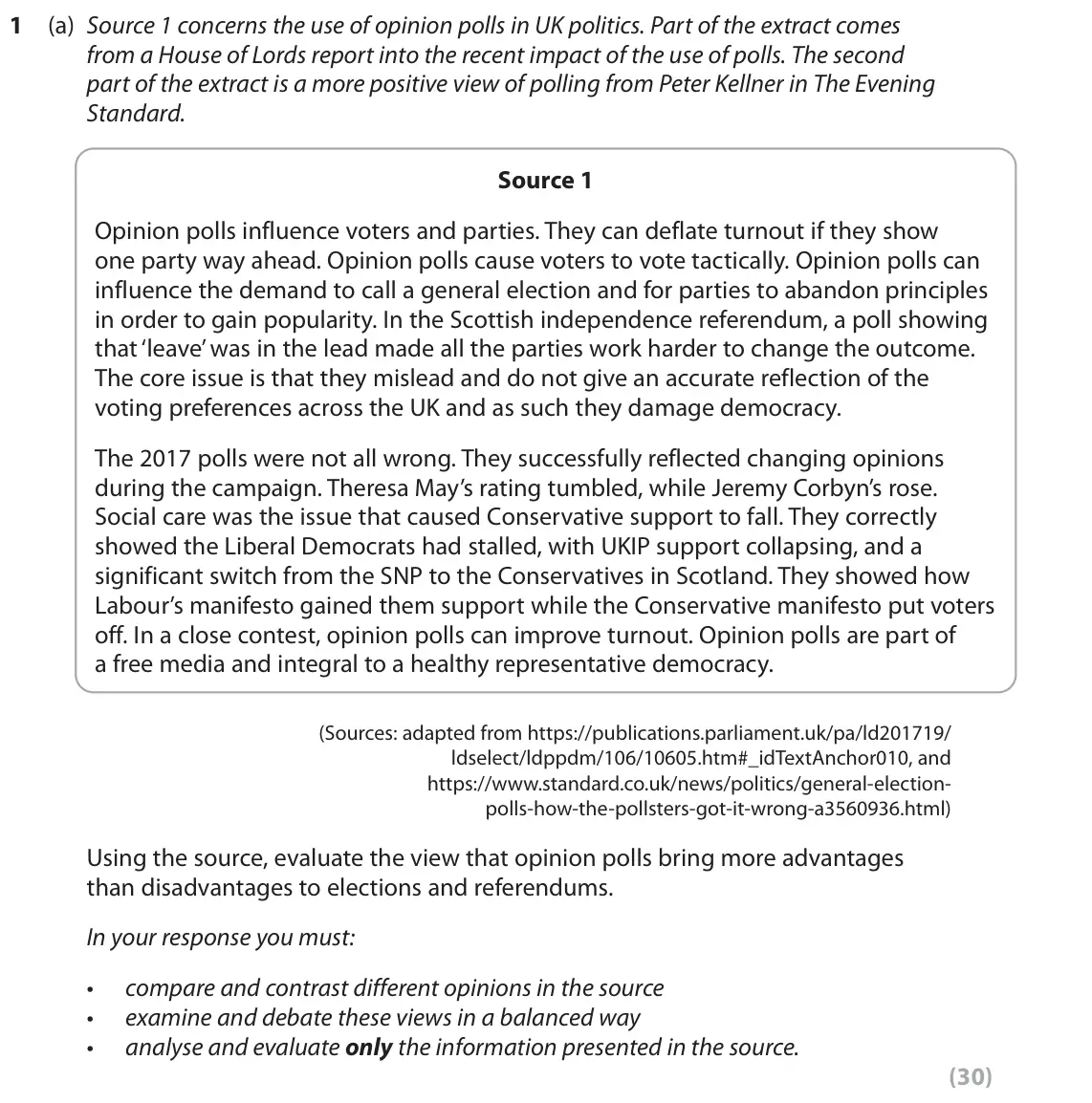
Q1(b)
The whole paper ↗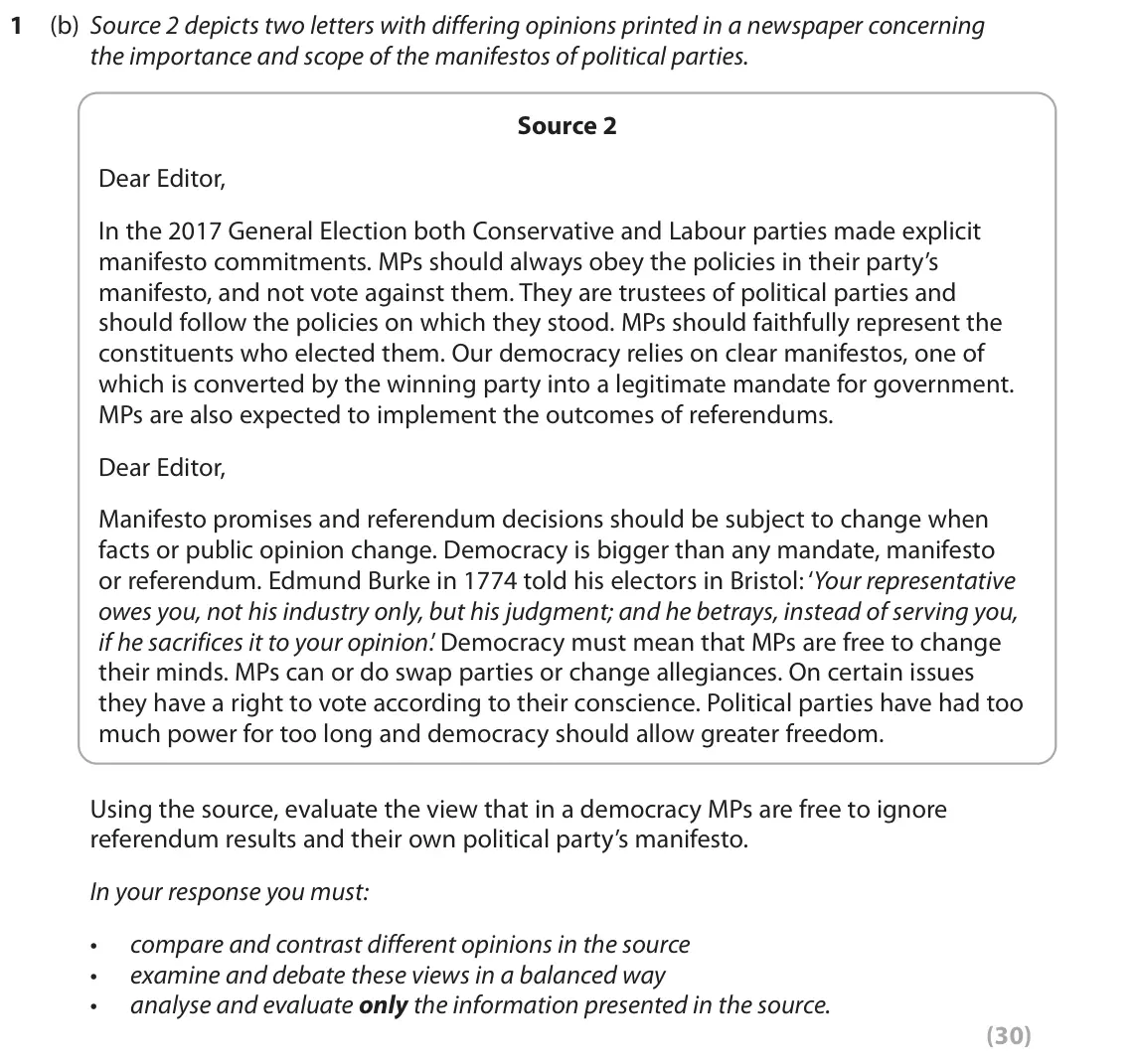
Q2(a)
The whole paper ↗
Q2(b)
The whole paper ↗
Q1(b)
The whole paper ↗
Q4(b)
The whole paper ↗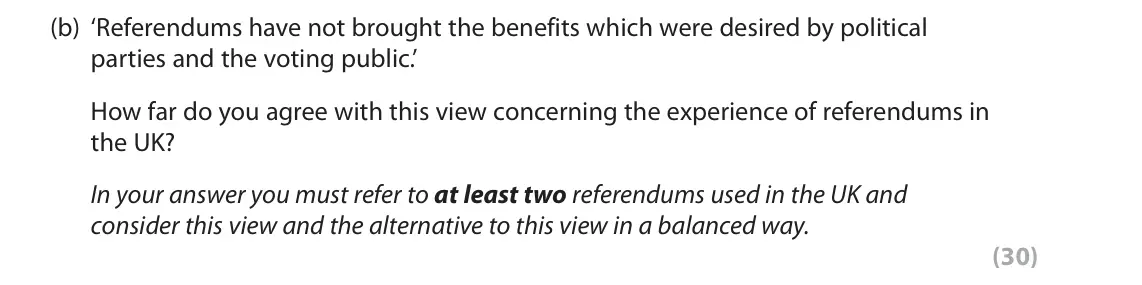
Q1(b)
The whole paper ↗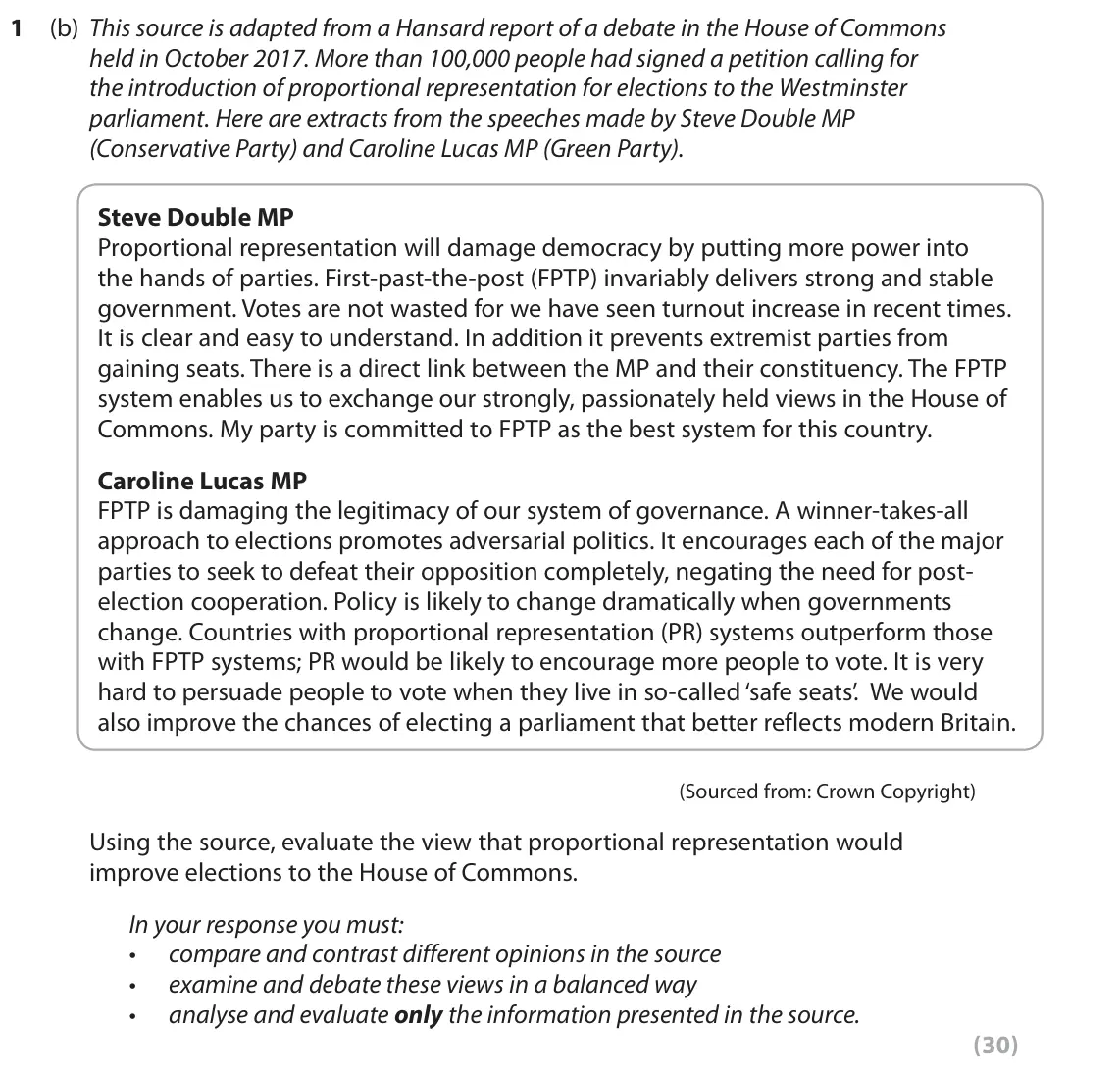
Q1(b)
The whole paper ↗
All 18 questions on Electoral systems, as a list
- June 2025, AS Paper 1, Q2 (10 marks): Using Source 1, explain the disadvantages of the Additional Member System (AMS). In your response you must use knowledge and understanding to analyse points tha
- June 2024, Paper 1, Q1(b) (30 marks): in the Source Booklet. (b) Using the source, evaluate the view that referendums since 1997 have not supported democracy but have been used for other political p
- June 2024, AS Paper 1, Q4(b) (30 marks): ‘The time has come to replace first-past-the-post (FPTP) with a different electoral system.’ How far do you agree with the view that the time has come to replac
- June 2023, Paper 1, Q2(a) (30 marks): Evaluate the view that referendums held in the UK since 1997 have brought more disadvantages than advantages. You must consider this view and the alternative to
- June 2023, AS Paper 1, Q4(a) (30 marks): ‘Referendums since 1997 have benefitted UK politics.’ How far do you agree that referendums since 1997 have benefitted UK politics? In your answer you must refe
- June 2022, Paper 1, Q1(b) (30 marks): The source depicts the weaknesses and strengths of first-past-the-post (FPTP) and considers that systems of proportional representation in use in the devolved b
- June 2022, AS Paper 1, Q1(b) (10 marks): Describe the key features of a minority government. (10)
- June 2022, AS Paper 1, Q4(b) (30 marks): ‘No matter which electoral system is used in the UK the outcomes remain broadly similar.’ How far do you agree with the view that election results are not signi
- November 2021, Paper 1, Q1(a) (30 marks): Source 1 concerns the use of opinion polls in UK politics. Part of the extract comes from a House of Lords report into the recent impact of the use of polls. Th
- November 2021, Paper 1, Q1(b) (30 marks): Source 2 depicts two letters with differing opinions printed in a newspaper concerning the importance and scope of the manifestos of political parties. Source 2
- November 2021, Paper 1, Q2(a) (30 marks): Evaluate the view that the emergence of multiple parties in the UK means that the Westminster electoral system must be changed. You must consider this view and
- October 2020, Paper 1, Q2(b) (30 marks): Evaluate the view that the various electoral systems in use in the UK make significant differences to party representation. You must consider this view and the
- October 2020, AS Paper 1, Q1(b) (10 marks): Describe the features of a coalition government. (10)
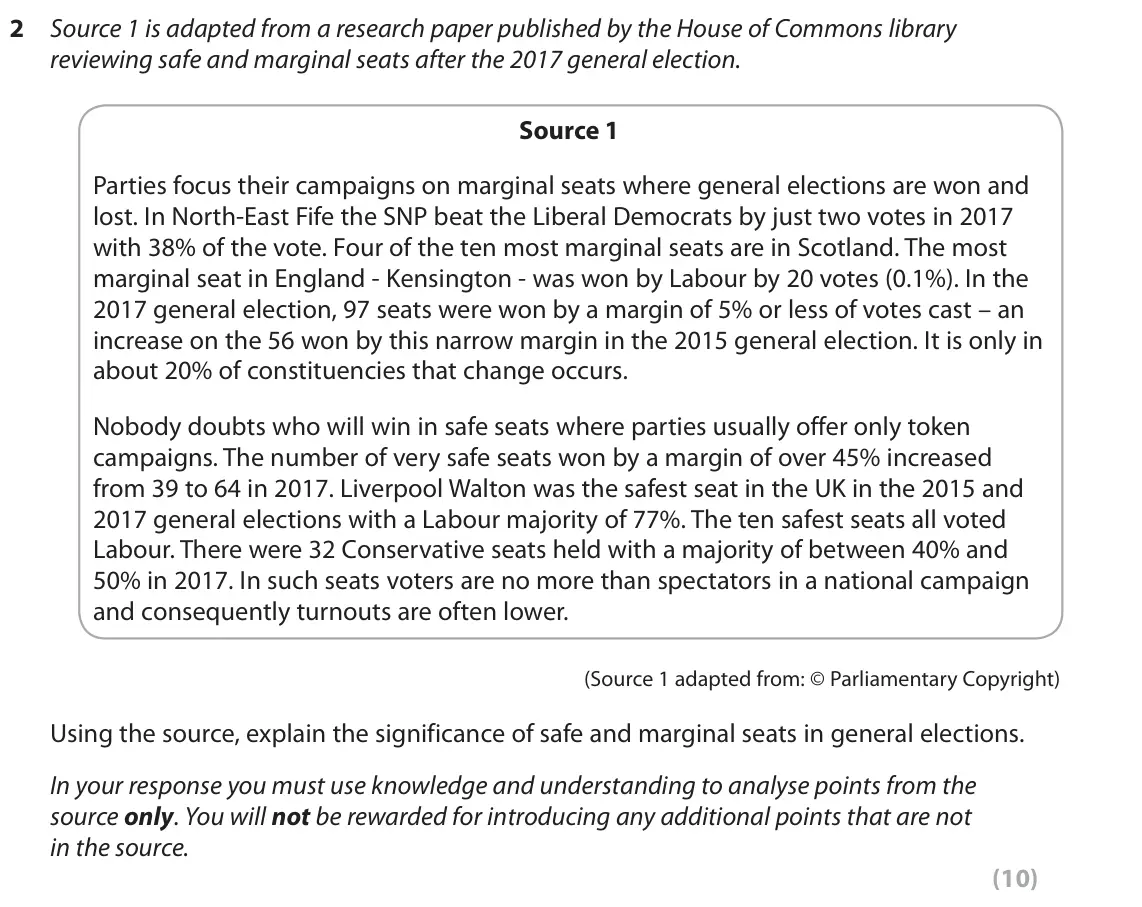
- October 2020, AS Paper 1, Q2 (10 marks): Source 1 is adapted from a research paper published by the House of Commons library reviewing safe and marginal seats after the 2017 general election. Source 1
- October 2020, AS Paper 1, Q4(b) (30 marks): ‘Referendums have not brought the benefits which were desired by political parties and the voting public.’ How far do you agree with this view concerning the ex
- June 2019, Paper 1, Q1(b) (30 marks): This source is adapted from a Hansard report of a debate in the House of Commons held in October 2017. More than 100,000 people had signed a petition calling fo
- June 2019, AS Paper 1, Q1(b) (10 marks): Describe how referendums have been used more in recent years. (10)
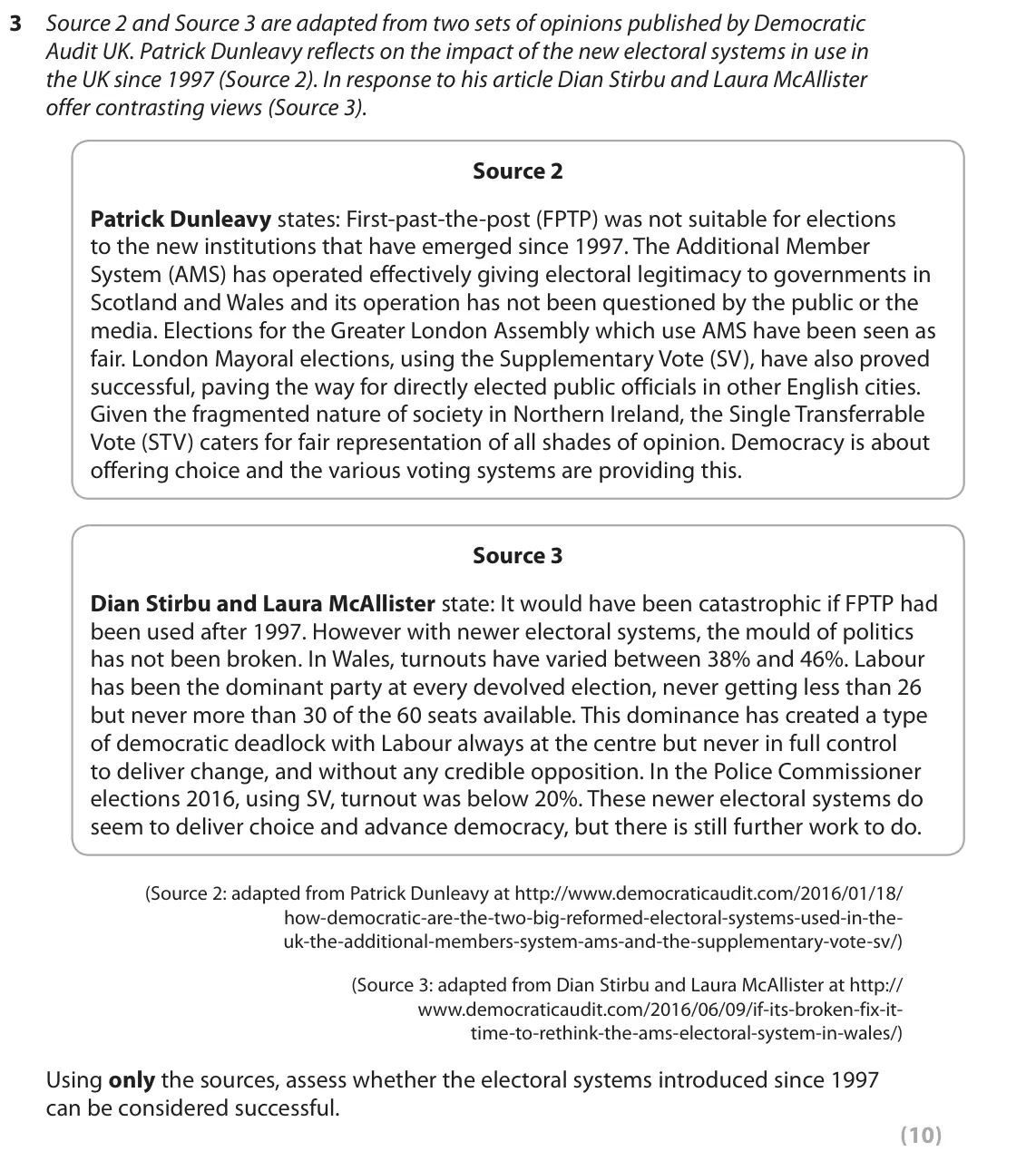
- June 2019, AS Paper 1, Q3 (10 marks): Source 2 and Source 3 are adapted from two sets of opinions published by Democratic Audit UK. Patrick Dunleavy reflects on the impact of the new electoral syste
Questions, mark schemes and examiner’s reports are © Pearson Edexcel, from their published past papers. Plumi isn’t affiliated with any exam board. Want whole papers? Full past papers.
Rather write your answers by hand on iPad? Plumi marks them against the same mark schemes.