 plumi
Cell structure: Edexcel A‑Level Biology A questions
Every Edexcel A-Level Biology A exam question on Cell structure (specification points 3.1–3.5), 2016–2025, with its mark scheme and examiner’s report.
Find questions1,749
Calculations
Q1(a)(i)
The whole paper ↗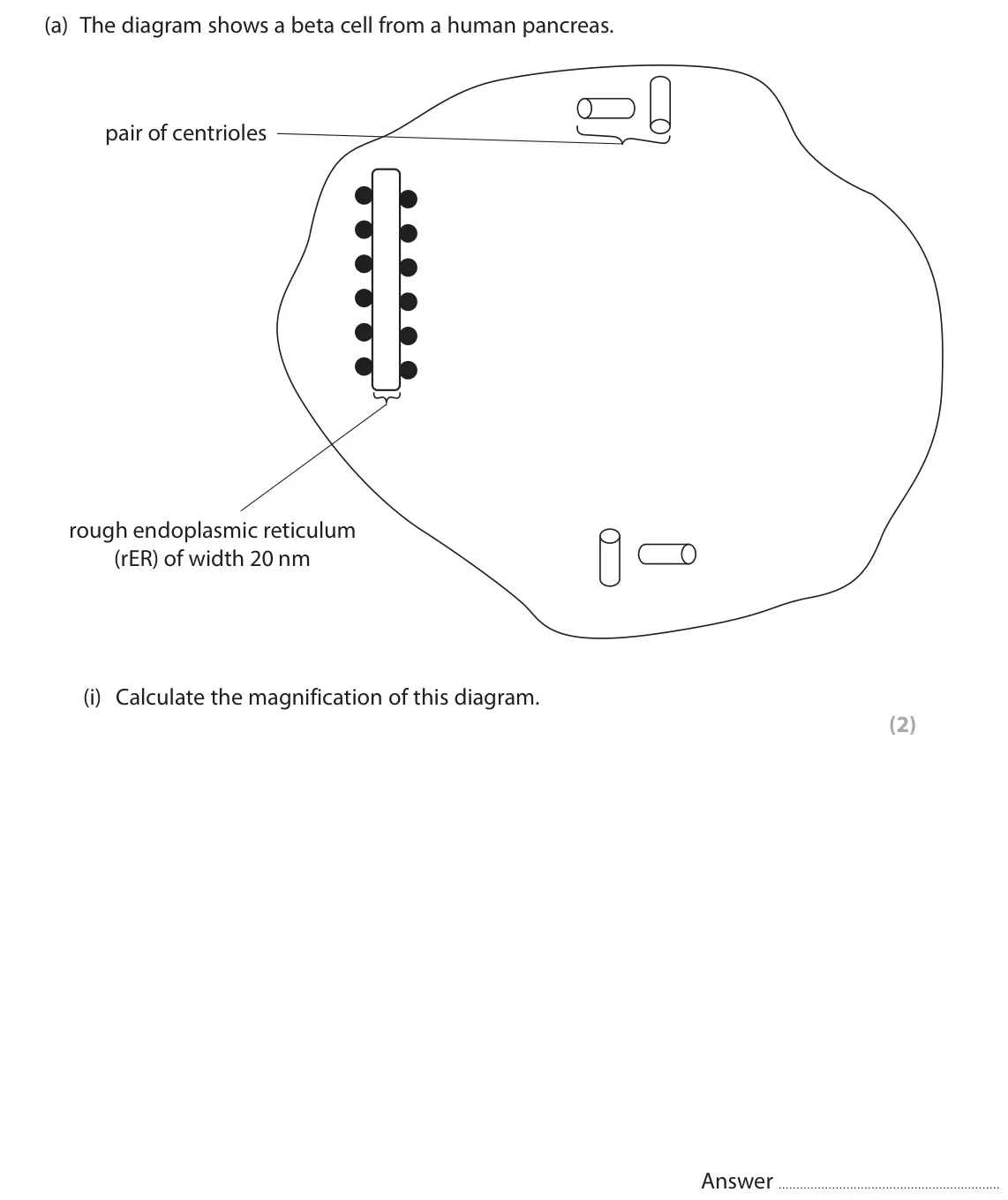
Q1(b)
The whole paper ↗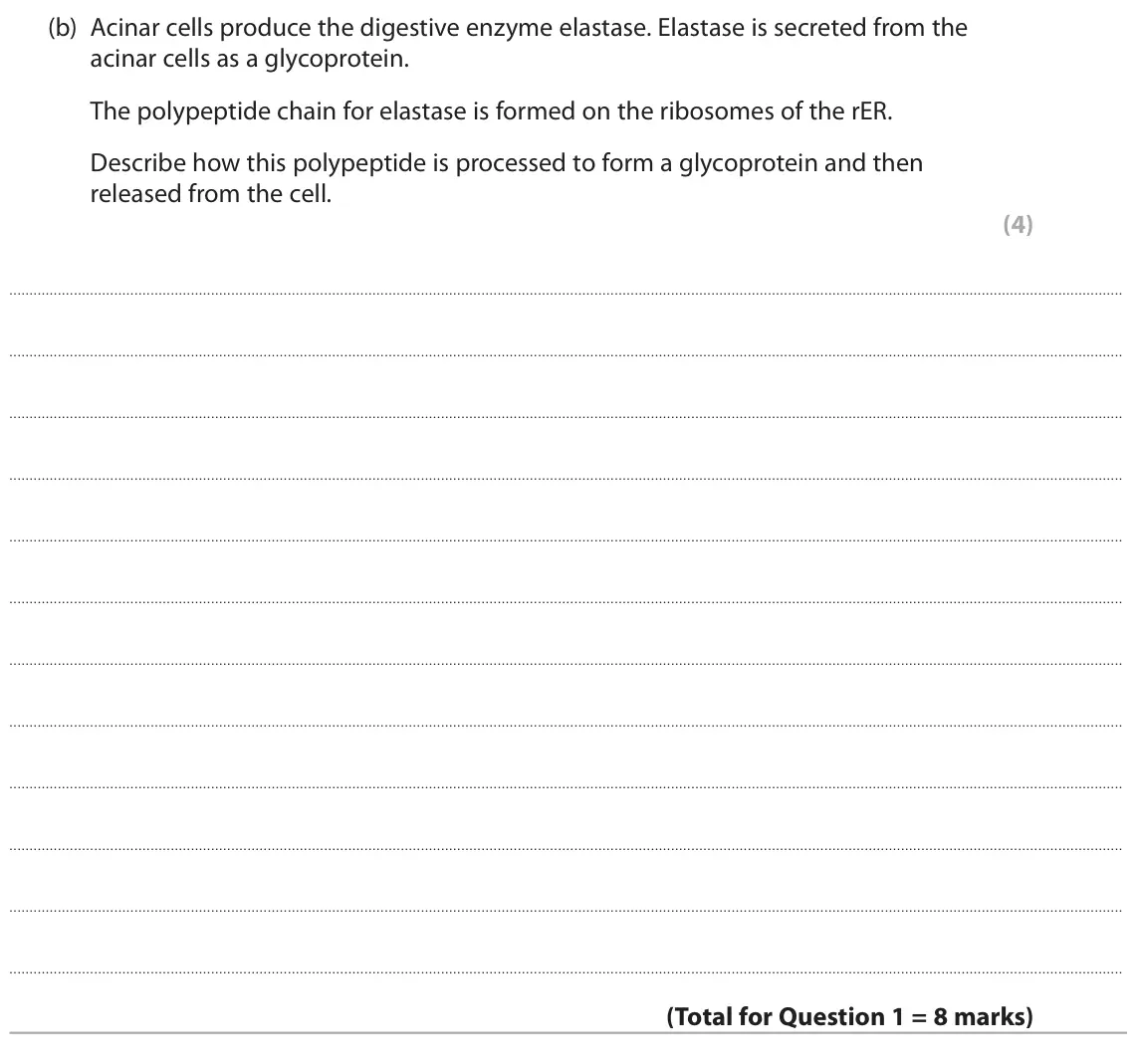
Q5(d)
The whole paper ↗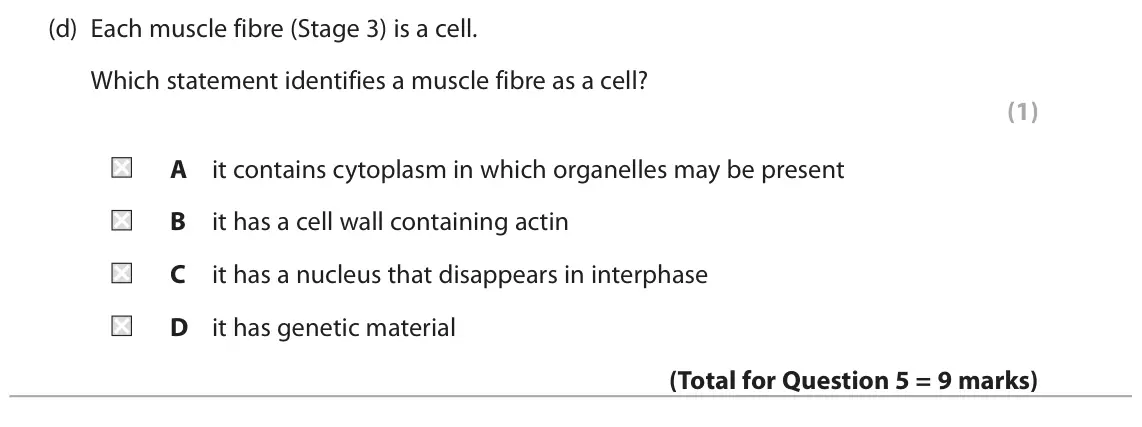
Q7(a)
The whole paper ↗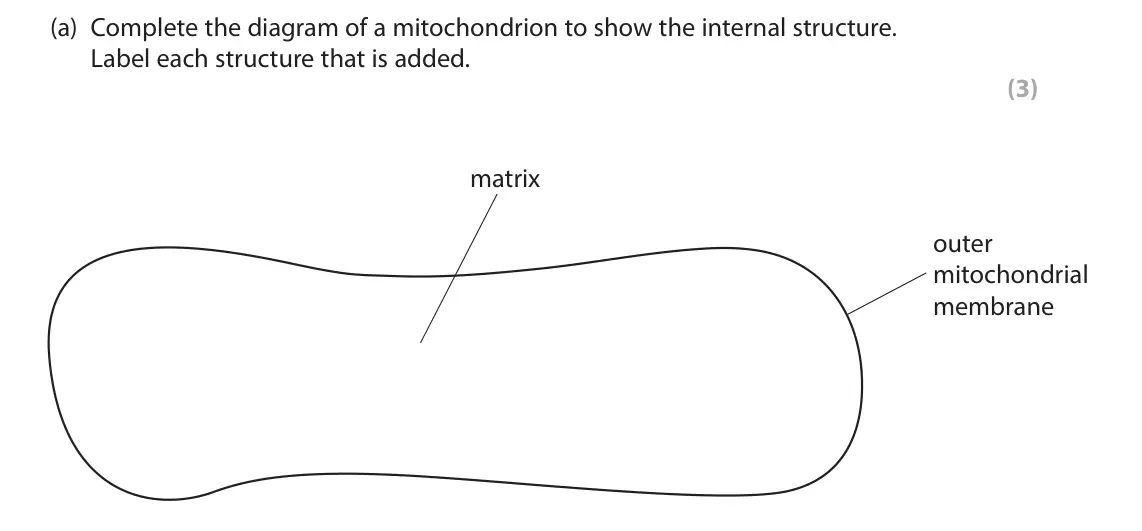
Q1(b)(i)
The whole paper ↗
Q1(a)(i)
The whole paper ↗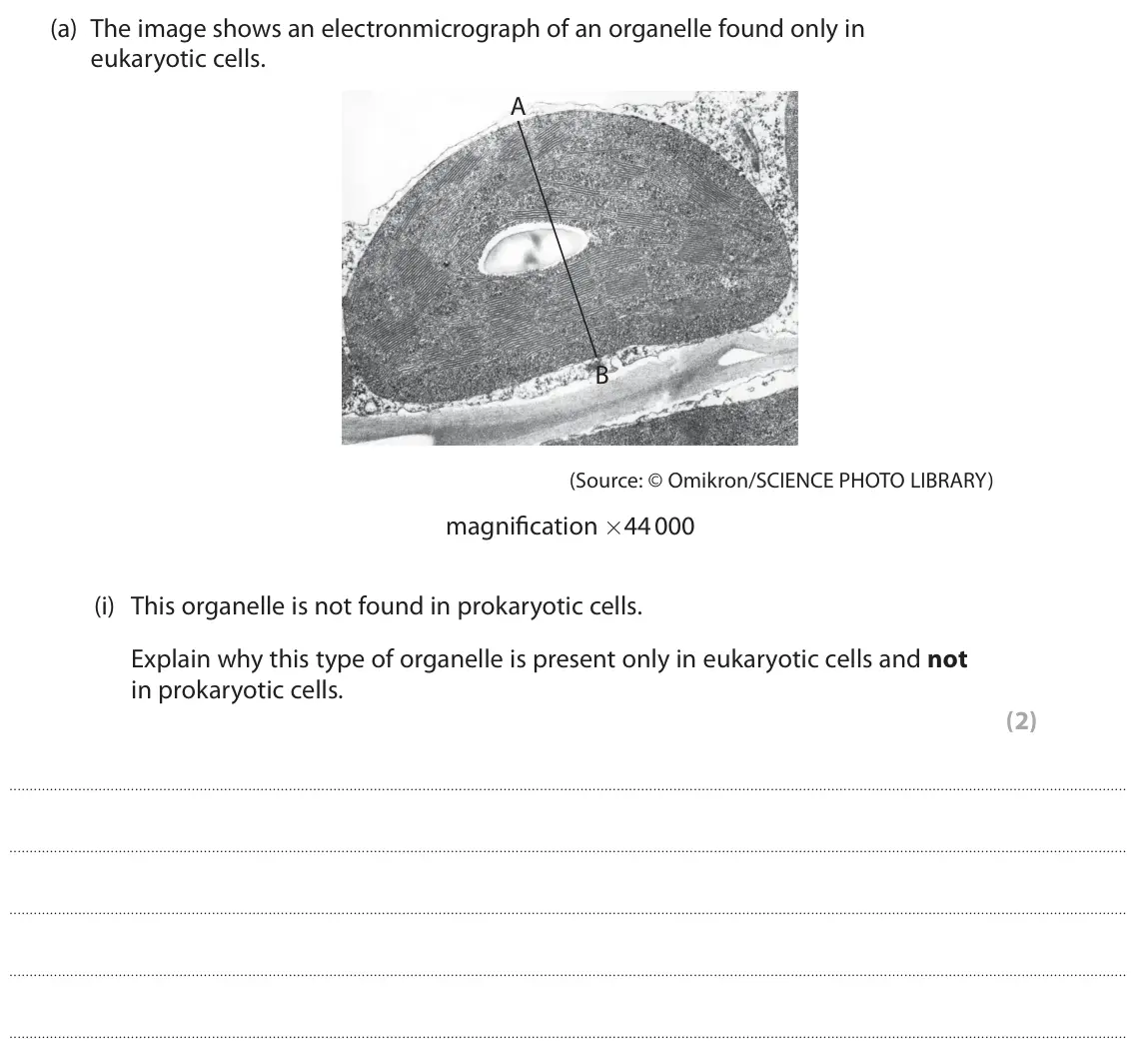
Q1(a)(ii)
The whole paper ↗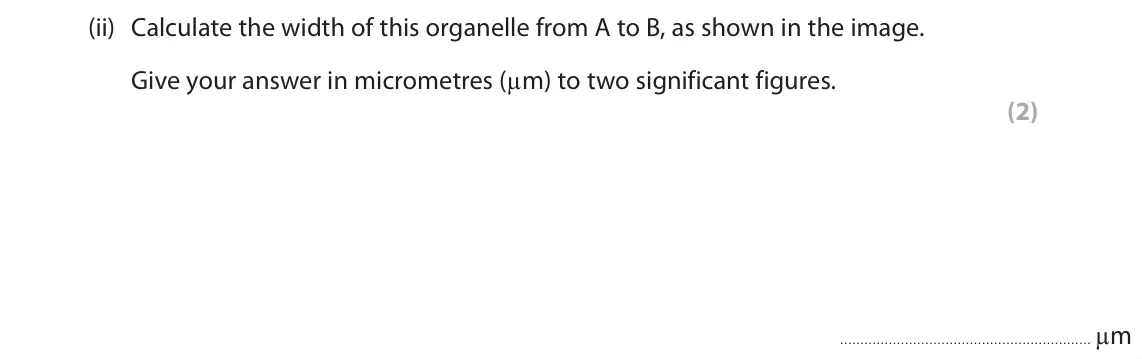
Q1(b)(i)
The whole paper ↗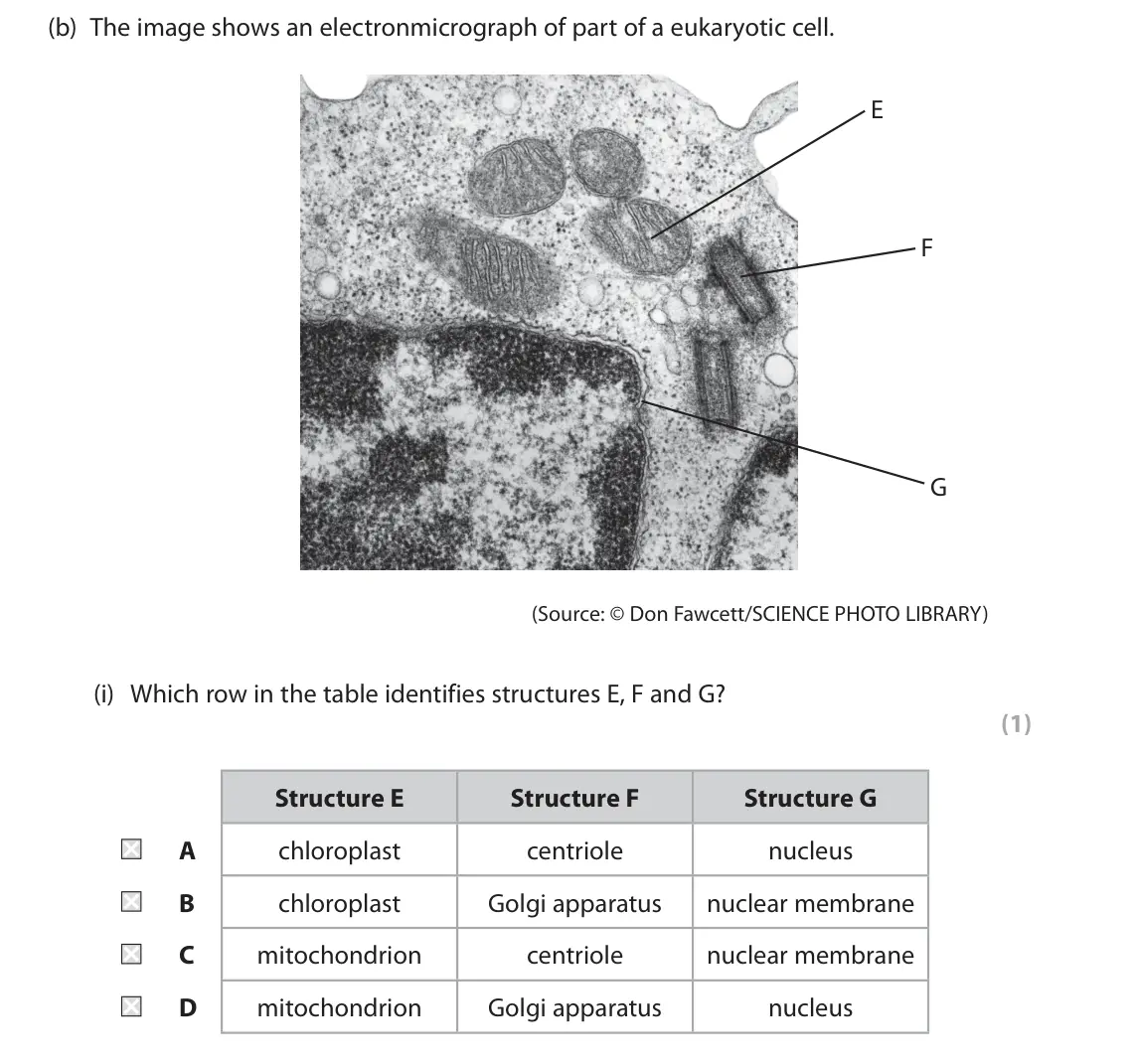
Q1(b)(ii)
The whole paper ↗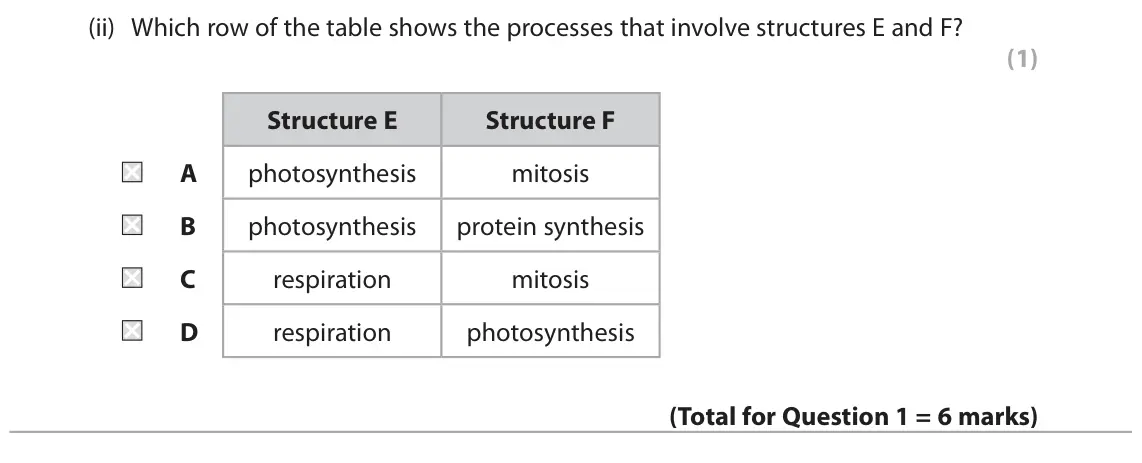
Q3(a)
The whole paper ↗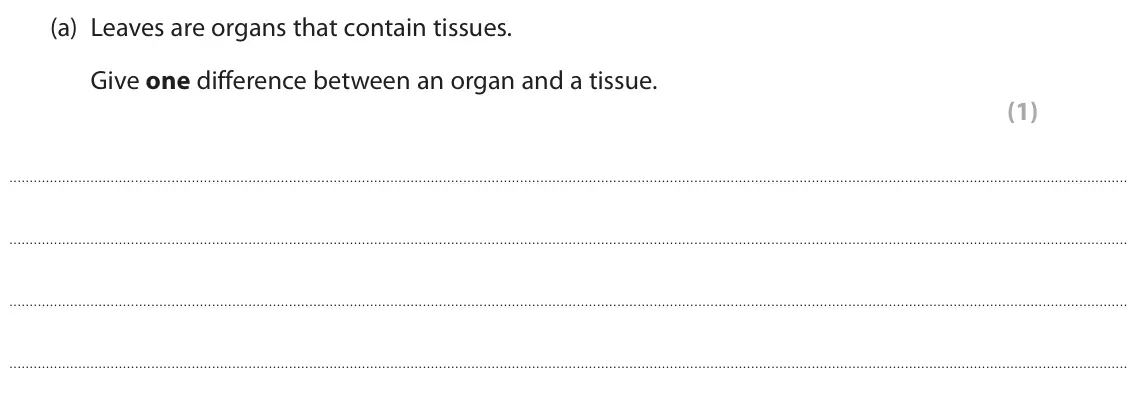
Q4(b)(ii)
The whole paper ↗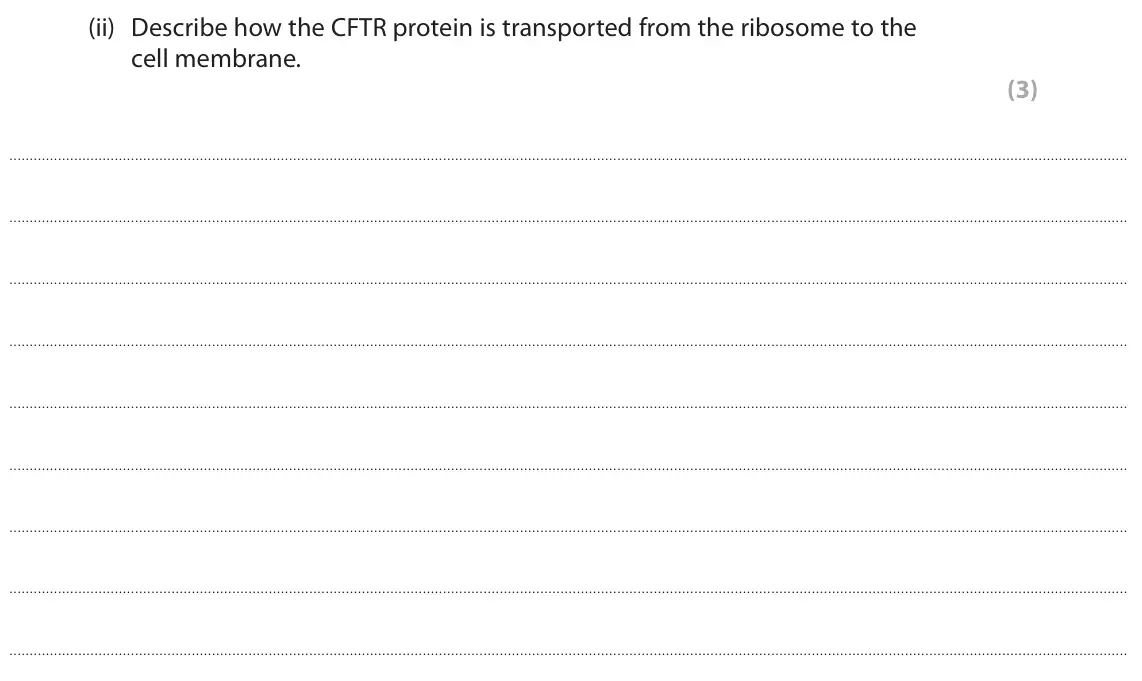
Q8(a)(i)
The whole paper ↗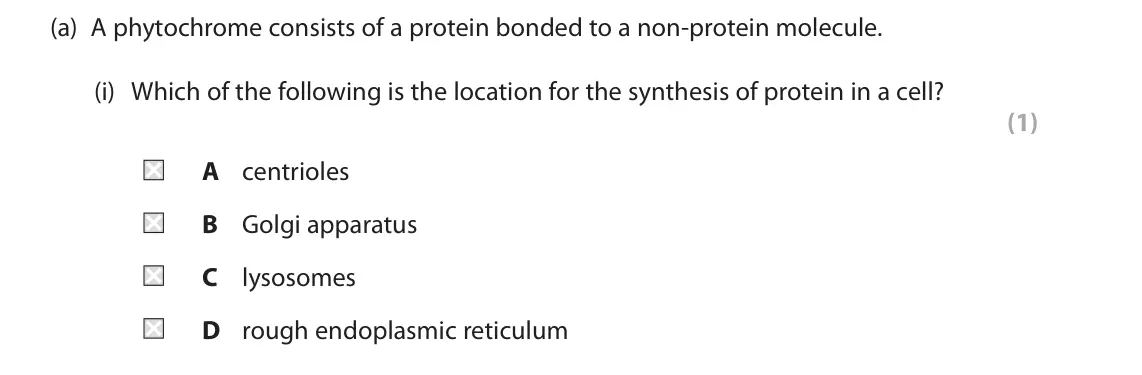
Q8(a)(ii)
The whole paper ↗
Q2(a)(i)
The whole paper ↗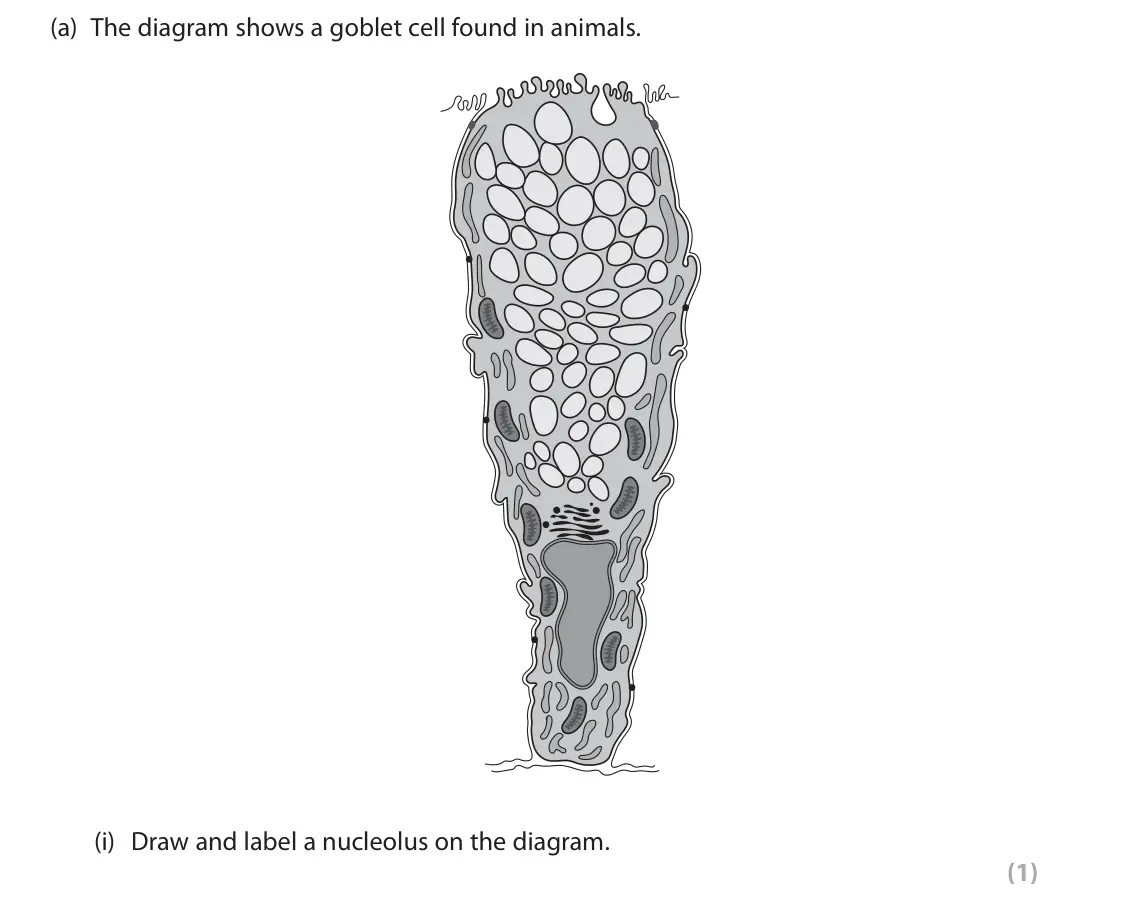
Q2(a)(ii)
The whole paper ↗
Q2(a)(iii)
The whole paper ↗
Q2(b)(i)
The whole paper ↗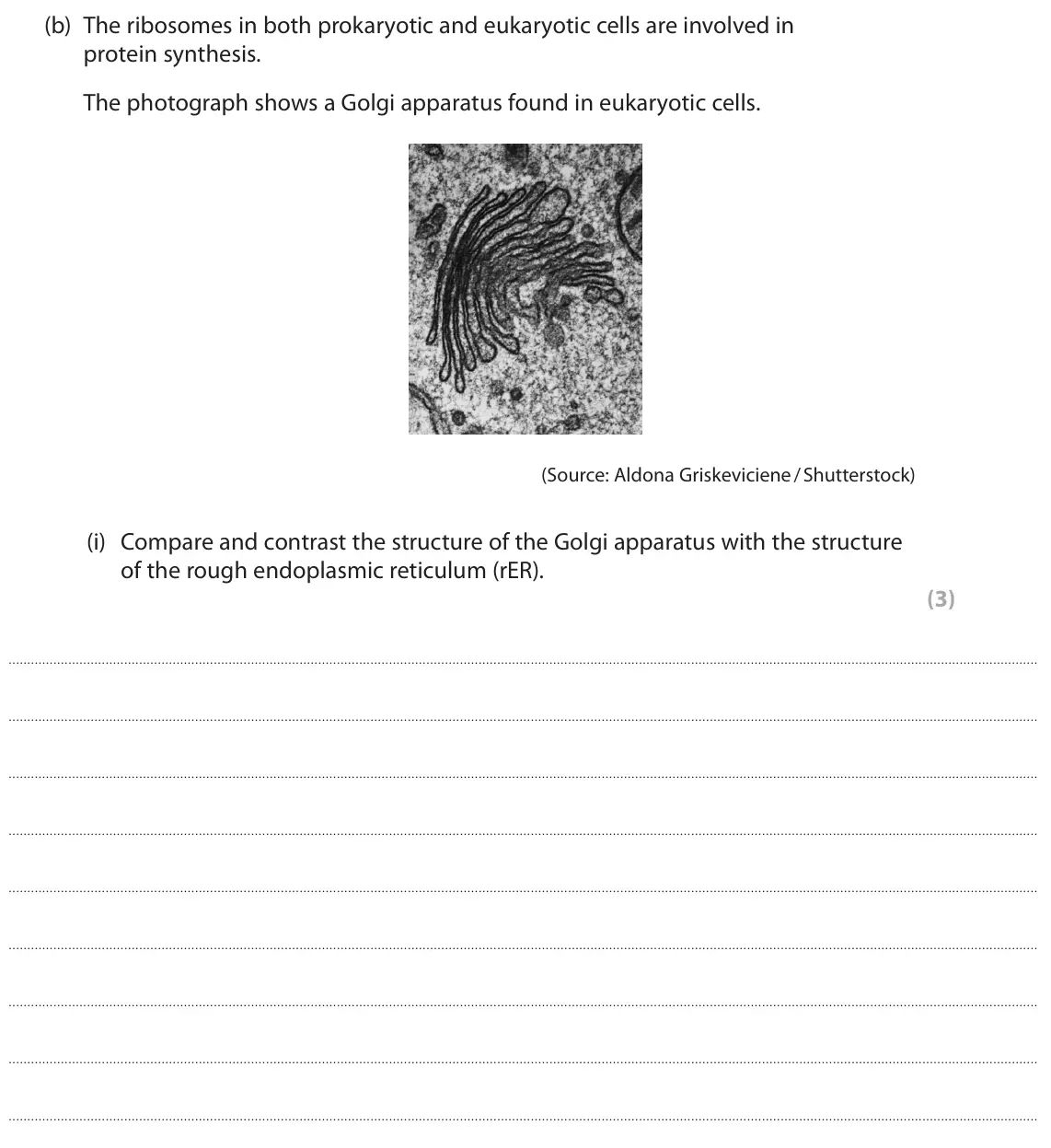
Q2(b)(ii)
The whole paper ↗
Q4(a)(i)
The whole paper ↗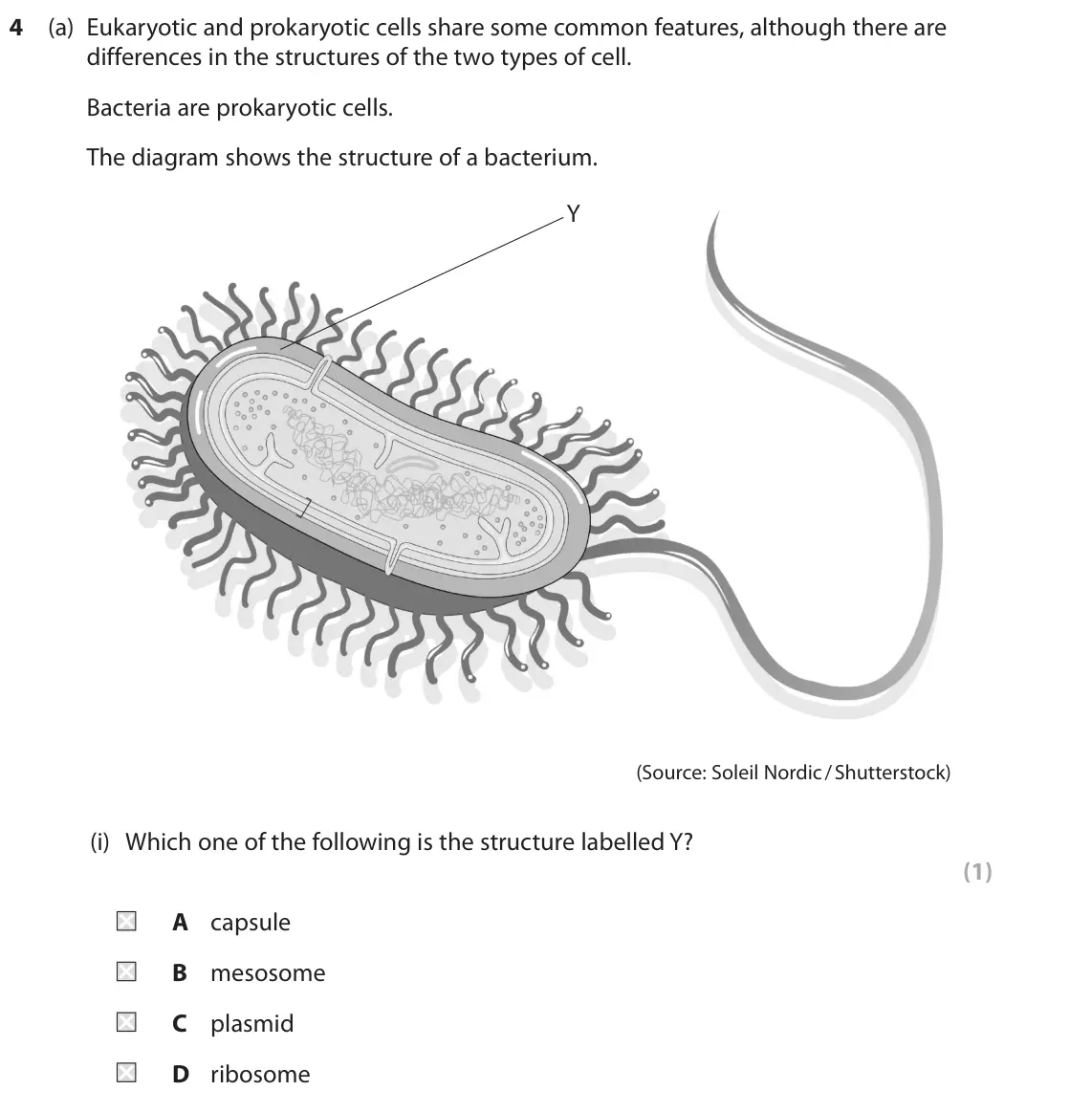
Q4(a)(ii)
The whole paper ↗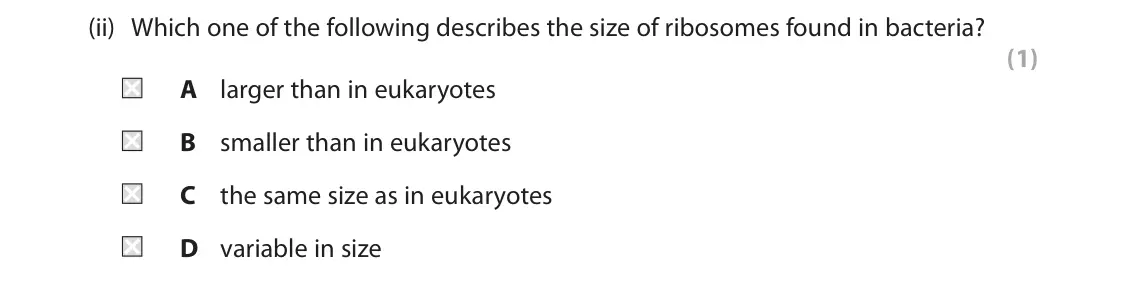
All 65 questions on Cell structure, as a list
- June 2025, Paper 2, Q1(a)(i) (2 marks): Calculate the magnification of this diagram. (2) Answer
- June 2025, Paper 2, Q1(b) (4 marks): Acinar cells produce the digestive enzyme elastase. Elastase is secreted from the acinar cells as a glycoprotein. The polypeptide chain for elastase is formed o
- June 2025, Paper 2, Q5(d) (1 mark): Each muscle fibre (Stage 3) is a cell. Which statement identifies a muscle fibre as a cell? (1) A it contains cytoplasm in which organelles may be present B it
- June 2025, Paper 2, Q7(a) (3 marks): Complete the diagram of a mitochondrion to show the internal structure. Label each structure that is added. (3) matrix outer mitochondrial membrane
- June 2025, Paper 3, Q1(b)(i) (1 mark): State what is meant by the term organ. (1)
- June 2025, AS Paper 2, Q1(a)(i) (2 marks): This organelle is not found in prokaryotic cells. Explain why this type of organelle is present only in eukaryotic cells and not in prokaryotic cells. (2)
- June 2025, AS Paper 2, Q1(a)(ii) (2 marks): Calculate the width of this organelle from A to B, as shown in the image. Give your answer in micrometres (µm) to two significant figures. (2) µm
- June 2025, AS Paper 2, Q1(b)(i) (1 mark): Which row in the table identifies structures E, F and G? (1) Structure E Structure F Structure G A chloroplast centriole nucleus B chloroplast Golgi apparatus n
- June 2025, AS Paper 2, Q1(b)(ii) (1 mark): Which row of the table shows the processes that involve structures E and F? (1) Structure E Structure F A photosynthesis mitosis B photosynthesis protein synthe
- June 2025, AS Paper 2, Q3(a) (1 mark): Leaves are organs that contain tissues. Give one difference between an organ and a tissue. (1)
- June 2024, Paper 1, Q4(b)(ii) (3 marks): Describe how the CFTR protein is transported from the ribosome to the cell membrane. (3)
- June 2024, Paper 2, Q8(a)(i) (1 mark): Which of the following is the location for the synthesis of protein in a cell? (1) A centrioles B Golgi apparatus C lysosomes D rough endoplasmic reticulum
- June 2024, Paper 2, Q8(a)(ii) (1 mark): Which of the following is the location where carbohydrate can be added to a protein molecule in a eukaryotic cell? (1) A cytoplasm B Golgi apparatus C lysosome
- June 2024, AS Paper 2, Q2(a)(i) (1 mark): Draw and label a nucleolus on the diagram. (1)
- June 2024, AS Paper 2, Q2(a)(ii) (1 mark): Name an organelle, other than the nucleus, that contains DNA. (1)
- June 2024, AS Paper 2, Q2(a)(iii) (2 marks): Describe the organisation of DNA in the nucleus of a eukaryotic cell. (2)
- June 2024, AS Paper 2, Q2(b)(i) (3 marks): Compare and contrast the structure of the Golgi apparatus with the structure of the rough endoplasmic reticulum (rER). (3)
- June 2024, AS Paper 2, Q2(b)(ii) (3 marks): Describe the roles of the rER and the Golgi apparatus in the processing of proteins. (3)
- June 2024, AS Paper 2, Q4(a)(i) (1 mark): Which one of the following is the structure labelled Y? (1) A capsule B mesosome C plasmid D ribosome
- June 2024, AS Paper 2, Q4(a)(ii) (1 mark): Which one of the following describes the size of ribosomes found in bacteria? (1) A larger than in eukaryotes B smaller than in eukaryotes C the same size as in
- June 2023, Paper 1, Q7(a) (1 mark): Which of the following are found only in bacterial cells? (1) A cellulose cell wall, plasmid, 70S ribosome B flagellum, plasma membrane, mitochondria C plasma m
- June 2023, Paper 2, Q2(a) (1 mark): Which one of the following statements comparing prokaryotic DNA with human DNA is correct? (1) A prokaryotic DNA is linear and human DNA is circular B prokaryot
- June 2023, Paper 2, Q5(a) (3 marks): The width of the E. coli DNA is 250 times smaller than the width of the bacterium. An image of E. coli, at a magnification of 20 000, had a width of 10 mm. Calc
- June 2023, AS Paper 2, Q1(a) (1 mark): Which of the following groups of organelles are found in both animal and plant cells? (1) A amyloplasts, chloroplasts and Golgi apparatus B amyloplasts, Golgi a
- June 2023, AS Paper 2, Q7(a)(i) (2 marks): The pink colour is partly caused by the presence of prokaryotic microorganisms living in the feathers. These organisms contain a red pigment. Name two structure
- June 2022, Paper 1, Q4(a) (2 marks): State and justify two structures shown in the diagram that indicate that Plasmodium is a eukaryotic organism. (2)
- June 2022, Paper 1, Q4(b)(ii) (5 marks): The primary structure of this protein is then converted into a tertiary structure and modified by organelles in the cell. Describe the role of the organelles in
- June 2022, Paper 1, Q6(a) (2 marks): Draw and label a mitochondrion. (2)
- June 2022, Paper 2, Q8(a) (1 mark): Which row identifies the type of DNA found in prokaryotic cells? (1) Plasmid DNA is Chromosomal DNA is A double‑stranded double‑stranded B double‑stranded singl
- June 2022, Paper 2, Q8(b)(i) (1 mark): Name two other organelles that are bound by a single membrane. (1)
- June 2022, Paper 2, Q8(b)(ii) (5 marks): The table shows the percentage of cell membranes that make up Golgi apparatus and rER in the cells from two organs. Percentage of cell membranes (%) Organ Golgi
- June 2022, Paper 2, Q8(c) (2 marks): In one study, measurements were taken of a single Golgi apparatus. The measurements were: • total number of cisternae = 6 • height of each cisterna = 15 nm • di
- June 2022, AS Paper 2, Q1(b)(i) (2 marks): Describe what is meant by the term tissue. (2)
- June 2022, AS Paper 2, Q5(a) (1 mark): The DNA in Staphylococcus aureus is (1) A double‑stranded and found in the cytoplasm B double‑stranded and found in a nucleus C single‑stranded and found in the
- June 2022, AS Paper 2, Q5(b)(i) (4 marks): This polypeptide is processed inside the cells to produce the active enzyme. The enzyme is then secreted from the cells. Describe how the cells process this pol
- November 2021, Paper 2, Q8(a)(iii) (2 marks): Yeast cells can have many small mitochondria. Calculate the magnification of the diagram if the maximum length of the mitochondrion is 0.5 µm. (2) Answer
- November 2021, AS Paper 2, Q1(a)(i) (1 mark): Label the nucleolus on the photograph. (1) (Source: AL1379899 – Jose Luis Calvo / Shutterstock / PAL)
- November 2021, AS Paper 2, Q1(a)(ii) (1 mark): The nucleolus is not found in prokaryotic cells because they (1) A do not contain DNA B do not have a nucleus C only contain RNA D only contain single‑stranded
- November 2021, AS Paper 2, Q6(a) (1 mark): The whole heart contains cardiac muscle tissue. The whole heart is an organ. Give one difference between a tissue and an organ. (1)
- October 2020, Paper 1, Q1(a) (1 mark): Protein synthesis in eukaryotic cells occurs in (1) A 70S ribosomes in the nucleus B 70S ribosomes on the endoplasmic reticulum C 80S ribosomes in the nucleus D
- October 2020, Paper 1, Q1(b)(i) (3 marks): Many of the proteins synthesised become extracellular enzymes. Describe what happens to these proteins following the process of translation until they are relea
- October 2020, Paper 2, Q6(c)(i) (2 marks): Give two functions of the Golgi apparatus. (2)
- October 2020, AS Paper 2, Q1(a) (3 marks): Complete the diagram by drawing and labelling the cell membrane, a mesosome and a plasmid. (3)
- October 2020, AS Paper 2, Q1(b) (1 mark): In prokaryotic cells, ribosomes are (1) A absent B larger than ribosomes in eukaryotic cells C smaller than ribosomes in eukaryotic cells D the same size as rib
- October 2020, AS Paper 2, Q1(c) (1 mark): Some bacteria have a capsule that is located (1) A between the cell wall and the cell membrane B in the cytoplasm C inside the cell wall D outside the cell wall
- October 2020, AS Paper 2, Q1(d) (1 mark): Bacterial DNA is (1) A circular and surrounded by a nuclear membrane B circular with no nuclear membrane C linear and surrounded by a nuclear membrane D linear
- October 2020, AS Paper 2, Q3(a)(i) (1 mark): Name the organelle labelled A. (1)
- October 2020, AS Paper 2, Q3(a)(ii) (1 mark): The organelle labelled A is involved in (1) A lipid synthesis B protein synthesis C ribosome production D spindle organisation
- June 2019, Paper 1, Q6(a)(i) (1 mark): Which of the following structures is found in animal cells? (1) A amyloplast B chloroplast C mesosome D ribosome
- June 2019, Paper 1, Q6(b) (2 marks): The photograph shows an electron micrograph of a mitochondrion from a liver cell. Magnification ×20 000 Calculate the maximum actual length of this mitochondrio
- June 2019, AS Paper 2, Q2(c)(ii) (4 marks): Scientists took blood samples from infected red squirrels and analysed them using an electron microscope. Describe the features that could be used to identify t
- June 2018, Paper 1, Q3(c)(ii) (2 marks): Interferon can be used to treat people with viral hepatitis. Interferon can be made by animal cells or by genetically modified bacteria. The table shows informa
- June 2018, Paper 1, Q6(a) (1 mark): Most cases of TB are caused by infection with Mycobacterium tuberculosis (M. tuberculosis). The ribosomes of bacteria are (1) A larger than the ribosomes in euk
- June 2018, AS Paper 2, Q2(a) (3 marks): Name the parts of the cell labelled A, B and C. (3) A B C
- June 2018, AS Paper 2, Q2(b) (4 marks): Describe the roles of parts B and C in the formation and transport of extracellular enzymes. (4)
- June 2018, AS Paper 2, Q2(d) (1 mark): Eukaryotic and prokaryotic cells both produce enzymes. Which of the following pairs of statements is true for eukaryotic and prokaryotic cells? (1) Similarity D
- June 2017, Paper 1, Q3(a) (3 marks): Describe how DNA is organised in a bacterial cell. (3)
- June 2017, Paper 3, Q6(b) (9 marks): The ratio of lipid to protein in a cell surface membrane is approximately 1:1. Scientists have studied the proteins present within human cells. Proteins in a ce
- June 2017, Paper 3, Q7(b) (2 marks): Give reasons why ‘humble microbes’, such as bacteria, are considered less complex than eukaryotes (paragraph 4). (2)
- June 2017, Paper 3, Q7(h) (2 marks): Describe the structure of the ‘protein-synthesis machinery’ in bacteria (paragraph 20). (2)
- June 2017, AS Paper 2, Q4(a) (4 marks): The photograph shows P. falciparum in a sample of human blood. P. falciparum Describe how scientists could have determined that P. falciparum is a eukaryotic or
- June 2017, AS Paper 2, Q4(b)(i) (1 mark): The image of the normal red blood cell labelled in the electron micrograph has a diameter of 2 cm. Which of the following is the actual diameter of this red blo
- June 2017, AS Paper 2, Q7(a)(i) (2 marks): Describe how a tissue differs in structure from a system. (2)
- June 2016, AS Paper 2, Q2(c) (2 marks): There is no nucleus in a mature sieve tube element. Give two reasons why a sieve tube element does not require rough endoplasmic reticulum and ribosomes. (2)
- June 2016, AS Paper 2, Q7(b) (4 marks): Anti-freeze glycoprotein (AFGP) is one type of anti-freeze protein. Messenger RNA coding for AFGP is translated at a ribosome to produce a polypeptide. Describe
Questions, mark schemes and examiner’s reports are © Pearson Edexcel, from their published past papers. Plumi isn’t affiliated with any exam board. Want whole papers? Every Edexcel A-Level Biology A paper.
Rather write your answers by hand on iPad? Plumi marks them against the same mark schemes.