 plumi
Developing and planning a solution: CAIE IGCSE Design and Technology questions
CAIE IGCSE Design and Technology past-paper questions on PD.4 Developing and planning a solution, June 2024 and the 2020 and 2028 specimens, with mark schemes and examiner’s reports where available.
Getting your paper ready…
CAIE IGCSE Design and TechnologyDeveloping and planning a solution268 questions
All papers
All years
More filters
Loading the full question list…
Q1(d)8 marksChallenge
PD.6 Evaluation and testingPD.4 Developing and planning a solution
1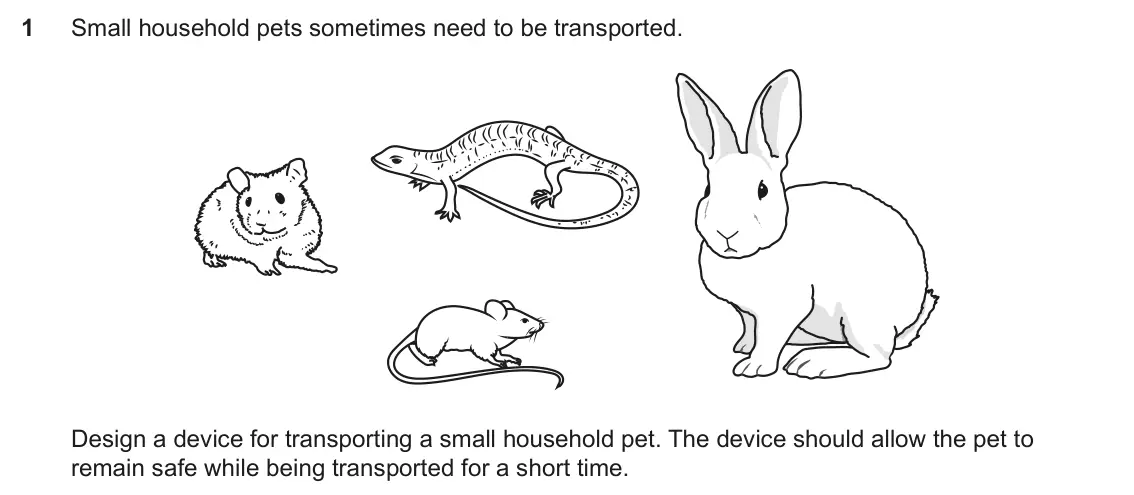

Q2(d)8 marksChallenge
PD.6 Evaluation and testingPD.4 Developing and planning a solution
5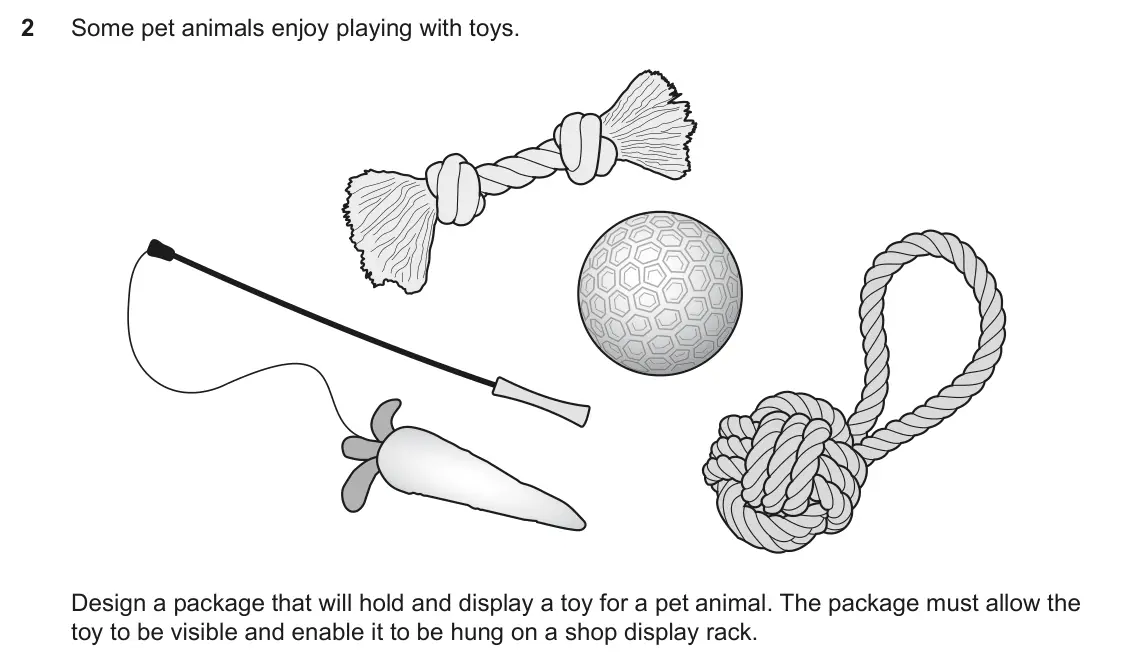

Q3(d)8 marksChallenge
PD.6 Evaluation and testingPD.4 Developing and planning a solution
9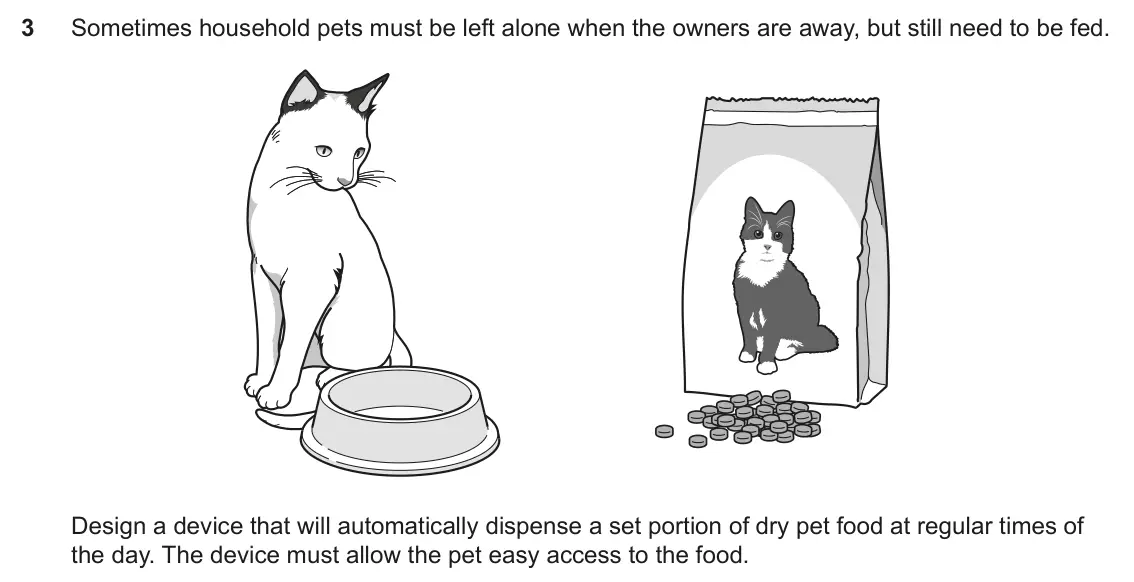

Q3(f)4 marksChallenge
PD.7 Making and health and safetyPD.4 Developing and planning a solution
11
Q3(g)6 marksChallenge
PD.7 Making and health and safetyPD.4 Developing and planning a solution
12
Q11(b)4 marksChallenge
RM.8 Joining and assemblyRM.7 Wastage: cutting, drilling and turning
13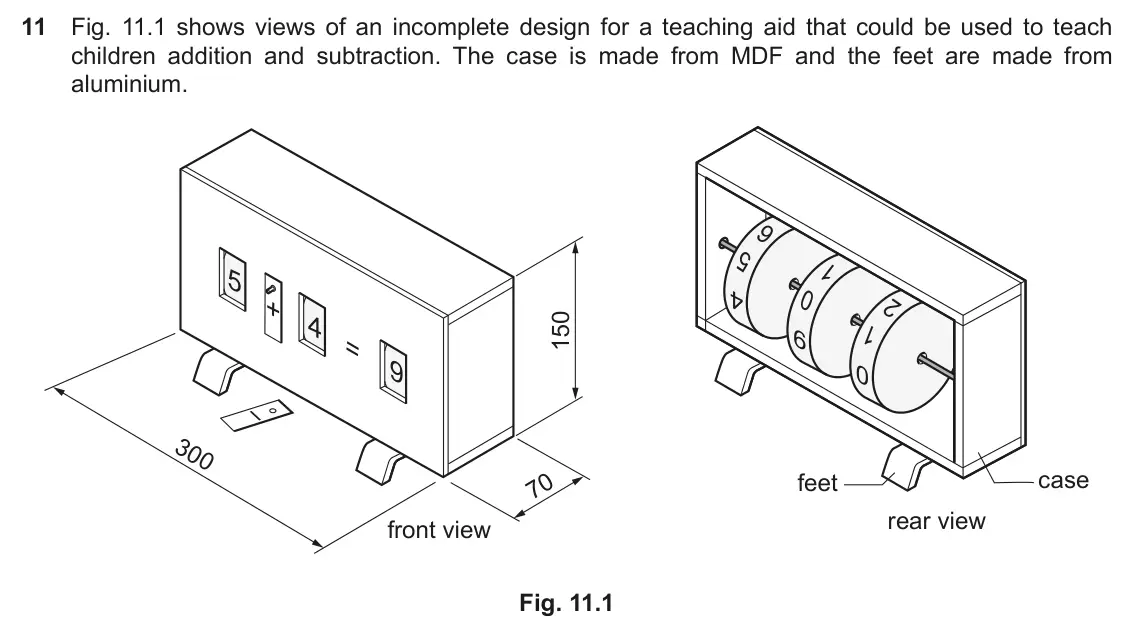
Q11(e)3 marksStretch
RM.8 Joining and assemblyPD.4 Developing and planning a solution
14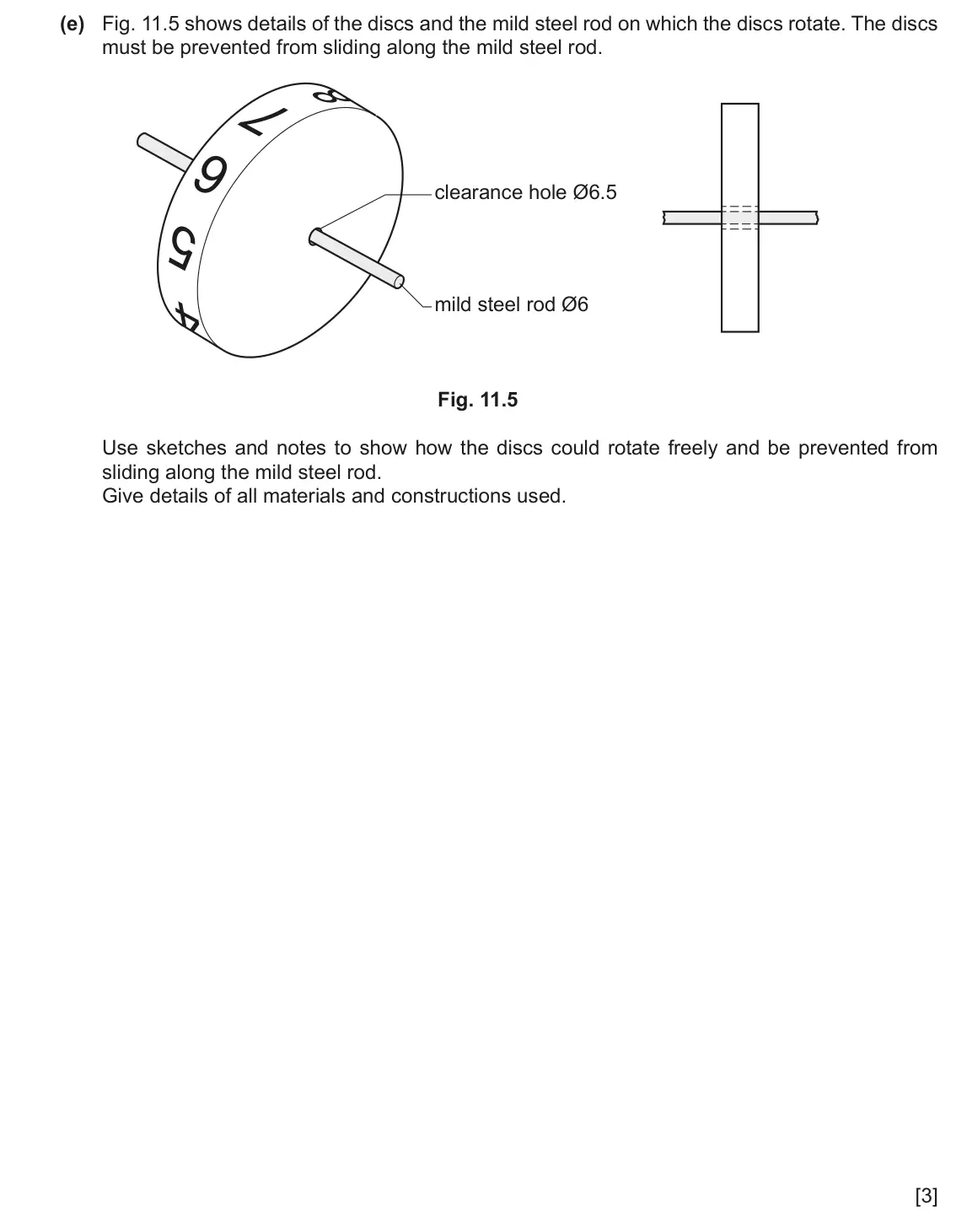
Q13(d)3 marksStretch
RM.8 Joining and assemblyPD.4 Developing and planning a solution
16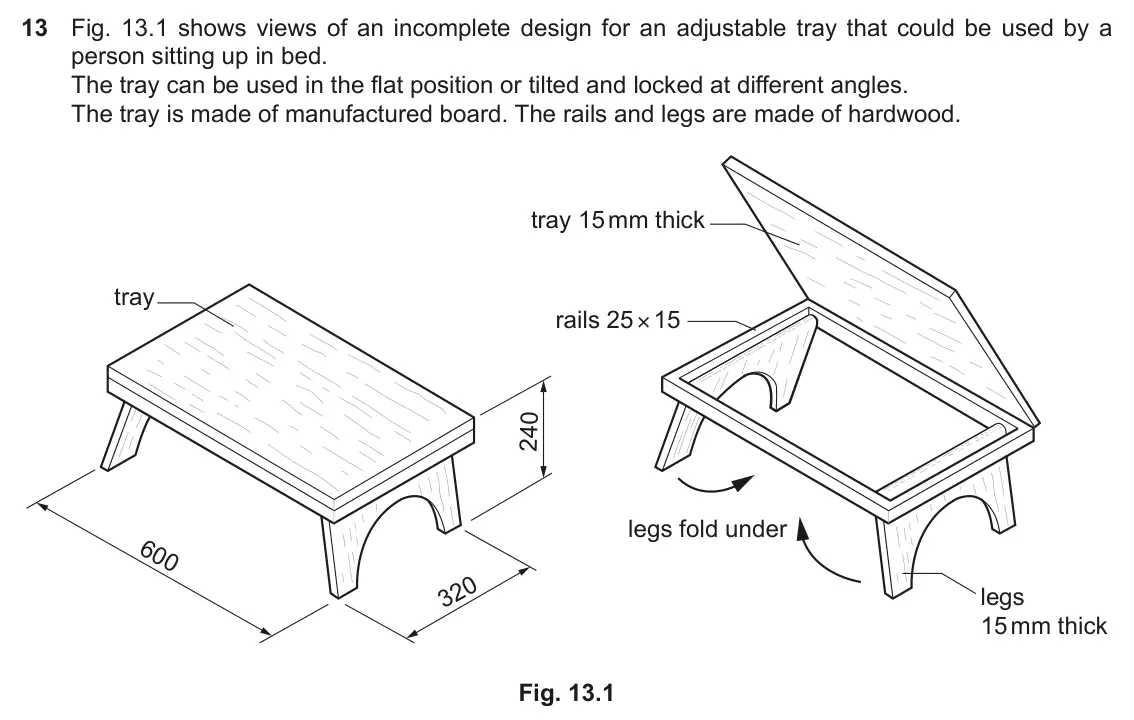
Q13(f)3 marksStretch
RM.8 Joining and assemblyPD.4 Developing and planning a solution
17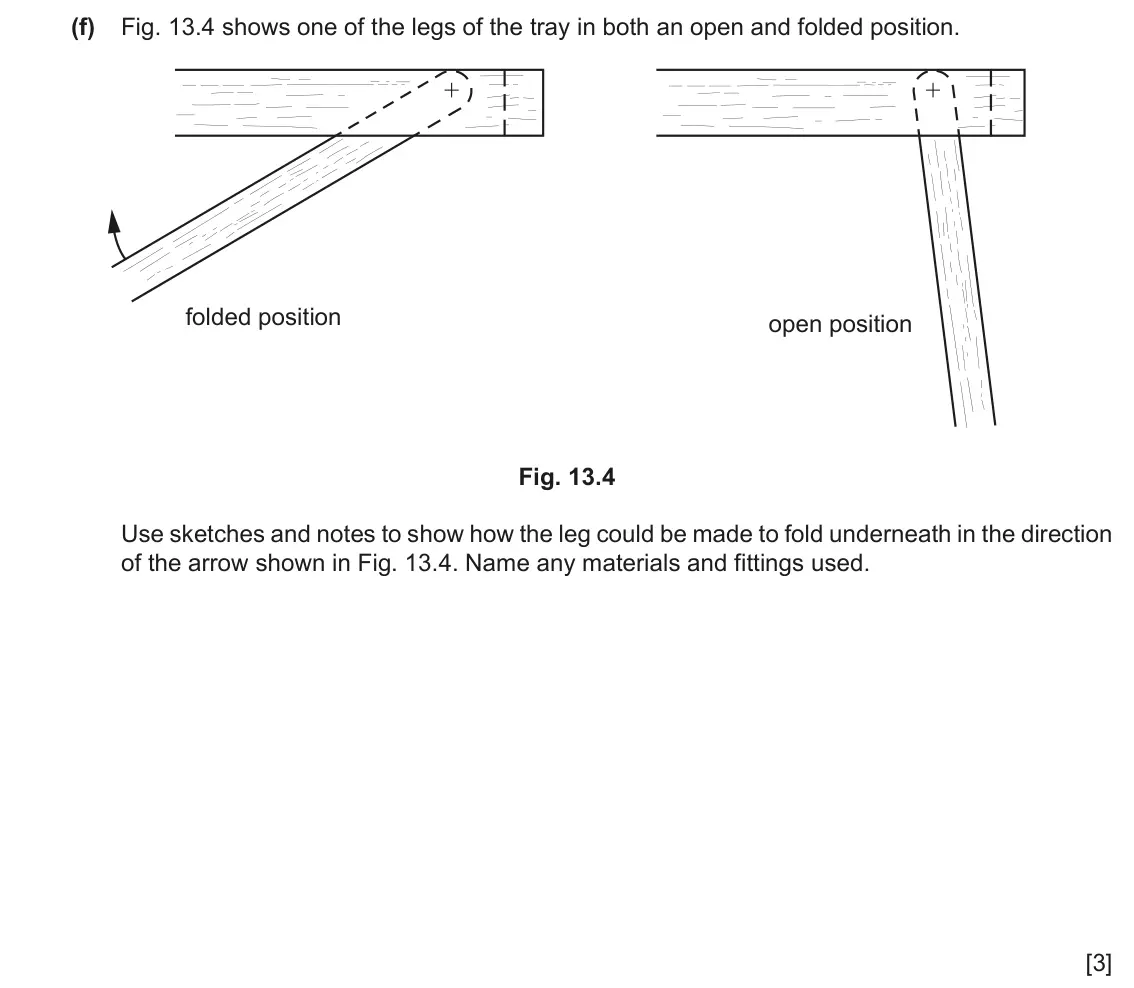
Q13(h)5 marksChallenge
RM.8 Joining and assemblyPD.4 Developing and planning a solution
18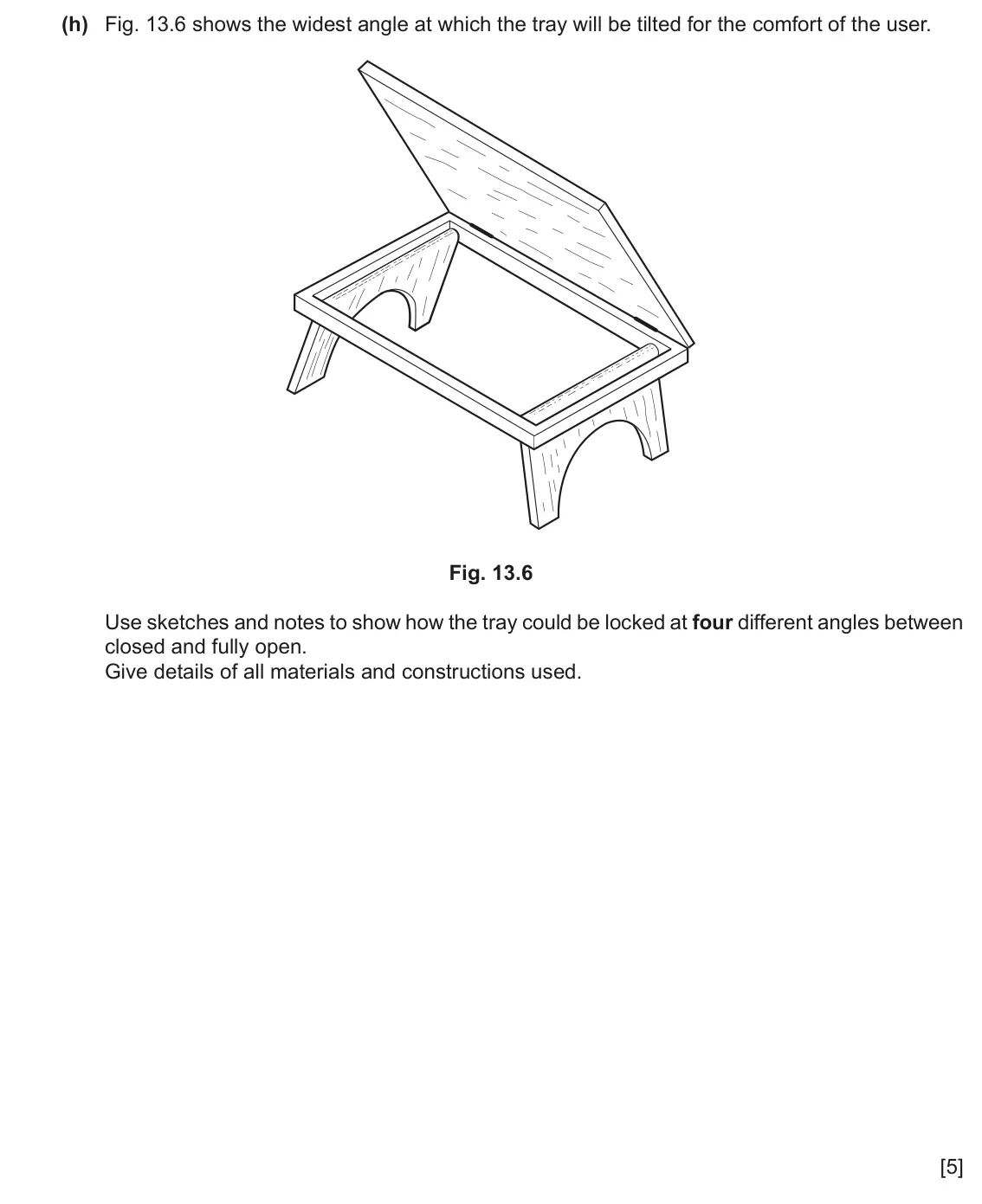







All 42 questions on Developing and planning a solution, as a list
- June 2024, Paper 1, Q1(d) (8 marks): Evaluate your three ideas. Choose one idea to develop further and justify your choice. [8]
- June 2024, Paper 1, Q1(e) (12 marks): Draw, using a method of your own choice, a full solution to the design problem. Include construction details and important dimensions. [12]
- June 2024, Paper 1, Q1(f) (4 marks): Suggest two suitable specific materials for the solution you have drawn in part (e) and give reasons for your choice. [4]
- June 2024, Paper 1, Q1(g) (6 marks): Outline a method that could be used to manufacture one part of your solution drawn in part (e). Include the names of the tools used. [6]
- June 2024, Paper 1, Q2(d) (8 marks): Evaluate your three ideas. Choose one idea to develop further and justify your choice. [8]
- June 2024, Paper 1, Q2(e) (12 marks): Draw, using a method of your own choice, a full solution to the design problem. Include construction details and important dimensions. [12]
- June 2024, Paper 1, Q2(f) (4 marks): Suggest two suitable specific materials for the solution you have drawn in part (e) and give reasons for your choice. [4]
- June 2024, Paper 1, Q2(g) (6 marks): Outline a method that could be used to manufacture one part of your solution drawn in part (e). Include the names of the tools used. [6]
- June 2024, Paper 1, Q3(d) (8 marks): Evaluate your three ideas. Choose one idea to develop further and justify your choice. [8]
- June 2024, Paper 1, Q3(e) (12 marks): Draw, using a method of your own choice, a full solution to the design problem. Include construction details and important dimensions. [12]
- June 2024, Paper 1, Q3(f) (4 marks): Suggest two suitable specific materials for the solution you have drawn in part (e) and give reasons for your choice. [4]
- June 2024, Paper 1, Q3(g) (6 marks): Outline a method that could be used to manufacture one part of your solution drawn in part (e). Include the names of the tools used. [6]
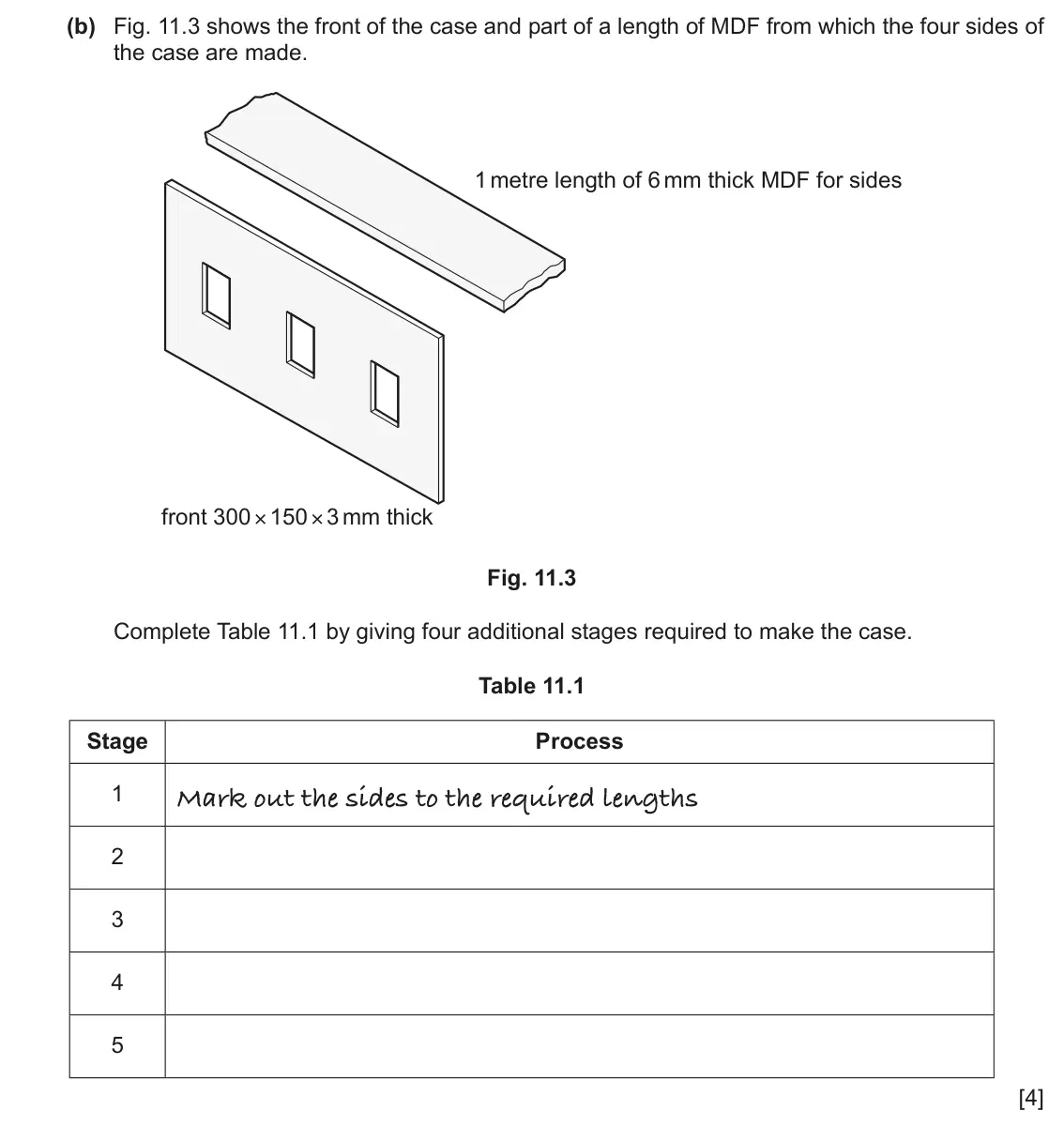
- June 2024, Paper 3, Q11(b) (4 marks): Fig. 11.3 shows the front of the case and part of a length of MDF from which the four sides of the case are made. 1 metre length of 6 mm thick MDF for sides fro
- June 2024, Paper 3, Q11(e) (3 marks): Fig. 11.5 shows details of the discs and the mild steel rod on which the discs rotate. The discs must be prevented from sliding along the mild steel rod. cleara
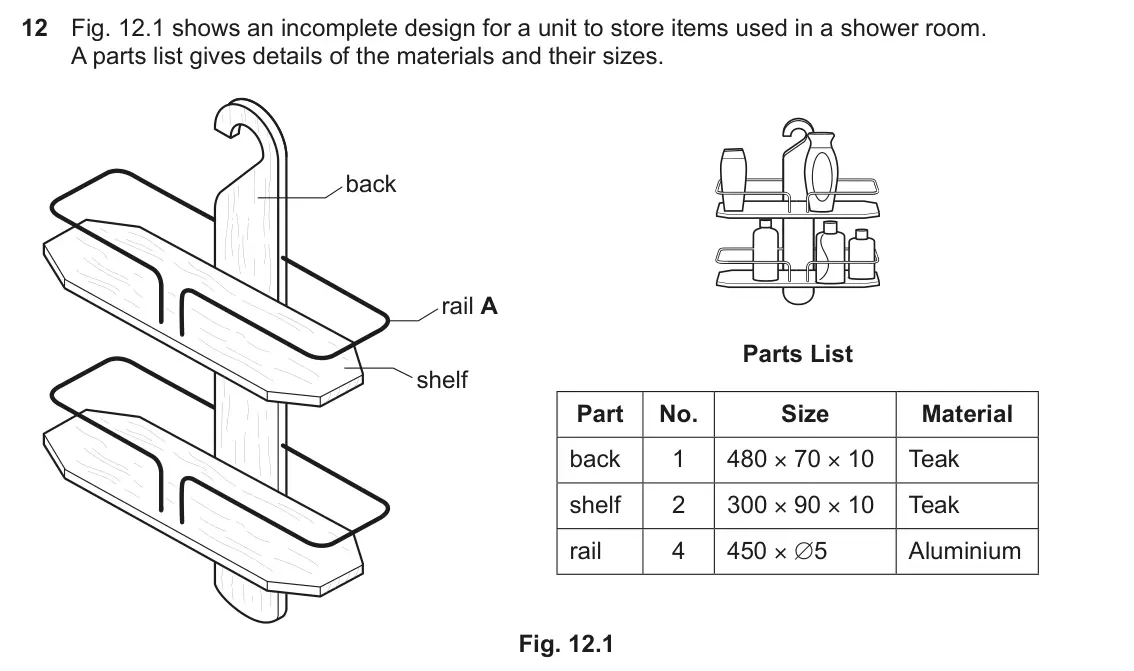
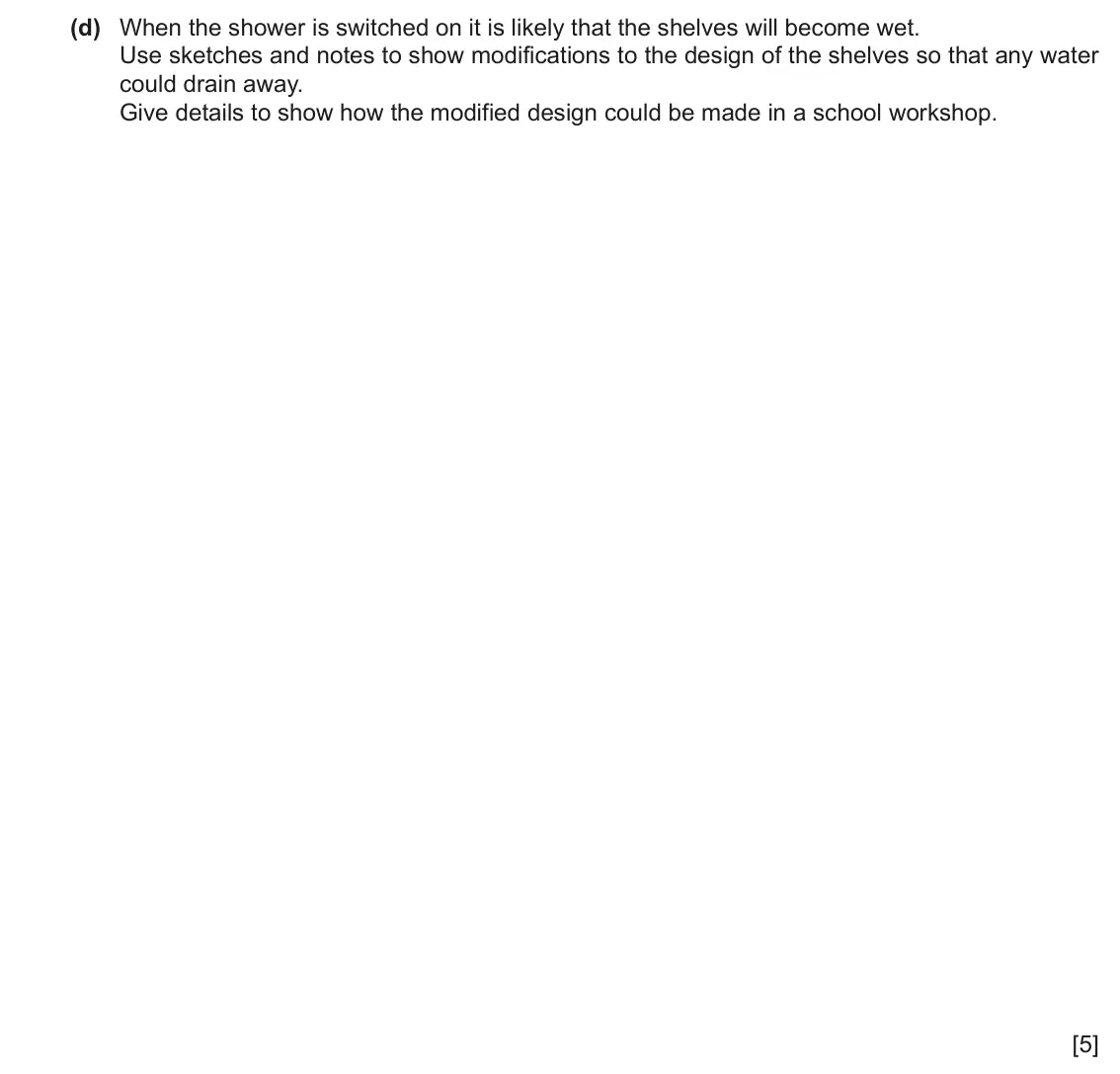
- June 2024, Paper 3, Q12(d) (5 marks): When the shower is switched on it is likely that the shelves will become wet. Use sketches and notes to show modifications to the design of the shelves so that
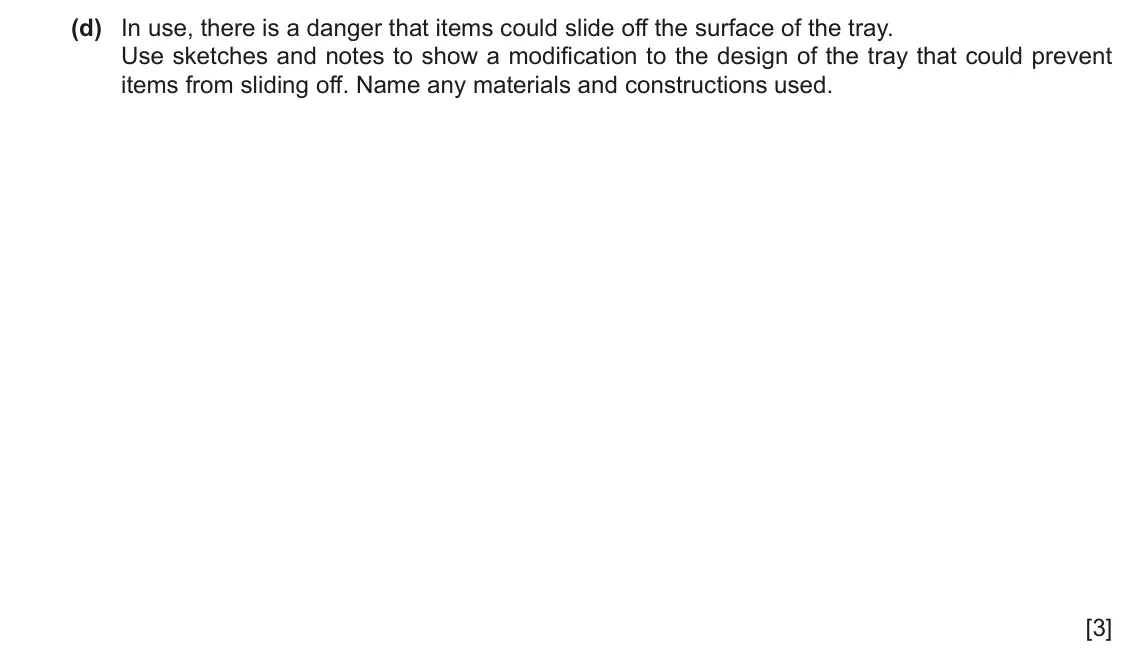
- June 2024, Paper 3, Q13(d) (3 marks): In use, there is a danger that items could slide off the surface of the tray. Use sketches and notes to show a modification to the design of the tray that could
- June 2024, Paper 3, Q13(f) (3 marks): Fig. 13.4 shows one of the legs of the tray in both an open and folded position. folded position open position Fig. 13.4 Use sketches and notes to show how the
- June 2024, Paper 3, Q13(h) (5 marks): Fig. 13.6 shows the widest angle at which the tray will be tilted for the comfort of the user. Fig. 13.6 Use sketches and notes to show how the tray could be lo
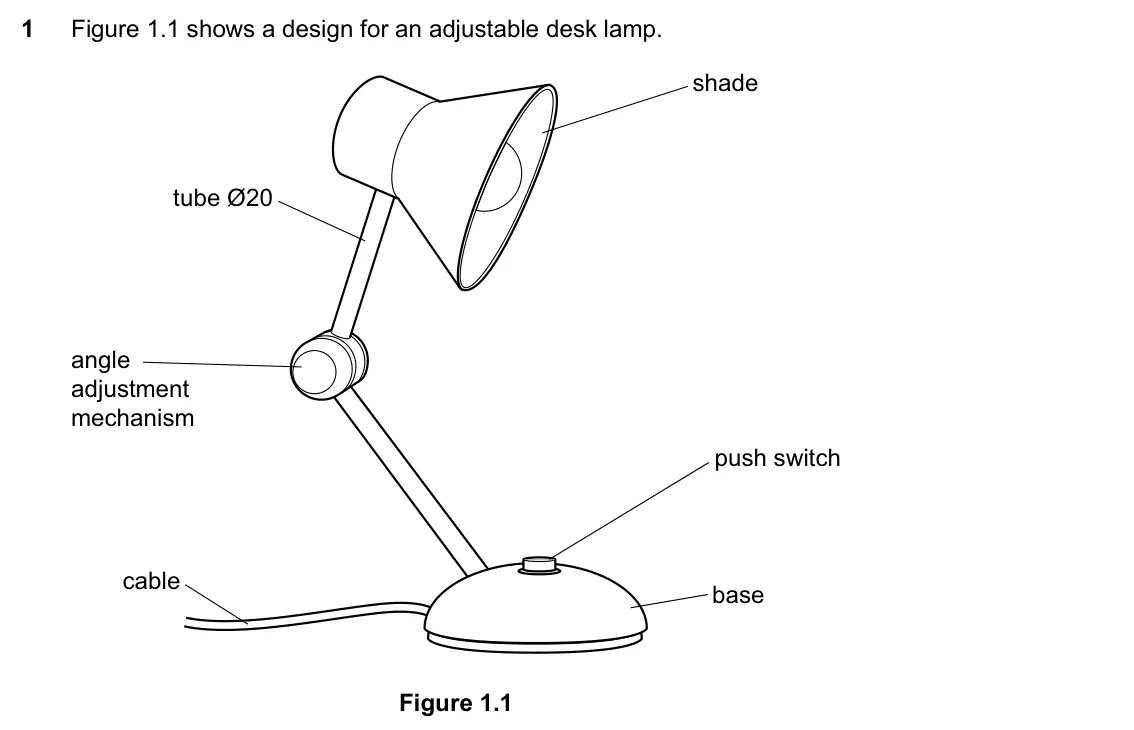
- 2028 specimen, Paper 1 (from 2028), Q1(b) (6 marks): Use sketches and notes to show how the design for the base of the desk lamp could be developed to temporarily attach to a desk. Your idea will be assessed on th
- 2028 specimen, Paper 1 (from 2028), Q1(c) (6 marks): Use sketches and notes to show a design for a suitable angle adjustment mechanism for the desk lamp. Your idea will be assessed on the communication of the idea
- 2028 specimen, Paper 1 (from 2028), Q1(d) (2 marks): State two reasons why a model would be made of the angle adjustment mechanism for the desk lamp before the lamp is manufactured in quantity. 1 2 [2]
- 2028 specimen, Paper 1 (from 2028), Q2(f) (2 marks): Different drawing techniques were used when designing and making the box. Complete Table 2.2 to show two drawing techniques and their uses. Table 2.2 drawing te
- 2020 specimen, Paper 1, Q1(d) (8 marks): Evaluate your three ideas. Choose one idea to develop further and justify your choice. [8]
- 2020 specimen, Paper 1, Q1(e) (12 marks): Draw, using a method of your own choice, a full solution to the design problem. Include construction details and important dimensions. [12]
- 2020 specimen, Paper 1, Q1(f) (4 marks): Suggest two suitable specific materials for the solution you have drawn in part (e) and give reasons for your choice. [4]
- 2020 specimen, Paper 1, Q1(g) (6 marks): Describe a method that could be used to manufacture one part of your solution drawn in part (e). Include the names of the tools used. [6]
- 2020 specimen, Paper 1, Q2(d) (8 marks): Evaluate your three ideas. Choose one idea to develop further and justify your choice. [8]
- 2020 specimen, Paper 1, Q2(e) (12 marks): Draw, using a method of your own choice, a full solution to the design problem. Include construction details and important dimensions. [12]
- 2020 specimen, Paper 1, Q2(f) (4 marks): Suggest two suitable specific materials for the solution you have drawn in part (e) and give reasons for your choice. [4]
- 2020 specimen, Paper 1, Q2(g) (6 marks): Describe a method that could be used to manufacture one part of your solution drawn in part (e). Include the names of the tools used. [6]
- 2020 specimen, Paper 1, Q3(d) (8 marks): Evaluate your three ideas. Choose one idea to develop further and justify your choice. [8]
- 2020 specimen, Paper 1, Q3(e) (12 marks): Draw, using a method of your own choice, a full solution to the design problem. Include construction details and important dimensions. [12]
- 2020 specimen, Paper 1, Q3(f) (4 marks): Suggest two suitable specific materials for the solution you have drawn in part (e) and give reasons for your choice. [4]
- 2020 specimen, Paper 1, Q3(g) (6 marks): Describe a method that could be used to manufacture one part of your solution drawn in part (e). Include the names of the tools used. [6]
- 2020 specimen, Paper 3, Q11(c) (5 marks): Use sketches and notes to show a modification to the table top that would prevent items from slipping off. Include: • names of materials used • methods of const
- 2020 specimen, Paper 3, Q11(d) (5 marks): Use detailed sketches and notes to show how the upright could be fixed securely to the underside of the table top. Additional materials may be used. [5]
- 2020 specimen, Paper 3, Q11(e) (4 marks): Fig. 11.2 shows the joint at A. Add sketches and notes to Fig. 11.2 showing how the joint could be strengthened using additional materials. Include details of s
- 2020 specimen, Paper 3, Q11(f) (6 marks): Use sketches and notes to show how the table top could be adjusted and locked at different heights between 700 mm and 800 mm. Include details of materials, size
- 2020 specimen, Paper 3, Q12(b) (4 marks): Use sketches and notes to show how knock-down (KD) corner blocks could be used to join the top to one side of the computer desk. [4]
- 2020 specimen, Paper 3, Q12(c) (4 marks): Use sketches and notes to show how the keyboard shelf could be made to move in and out as shown in Fig. 12.1. Include details of materials and constructions use
- 2020 specimen, Paper 3, Q13(f) (5 marks): Use sketches and notes to show how one of the trays could be attached to the tube. Your method must allow the tray to be removed quickly and must include fittin
- 2020 specimen, Paper 3, Q13(g) (4 marks): Use sketches and notes to show a design for a base into which the tube will fit permanently. Include details of materials, sizes and construction. [4]
Questions, mark schemes and examiner’s reports are © Cambridge University Press & Assessment, from their published past papers. Plumi isn’t affiliated with any exam board. Want whole papers? CAIE IGCSE Design and Technology past papers.
The Plumi iPad app also offers exam-style questions with AI feedback on your handwritten working.