 plumi
Deforming and reforming: CAIE IGCSE Design and Technology questions
CAIE IGCSE Design and Technology past-paper questions on RM.6 Deforming and reforming, June 2024 and the 2020 and 2028 specimens, with mark schemes and examiner’s reports where available.
Getting your paper ready…
CAIE IGCSE Design and TechnologyDeforming and reforming268 questions
Paper
All papers
Exam
All years
Difficulty
More filters
Exam boards
Cambridge IGCSE
Loading the full question list…



All 12 questions on Deforming and reforming, as a list
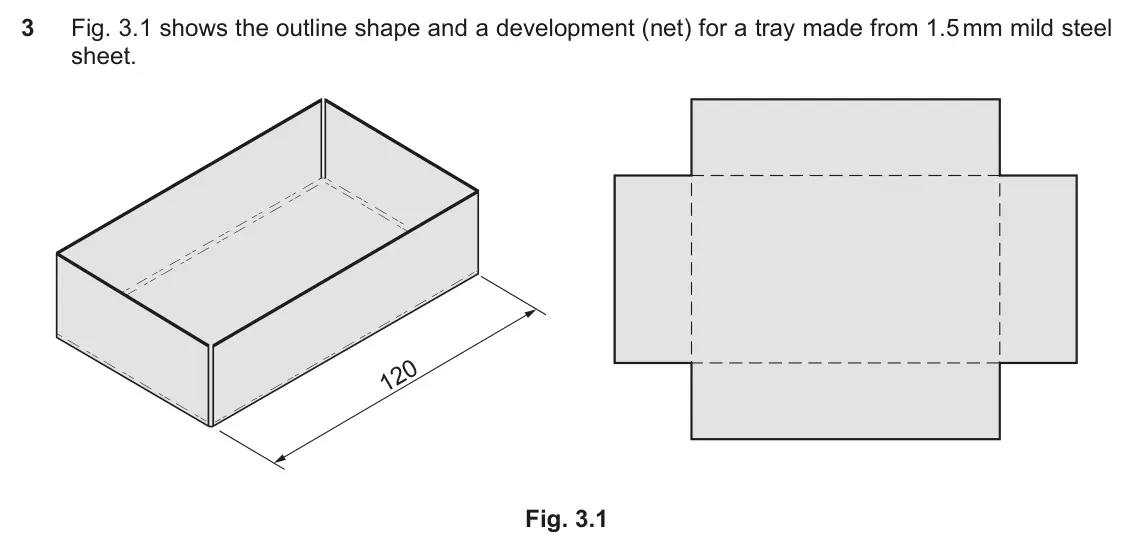
- June 2024, Paper 3, Q3(a) (2 marks): Add flaps to the development (net) shown in Fig. 3.1 that would enable the sides of the tray to be joined correctly when bent to shape. [2]
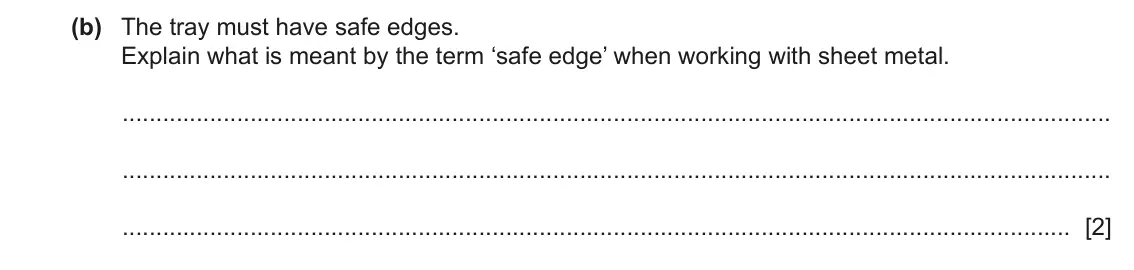
- June 2024, Paper 3, Q3(b) (2 marks): The tray must have safe edges. Explain what is meant by the term ‘safe edge’ when working with sheet metal. [2]
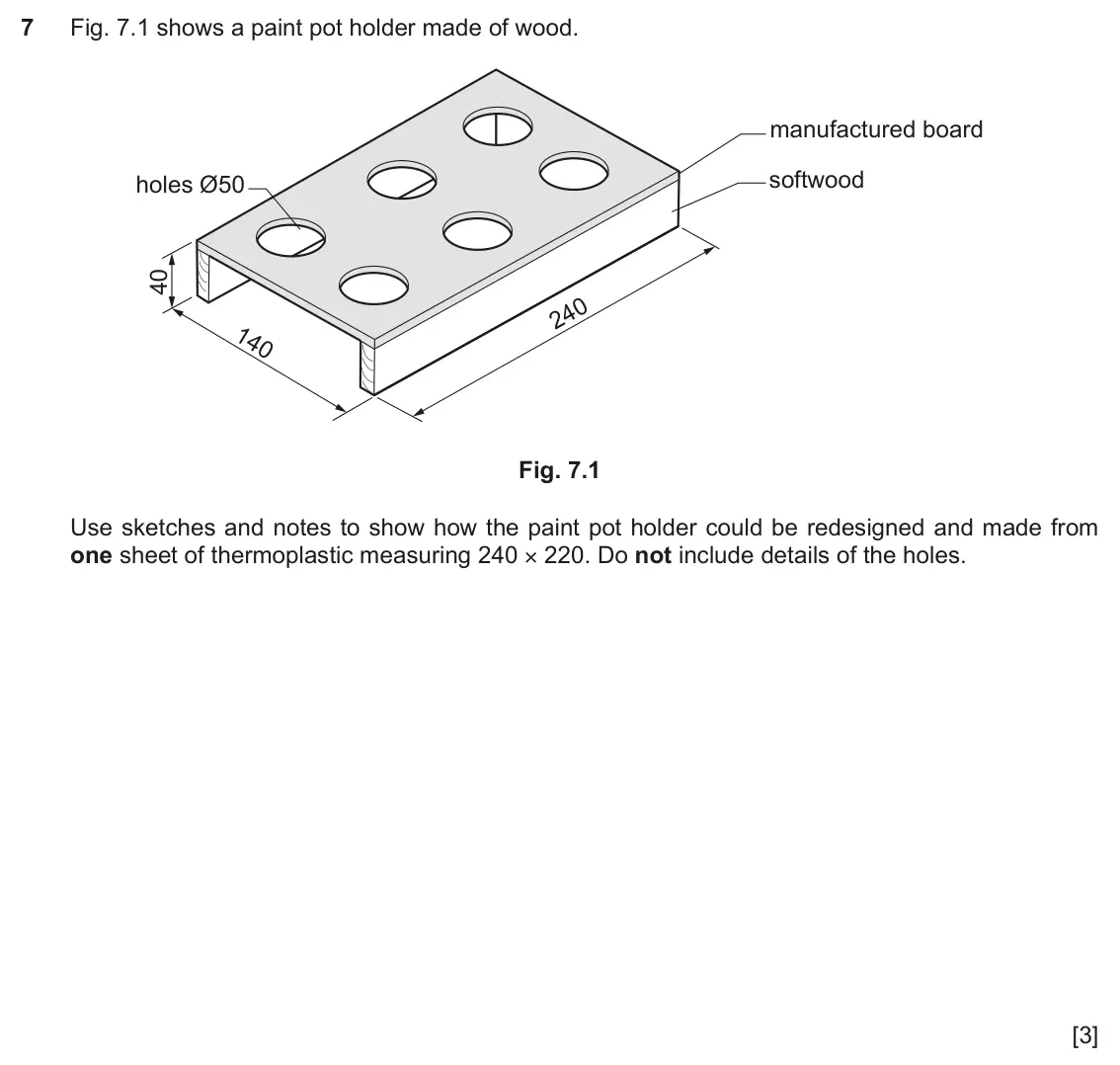
- June 2024, Paper 3, Q7 (3 marks): Fig. 7.1 shows a paint pot holder made of wood. manufactured board softwood holes Ø50 Fig. 7.1 Use sketches and notes to show how the paint pot holder could be
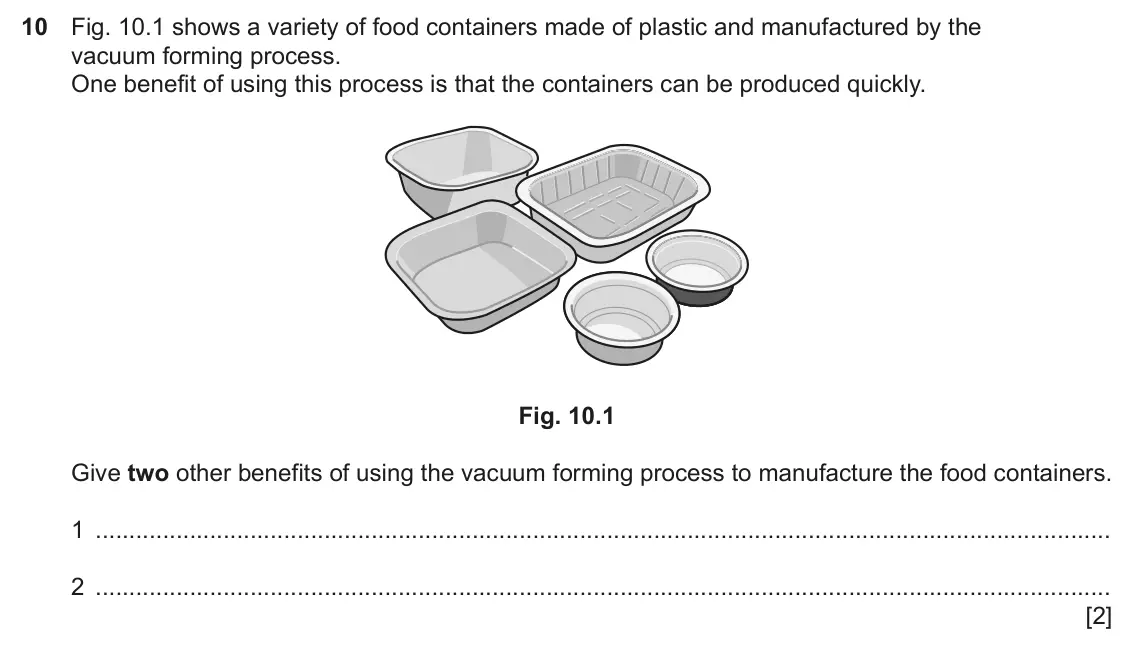
- June 2024, Paper 3, Q10 (2 marks): Fig. 10.1 shows a variety of food containers made of plastic and manufactured by the vacuum forming process. One benefit of using this process is that the conta
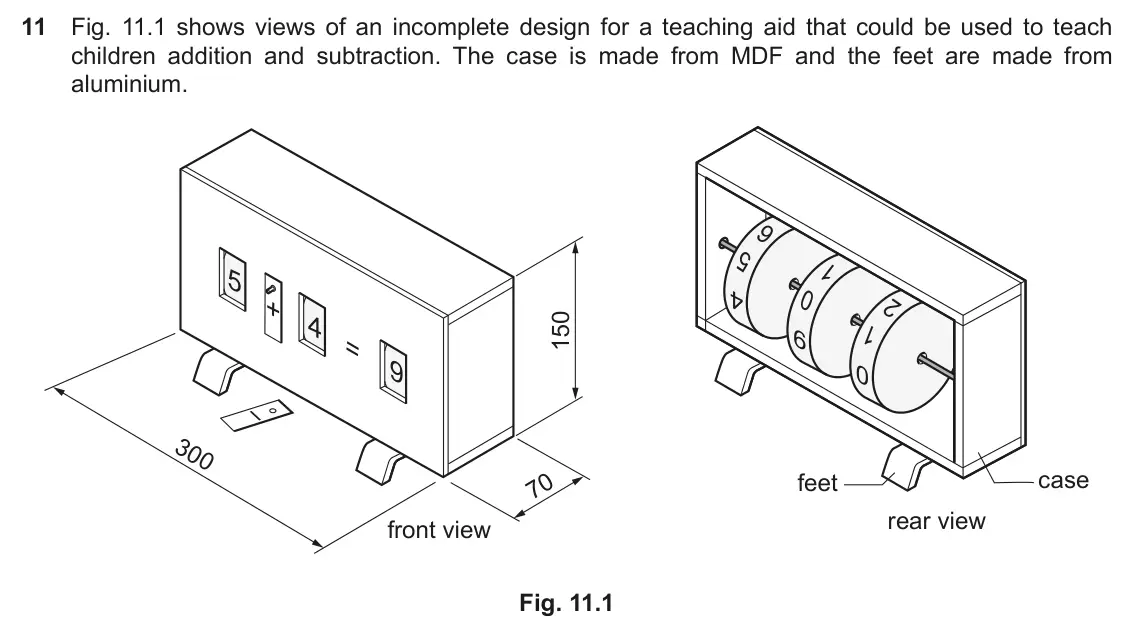
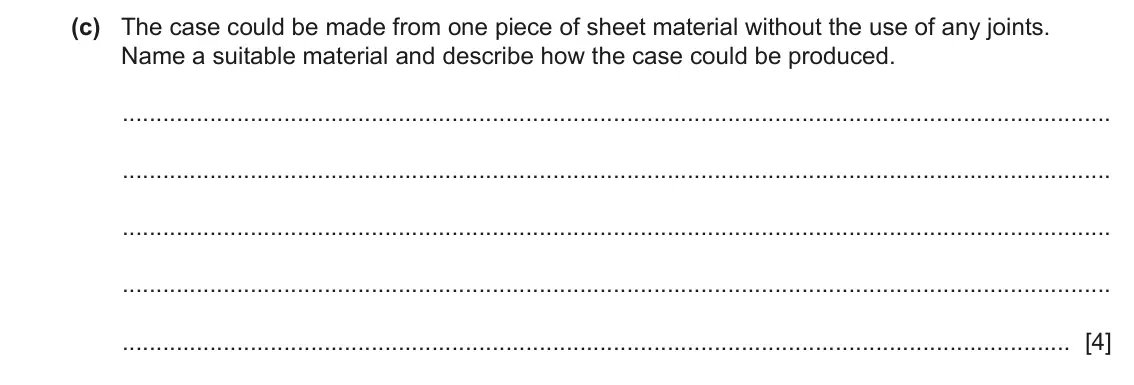
- June 2024, Paper 3, Q11(c) (4 marks): The case could be made from one piece of sheet material without the use of any joints. Name a suitable material and describe how the case could be produced. [4]
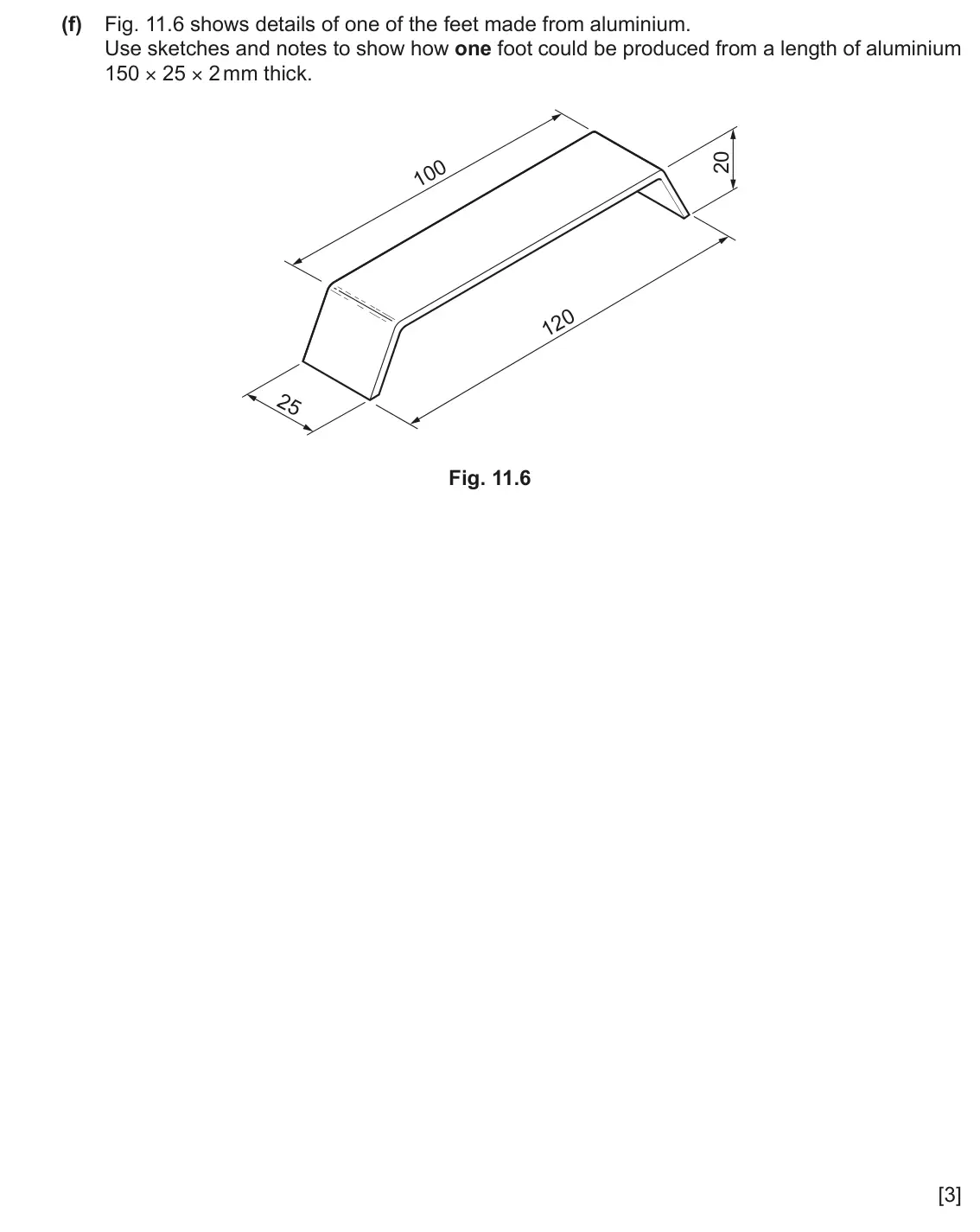
- June 2024, Paper 3, Q11(f) (3 marks): Fig. 11.6 shows details of one of the feet made from aluminium. Use sketches and notes to show how one foot could be produced from a length of aluminium 150 × 2
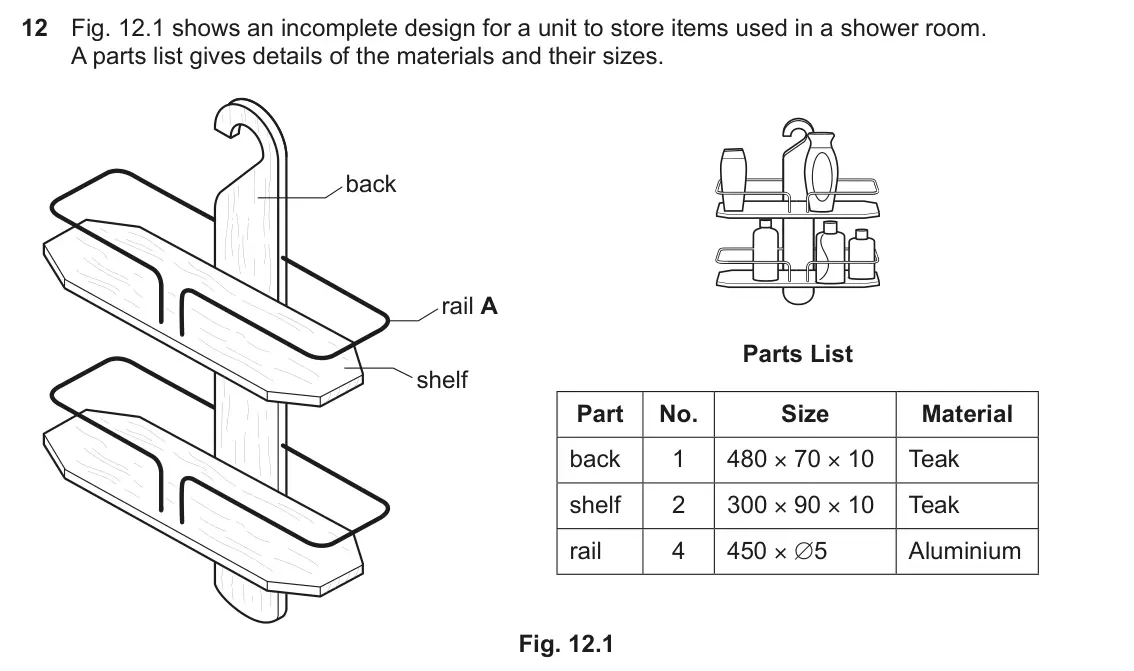
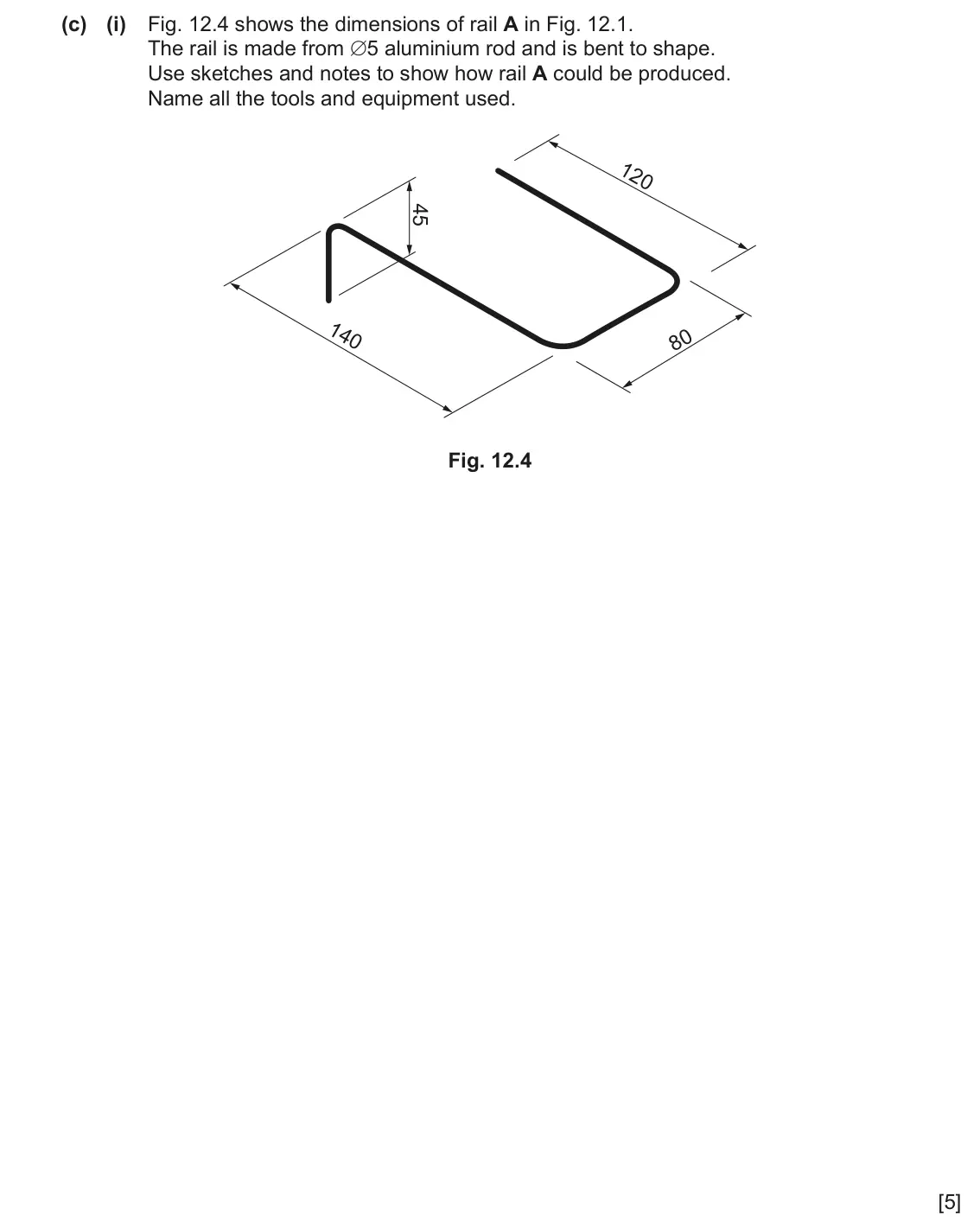
- June 2024, Paper 3, Q12(c)(i) (5 marks): Fig. 12.4 shows the dimensions of rail A in Fig. 12.1. The rail is made from ∅5 aluminium rod and is bent to shape. Use sketches and notes to show how rail A co
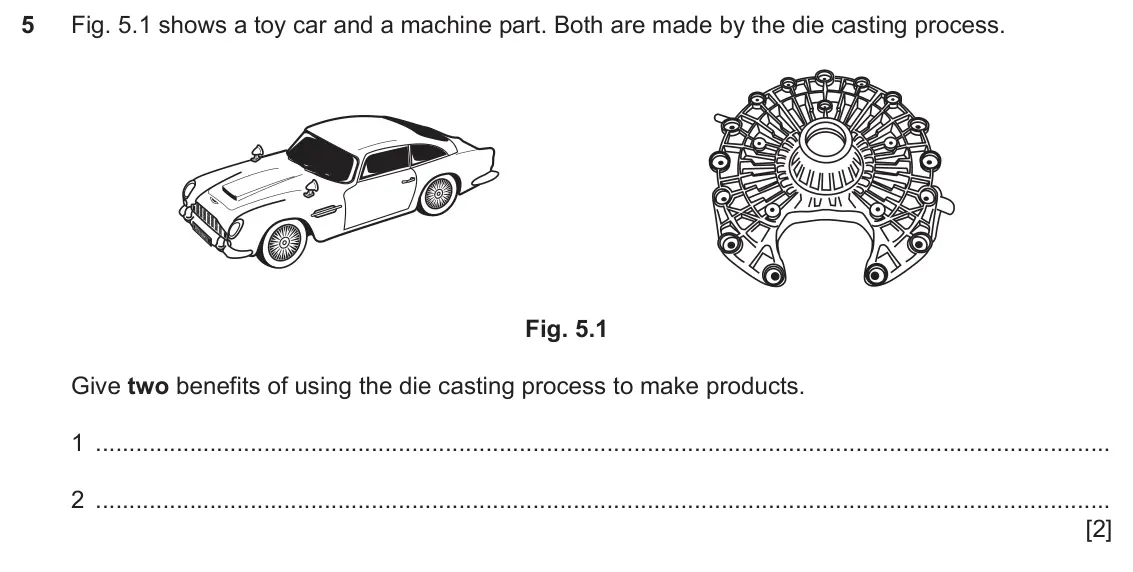
- 2020 specimen, Paper 3, Q5 (2 marks): Fig. 5.1 shows a toy car and a machine part. Both are made by the die casting process. Fig. 5.1 Give two benefits of using the die casting process to make produ
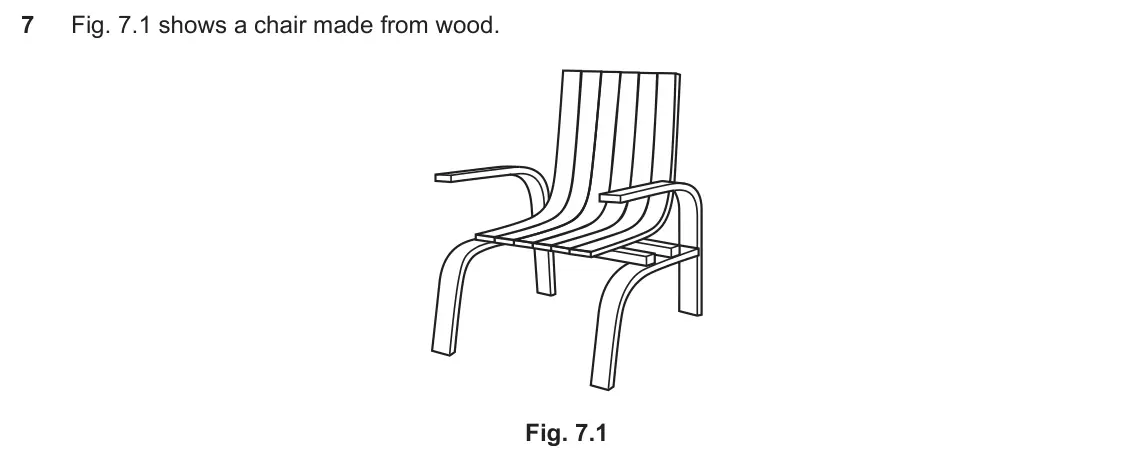
- 2020 specimen, Paper 3, Q7(a) (1 mark): Name the process by which the parts of the chair are shaped. [1]
- 2020 specimen, Paper 3, Q7(b) (1 mark): Give one benefit of this type of process when making the chair. [1]
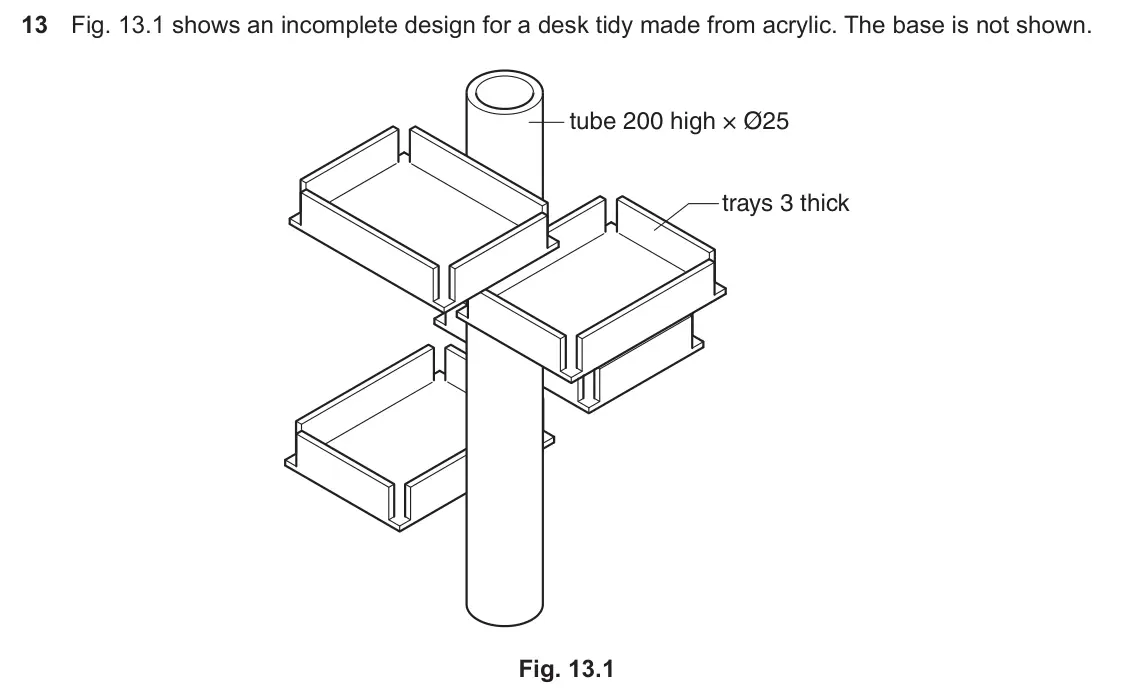
- 2020 specimen, Paper 3, Q13(d) (4 marks): Use sketches and notes to show how the sides of the tray could be bent to shape. Include the following details: • the method of heating the acrylic • use of a f
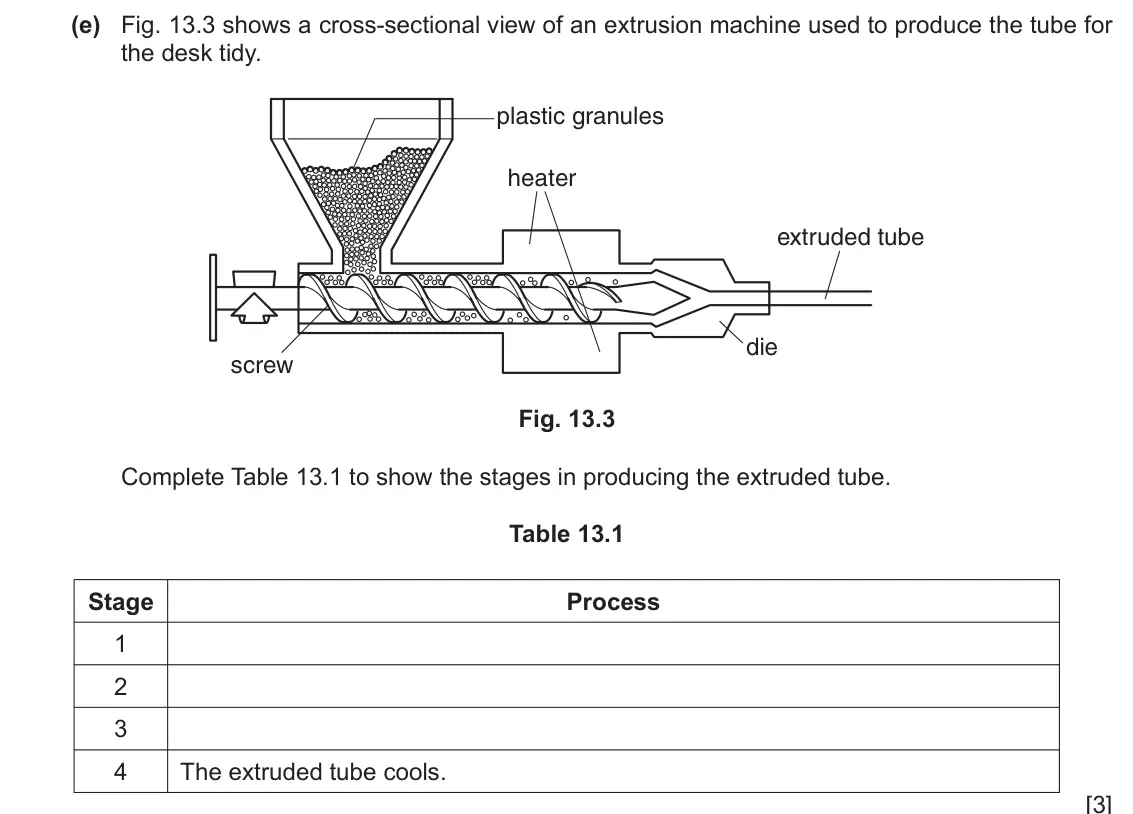
- 2020 specimen, Paper 3, Q13(e) (3 marks): Fig. 13.3 shows a cross-sectional view of an extrusion machine used to produce the tube for the desk tidy. plastic granules heater extruded tube die screw Fig.
Questions, mark schemes and examiner’s reports are © Cambridge University Press & Assessment, from their published past papers. Plumi isn’t affiliated with any exam board. Want whole papers? CAIE IGCSE Design and Technology past papers.
The Plumi iPad app also offers exam-style questions with AI feedback on your handwritten working.