 plumi
Homeostasis: CAIE IGCSE Biology questions
Every CAIE IGCSE Biology exam question on 14.4 Homeostasis, June 2024 and the specimen papers, with its mark scheme and examiner’s report.
Find questions346
Calculations
Q2(a)(i)
The whole paper ↗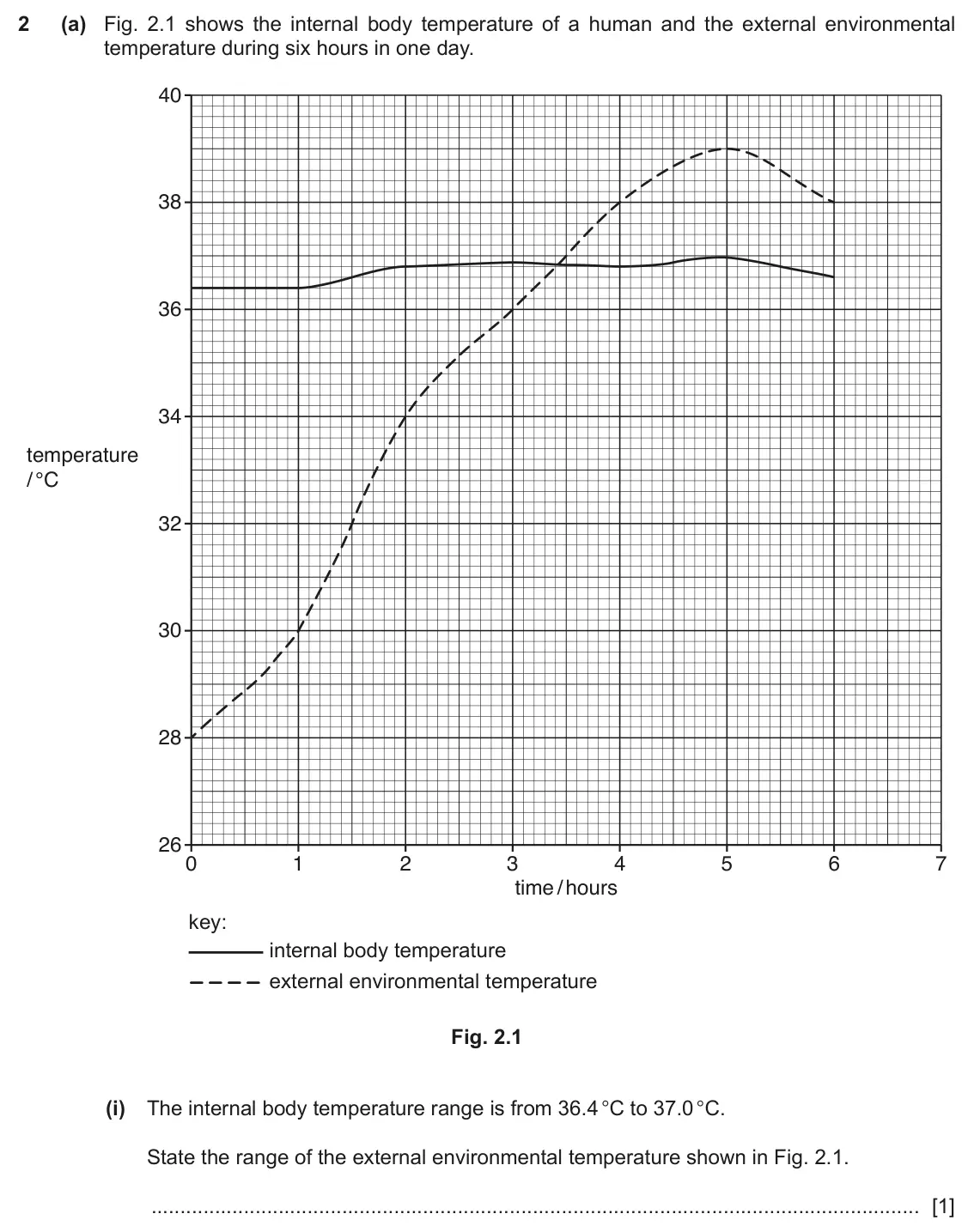
Q2(a)(ii)
The whole paper ↗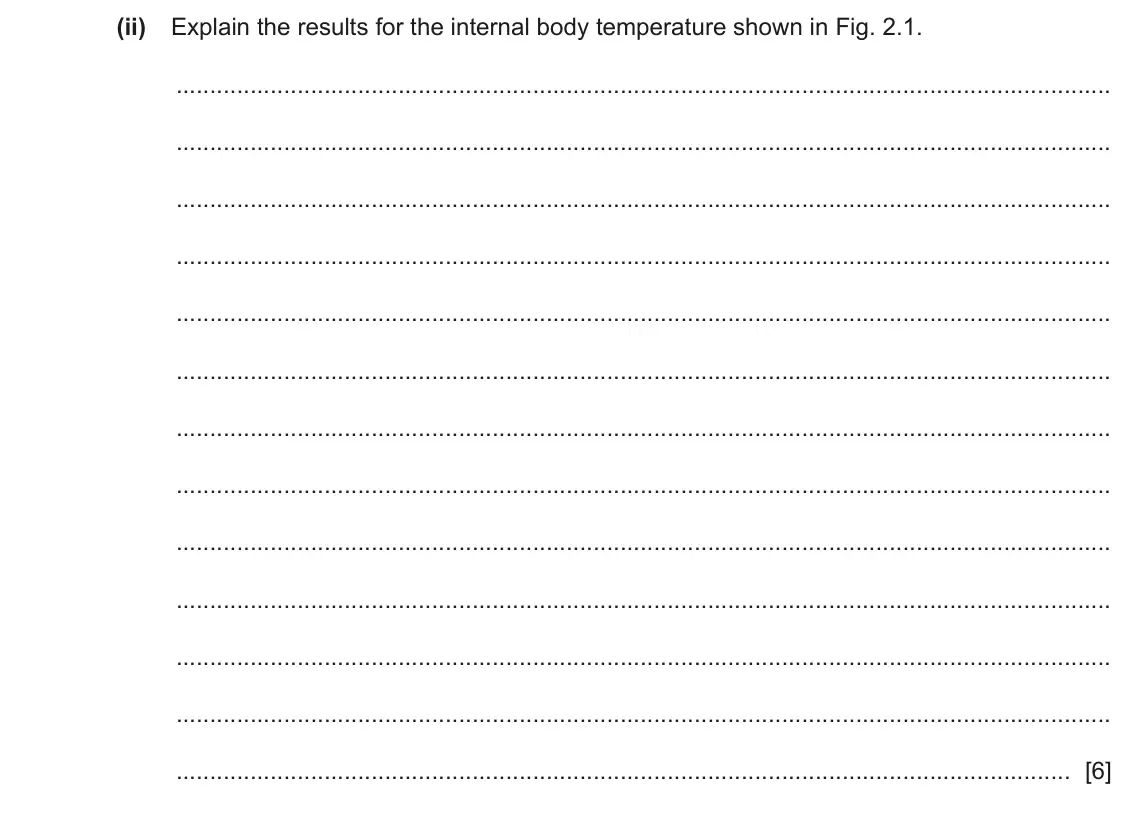
Q2(b)
The whole paper ↗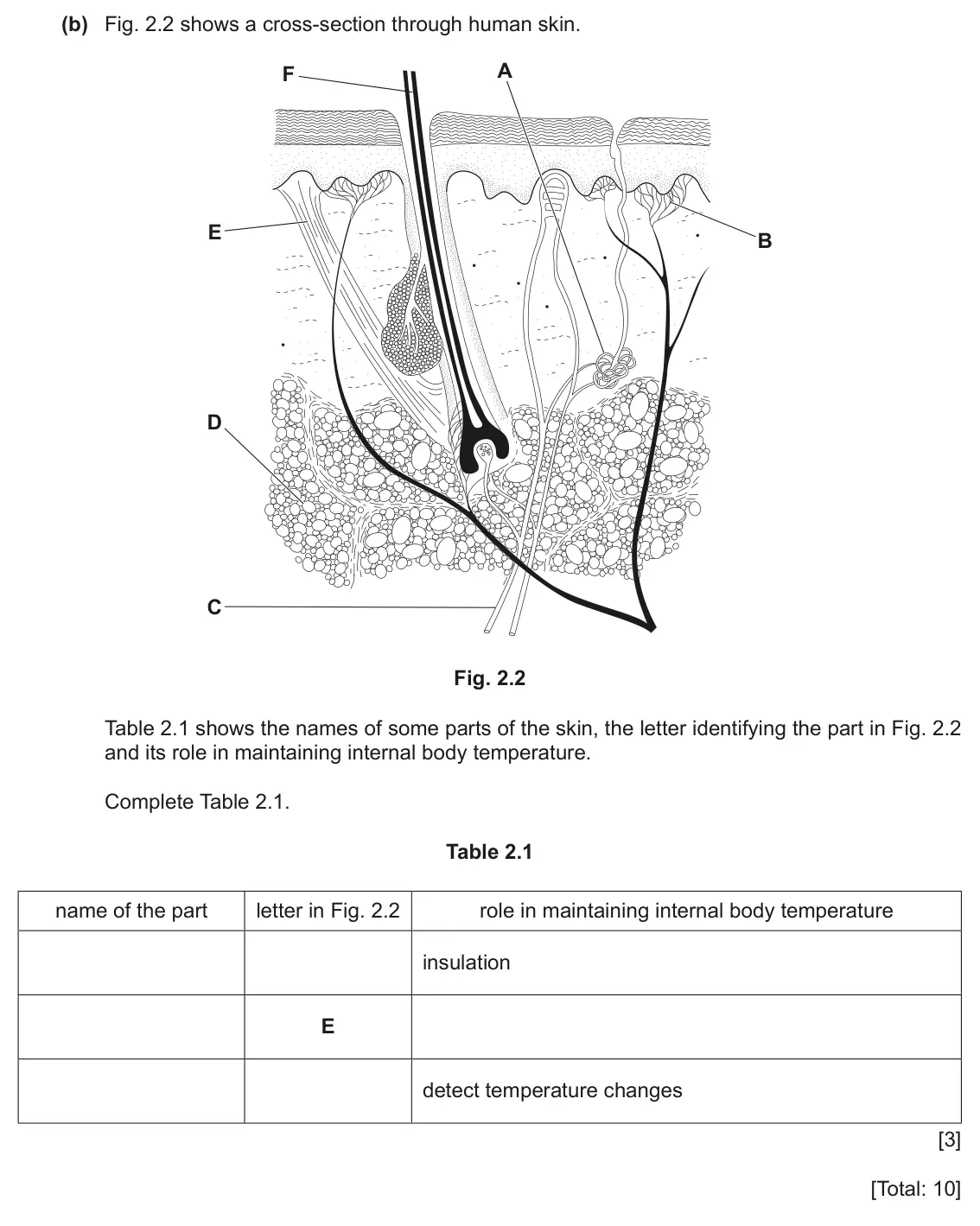
Q2(b)(i)
The whole paper ↗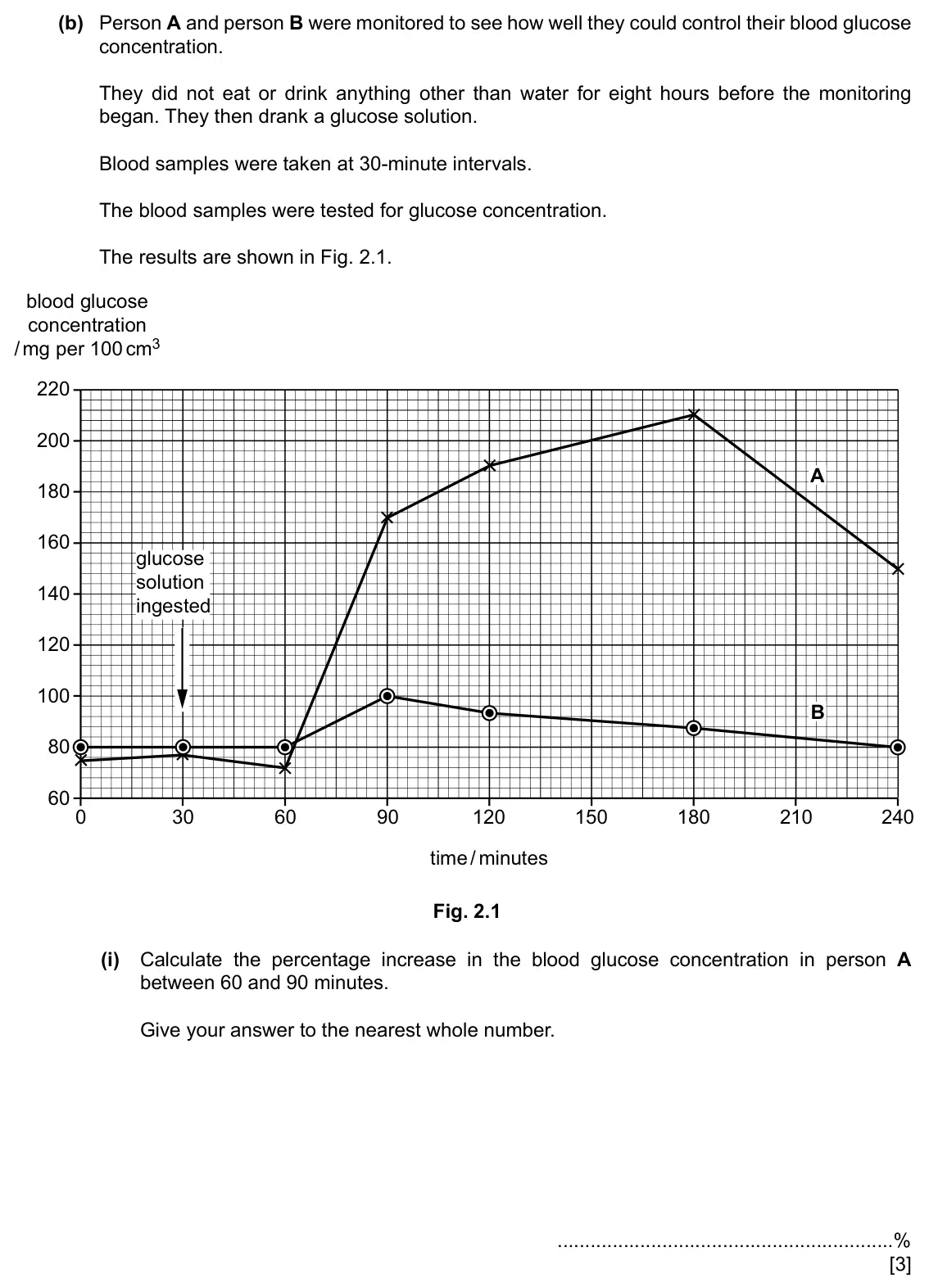
Q2(b)(ii)
The whole paper ↗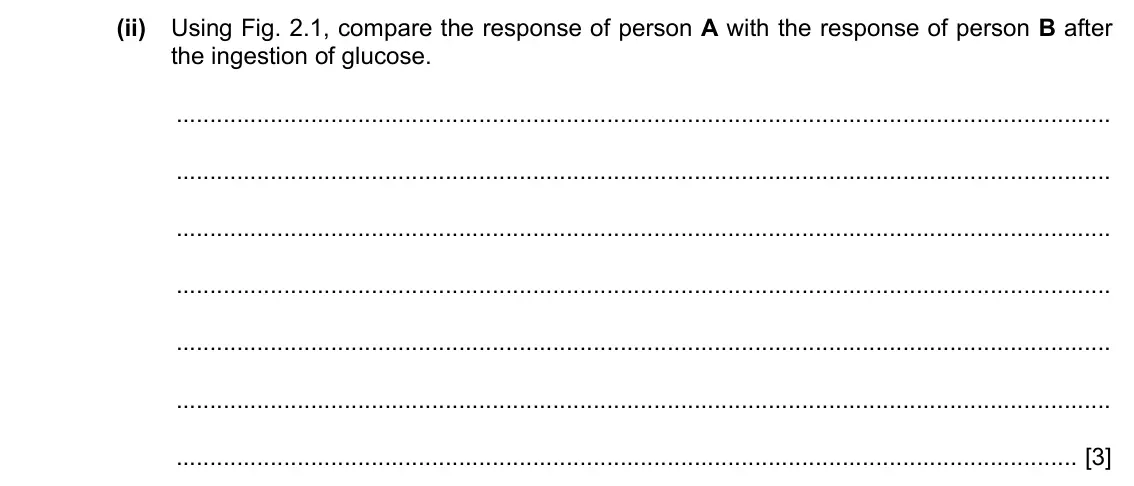
Q2(b)(iii)
The whole paper ↗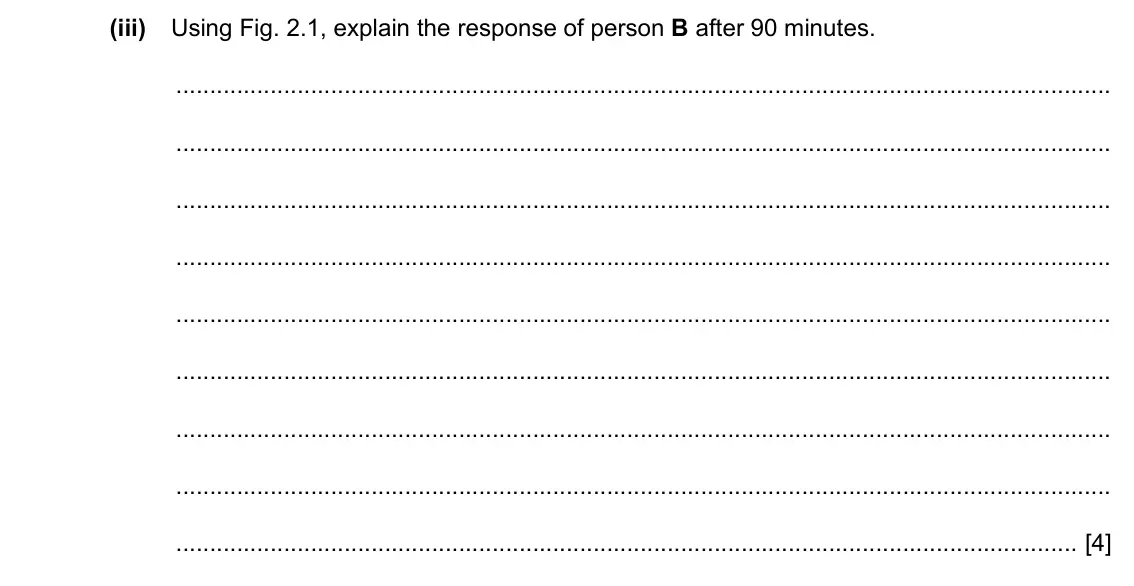
Q2(b)(iv)
The whole paper ↗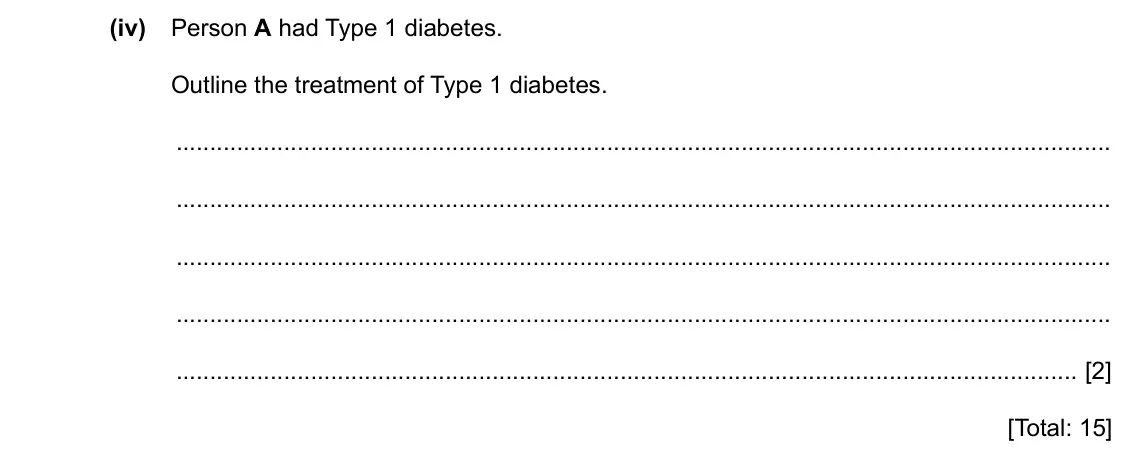
All 11 questions on Homeostasis, as a list
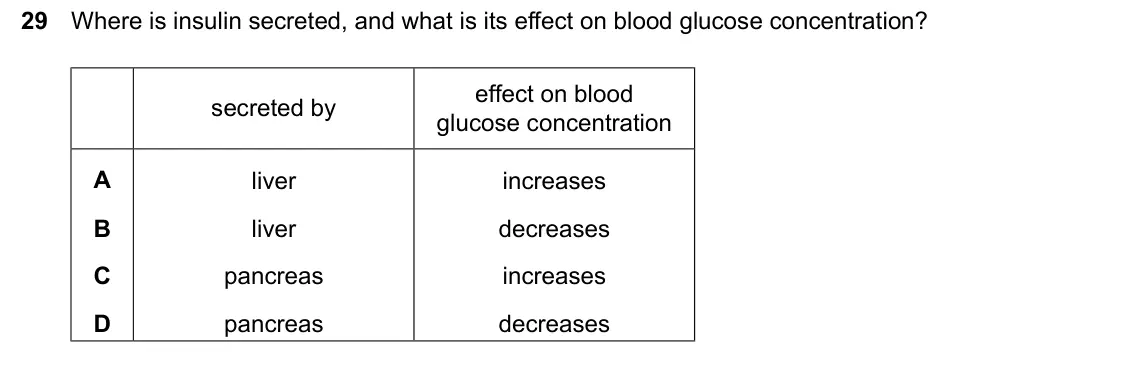
- June 2024, Paper 1, Q29 (1 mark): Where is insulin secreted, and what is its effect on blood glucose concentration? effect on blood secreted by glucose concentration A liver increases B liver de
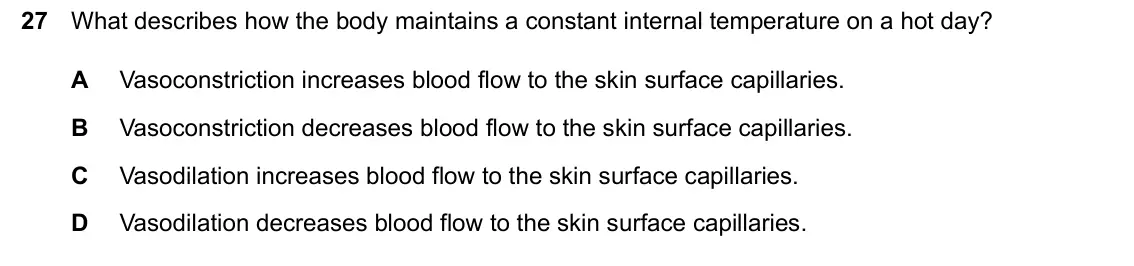
- June 2024, Paper 2, Q27 (1 mark): What describes how the body maintains a constant internal temperature on a hot day? A Vasoconstriction increases blood flow to the skin surface capillaries. B V
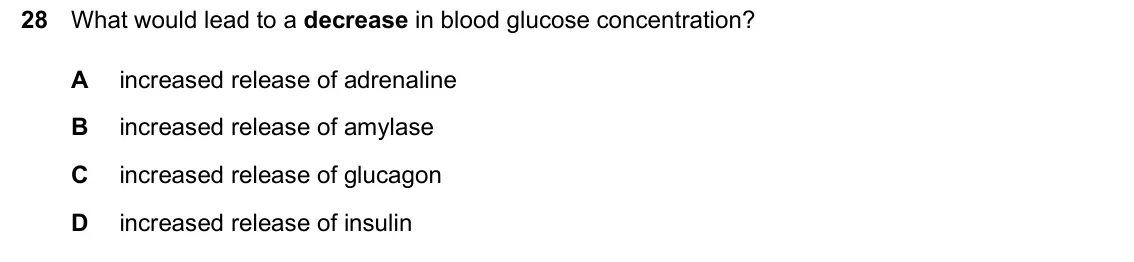
- June 2024, Paper 2, Q28 (1 mark): What would lead to a decrease in blood glucose concentration? A increased release of adrenaline B increased release of amylase C increased release of glucagon D
- June 2024, Paper 4, Q2(a)(i) (1 mark): The internal body temperature range is from 36.4 °C to 37.0 °C. State the range of the external environmental temperature shown in Fig. 2.1. [1]
- June 2024, Paper 4, Q2(a)(ii) (6 marks): Explain the results for the internal body temperature shown in Fig. 2.1. [6]
- June 2024, Paper 4, Q2(b) (3 marks): Fig. 2.2 shows a cross‑section through human skin. F A E B D C Fig. 2.2 Table 2.1 shows the names of some parts of the skin, the letter identifying the part in
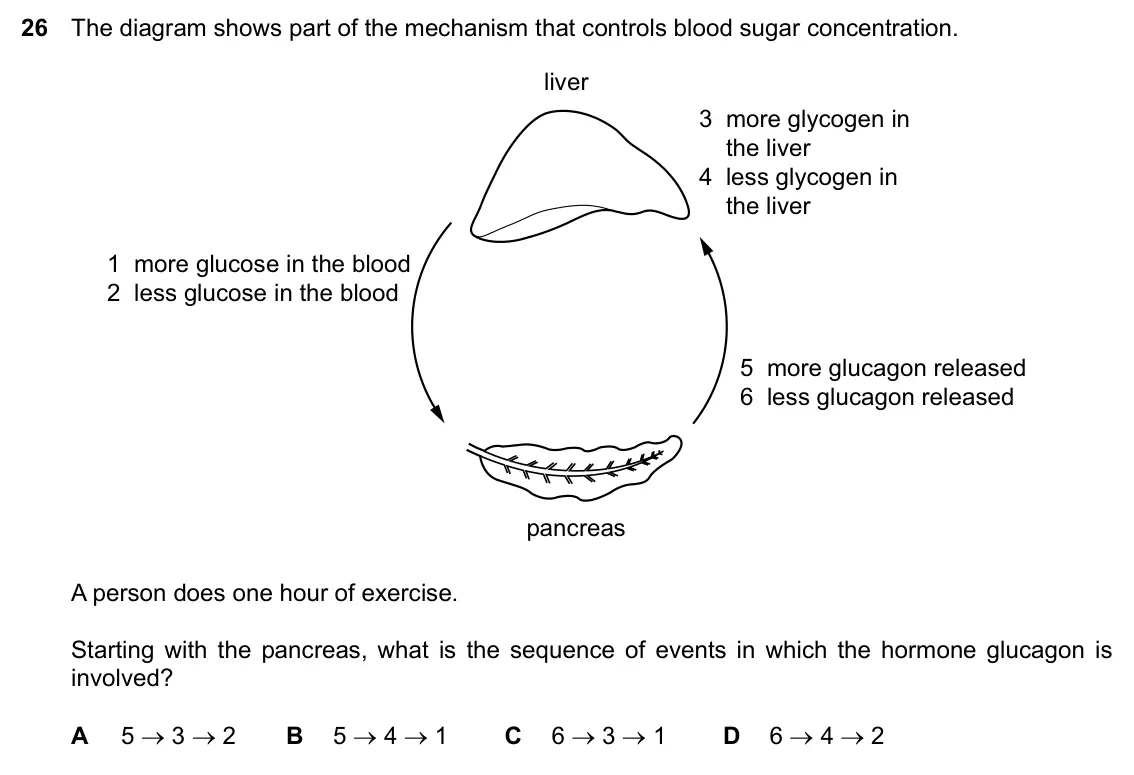
- Specimen, Paper 2, Q26 (1 mark): The diagram shows part of the mechanism that controls blood sugar concentration. liver 3 more glycogen in the liver 4 less glycogen in the liver 1 more glucose
- Specimen, Paper 4, Q2(b)(i) (3 marks): Calculate the percentage increase in the blood glucose concentration in person A between 60 and 90 minutes. Give your answer to the nearest whole number. % [3]
- Specimen, Paper 4, Q2(b)(ii) (3 marks): Using Fig. 2.1, compare the response of person A with the response of person B after the ingestion of glucose. [3]
- Specimen, Paper 4, Q2(b)(iii) (4 marks): Using Fig. 2.1, explain the response of person B after 90 minutes. [4]
- Specimen, Paper 4, Q2(b)(iv) (2 marks): Person A had Type 1 diabetes. Outline the treatment of Type 1 diabetes. [2] [Total: 15]
Questions, mark schemes and examiner’s reports are © Cambridge University Press & Assessment, from their published past papers. Plumi isn’t affiliated with any exam board. Want whole papers? Every CAIE IGCSE Biology paper.
Rather write your answers by hand on iPad? Plumi marks them against the same mark schemes.