 plumi
Internal energy and energy transfers: AQA GCSE Combined Science questions
Every AQA GCSE Combined Science exam question on 6.3.2 Internal energy and energy transfers, 2018–2025, with its mark scheme and examiner’s report.
Find questions3,069
Calculations
Q04.5
The whole paper ↗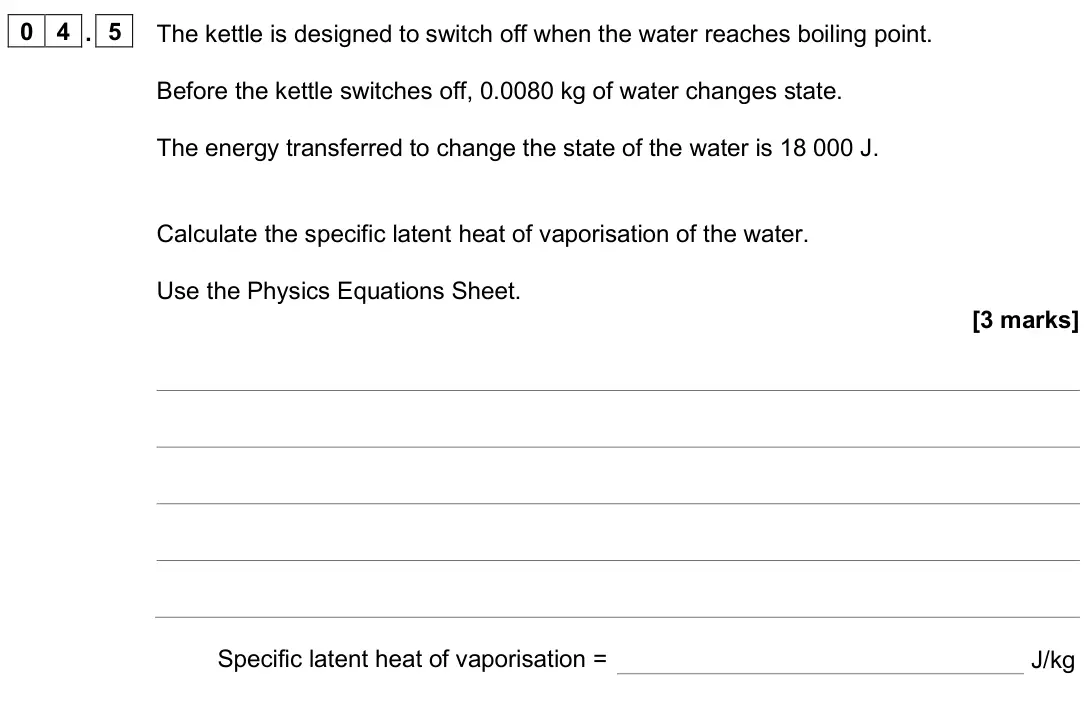
Q02.6
The whole paper ↗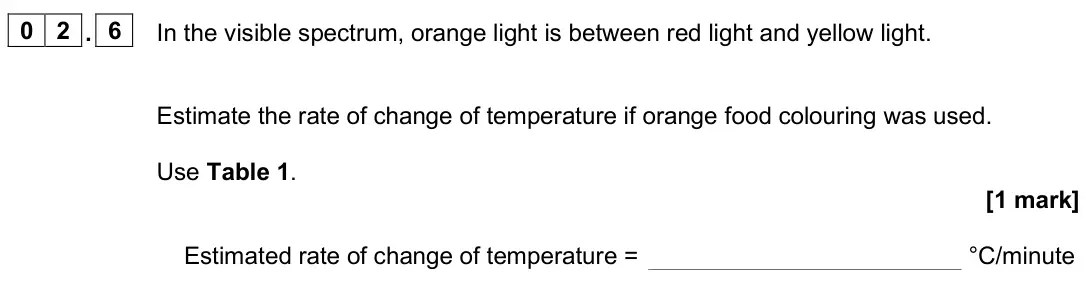
Q06.2
The whole paper ↗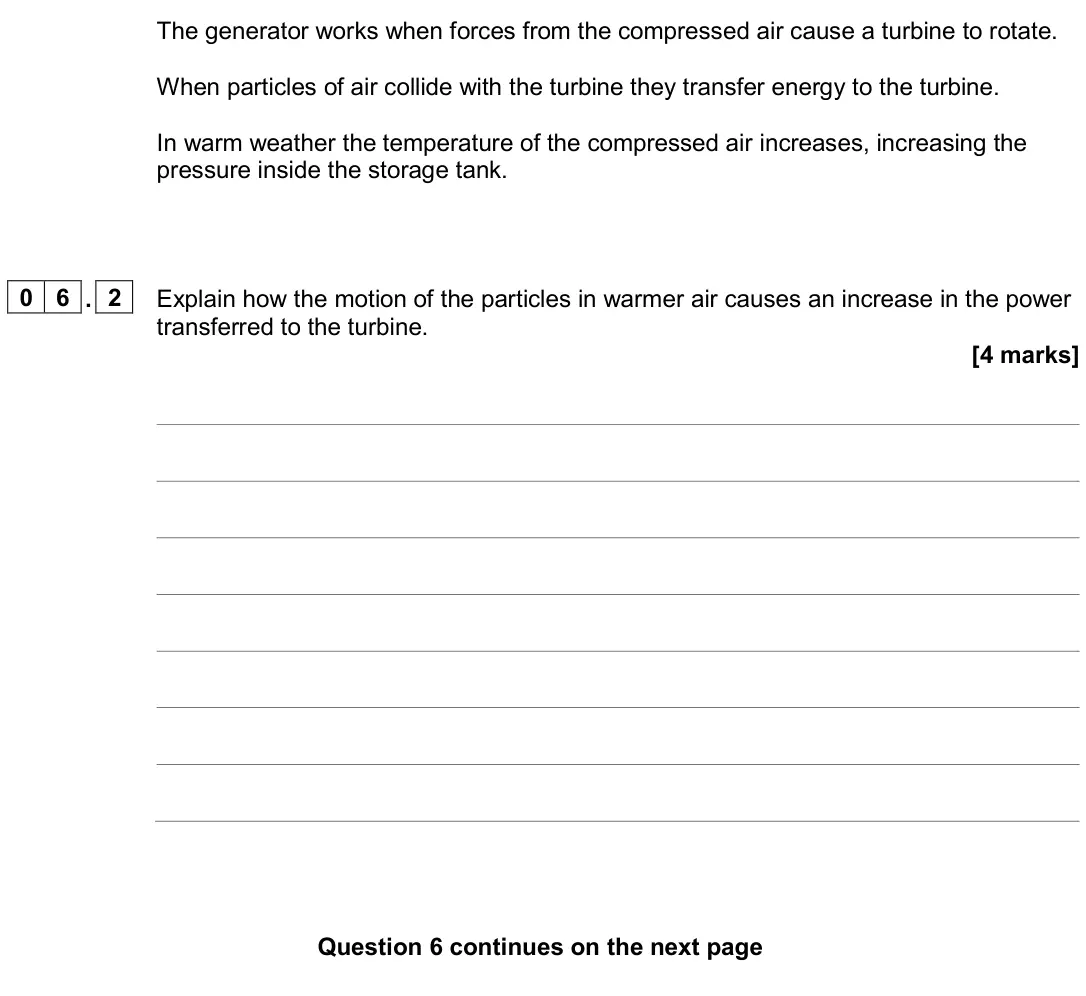
Q06.3
The whole paper ↗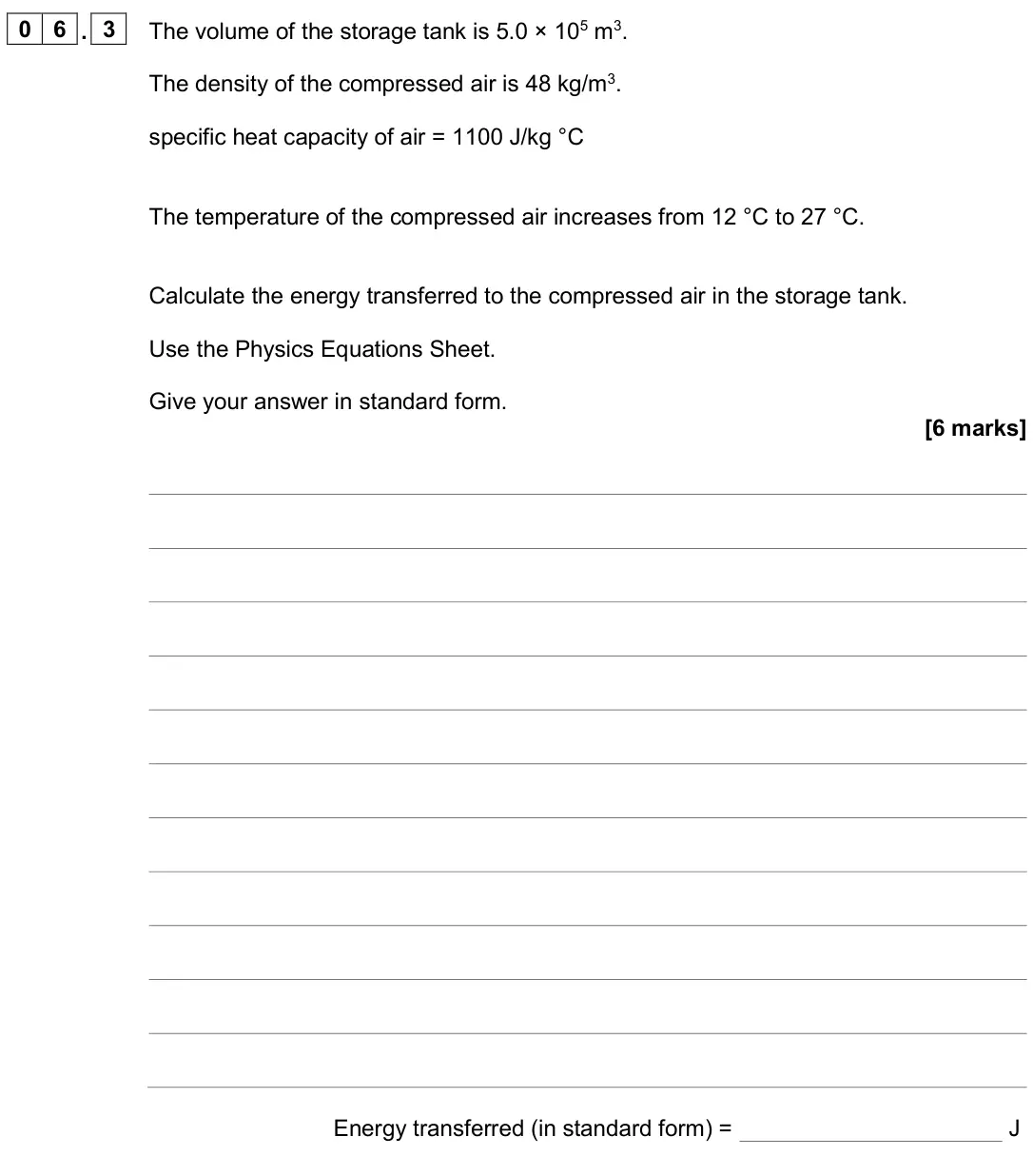
Q02.2
The whole paper ↗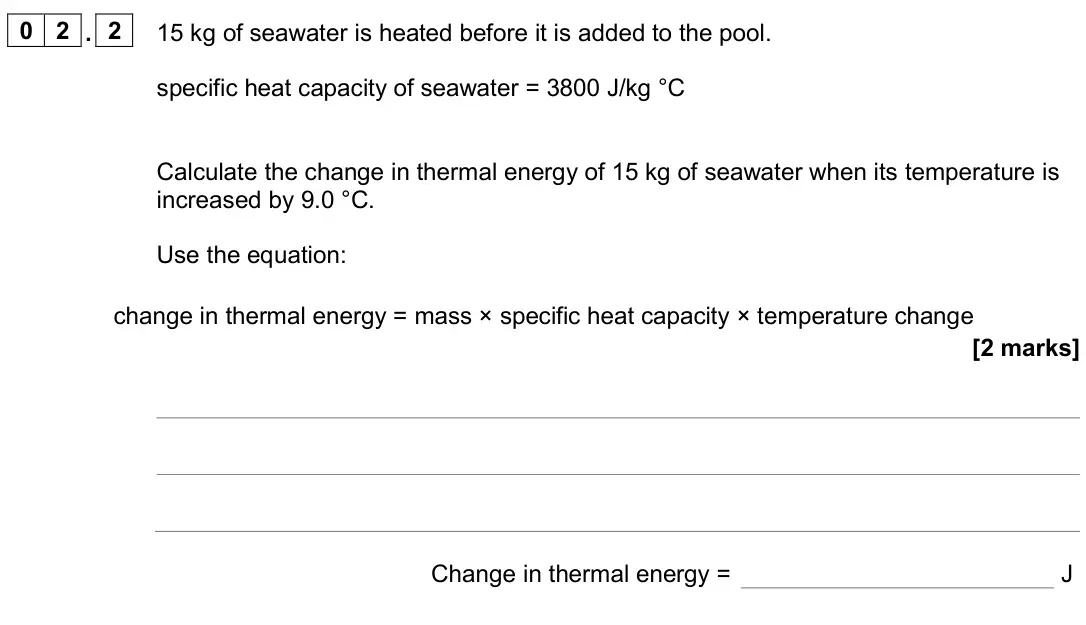
Q06.3
The whole paper ↗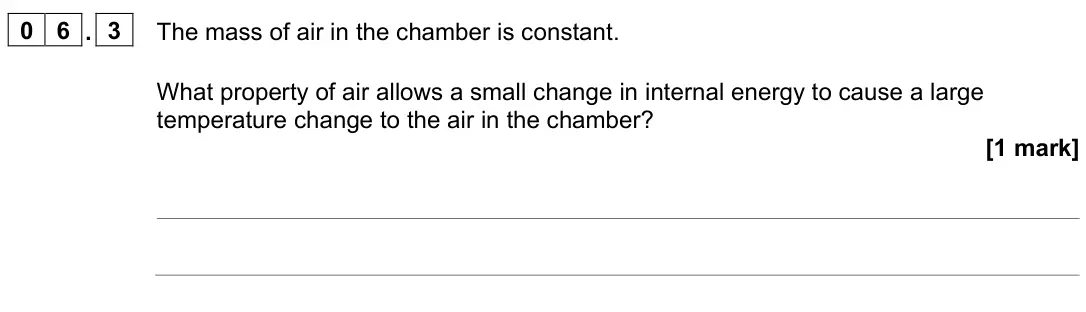
Q06.5
The whole paper ↗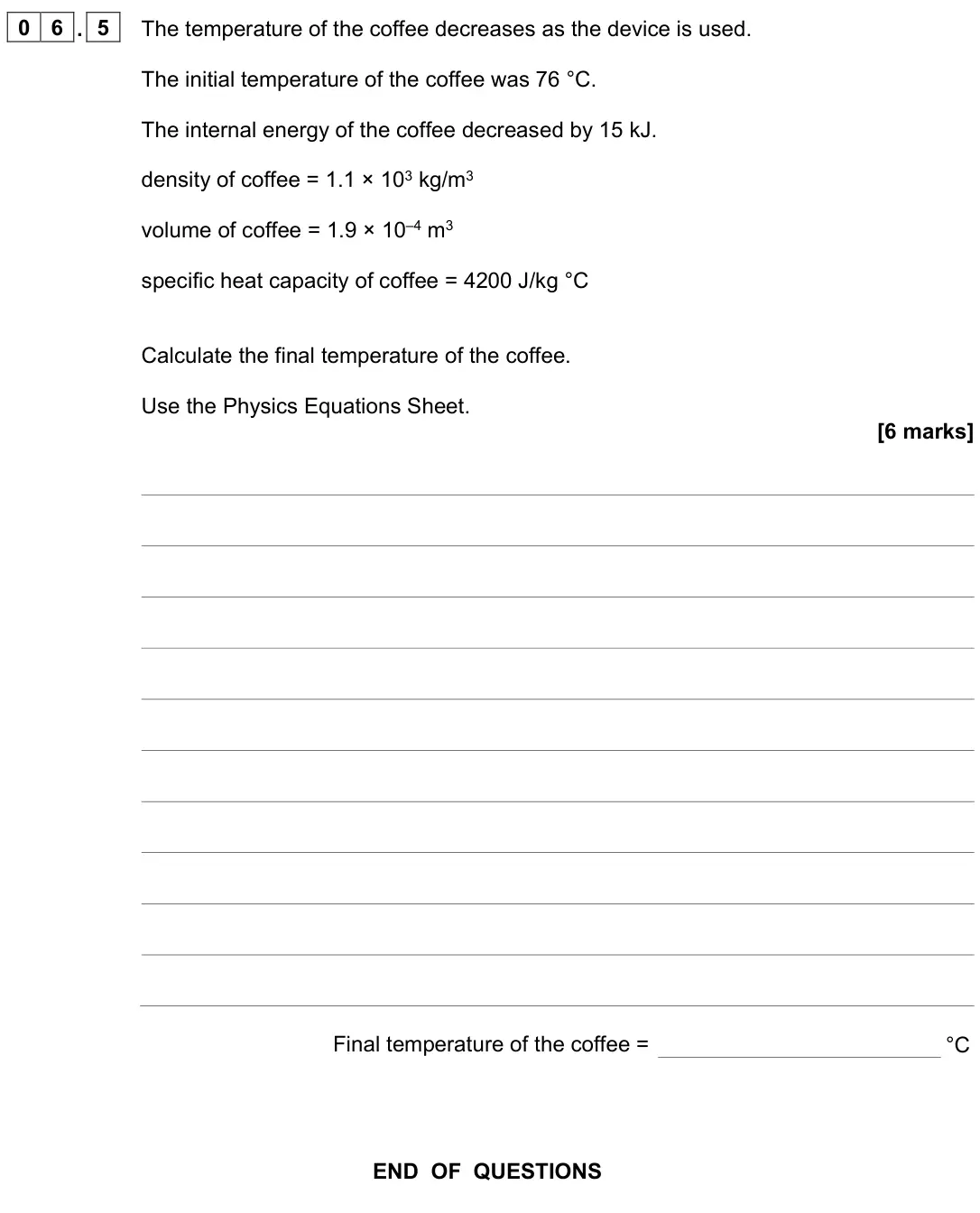
Q03.1
The whole paper ↗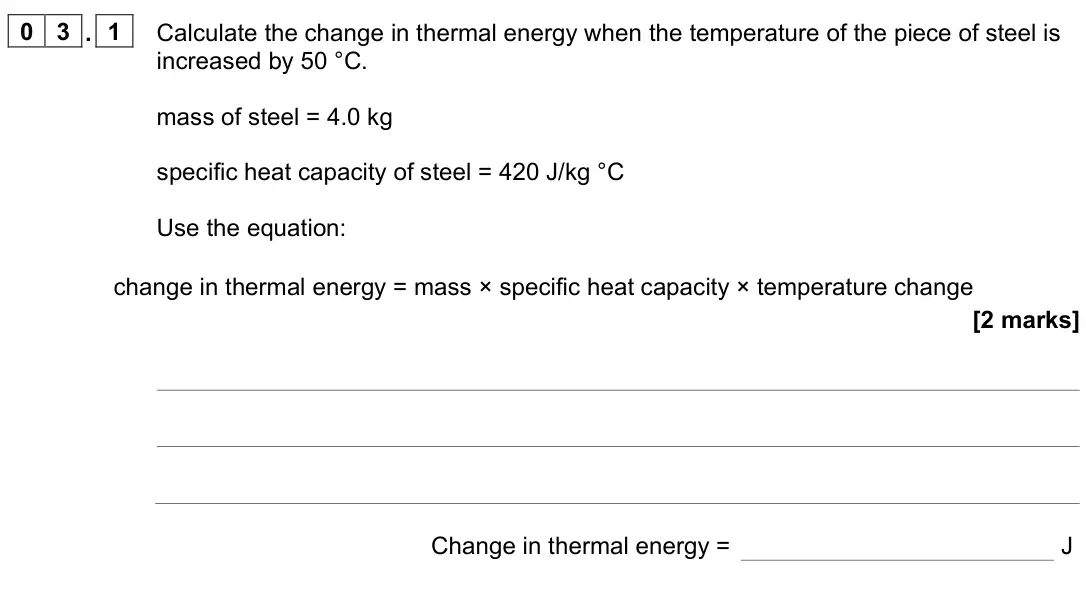
Q03.2
The whole paper ↗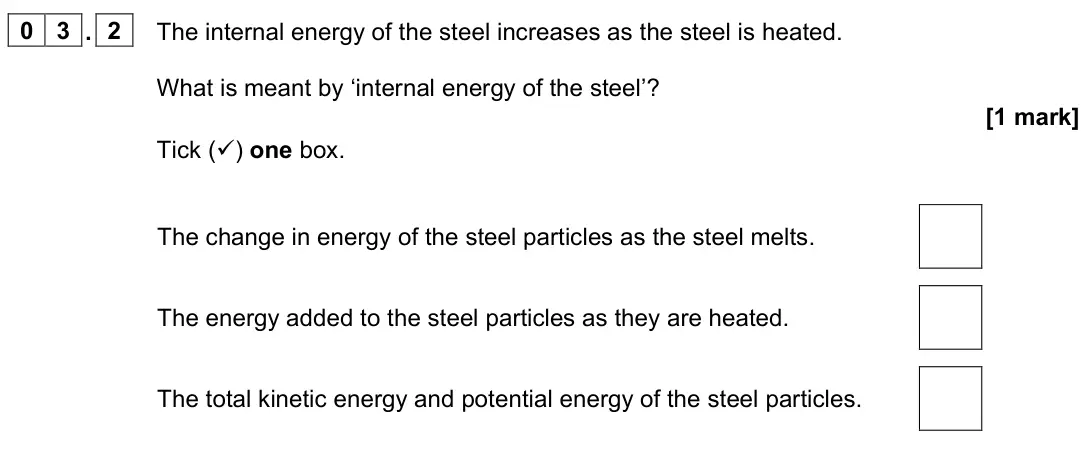
Q03.9
The whole paper ↗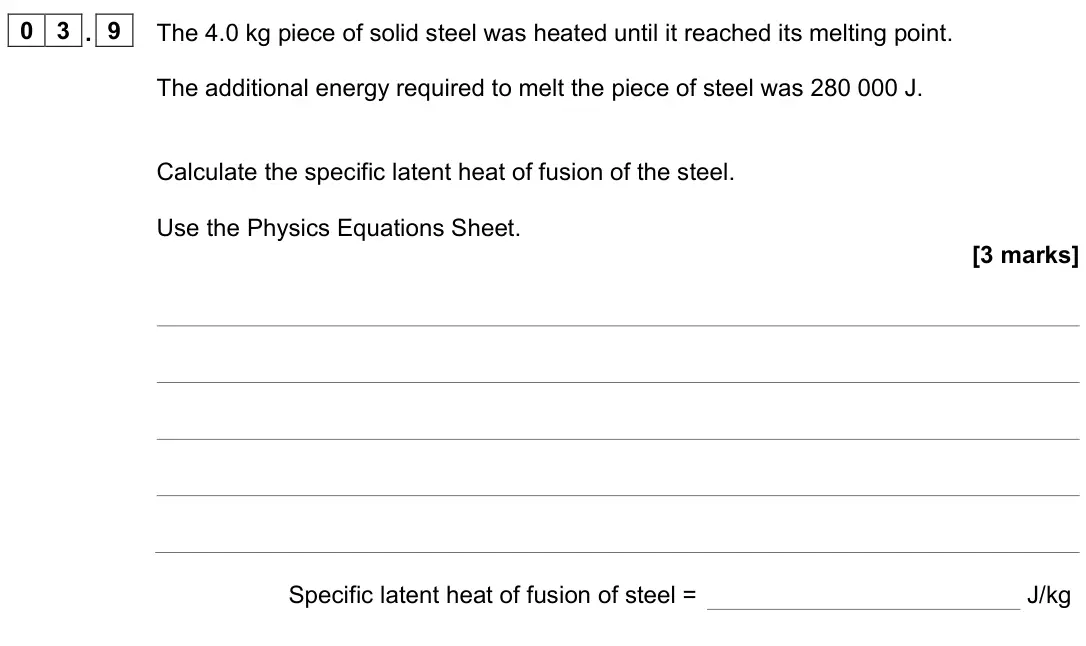
Q02.1
The whole paper ↗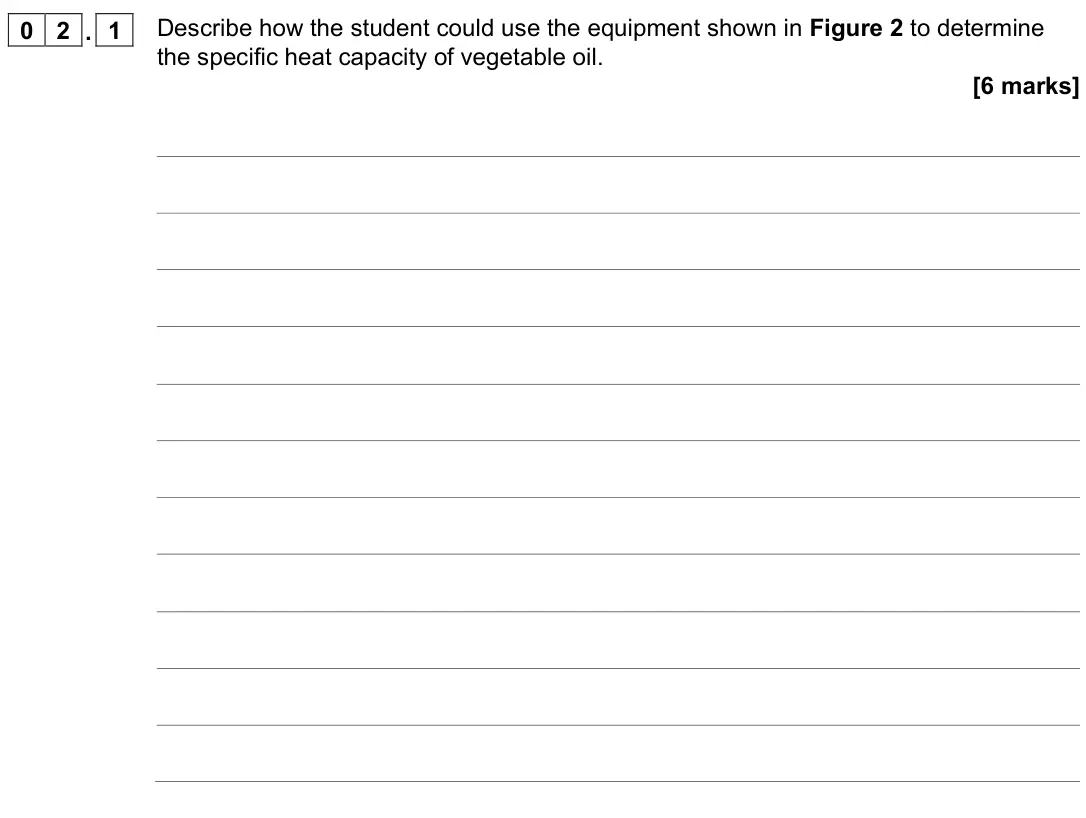
Q02.4
The whole paper ↗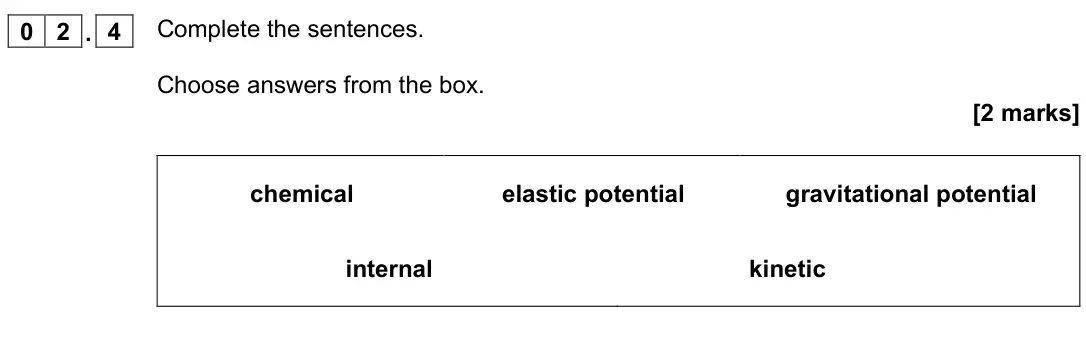
Q04.5
The whole paper ↗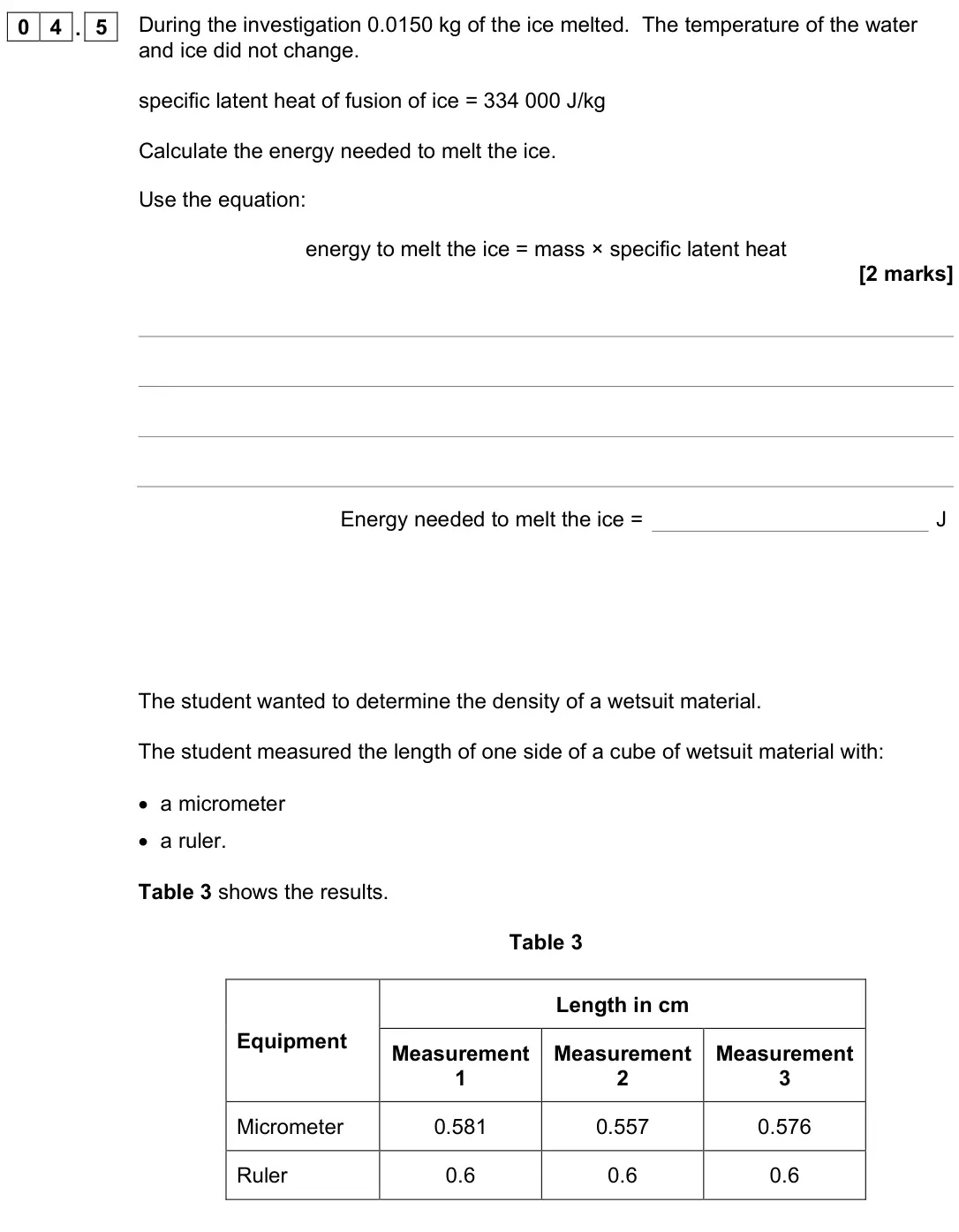
Q06.1
The whole paper ↗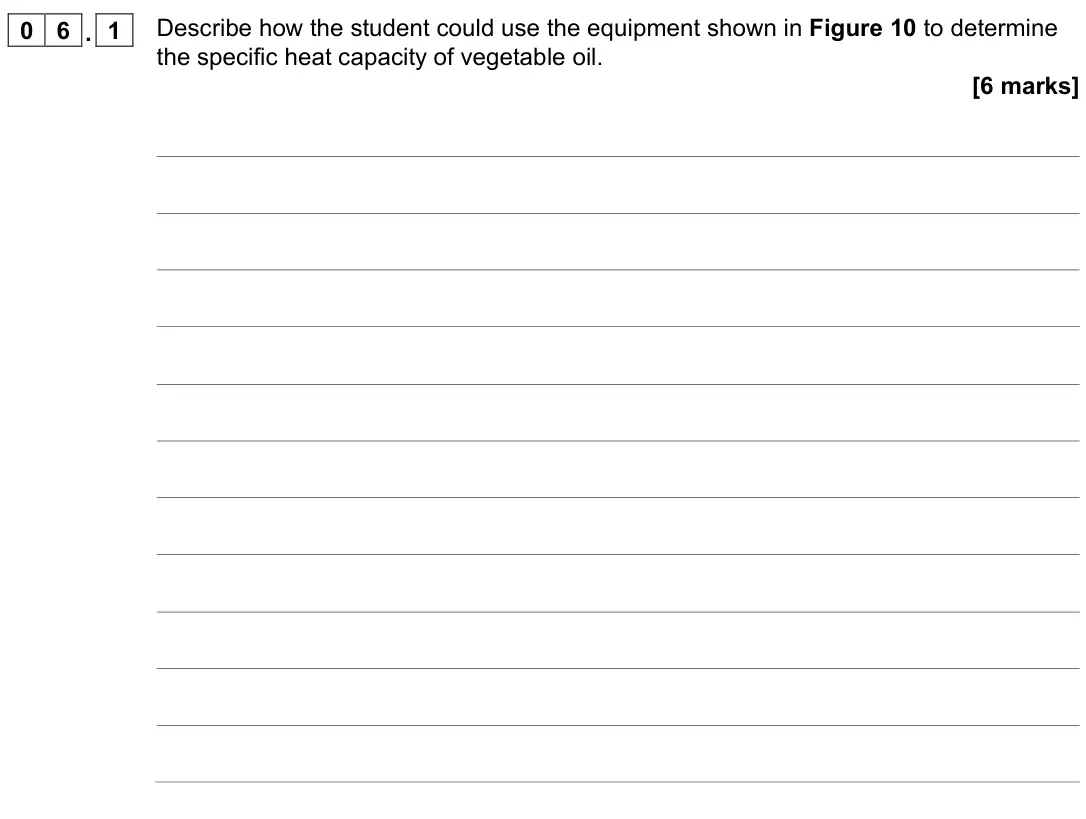
Q06.1
The whole paper ↗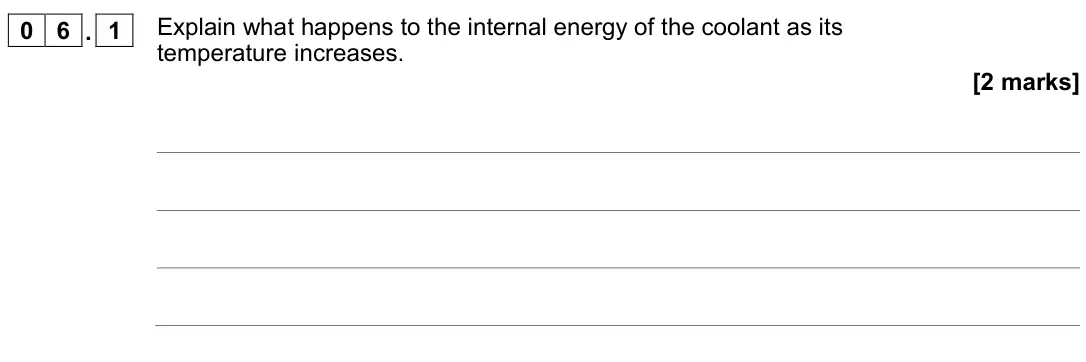
Q06.2
The whole paper ↗
Q04.6
The whole paper ↗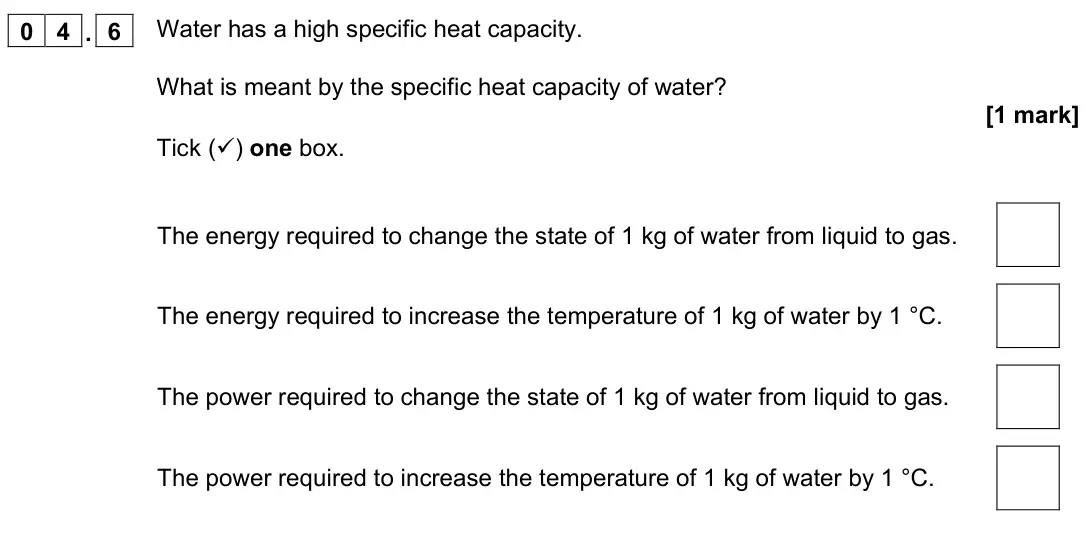
Q04.7
The whole paper ↗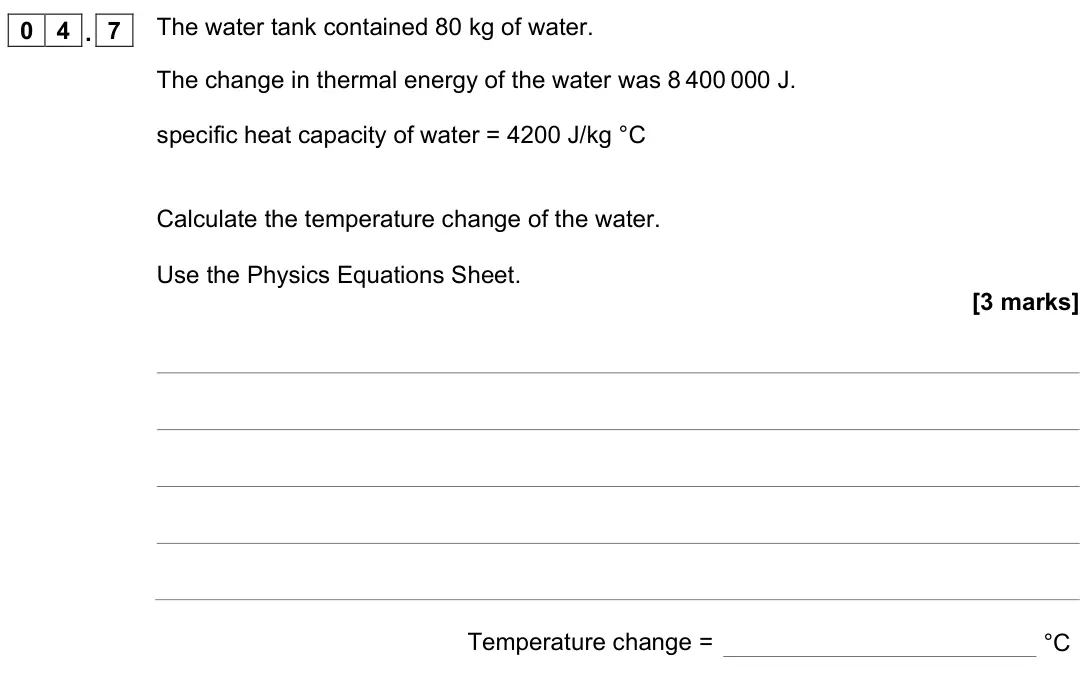
Q05.2
The whole paper ↗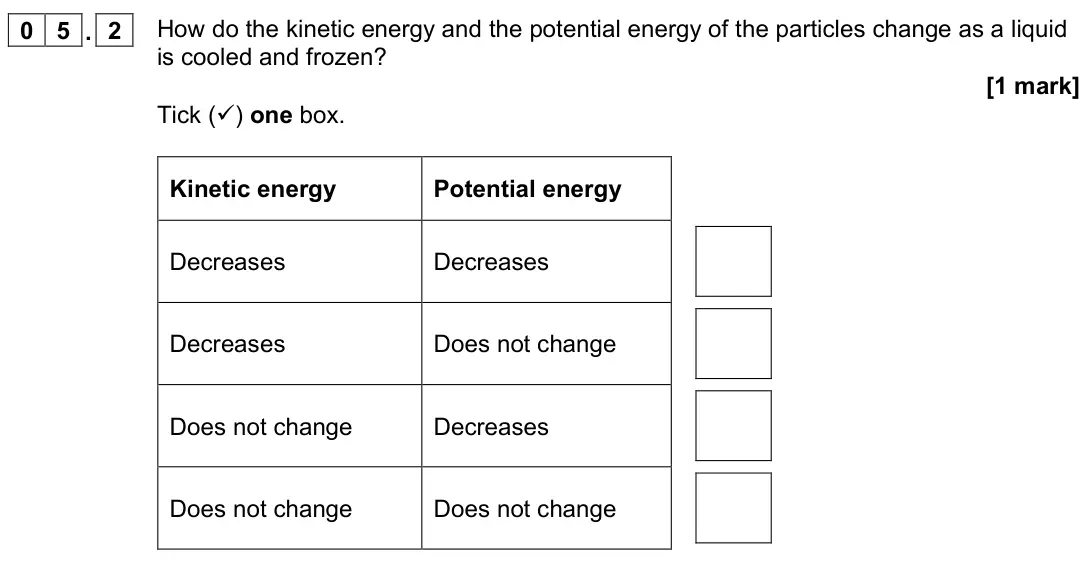
Q05.4
The whole paper ↗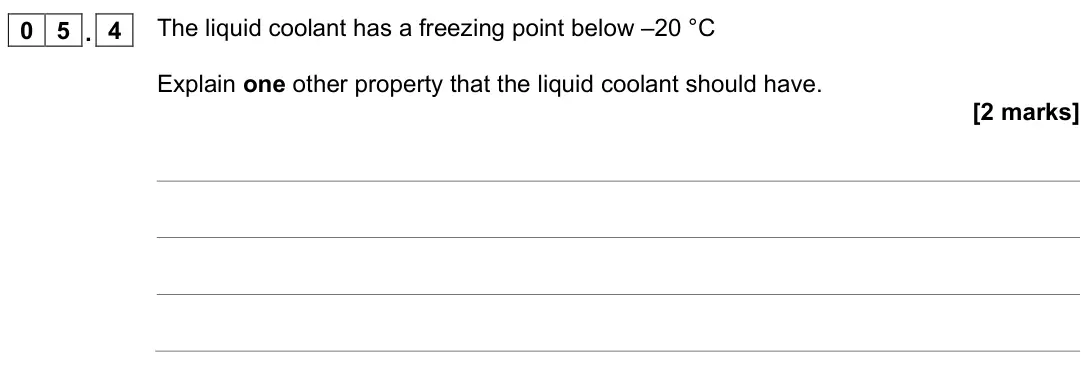
All 34 questions on Internal energy and energy transfers, as a list
- June 2025, Physics Paper 1 Foundation, Q04.5 (3 marks): The kettle is designed to switch off when the water reaches boiling point. Before the kettle switches off, 0.0080 kg of water changes state. The energy transfer
- June 2025, Physics Paper 2 Foundation, Q02.6 (1 mark): In the visible spectrum, orange light is between red light and yellow light. Estimate the rate of change of temperature if orange food colouring was used. Use T
- June 2024, Physics Paper 1 Higher, Q06.2 (4 marks): Explain how the motion of the particles in warmer air causes an increase in the power transferred to the turbine. [4 marks]
- June 2024, Physics Paper 1 Higher, Q06.3 (6 marks): The volume of the storage tank is 5.0 × 10⁵ m3. The density of the compressed air is 48 kg/m3. specific heat capacity of air = 1100 J/kg °C The temperature of t
- June 2024, Physics Paper 1 Foundation, Q02.2 (2 marks): 15 kg of seawater is heated before it is added to the pool. specific heat capacity of seawater = 3800 J/kg °C Calculate the change in thermal energy of 15 kg of
- June 2023, Physics Paper 1 Higher, Q06.3 (1 mark): The mass of air in the chamber is constant. What property of air allows a small change in internal energy to cause a large temperature change to the air in the
- June 2023, Physics Paper 1 Higher, Q06.5 (6 marks): The temperature of the coffee decreases as the device is used. The initial temperature of the coffee was 76 °C. The internal energy of the coffee decreased by 1
- June 2023, Physics Paper 1 Foundation, Q03.1 (2 marks): Calculate the change in thermal energy when the temperature of the piece of steel is increased by 50 °C. mass of steel = 4.0 kg specific heat capacity of steel
- June 2023, Physics Paper 1 Foundation, Q03.2 (1 mark): The internal energy of the steel increases as the steel is heated. What is meant by ‘internal energy of the steel’? [1 mark] Tick () one box. The change in ene
- June 2023, Physics Paper 1 Foundation, Q03.9 (3 marks): The 4.0 kg piece of solid steel was heated until it reached its melting point. The additional energy required to melt the piece of steel was 280 000 J. Calculat
- June 2022, Physics Paper 1 Higher, Q02.1 (6 marks): Describe how the student could use the equipment shown in Figure 2 to determine the specific heat capacity of vegetable oil. [6 marks]
- June 2022, Physics Paper 1 Foundation, Q02.4 (2 marks): Complete the sentences. Choose answers from the box. [2 marks] chemical elastic potential gravitational potential internal kinetic
- June 2022, Physics Paper 1 Foundation, Q04.5 (2 marks): During the investigation 0.0150 kg of the ice melted. The temperature of the water and ice did not change. specific latent heat of fusion of ice = 334 000 J/kg
- June 2022, Physics Paper 1 Foundation, Q06.1 (6 marks): Describe how the student could use the equipment shown in Figure 10 to determine the specific heat capacity of vegetable oil. [6 marks]
- November 2021, Physics Paper 1 Higher, Q06.1 (2 marks): Explain what happens to the internal energy of the coolant as its temperature increases. [2 marks]
- November 2021, Physics Paper 1 Higher, Q06.2 (1 mark): What name is given to the energy needed to change the state of the liquid coolant? [1 mark]
- November 2021, Physics Paper 1 Foundation, Q04.6 (1 mark): Water has a high specific heat capacity. What is meant by the specific heat capacity of water? [1 mark] Tick () one box. The energy required to change the stat
- November 2021, Physics Paper 1 Foundation, Q04.7 (3 marks): The water tank contained 80 kg of water. The change in thermal energy of the water was 8 400 000 J. specific heat capacity of water = 4200 J/kg °C Calculate the
- November 2020, Physics Paper 1 Higher, Q05.2 (1 mark): How do the kinetic energy and the potential energy of the particles change as a liquid is cooled and frozen? [1 mark] Tick () one box. Kinetic energy Potential
- November 2020, Physics Paper 1 Higher, Q05.4 (2 marks): The liquid coolant has a freezing point below –20 °C Explain one other property that the liquid coolant should have. [2 marks]
- November 2020, Physics Paper 1 Higher, Q05.5 (6 marks): The initial temperature of the mixture was +20 °C. The mixture froze at –1.5 °C. A total of 165 kJ of internal energy was transferred from the mixture to cool a
- November 2020, Physics Paper 1 Foundation, Q04.2 (1 mark): Which thermometer could be used to measure the temperature of the liquid nitrogen? [1 mark] Tick () one box.
- November 2020, Physics Paper 1 Foundation, Q04.3 (1 mark): The scientist wore special insulating gloves when putting the balloon into the liquid nitrogen. Suggest why. [1 mark]
- November 2020, Physics Paper 1 Foundation, Q04.4 (2 marks): When the balloon was put into liquid nitrogen the temperature of the air in the balloon decreased. Complete the sentences. Choose answers from the box. Each ans
- November 2020, Physics Paper 1 Foundation, Q04.5 (3 marks): The air in the balloon had a mass of 0.00320 kg The temperature of the air in the balloon decreased by 215 °C The change in thermal energy of the air in the bal
- November 2020, Physics Paper 1 Foundation, Q04.6 (1 mark): The liquid nitrogen boiled. What happens to the temperature of nitrogen as it boils? [1 mark] Tick () one box. Temperature decreases Temperature increases Temp
- November 2020, Physics Paper 1 Foundation, Q04.7 (1 mark): What is meant by vaporisation? [1 mark] Tick () one box. A change of state from liquid to gas A change of state from solid to gas A change of state from solid
- November 2020, Physics Paper 1 Foundation, Q04.8 (3 marks): The mass of nitrogen that vaporised was 0.0072 kg 1440 J of energy was transferred to the nitrogen as it vaporised. Calculate the specific latent heat of vapori
- June 2019, Physics Paper 1 Higher, Q02.2 (3 marks): The air contained water that froze at 0 °C The change in internal energy of the water as it froze was 0.70 kJ The specific latent heat of fusion of water is 330
- June 2019, Physics Paper 1 Higher, Q05.5 (6 marks): The power of the kettle was 2.6 kW The kettle took 120 seconds to heat 0.80 kg of water from 18 °C to 100 °C Calculate the specific heat capacity of water using
- June 2019, Physics Paper 1 Foundation, Q03.4 (1 mark): What is the melting point of the gold? [1 mark] Melting point = °C
- June 2019, Physics Paper 1 Foundation, Q03.5 (1 mark): How many minutes did it take for all of the gold in the sample to change from solid to liquid? [1 mark] Time taken = minutes
- June 2019, Physics Paper 1 Foundation, Q03.6 (1 mark): What does the gradient of the graph in Figure 5 represent? [1 mark] Tick () one box. The internal energy of the gold The rate of change of temperature of the g
- June 2019, Physics Paper 1 Foundation, Q07.2 (3 marks): The air contained water that froze at 0 °C The change in internal energy of the water as it froze was 0.70 kJ The specific latent heat of fusion of water is 330
Questions, mark schemes and examiner’s reports are © AQA, from their published past papers. Plumi isn’t affiliated with any exam board. Want whole papers? Full past papers.
Rather write your answers by hand on iPad? Plumi marks them against the same mark schemes.