 plumi
Coastal landscape development: AQA A‑Level Geography questions
Every AQA A-Level Geography exam question on 3.1.3.3 Coastal landscape development, 2020–2025, with its mark scheme and examiner’s report.
Find questions537
Exam
All years
Calculations
Q03.1
The whole paper ↗
Q03.4
The whole paper ↗
Q02.1
The whole paper ↗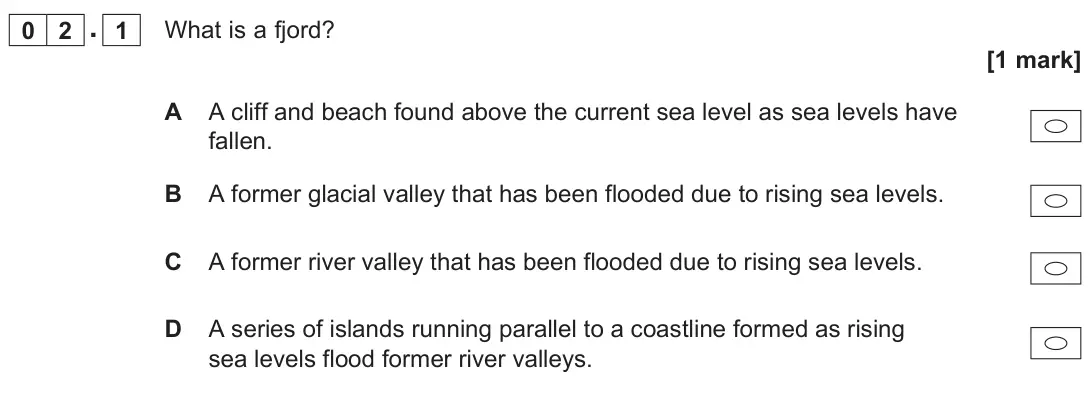
Q02.4
The whole paper ↗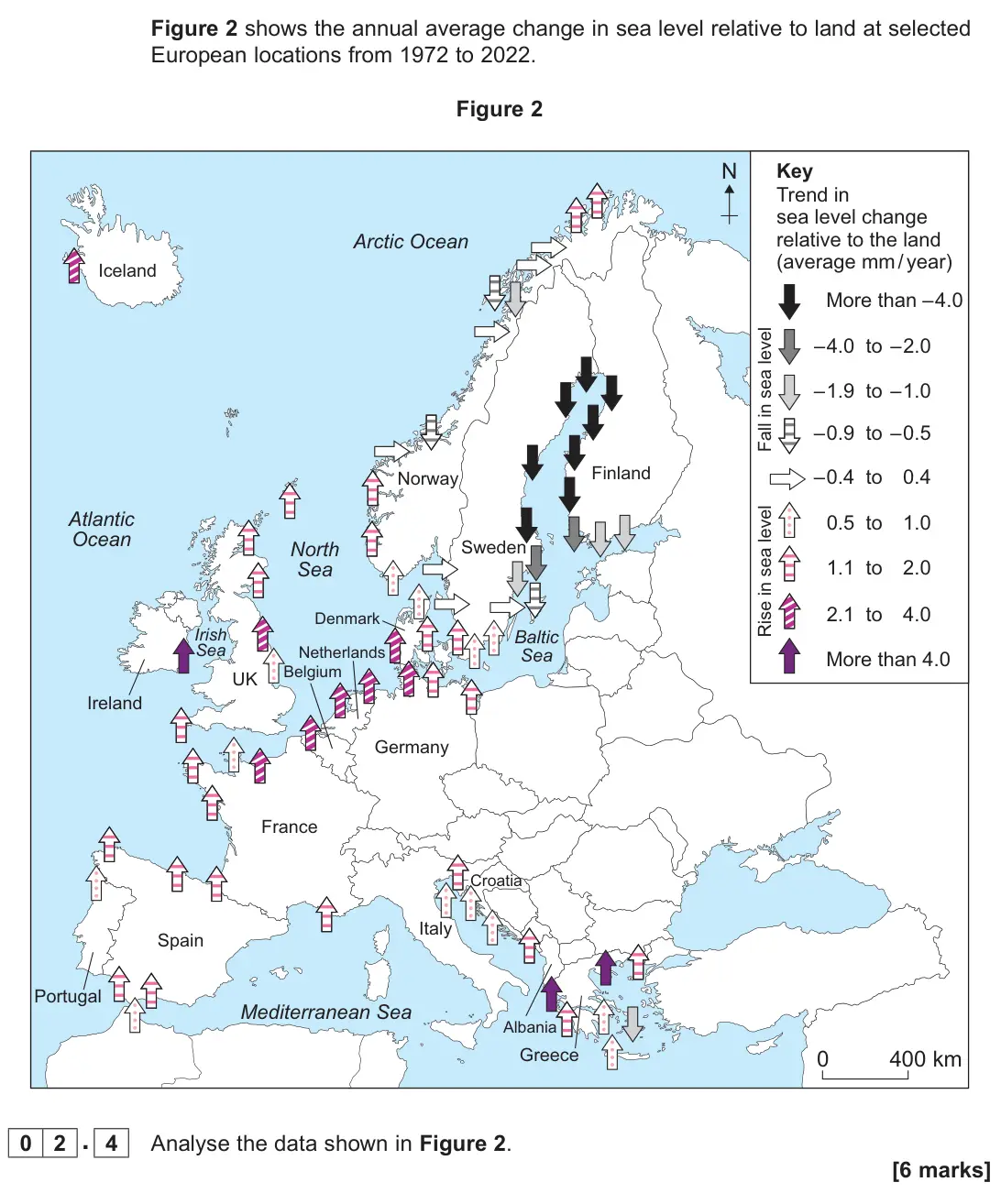
Q02.5
The whole paper ↗
Q02.6
The whole paper ↗
Q03.1
The whole paper ↗
Q03.4
The whole paper ↗
Q02.3
The whole paper ↗
Q02.5
The whole paper ↗
Q02.2
The whole paper ↗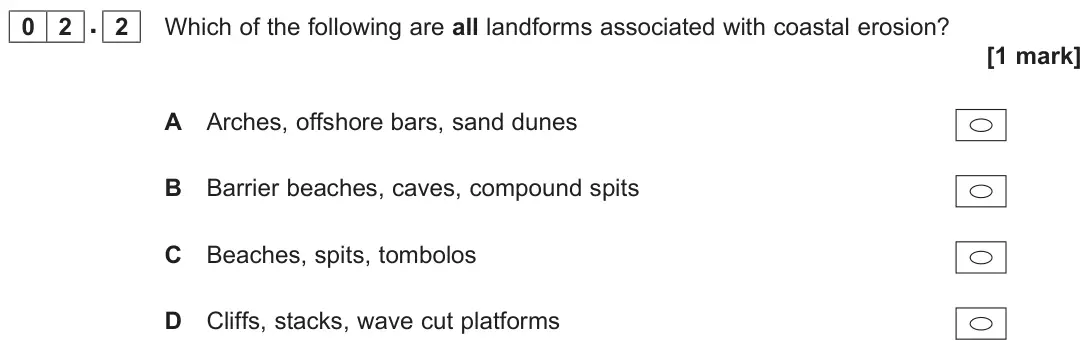
Q02.4
The whole paper ↗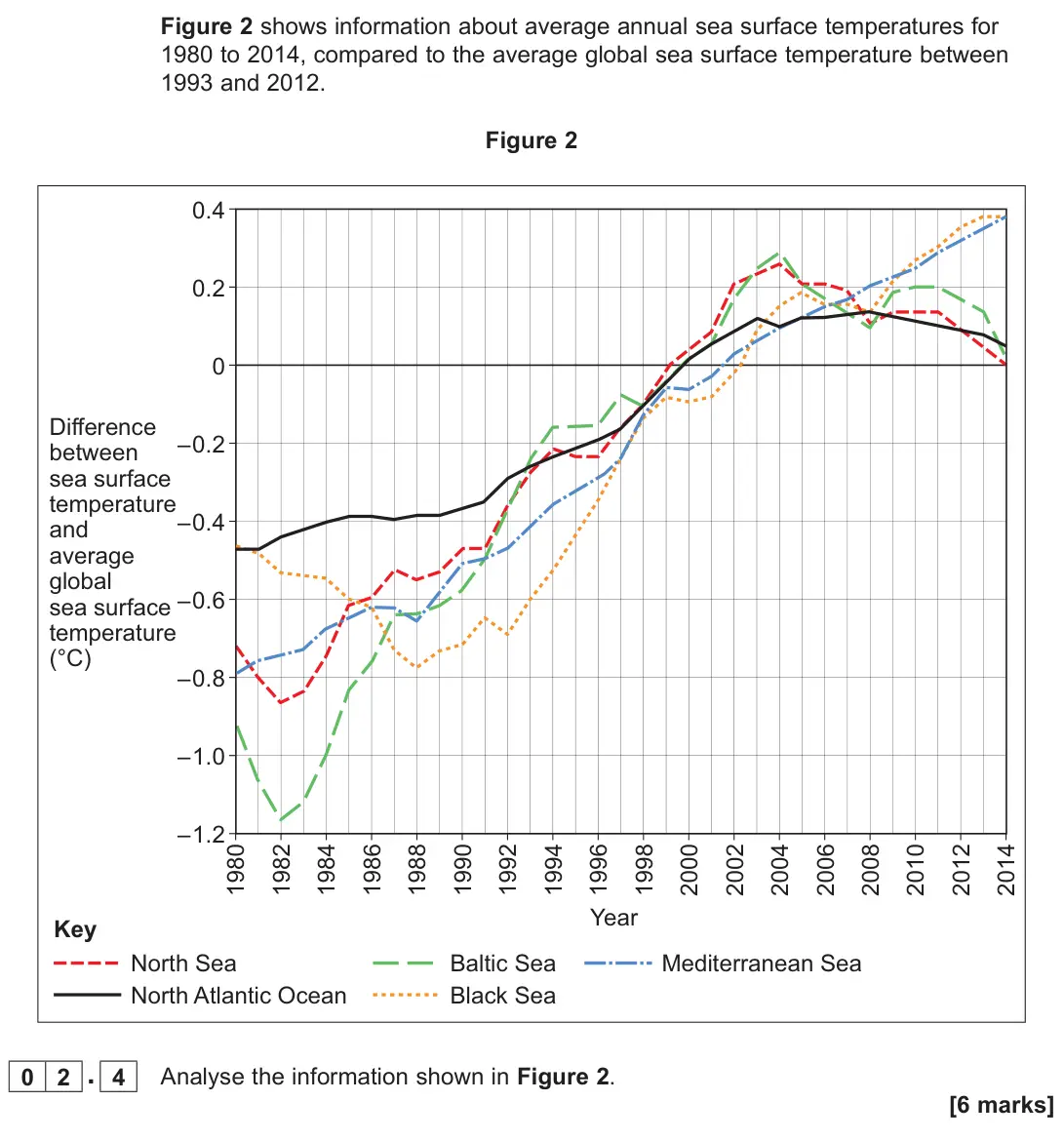
Q02.5
The whole paper ↗
Q03.1
The whole paper ↗
Q03.2
The whole paper ↗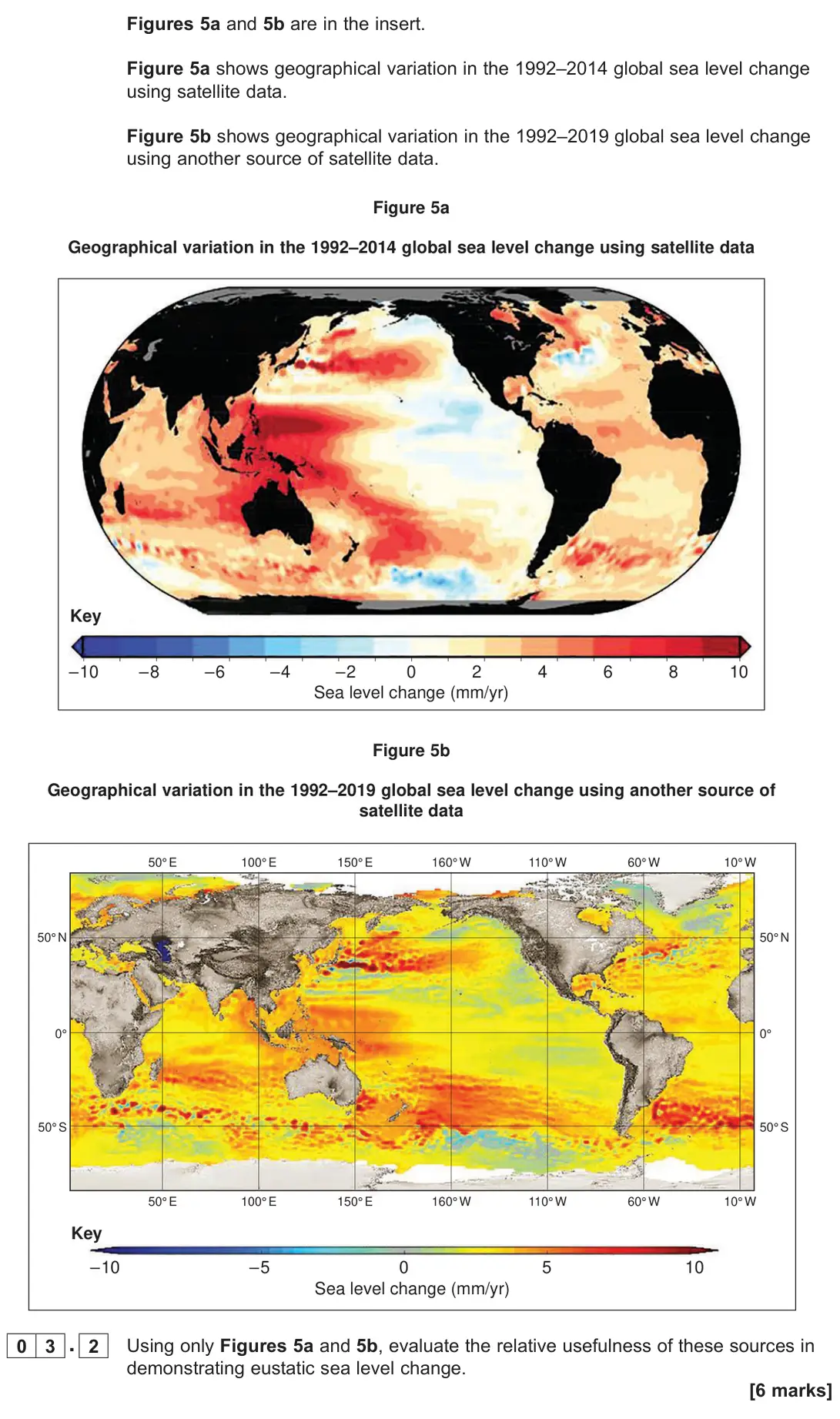
Q03.3
The whole paper ↗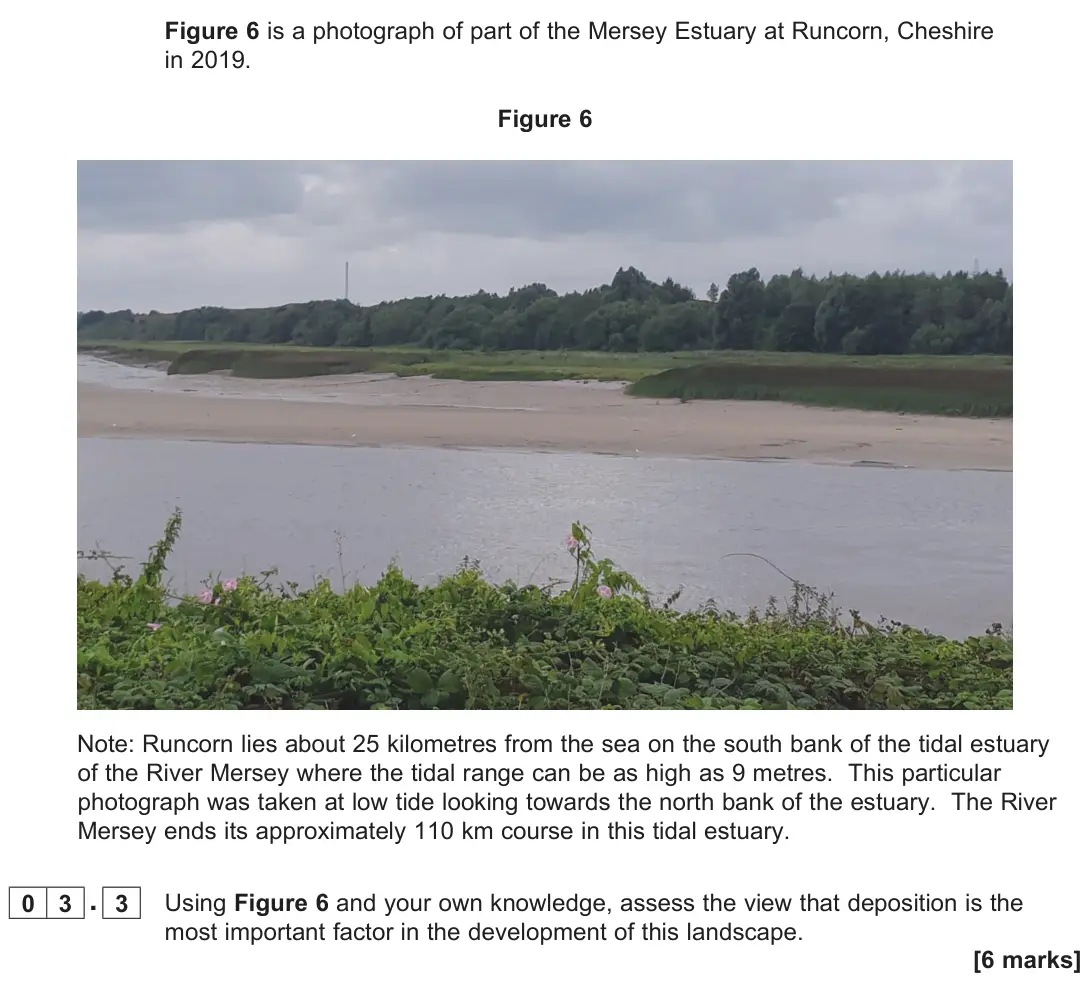
Q02.1
The whole paper ↗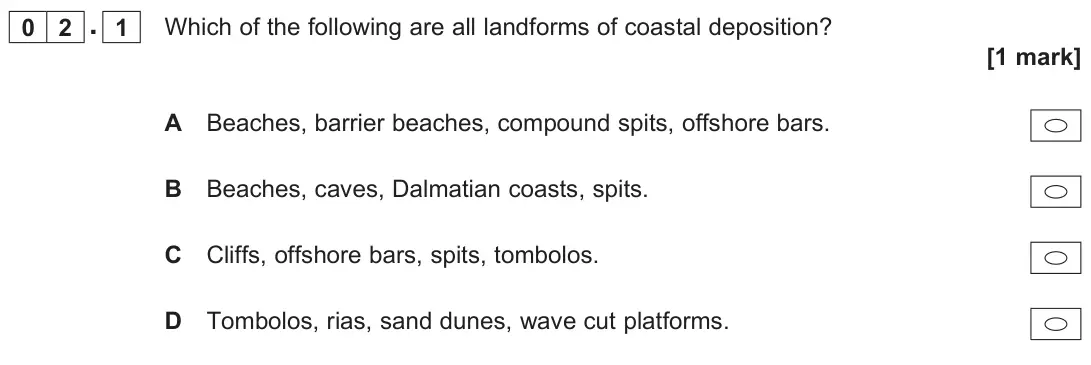
Q02.6
The whole paper ↗
Q03.3
The whole paper ↗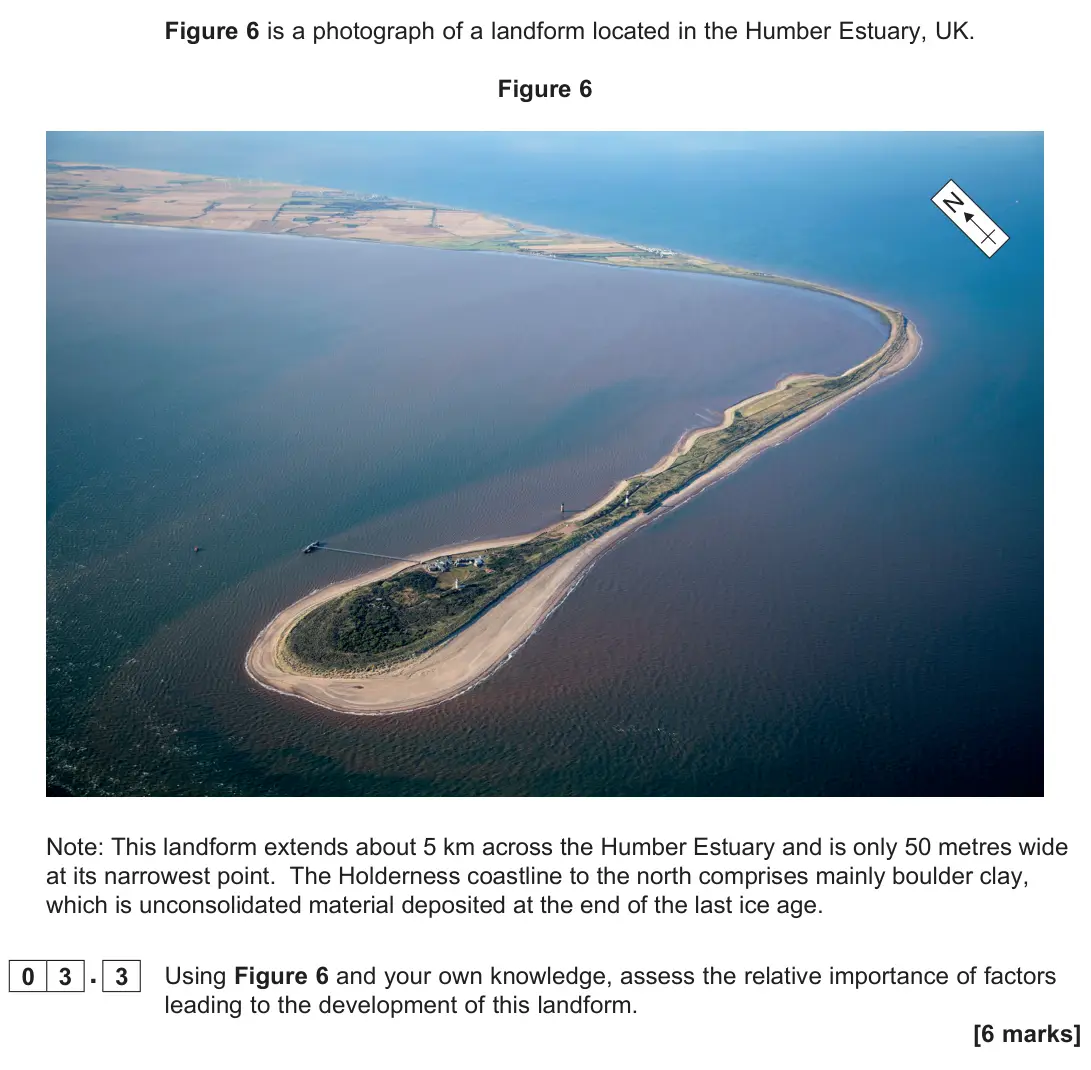
Q03.2
The whole paper ↗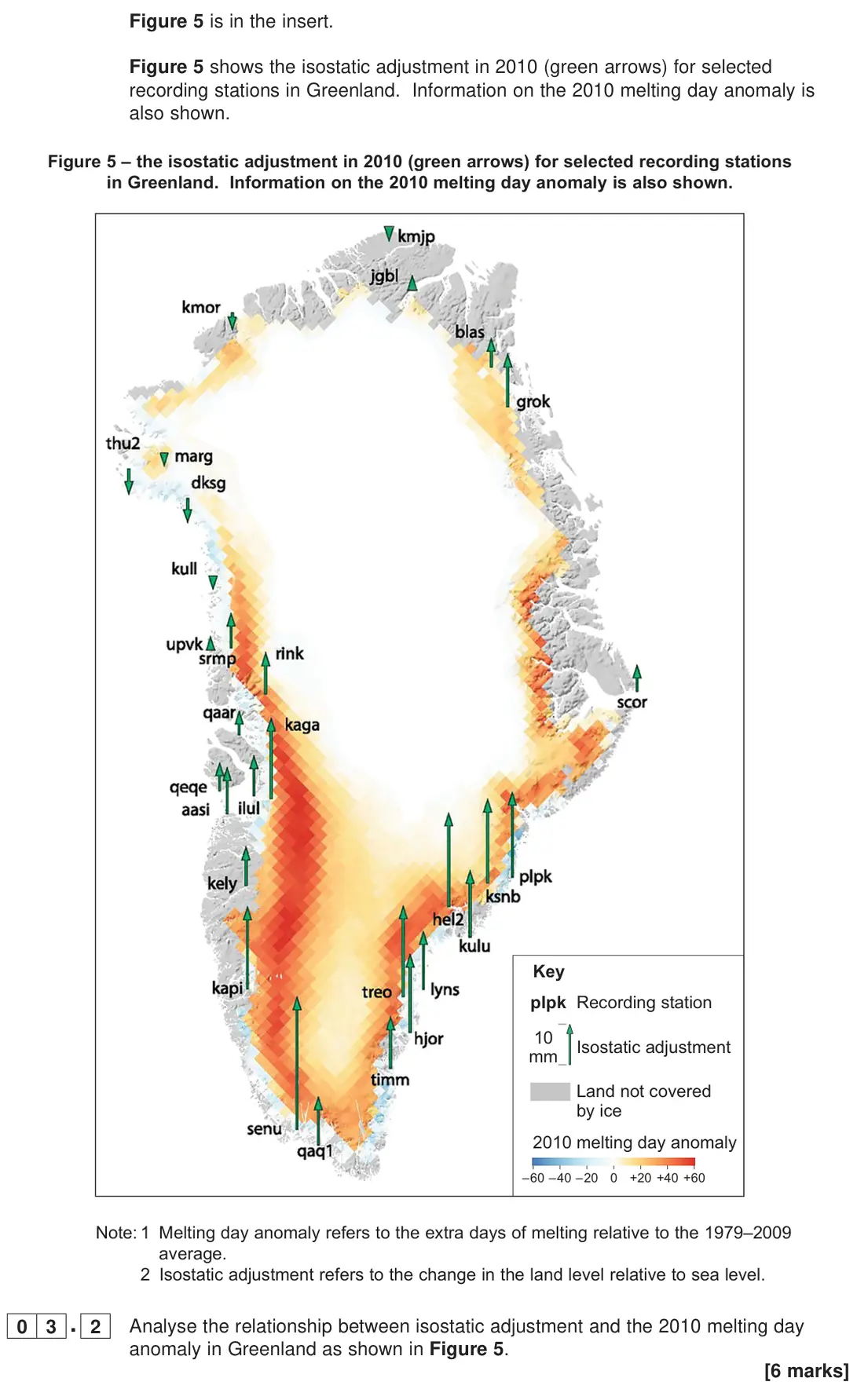
All 24 questions on Coastal landscape development, as a list
- June 2025, Paper 1, Q03.1 (4 marks): Outline processes leading to the formation of sand dunes. [4 marks]
- June 2025, Paper 1, Q03.4 (20 marks): With reference to one or more coastal environment(s) that you have studied, analyse factors and processes leading to the development of a high energy, erosional
- June 2025, AS Paper 1, Q02.1 (1 mark): What is a fjord? [1 mark]
- June 2025, AS Paper 1, Q02.4 (6 marks): Analyse the data shown in Figure 2. [6 marks]
- June 2025, AS Paper 1, Q02.5 (9 marks): Assess the role of mass movement processes in shaping coastal landforms. [9 marks]
- June 2025, AS Paper 1, Q02.6 (20 marks): Analyse the relationship between sea level change and landform development over the last 10 000 years. [20 marks]
- June 2024, Paper 1, Q03.1 (4 marks): Outline the sequence in the development of a sea stack. [4 marks]
- June 2024, Paper 1, Q03.4 (20 marks): With reference to one or more coastal environments that you have studied, assess the potential impact of climate change on the development of landforms. [20 mar
- June 2024, AS Paper 1, Q02.3 (3 marks): Outline processes involved in the development of estuarine mudflat environments. [3 marks]
- June 2024, AS Paper 1, Q02.5 (9 marks): Assess potential impacts of climate change on the physical landforms of a local scale coastal landscape you have studied. [9 marks]
- June 2023, AS Paper 1, Q02.2 (1 mark): Which of the following are all landforms associated with coastal erosion? [1 mark]
- June 2023, AS Paper 1, Q02.4 (6 marks): Analyse the information shown in Figure 2. [6 marks]
- June 2023, AS Paper 1, Q02.5 (9 marks): Assess the possible impacts of sea level change on estuarine saltmarsh environments. [9 marks]
- June 2022, Paper 1, Q03.1 (4 marks): Outline factors leading to the formation of fjords. [4 marks]
- June 2022, Paper 1, Q03.2 (6 marks): Using only Figures 5a and 5b, evaluate the relative usefulness of these sources in demonstrating eustatic sea level change. [6 marks]
- June 2022, Paper 1, Q03.3 (6 marks): Using Figure 6 and your own knowledge, assess the view that deposition is the most important factor in the development of this landscape. [6 marks]
- June 2022, AS Paper 1, Q02.1 (1 mark): Which of the following are all landforms of coastal deposition? [1 mark]
- June 2022, AS Paper 1, Q02.6 (20 marks): ‘Submergent coastal landforms will develop faster than emergent features in the future.’ To what extent do you agree with this statement? [20 marks]
- November 2021, Paper 1, Q03.3 (6 marks): Using Figure 6 and your own knowledge, assess the relative importance of factors leading to the development of this landform. [6 marks]
- November 2020, Paper 1, Q03.2 (6 marks): Analyse the relationship between isostatic adjustment and the 2010 melting day anomaly in Greenland as shown in Figure 5. [6 marks]
- November 2020, Paper 1, Q03.3 (6 marks): Using Figure 6 and your own knowledge, assess the view that rock type is the most important factor in the development of this landscape. [6 marks]
- November 2020, Paper 1, Q03.4 (20 marks): With reference to a coastal environment at a local scale, assess the predicted impact of climate change upon the landscape. [20 marks]
- November 2020, AS Paper 1, Q02.2 (1 mark): What is a spit? [1 mark]
- November 2020, AS Paper 1, Q02.5 (9 marks): How far do you agree that weathering processes make little contribution to the development of landscapes of coastal erosion? [9 marks]
Questions, mark schemes and examiner’s reports are © AQA, from their published past papers. Plumi isn’t affiliated with any exam board. Want whole papers? Full past papers.
Rather write your answers by hand on iPad? Plumi marks them against the same mark schemes.